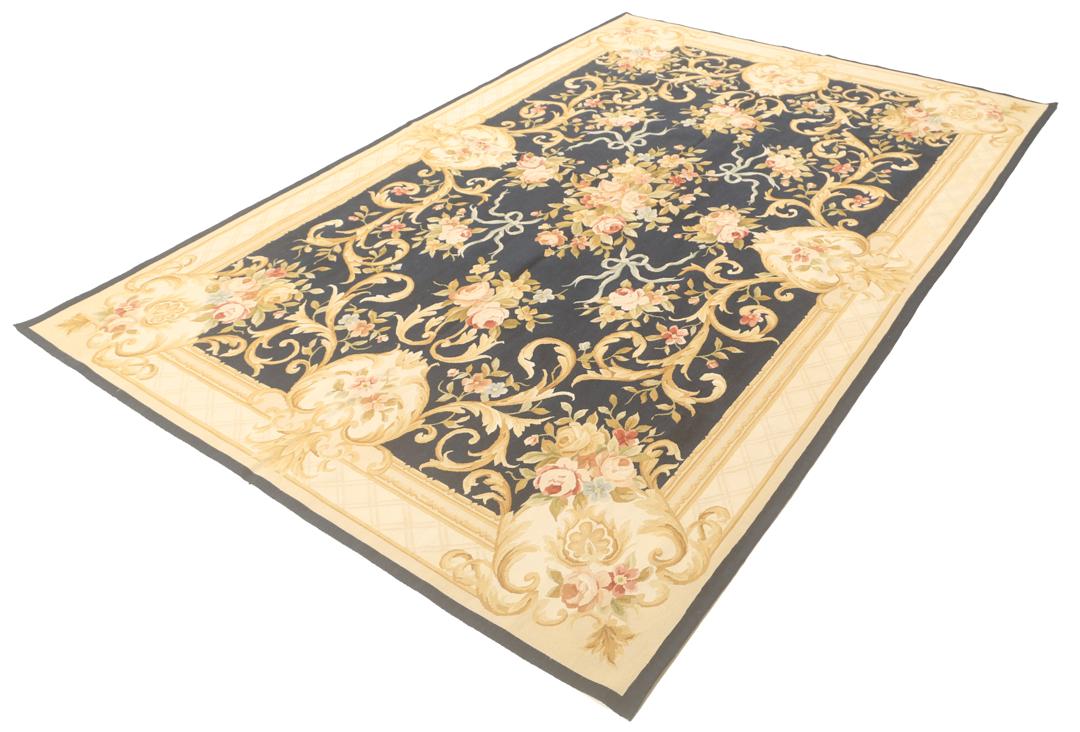
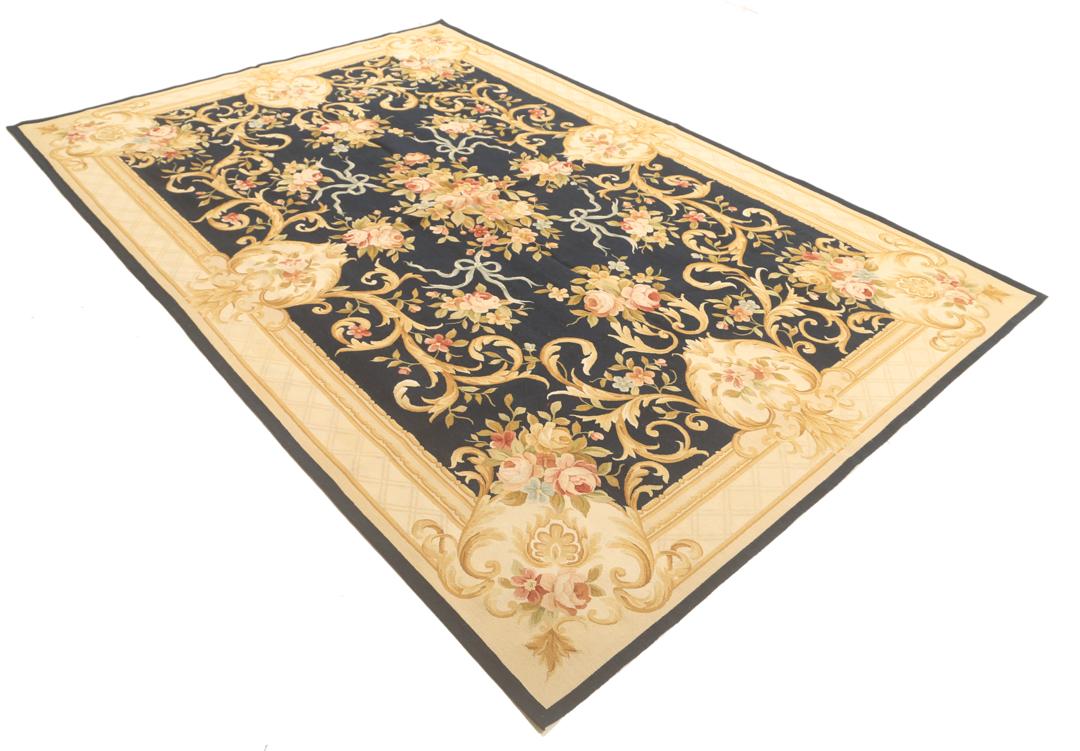
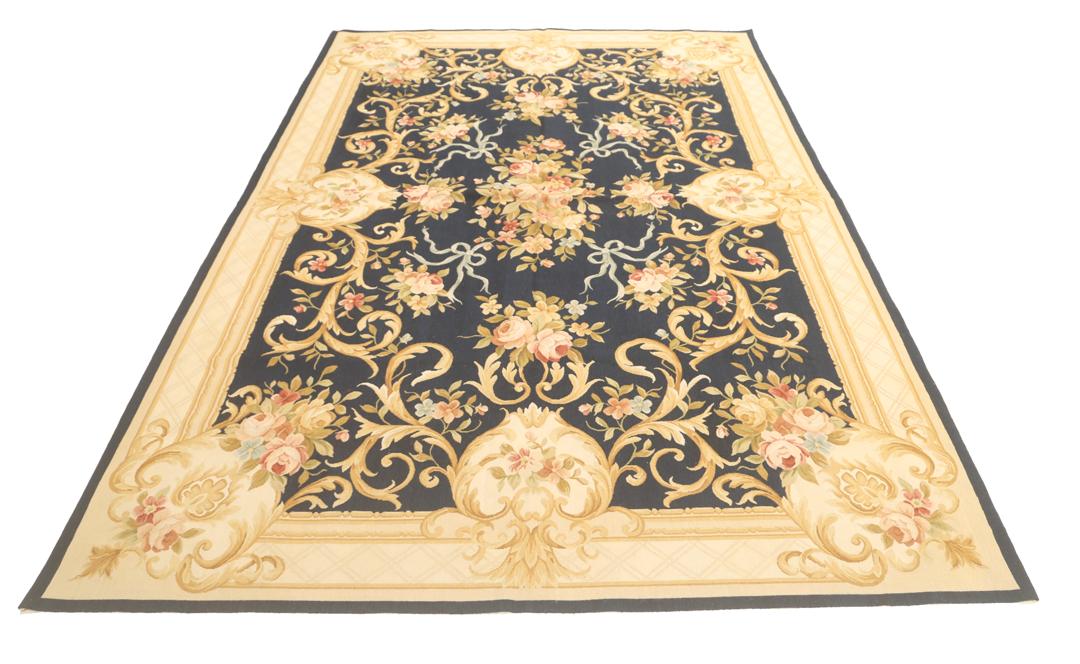
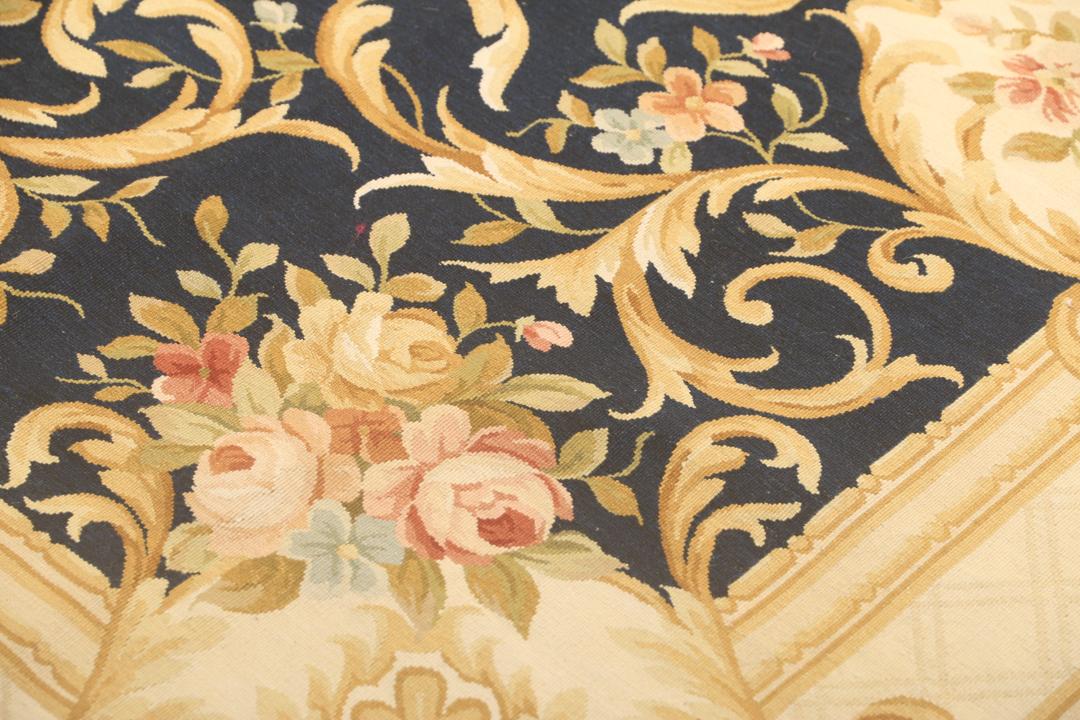
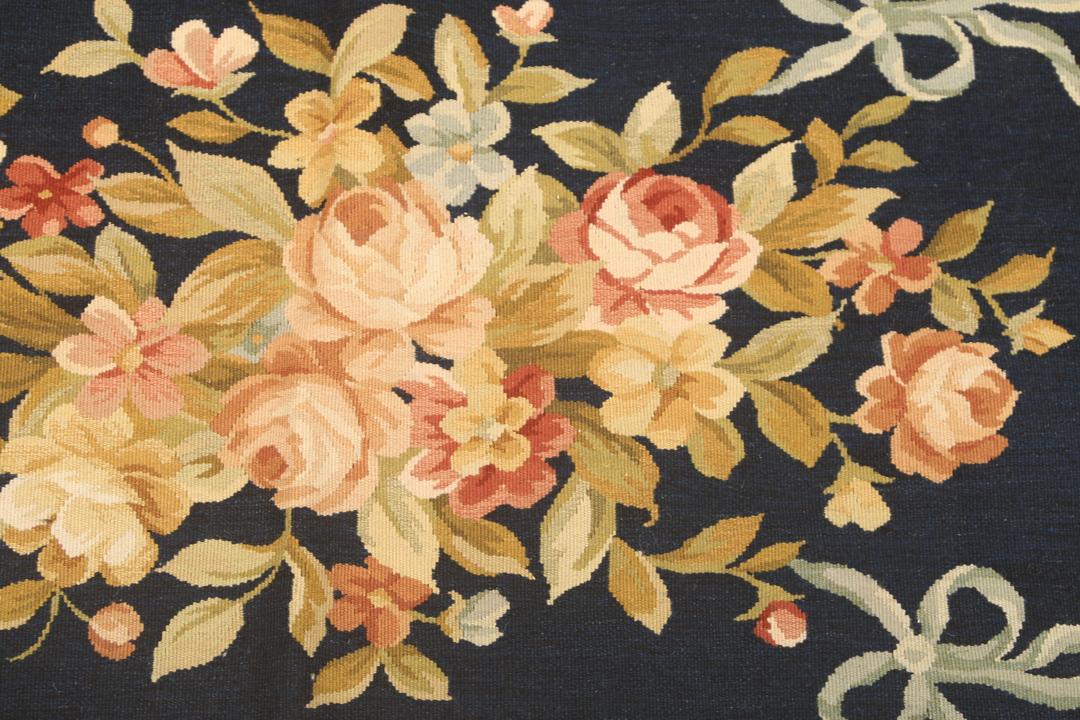
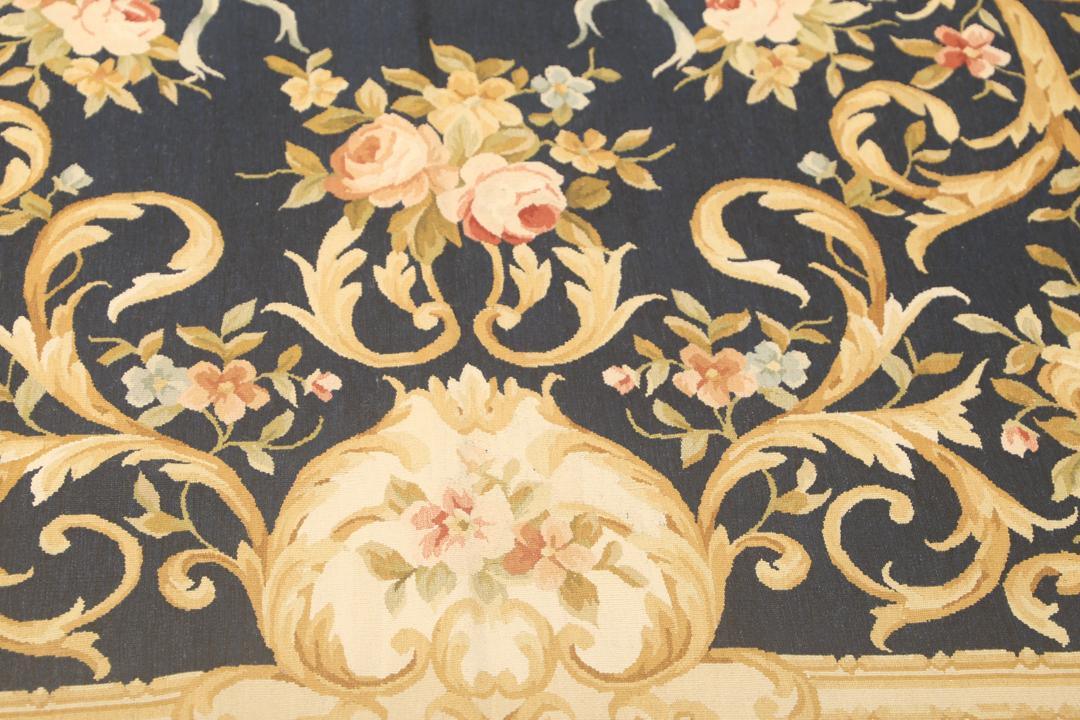
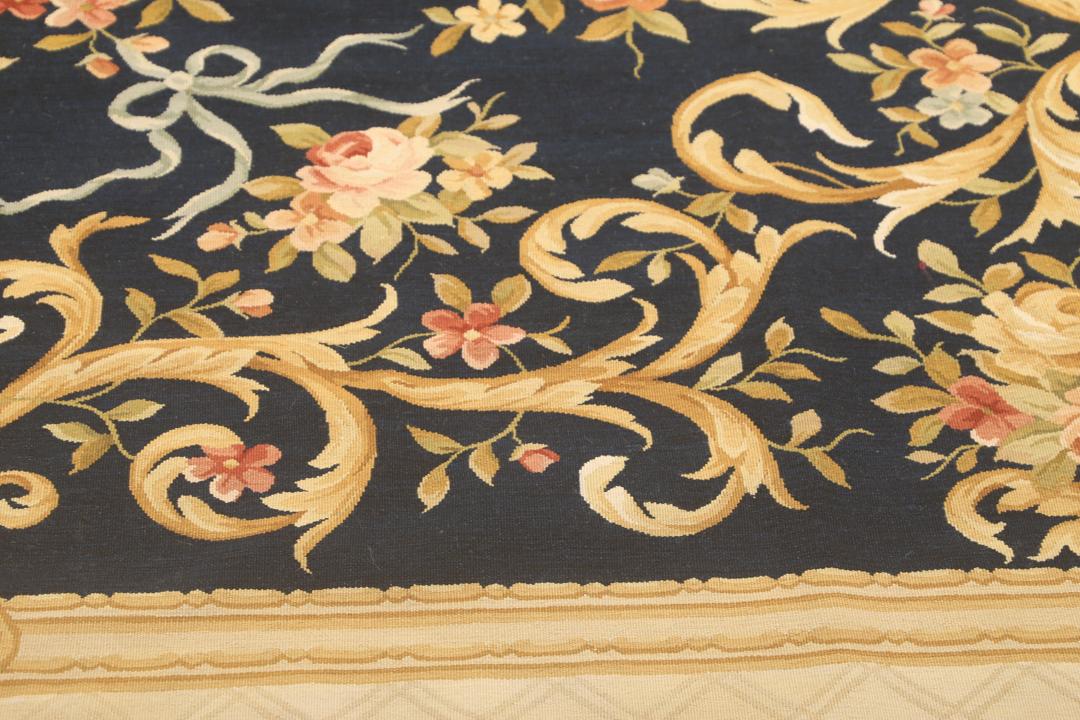
The term Aubusson refers to a historic tradition of fine tapestry and rug weaving that originated in the French town of the same name. During the 17th and 18th centuries, these pieces became synonymous with luxury, adorning the floors and walls of aristocratic estates across Europe. Today, this tradition has evolved, with skilled artisans in China masterfully interpreting these classic designs using traditional hand-weaving techniques.
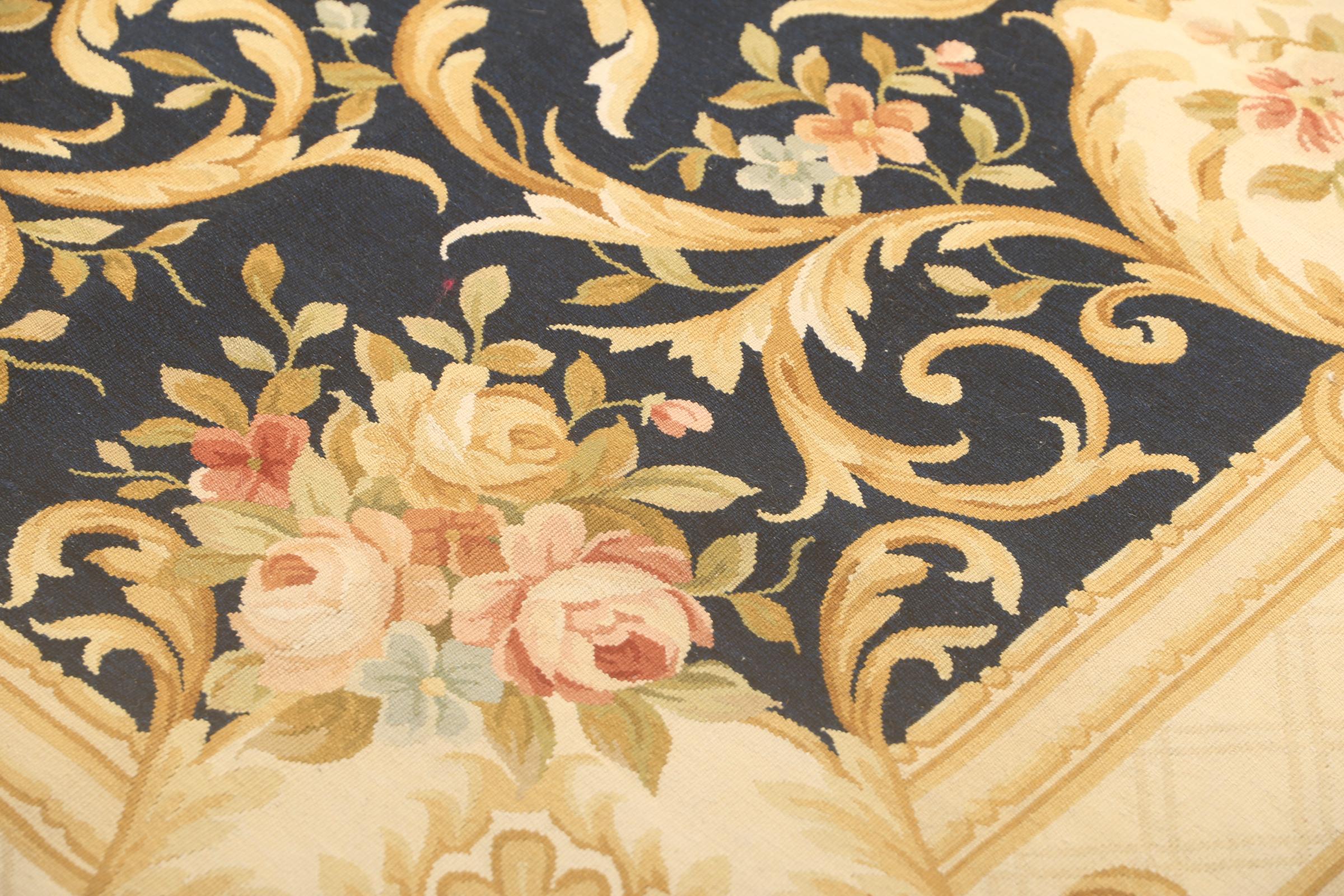
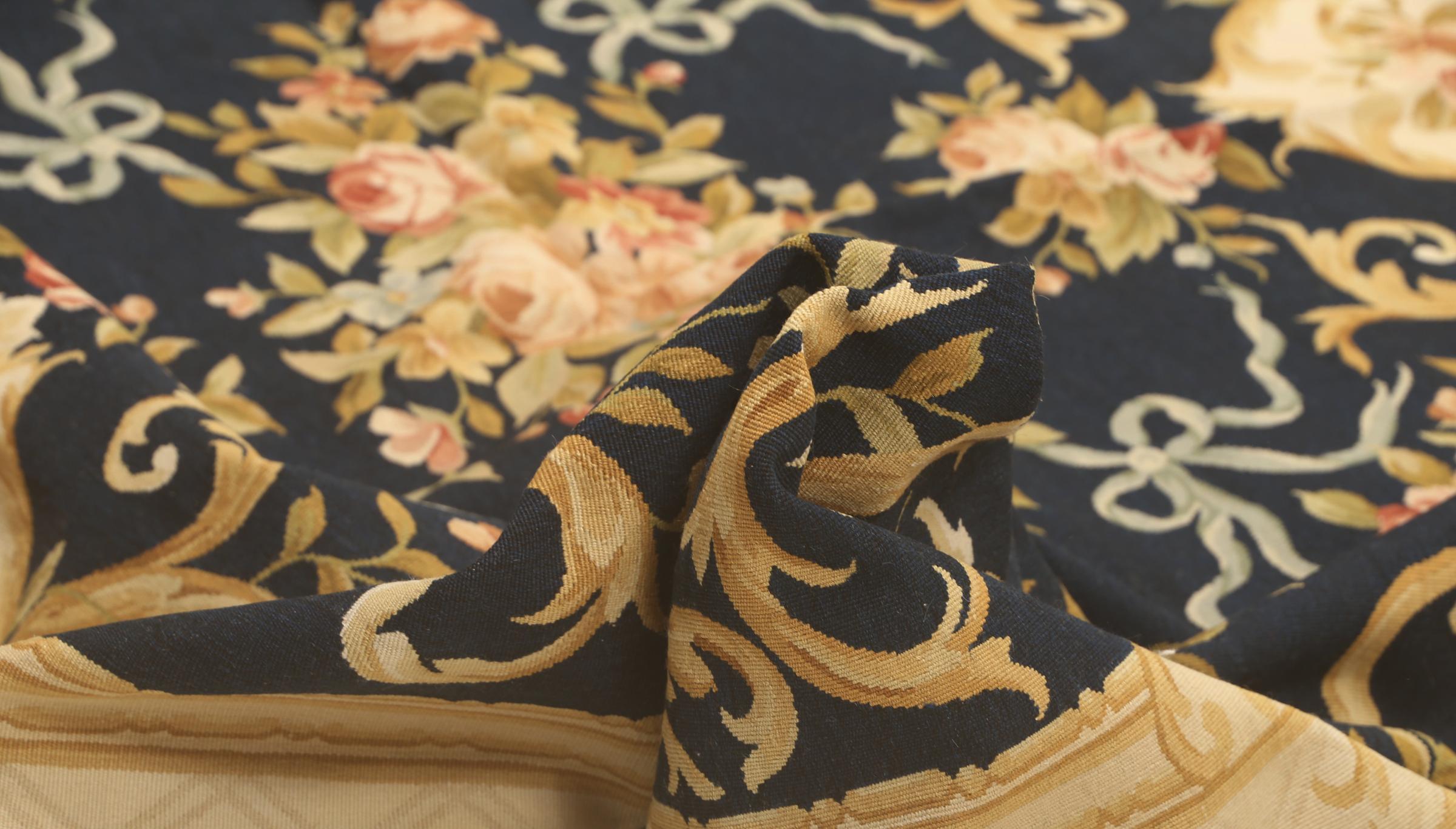
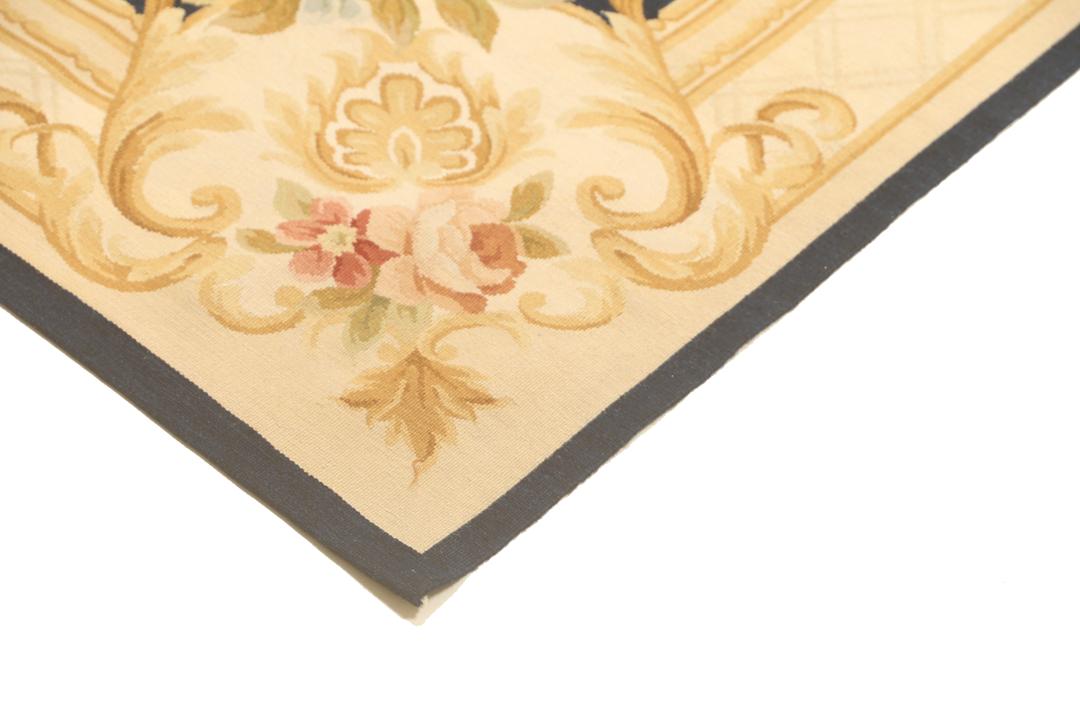
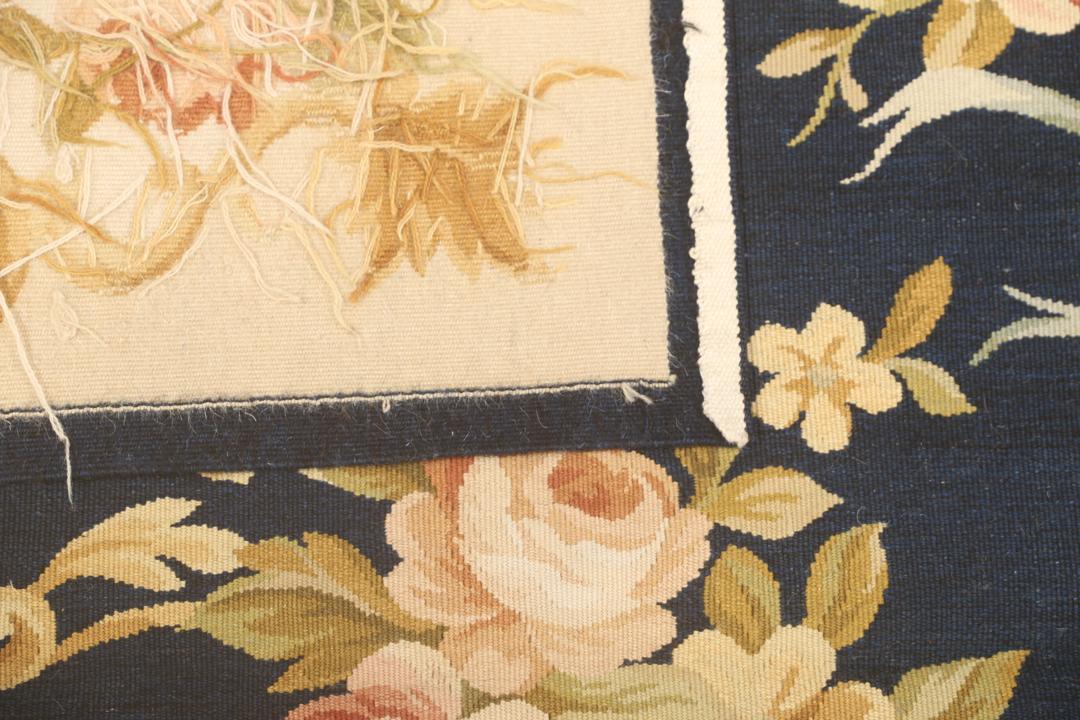
Technically, these rugs are defined by their flat-weave construction, which distinguishes them from pile-based carpets. By using a flat-weave technique, the artisans are able to achieve a remarkable level of detail and clarity in the design. This creates a surface that is both durable and incredibly smooth, allowing the intricate, curvilinear patterns to stand out with precision.
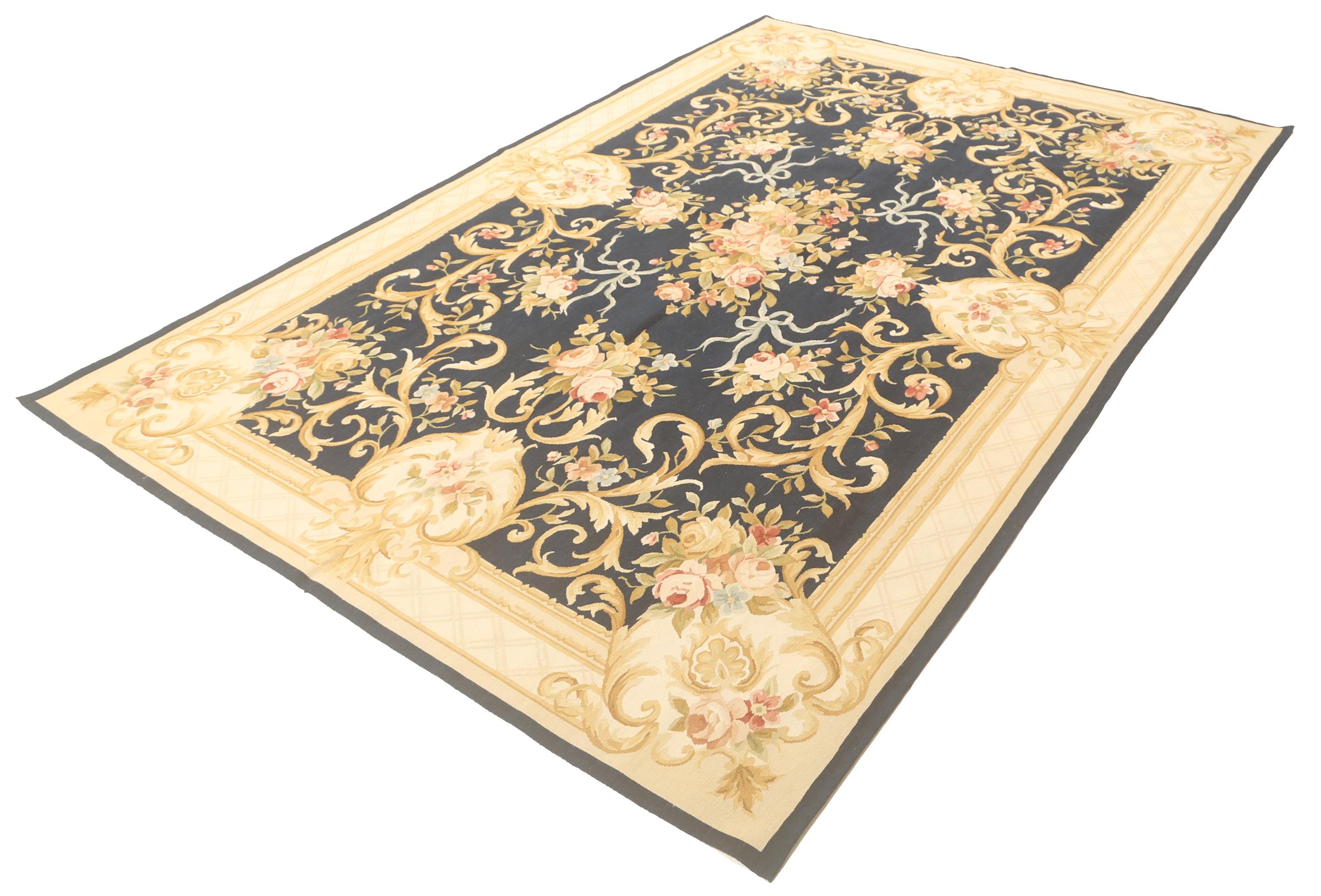
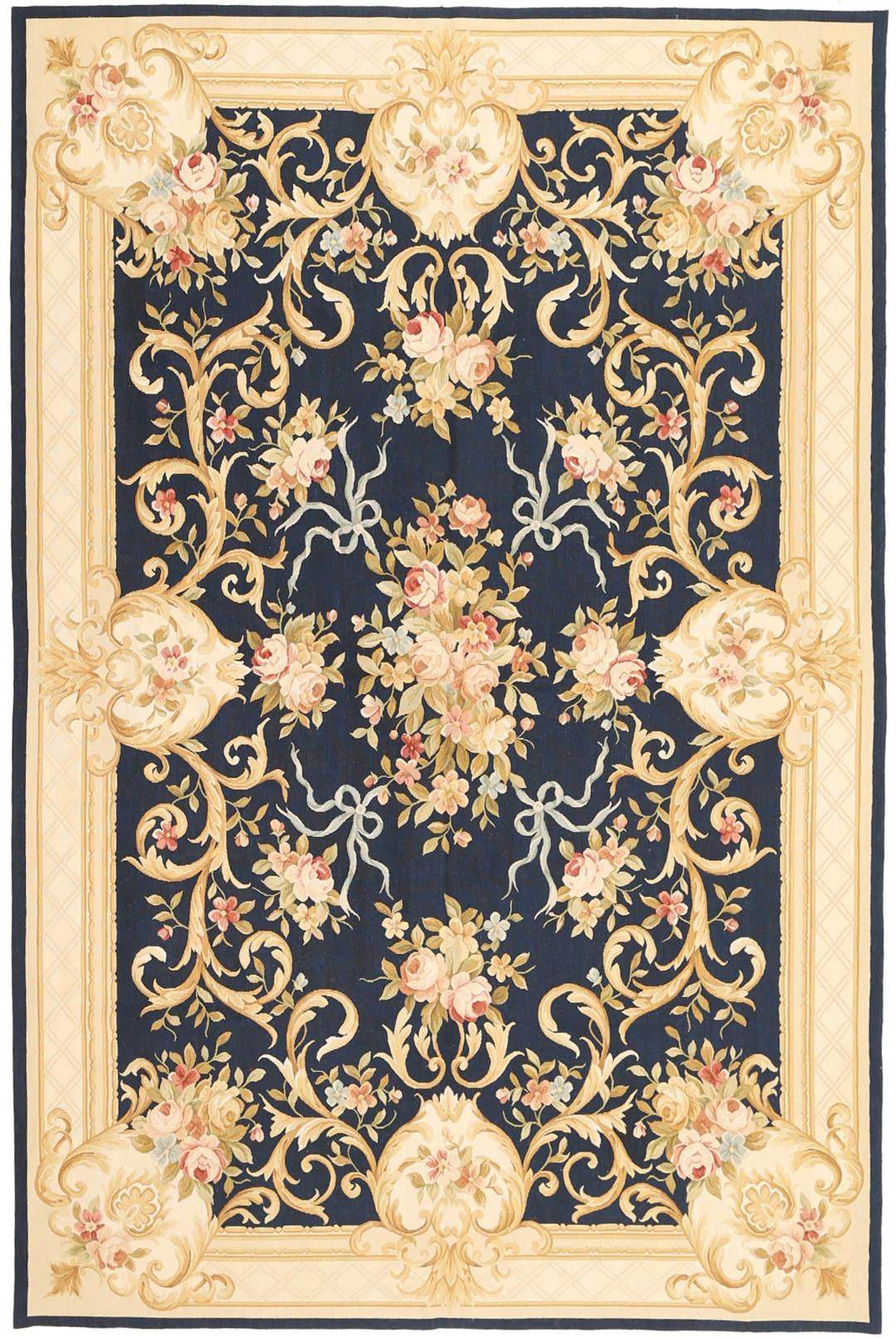
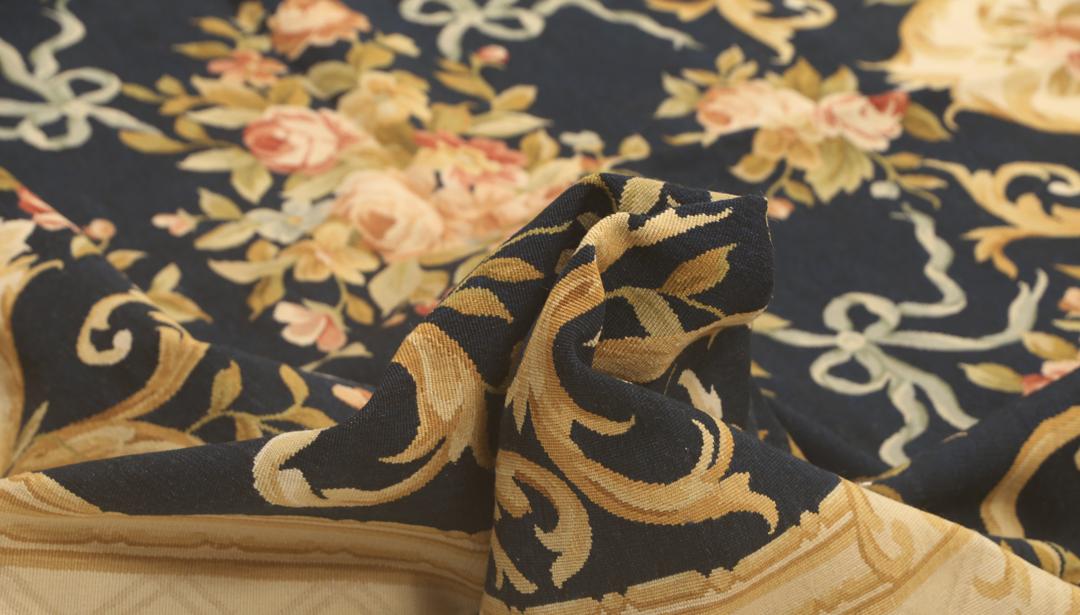
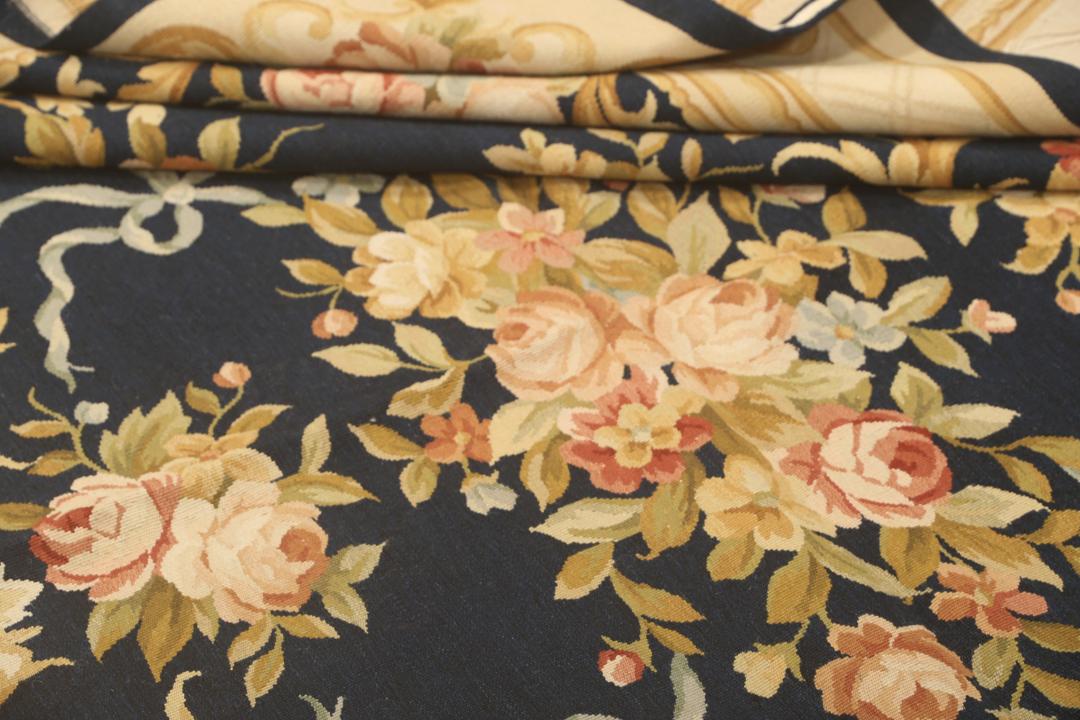
The signature design language of this style is rooted in the decorative arts of the 18th century, characterised by naturalistic floral sprays, garlands, and ornate, scrolling frames. These motifs are often arranged in a formal, symmetrical layout that emphasises balance and elegance. The use of a dark field in this particular rug is a sophisticated twist, allowing the lighter, floral-toned elements to pop with added vibrancy.
Collecting a rug of this lineage is an appreciation of the enduring appeal of classical design. It represents a bridge between historical aesthetics and modern home styling. Owning such a piece is a testament to an appreciation for heritage, as it brings the refined artistry of centuries-old European textile traditions into a contemporary home context.