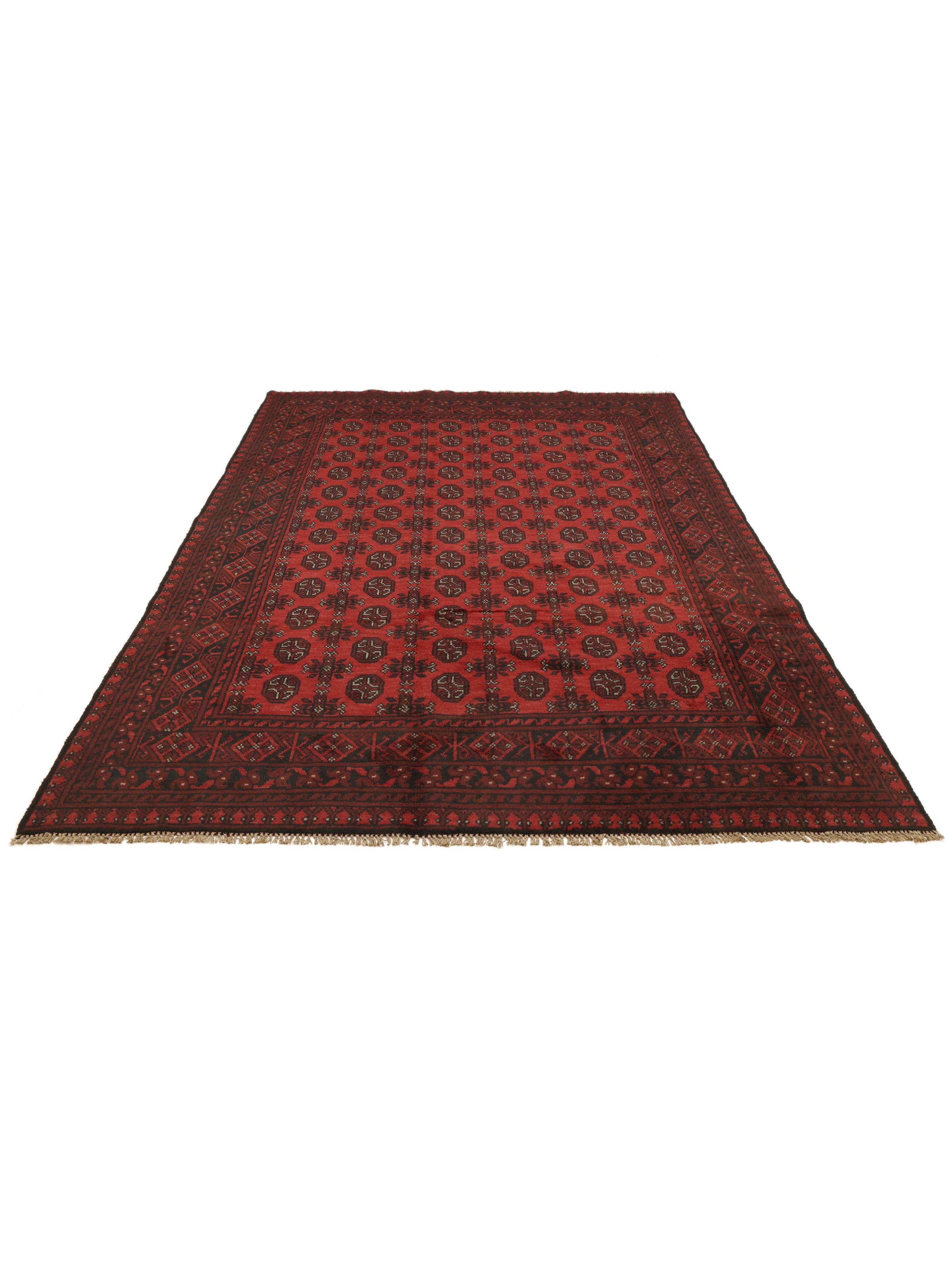
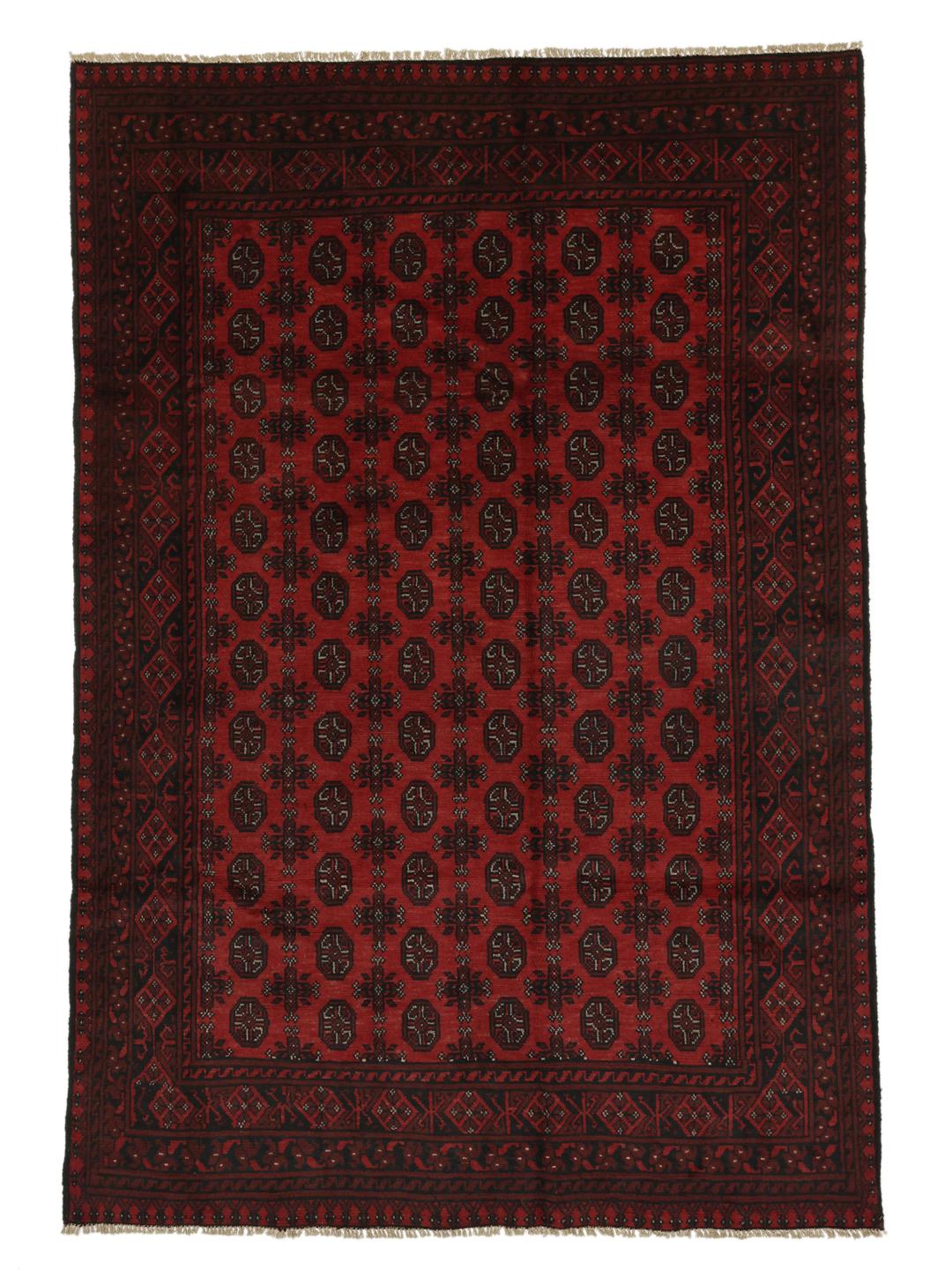
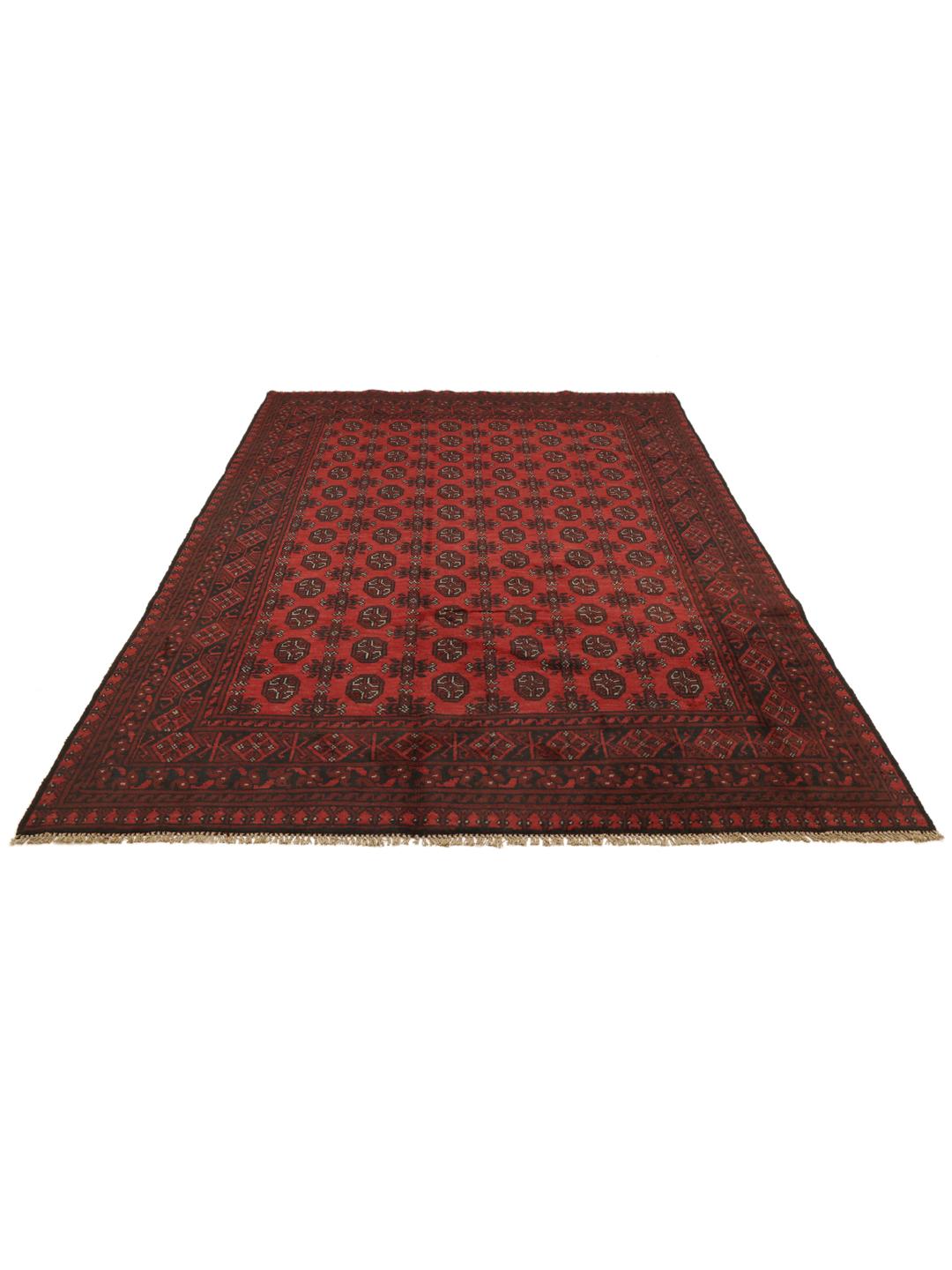
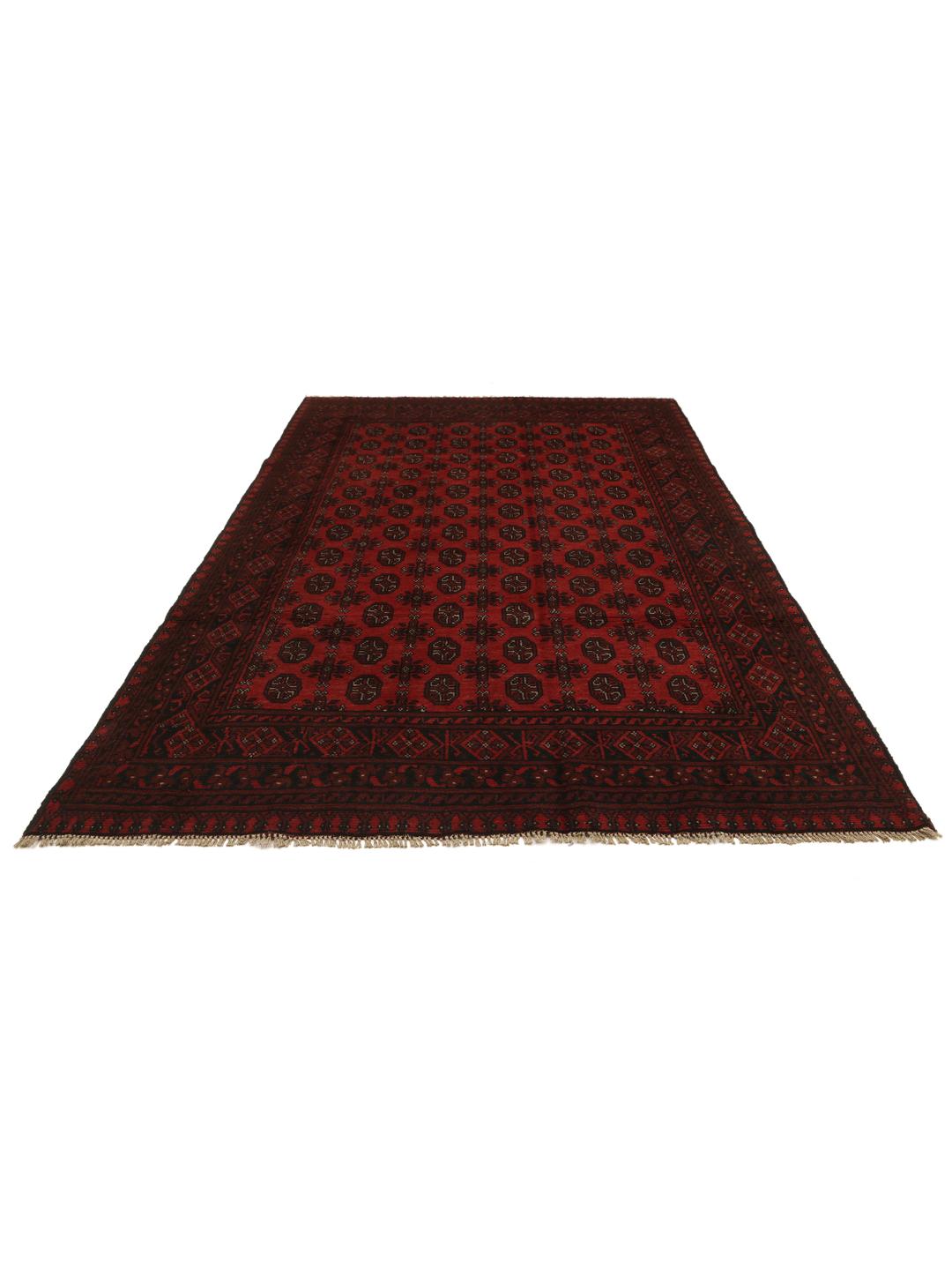
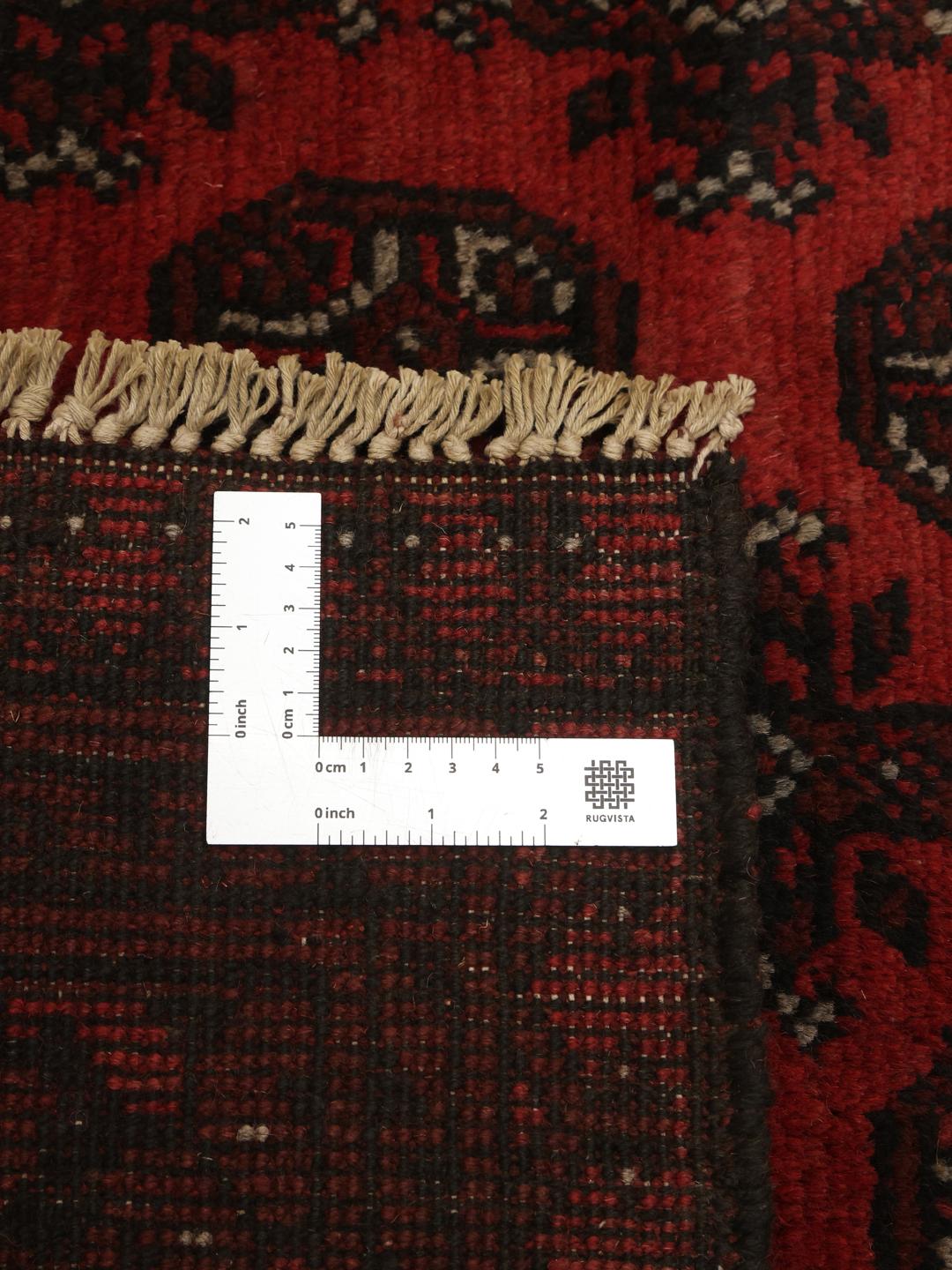
Afghan rugs have a long and respected heritage rooted in the nomadic and village weaving traditions of Central and South Asia. Historically produced by Turkmen and regional weaving communities across northern Afghanistan, these rugs were initially woven for practical daily use, warmth, and family trade along historic trade routes.
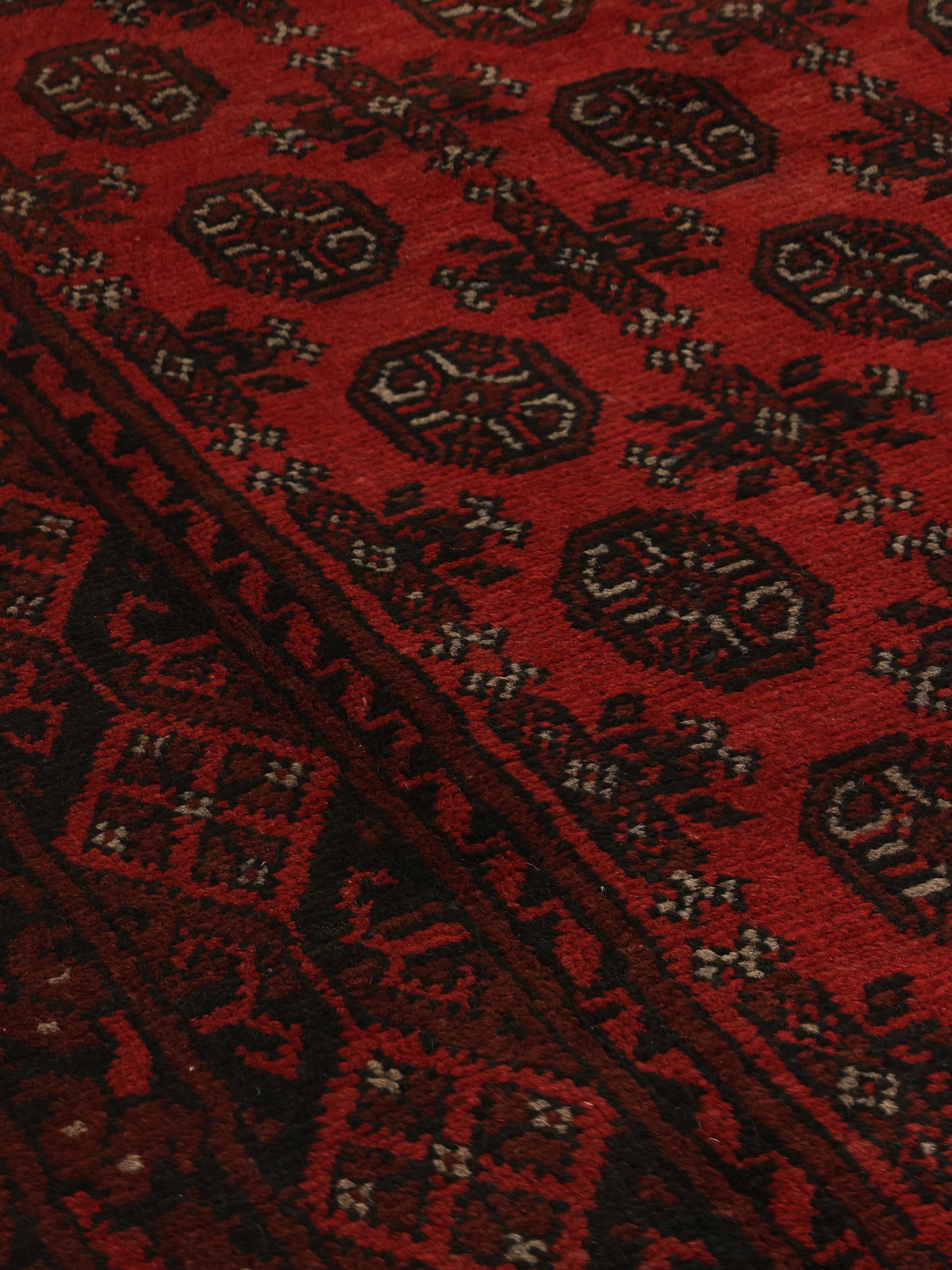
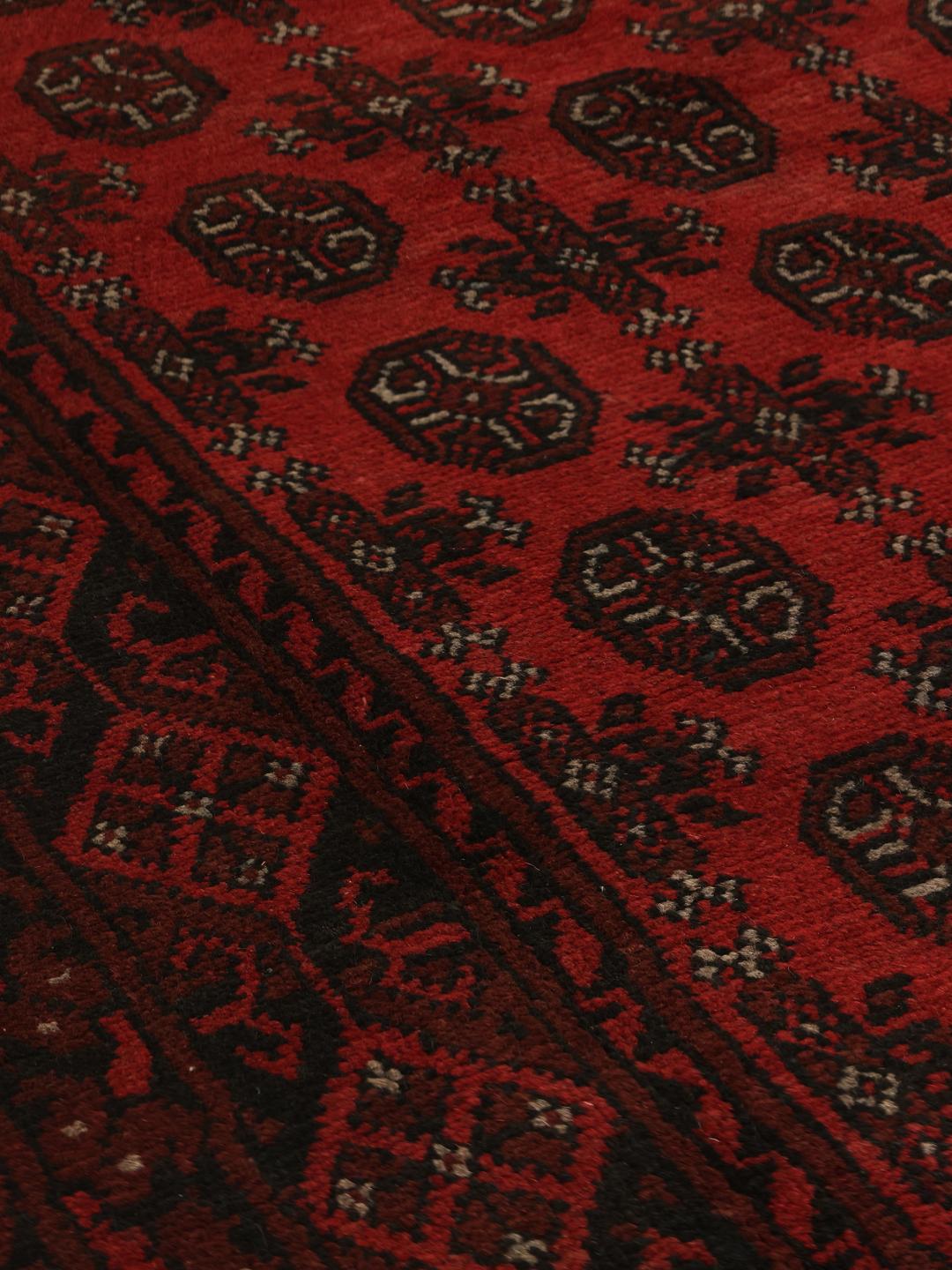
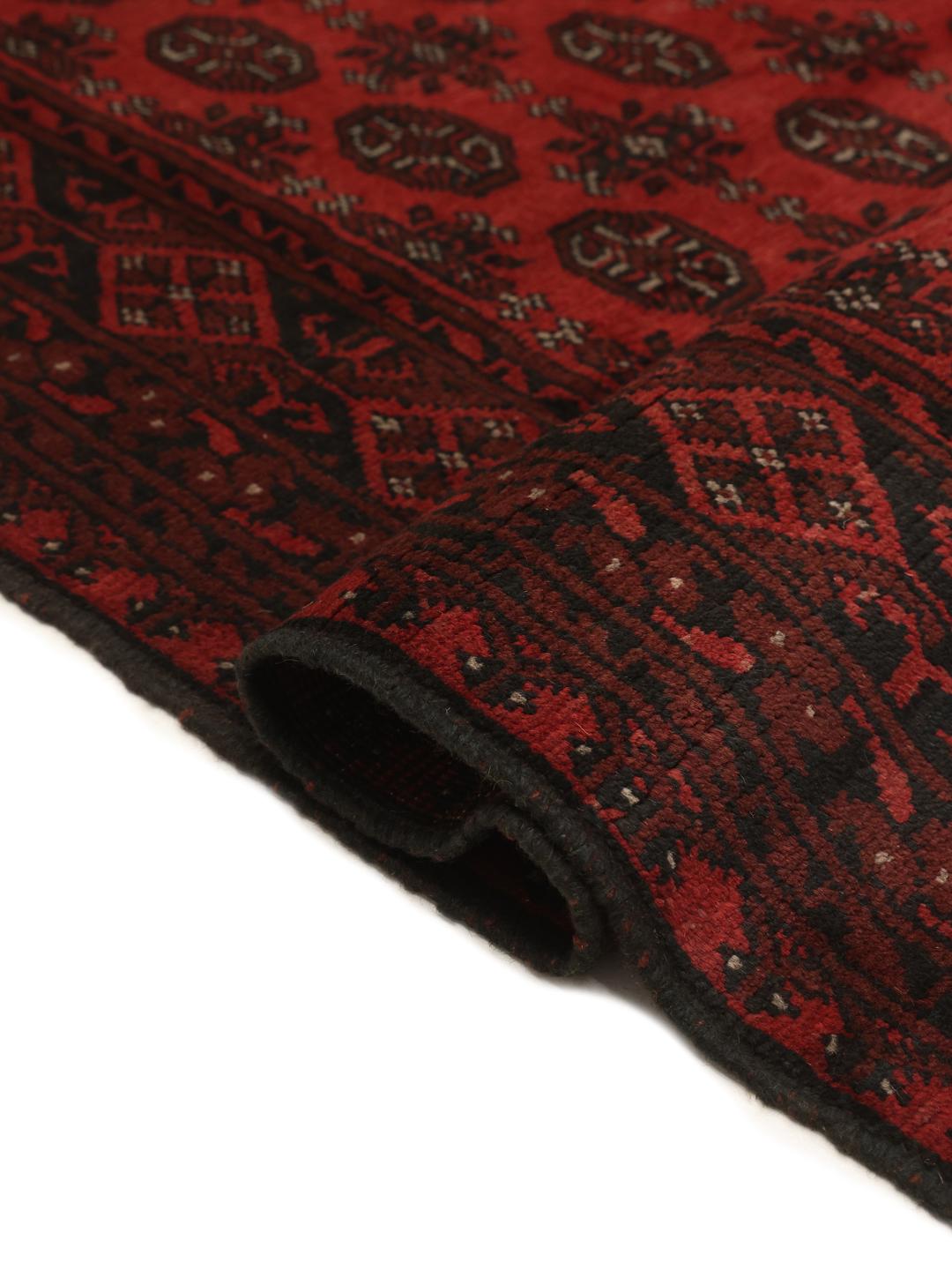
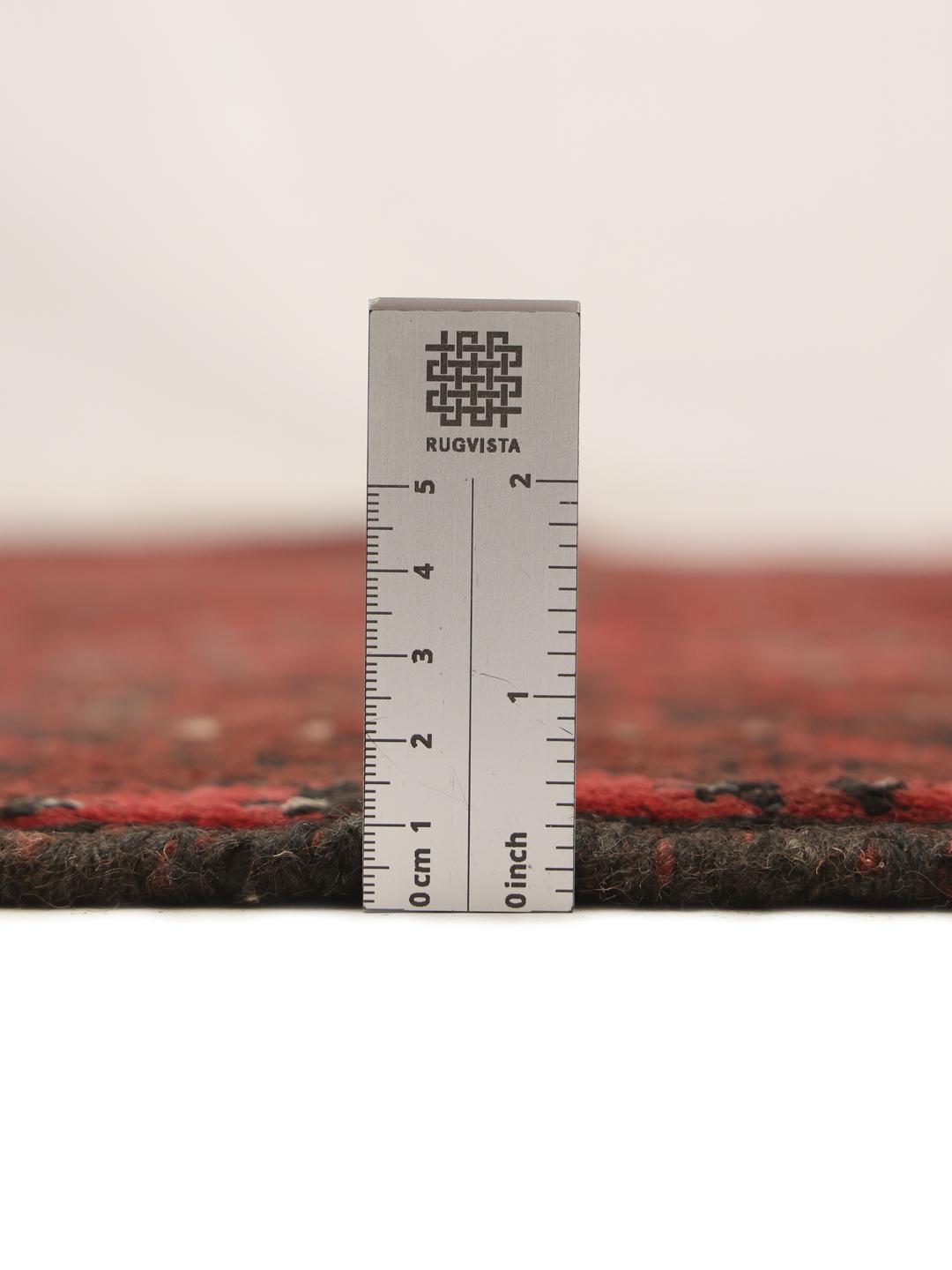
In rug making, the term Fine designates a higher standard of knotting and material selection compared to standard village weaves. Hand-knotted construction involves tying thousands of individual wool knots onto a structural foundation, resulting in crisp pattern alignment, enhanced durability, and a smooth, lustrous surface finish that ages gracefully.
Visually, Afghan rugs are celebrated for their rich palette dominated by deep madder reds, dark navy, and black accents. The central field traditionally features repeating geometric motifs, such as guls or octagonal medallions, framed by multiple detailed borders. These classic patterns convey traditional tribal symbols, giving each rug a sense of balance and order.
Rugs from this region are highly valued by collectors and homeowners alike for their honest craftsmanship and enduring appeal. Acquiring a hand-knotted Afghan rug means bringing a tangible piece of regional heritage into your home, backed by centuries of preserved skill.