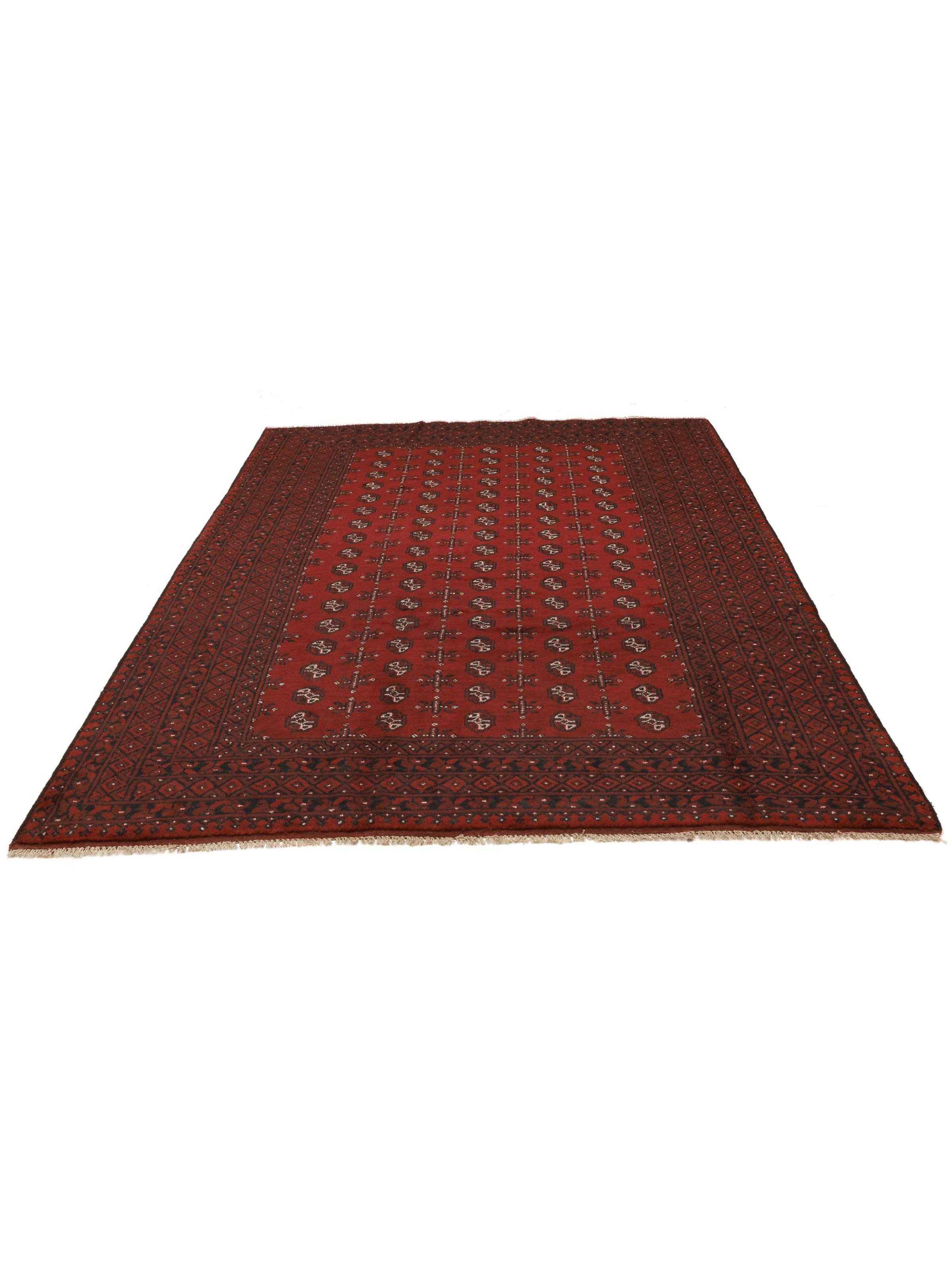
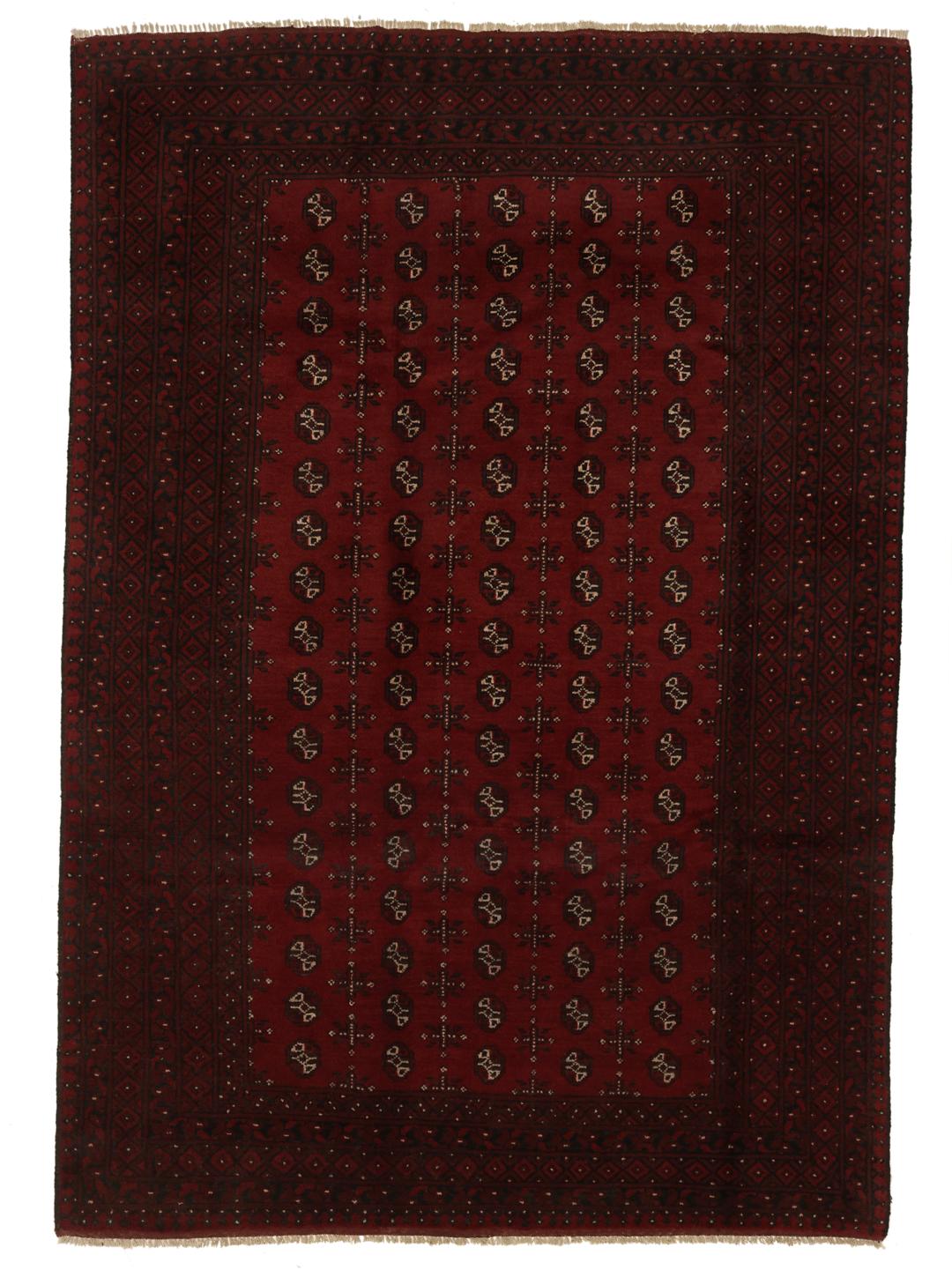
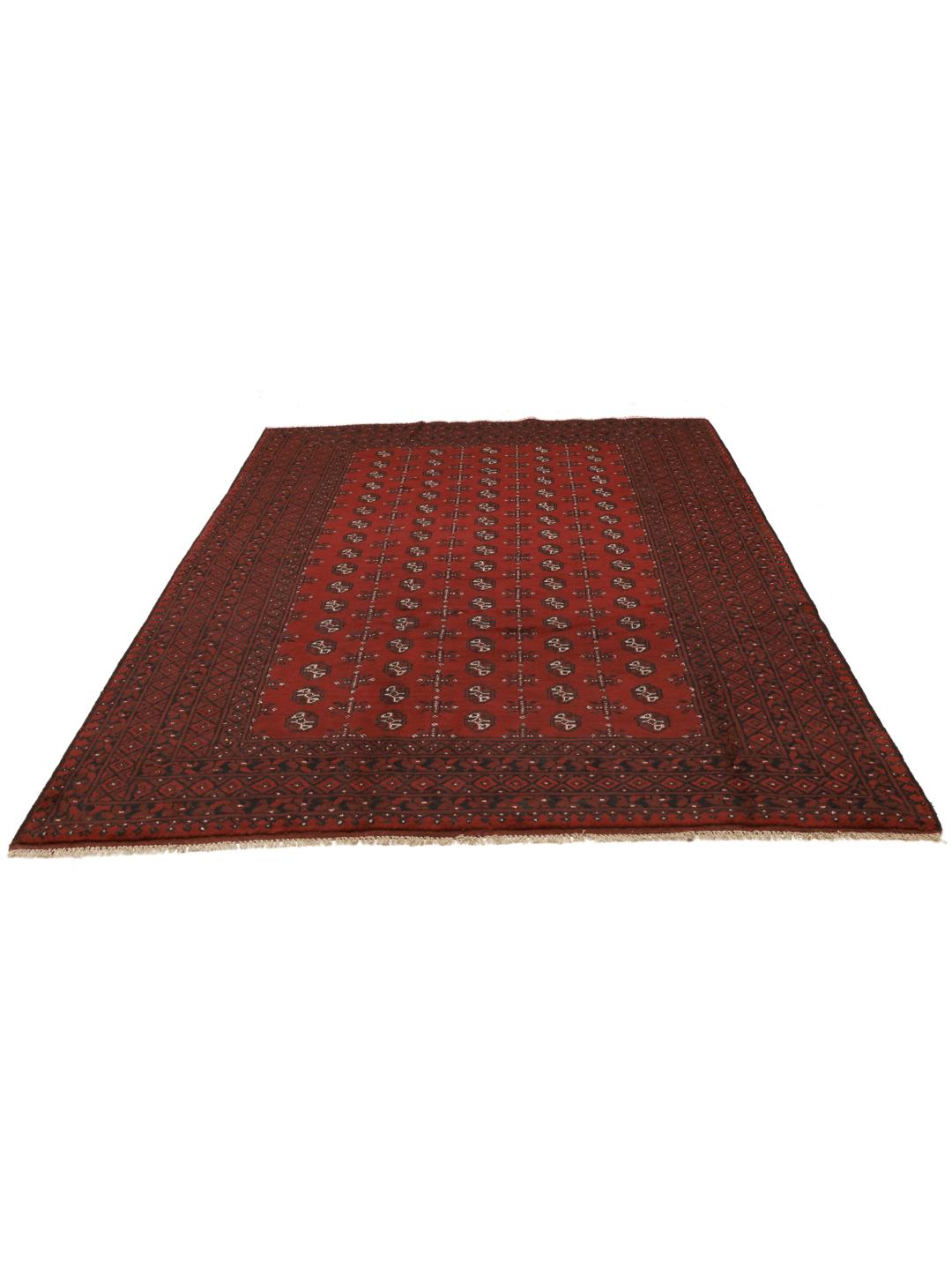
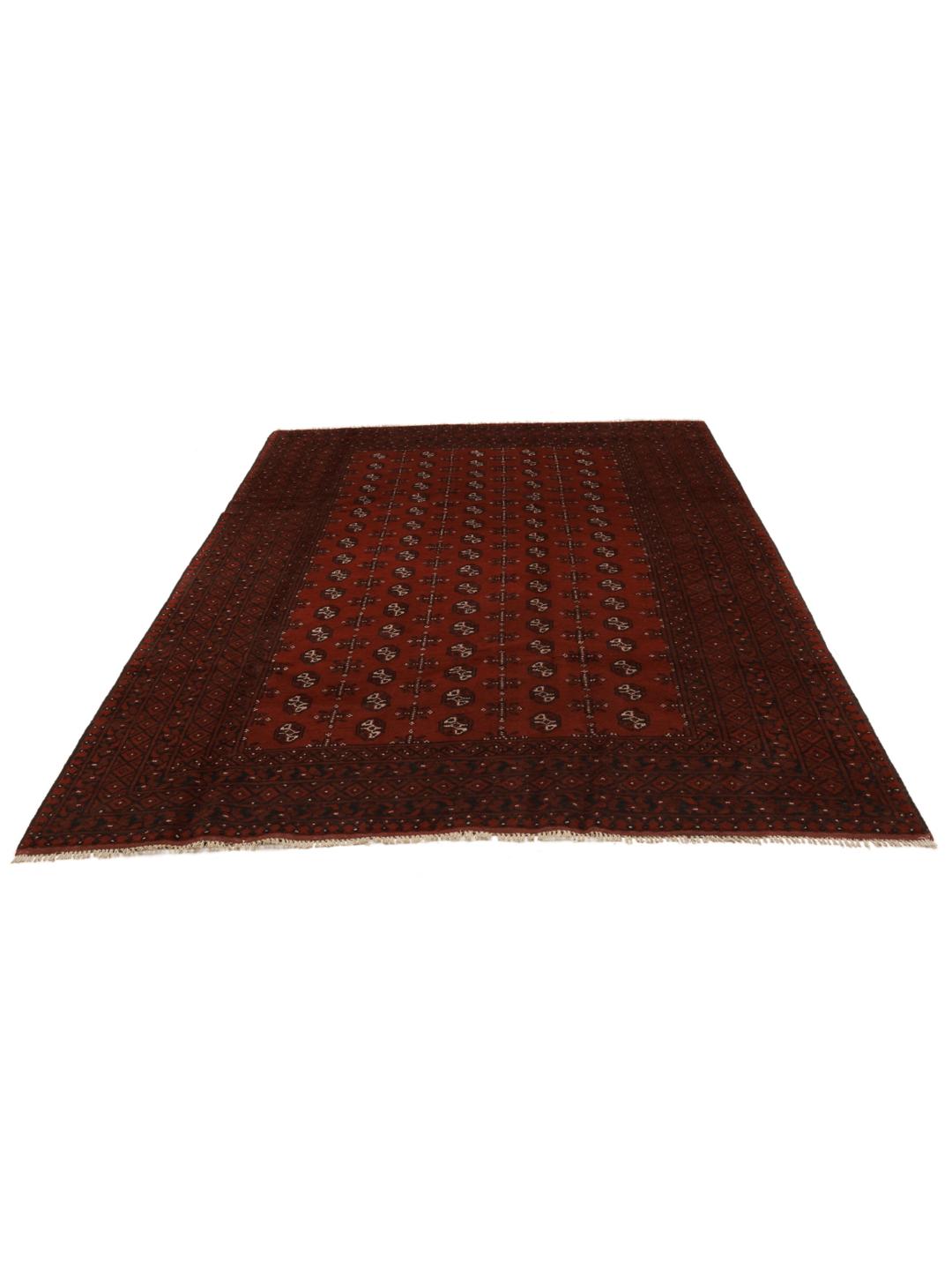
Afghan Fine rugs belong to a celebrated weaving lineage centred in northern Afghanistan, closely tied to the craft traditions of Turkmen communities. Historically woven by semi-nomadic and village weavers, these textiles were created both for daily domestic life and trade along ancient regional routes. Over generations, northern Afghan towns like Akhche became renowned markets for fine floor coverings defined by deep tones and clear geometric structures.
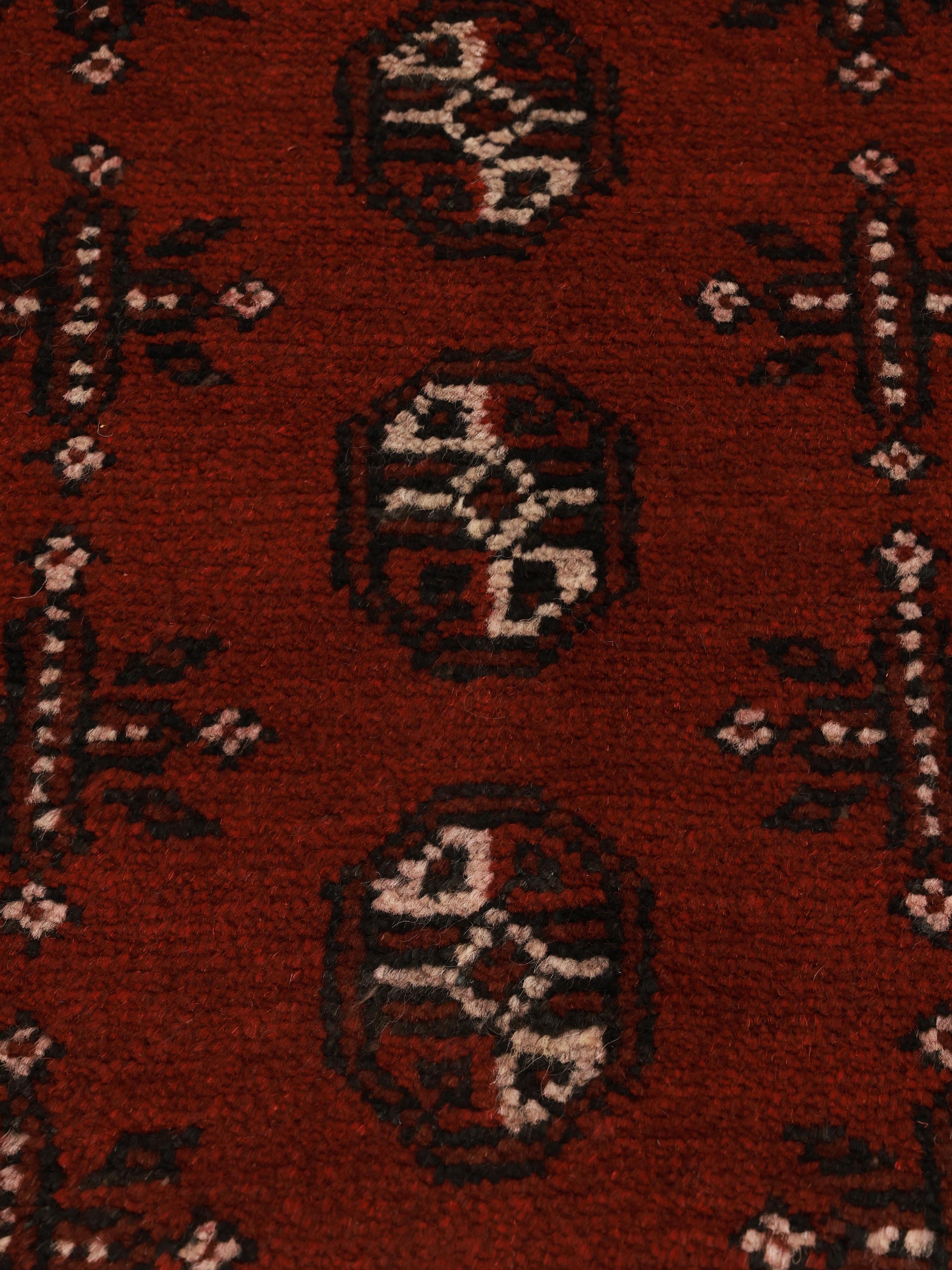
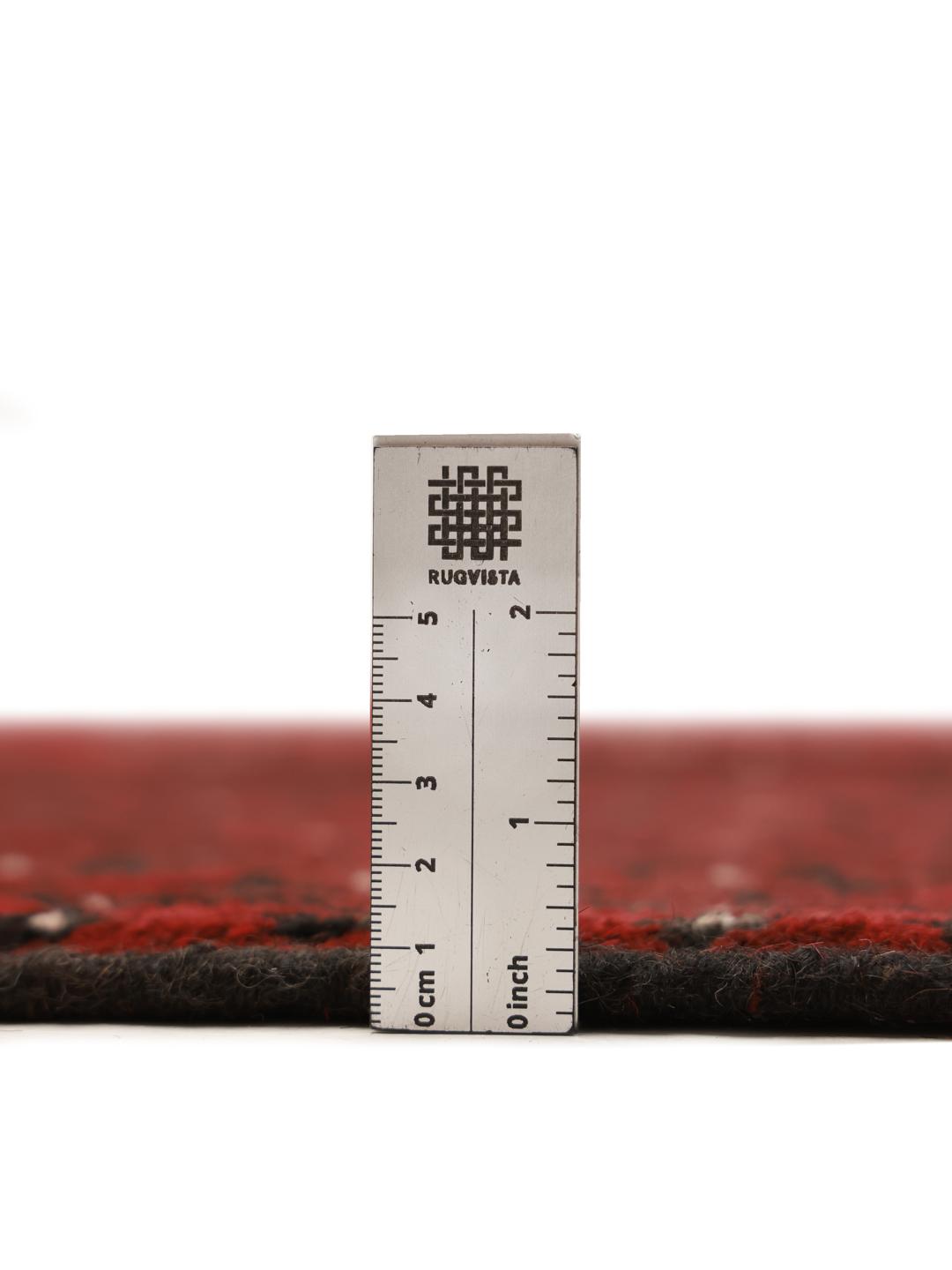
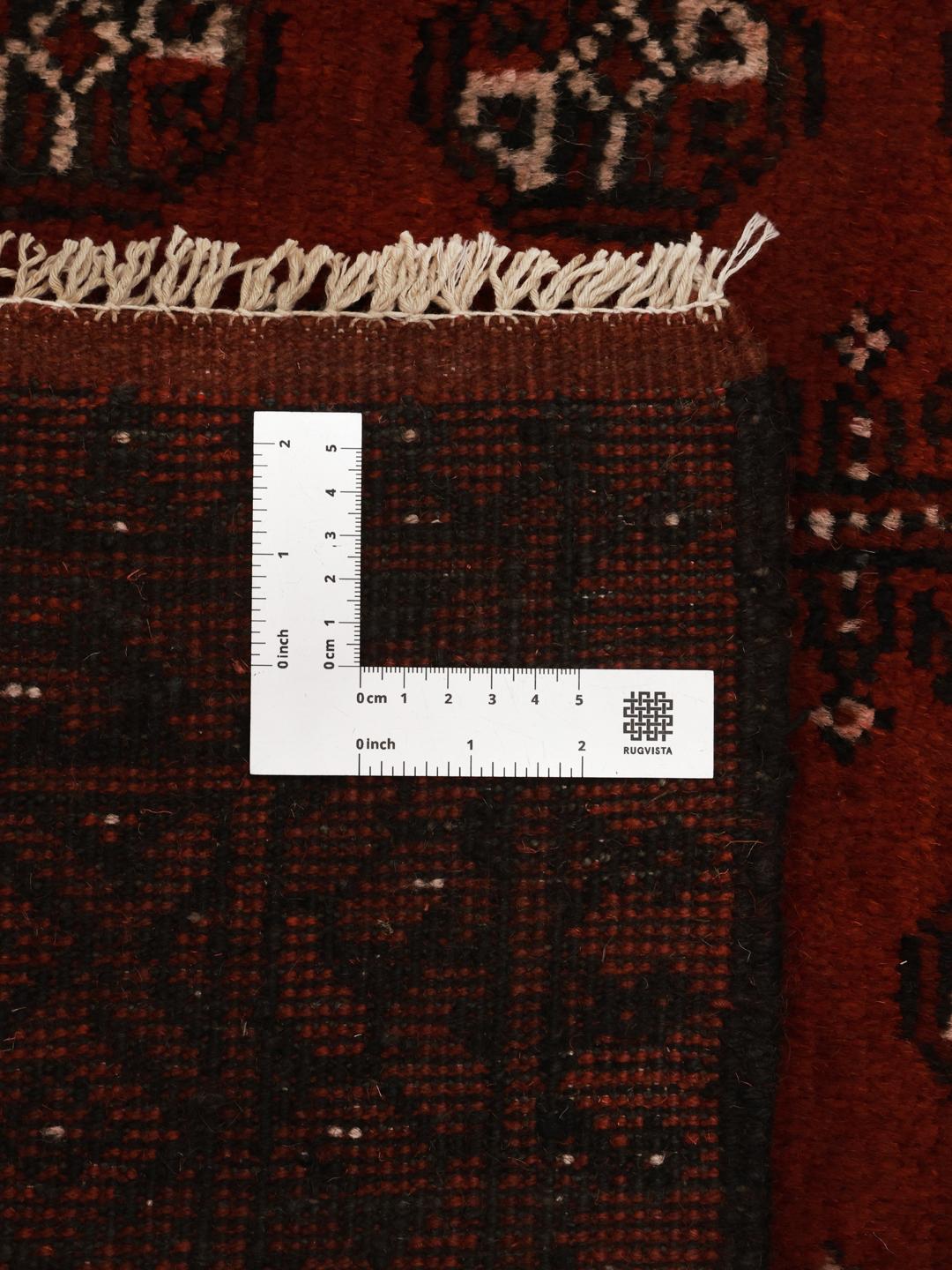
The term Fine signifies a careful standard of weaving, where hand-spun wool is tied into precise knots across a firm cotton warp. This traditional setup allows the weaver to execute sharp geometric lines and dense pile structures. Using strong cotton strands for the structural base gives the rug stability, while the pure wool pile absorbs vegetable dyes deeply, developing a soft sheen over time.
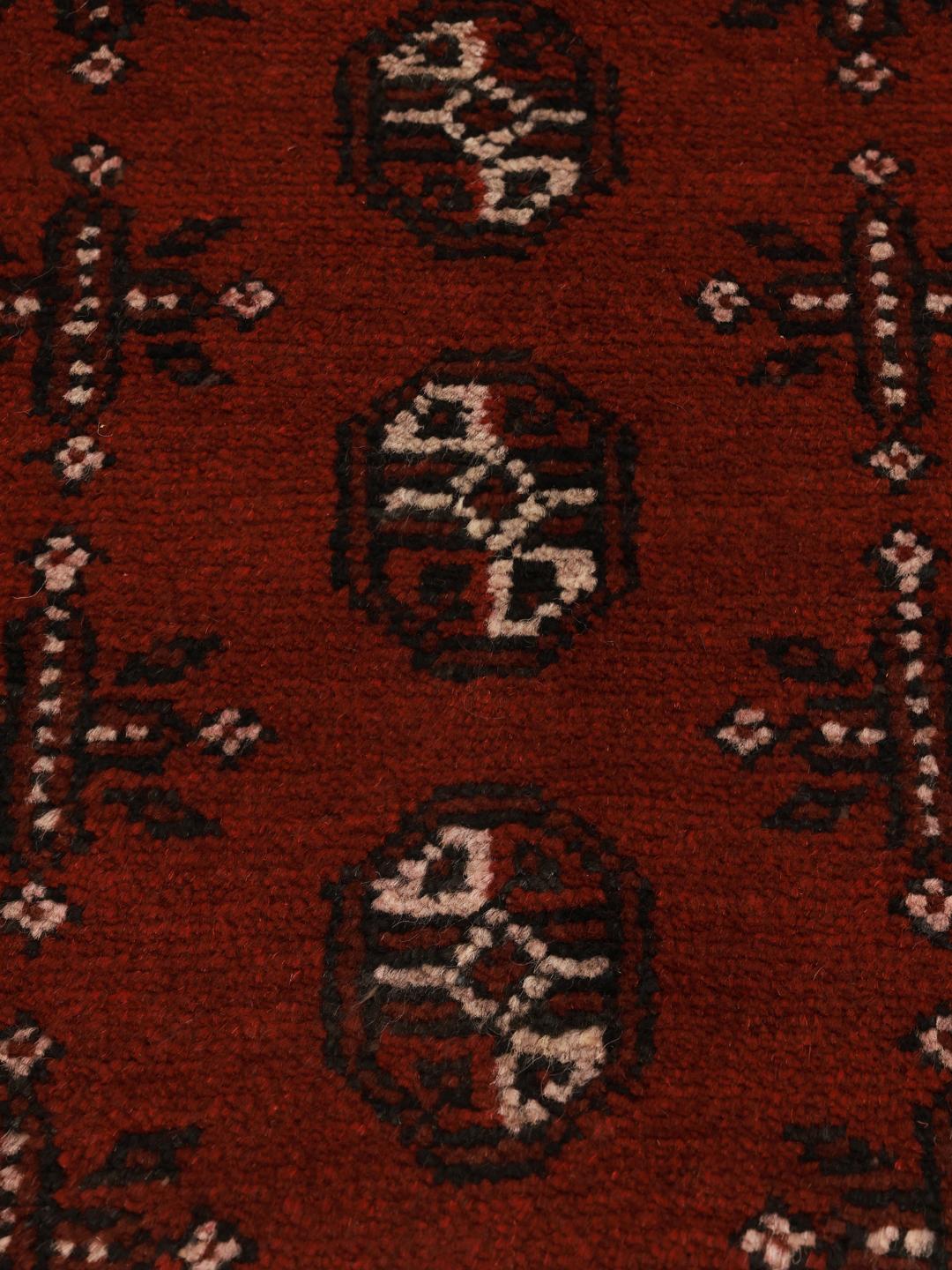
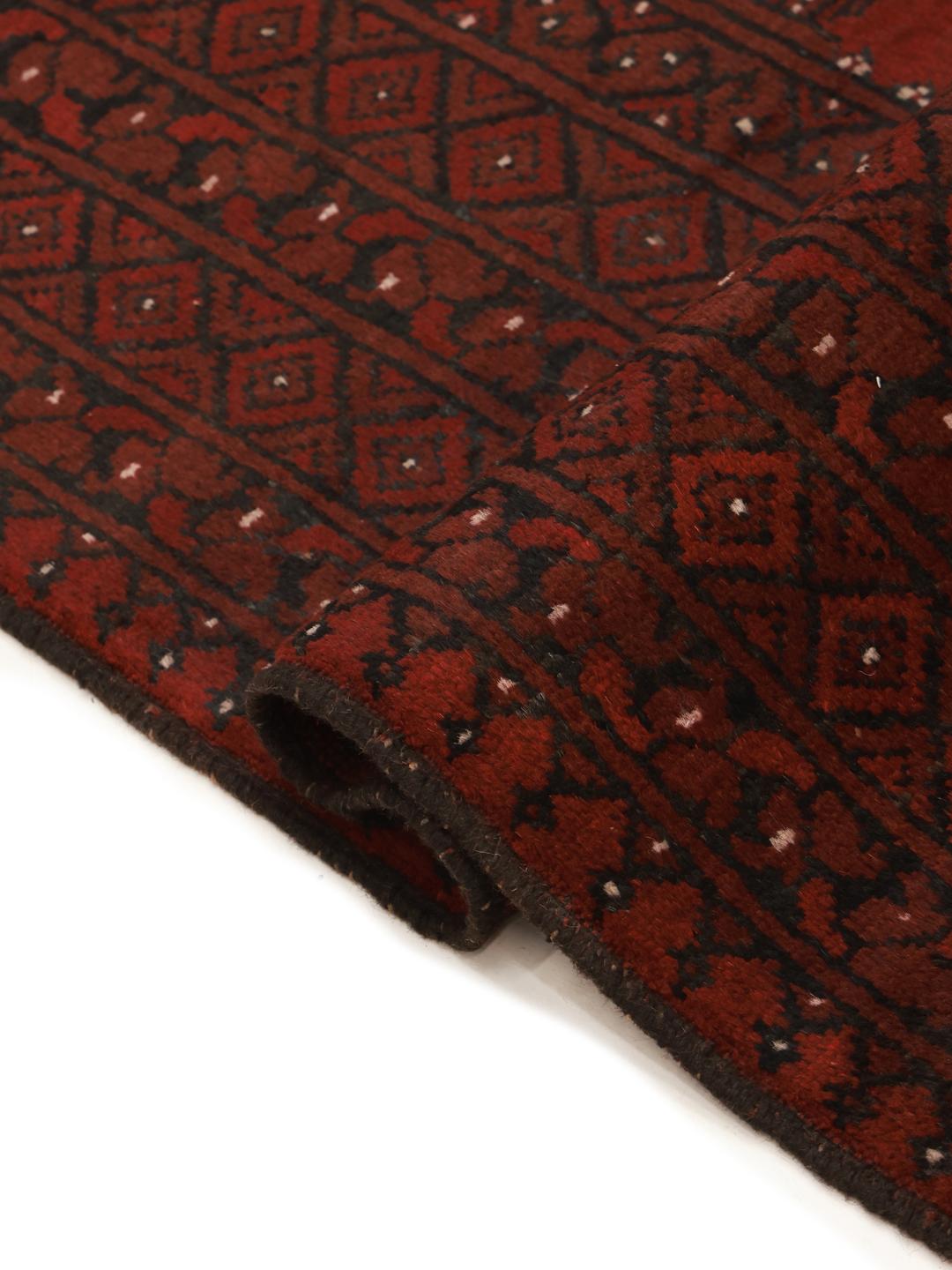
Visual language in Afghan Fine rugs centres on repeating gul motifs — octagonal emblems that historically represented family, tribal identity, or regional heritage. Arranged in disciplined rows across a rich dark red field, these guls are framed by layered geometric borders. Small detail motifs such as diamonds and step-like structures fill the outer panels, creating a sense of balance and rhythm across the entire surface.
Rugs from this Afghan tradition are prized worldwide by enthusiasts for their honesty of craft, enduring materials, and rich cultural weight. Owning an authentic hand-knotted Afghan rug brings more than just comfort to a floor; it connects your modern home to a living tradition of craftsmanship that has survived virtually unchanged for centuries.