The Afghan Akhche weaving tradition originates in the northern regions of Afghanistan, where nomadic and village weavers have practiced their craft for generations. These rugs are deeply rooted in the cultural heritage of the Turkmen tribes, who settled along the ancient trade routes of Central Asia.
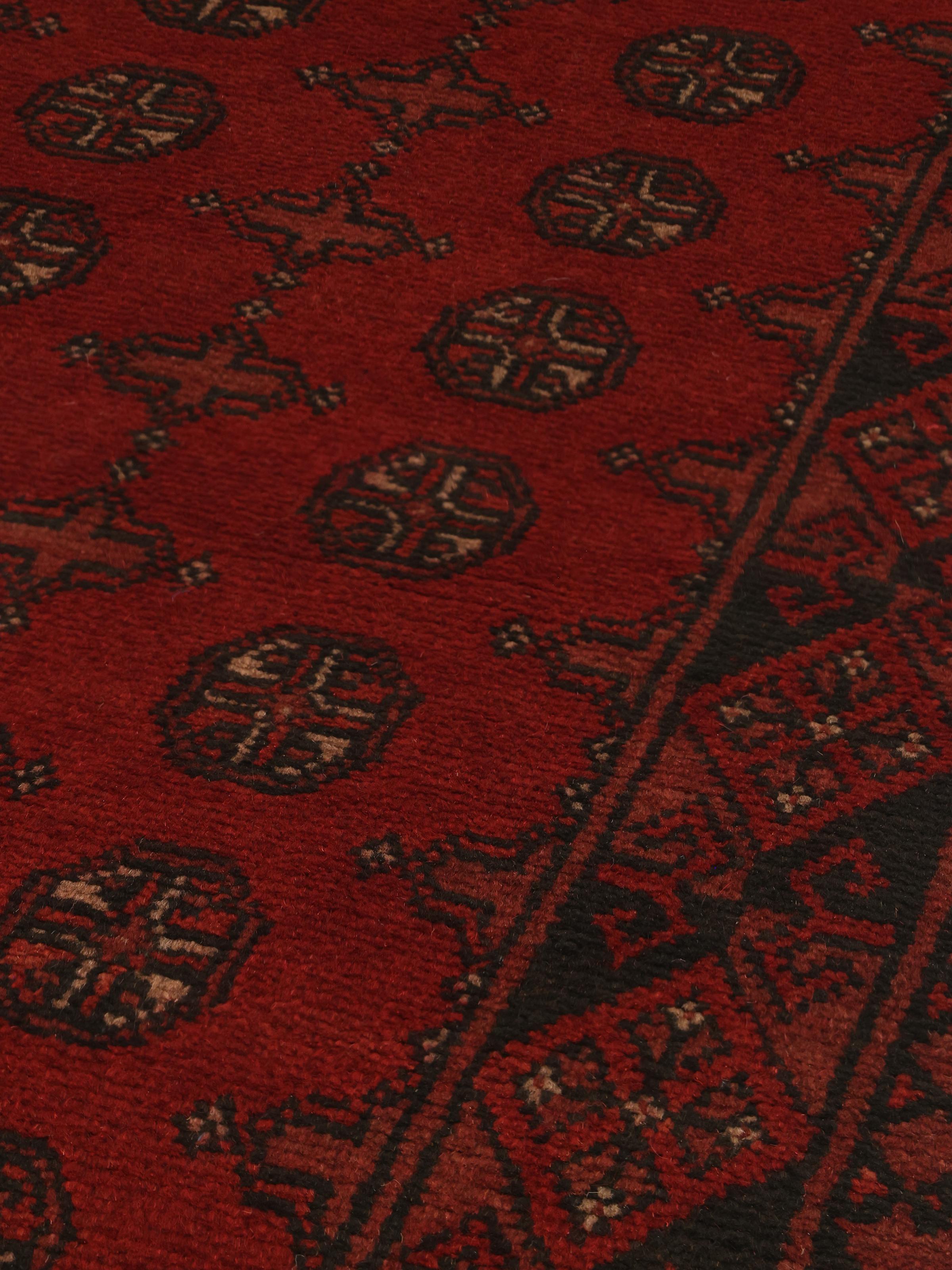
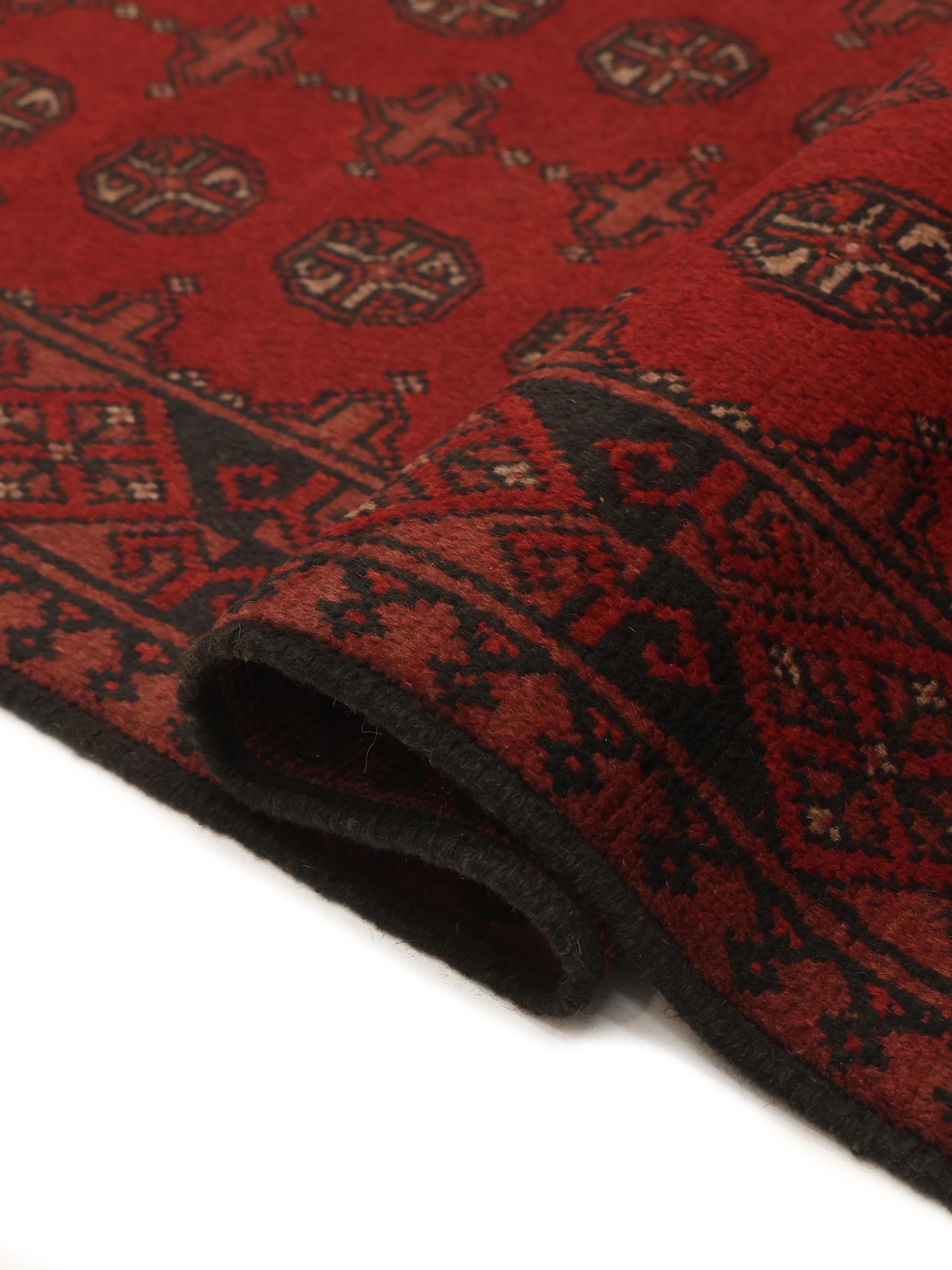
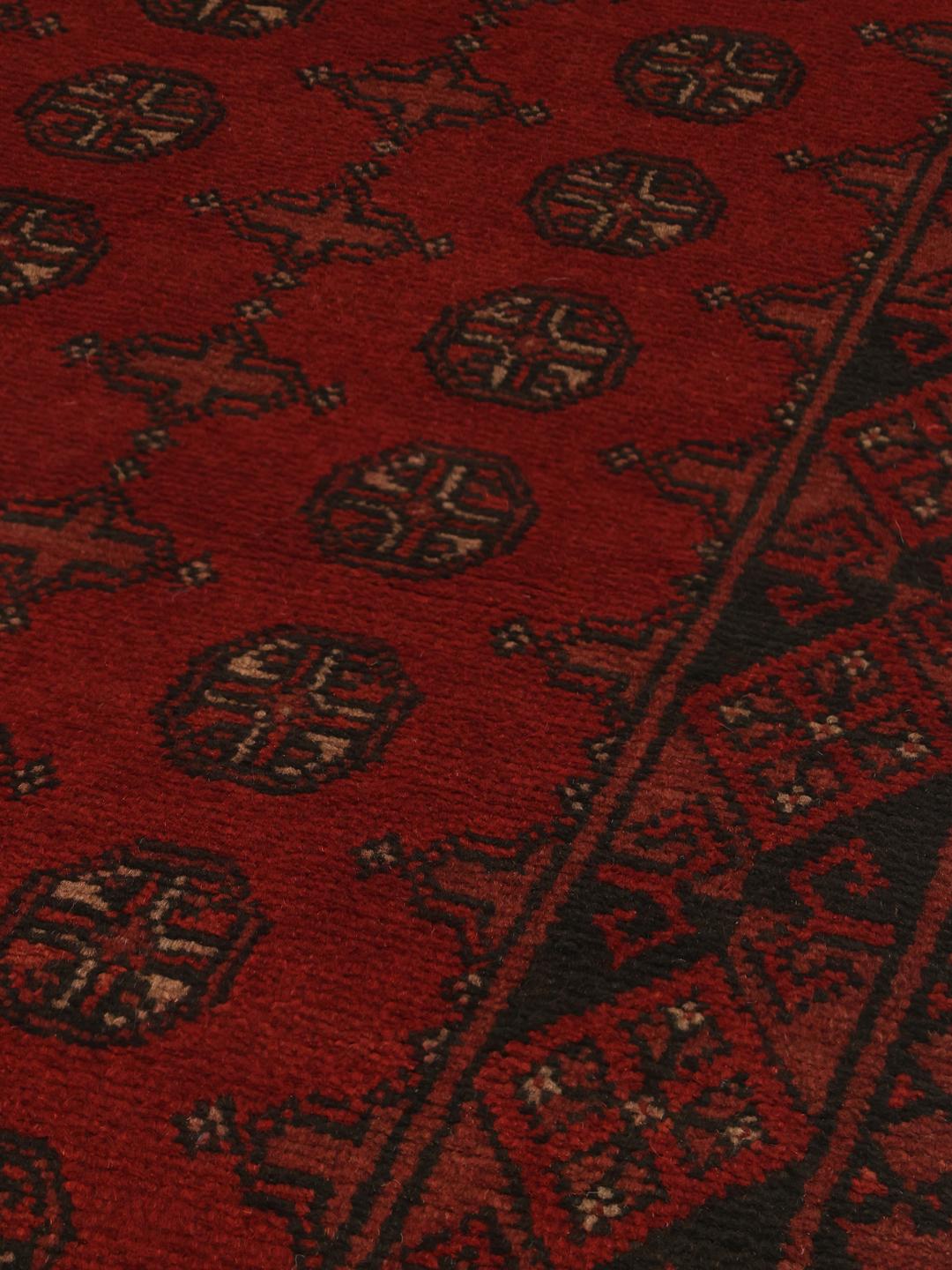
Known for their robust and practical construction, Akhche rugs are traditionally woven to withstand the demands of daily life. The term fine denotes a more careful selection of wool and a more defined execution of the traditional patterns, resulting in a clearer design and a more lustrous surface.
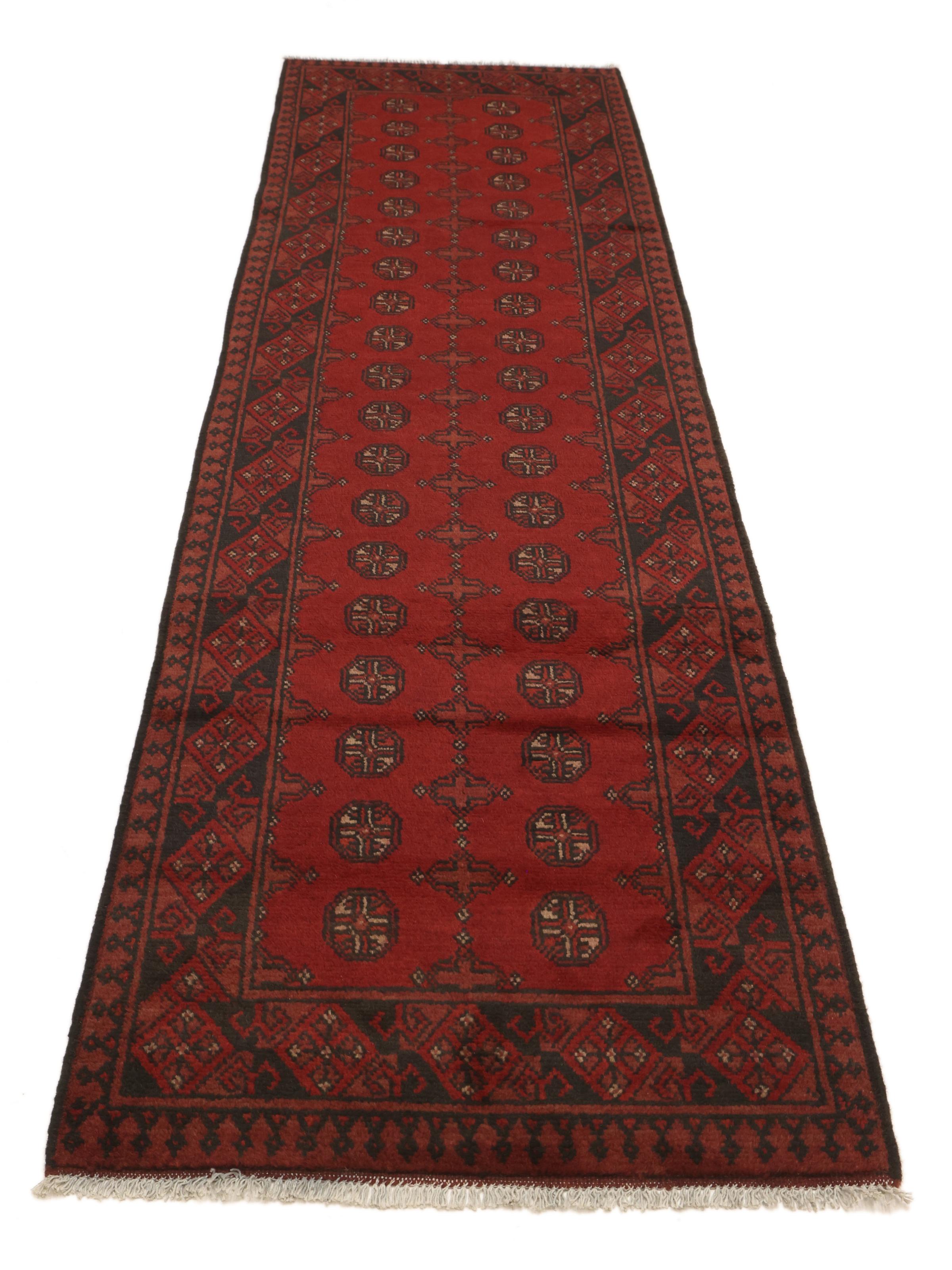
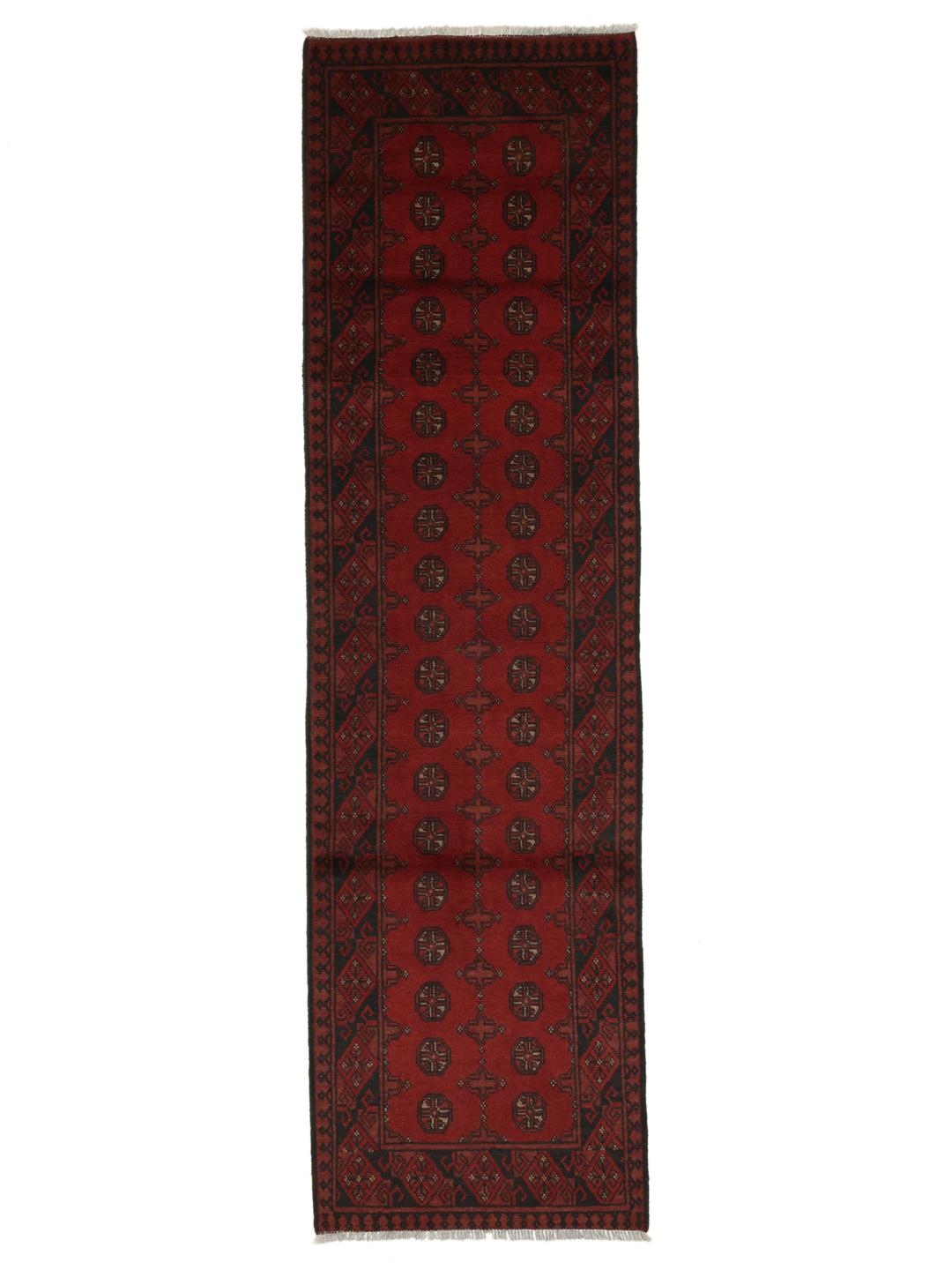
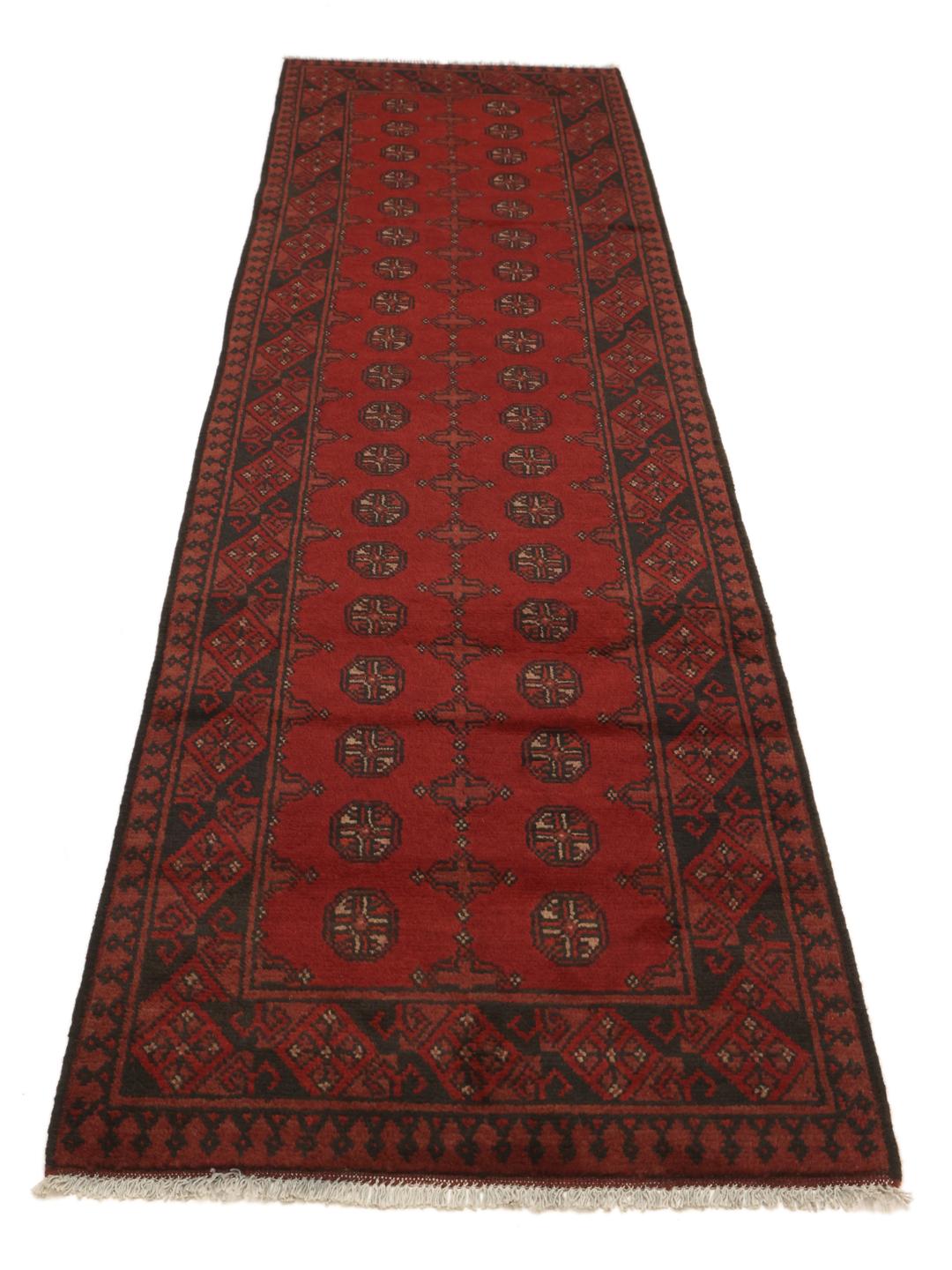
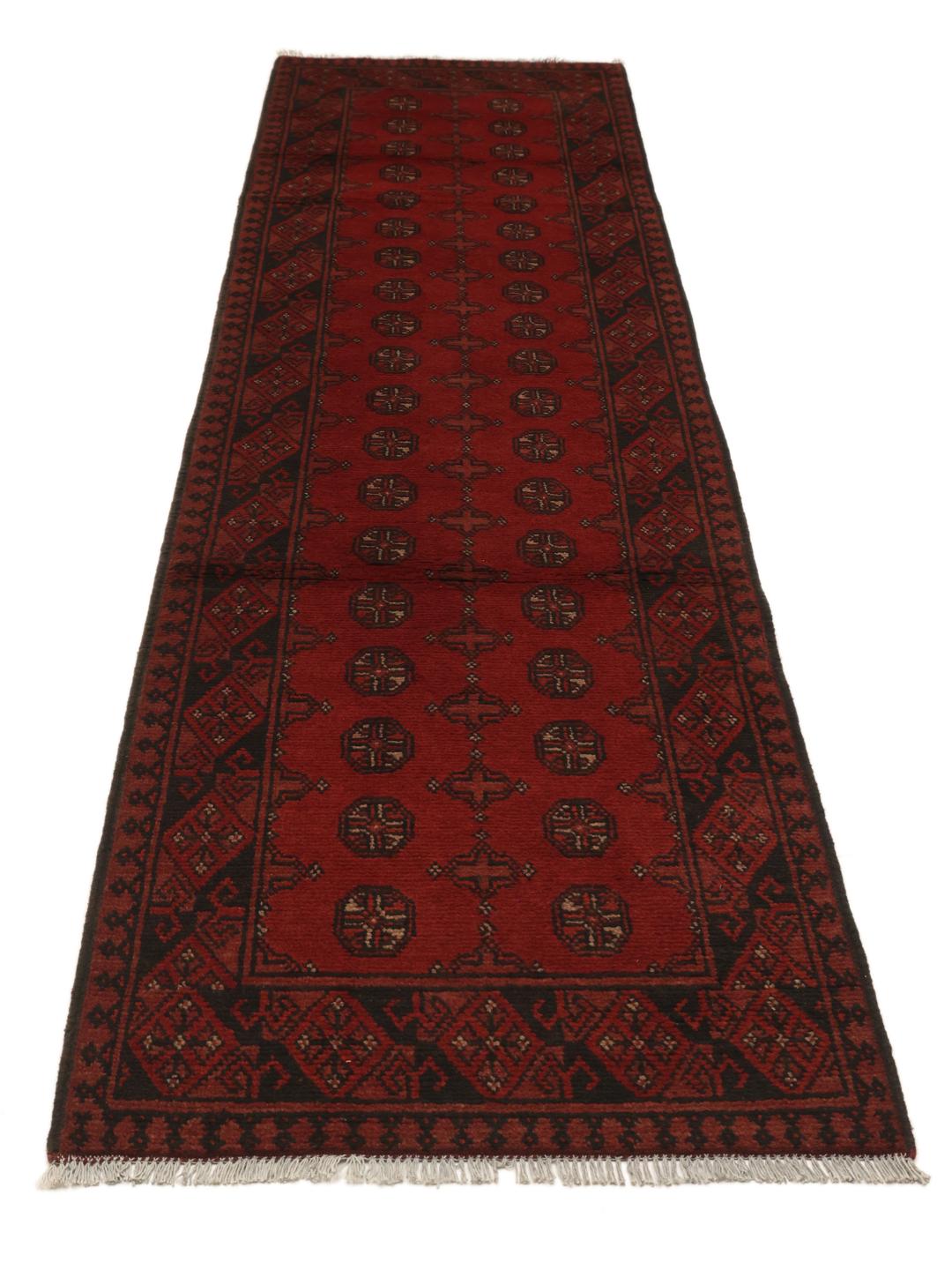
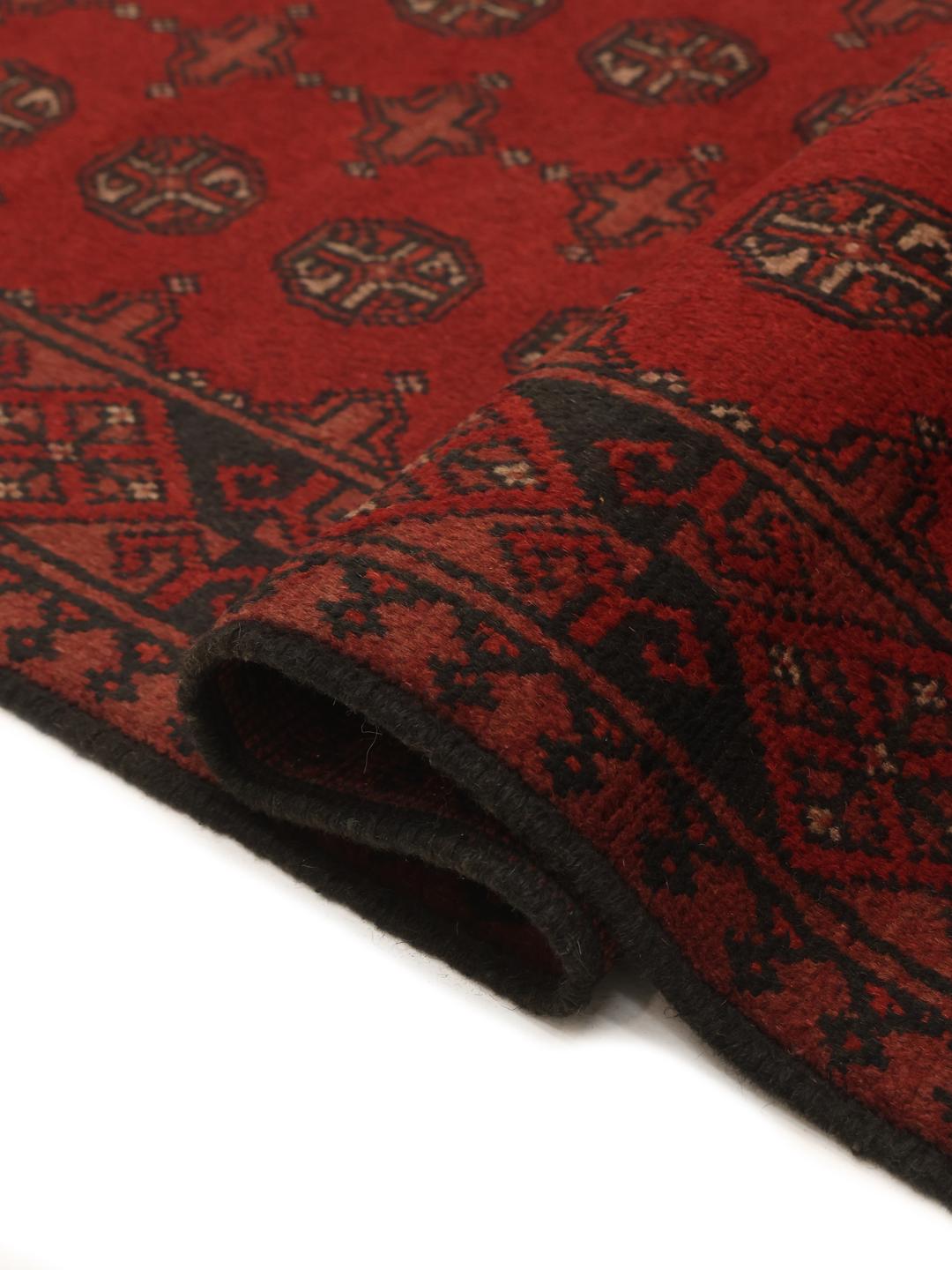
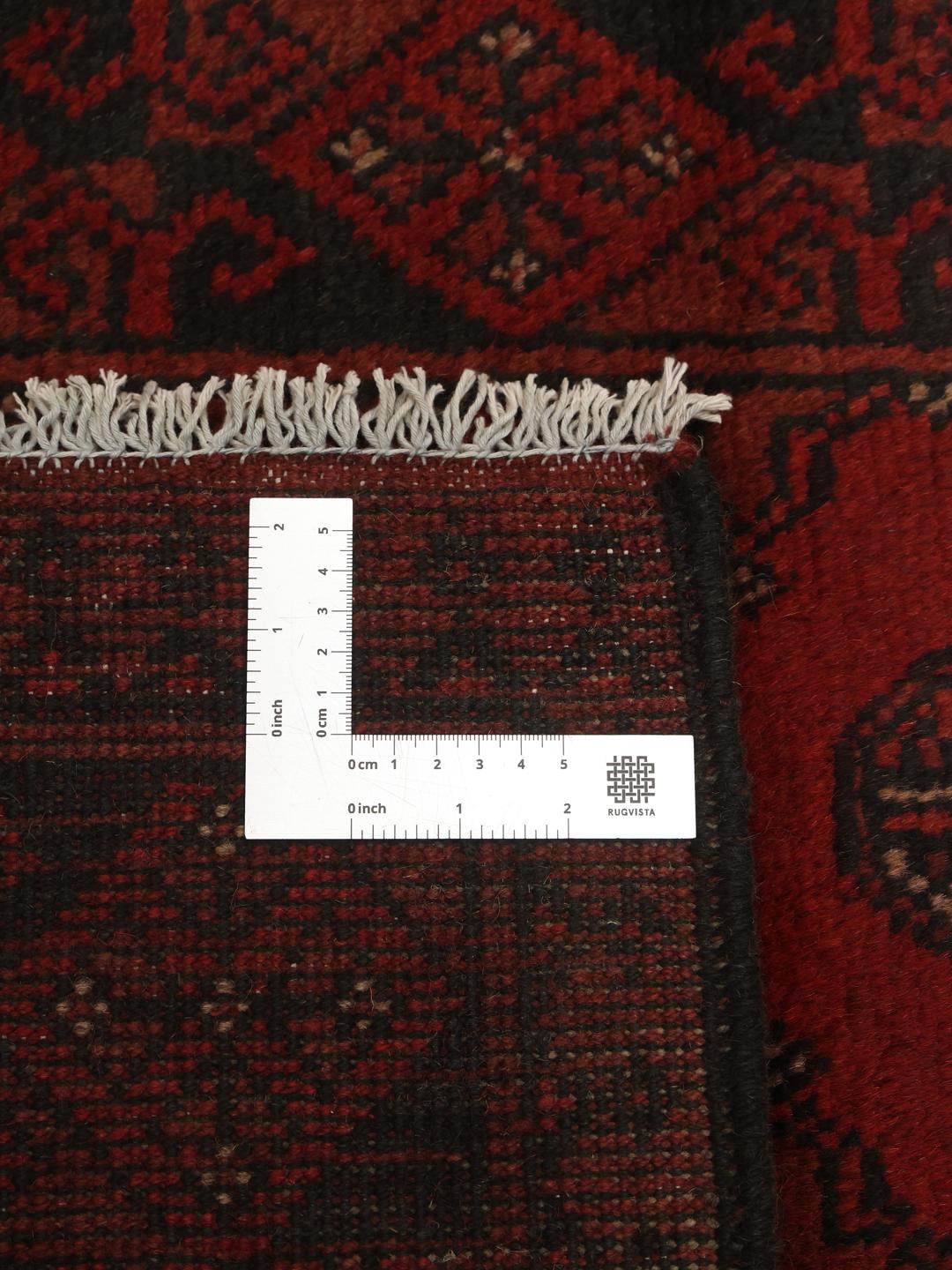
The visual language of this runner is defined by repeating geometric medallions, often referred to as guls, enclosed by structured decorative borders. The classic colour palette relies on deep, warm reds contrasted with dark indigo or black, creating a solemn and dignified aesthetic that has remained popular for centuries.
In Middle Eastern culture, these hand-knotted runners were originally crafted to line the floors of family tents and homes, providing essential insulation and comfort. Today, they are highly valued by collectors and homeowners alike for their honest craftsmanship, rich cultural narrative, and ability to ground contemporary interiors.