Kelim rugs have been a cornerstone of nomadic and village life across the Middle East and Central Asia for centuries. These flat-woven textiles were traditionally created as functional items, serving as floor coverings, wall hangings, or storage bags for families on the move. The tradition of weaving in Afghanistan is particularly celebrated for its resilience and the use of hardy, local wool.
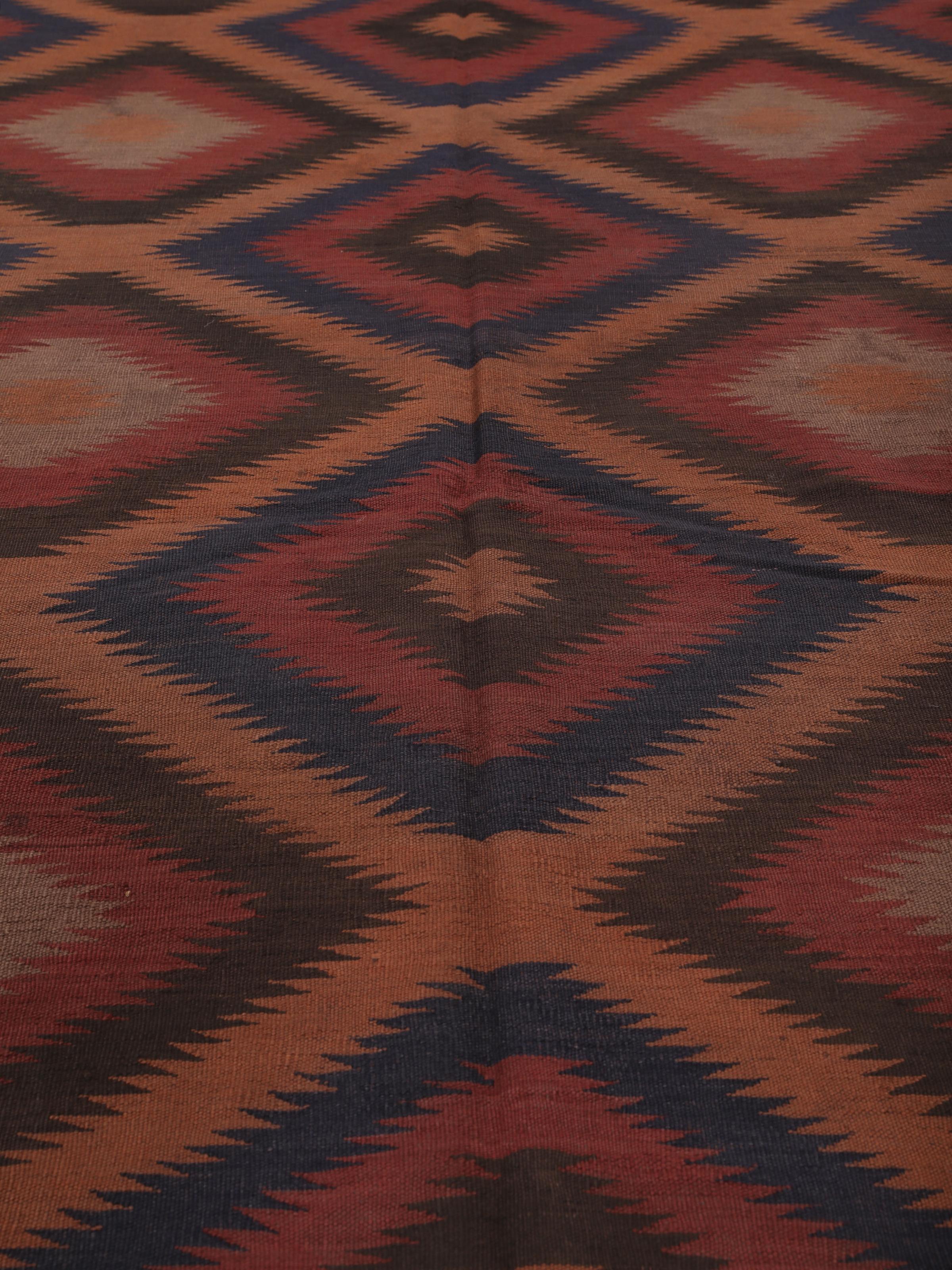
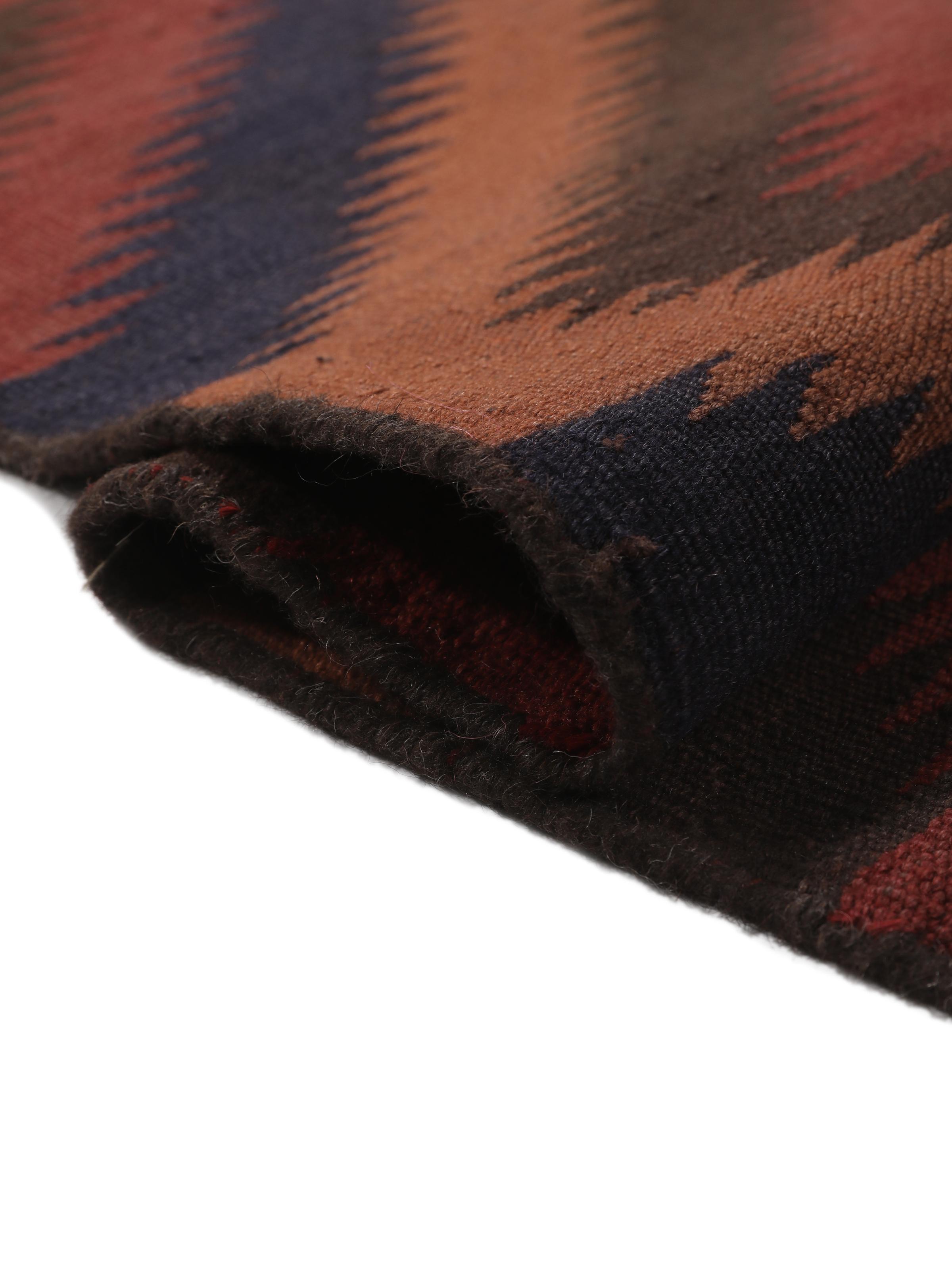
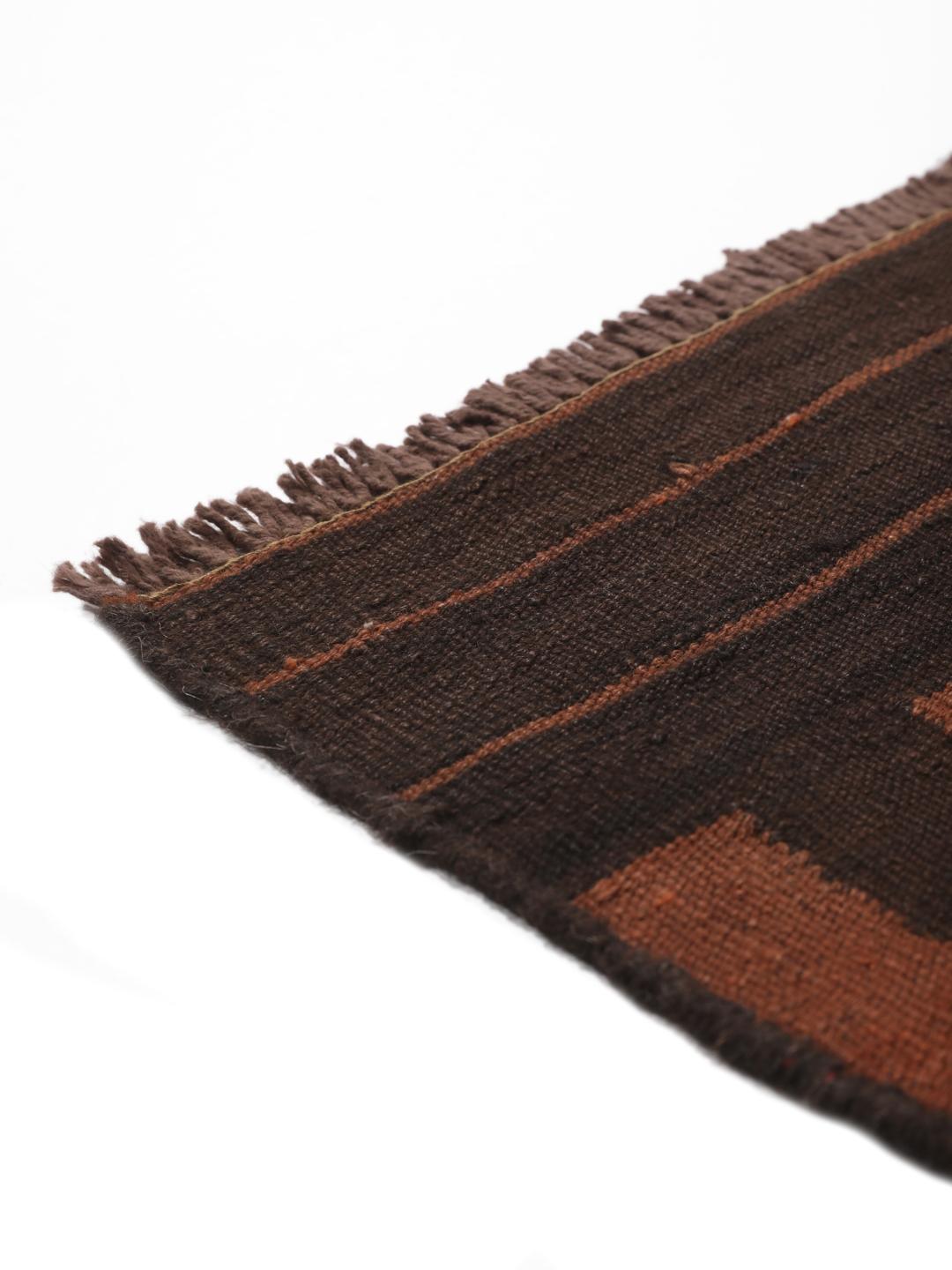
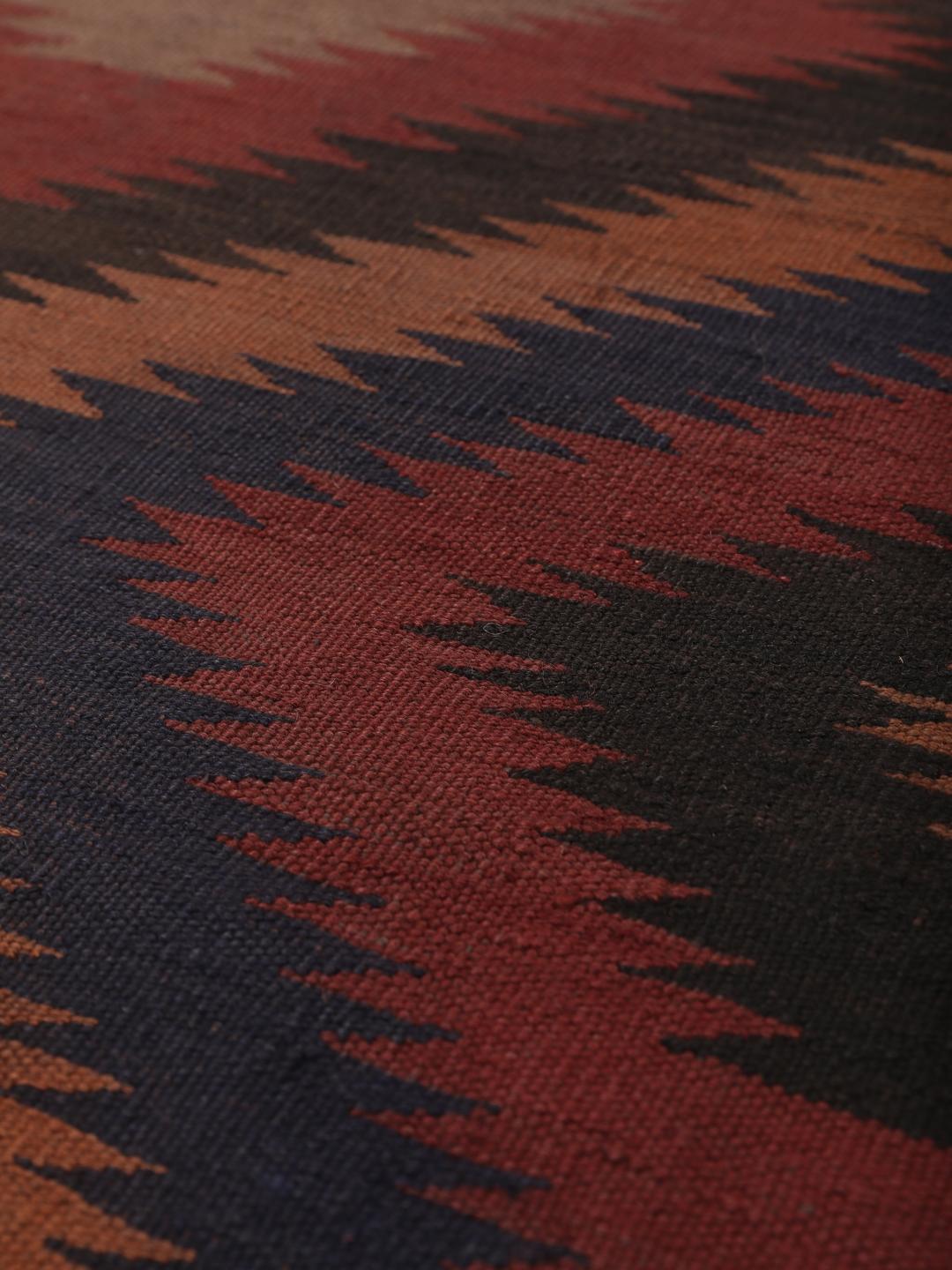
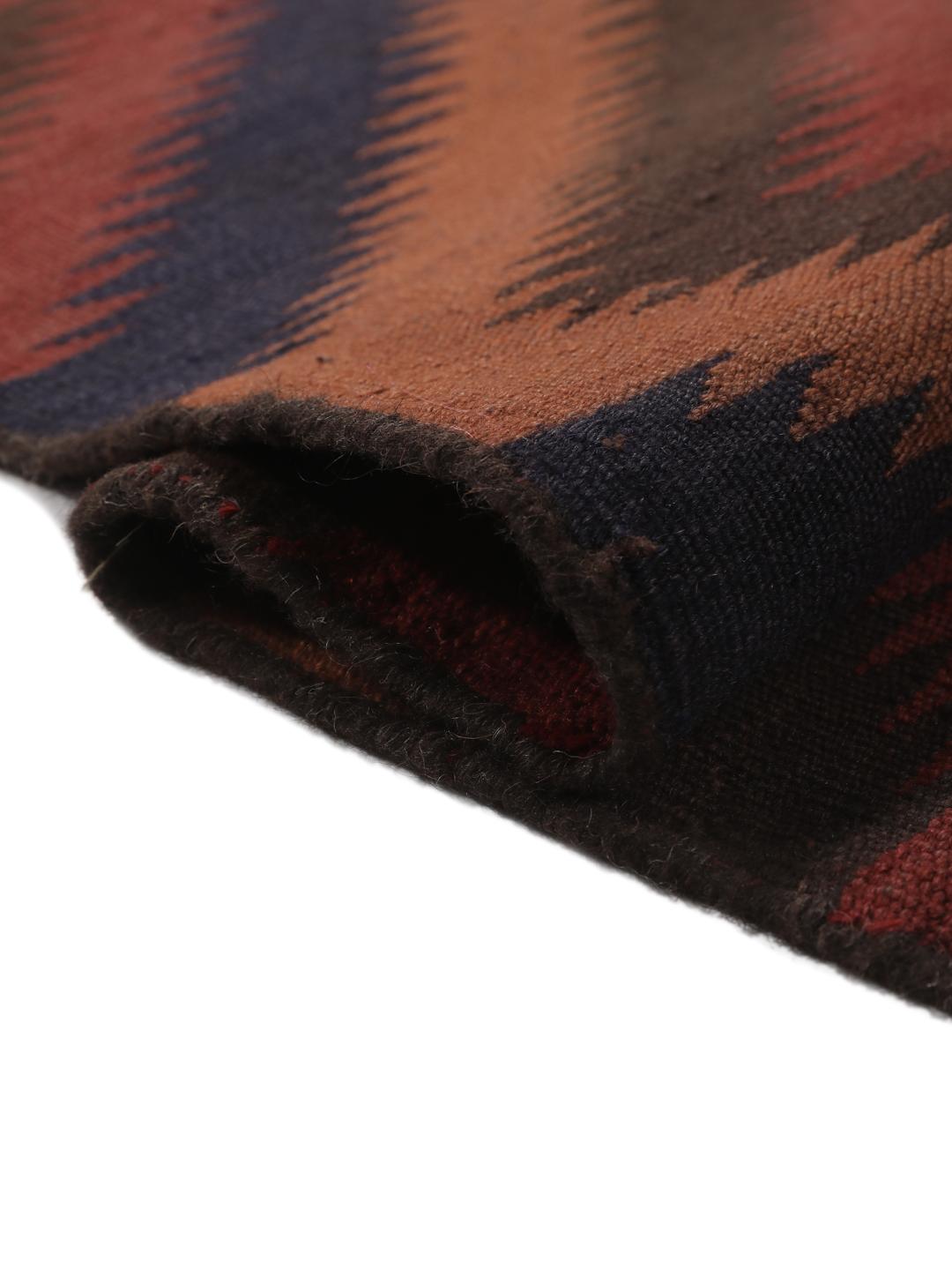
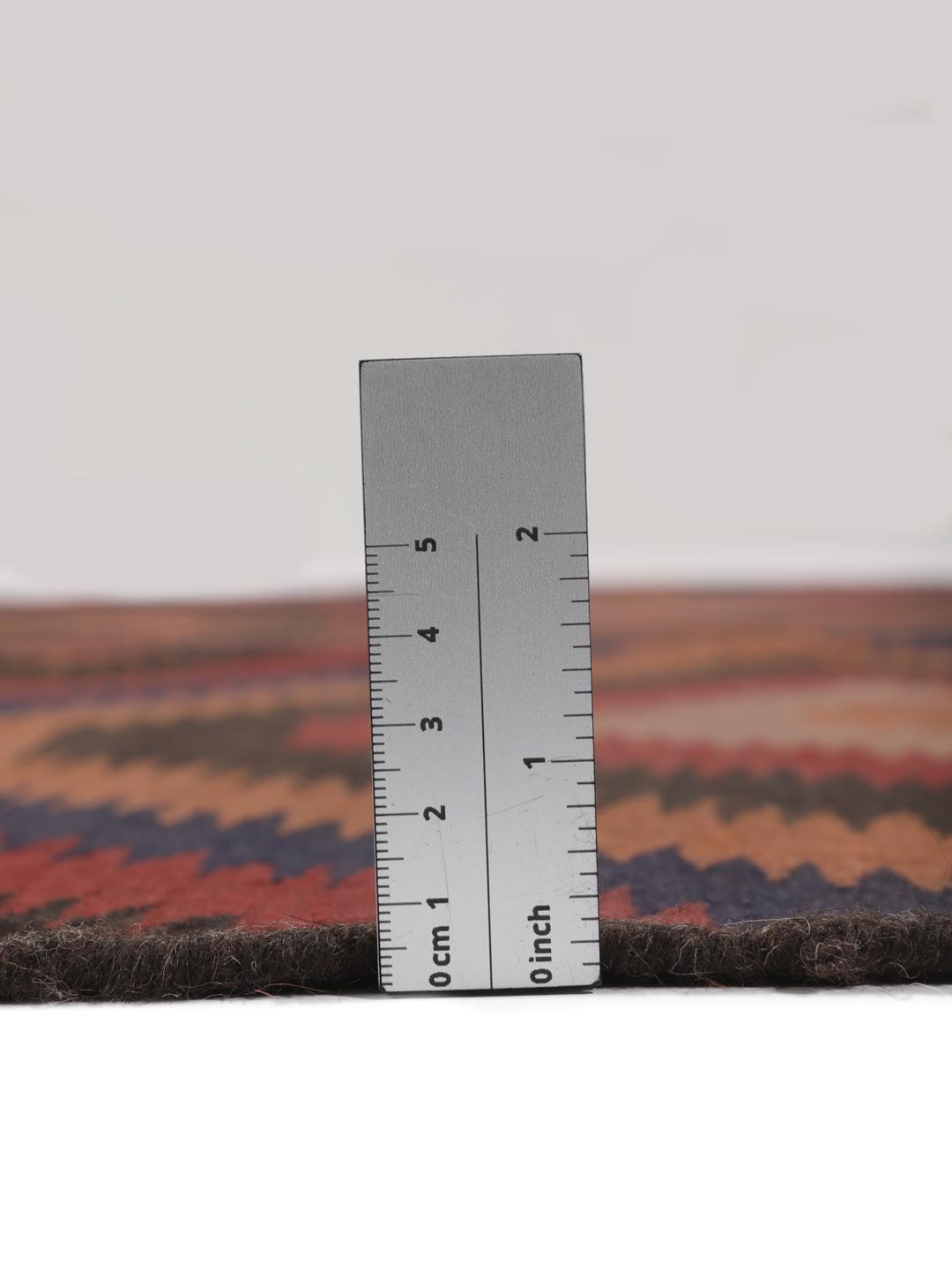
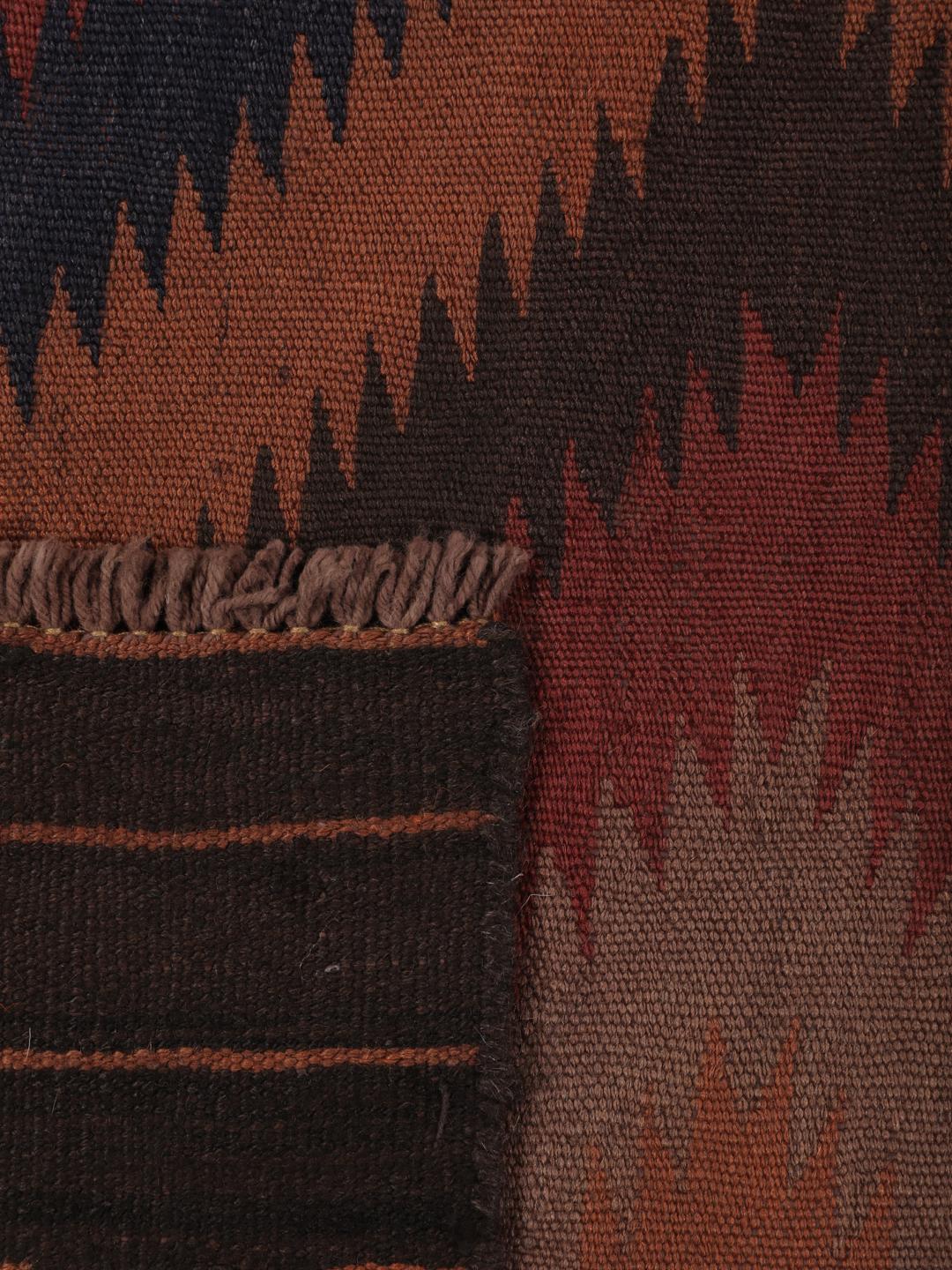
The term 'kelim' refers to the specific slit-weave technique used to create the patterns, where the weft threads are passed back and forth around the warp threads without being knotted. This method creates a thin, durable, and reversible fabric that is highly prized for its versatility and clear, sharp pattern definition.
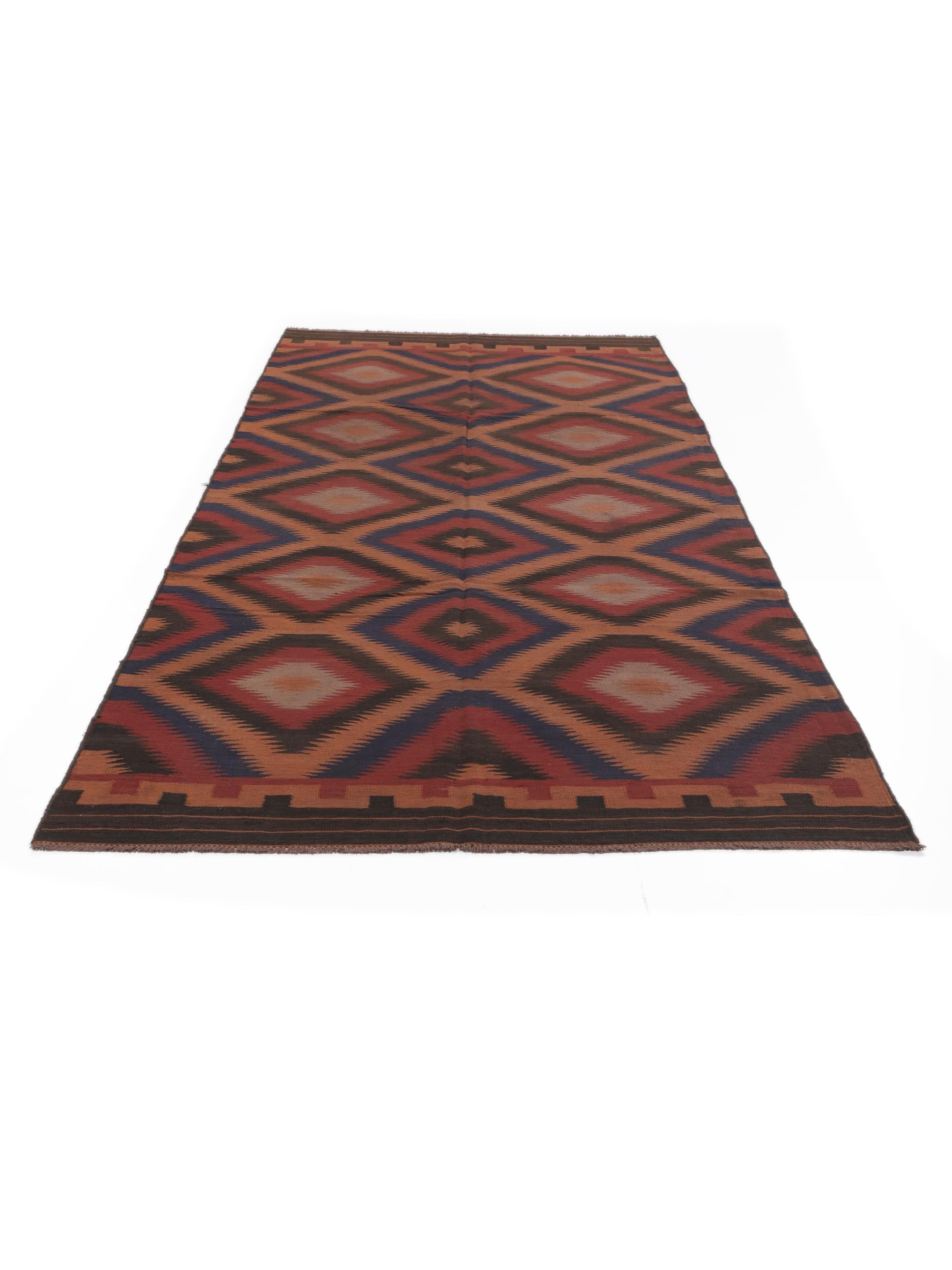
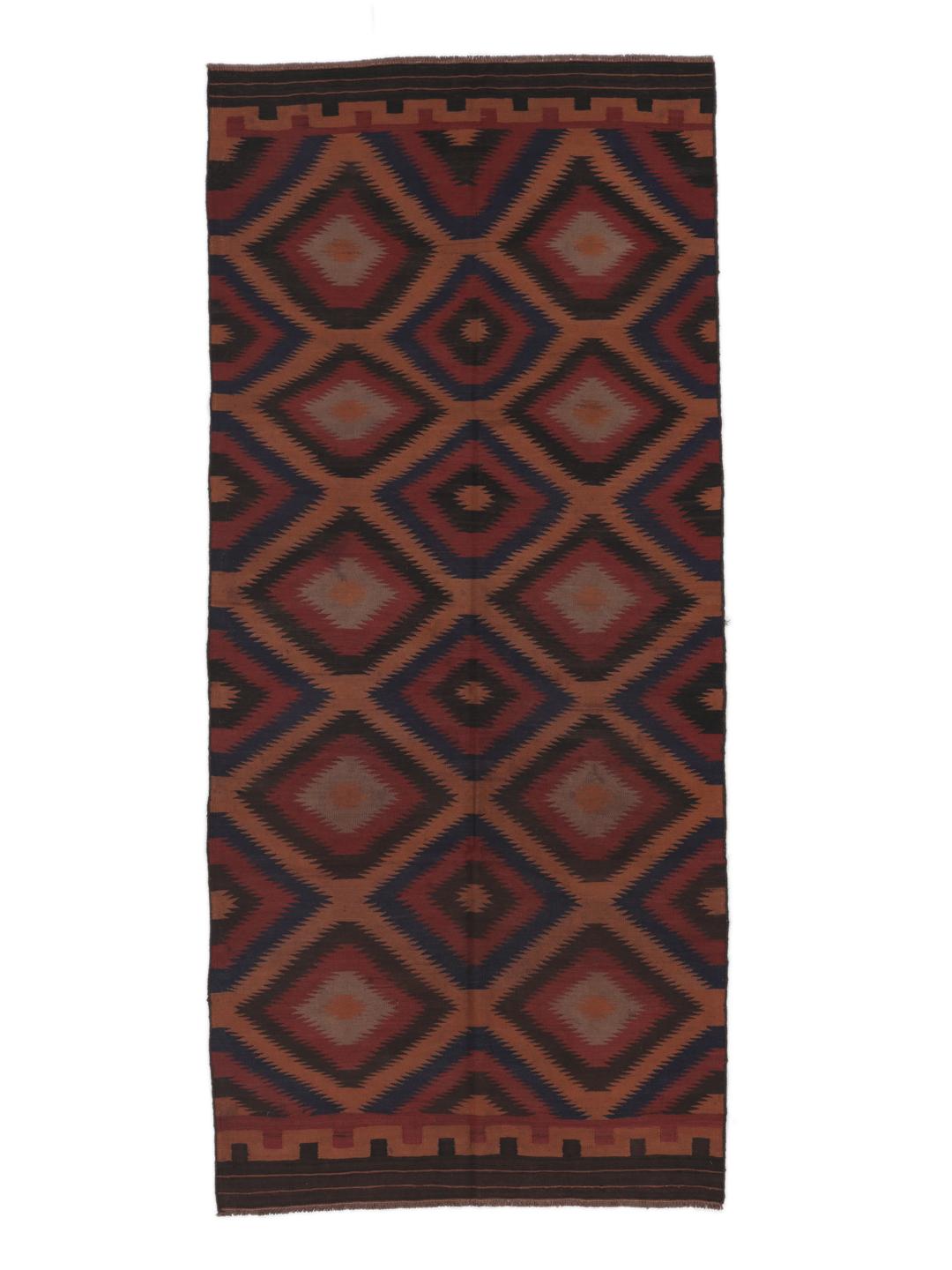
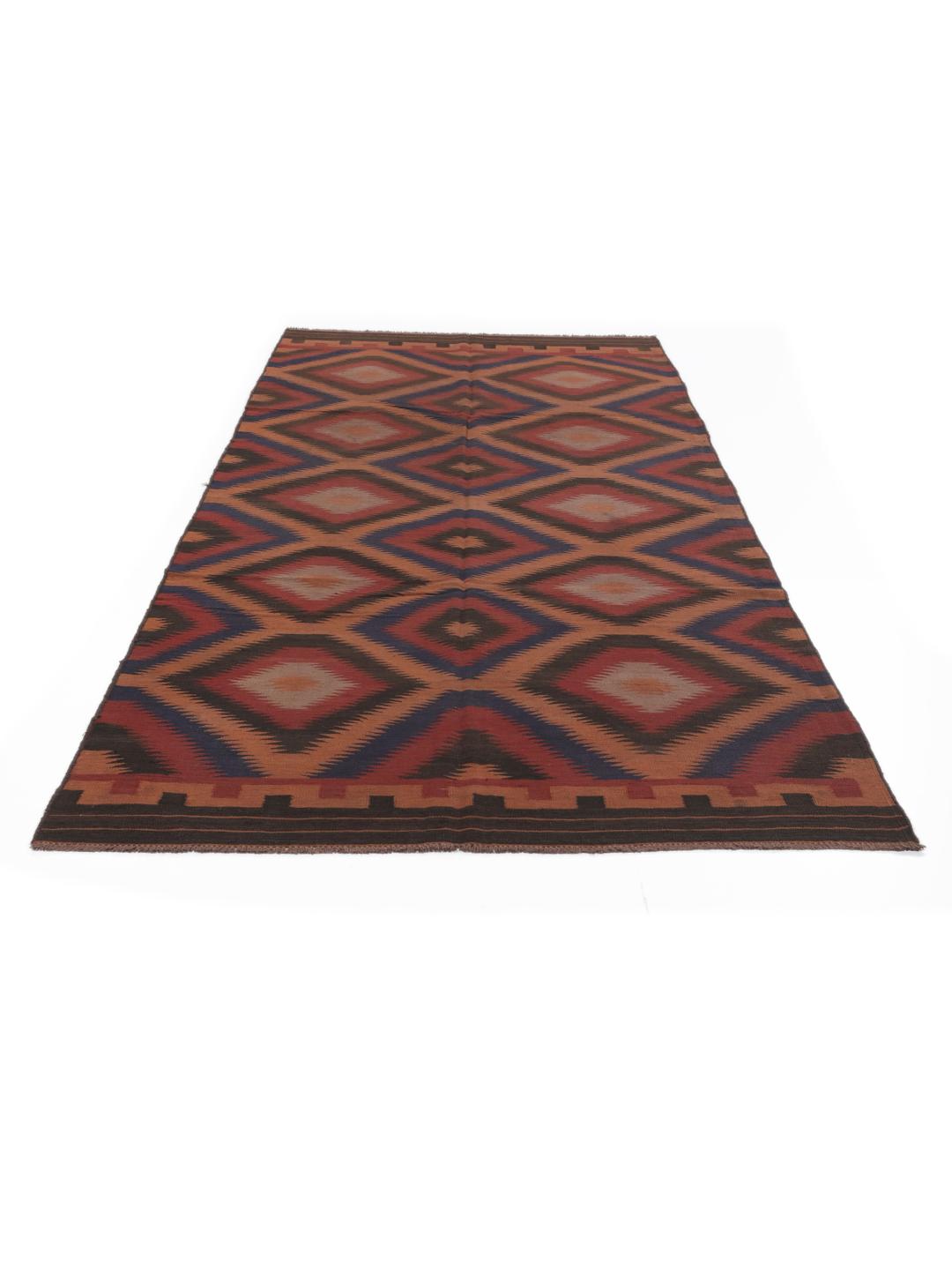
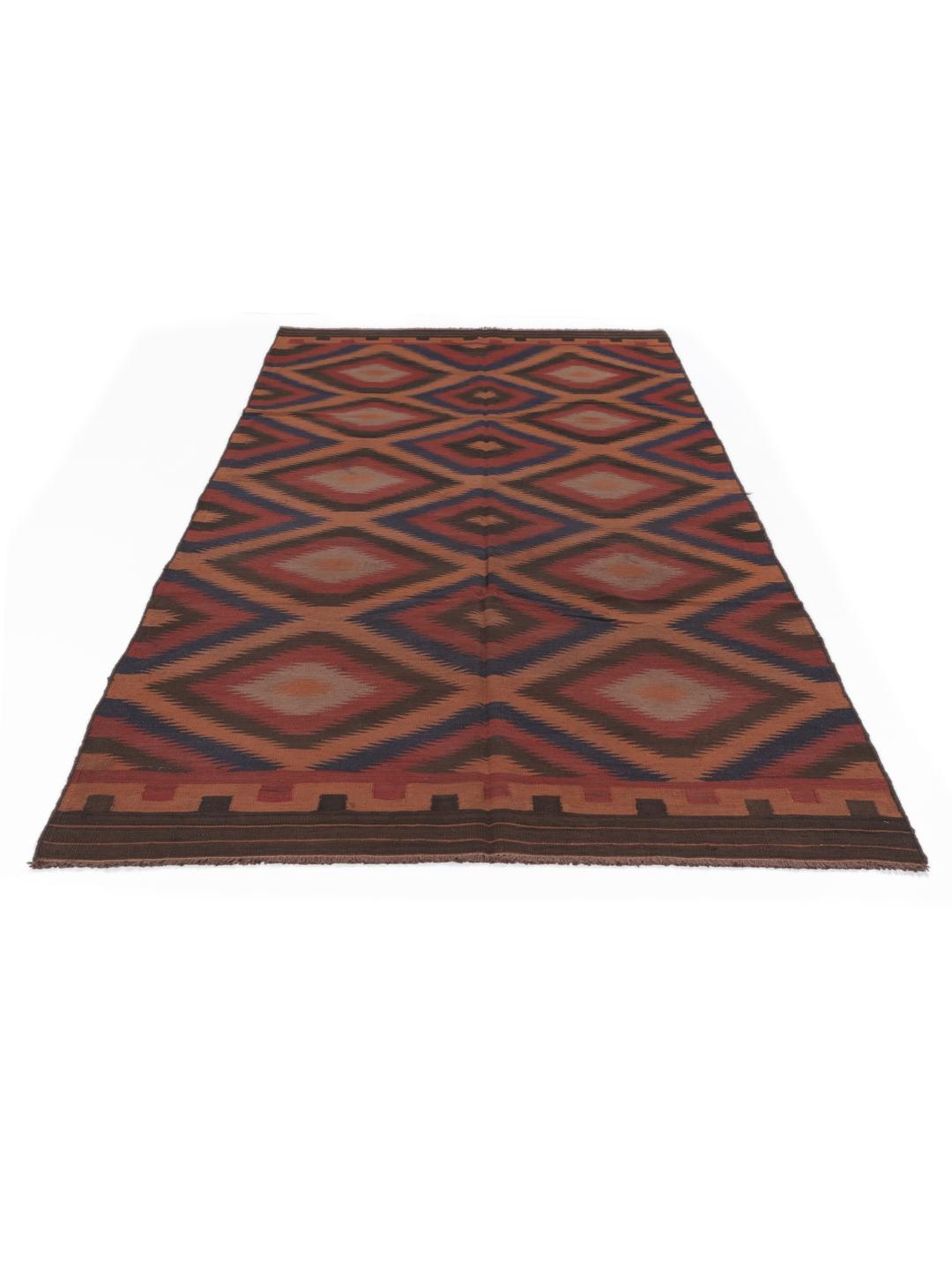
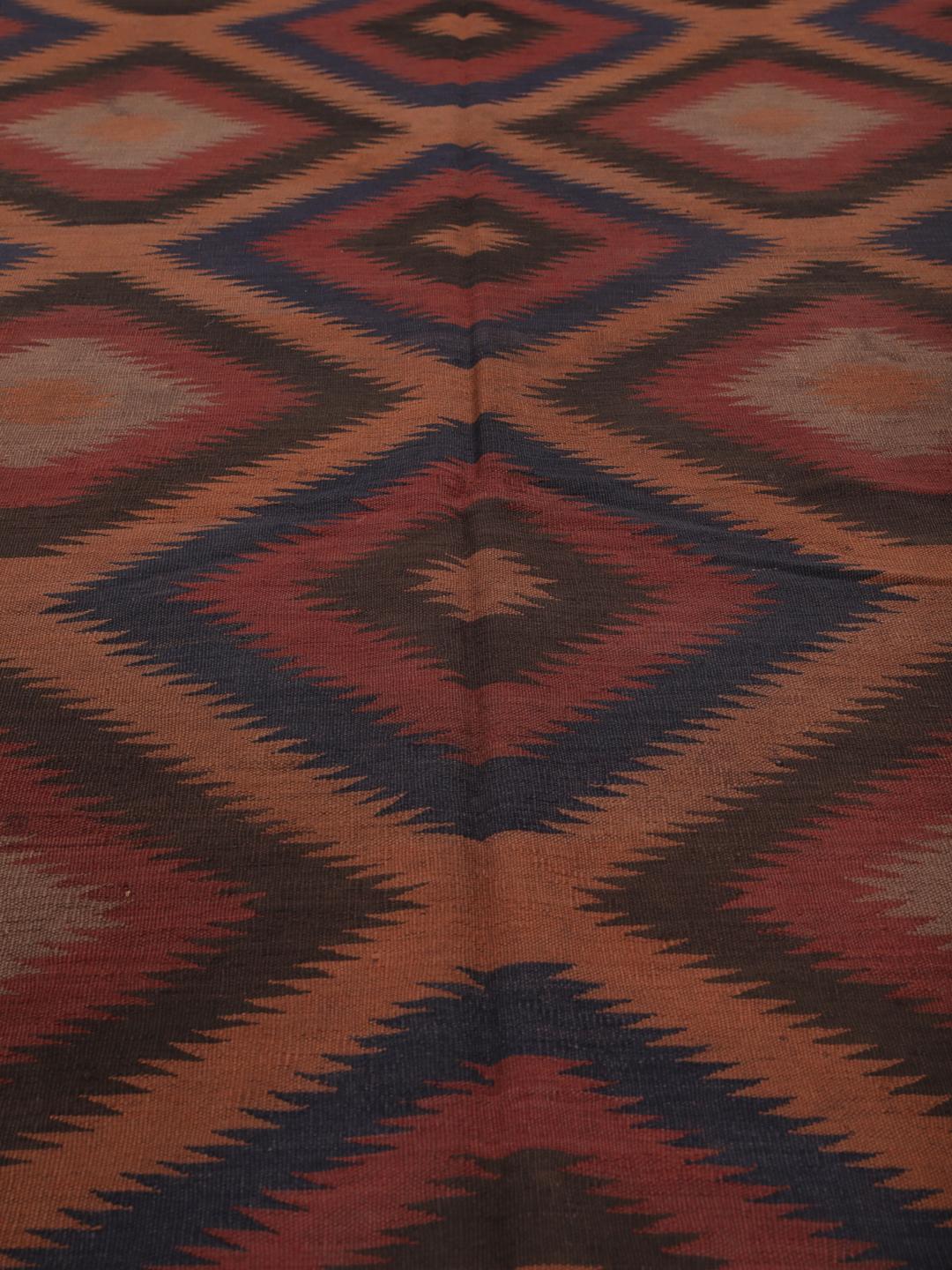
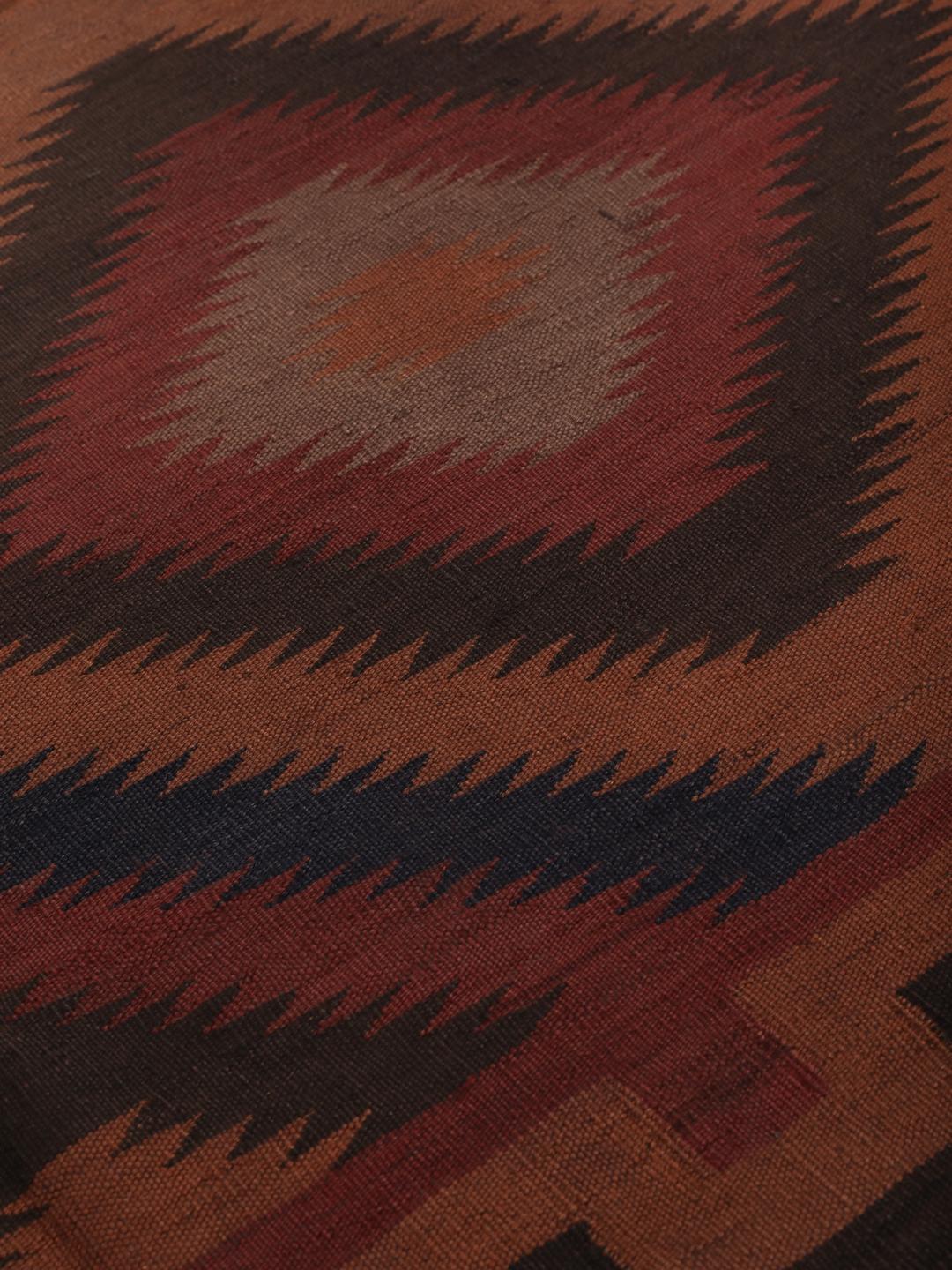
The signature design of this piece features repeating diamonds, a classic motif often found in tribal textiles. Geometric shapes like these are deeply rooted in the cultural symbolism of the region, often representing protection or local folklore. The bold use of red and dark tones is typical of Afghan weaving traditions, which frequently utilise natural dyes to achieve deep, lasting saturation.
Owning a vintage kelim is an invitation to connect with a storied past. These rugs are highly valued by collectors not just for their aesthetic appeal, but for the skill and cultural heritage they embody. Each piece serves as a testament to the artisan's dedication, preserving a craft tradition that remains as relevant and beautiful today as it was generations ago.