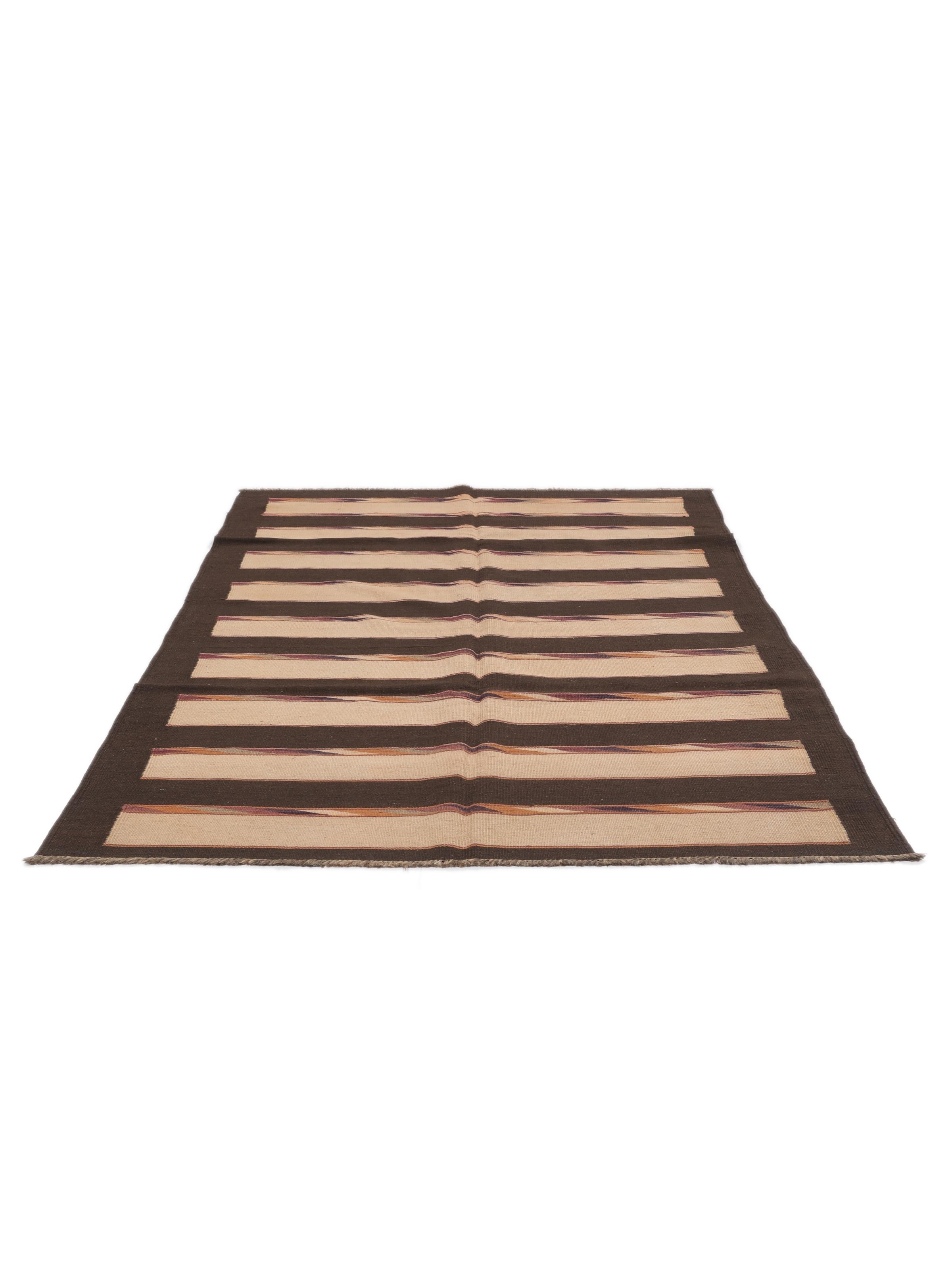
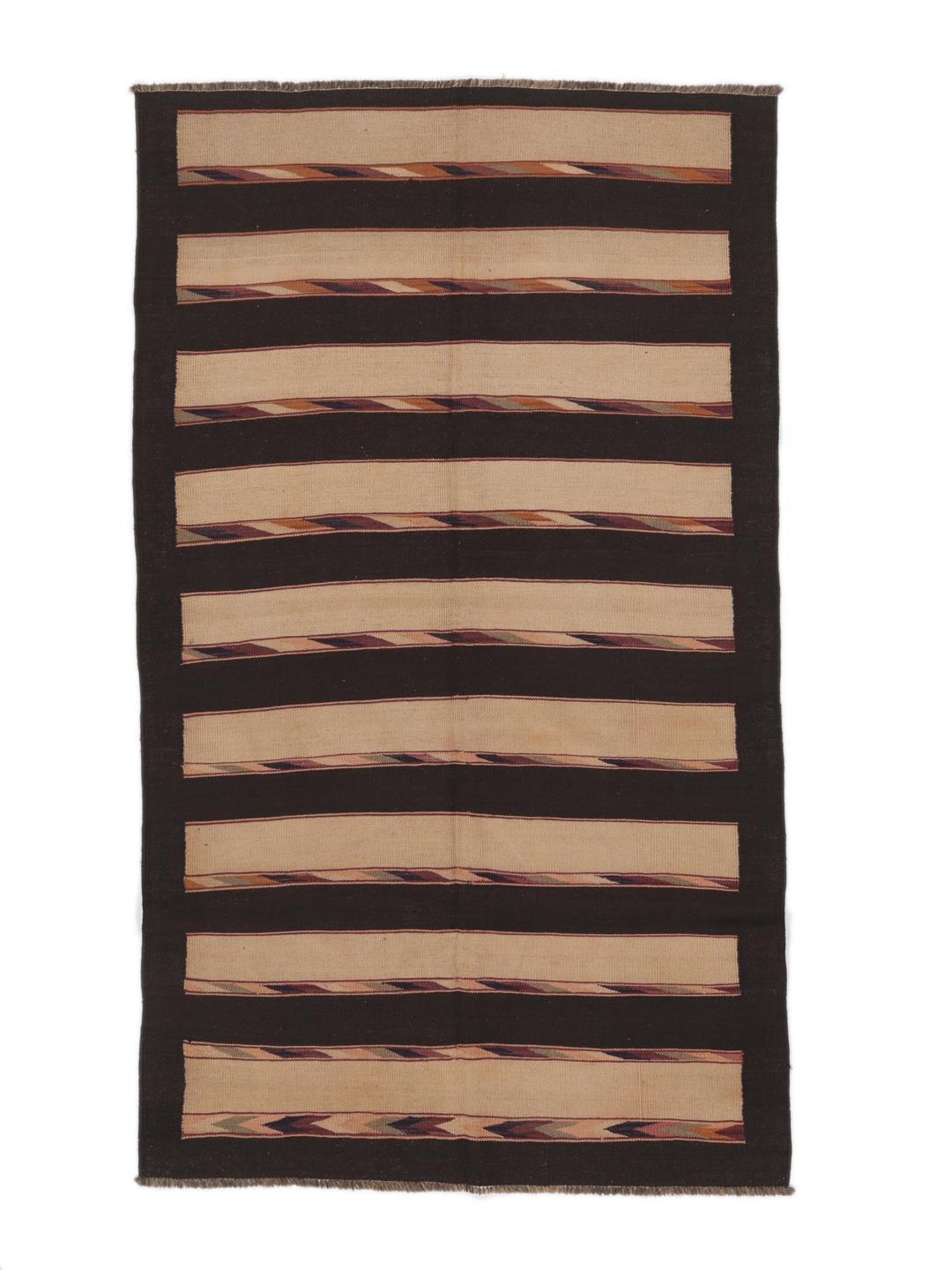
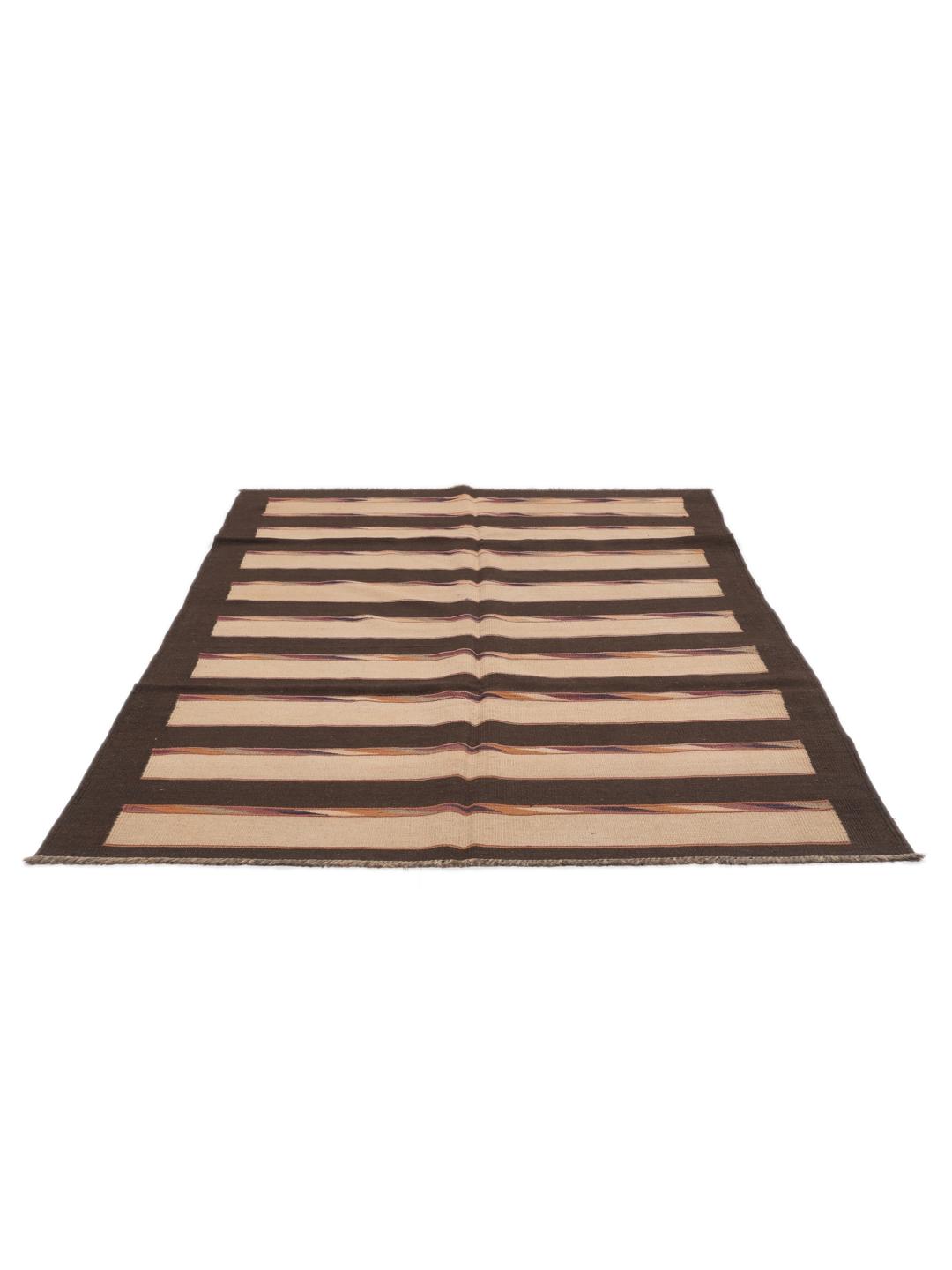
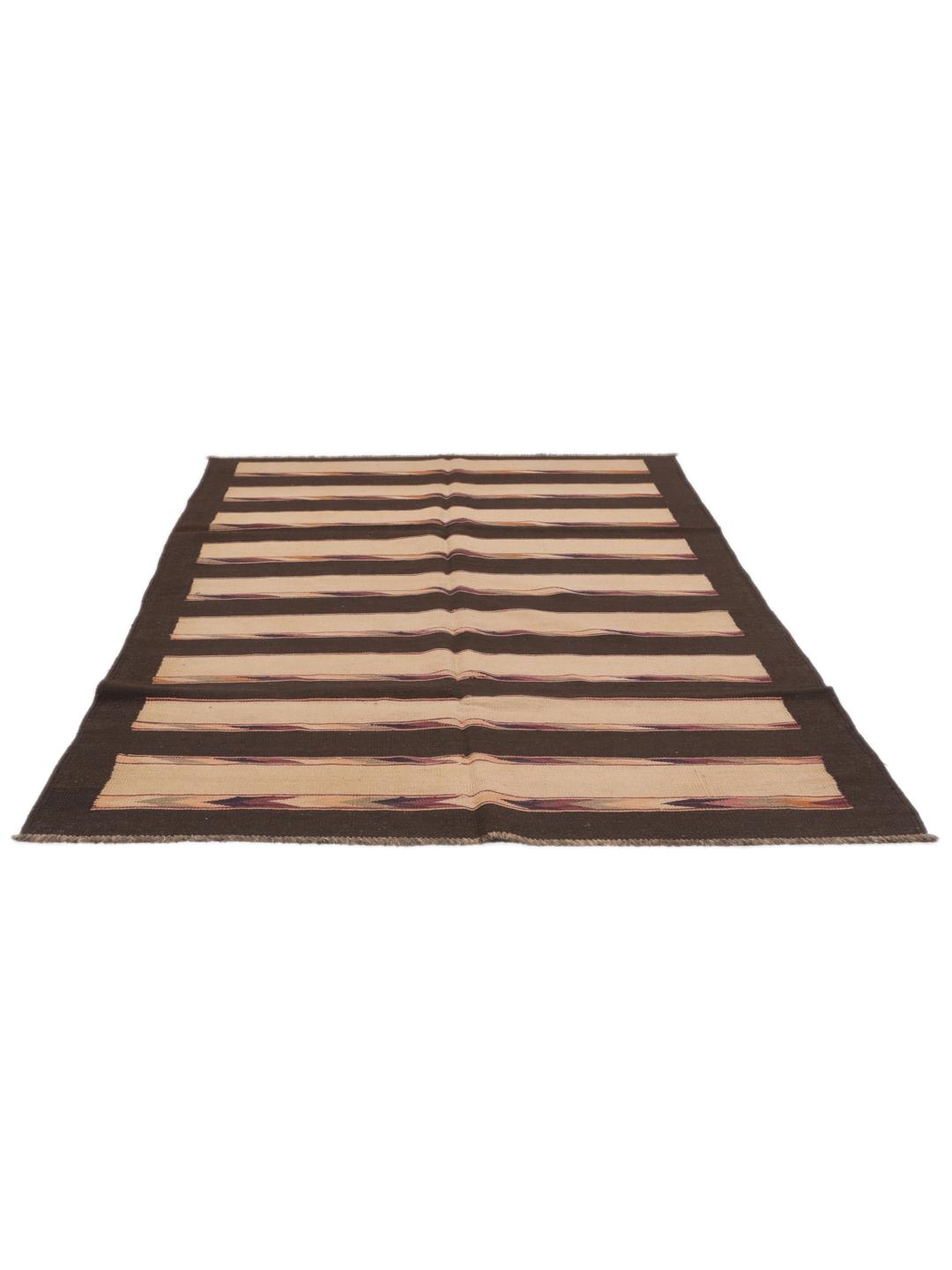
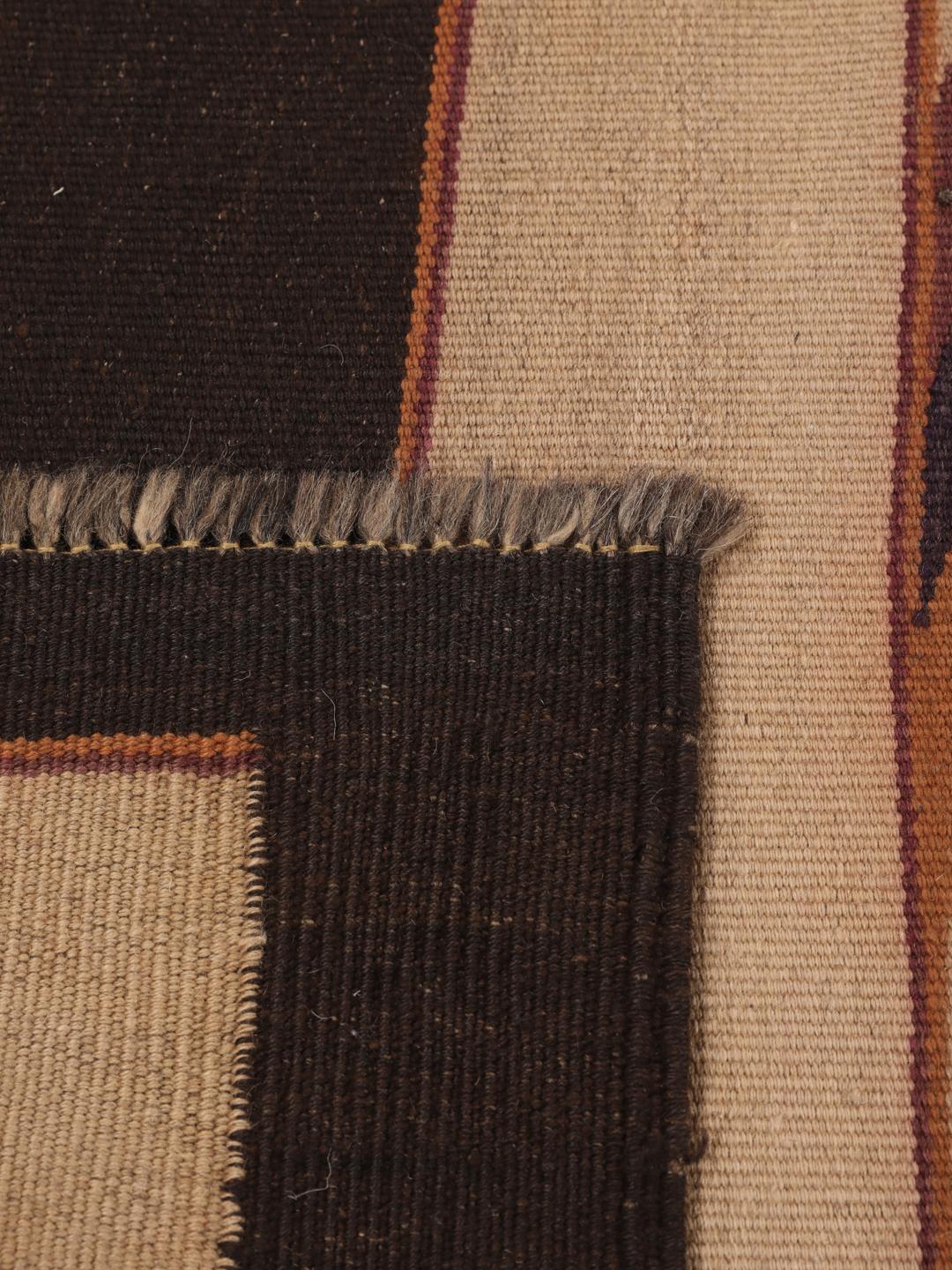
The Afghan kelim tradition is deeply rooted in the nomadic history of the region, where flat-woven rugs were essential for daily life. These textiles were historically used as floor coverings, blankets, and storage sacks, designed to be durable enough for life on the move while showcasing the weaver's creative vision. Today, these rugs represent a vital part of Middle Eastern textile history, evolved from utilitarian roots into highly sought-after decorative pieces.
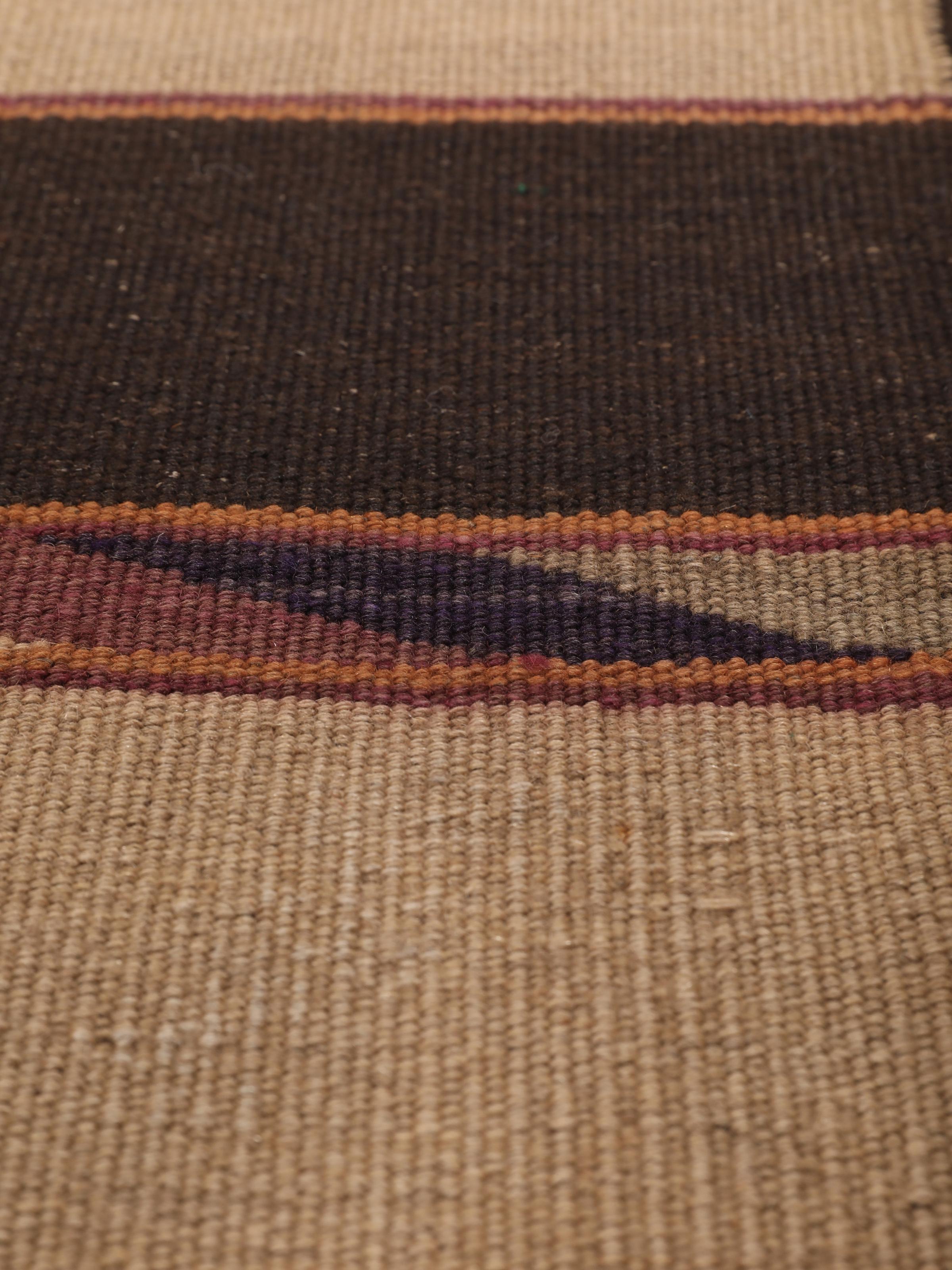
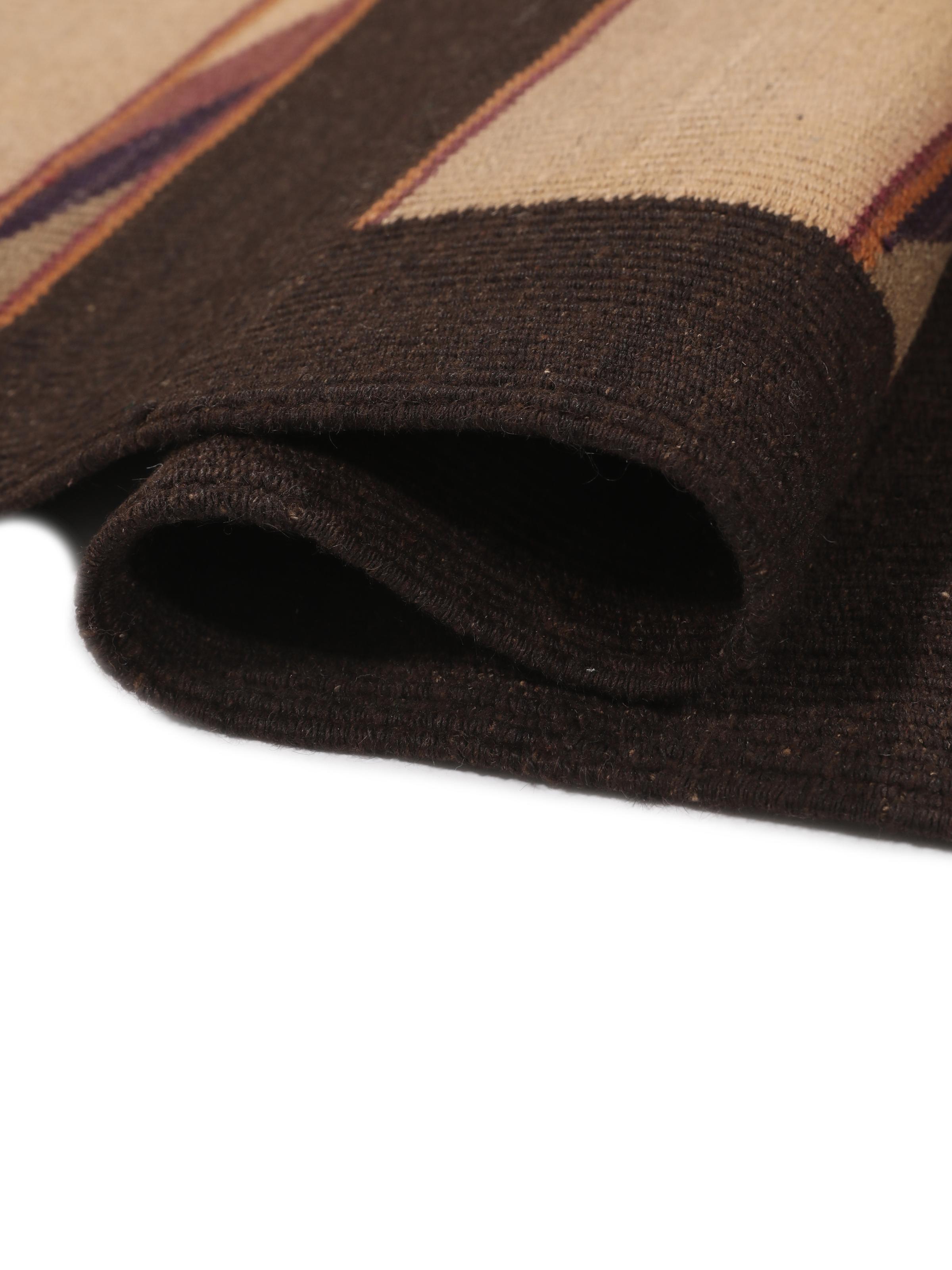
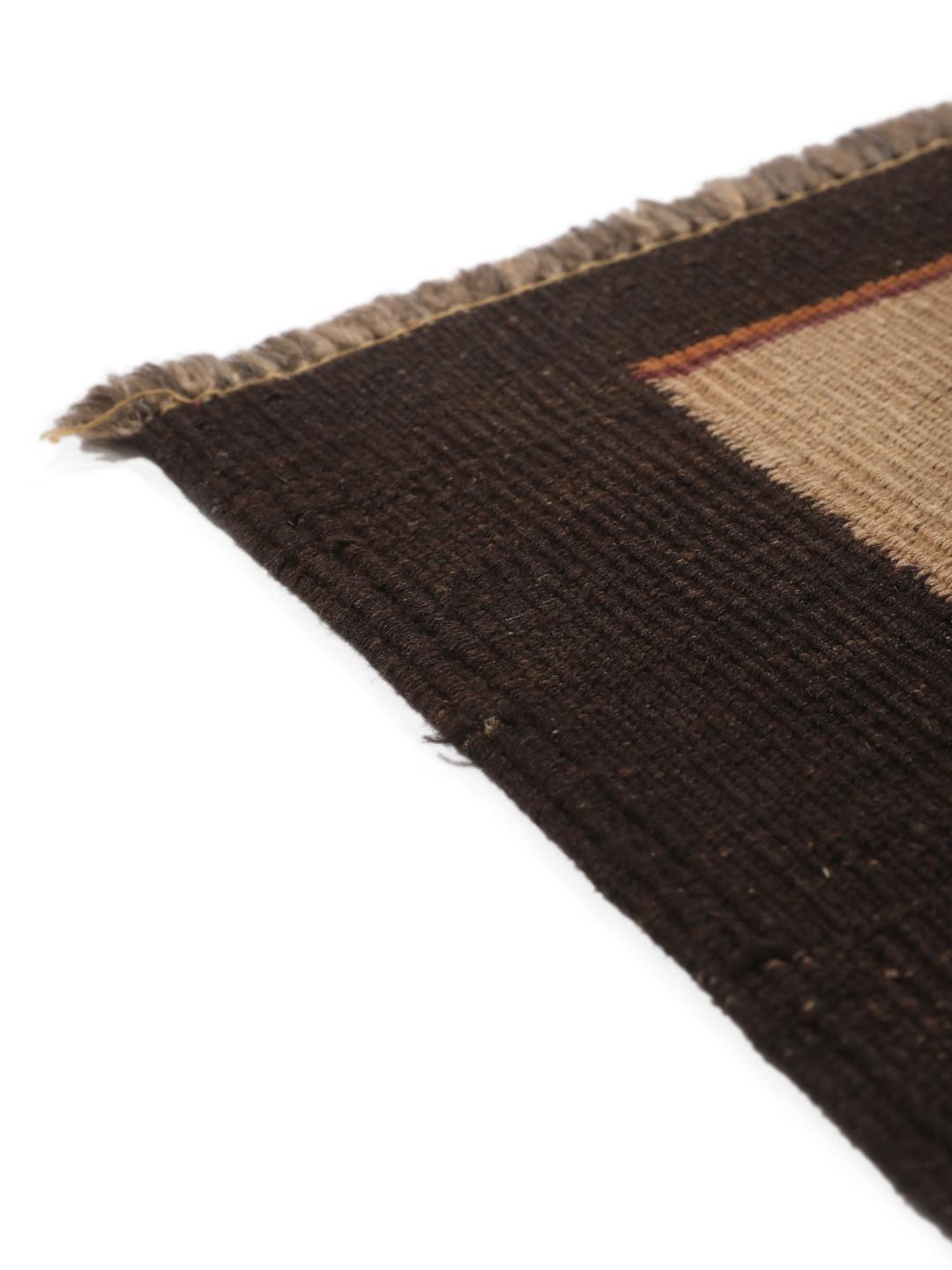
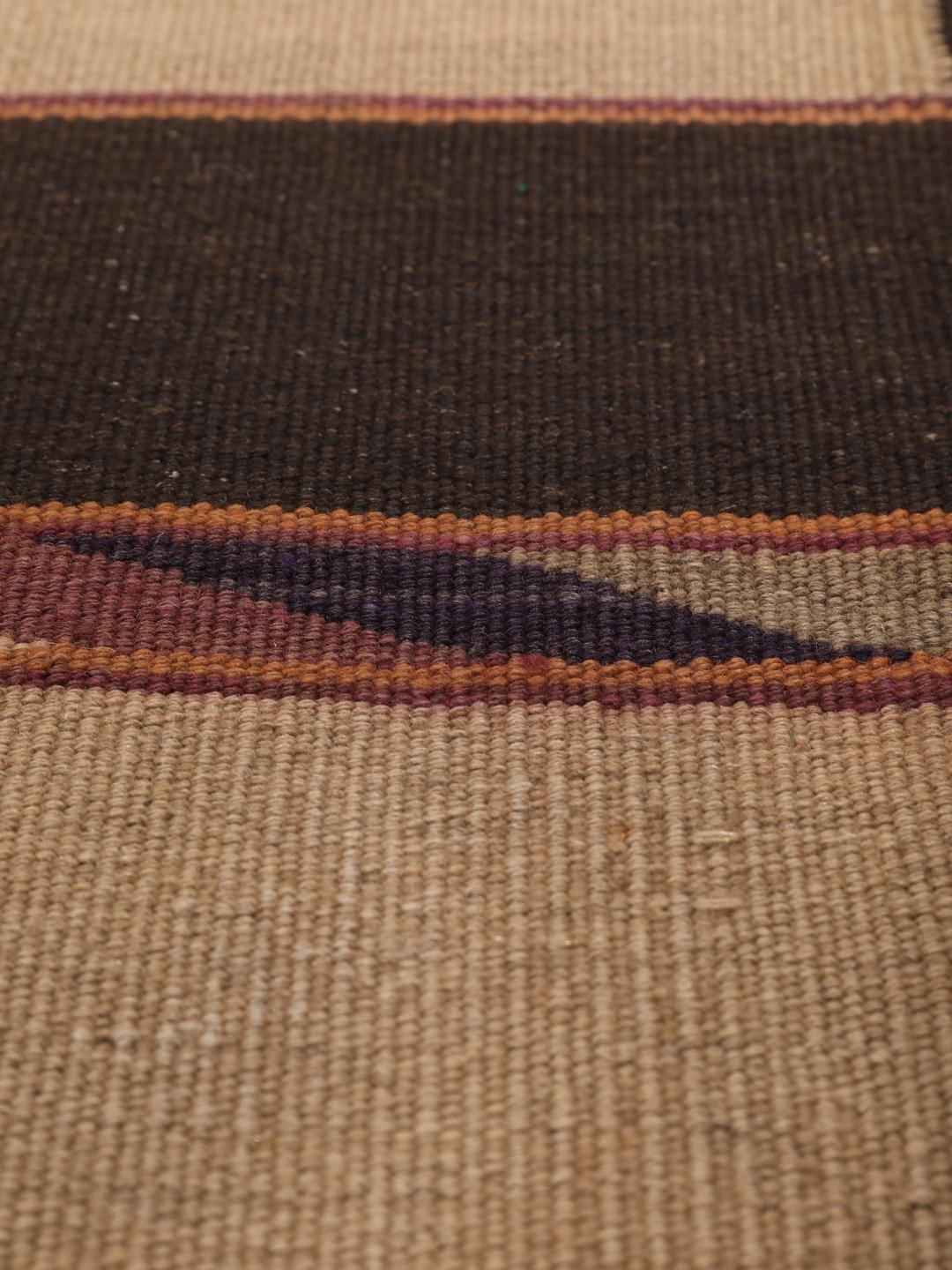
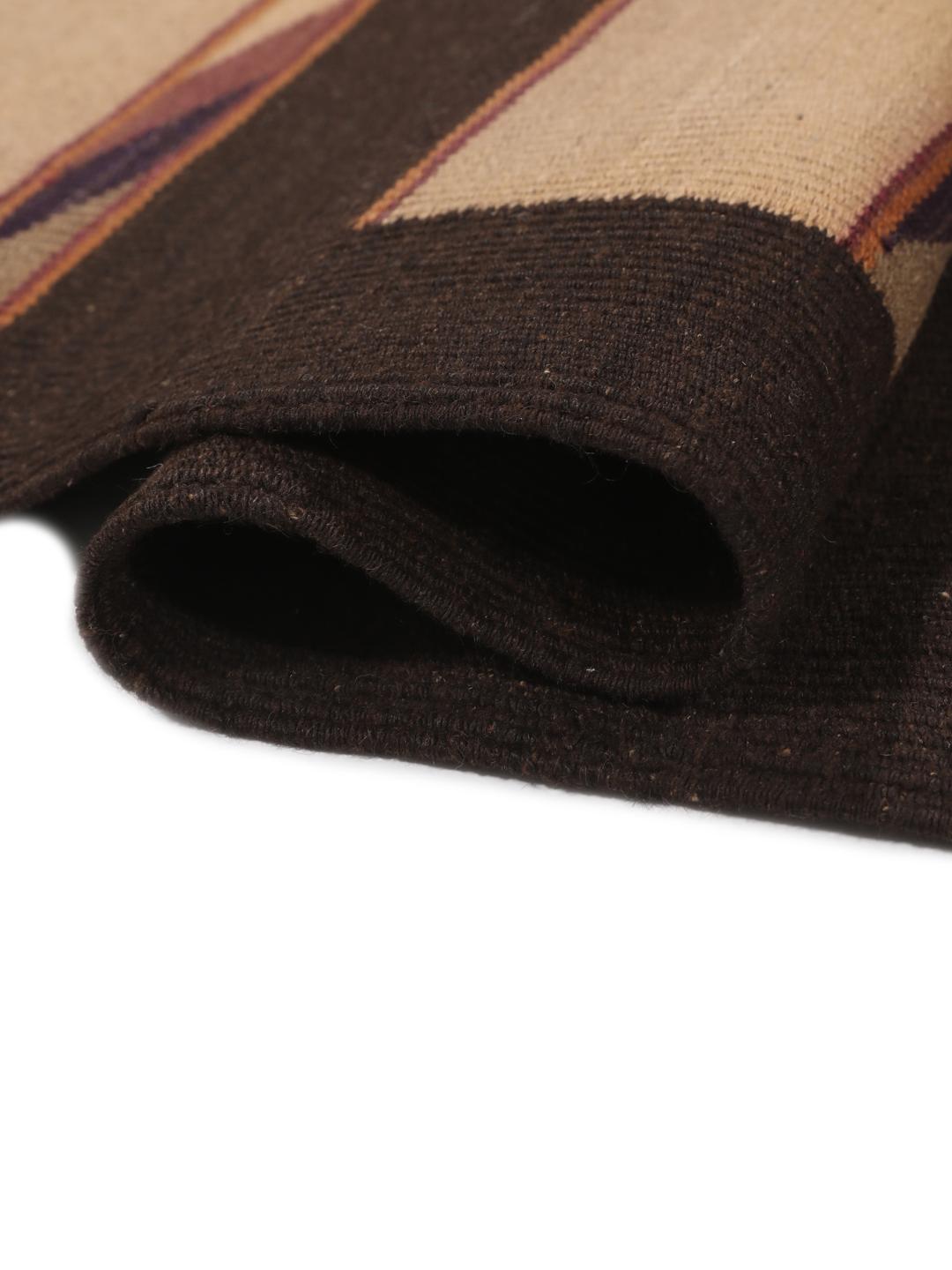
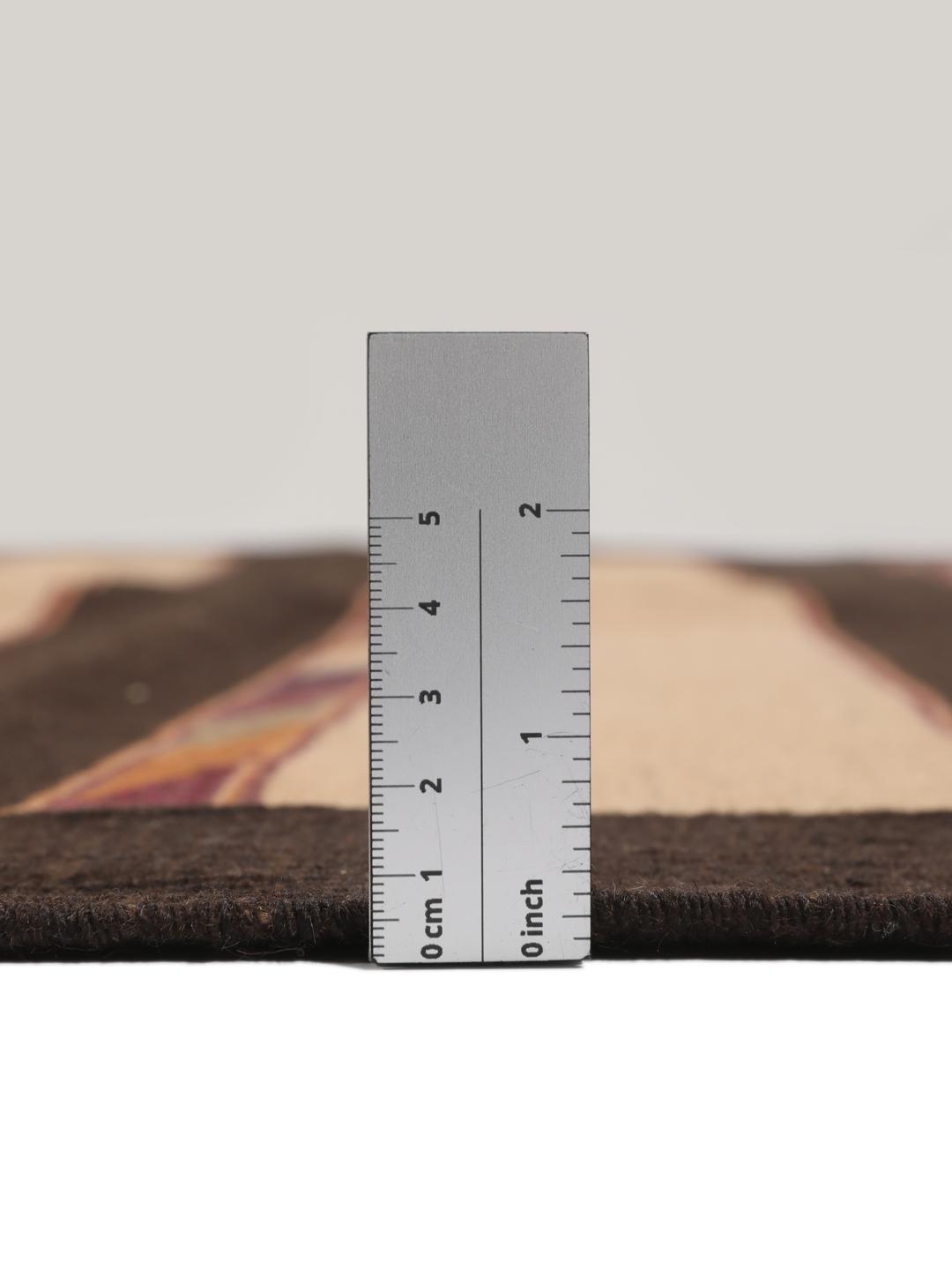
A kelim is a flat-woven rug, meaning it lacks a pile or backing. This technique relies on the interlocking of the weft threads to form the pattern, which makes the rug lightweight and often reversible. The quality of a kelim is determined by the tightness of the weave and the quality of the Wool, which provides a natural luster and resilience that synthetic fibres cannot match.
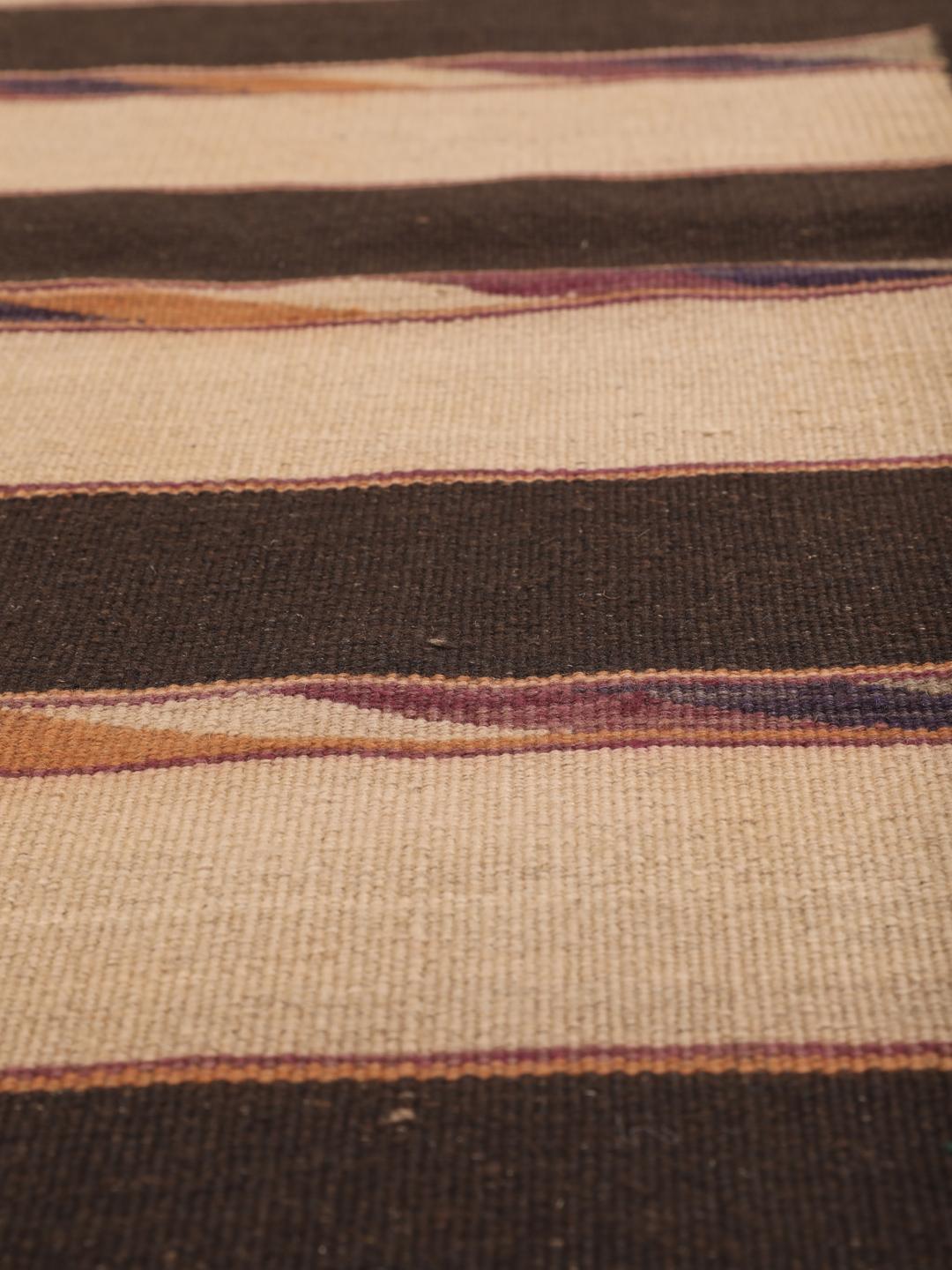
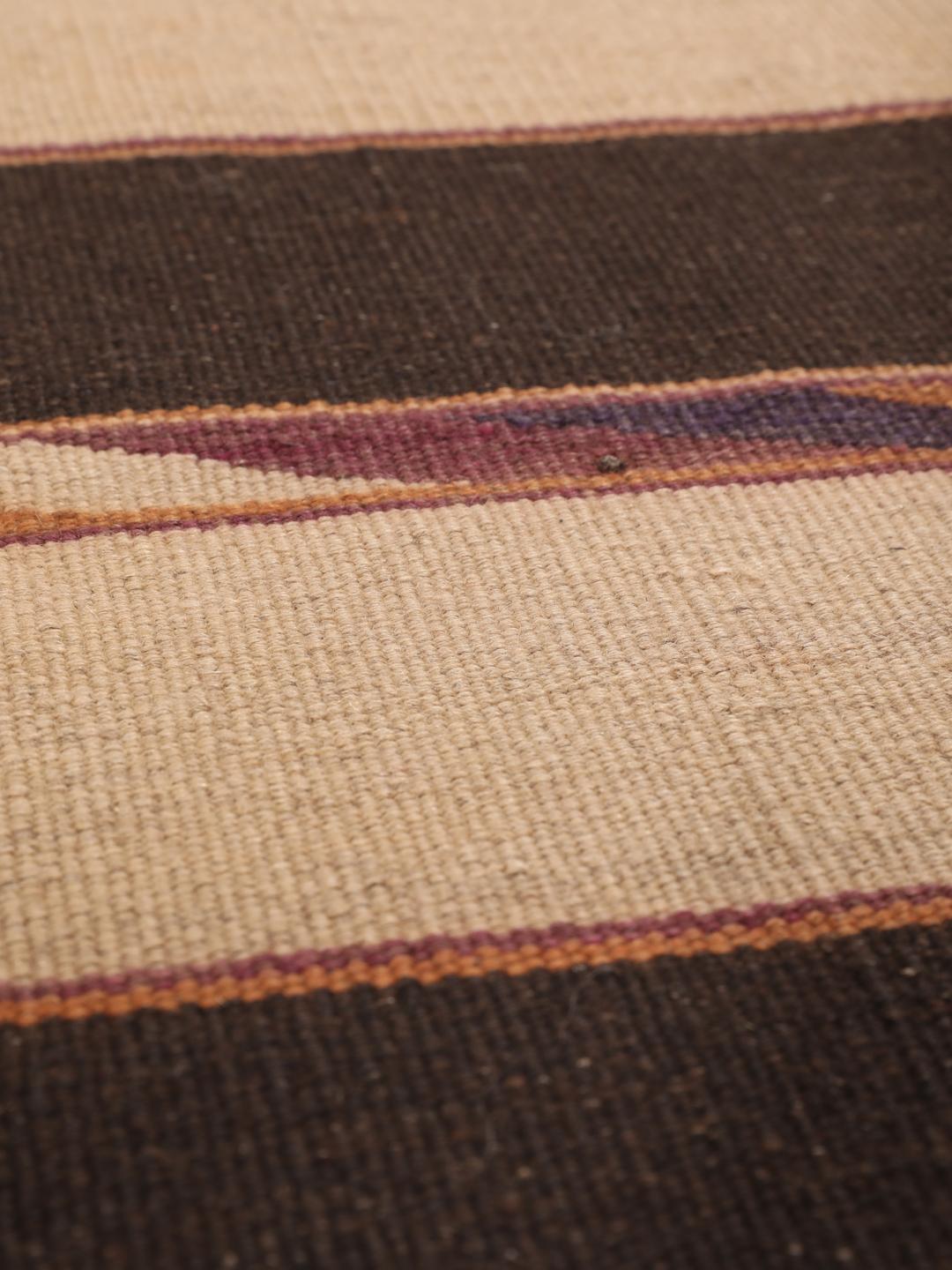
The design of this piece features bold, wide stripes, a classic motif in many tribal weaving traditions. These stripes are often used to signify tribal identity or simply to create a striking visual impact. The inclusion of subtle, earthy tones within the stripe transitions is a hallmark of traditional Afghan dyeing practices, where natural materials are used to achieve deep, rich colours that age gracefully over time.
Collecting vintage kelims is a way of preserving a vanishing craft. Each rug tells a story of the time and place in which it was created, reflecting the aesthetic sensibilities of the weaver and their community. By choosing a vintage piece, you are acquiring a piece of cultural heritage that brings both lasting quality and a unique, human-centred narrative into your modern home.