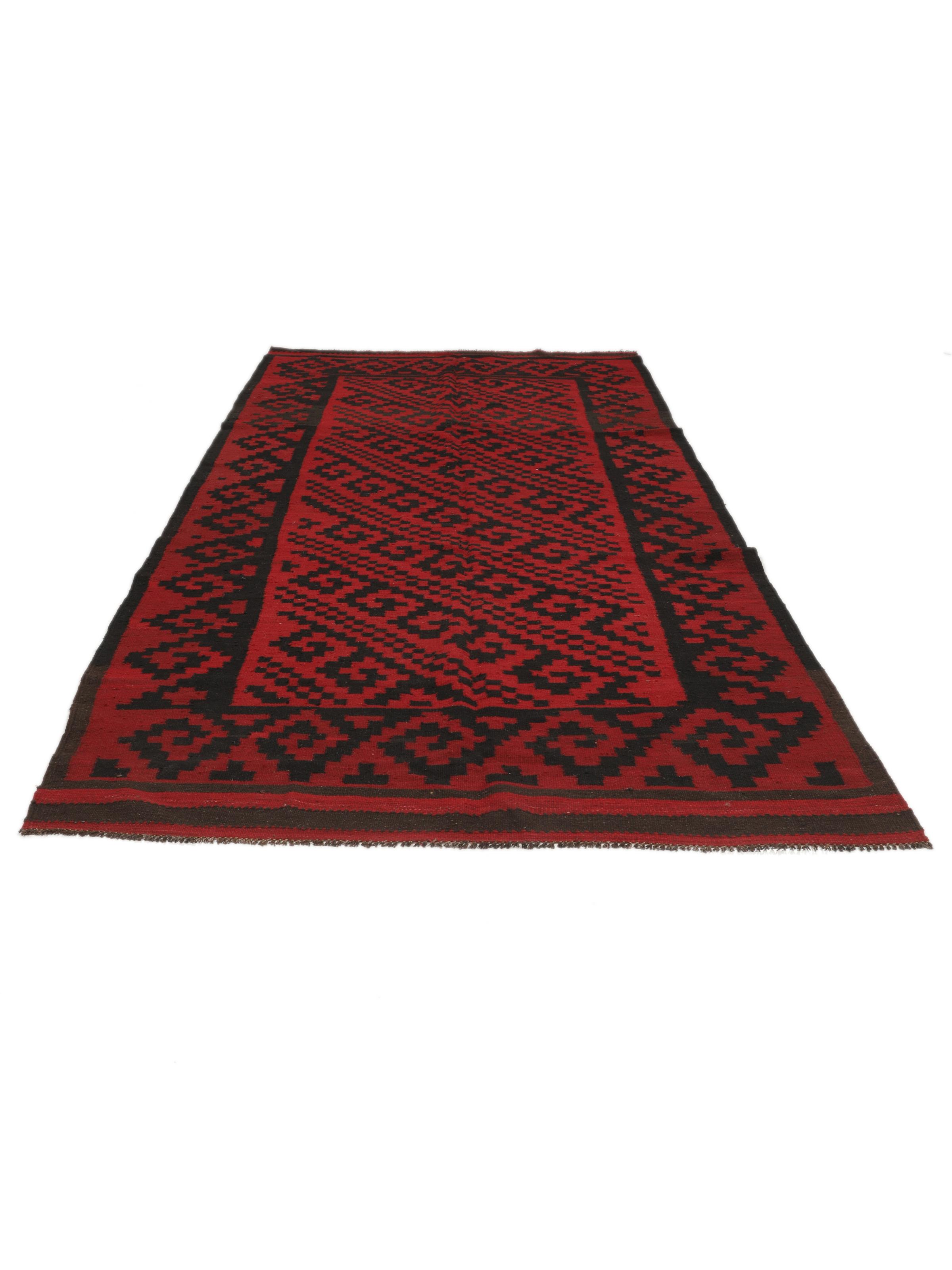
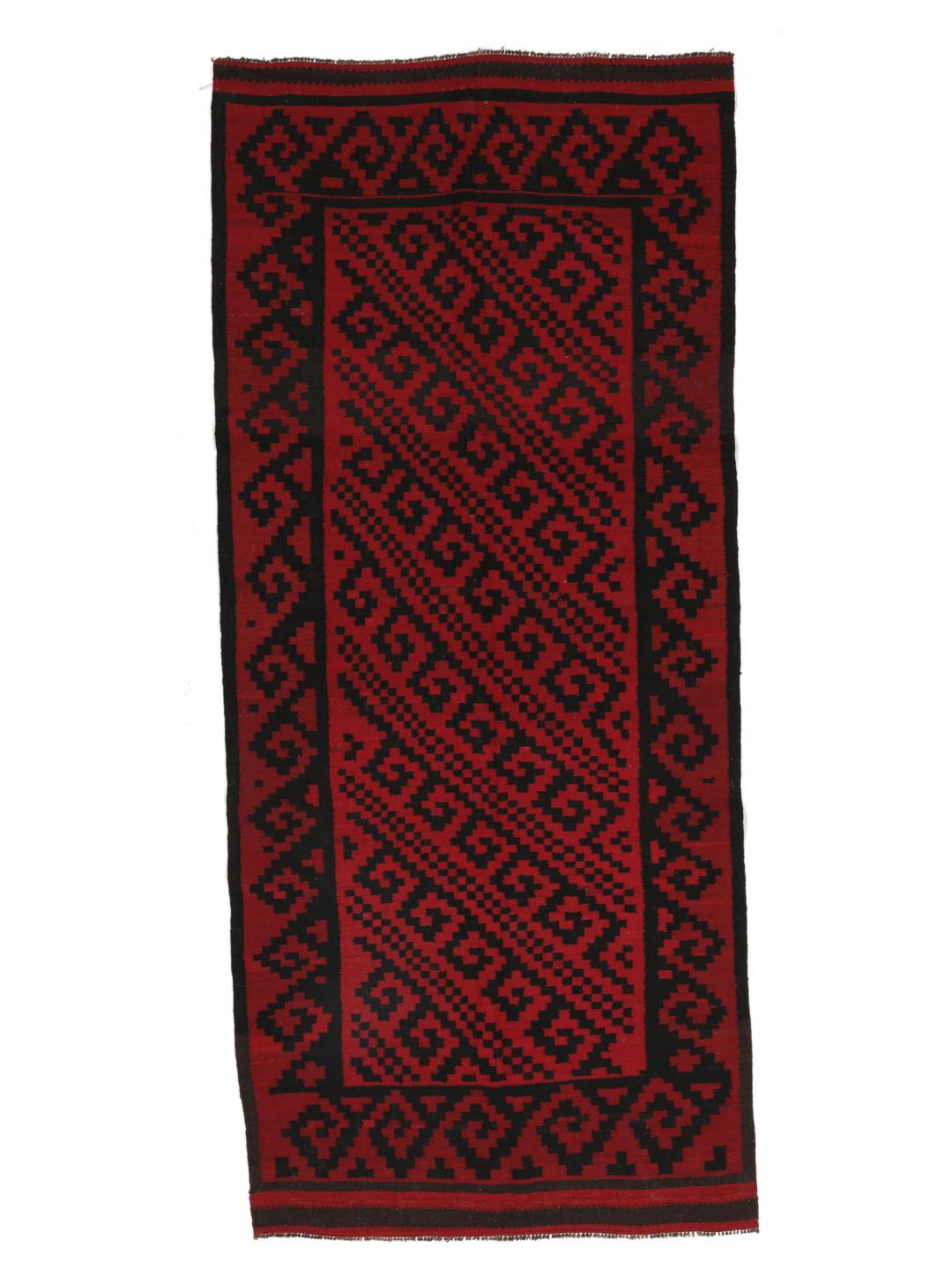
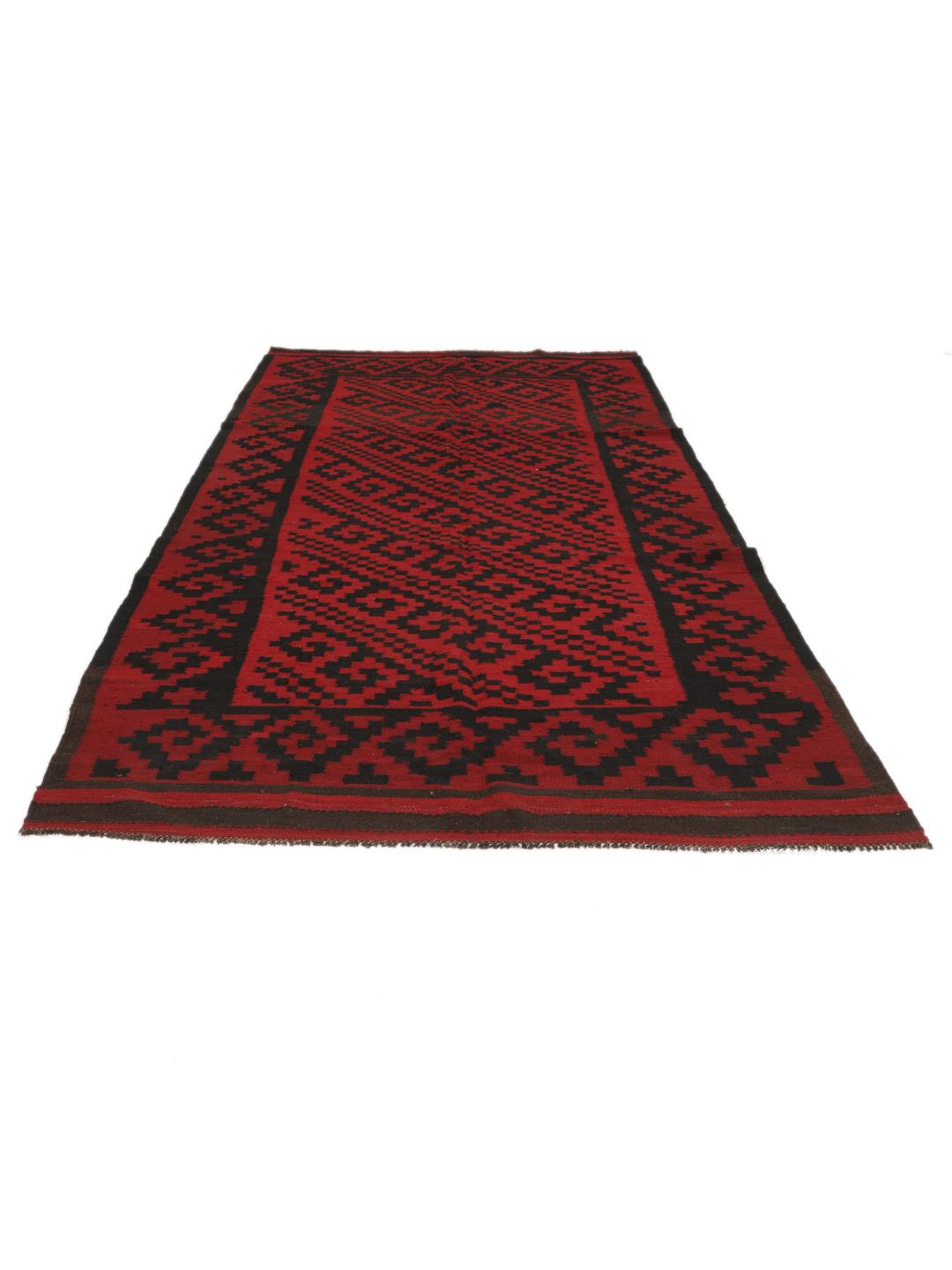
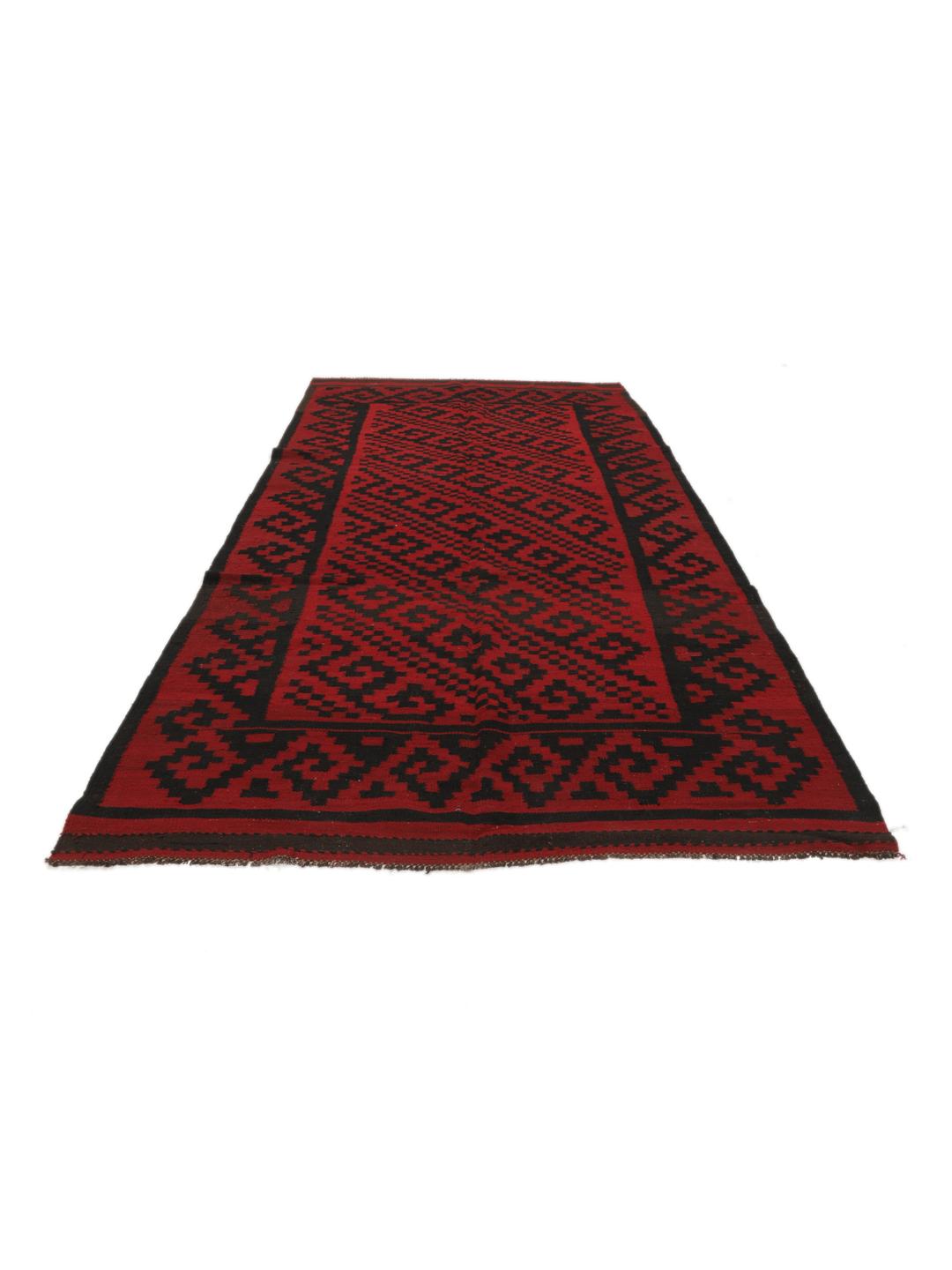
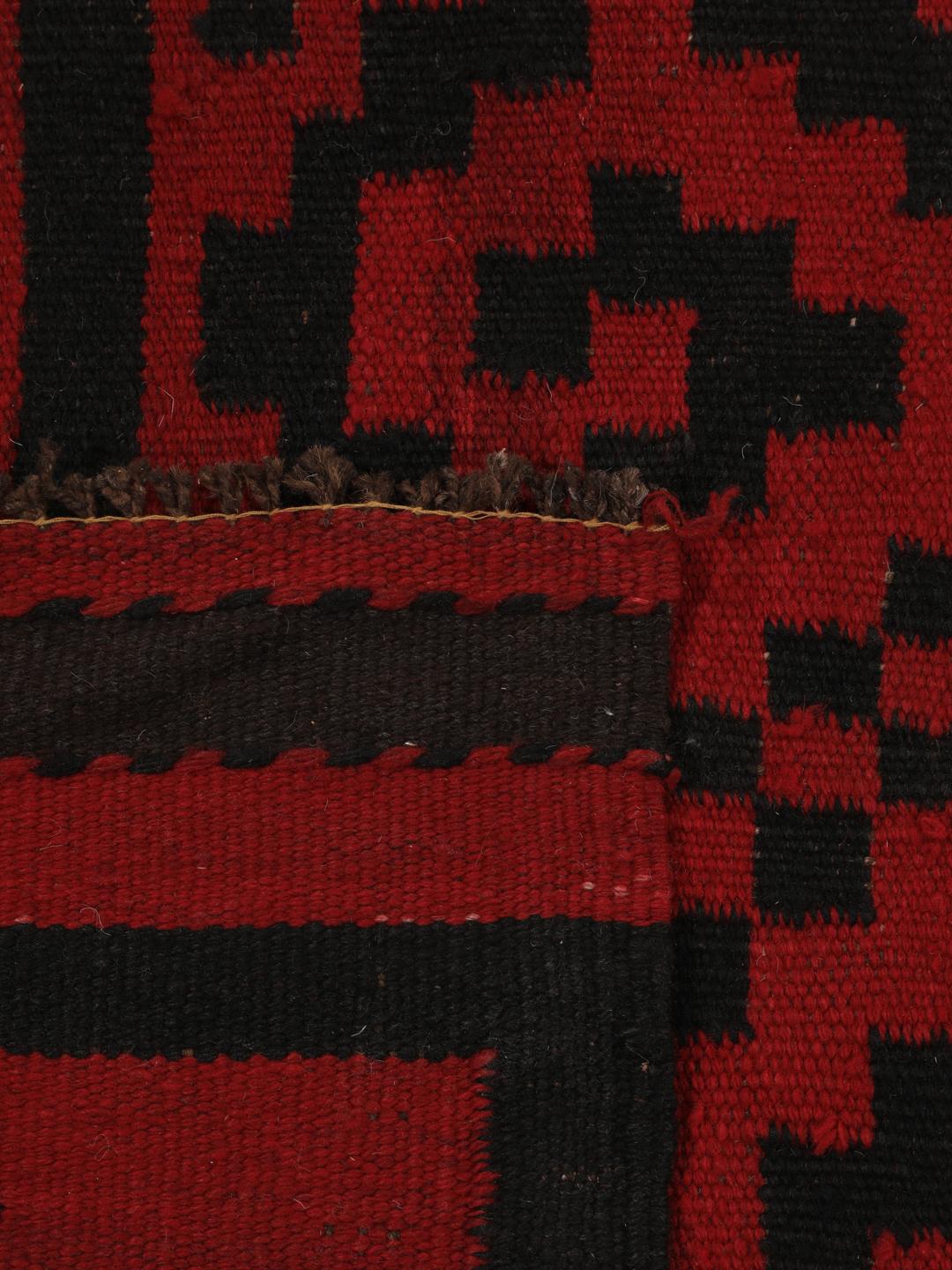
The tradition of weaving in Afghanistan is deeply rooted in the nomadic and semi-nomadic lifestyles of the region's diverse tribes. For centuries, these communities have produced functional textiles like this runner to meet the needs of daily life, using materials sourced directly from their own flocks. This heritage has evolved over time, blending ancient techniques with local artistic expressions that reflect the spirit of the Afghan landscape.
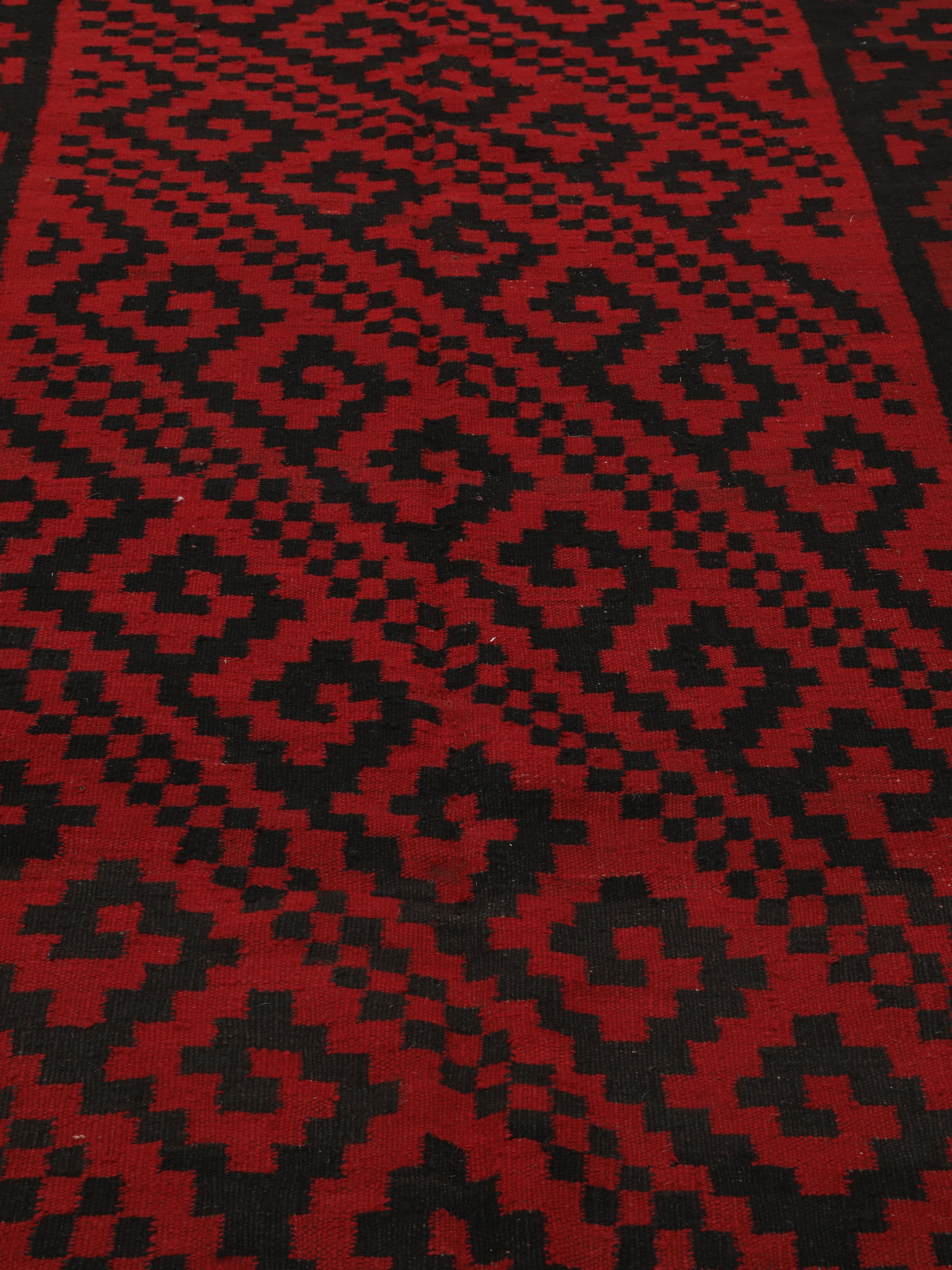
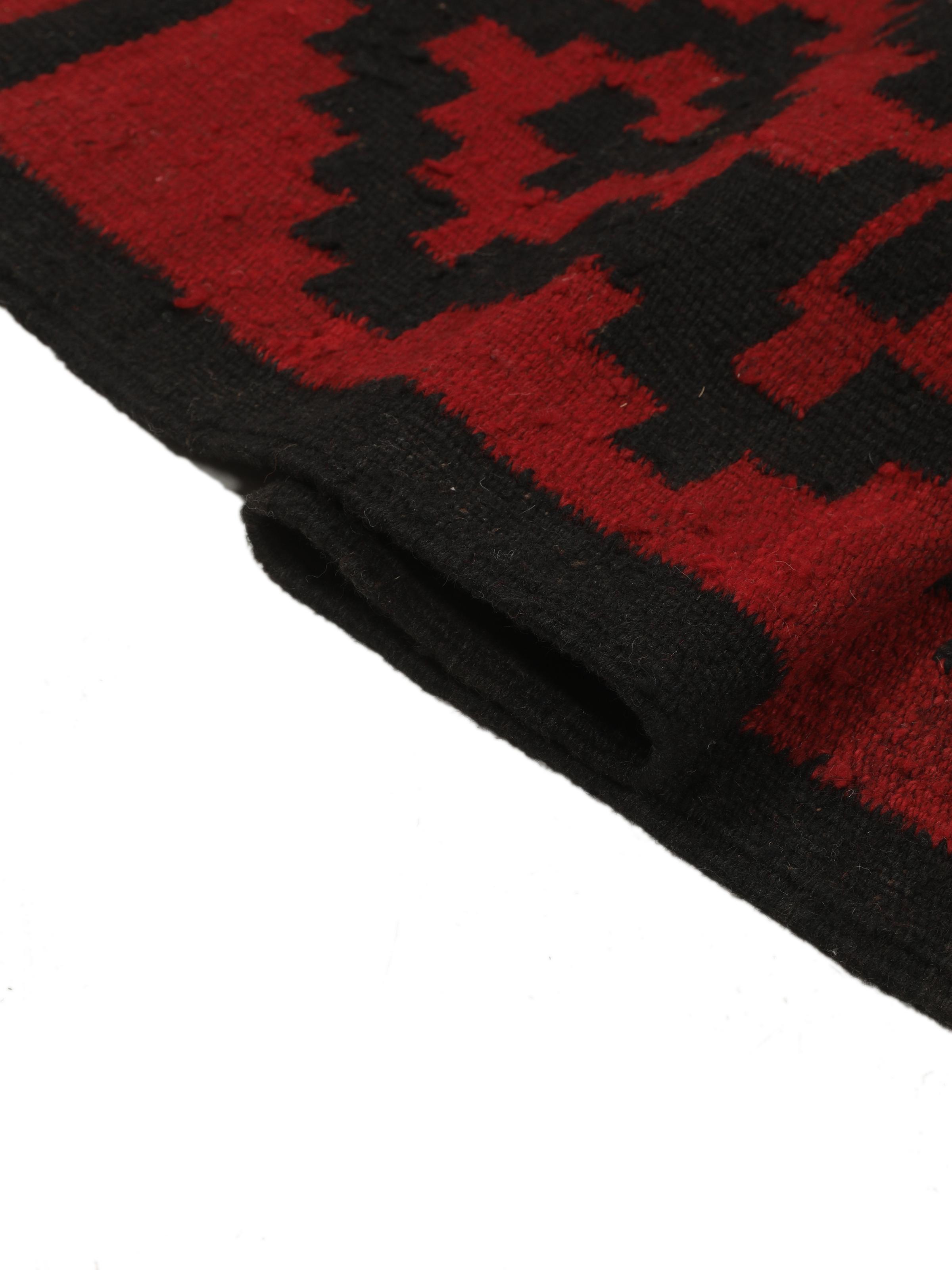
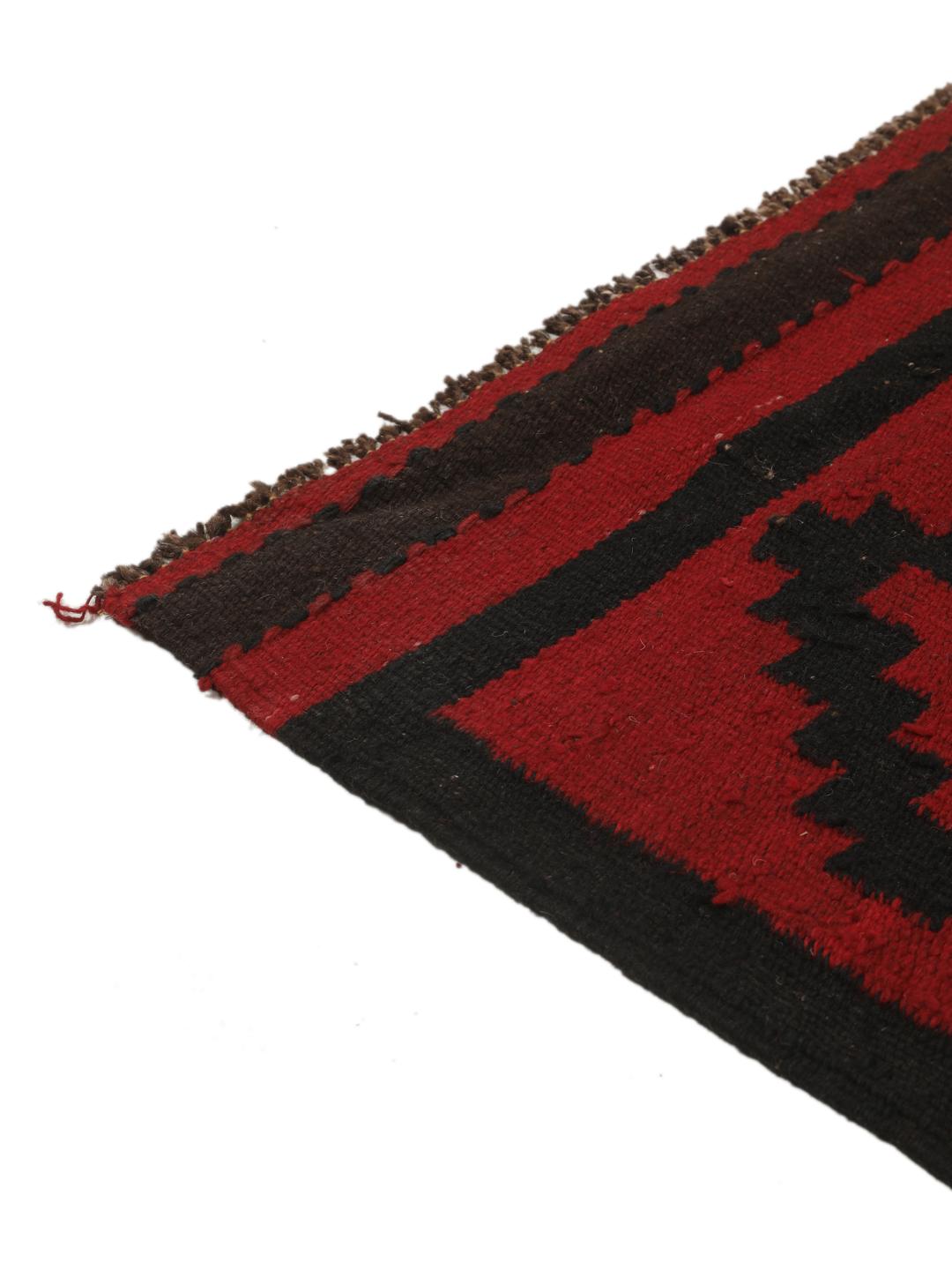
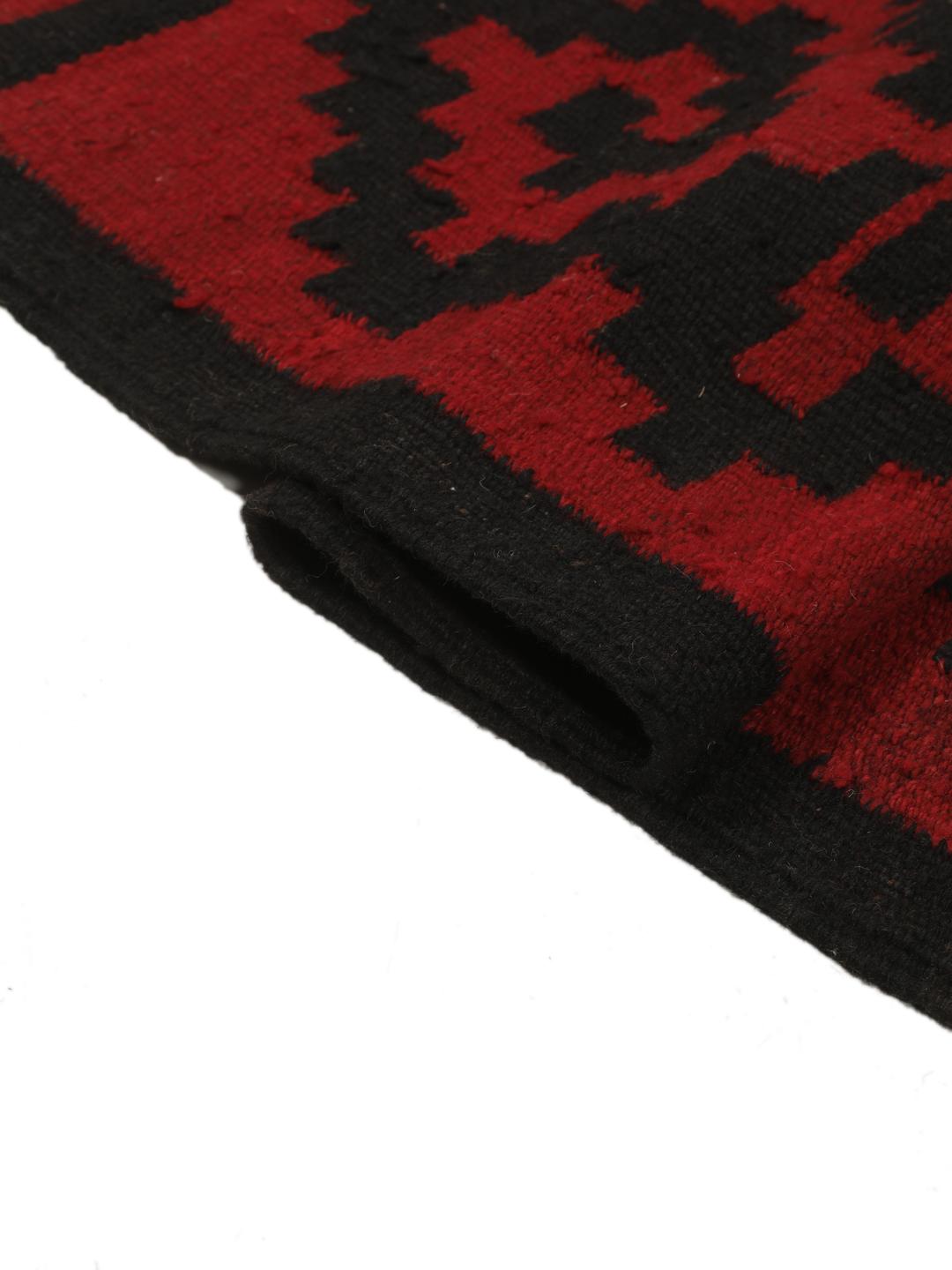
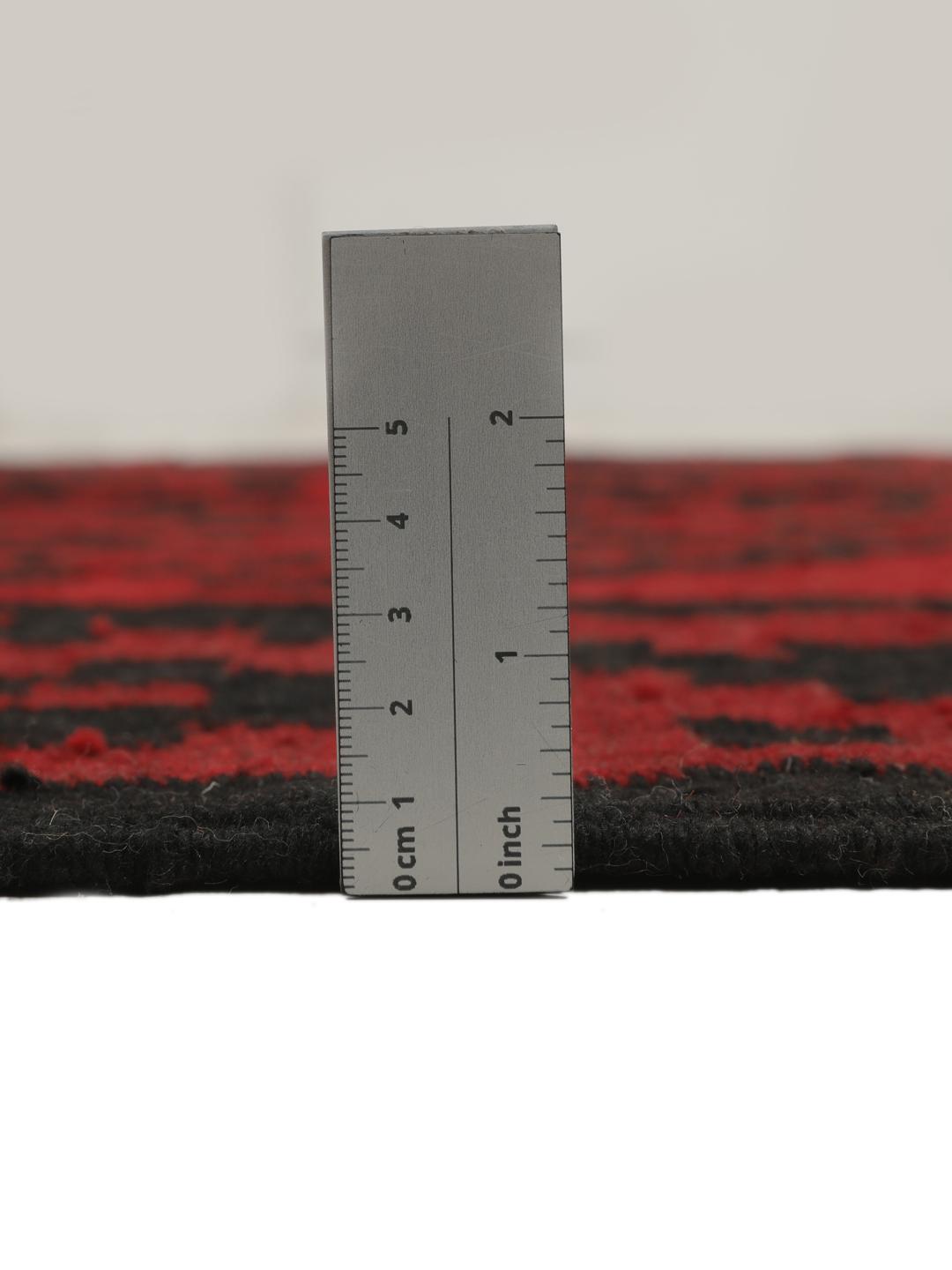
The term 'kilim' refers to a specific flat-weaving technique where the weft threads are pulled tightly over the warp threads, resulting in a rug without a pile. This method is highly valued for its strength and versatility, allowing for crisp, sharp geometric designs that have become a hallmark of the craft. Because there is no pile to wear down, these rugs are exceptionally durable and maintain their vibrant appearance even after decades of use.
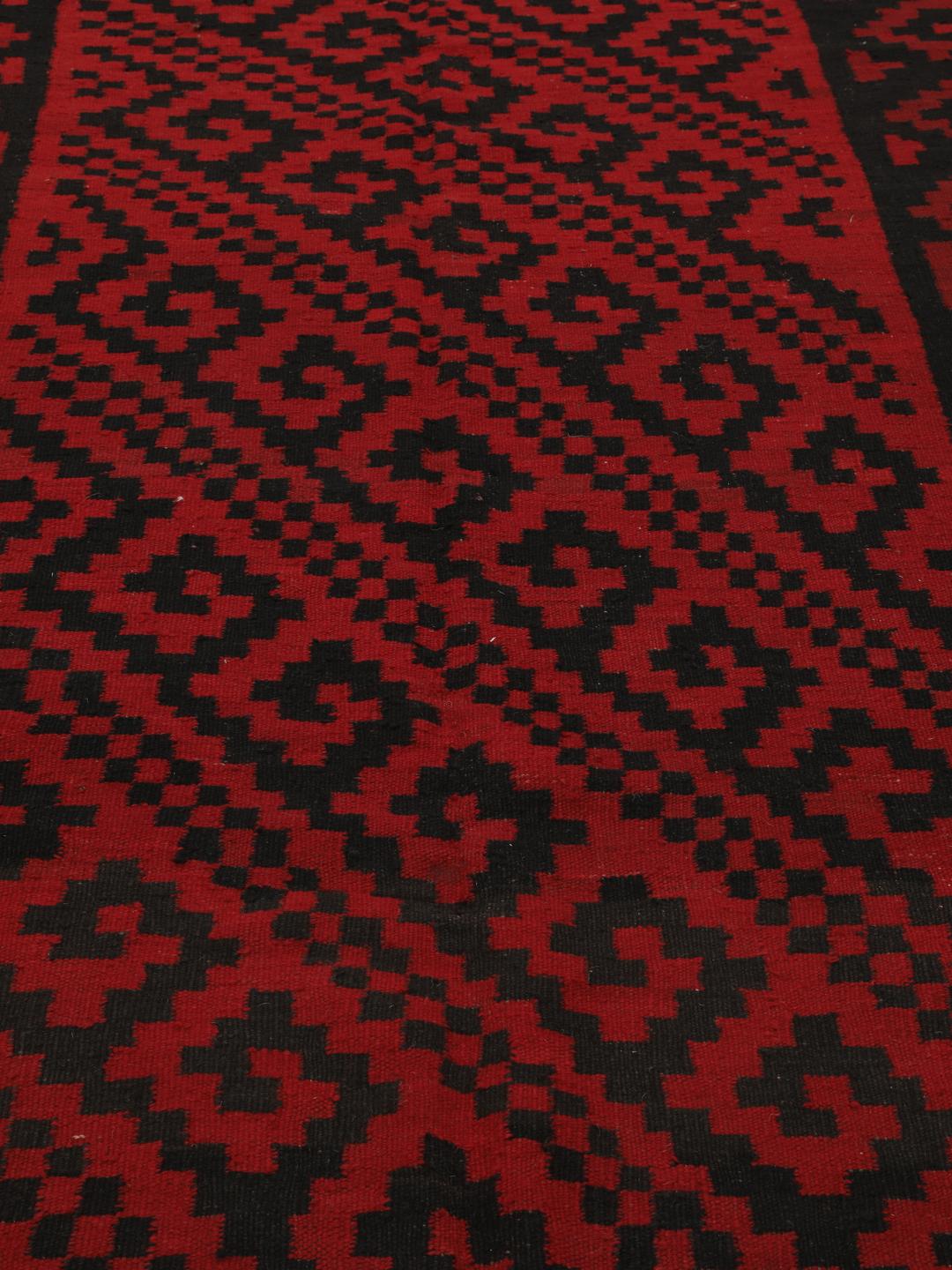
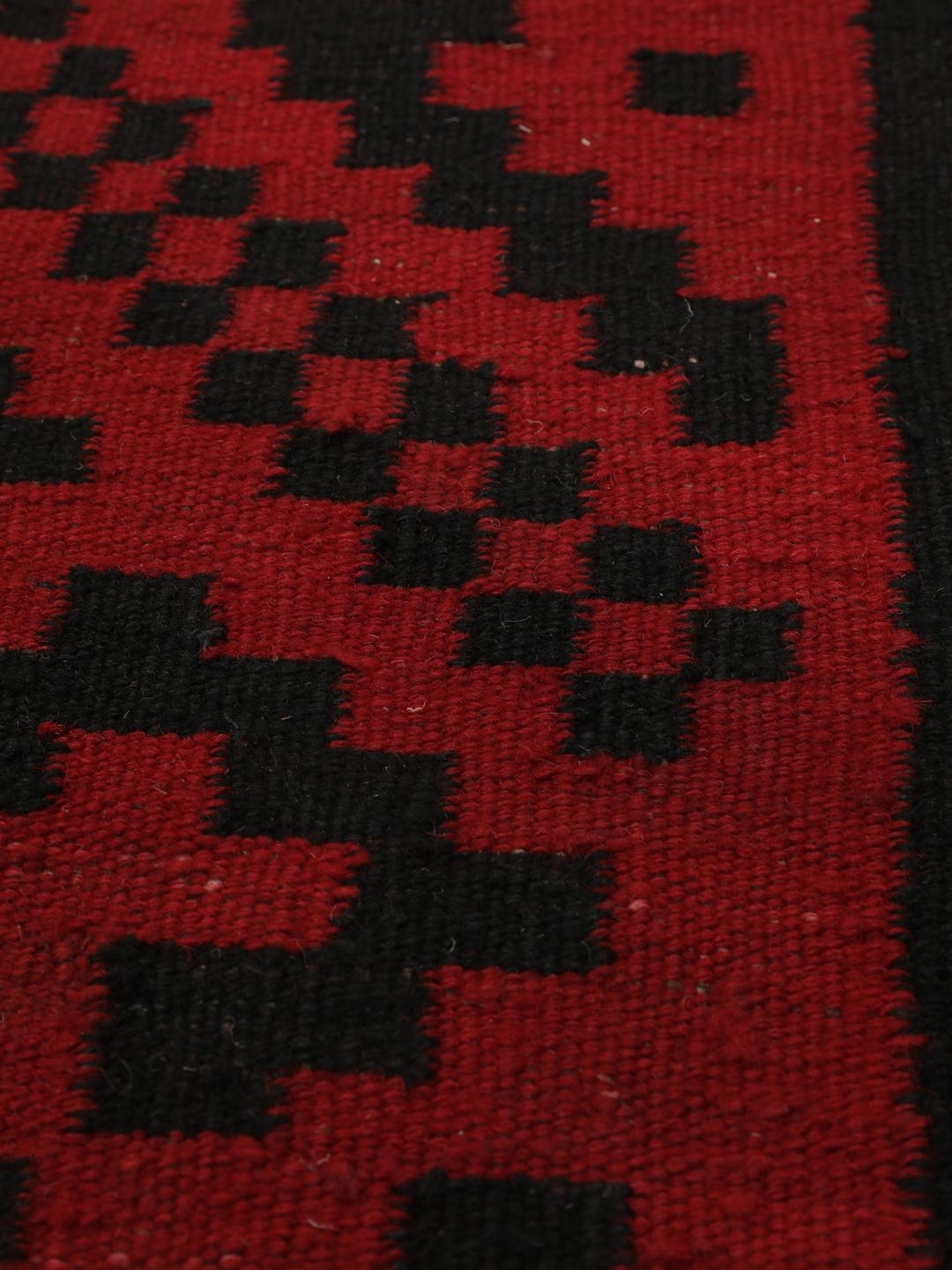
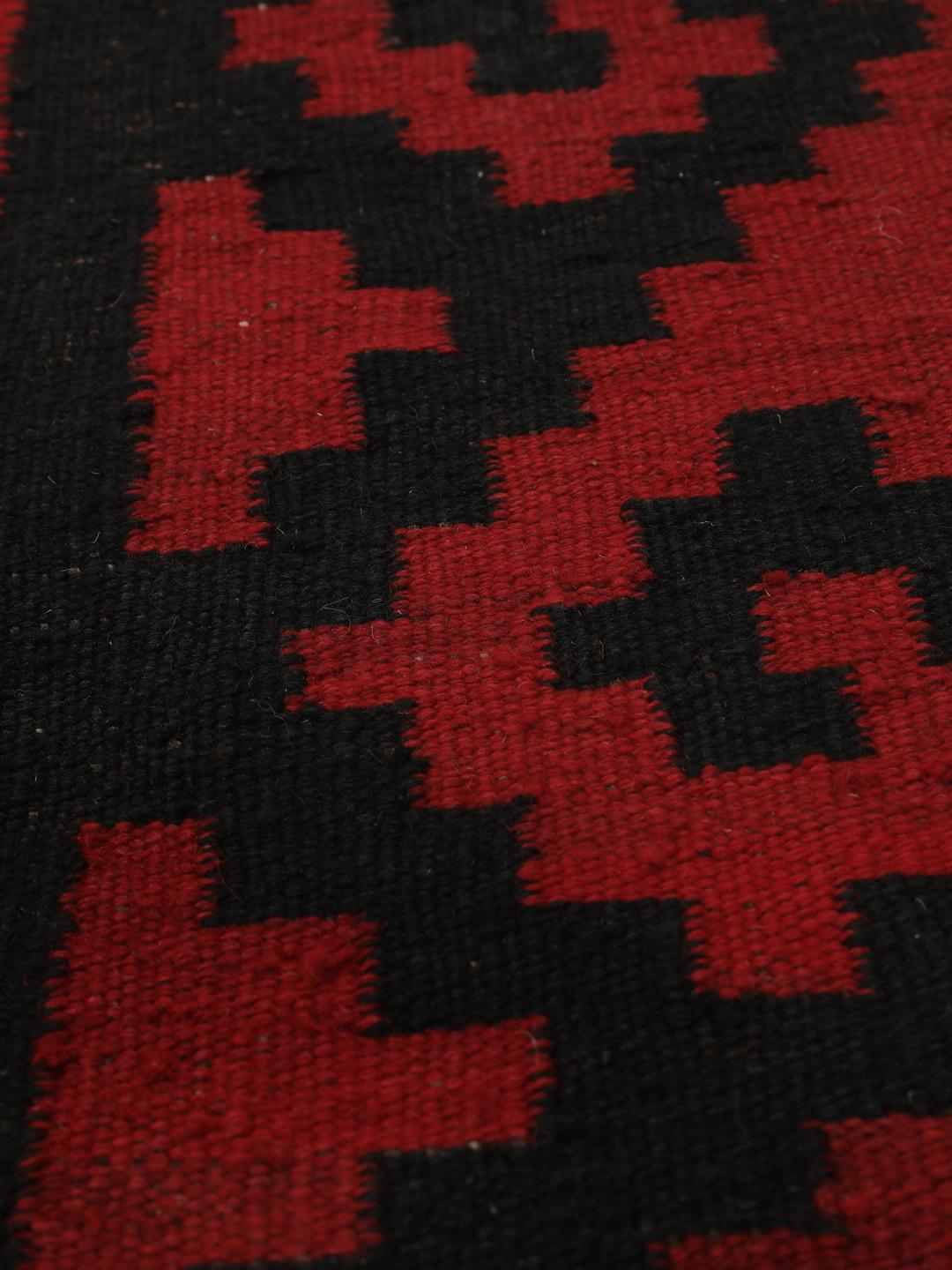
Visually, this runner is defined by its repetitive geometric motifs, which are often symbolic of protection, fertility, or tribal identity. The use of deep red and black is a classic combination in this region, utilising natural dyes that develop a beautiful, soft patina as they age. Such patterns are not merely decorative but serve as a visual language that connects the piece to its specific cultural context and the generations of weavers who refined these designs.
Collectors value these pieces not only for their aesthetic appeal but for the immense skill and cultural history they represent. Owning a vintage Afghan runner is an investment in a disappearing art form, as the techniques and traditional motifs are increasingly rare in a modern, mass-produced world. It stands as a testament to the endurance of human creativity and the timeless beauty of hand-crafted design.