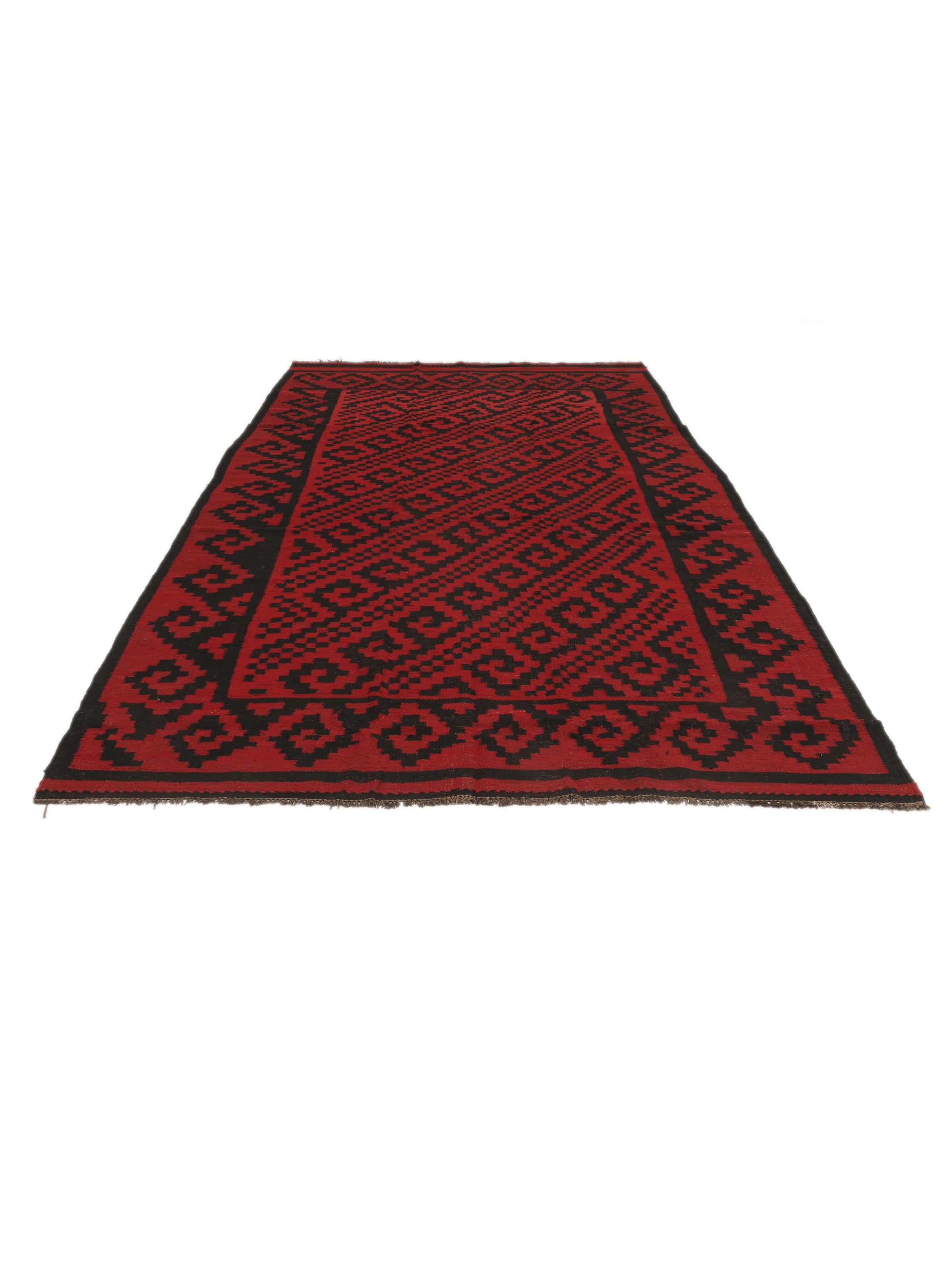
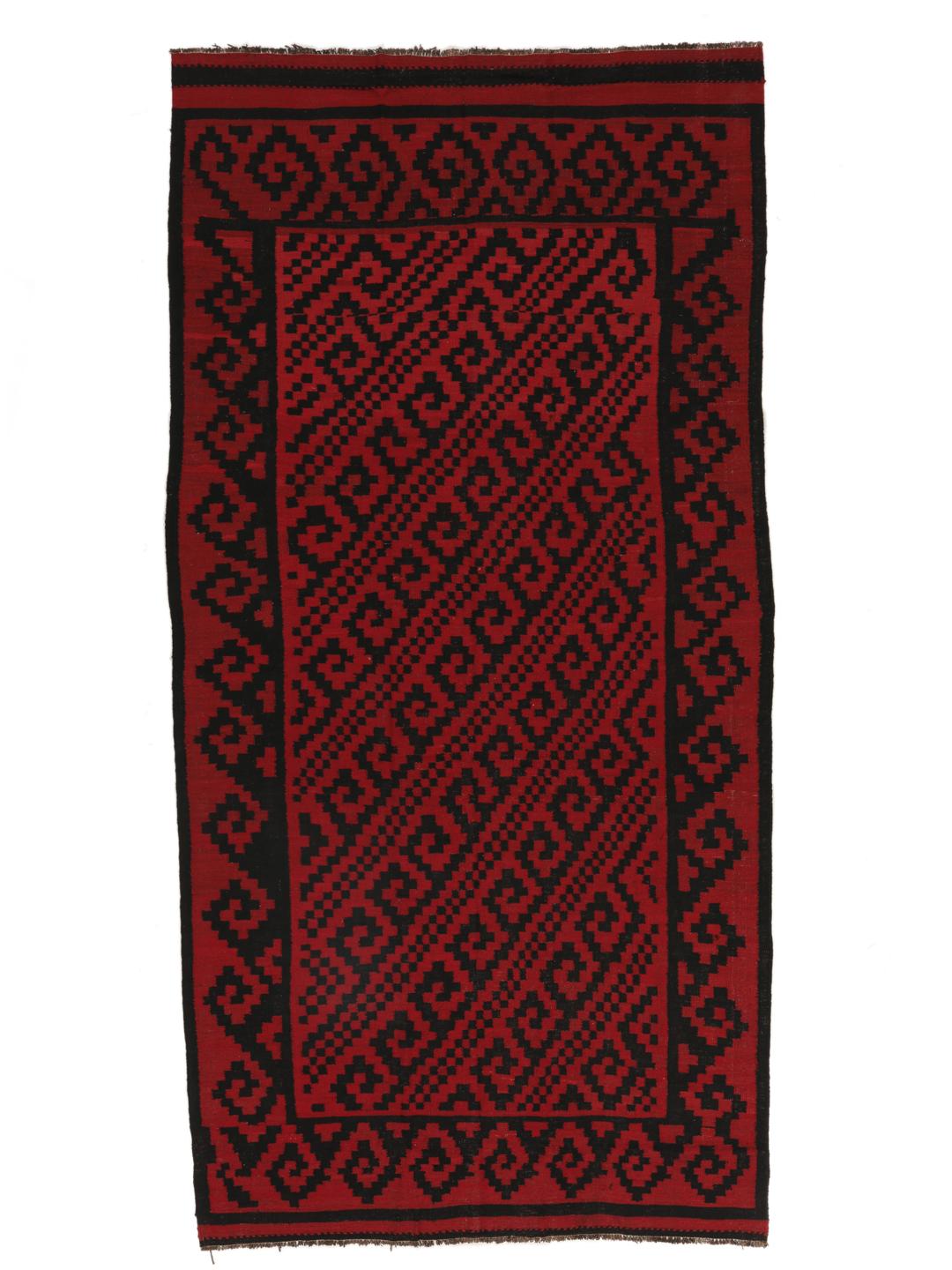
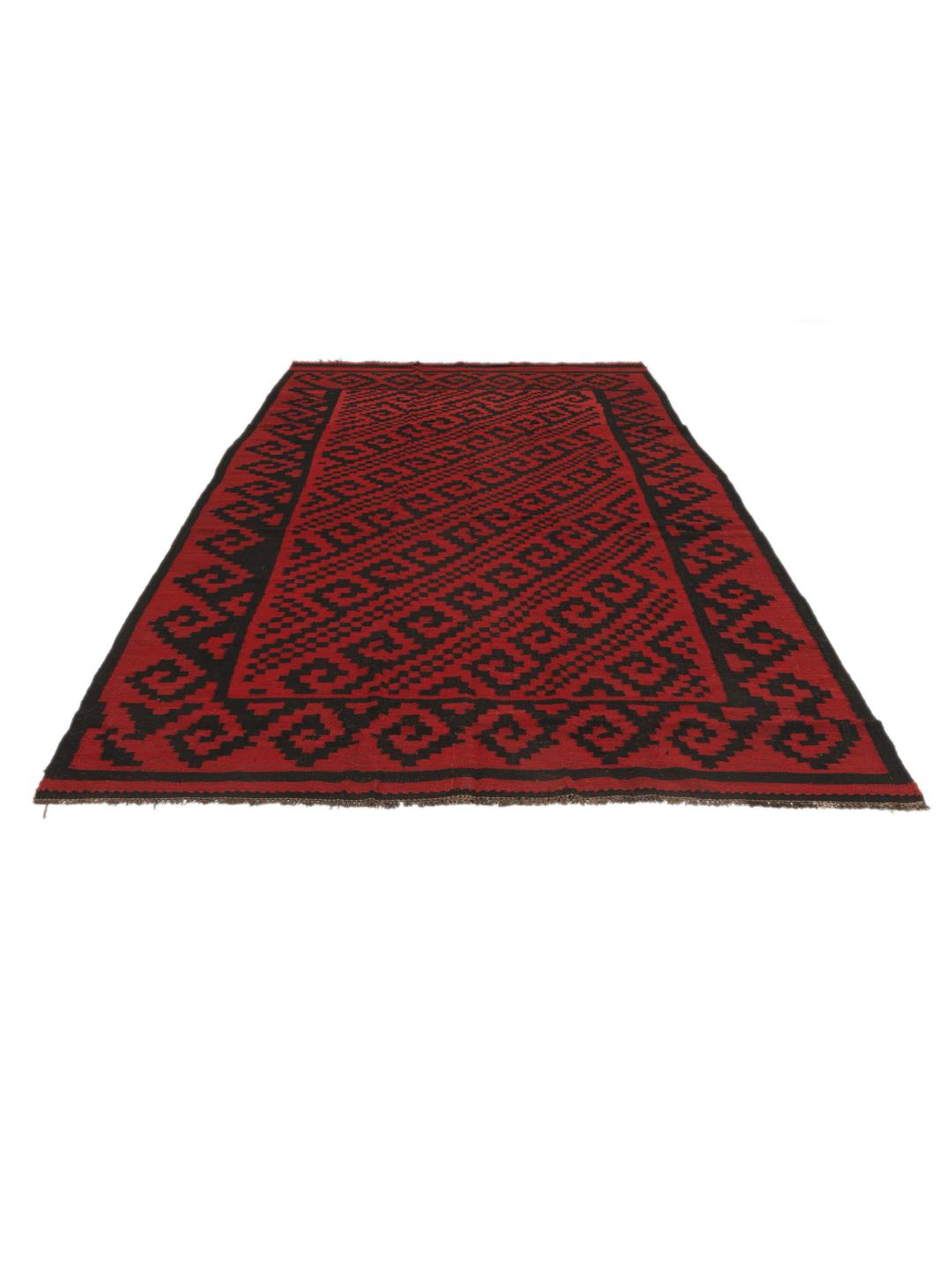
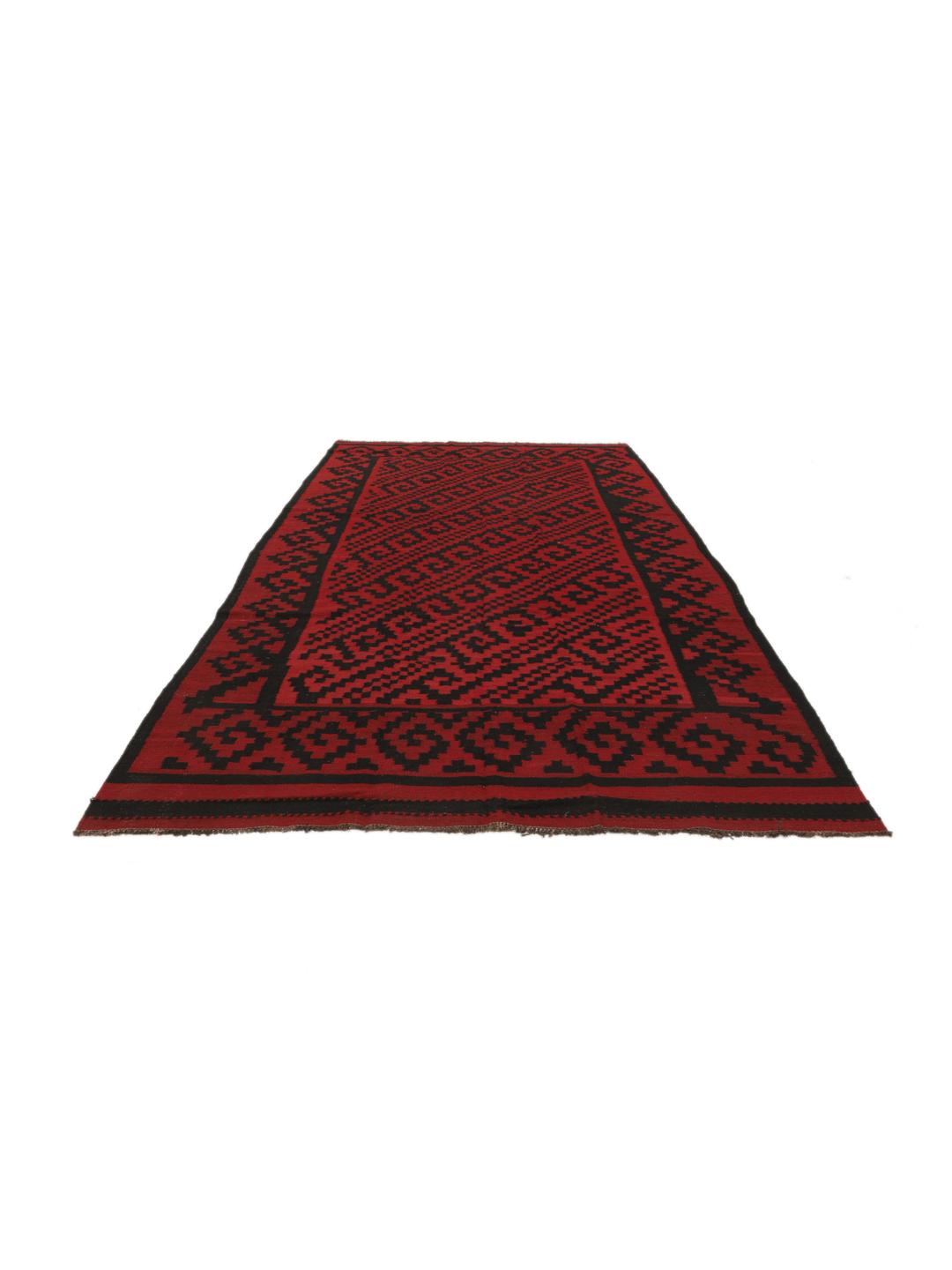
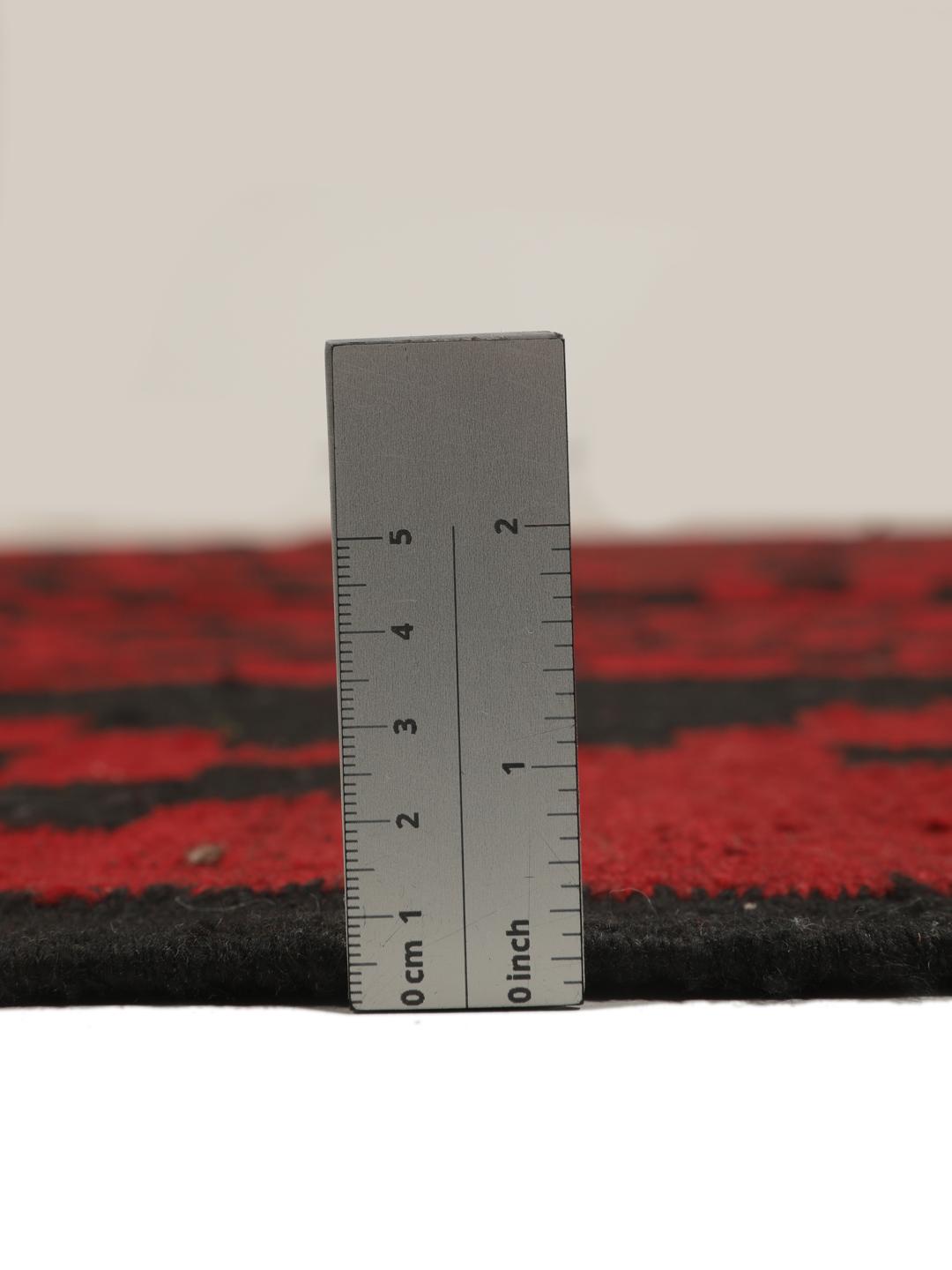
The tradition of Kelim weaving in Afghanistan is deeply rooted in the nomadic and semi-nomadic lifestyles of the region. These rugs were historically created by tribal groups to serve as practical, portable floor coverings, room dividers, and storage bags, meaning they had to be both lightweight and exceptionally durable to withstand the rigours of daily life.
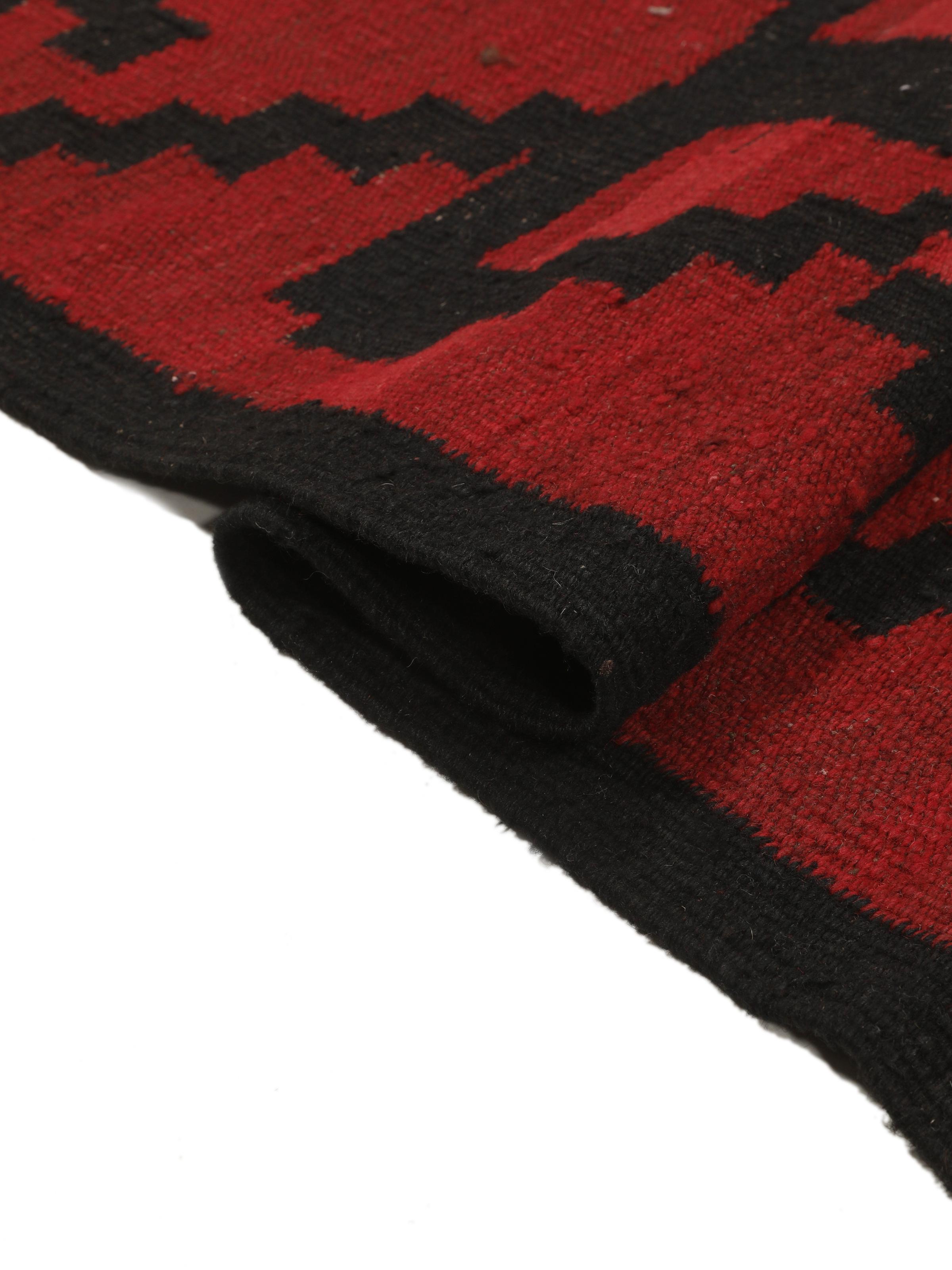
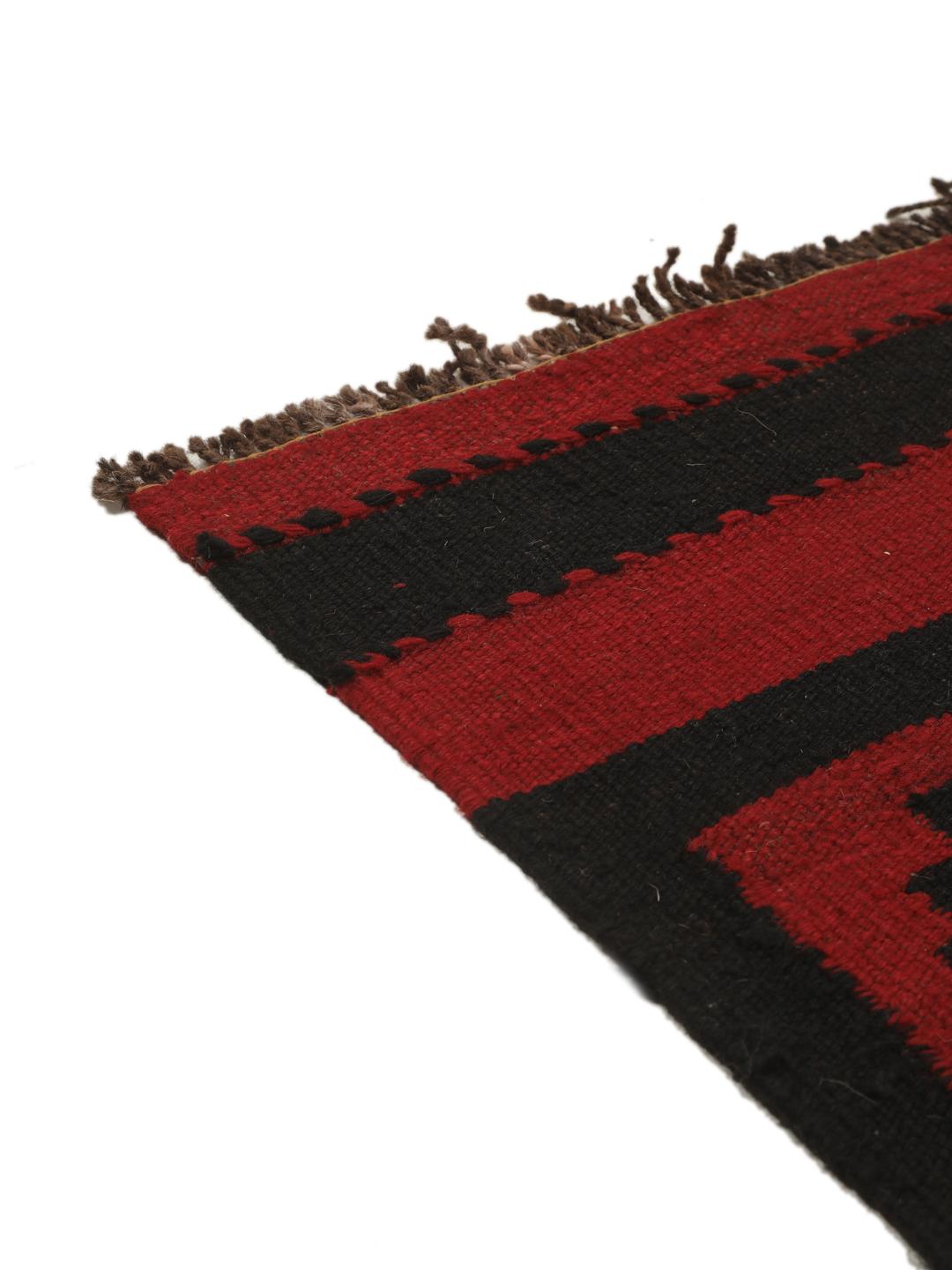
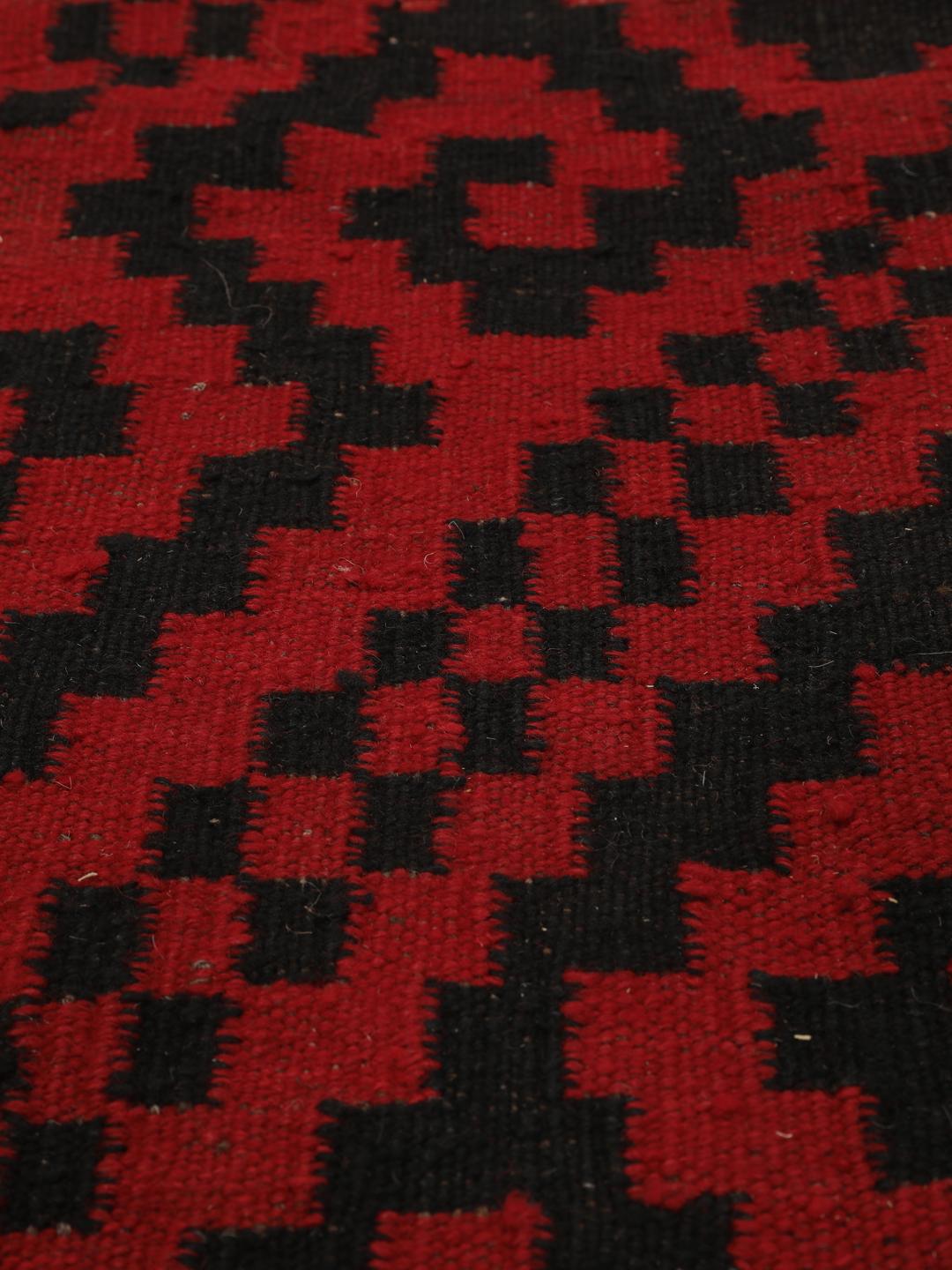
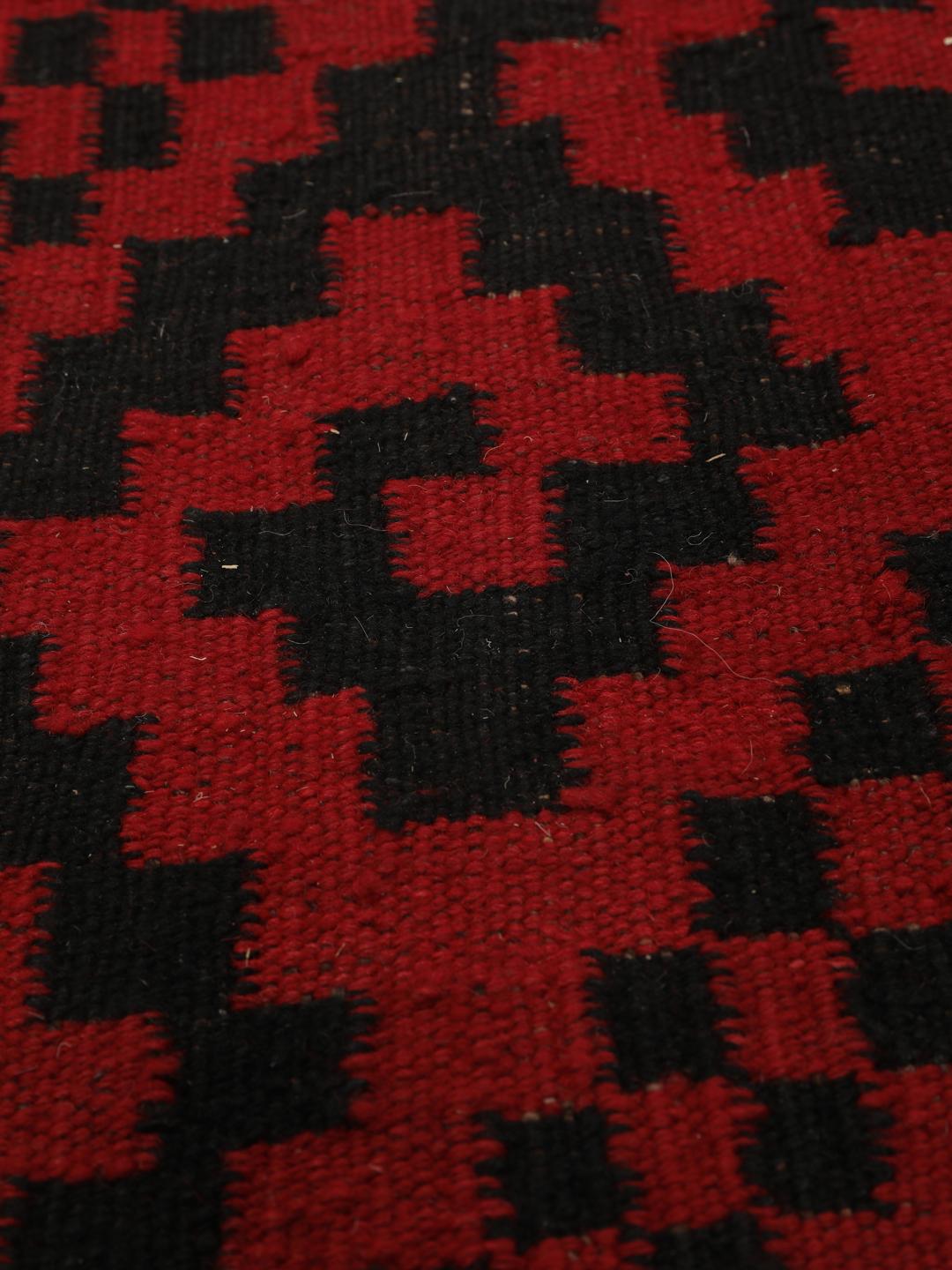
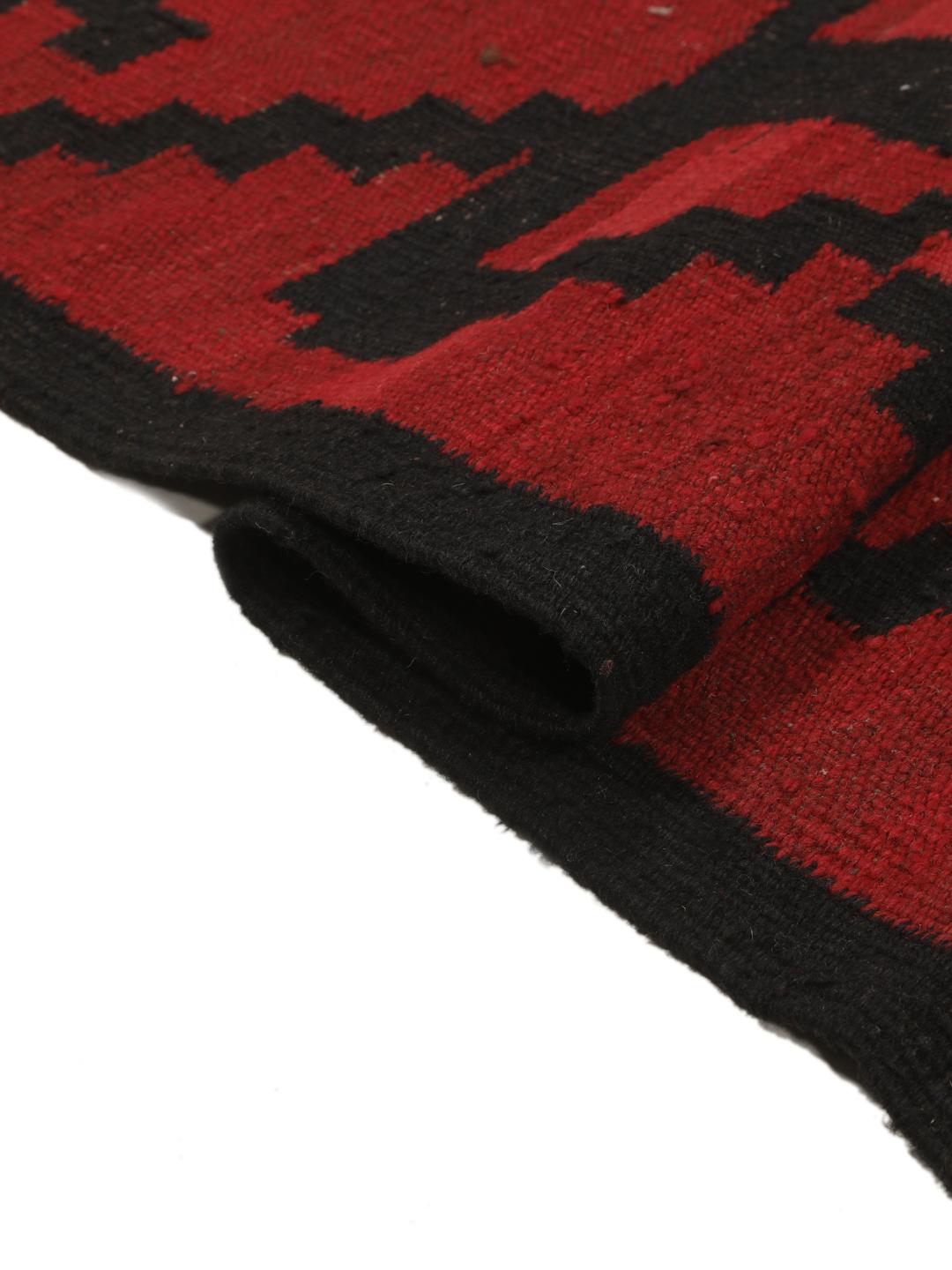
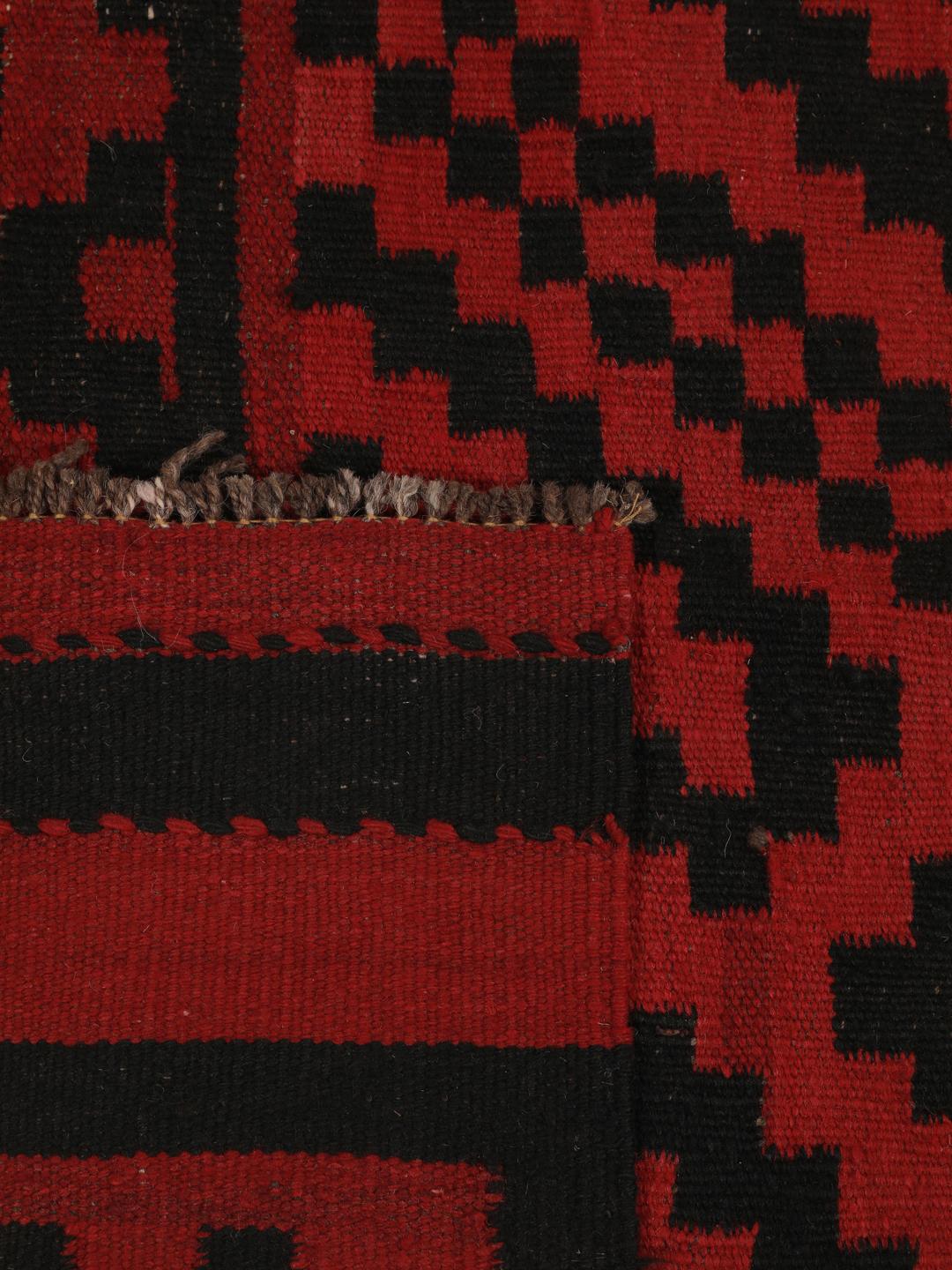
A Kelim is defined by its flat-weave construction, where the colourful weft threads are woven over and under the vertical warp threads. This technique creates a reversible rug with a clean, graphic aesthetic. Because there is no pile to wear down, these pieces are prized for their ability to maintain their structural integrity and pattern clarity for generations, provided they are cared for properly.
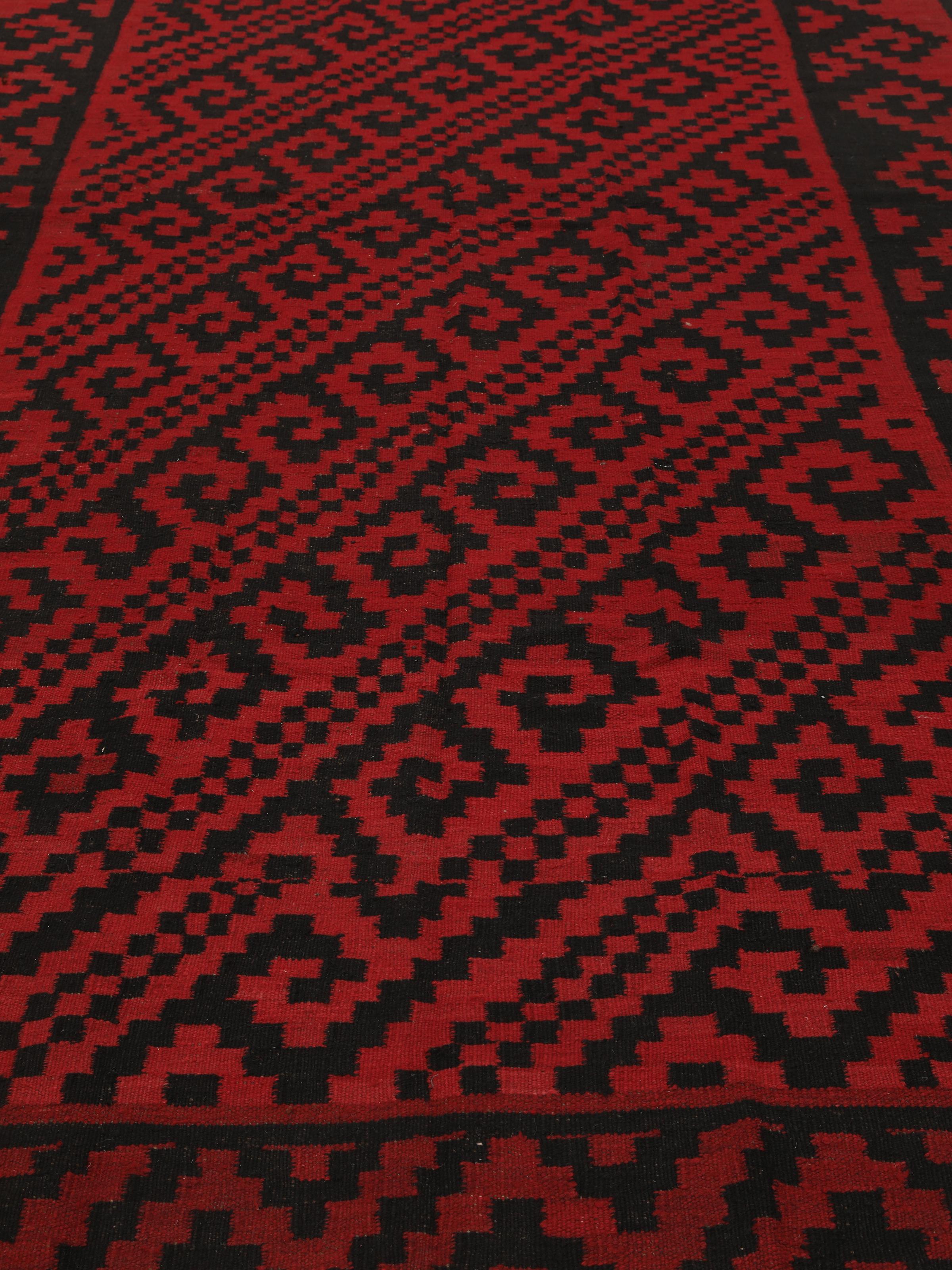
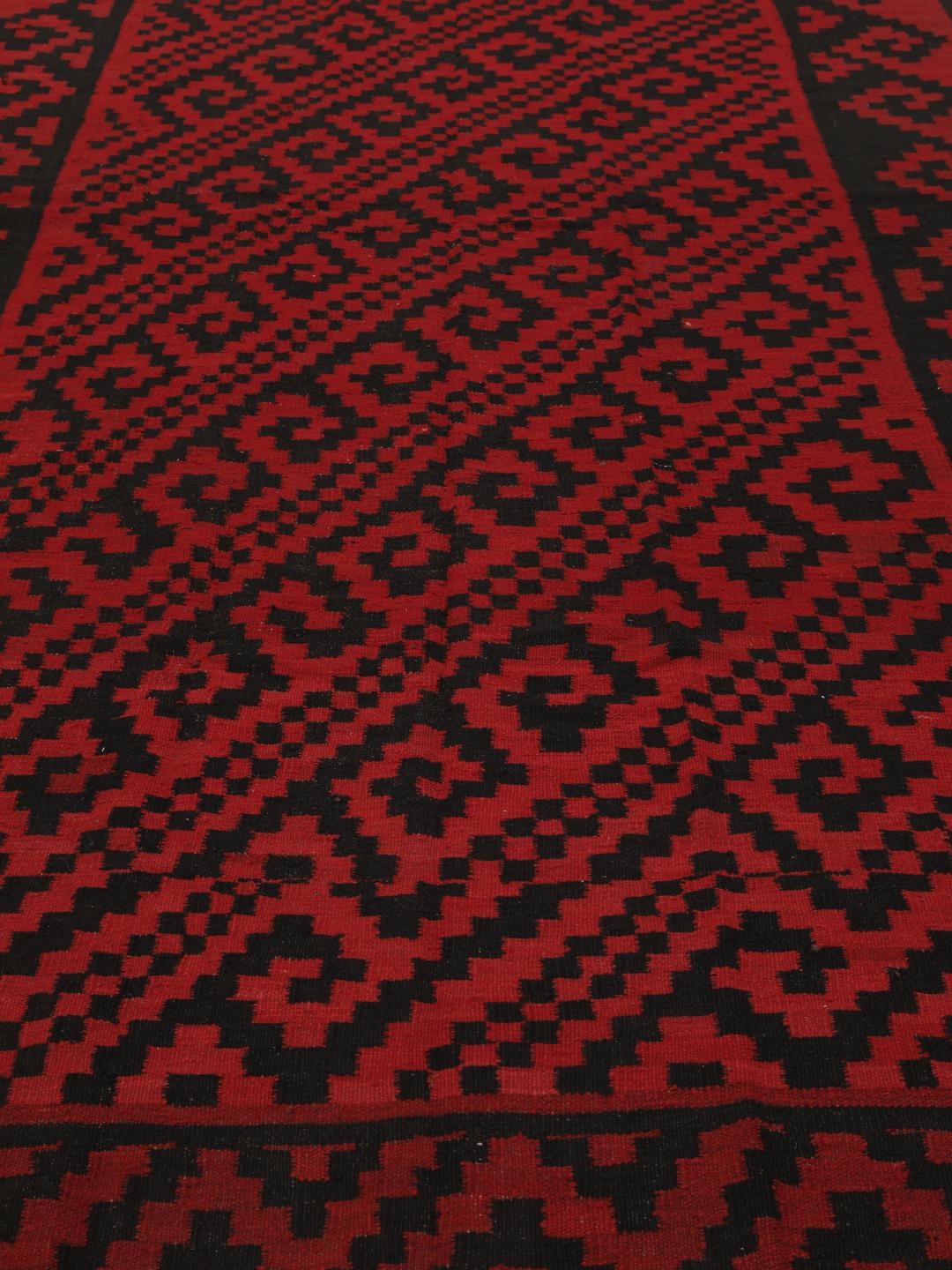
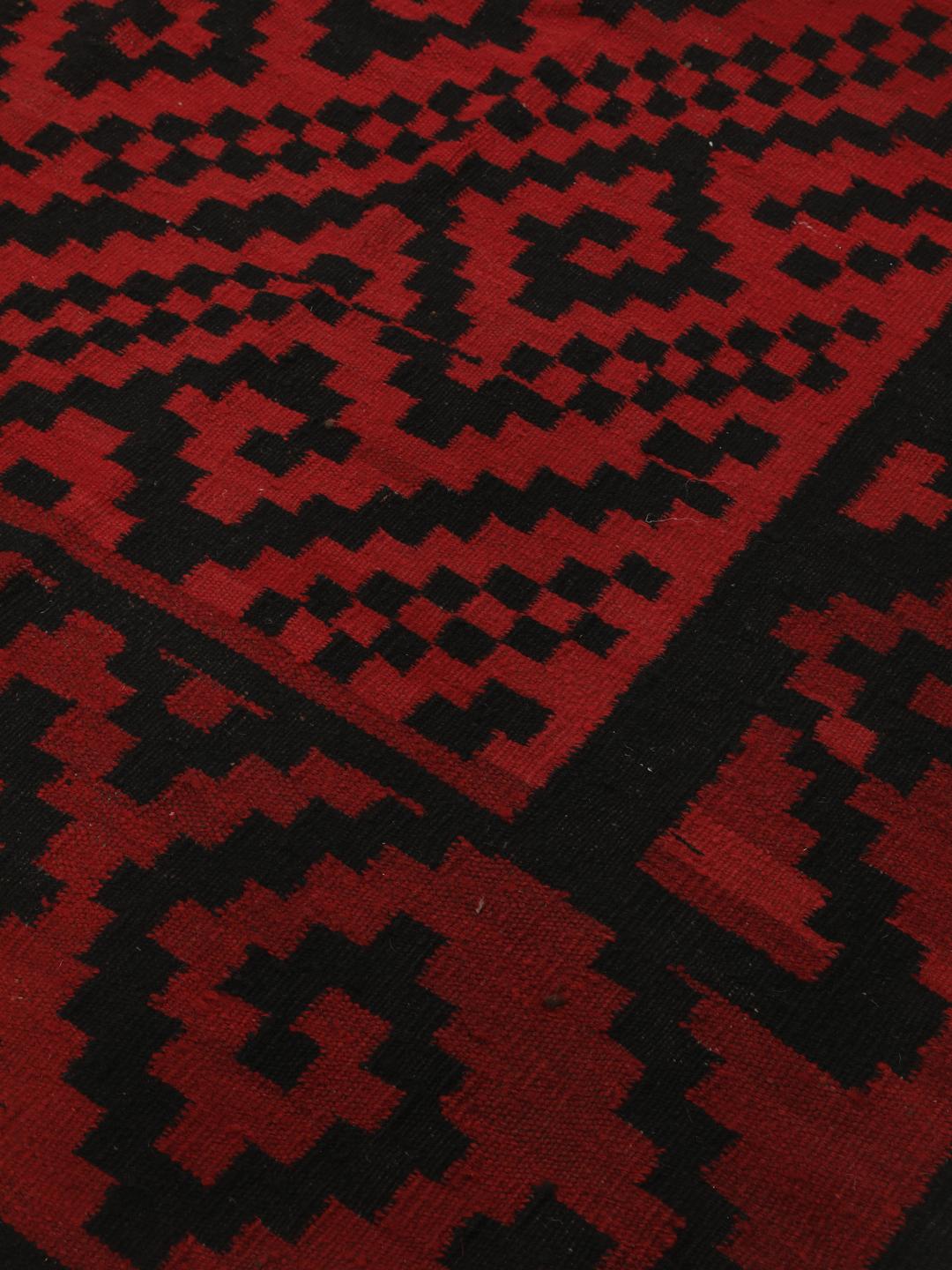
The design language of this rug is dominated by bold, geometric motifs that often carry symbolic meanings related to protection, fertility, or the natural landscape. The use of a strong red and black palette is characteristic of the region's aesthetic tradition, where natural dyes were historically used to create deep, lasting colours that evoke the warmth and spirit of the Afghan highlands.
Collecting these vintage pieces is a way to preserve a rich cultural heritage. Each rug serves as a document of the weaver's personal expression and the tribal identity of their origin. Owning an authentic Afghan Kelim means bringing a piece of this ancient craft into your home, celebrating the human effort and artistic legacy embedded in every thread.