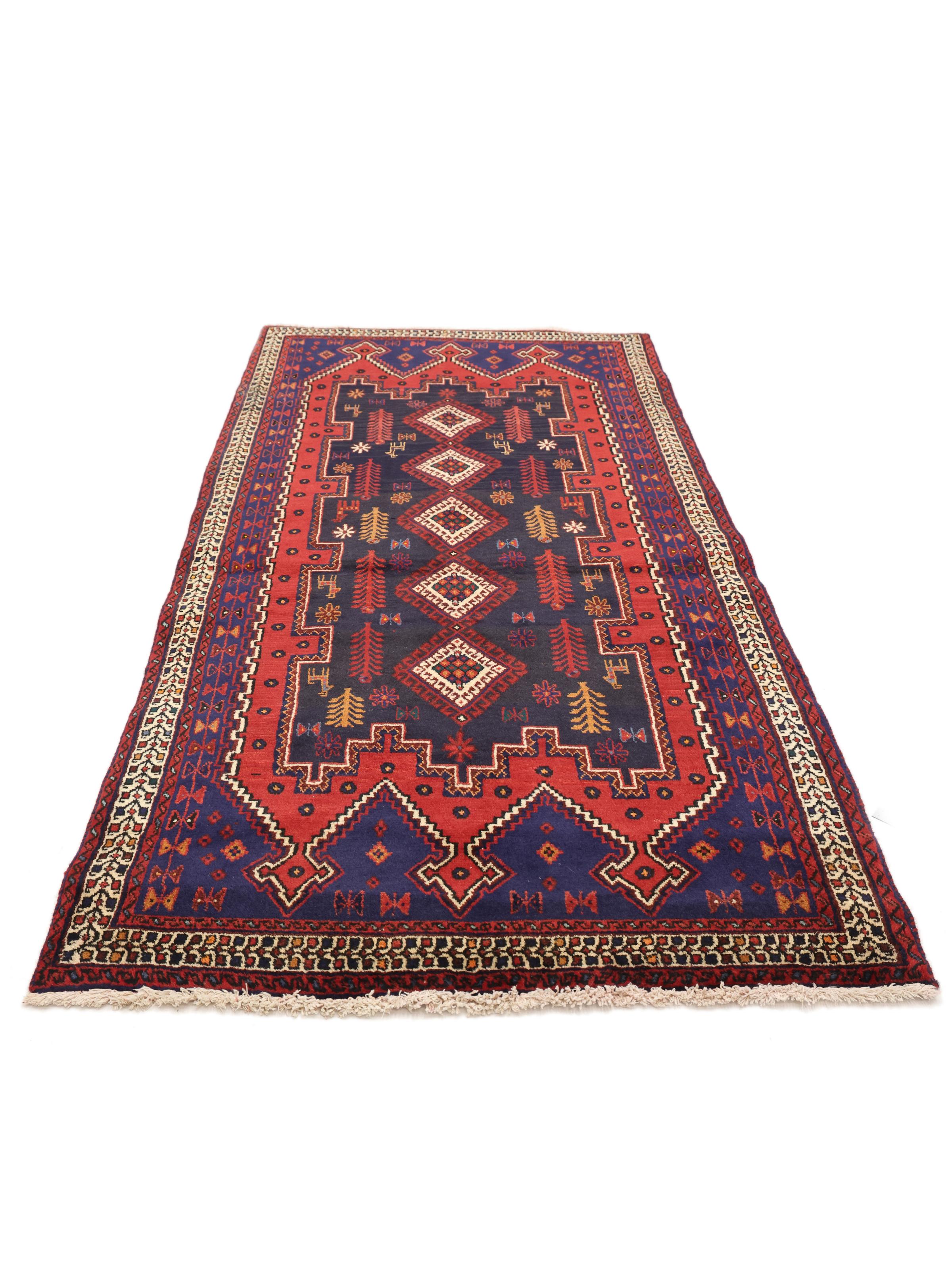
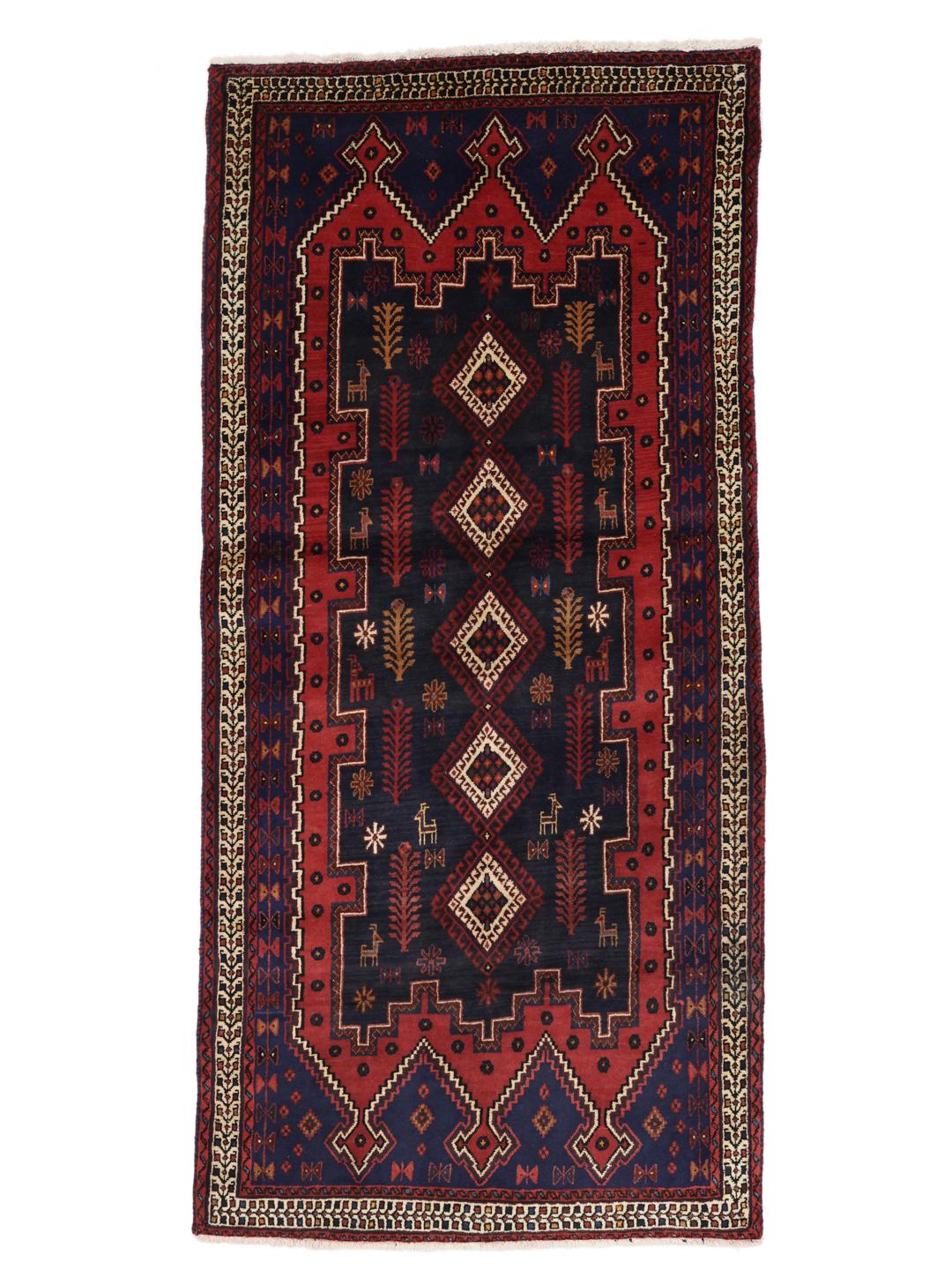
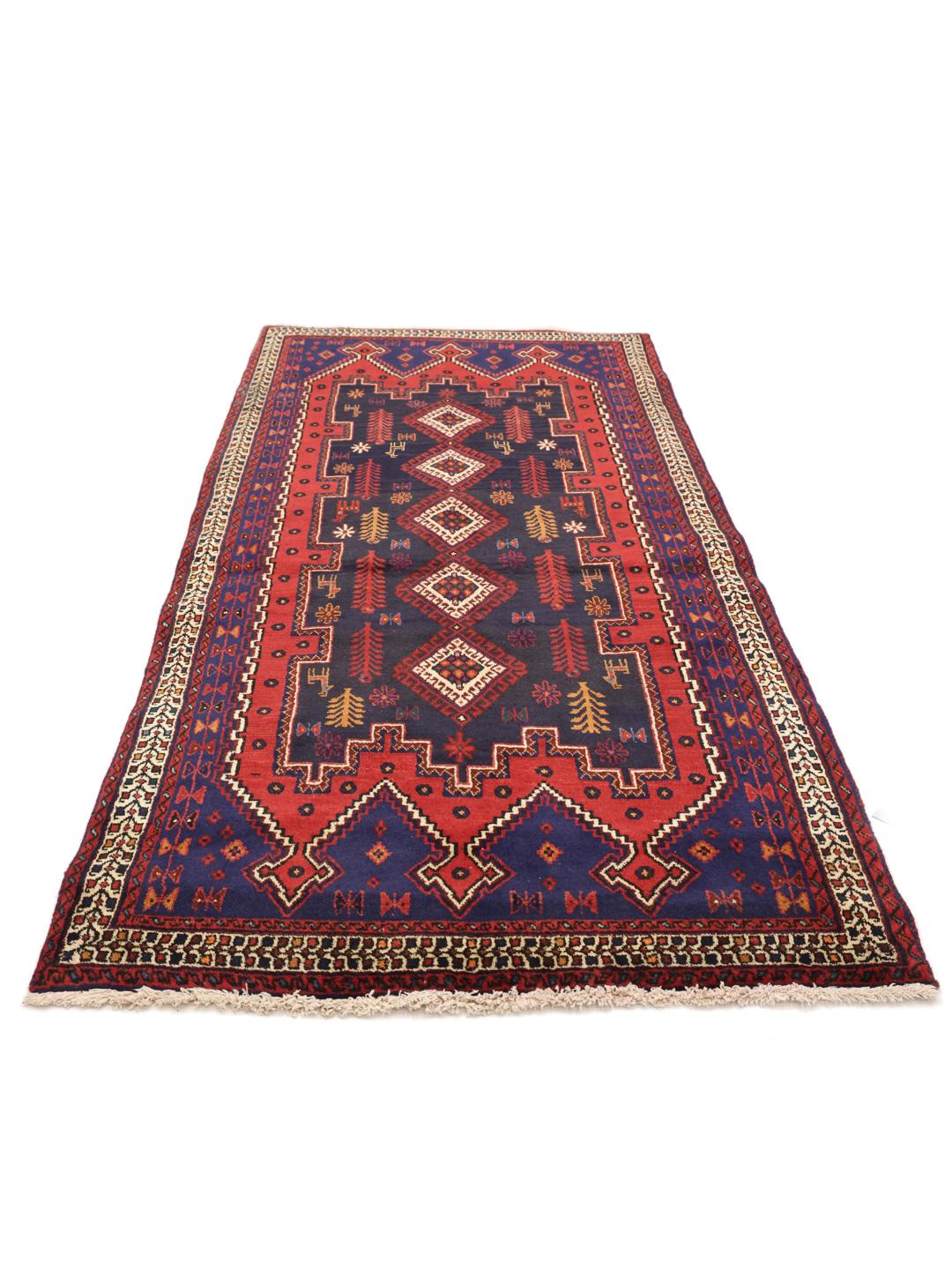
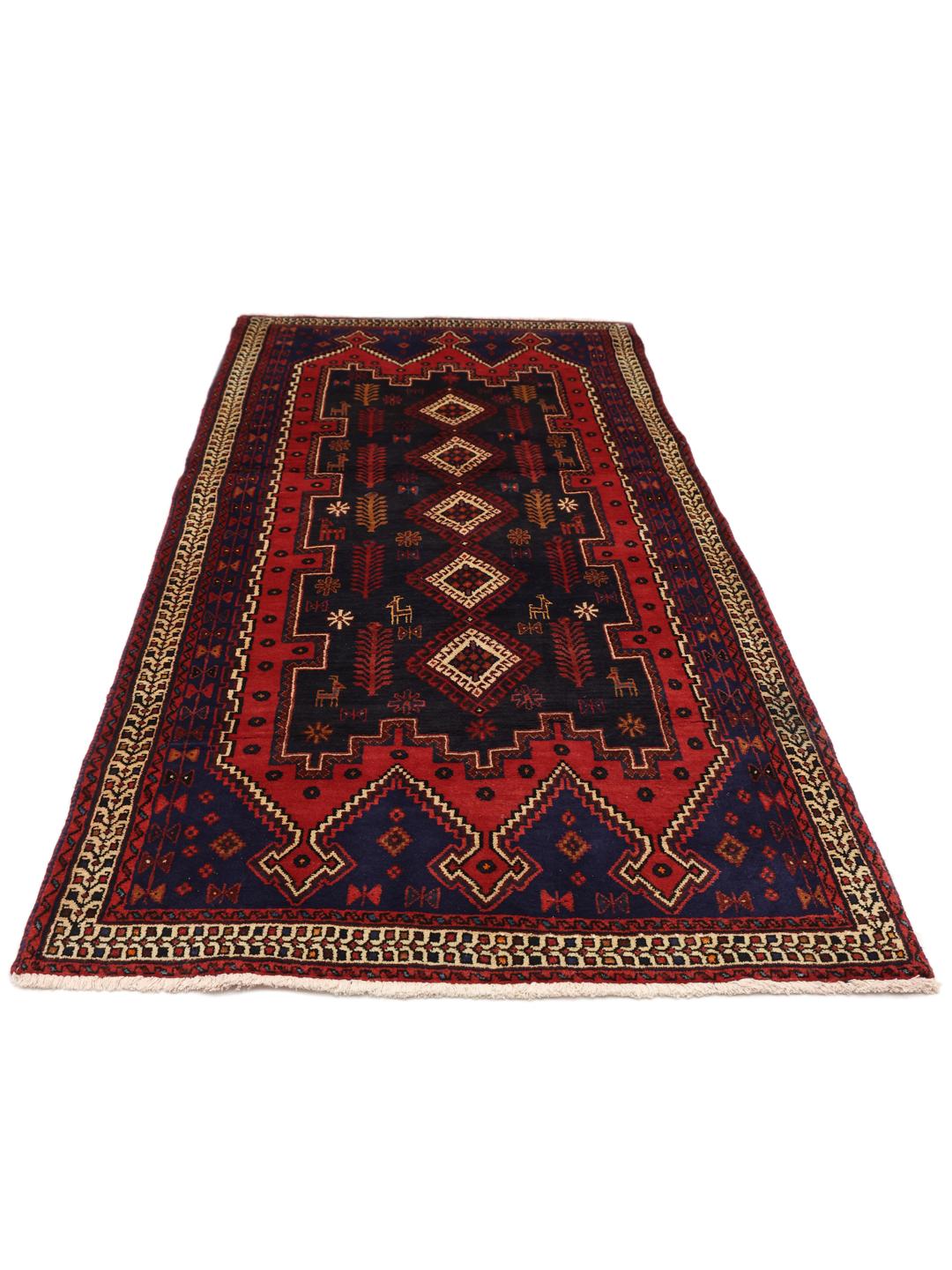
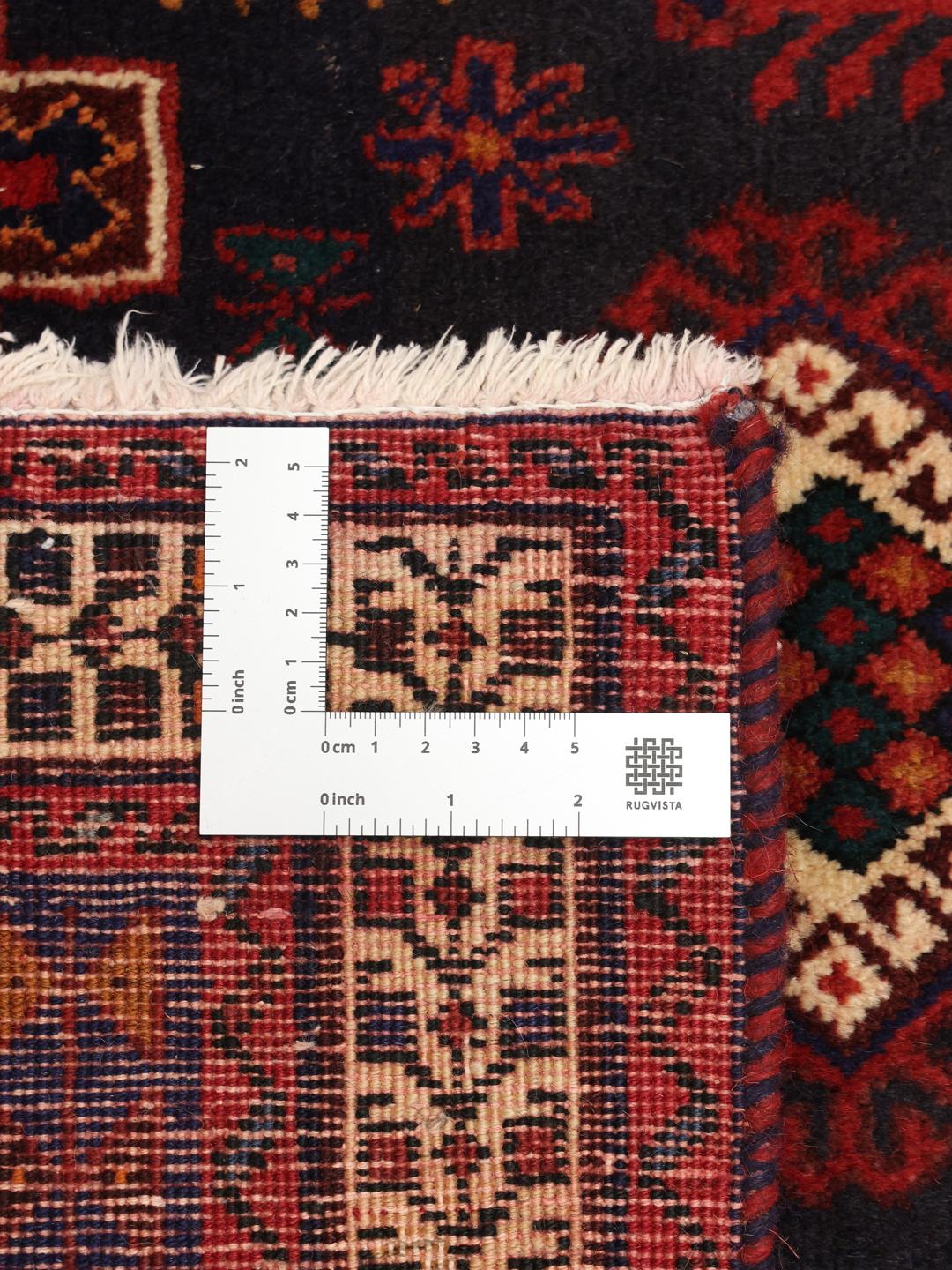
Afshar rugs originate from the nomadic and semi-nomadic Afshar tribes of the Middle East, a group with a rich history of migration and craft. Historically, these weavers were known for their resilience and adaptability, traits that are reflected in the sturdy and expressive nature of their textile work.
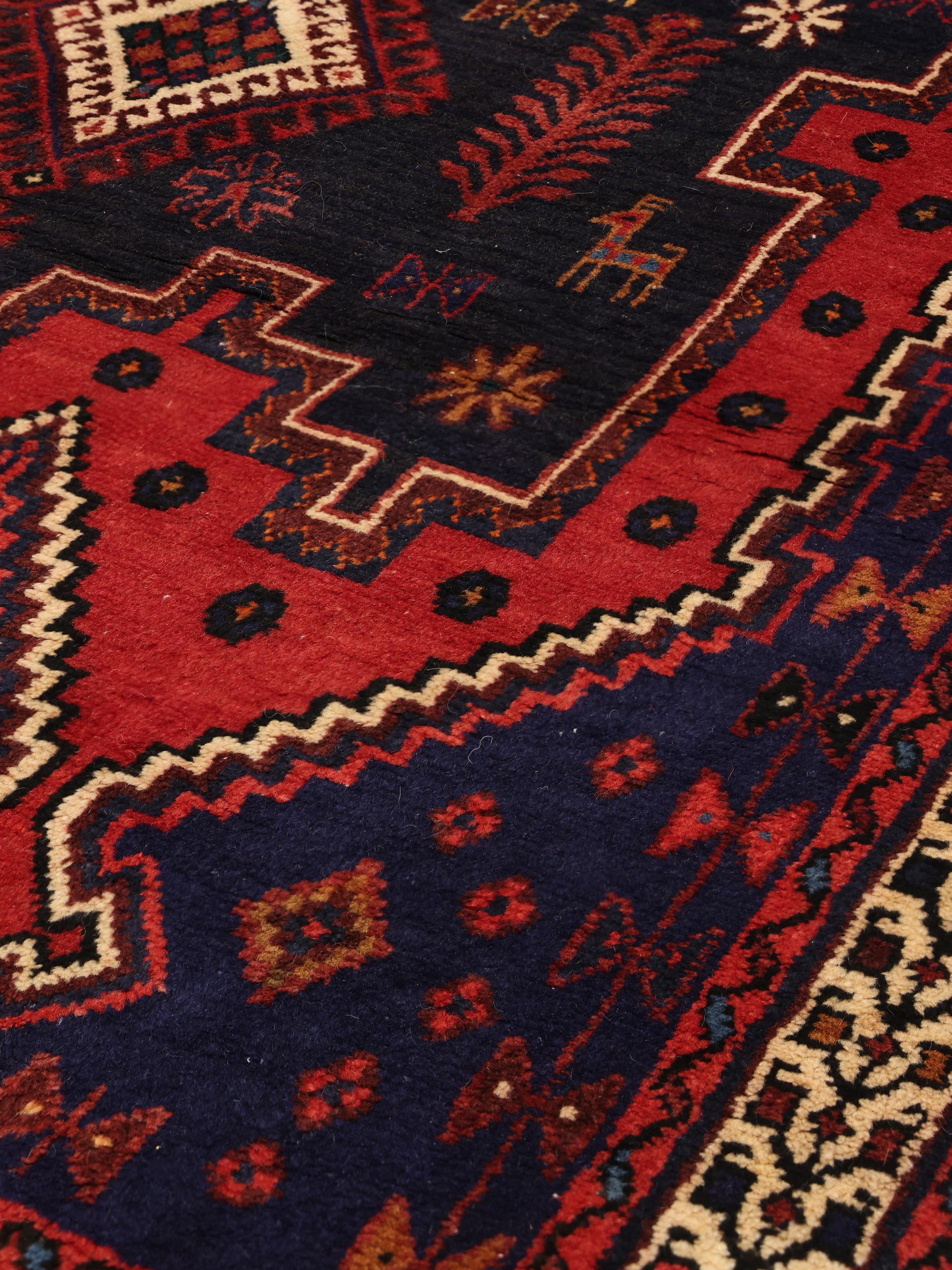
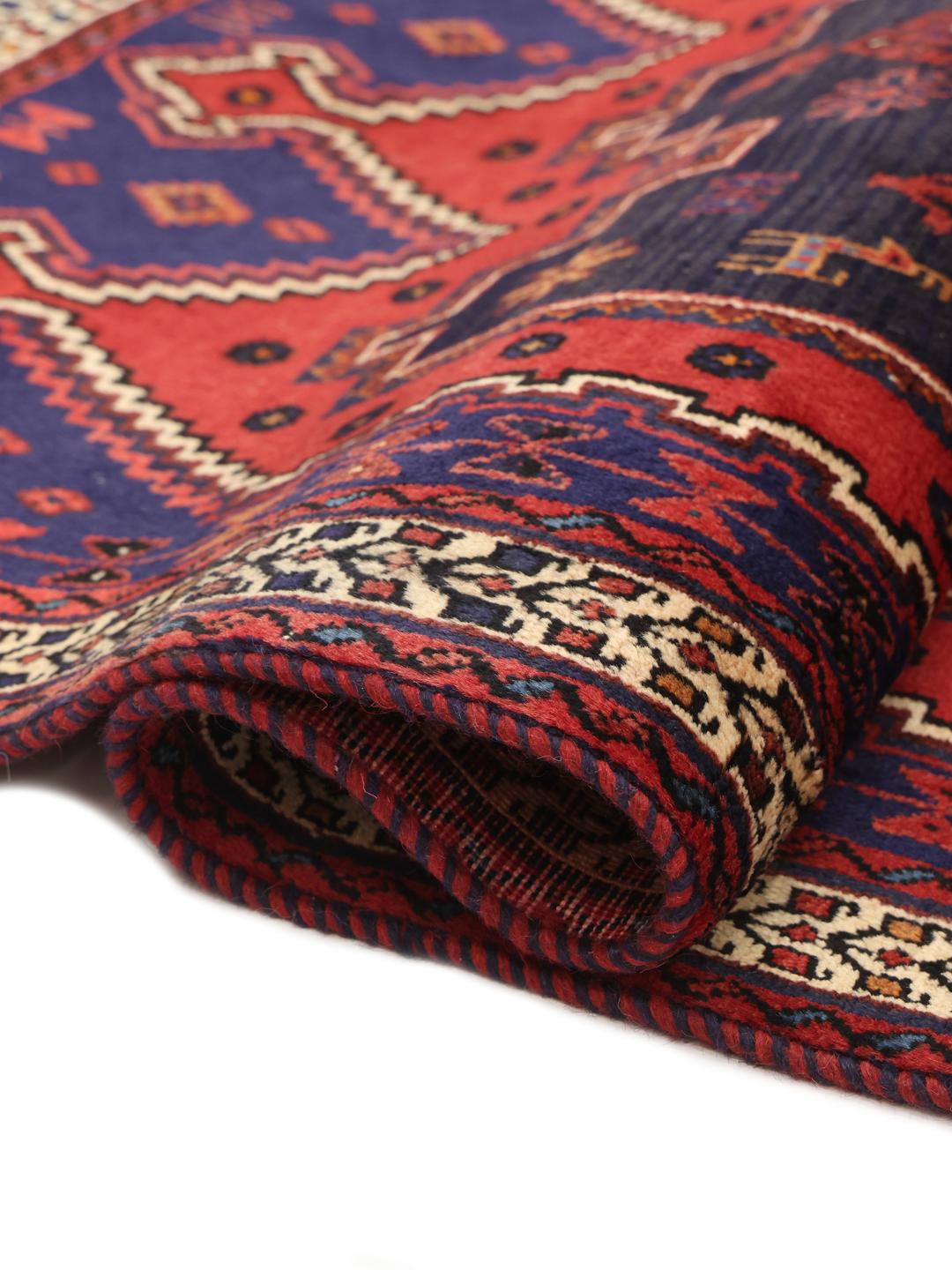
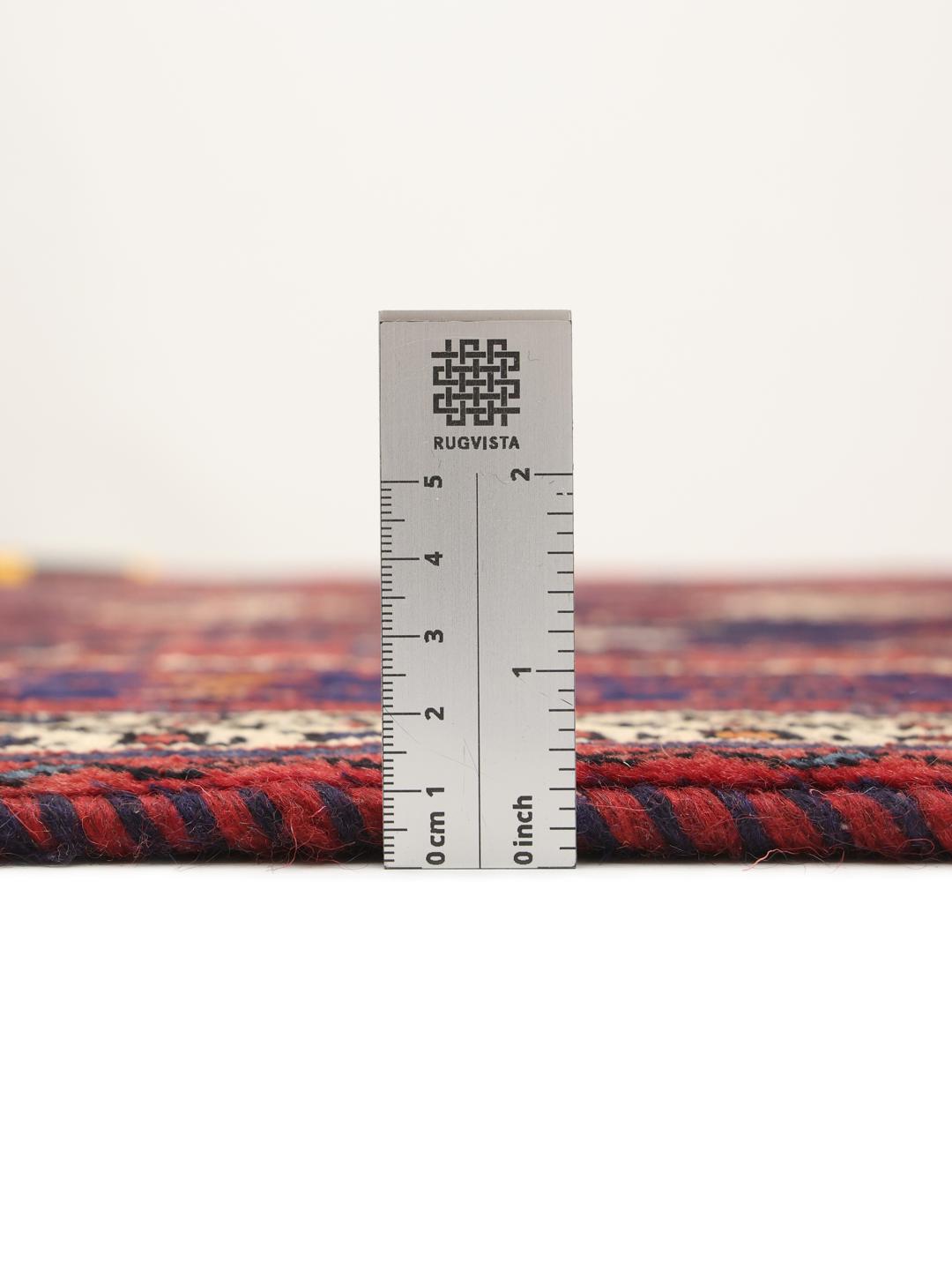
The term 'hand-knotted' refers to the traditional method where individual strands of wool are tied to the foundation, creating a pile that is both dense and luxurious. This labour-intensive technique is essential for achieving the complex patterns and long-lasting durability that these rugs are celebrated for globally.
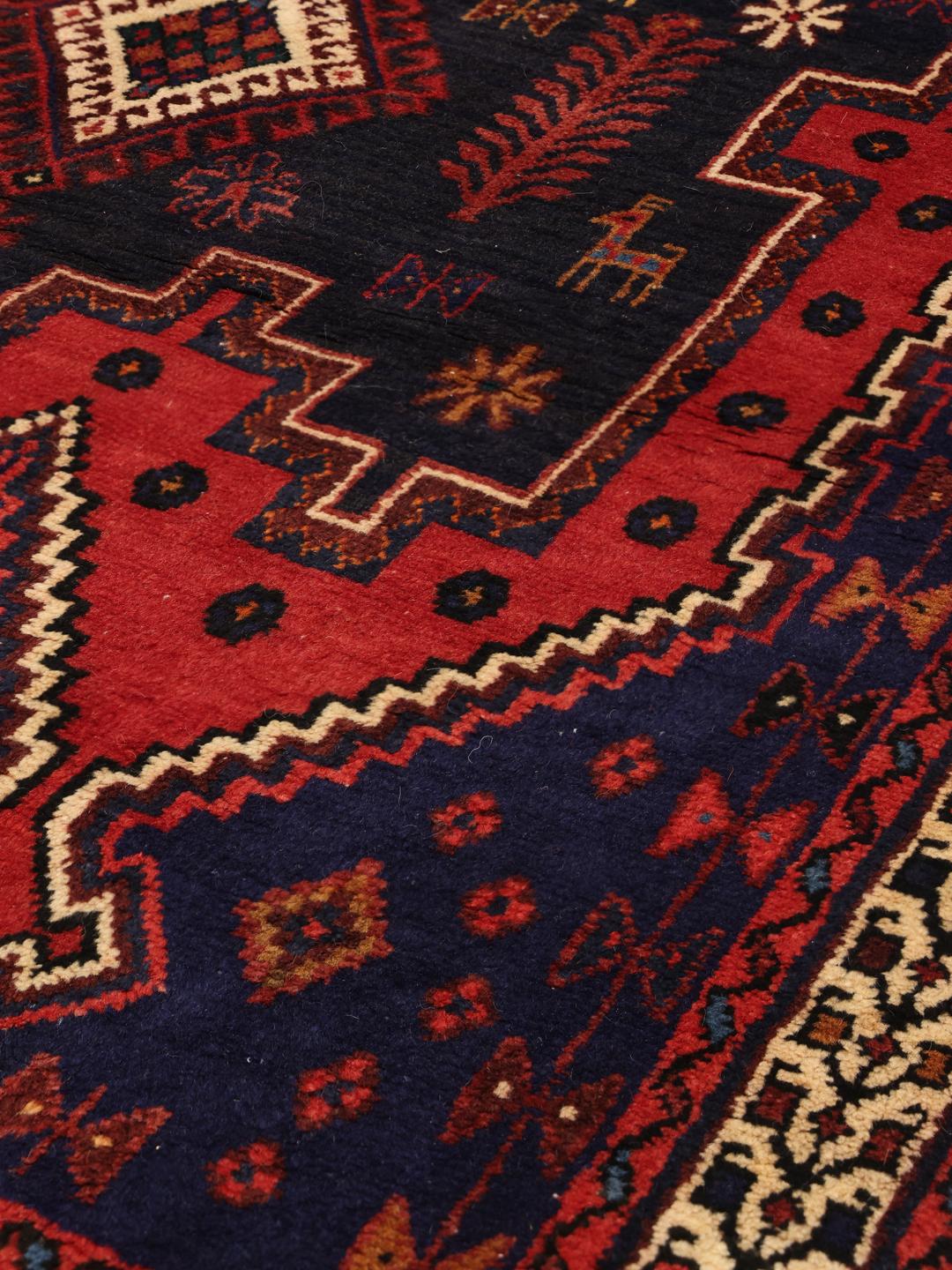
Visually, these pieces are defined by their bold geometric language. The field often features iconic diamond-shaped medallions, stylised floral motifs, and animal figures that tell stories of the environment and culture. The use of deep, resonant colours is a hallmark of the style, often contrasted with intricate, decorative borders that frame the narrative within.
Collecting an Afshar rug is an investment in cultural heritage. These pieces are highly valued by enthusiasts for their authentic, non-commercial aesthetic and the skill required to produce them. Owning one is a way to preserve a connection to ancient craft traditions while enjoying a piece of functional art that adds depth to any interior.