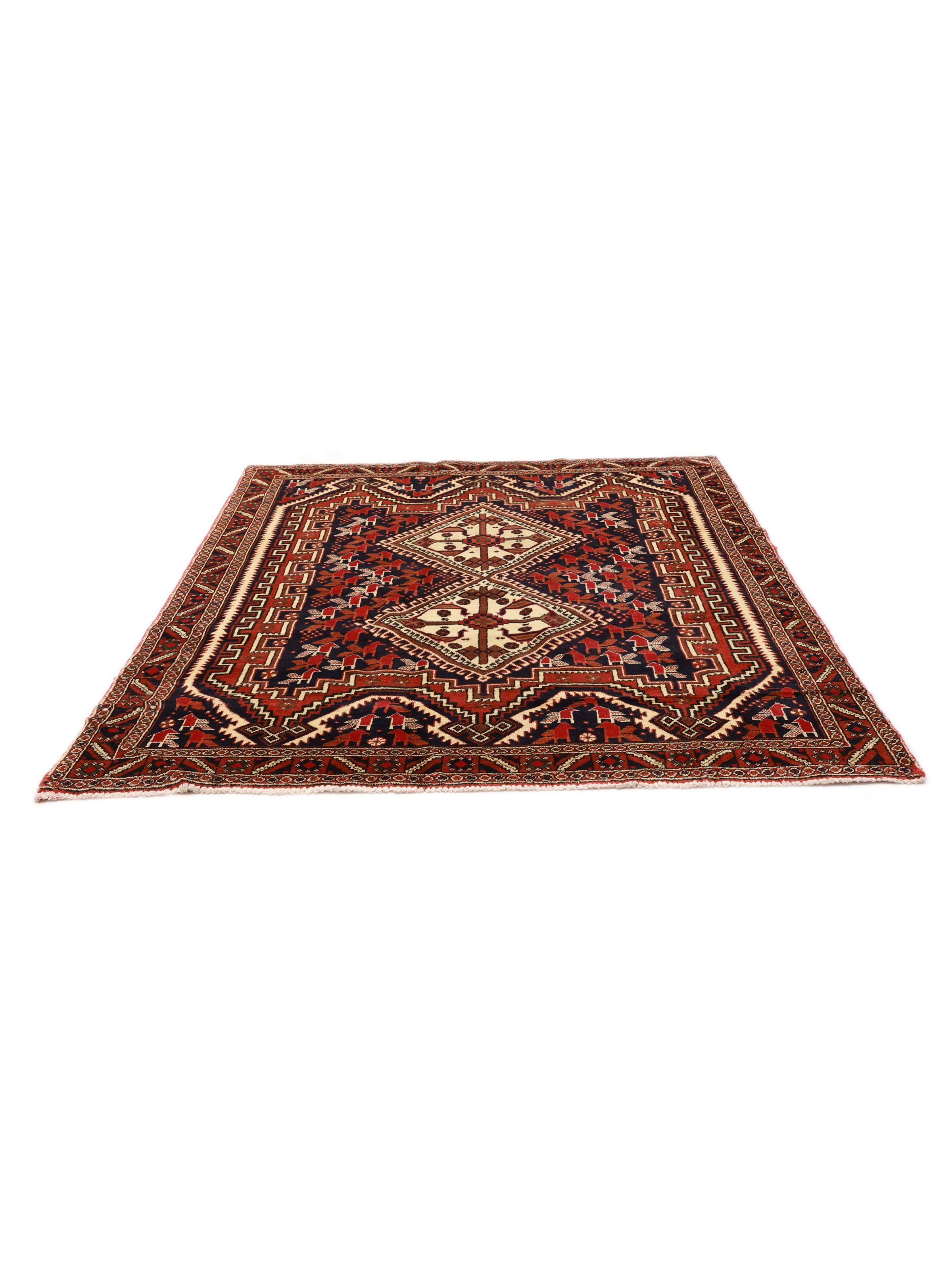
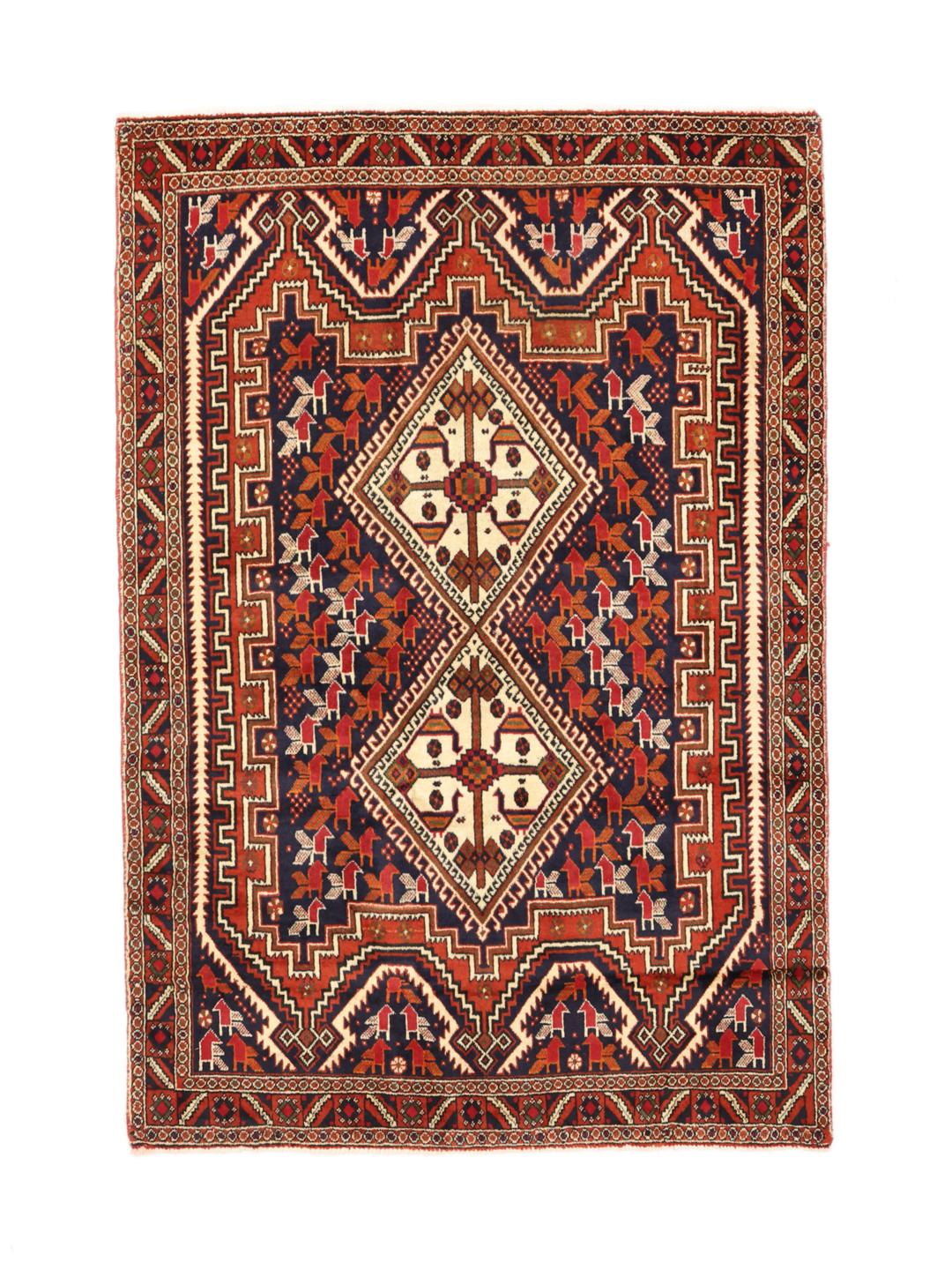
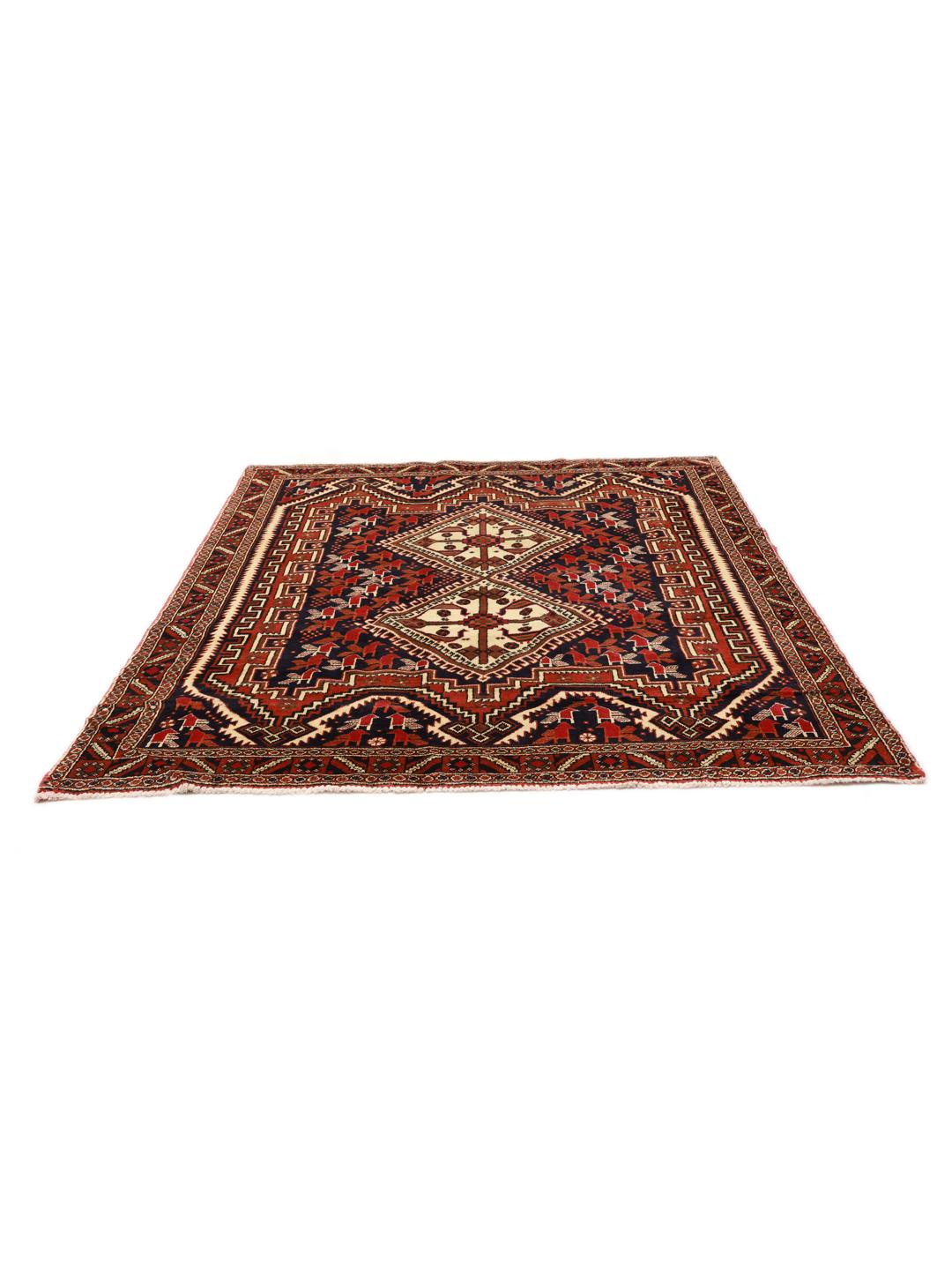
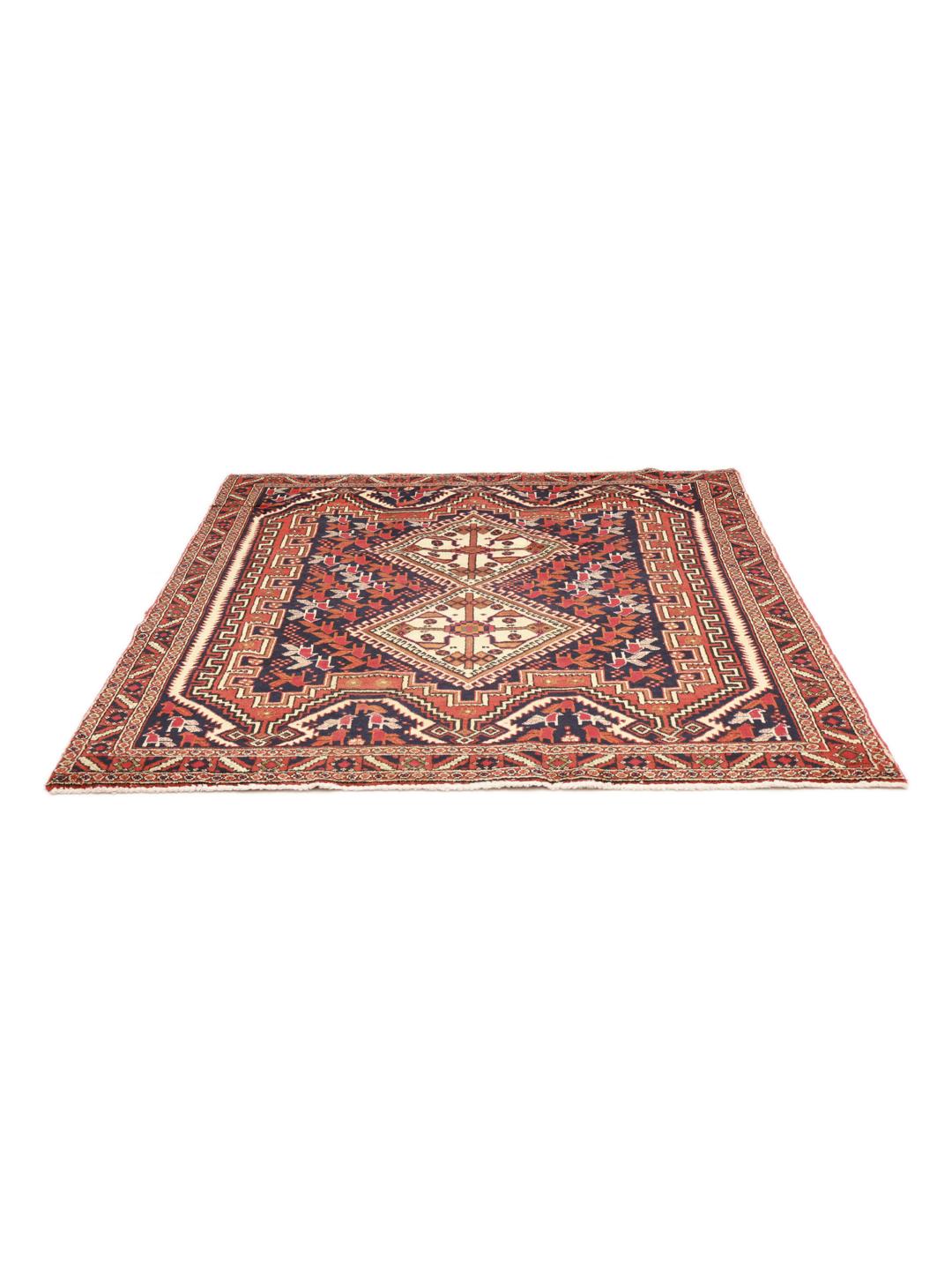
The Afshar Shahre Babak rug hails from the mountainous regions of the Middle East, where the Afshar tribe has maintained a distinct weaving tradition for centuries. These rugs are deeply rooted in the nomadic history of the region, reflecting the resilience and creativity of a people who have long lived in harmony with their environment. The craft has been passed down through generations, preserving unique tribal aesthetics that are distinct from urban workshop productions.
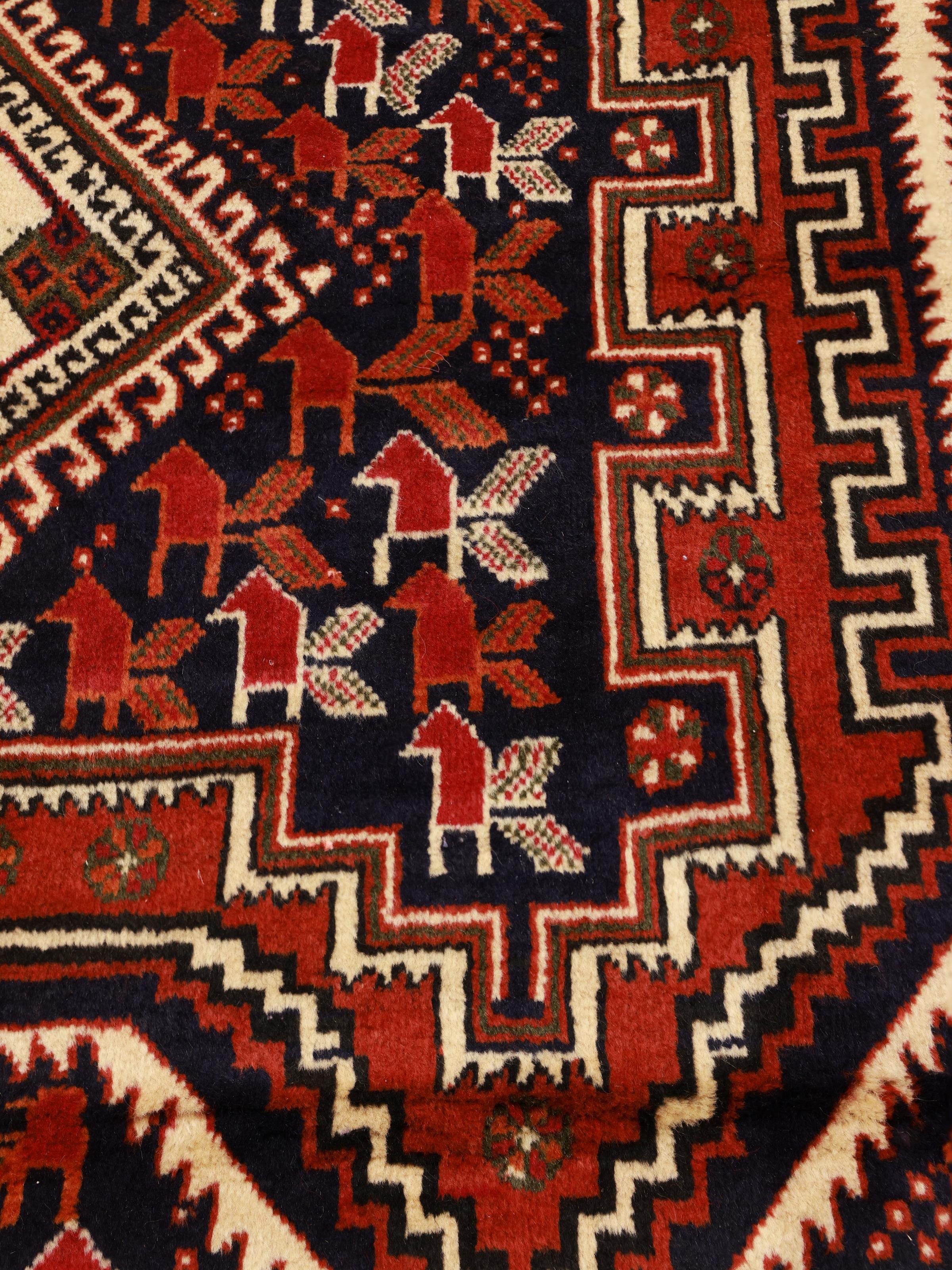
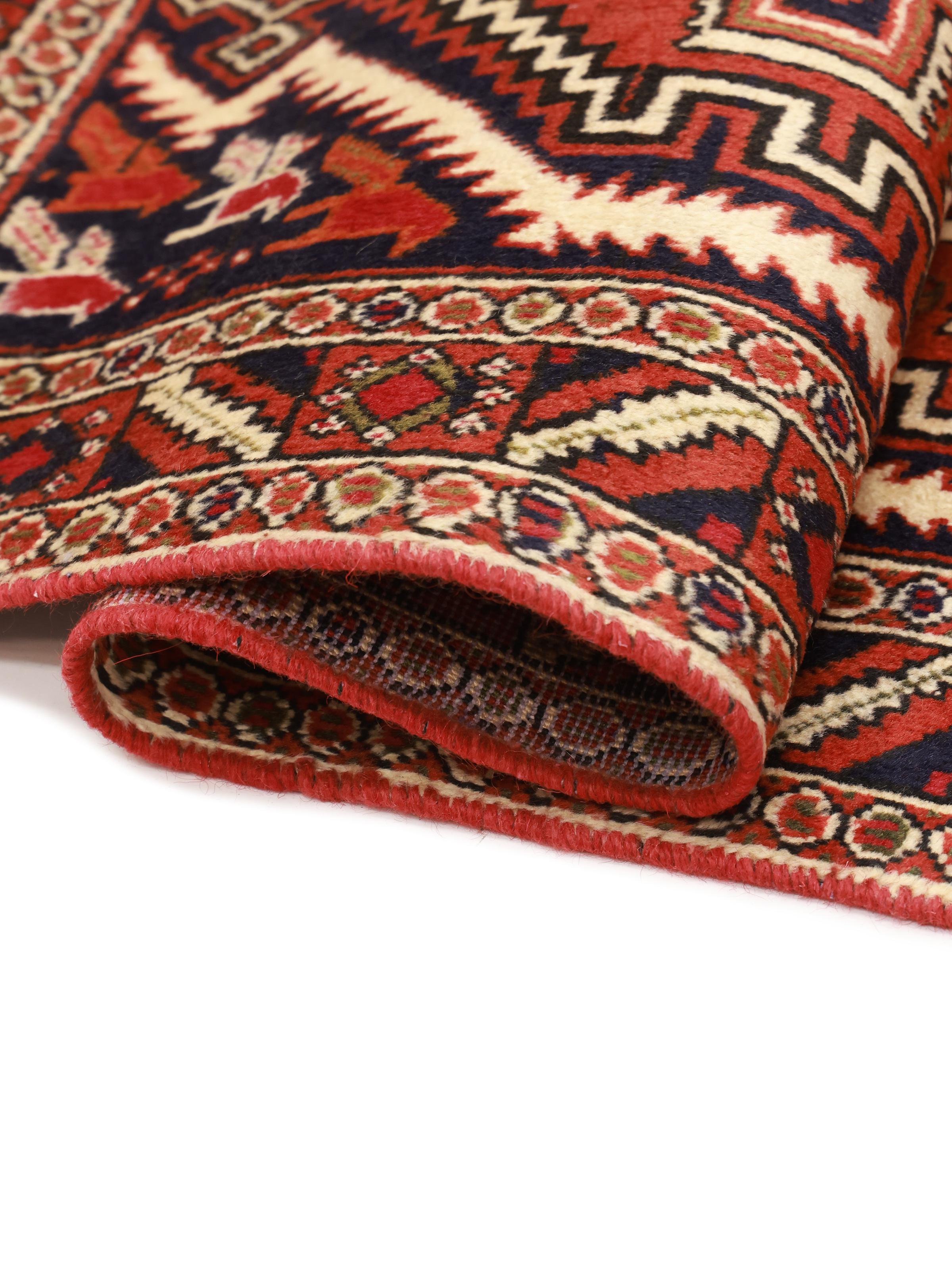
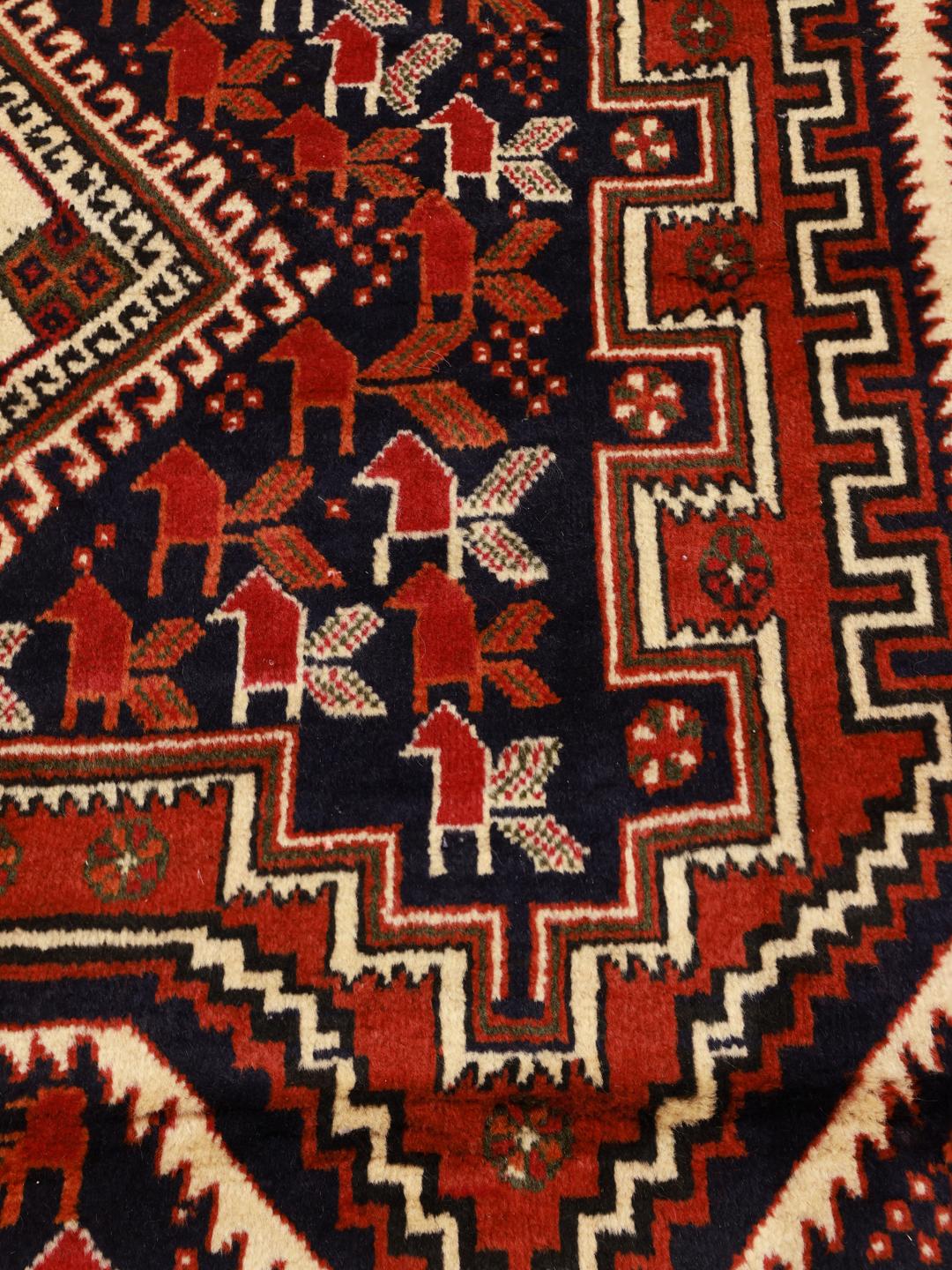
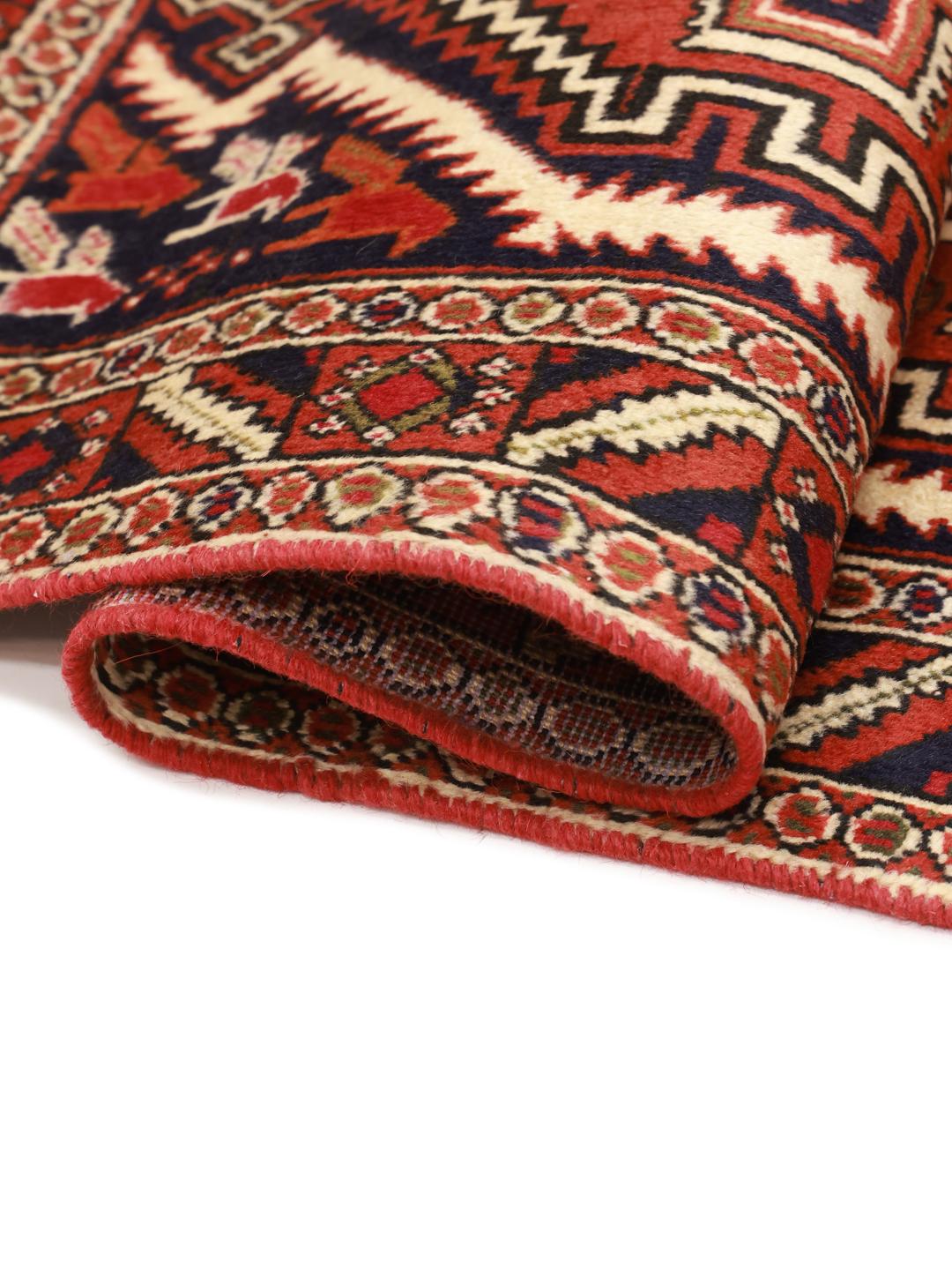
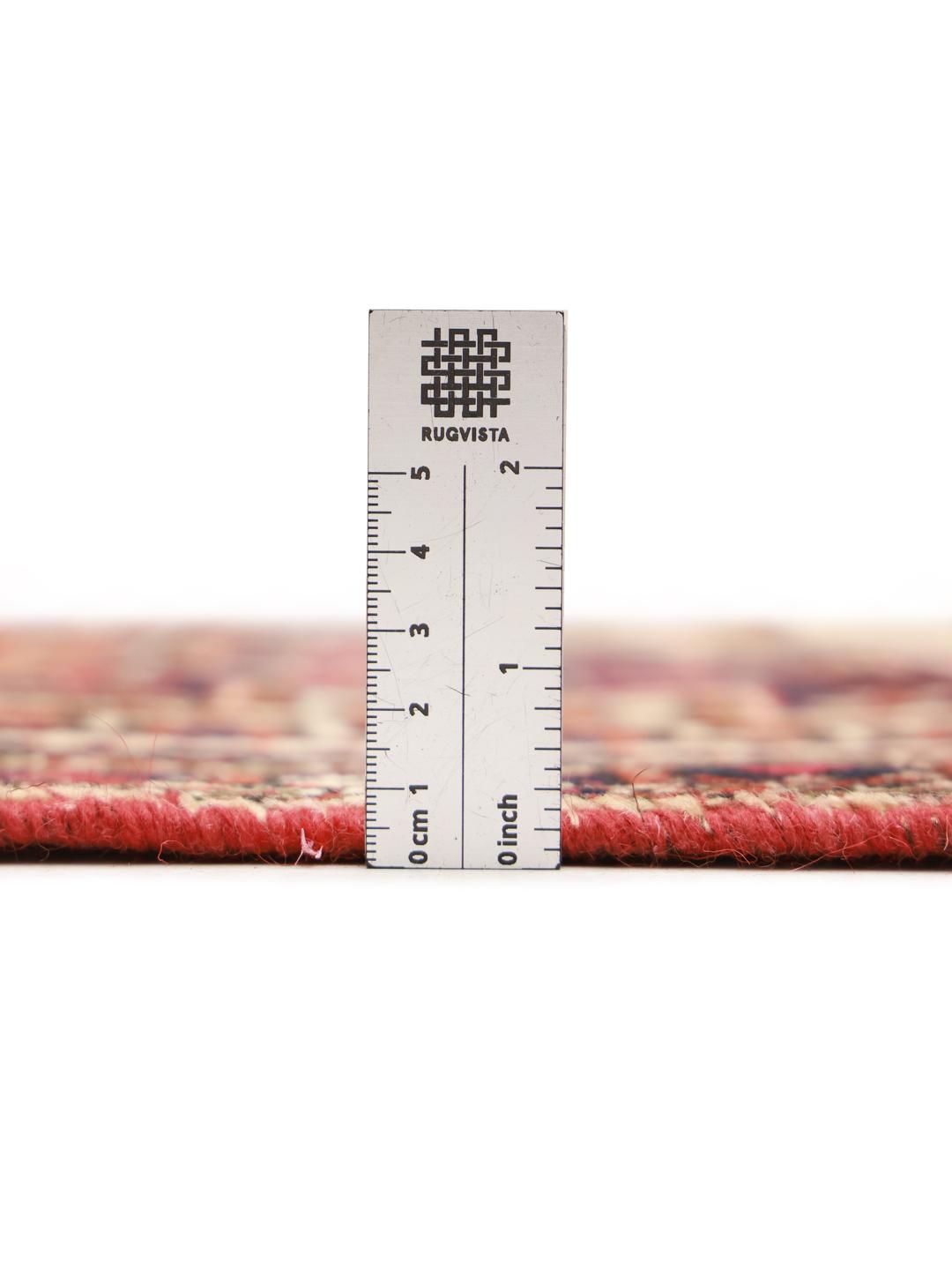
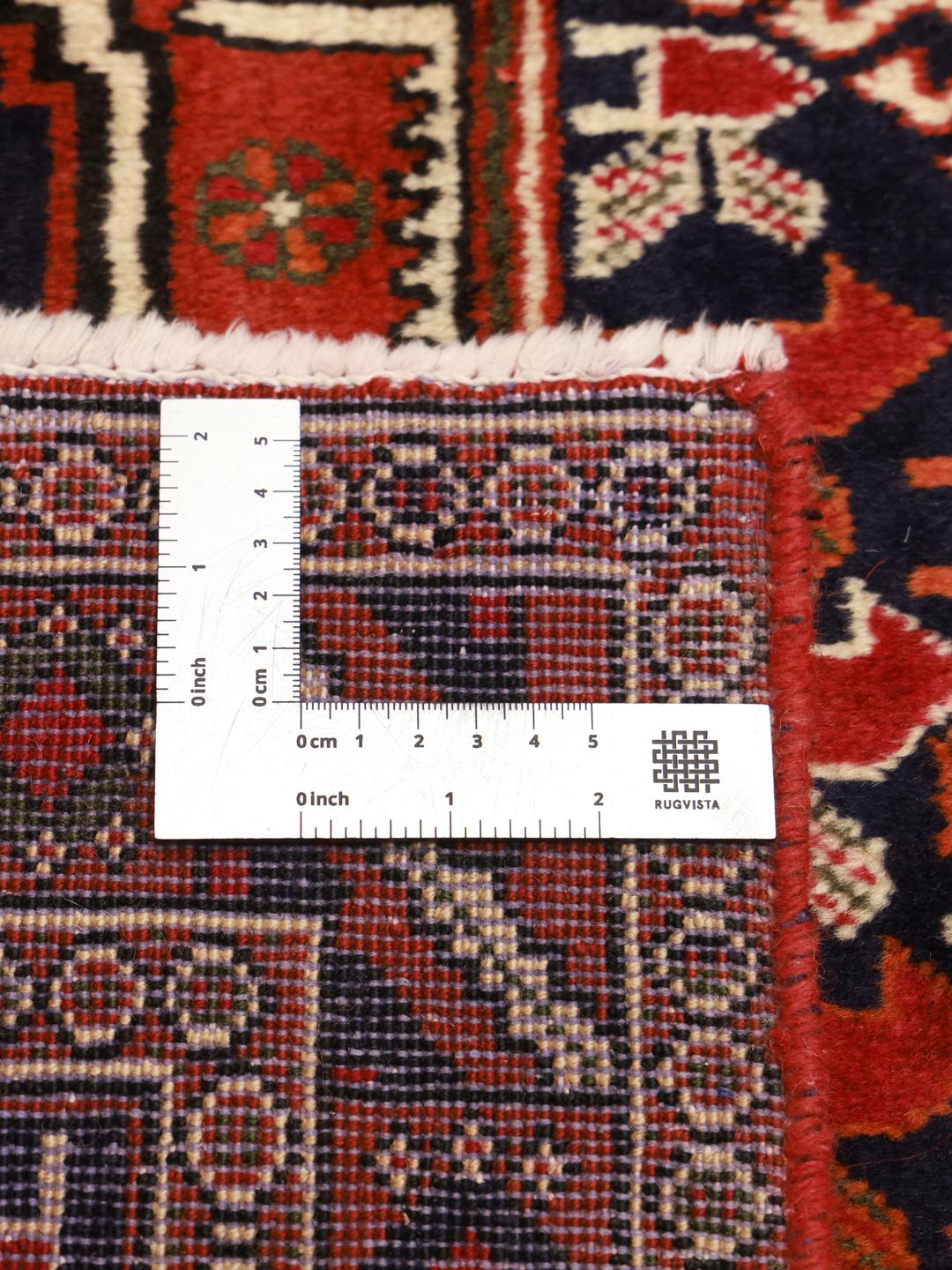
Technically, the quality of these rugs is defined by their dense, hand-knotted construction. The use of wool, which is often sourced locally from sheep raised in high-altitude pastures, results in a pile that is exceptionally hard-wearing and naturally lustrous. The term 'Shahre Babak' refers specifically to the town known for producing some of the most refined examples of these tribal rugs, where the weaving techniques are held in high regard for their consistency and precision.
Visually, these rugs are celebrated for their bold geometric language. Common motifs include the central medallion, which often mirrors the octagonal or diamond-shaped forms seen in this piece, surrounded by stylized animal figures and geometric borders. The colour palettes typically rely on deep reds and blues derived from natural dyes, creating a balanced, earthy aesthetic that feels both ancient and contemporary.
Collecting an Afshar Shahre Babak rug is a way of preserving a vanishing art form. In a world of mass-produced goods, these rugs represent a commitment to slow, deliberate craftsmanship. They are valued not just for their aesthetic appeal, but for the history and human story woven into every thread. Owning one is an act of stewardship, ensuring that this rich cultural legacy continues to be appreciated for generations.