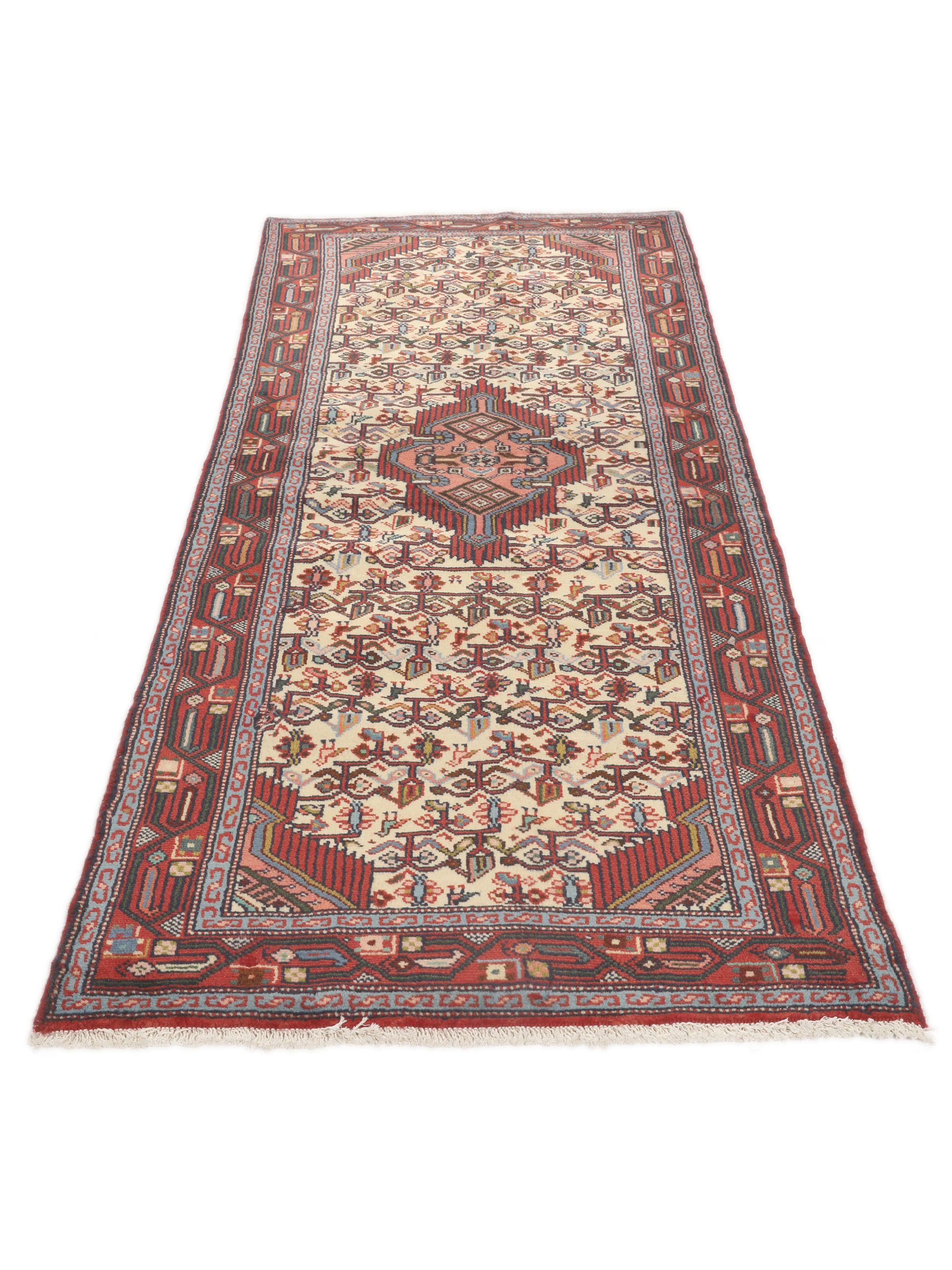
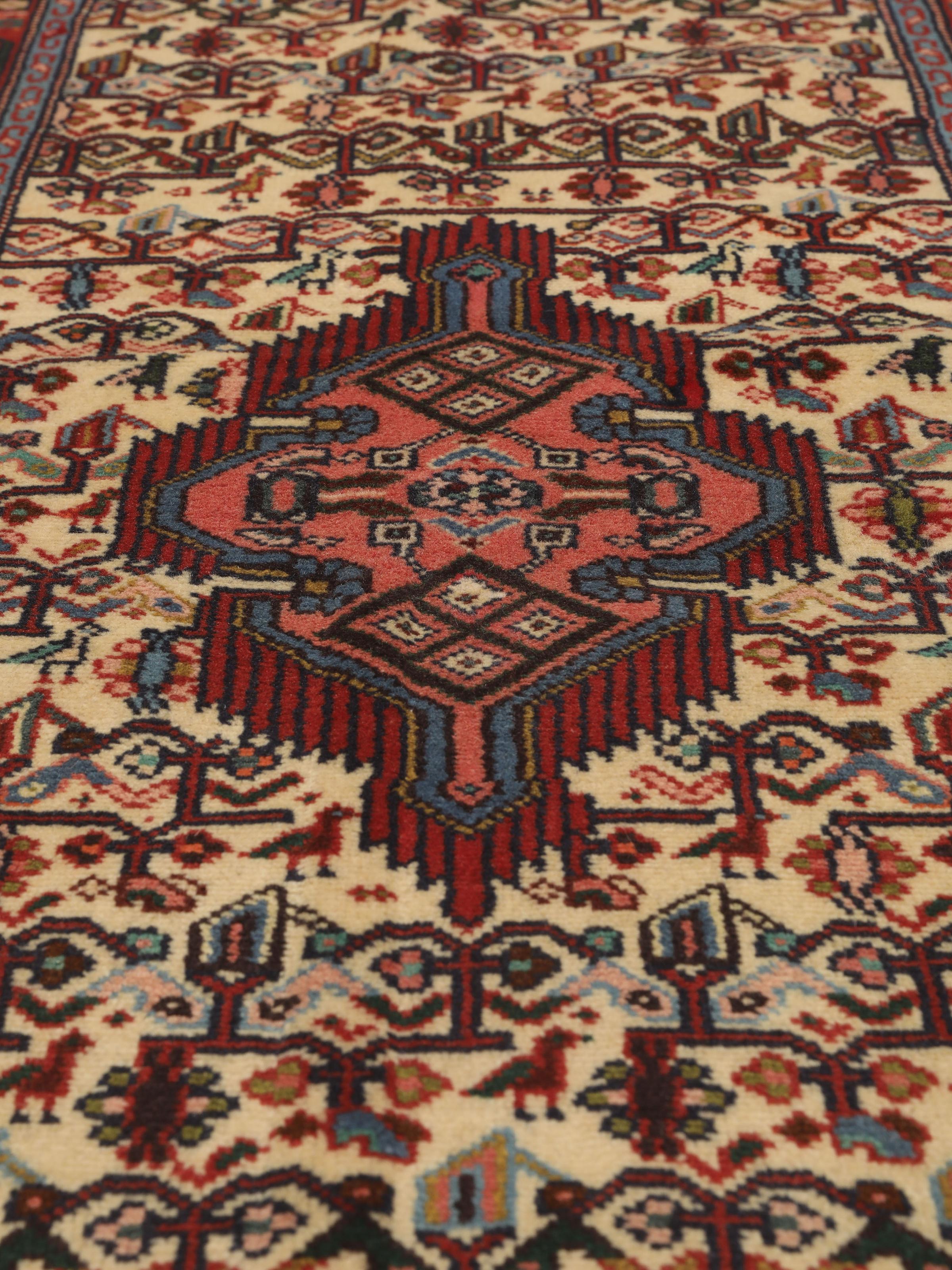
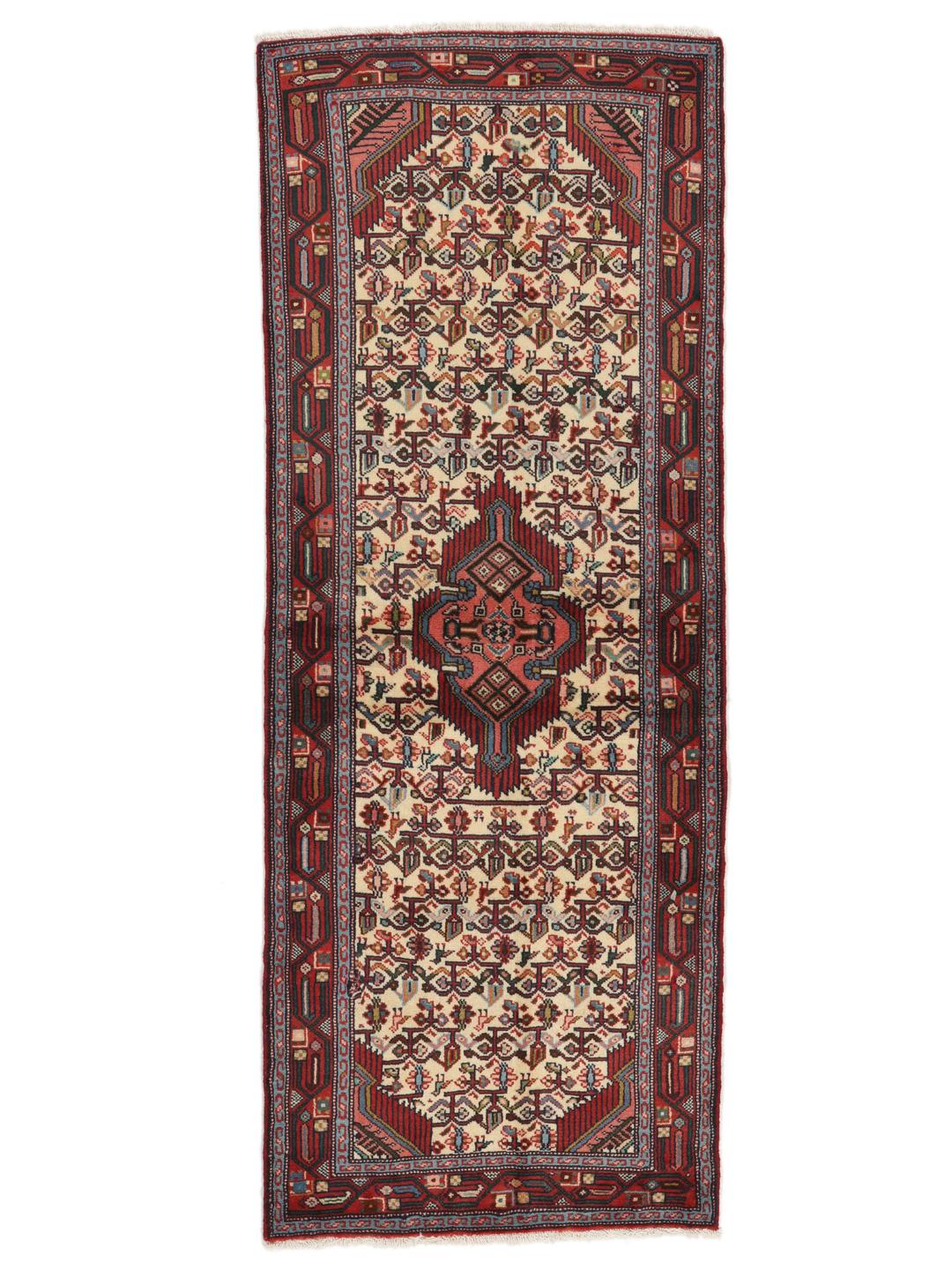
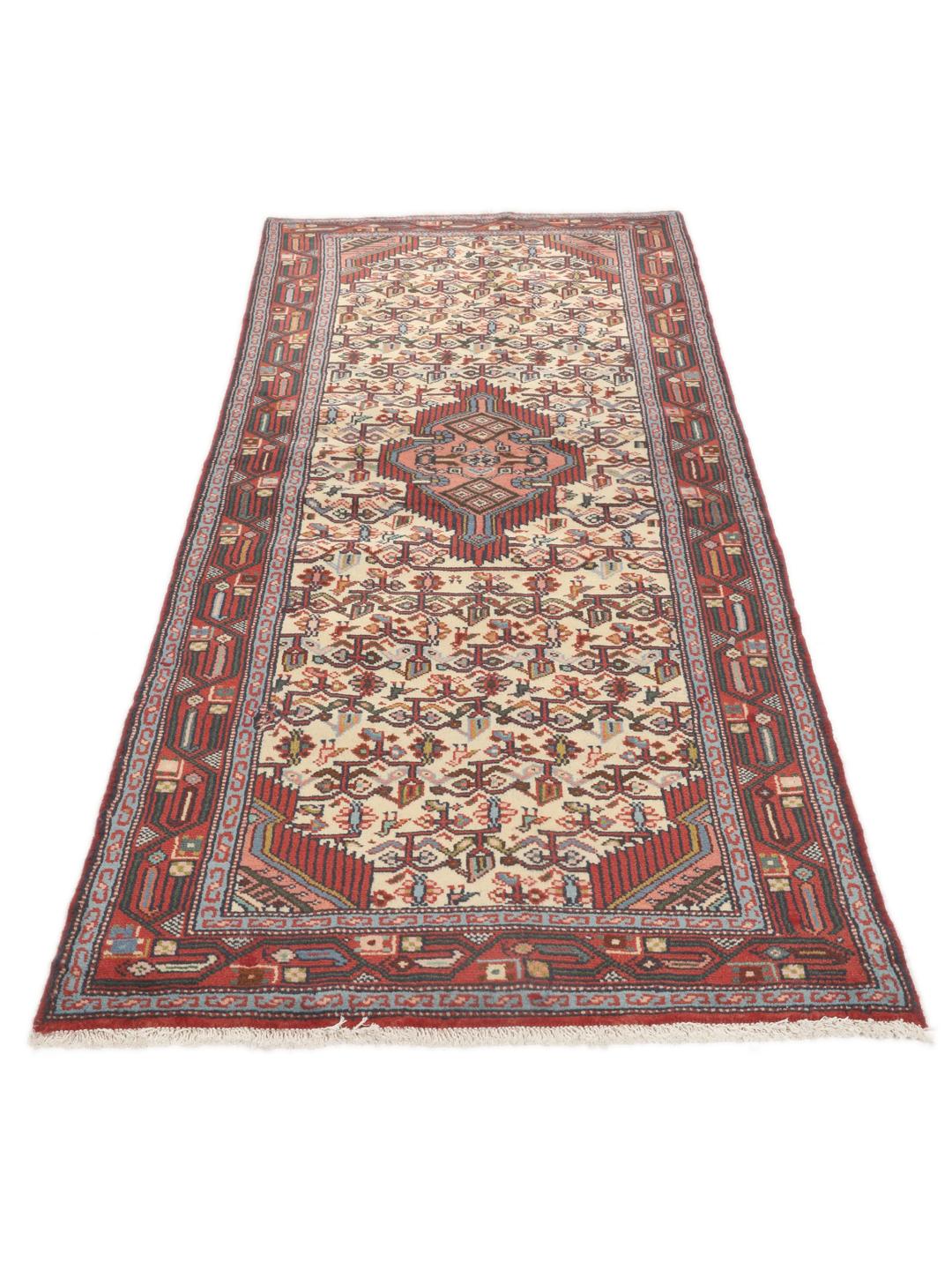
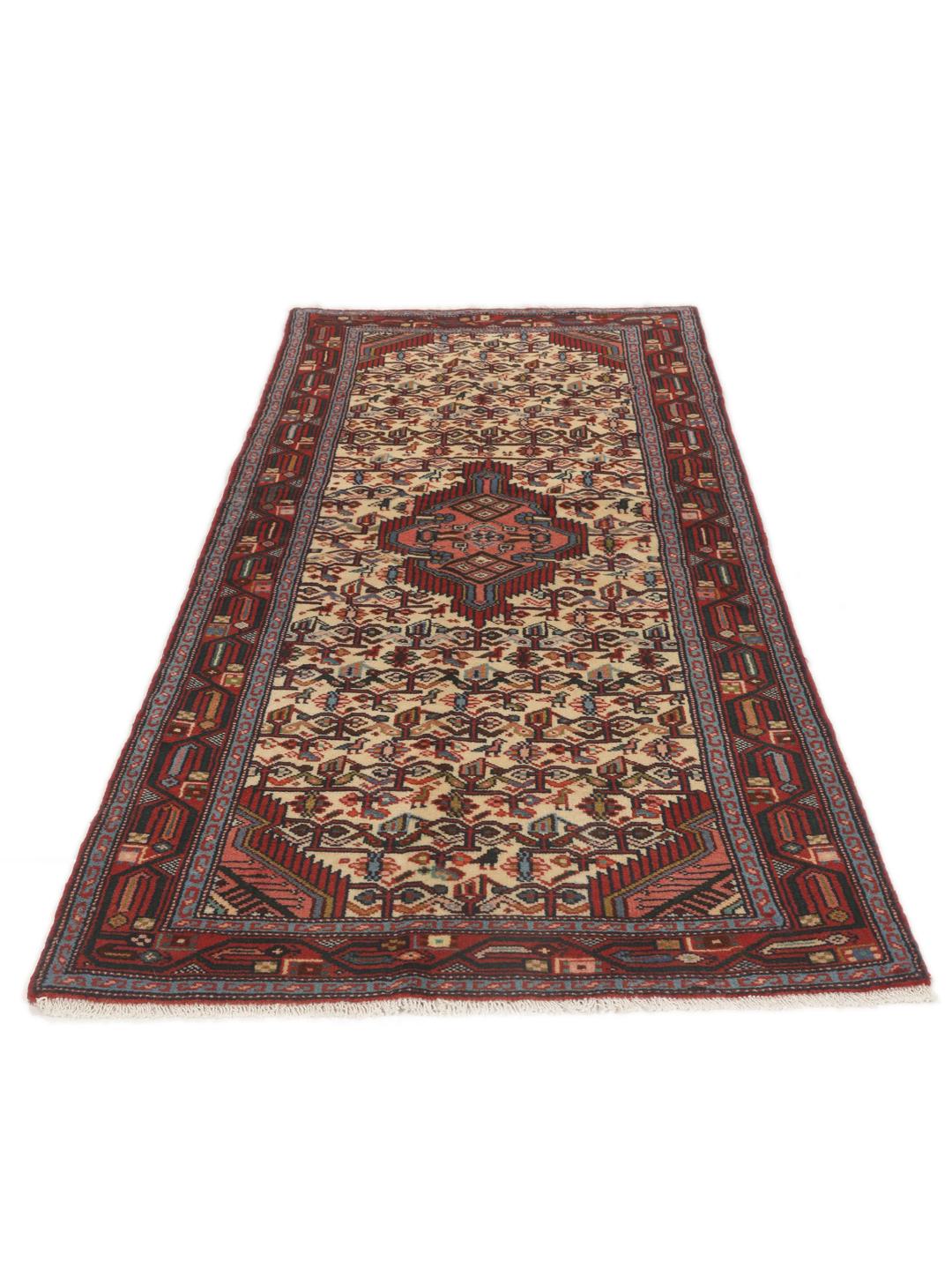
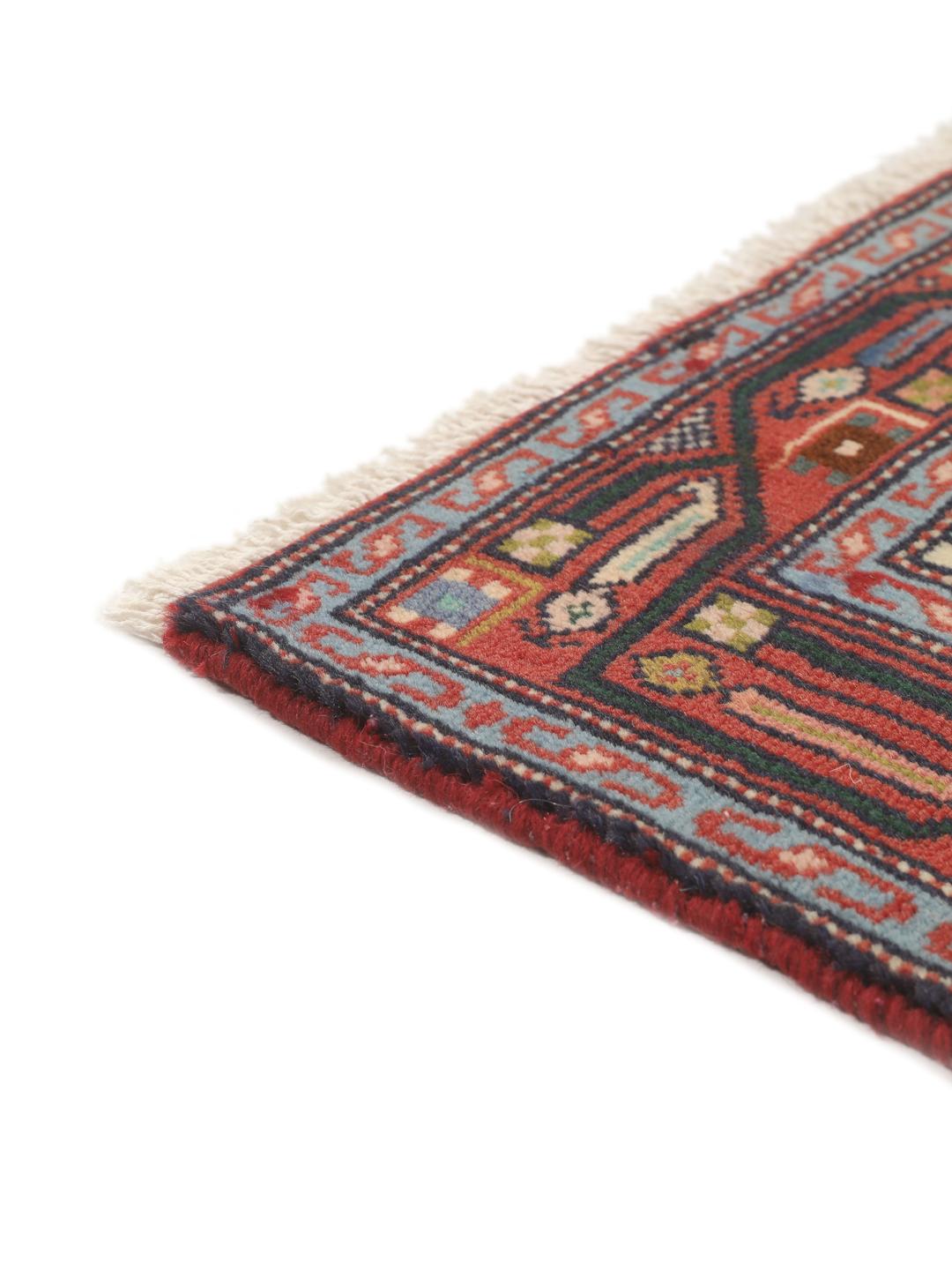
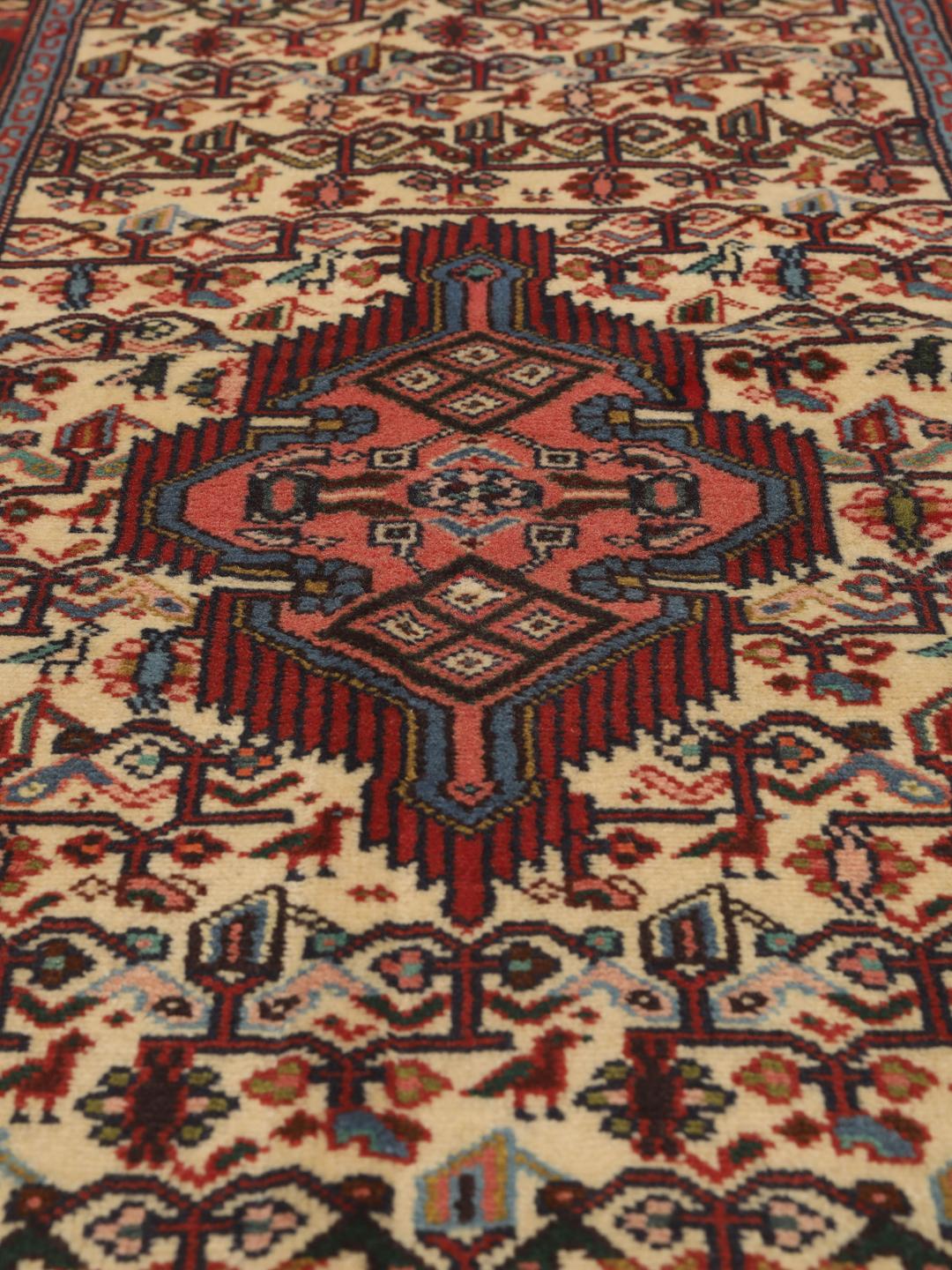
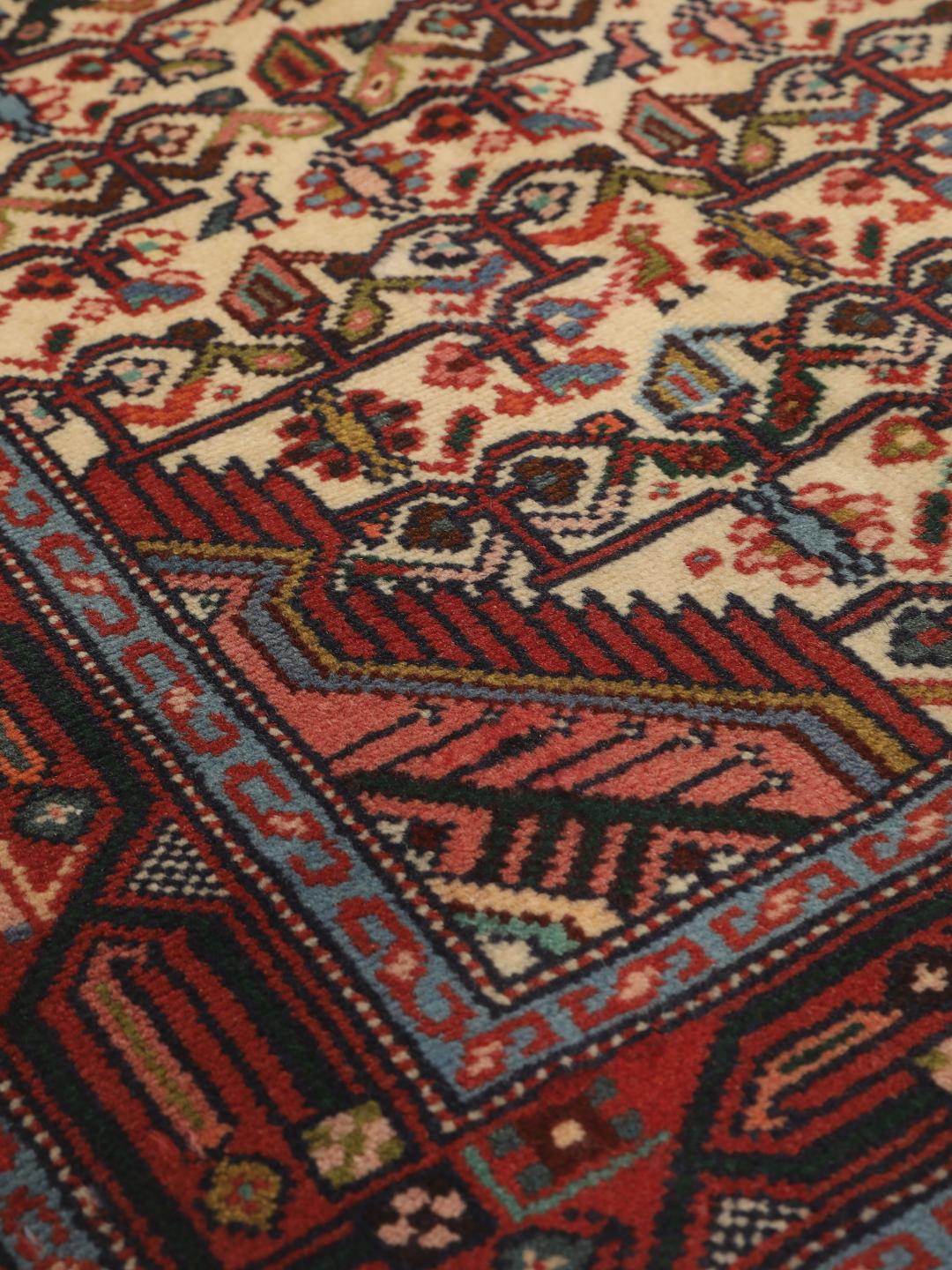
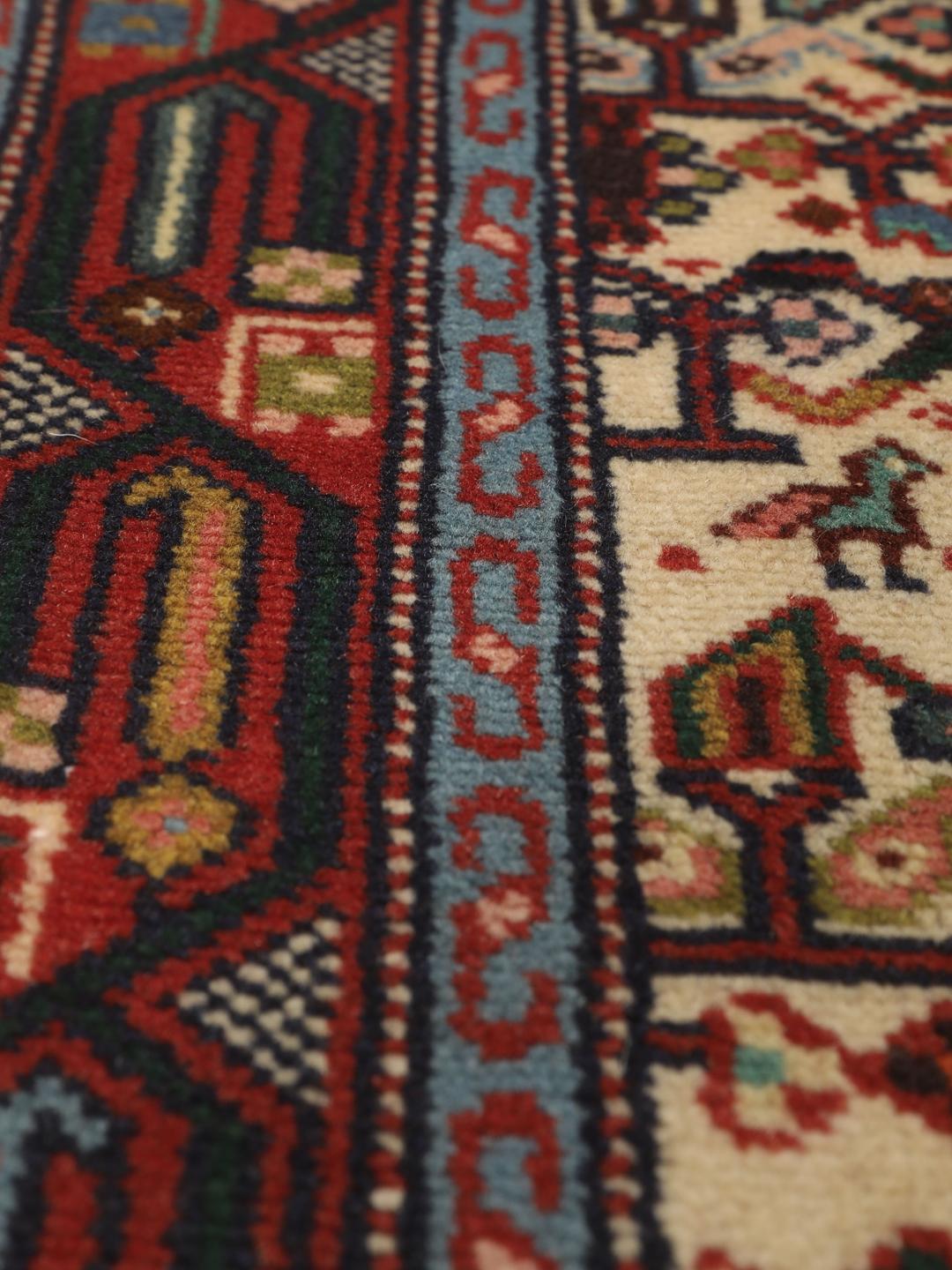
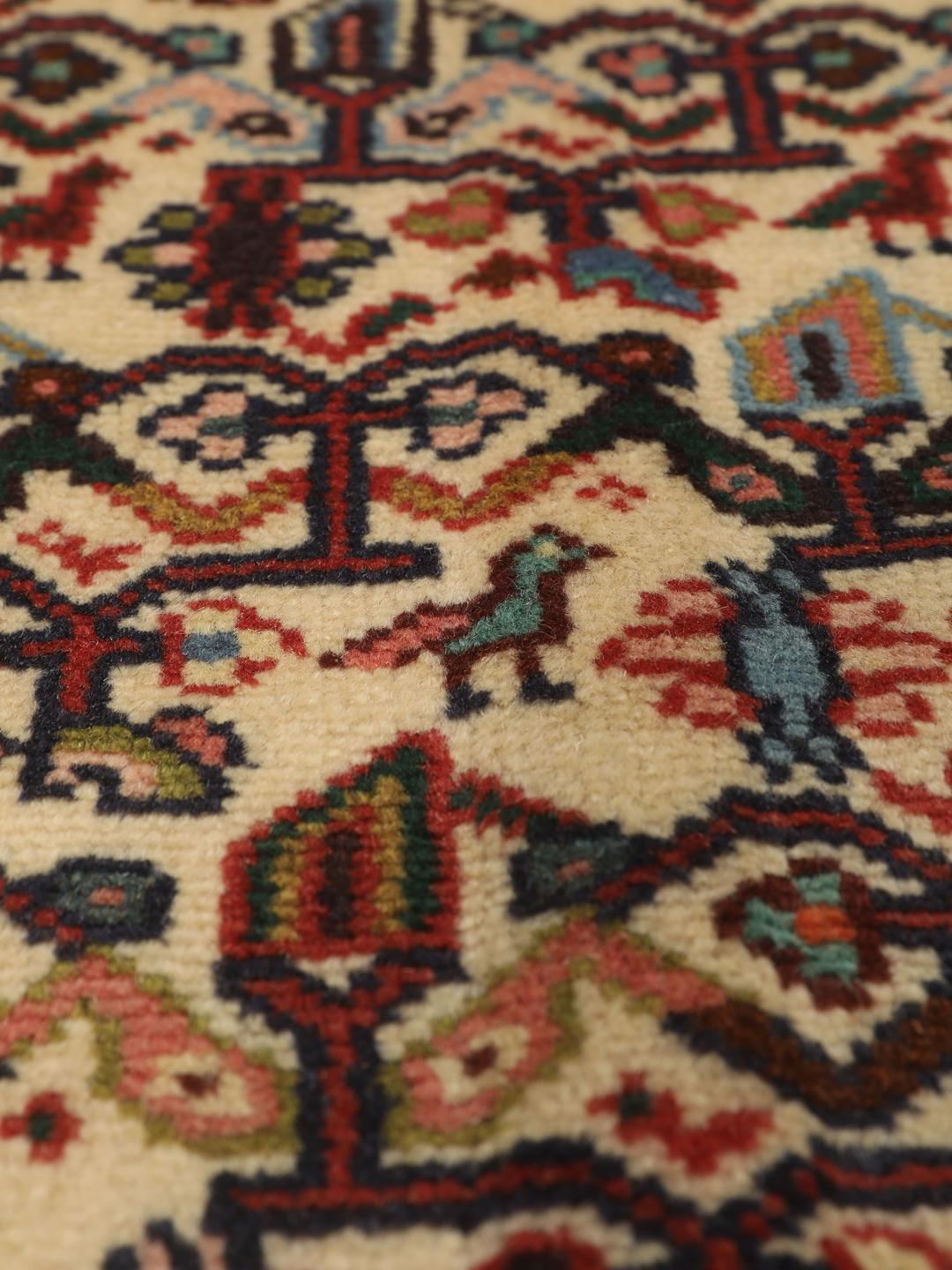
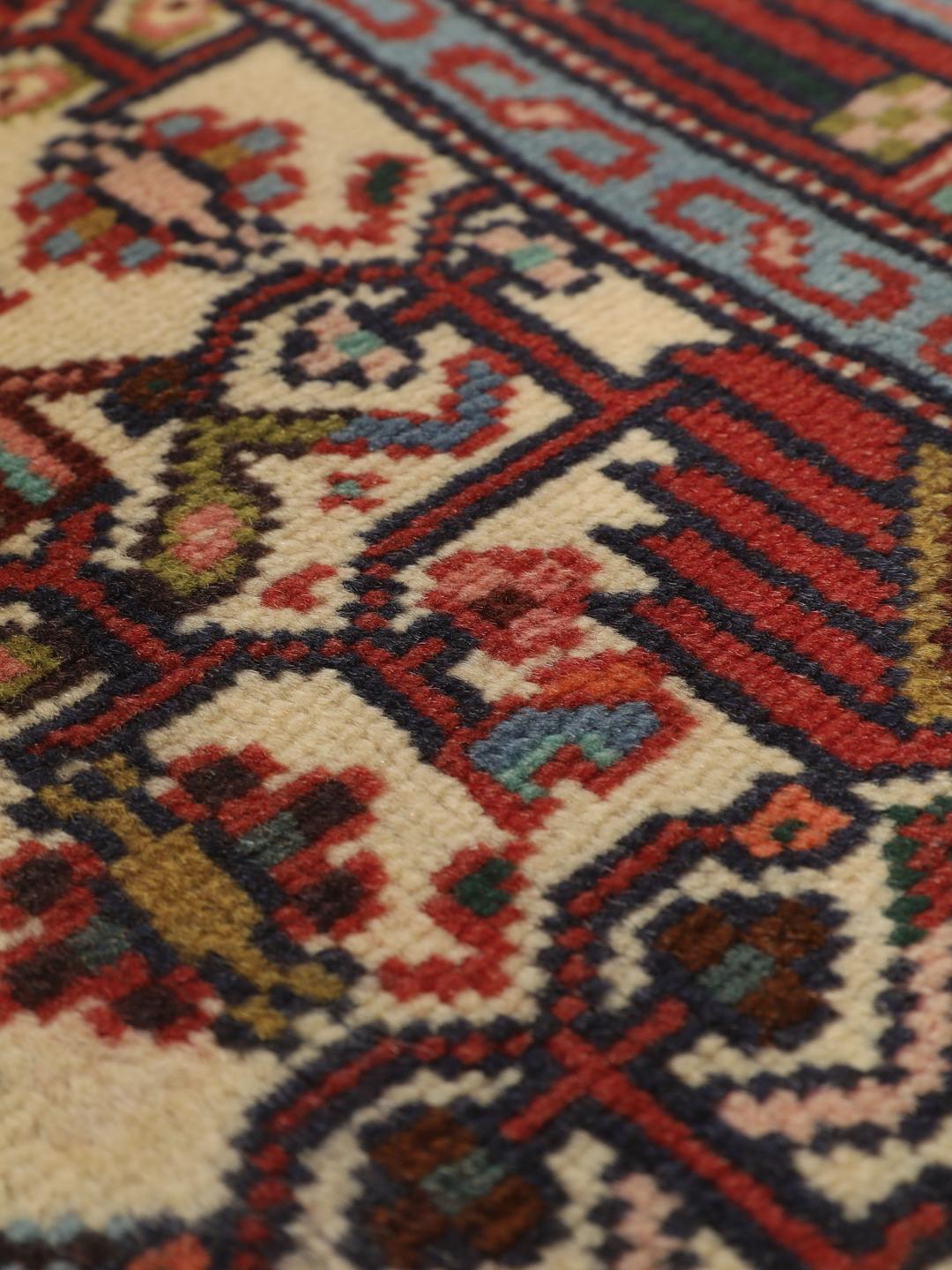
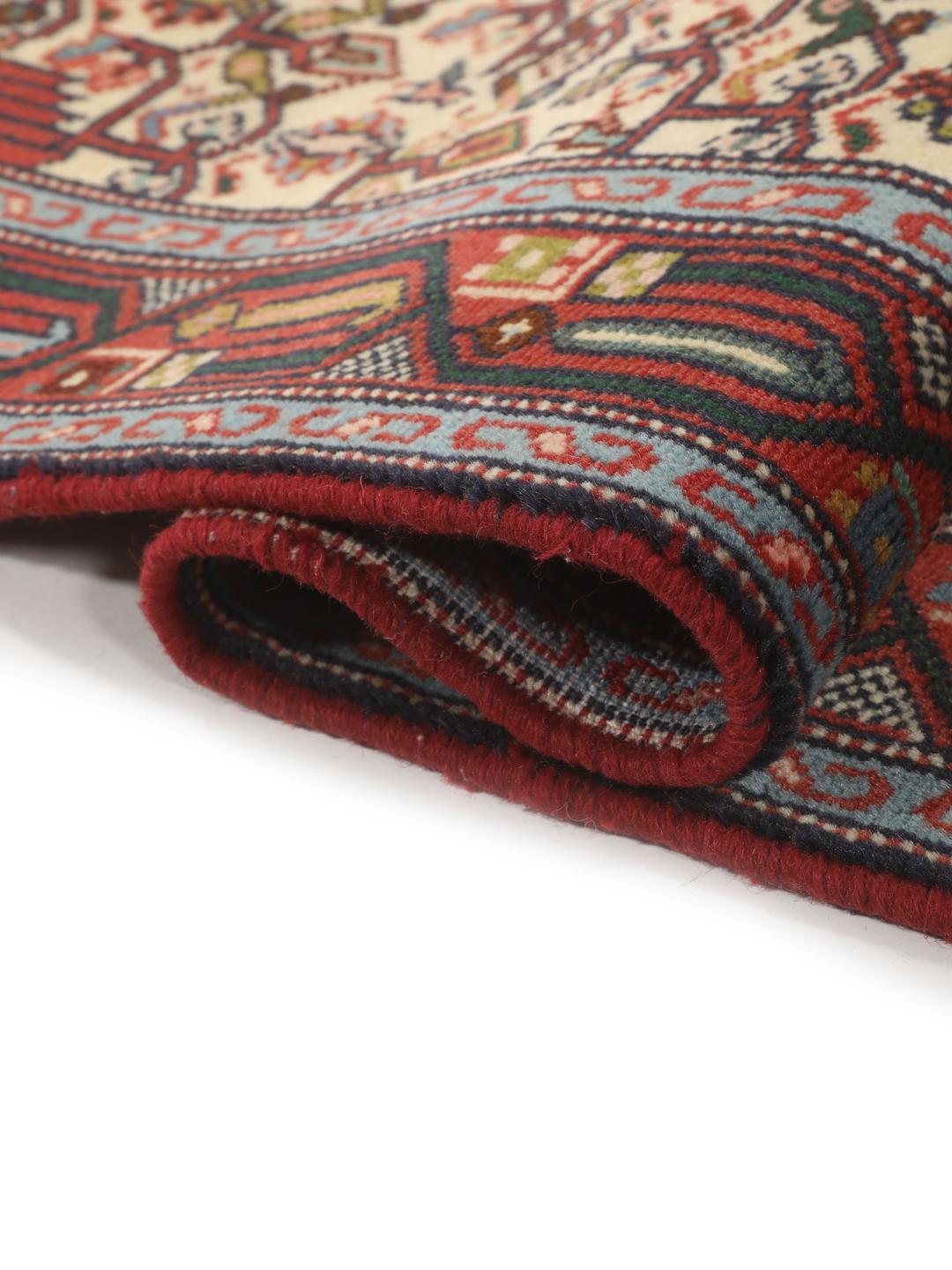
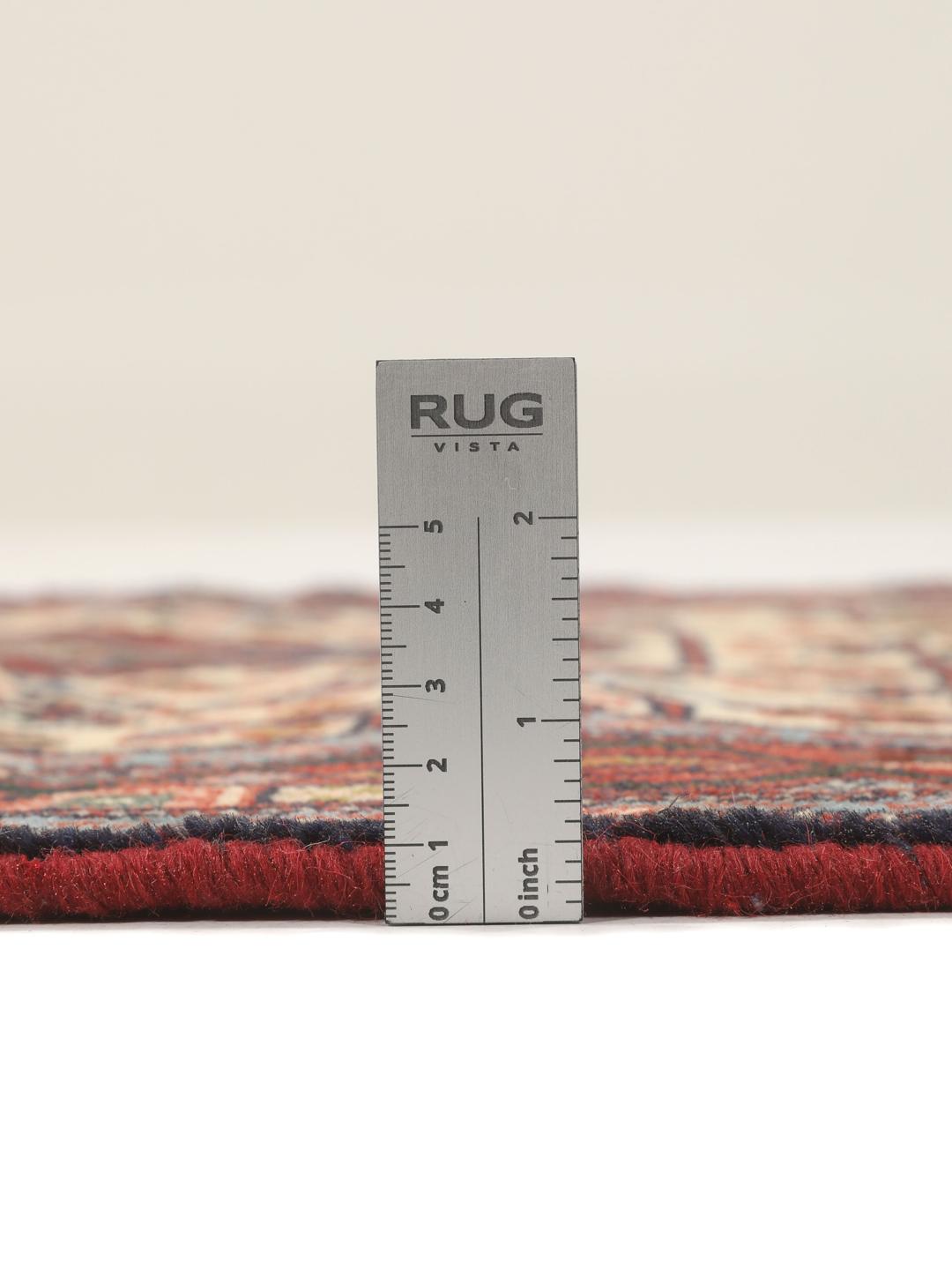
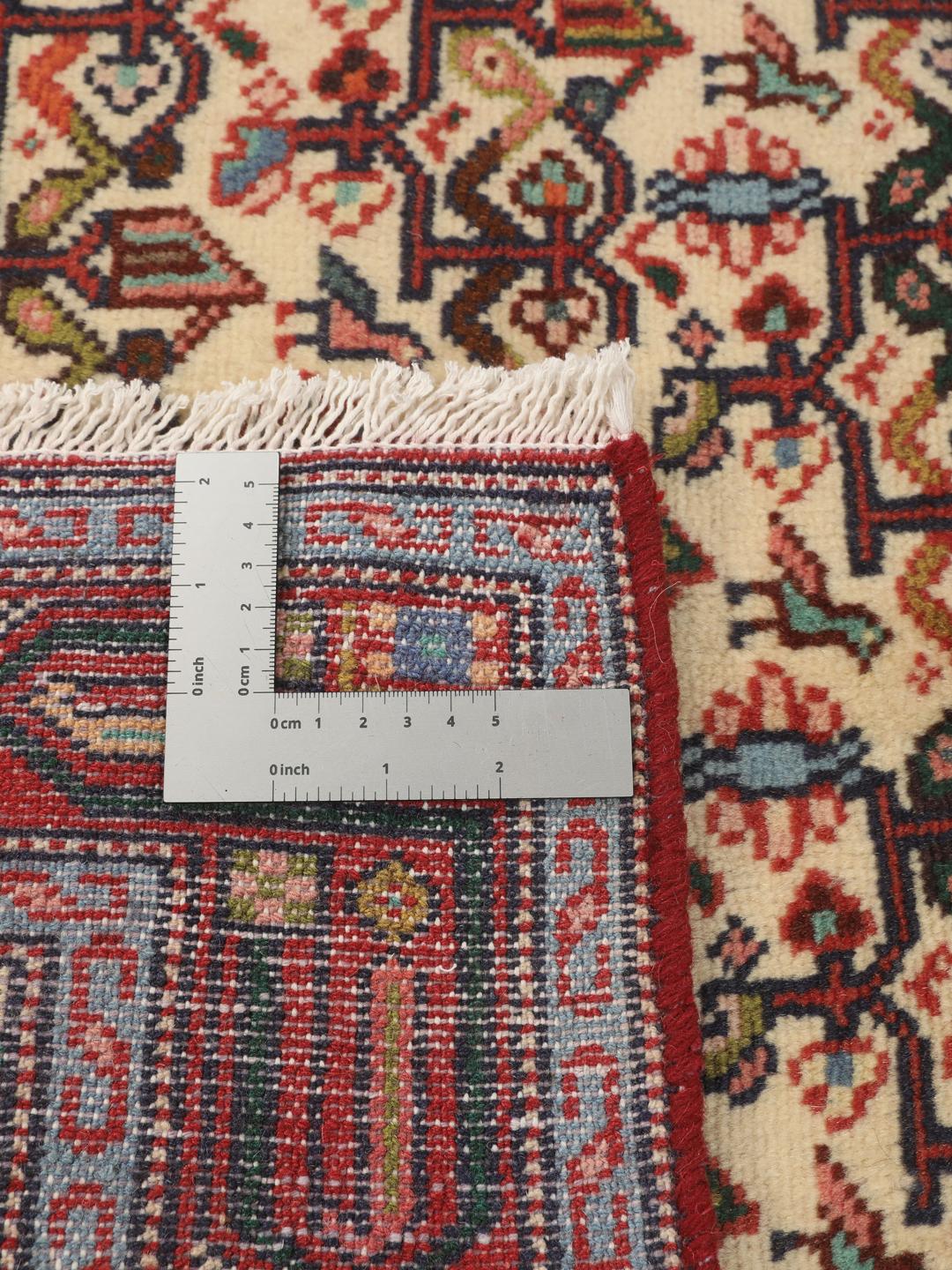
The Asadabad rug belongs to the diverse and storied Hamadan family of rugs, originating from the western regions of the Middle East. This area has long been a hub for weaving, where small villages and nomadic tribes have historically produced rugs that reflect their local environments and cultural narratives.
Hamadan rugs are celebrated for their variety and their use of high-quality, locally sourced materials. The term refers to a wide range of styles produced across hundreds of villages, each adding their own subtle variations in knotting and finishing, which results in the diverse and vibrant designs characteristic of the region.
Signature design elements for this style often include geometric medallions, repetitive floral motifs, and bold, protective borders. The use of a central medallion, as seen here, is a classic feature designed to draw the eye and provide a focal point, often framed by intricate borders that serve to contain the energy of the central field.
Collectors value these rugs for their authenticity and the human story behind every knot. Owning a piece from this tradition means connecting with a craft that has been passed down through generations, representing a bridge between ancient techniques and the modern home.