The Aubusson tradition traces its roots back to the 15th-century French town of the same name, where weavers began creating textiles that mirrored the opulence of royal courts. These tapestries were originally designed to hang on walls to provide insulation and decoration, becoming symbols of status and artistic patronage throughout Europe.
While the style originated in France, the techniques have been adopted by skilled weavers worldwide, including in China, where modern artisans have mastered the complex flat-weave methods required to replicate these historical scenes. This evolution demonstrates the enduring appeal of the Aubusson aesthetic, which focuses on classical themes, architectural elements, and lush floral borders.
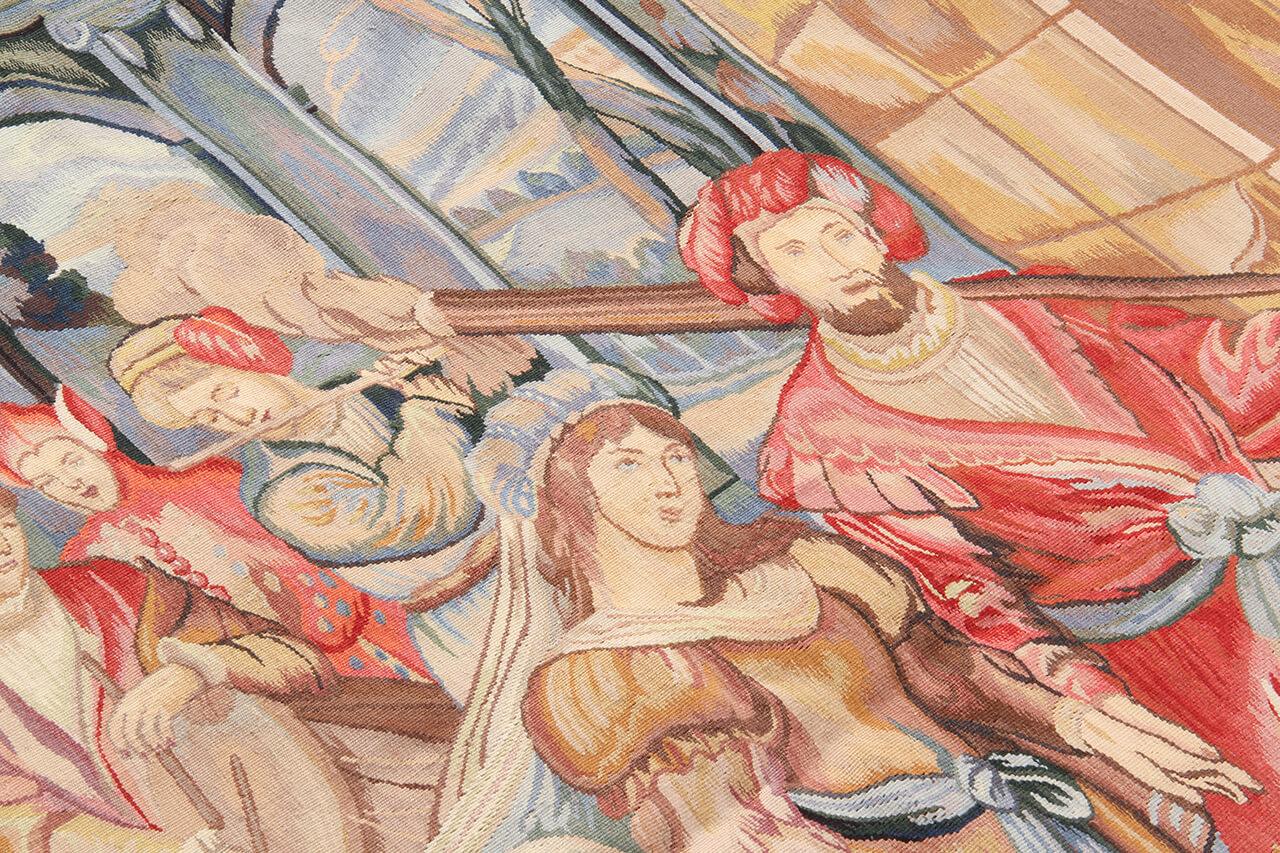
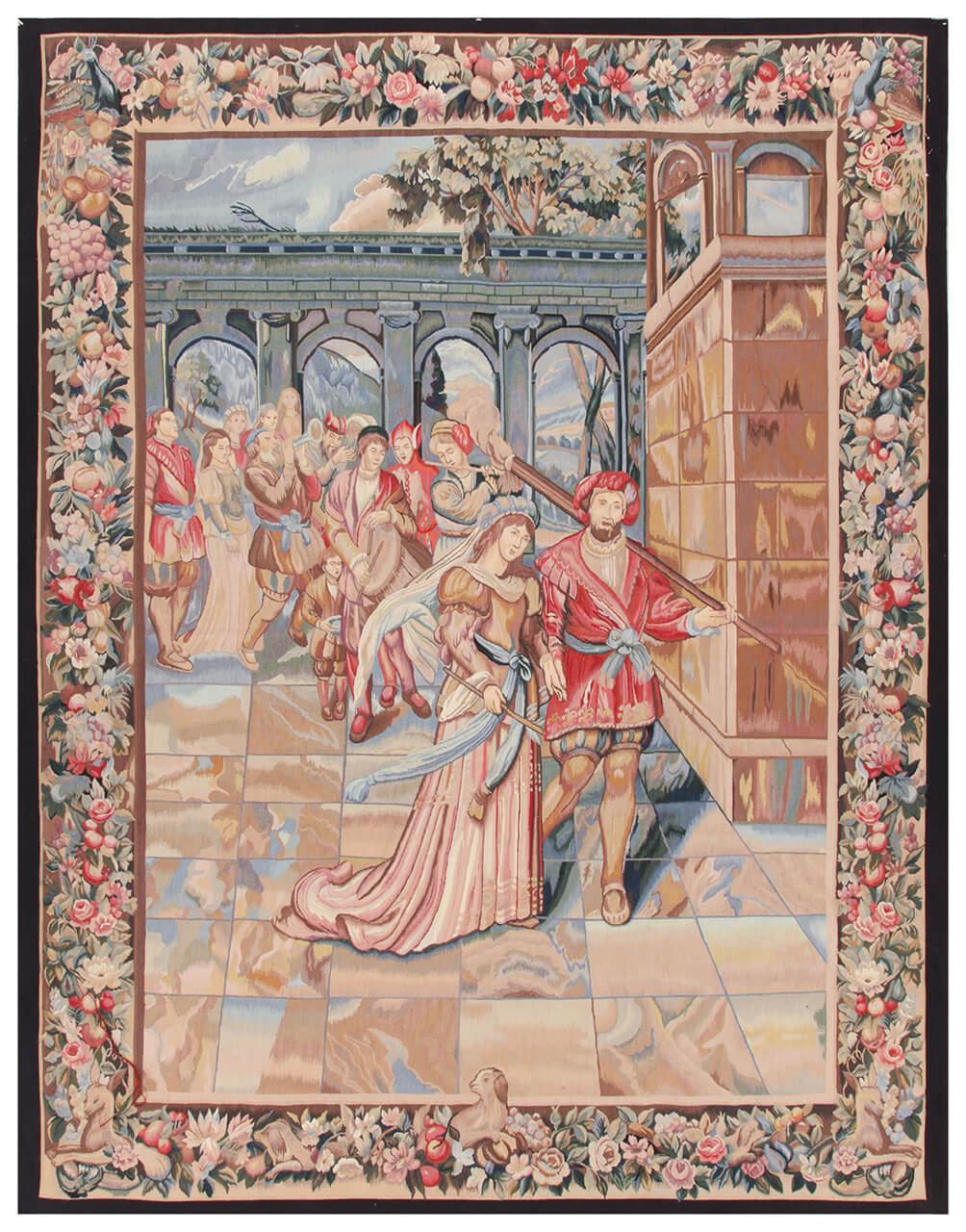
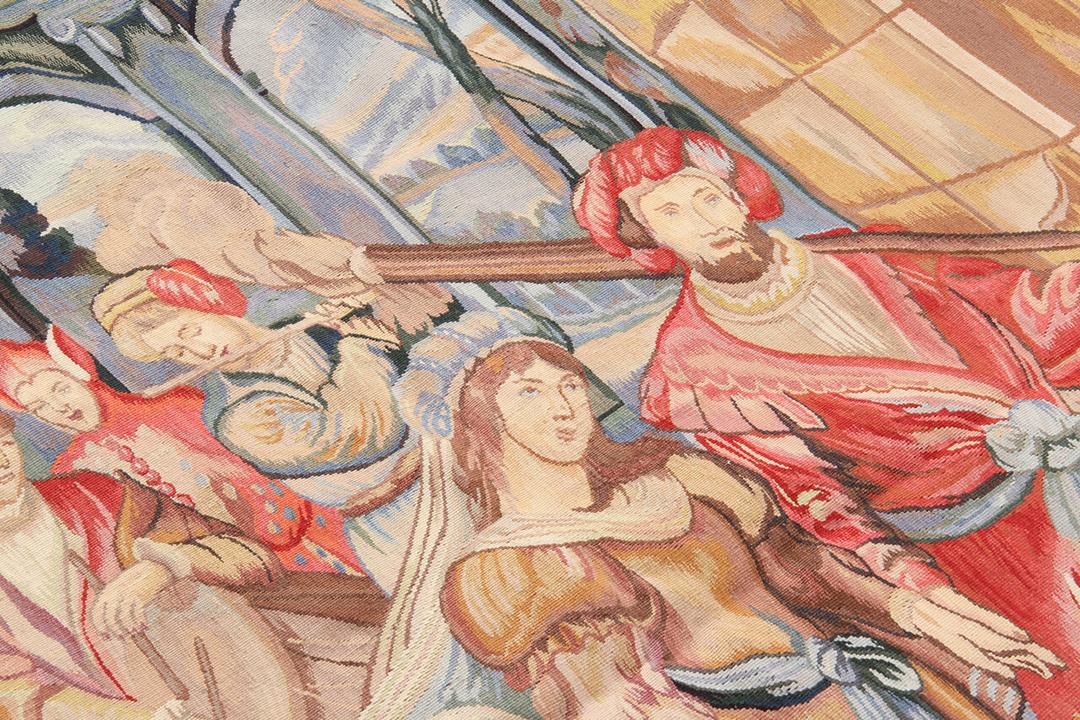
The signature look of an Aubusson-style textile is its 'painterly' quality, often featuring a central figurative scene framed by a decorative, realistic border of roses, fruits, and garlands. This design philosophy emphasises a balance between the central narrative and the naturalistic framing, a hallmark of French neoclassical art applied to textile form.
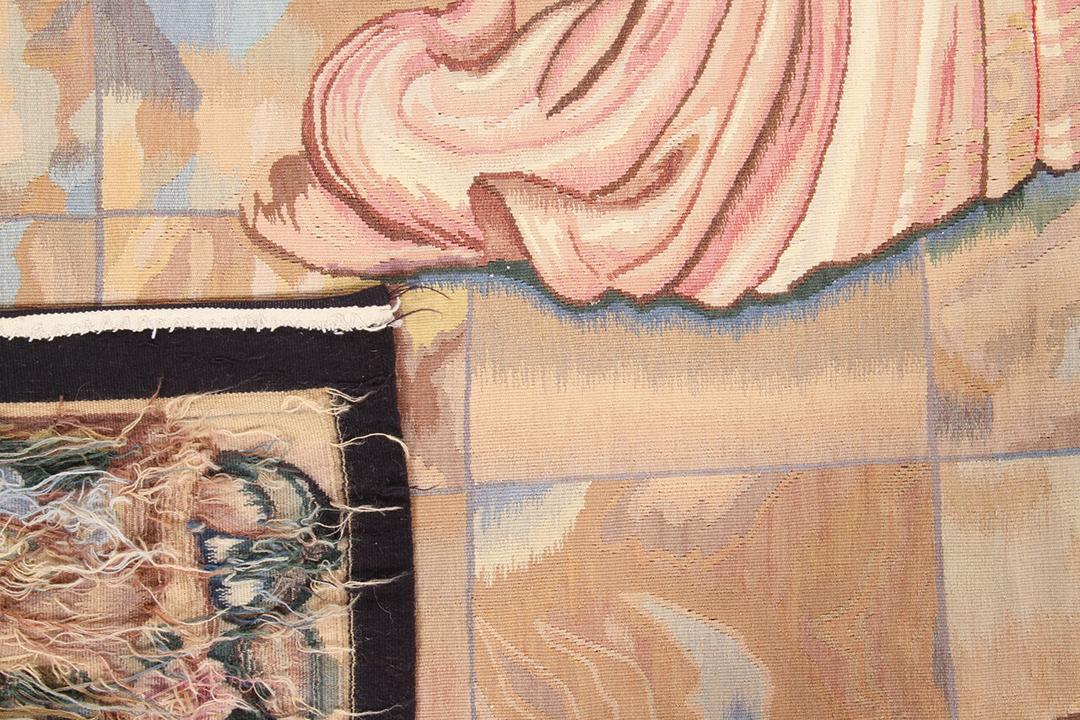
Collecting these pieces is an investment in a centuries-old language of design. They are valued not just for their visual beauty but for the immense skill required to render such complex, detailed imagery without the aid of modern technology. Owning one is a testament to an appreciation for history, narrative art, and the preservation of traditional craft.