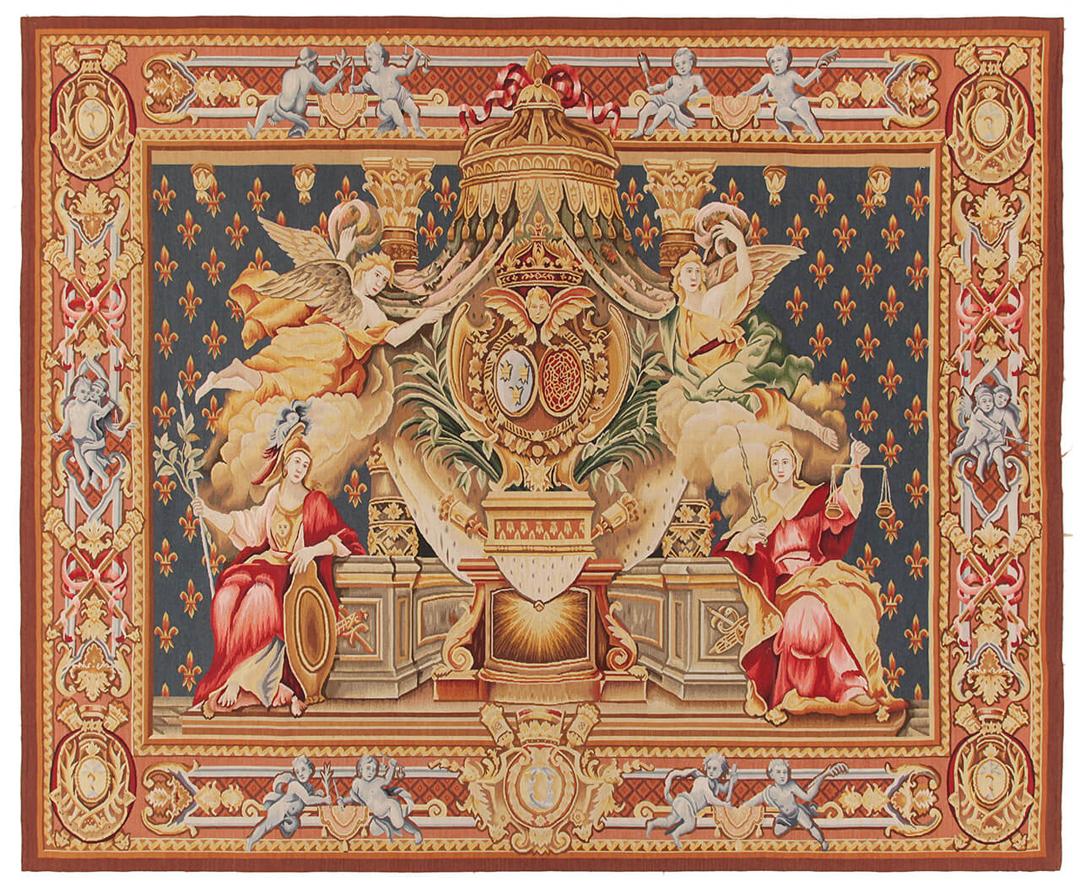
The Aubusson tradition traces its origins to the Creuse valley in central France, where the craft of tapestry weaving flourished as early as the 15th century. These tapestries were historically commissioned by royalty and the aristocracy to adorn the walls of chateaux and palaces, serving as both insulation and status symbols. The style is characterised by its focus on narrative, often featuring pastoral scenes, floral arrangements, or, as seen here, elaborate allegorical themes.
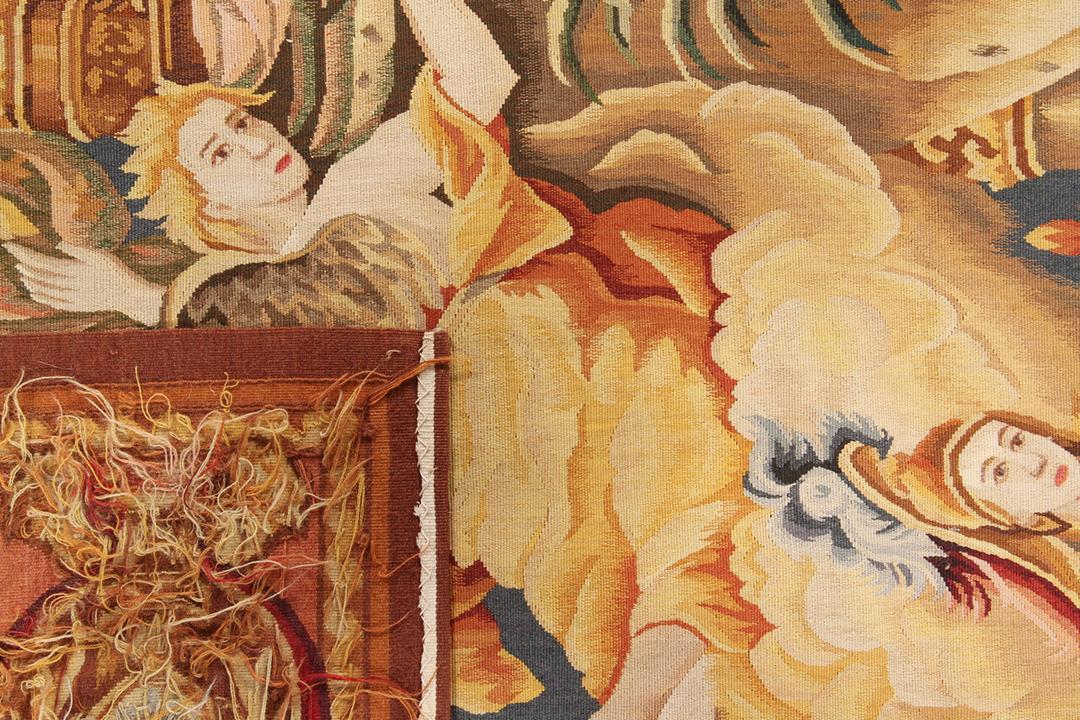
The term 'Aubusson' refers to a specific style of flat-woven tapestry that does not feature a pile, making it distinct from traditional hand-knotted rugs. This technique relies on the careful interlacing of the weft and warp threads to build up the image, a process that allows for fine, painterly detail. This category is highly valued by collectors for its ability to mimic the nuance of fine art, utilising a sophisticated palette to create depth and shadow within the woven fabric.
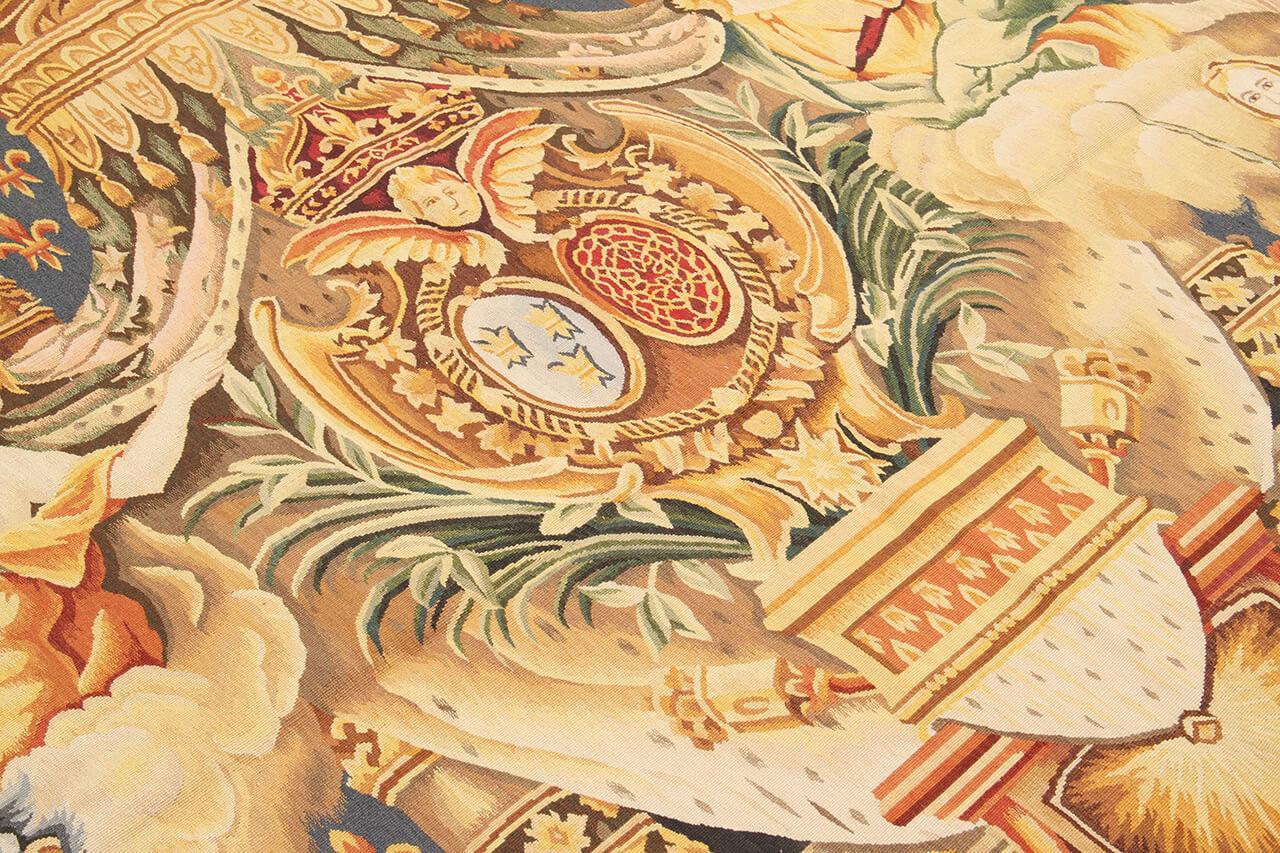
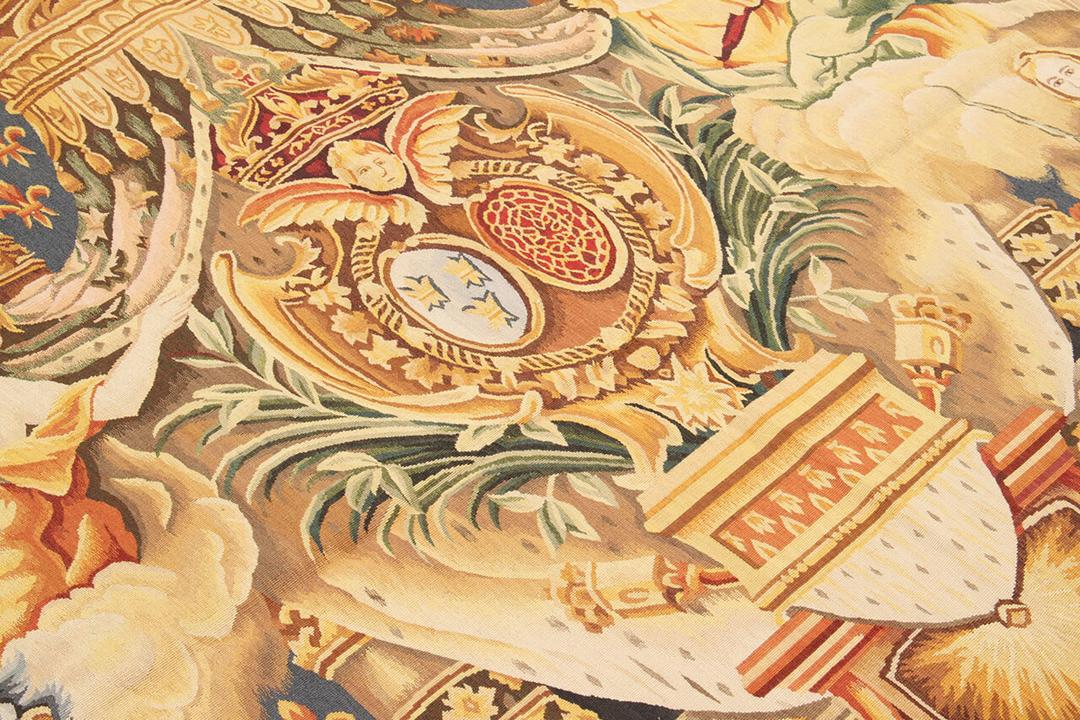
This particular rug draws heavily on the signature design language of the French Baroque and Neoclassical periods. The use of heraldic shields, ornamental borders, and symbolic figures such as those representing justice and virtue are hallmarks of this tradition. The inclusion of the fleur-de-lis—a symbol deeply rooted in French history—further anchors the design in the aesthetic language of classical European luxury, providing a sense of continuity with centuries of decorative arts.
Today, rugs and tapestries in this style are collected for their historical resonance and the immense skill required to produce them. Owning an Aubusson-style piece is an investment in a long-standing cultural tradition that prioritises storytelling through textile. It serves as a reminder of a time when the home was a canvas for grand narratives, and it continues to bring that same sense of importance and cultural weight to modern interiors.