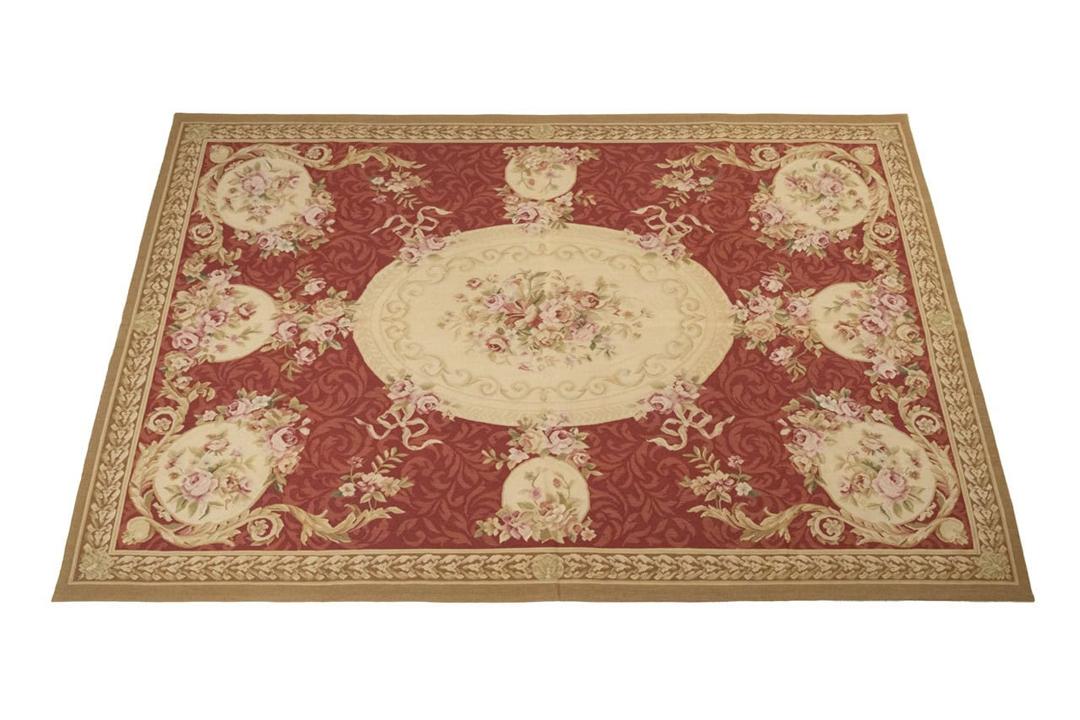
The Aubusson tradition traces its roots back to the 17th century in the small French town of the same name, where weavers became world-renowned for creating flat-weave tapestries and rugs for the French aristocracy. These designs were heavily influenced by the prevailing art of the era, favouring neoclassical floral motifs, ribbons, and ornate medallions that exuded luxury and refinement.
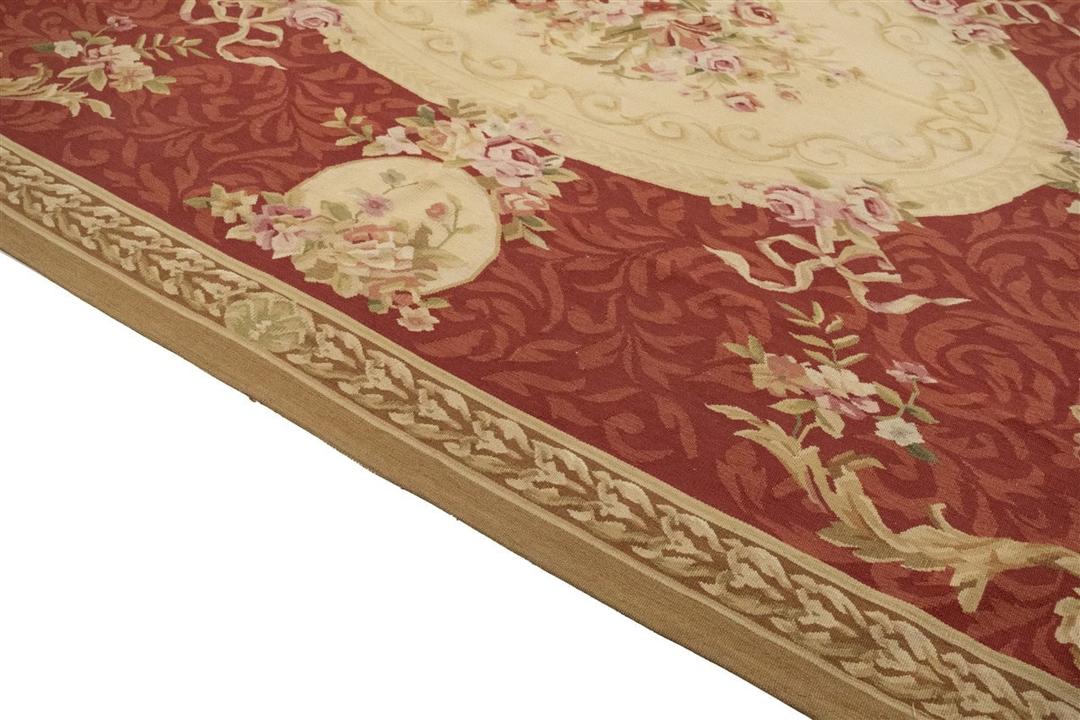
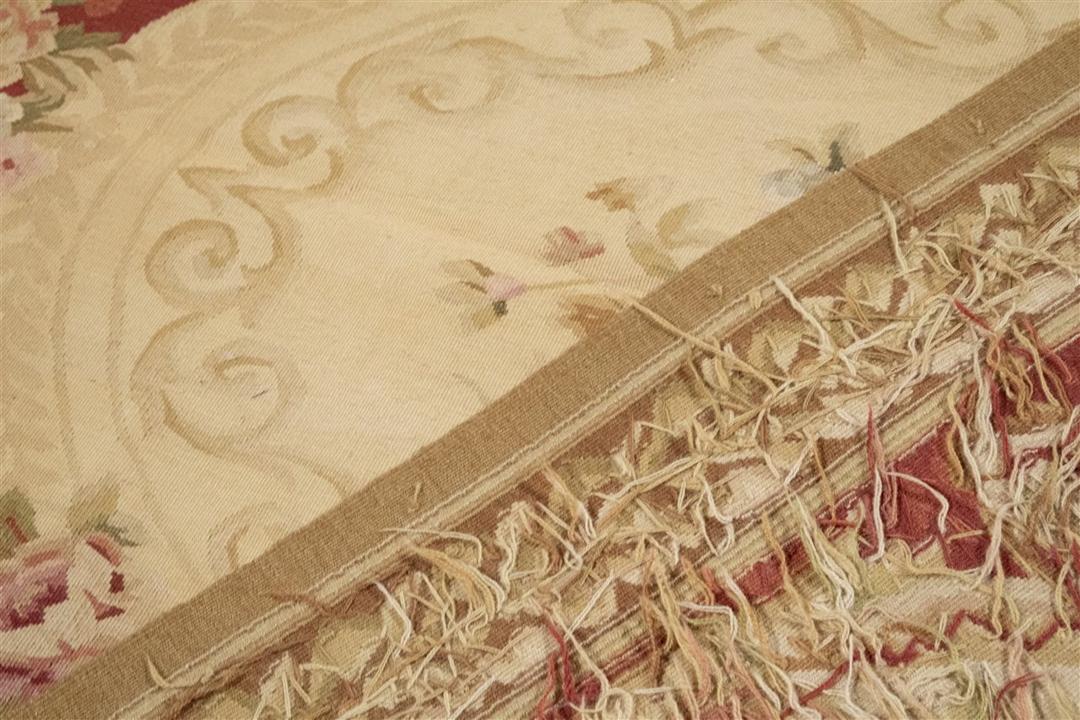
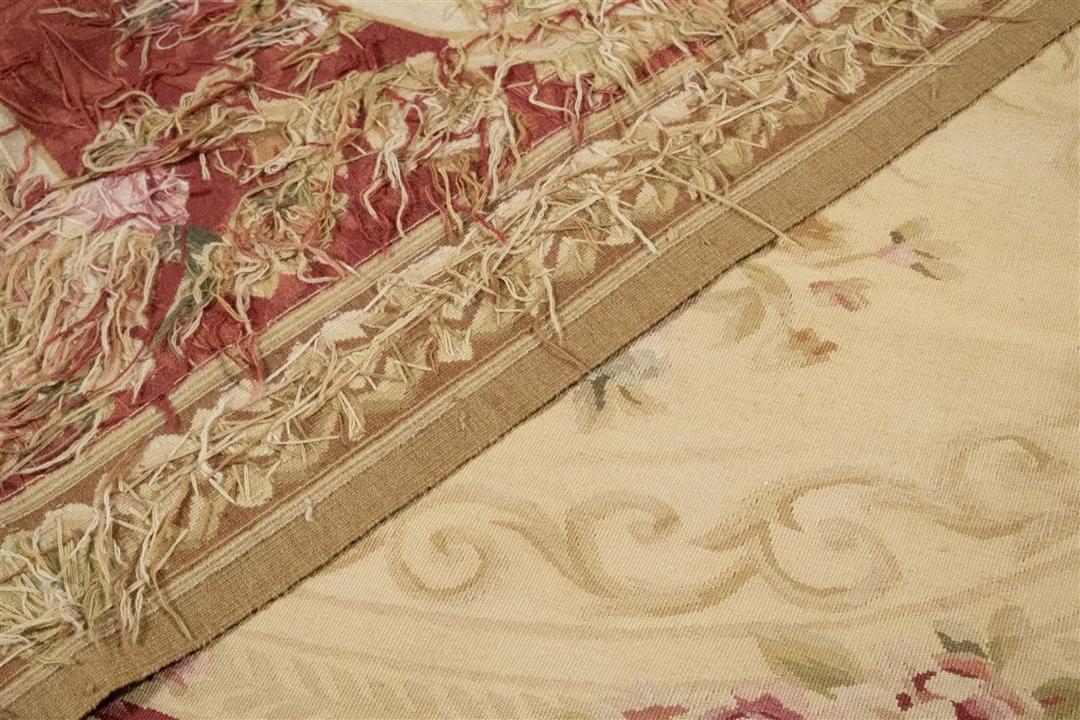
While the original tapestries were intended for walls, the style eventually evolved into floor coverings. The term 'tappissere' refers to this tapestry-like weaving technique, which produces a flat, durable surface without a pile. This construction is highly valued for its ability to showcase complex, painterly designs with a level of clarity that is difficult to achieve in thicker, knotted rugs.
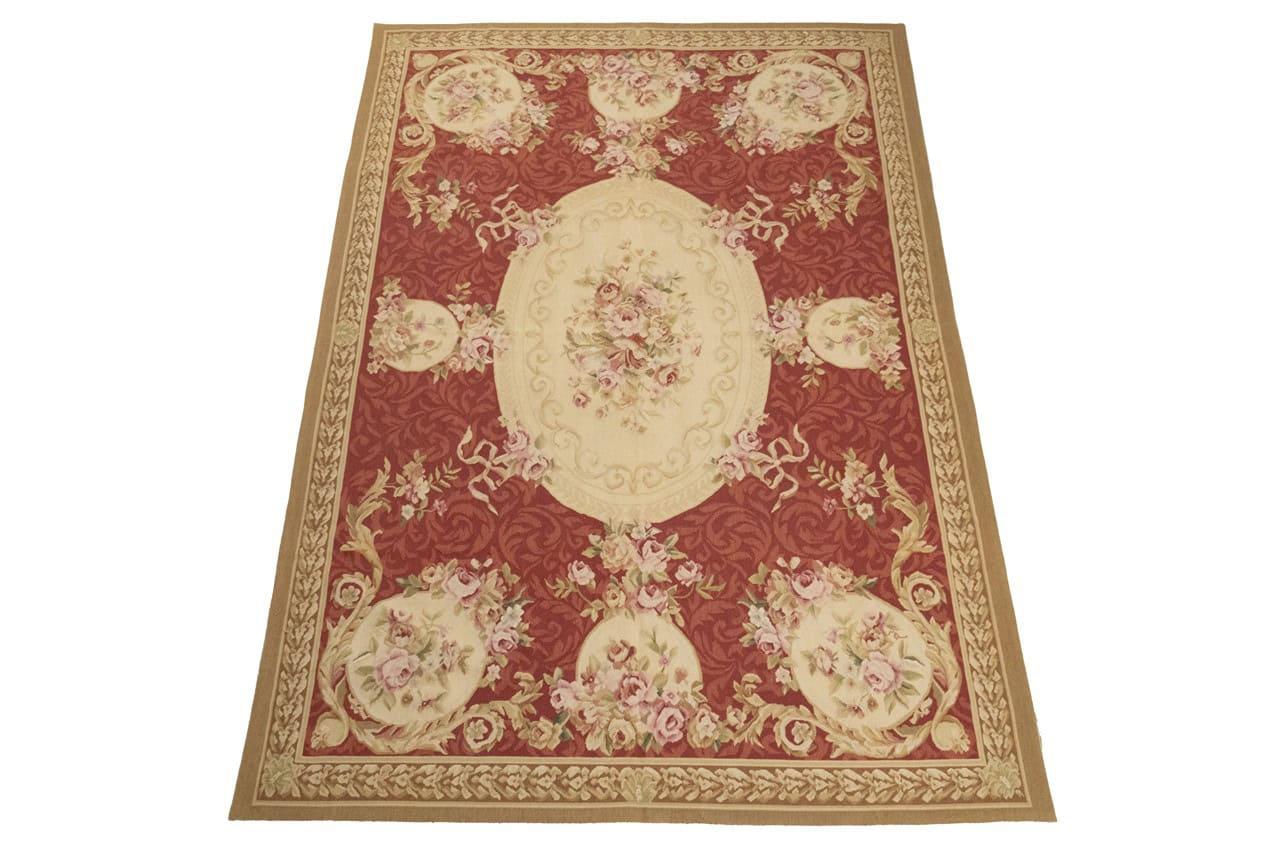
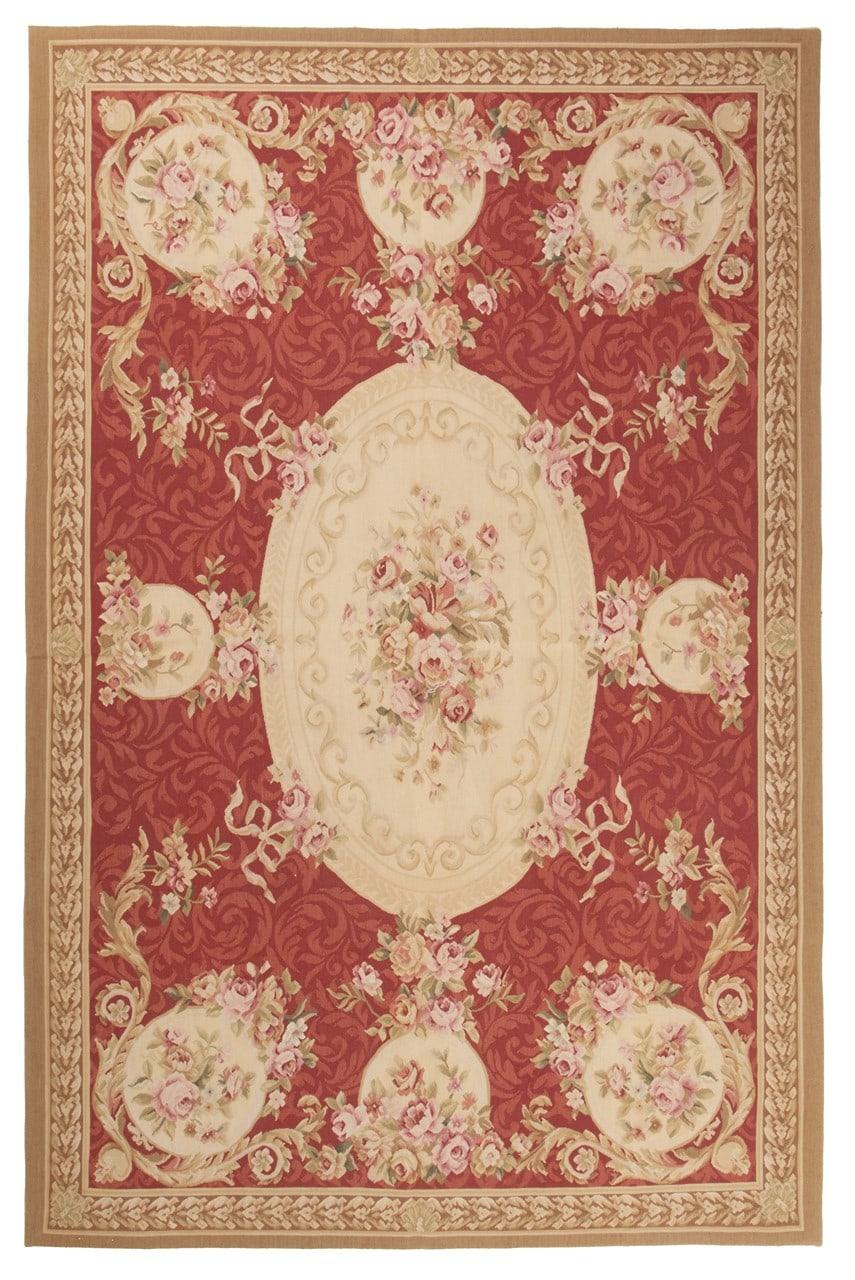
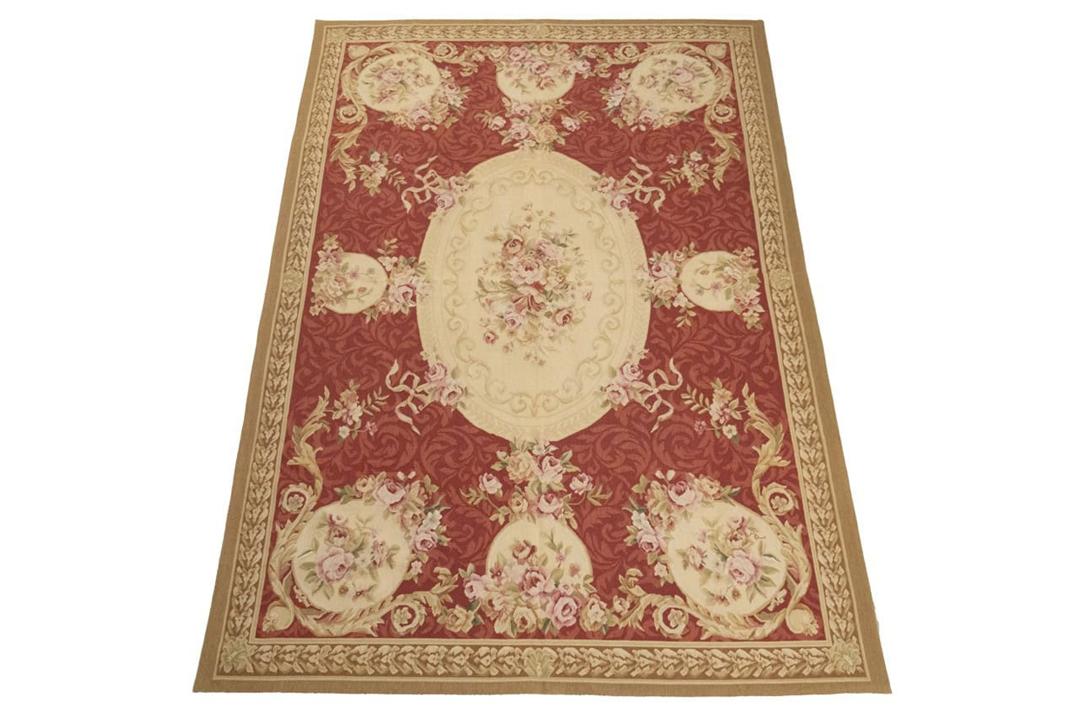
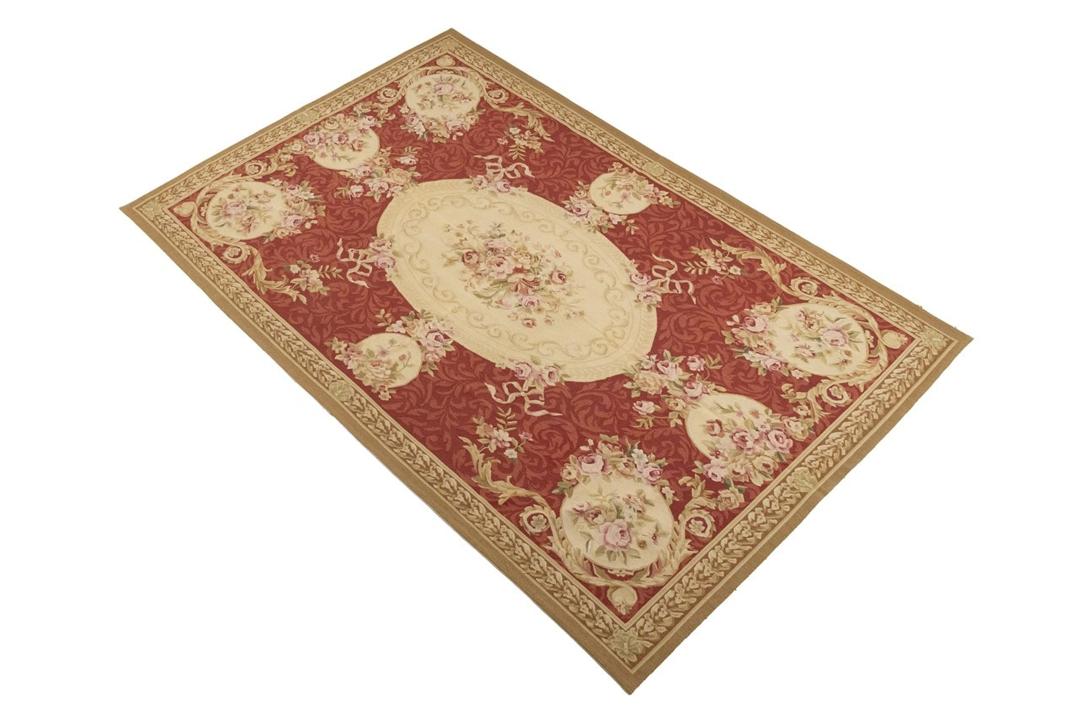
The visual language of this tradition is defined by its formal symmetry. The central medallion, often oval or circular, acts as the anchor, while the field is typically decorated with garlands of roses, acanthus leaves, and scrolls. The choice of a deep, rich red field is a classic design signature that adds intensity and depth, making the lighter, pastel-toned floral elements pop with visual energy.
Today, these rugs are celebrated for their ability to bridge the gap between historical art and modern interior design. Collecting an Aubusson-style piece means bringing home a tradition of craftsmanship that has been refined over centuries. It is an acquisition that values the skill of the weaver and the legacy of a design movement that continues to define elegance in interior spaces.