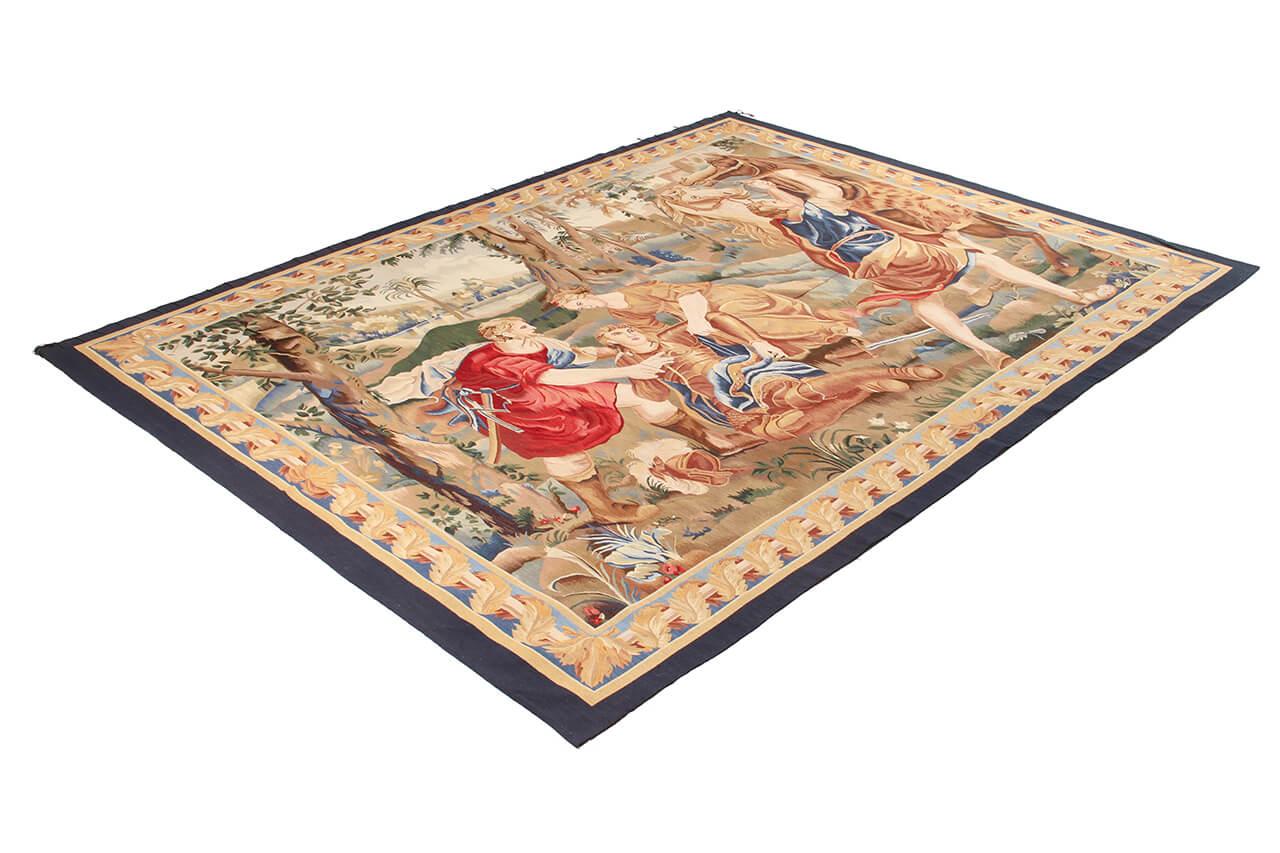
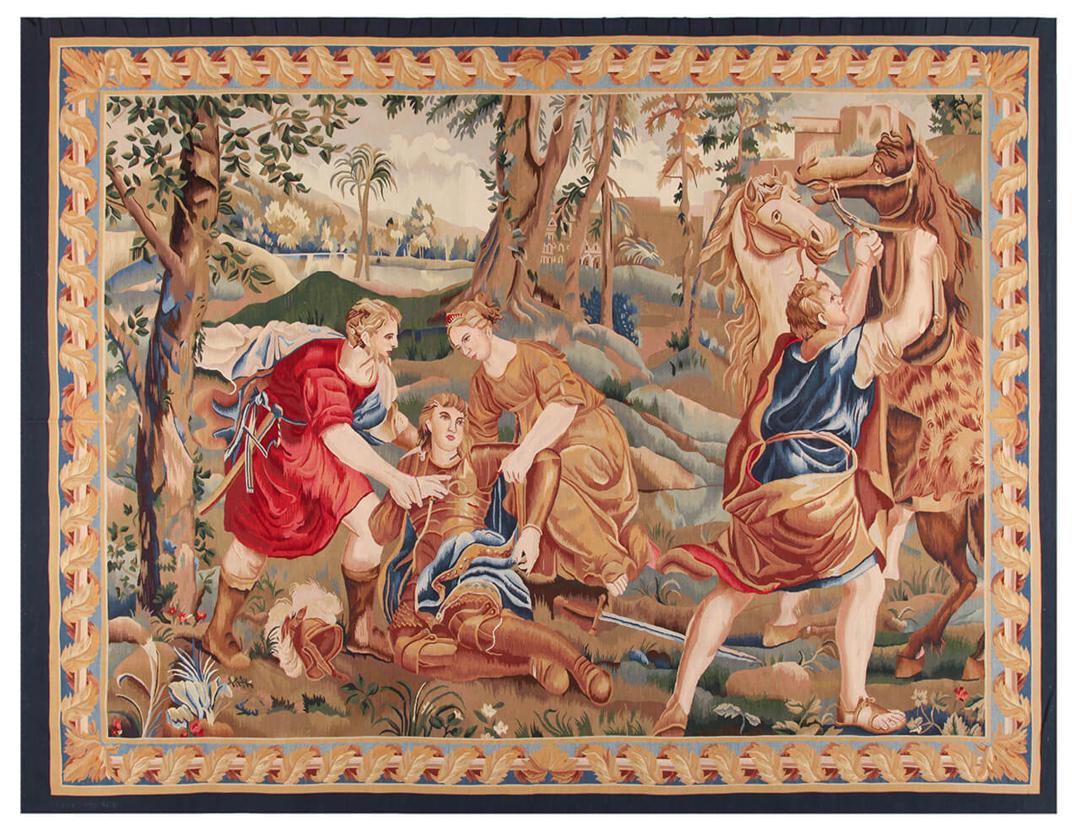
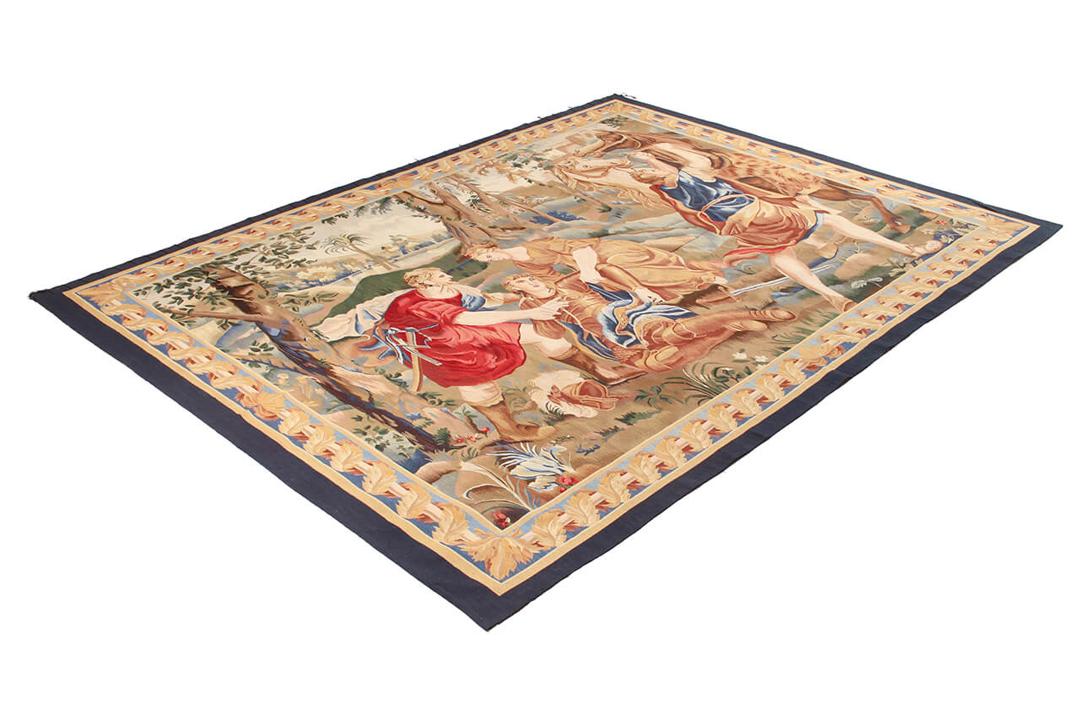
The Aubusson tradition originates from the historic French town of the same name, which became world-renowned for its production of exquisite tapestries and carpets beginning in the 17th century. While the style is rooted in French royal aesthetics and classical European design, the tradition has evolved over centuries, finding new life in modern weaving centres across the globe, including fine workshops in China that masterfully recreate these complex, pictorial styles.
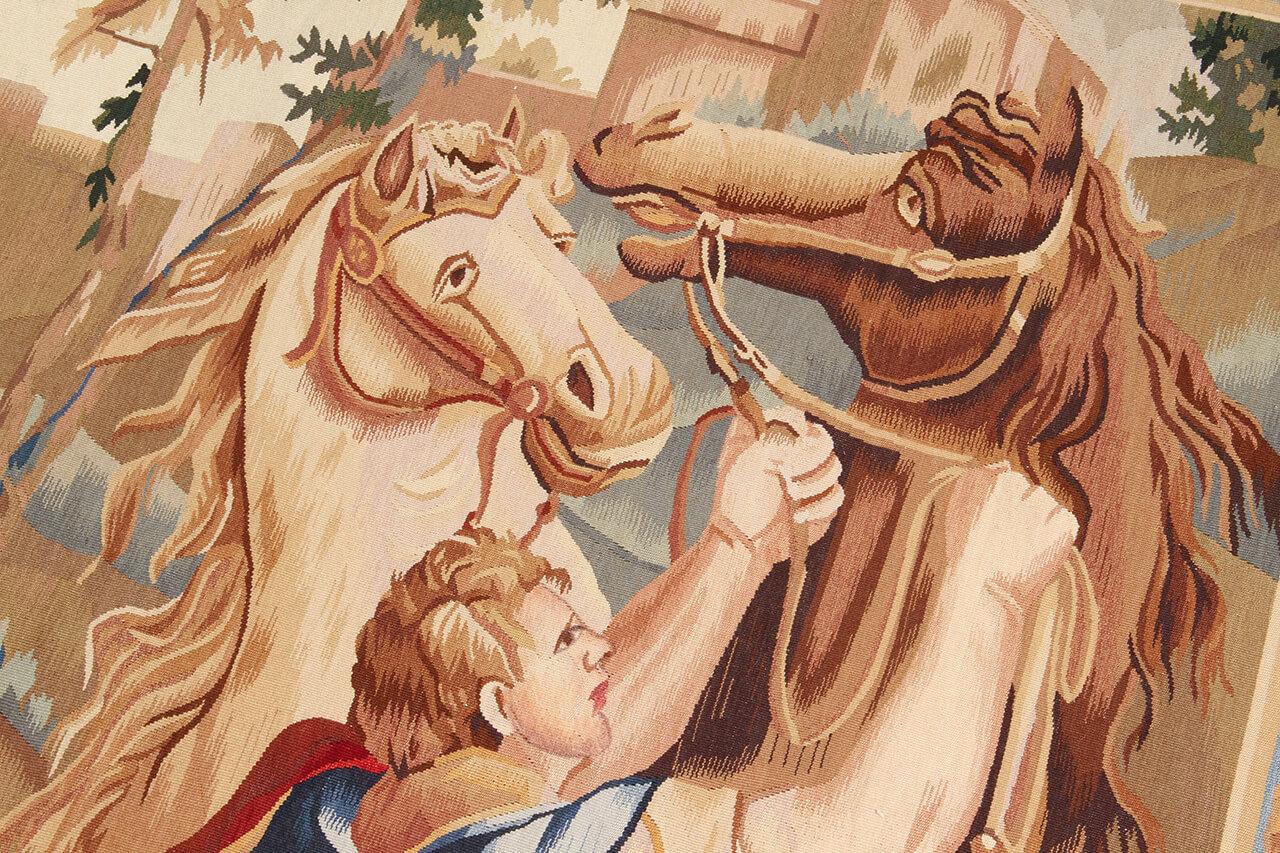
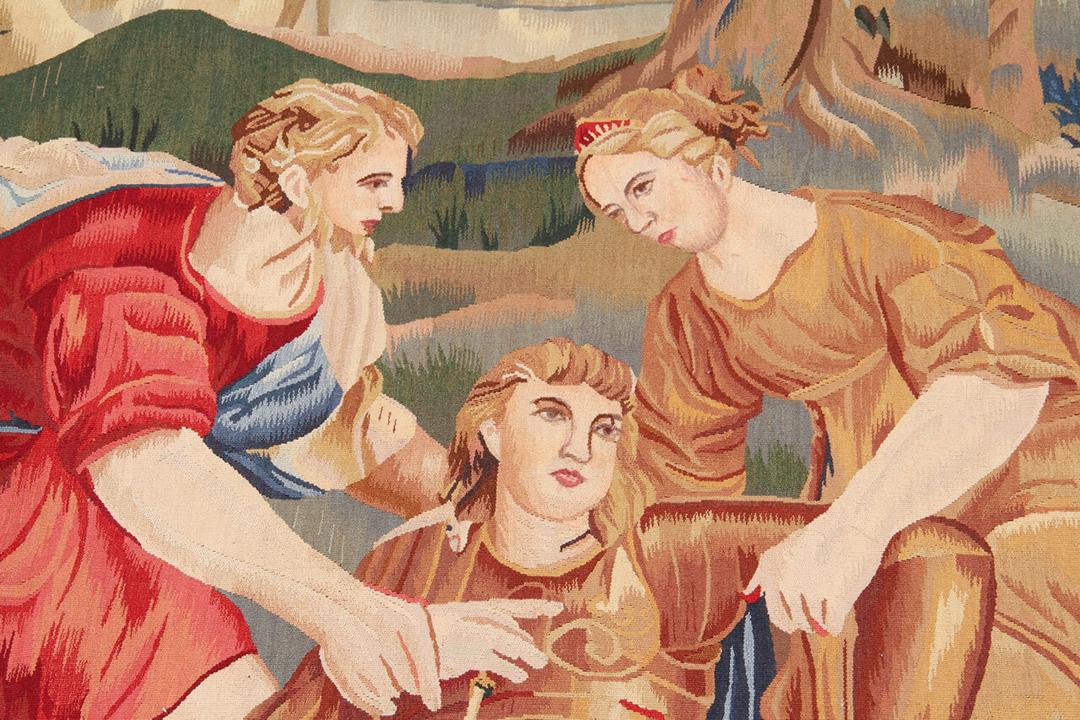
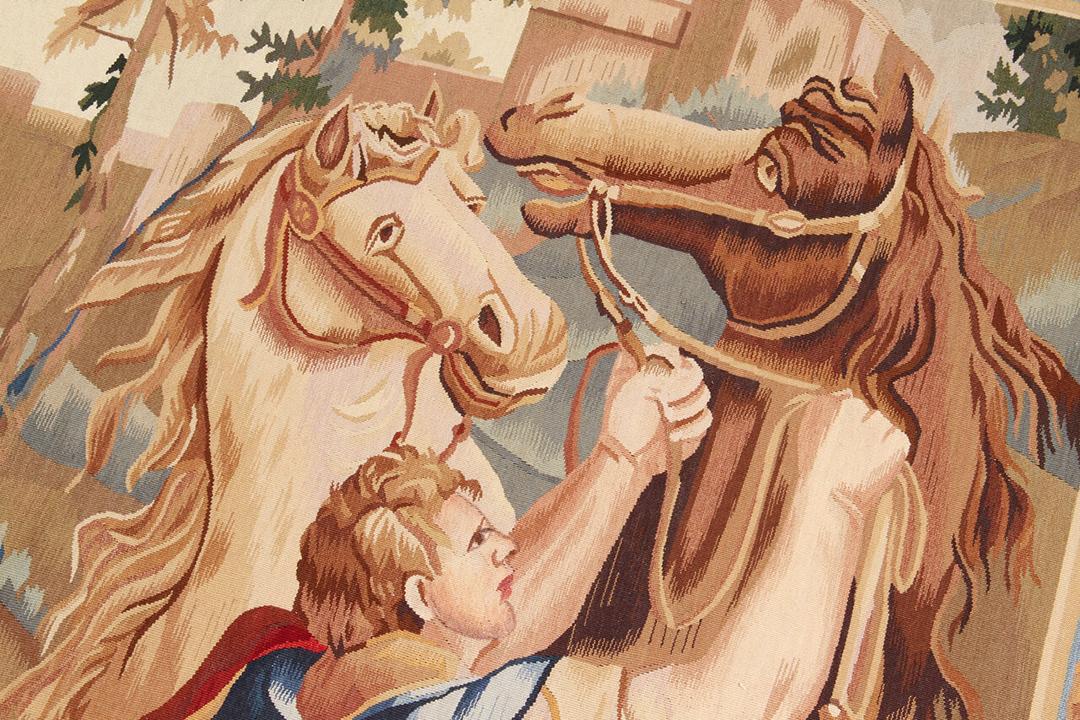
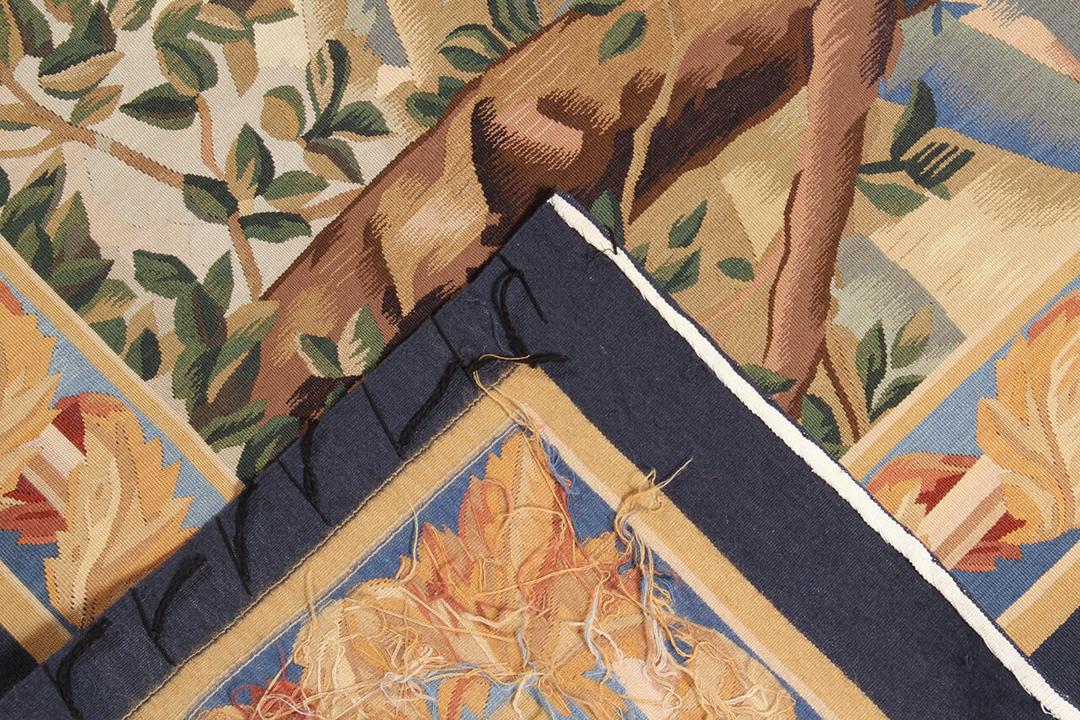
Technical excellence is the hallmark of the Aubusson style. Unlike pile rugs that rely on knots, these tapestries are typically hand-woven using a flat-weave technique. This allows for a much finer level of detail in the design, enabling the weaver to capture subtle shading, facial expressions, and complex architectural elements that would be impossible to render in a thicker, knotted rug. This technical precision is why these pieces are so highly prized by collectors.
The design language of this tradition is distinctly narrative. These rugs often feature pastoral scenes, mythological tales, or historical events framed by ornate, scrolling floral borders that mimic the frames of gilded paintings. The use of soft, painterly colours and light-filled landscapes creates a sense of depth, turning the floor or wall into a window into another time and place.
Valued for their cultural weight and artistic ambition, Aubusson-style rugs are more than just home furnishings; they are heirlooms. Owning such a piece signifies an appreciation for the intersection of fine art and craft. It represents a commitment to preserving a legacy of beauty, skill, and storytelling that has captivated interior designers and art lovers for generations.