The Aubusson tradition traces its origins to the French town of Aubusson, where the art of weaving fine tapestries flourished for centuries. These works were originally intended to decorate the walls of grand estates and palaces, depicting elaborate pastoral scenes, mythological tales, and complex floral arrangements that reflected the artistic tastes of the European nobility.
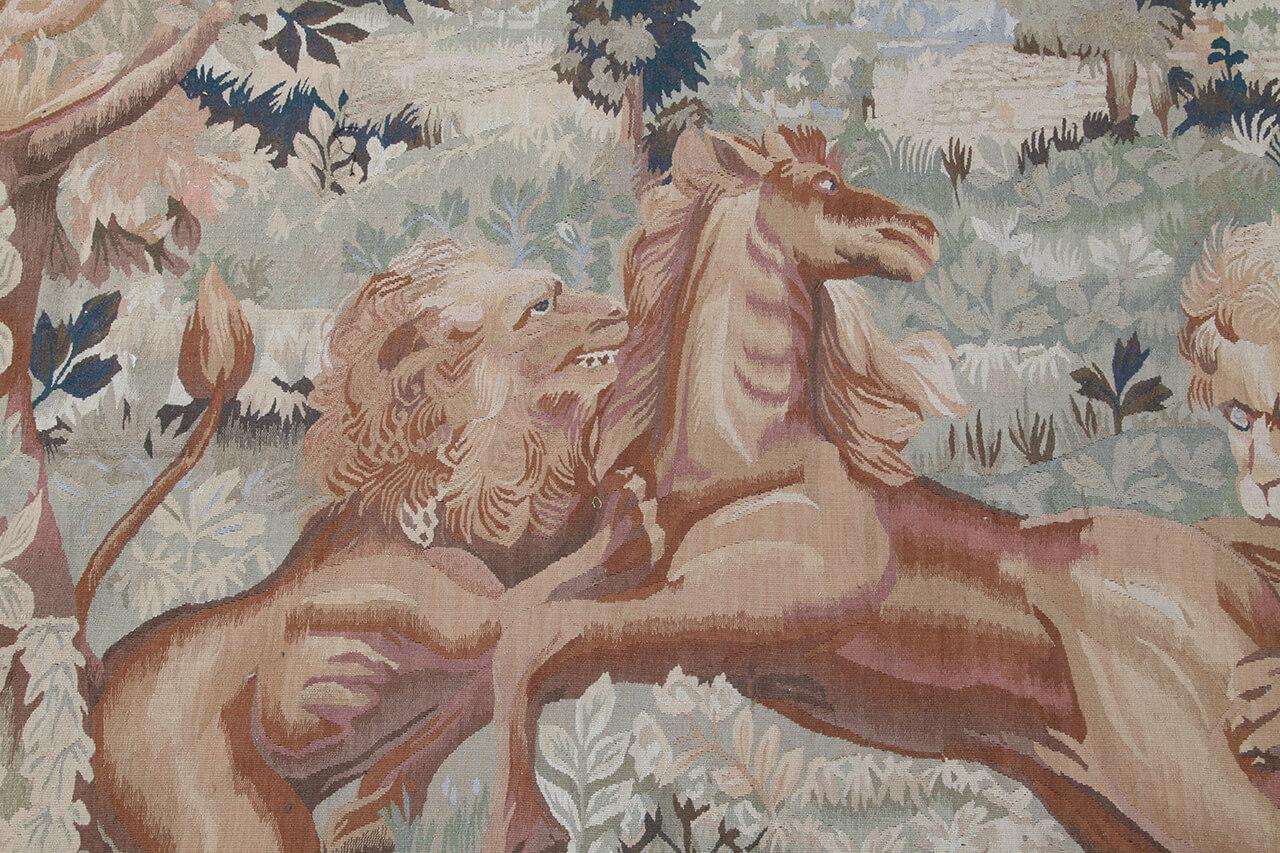
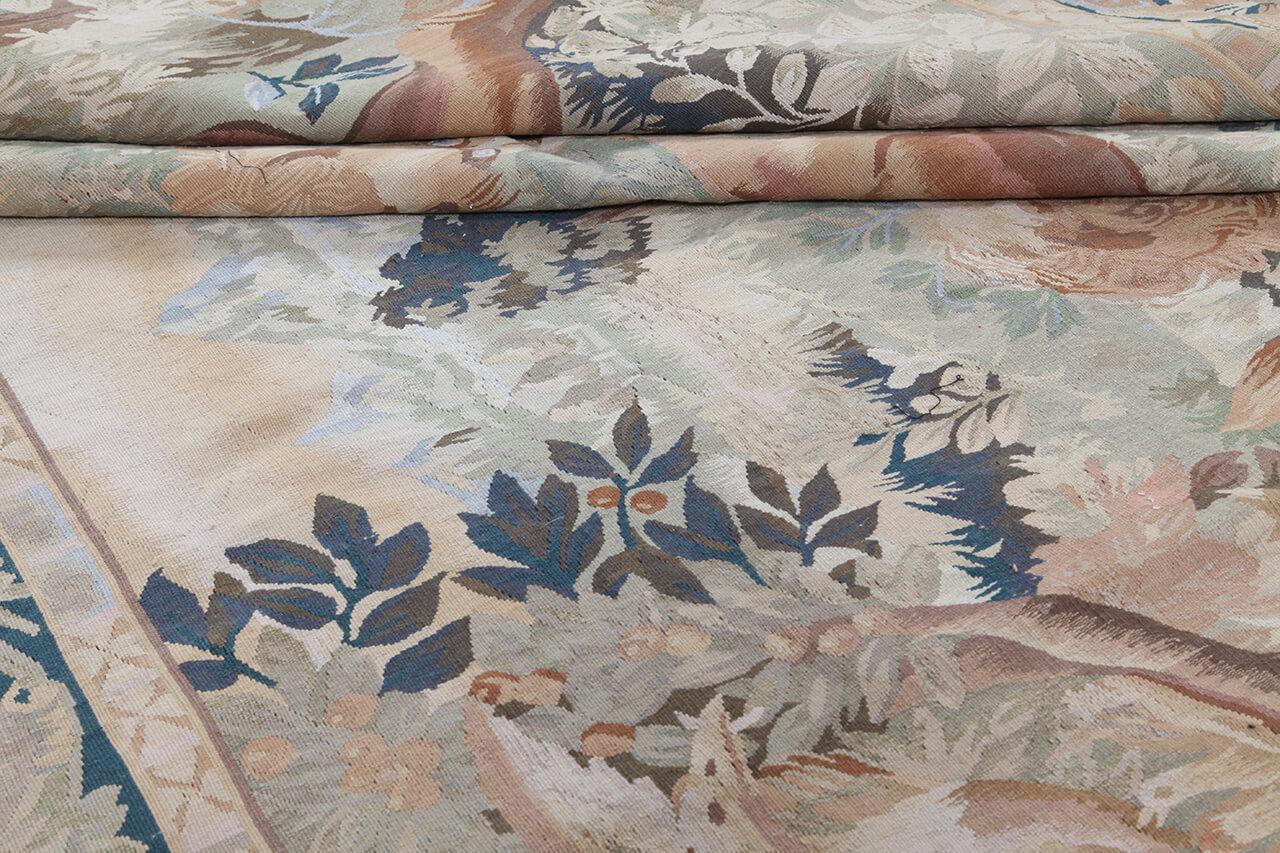
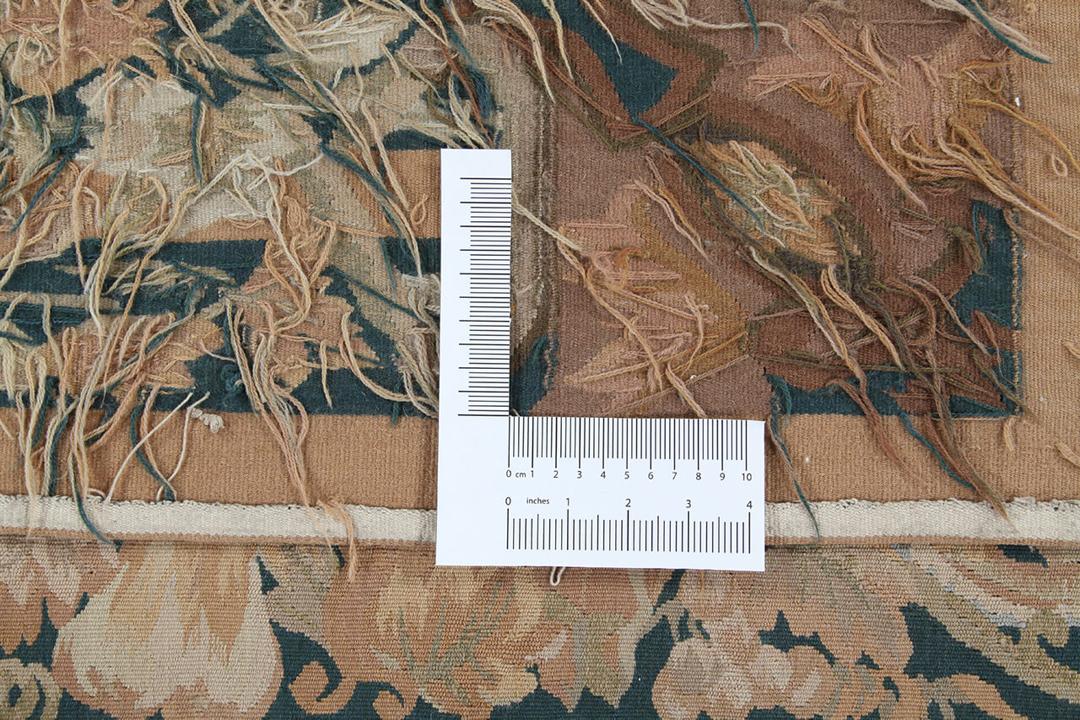
While the tradition began in France, it has inspired generations of weavers across the globe who have adapted these classic European aesthetics into new formats. The term 'tappissere' refers to this historical connection to tapestry-making, where the flat-weave technique is utilised to translate painterly detail into a textile medium, prioritising imagery and narrative flow over a deep pile.
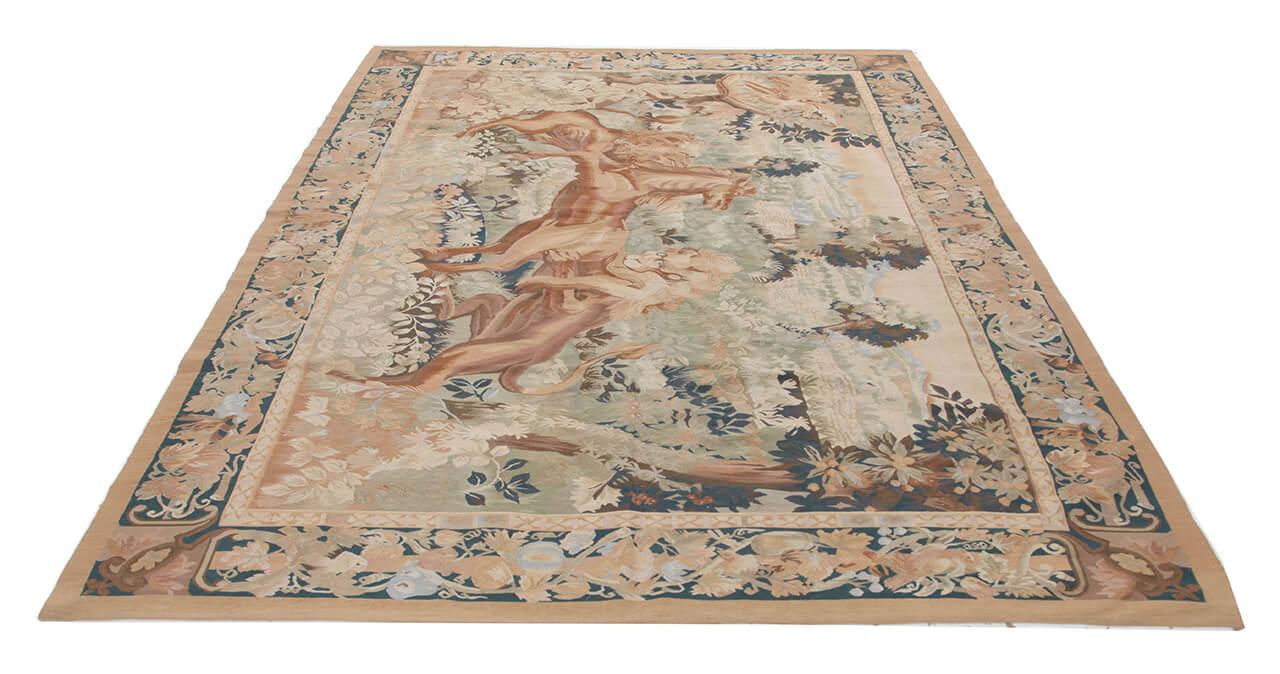
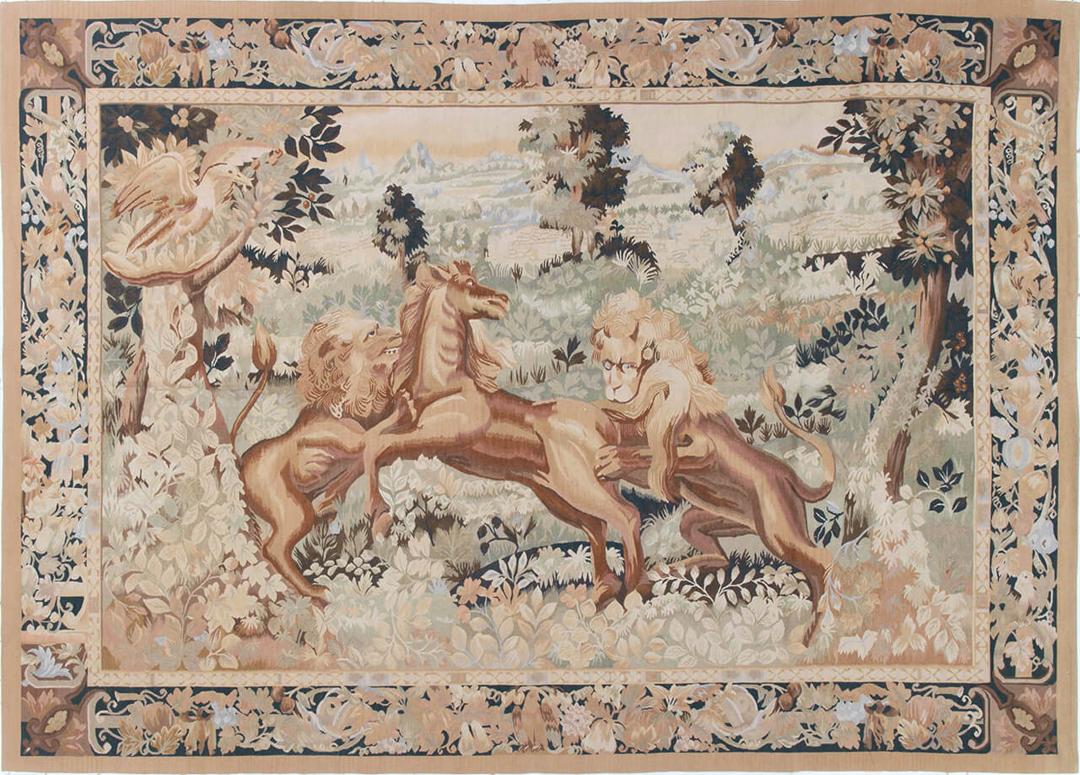
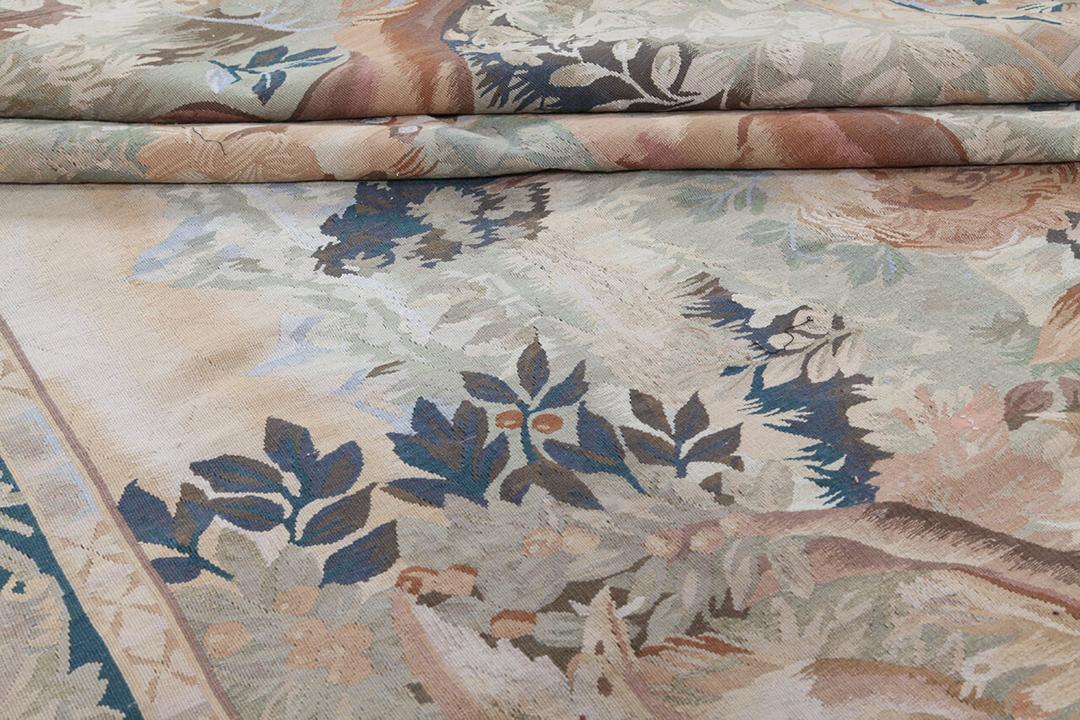
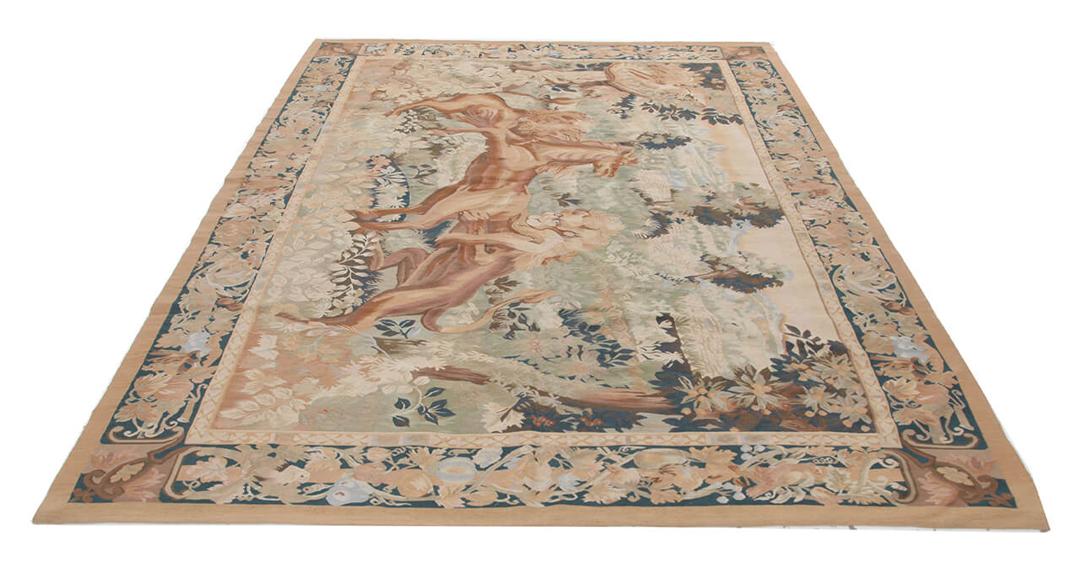
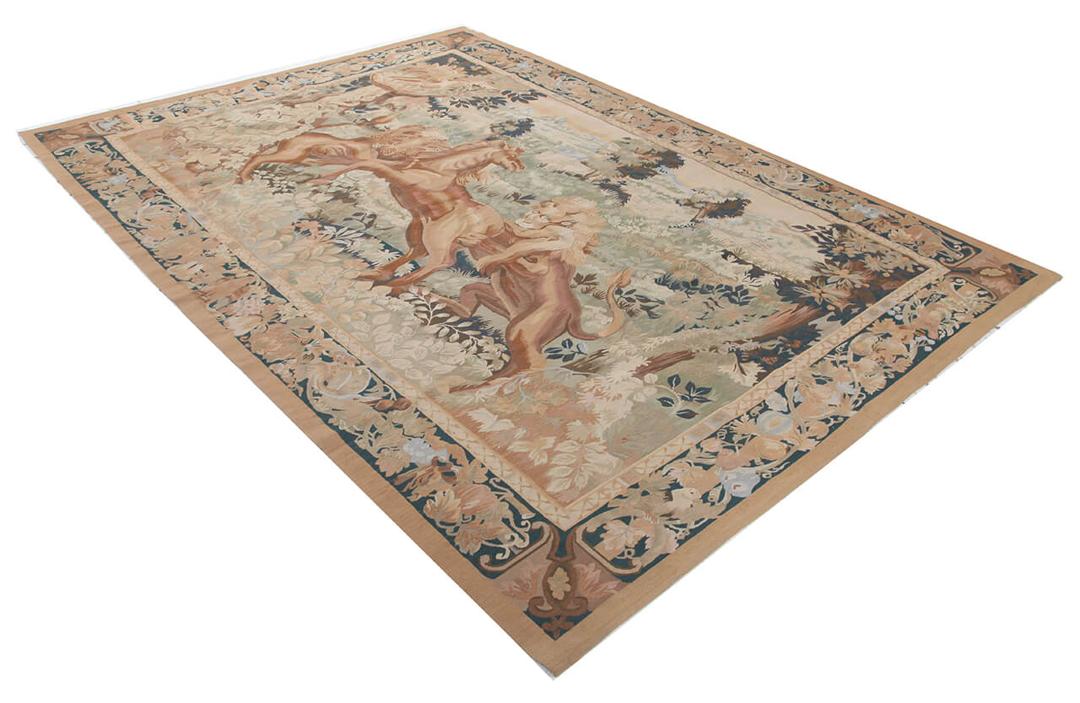
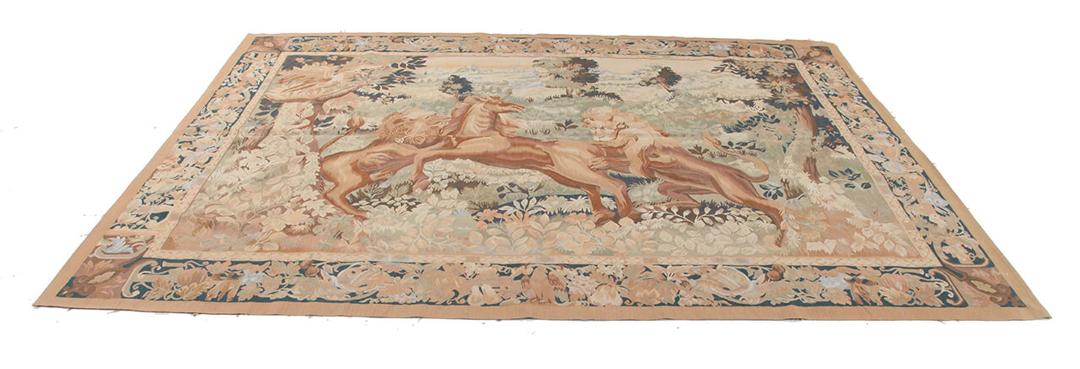
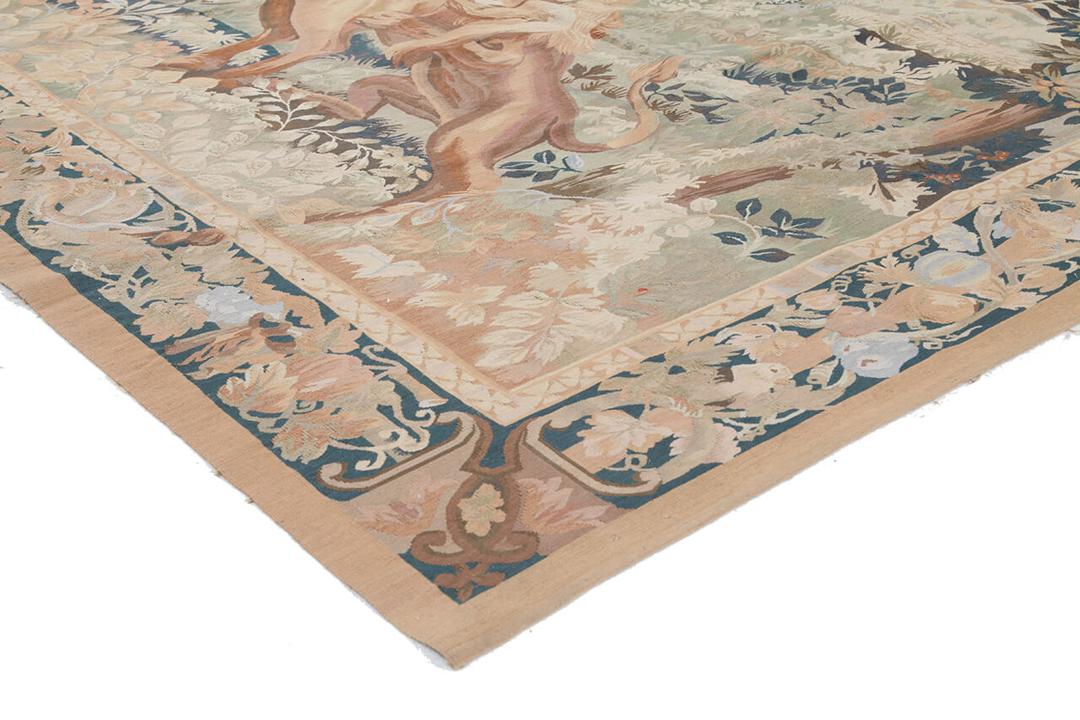
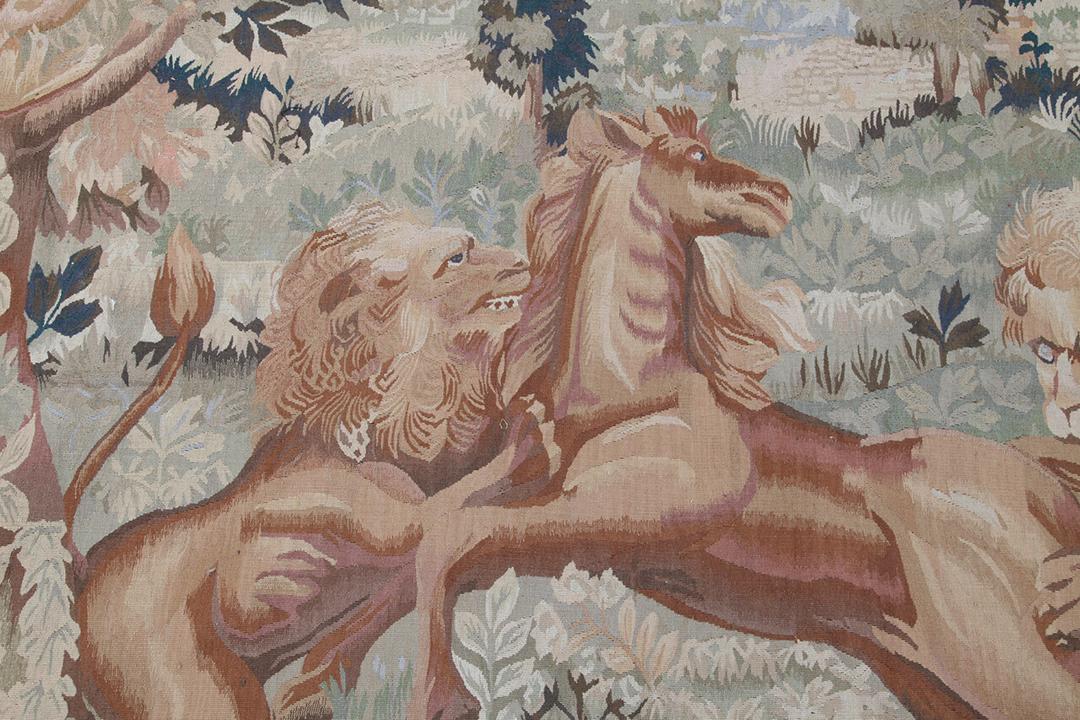
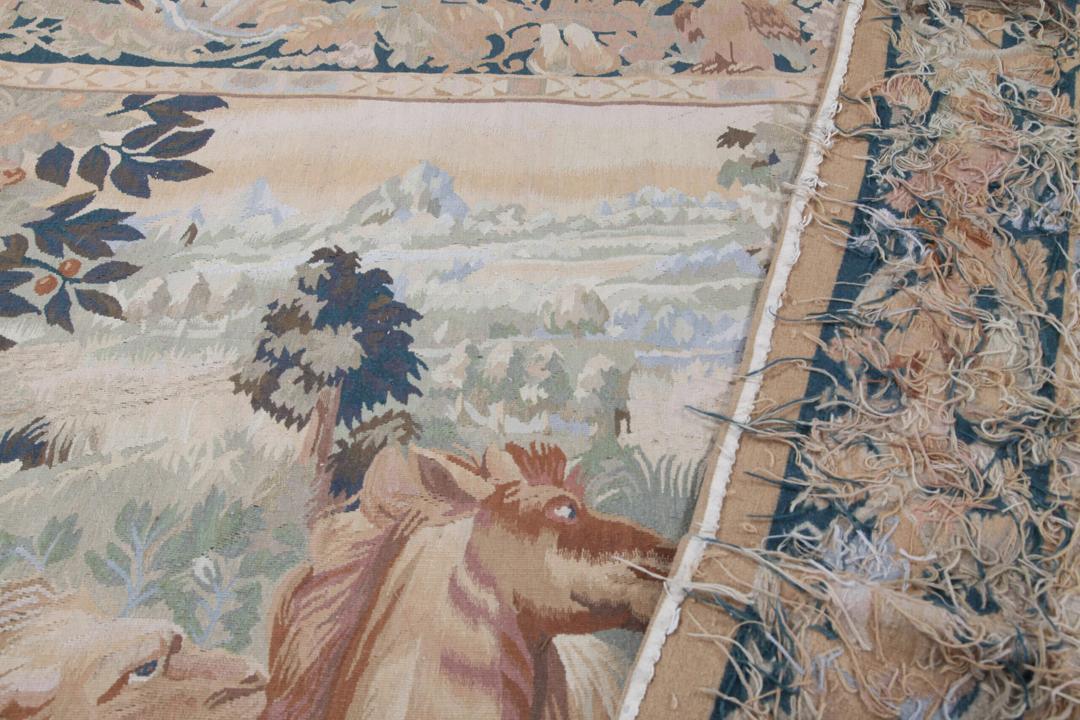
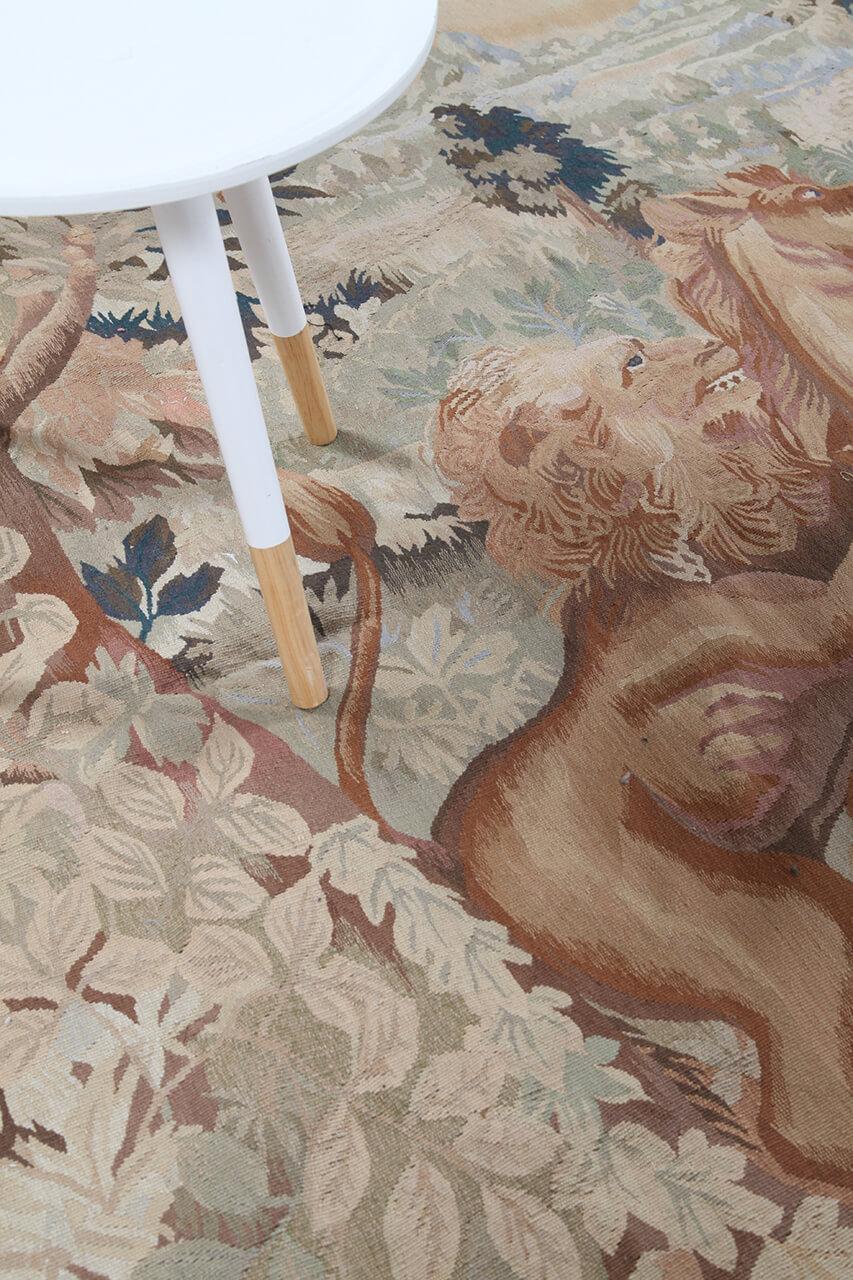
The design of this specific rug is defined by its narrative quality, featuring figures and natural landscapes arranged in a balanced, classical composition. Such designs are characterised by their formal borders and central focus, which draw the eye and invite the viewer to explore the story within the weave. The use of a muted, sophisticated palette is typical of the genre, designed to harmonise with elegant interiors.
Collecting such a piece is an investment in a storied craft tradition that values the union of narrative art and functional textile design. These rugs are highly regarded for their ability to bring a sense of heritage and intellectual depth to a room, serving as a reminder of the enduring power of historical design motifs that have been reimagined for the modern home.