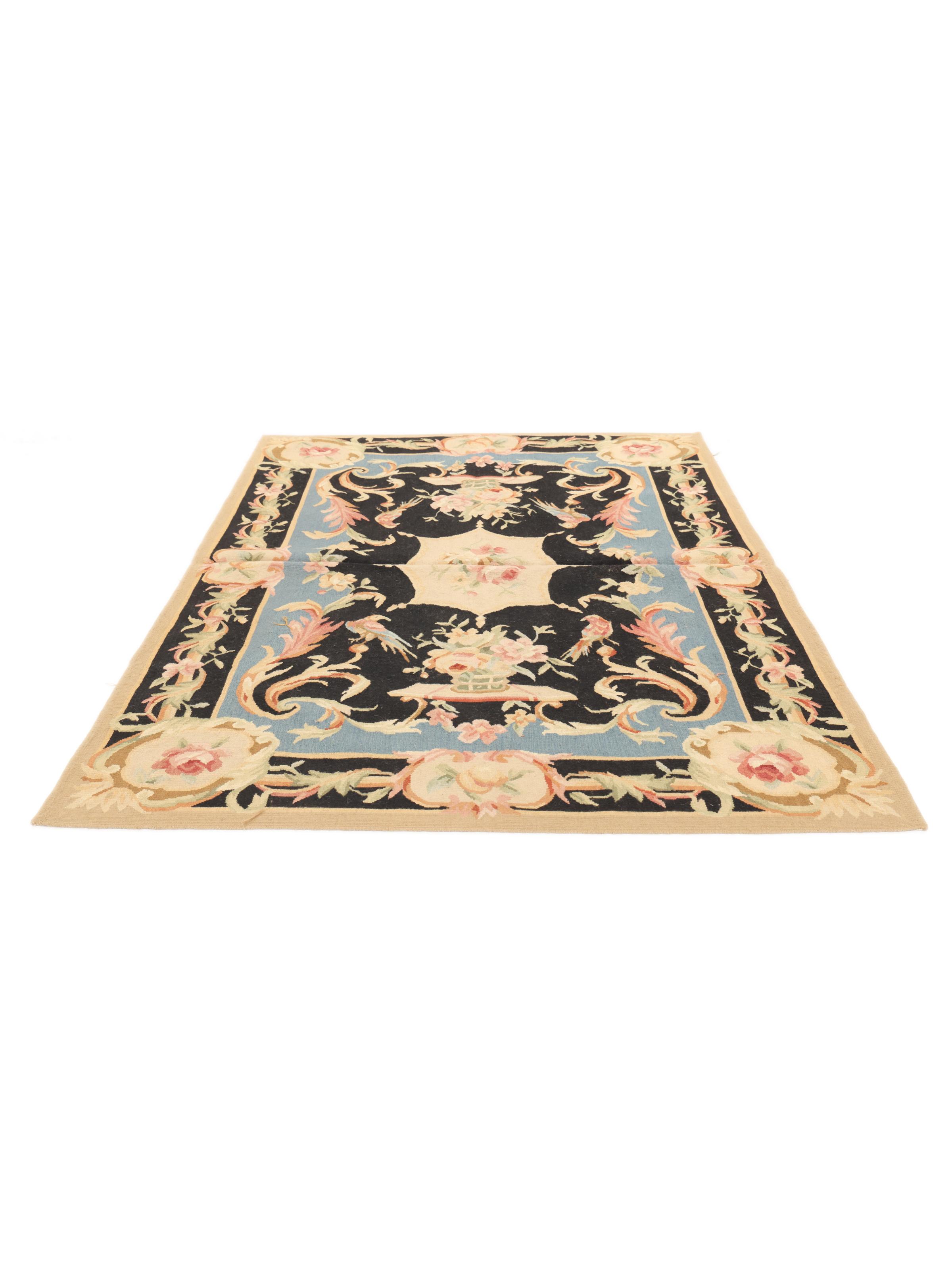
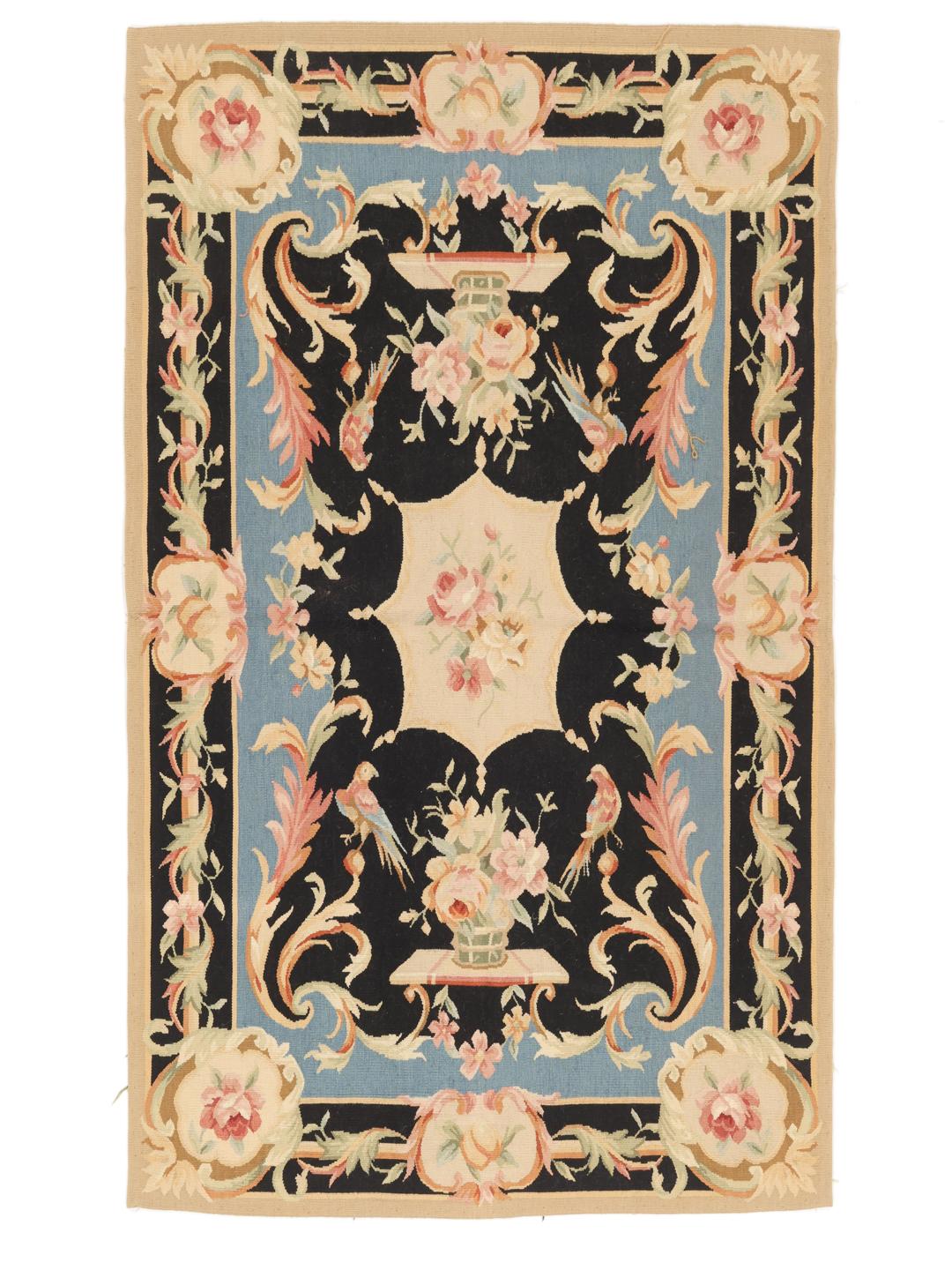
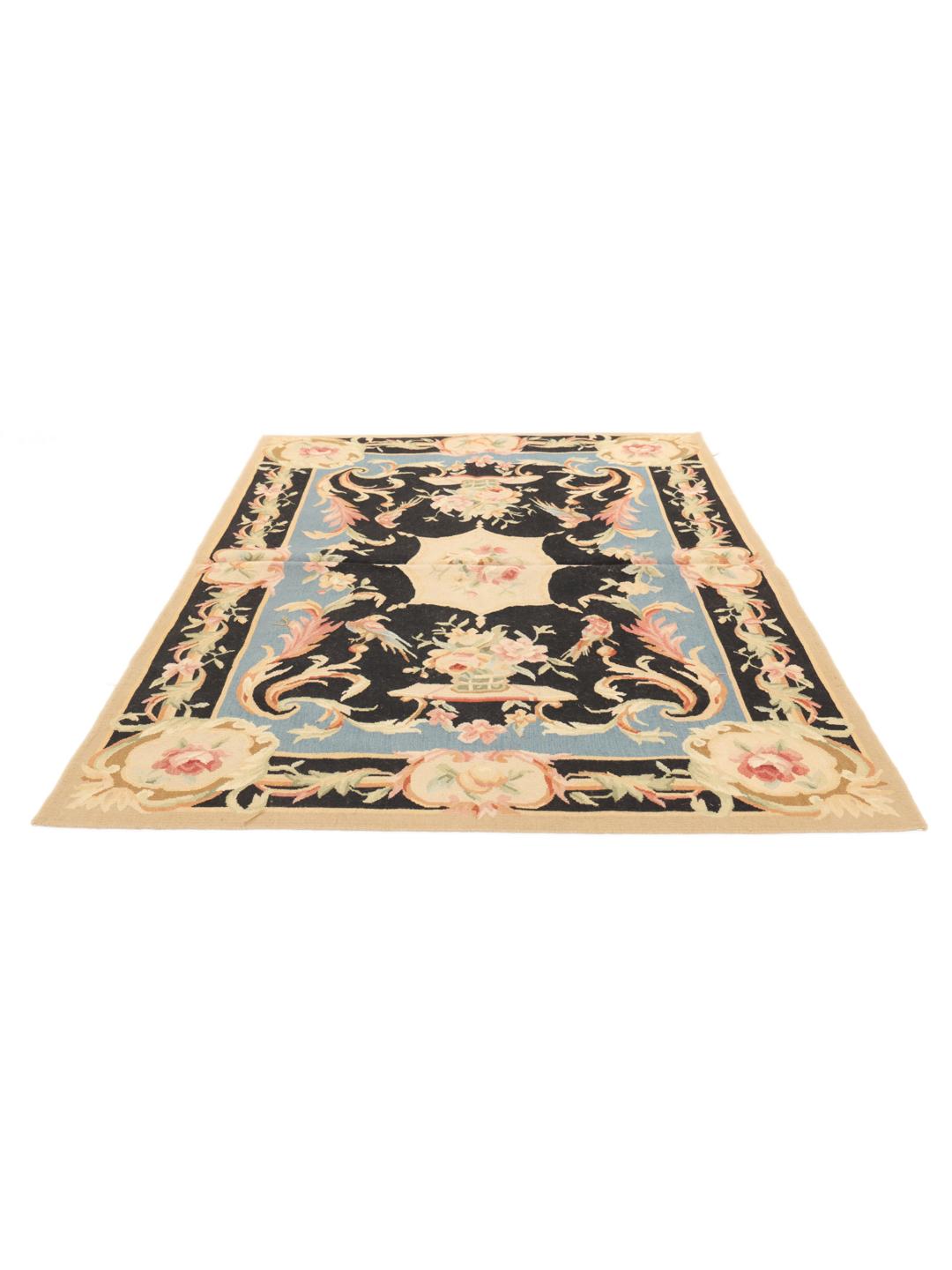
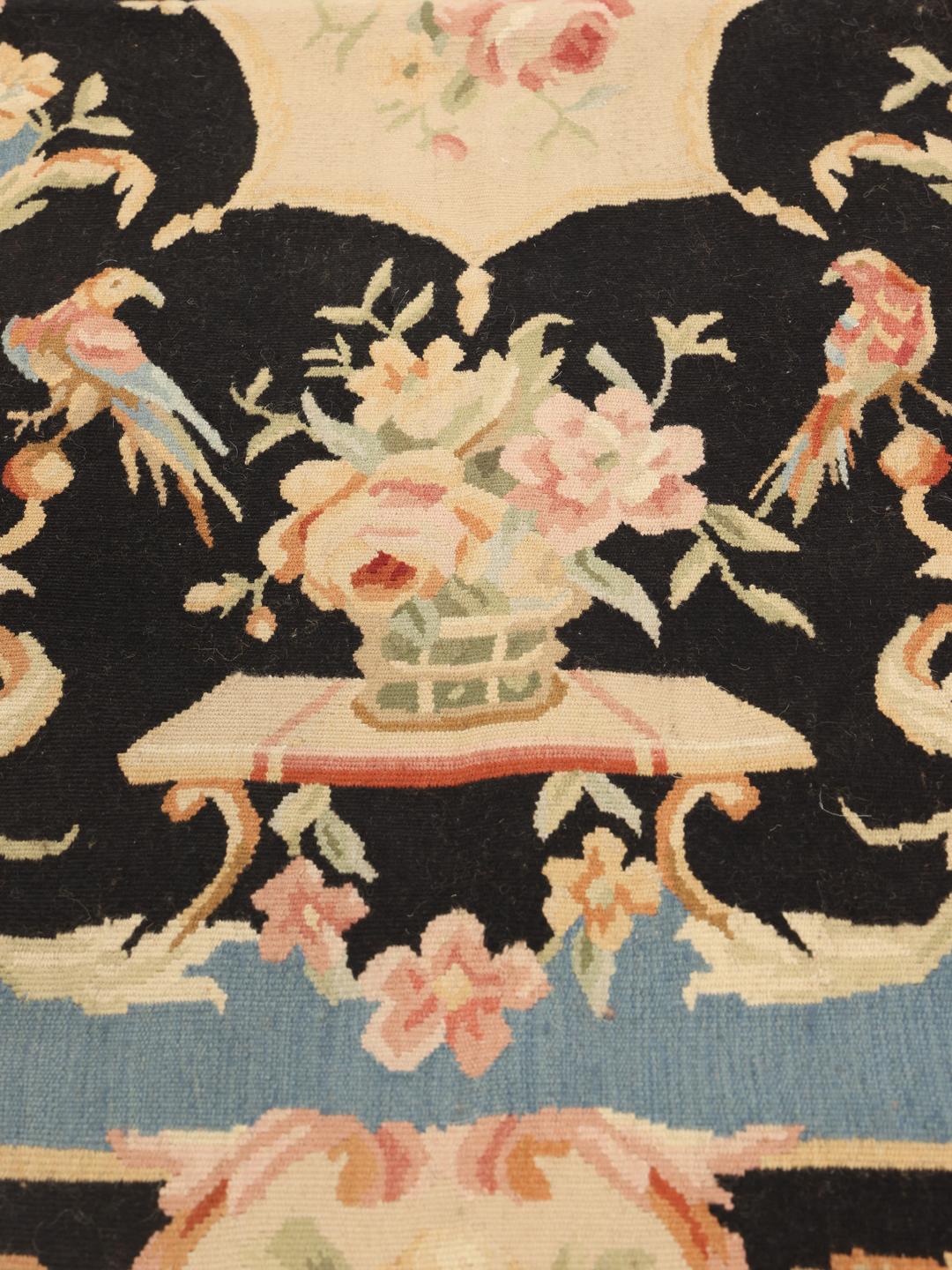
Aubusson rugs take their name from the French town of Aubusson, which became the epicentre of European tapestry weaving in the 17th and 18th centuries. Originally commissioned for royal palaces and grand estates, these textiles were designed to mimic the intricate detail of paintings, often depicting pastoral scenes, floral arrangements, and architectural elements.
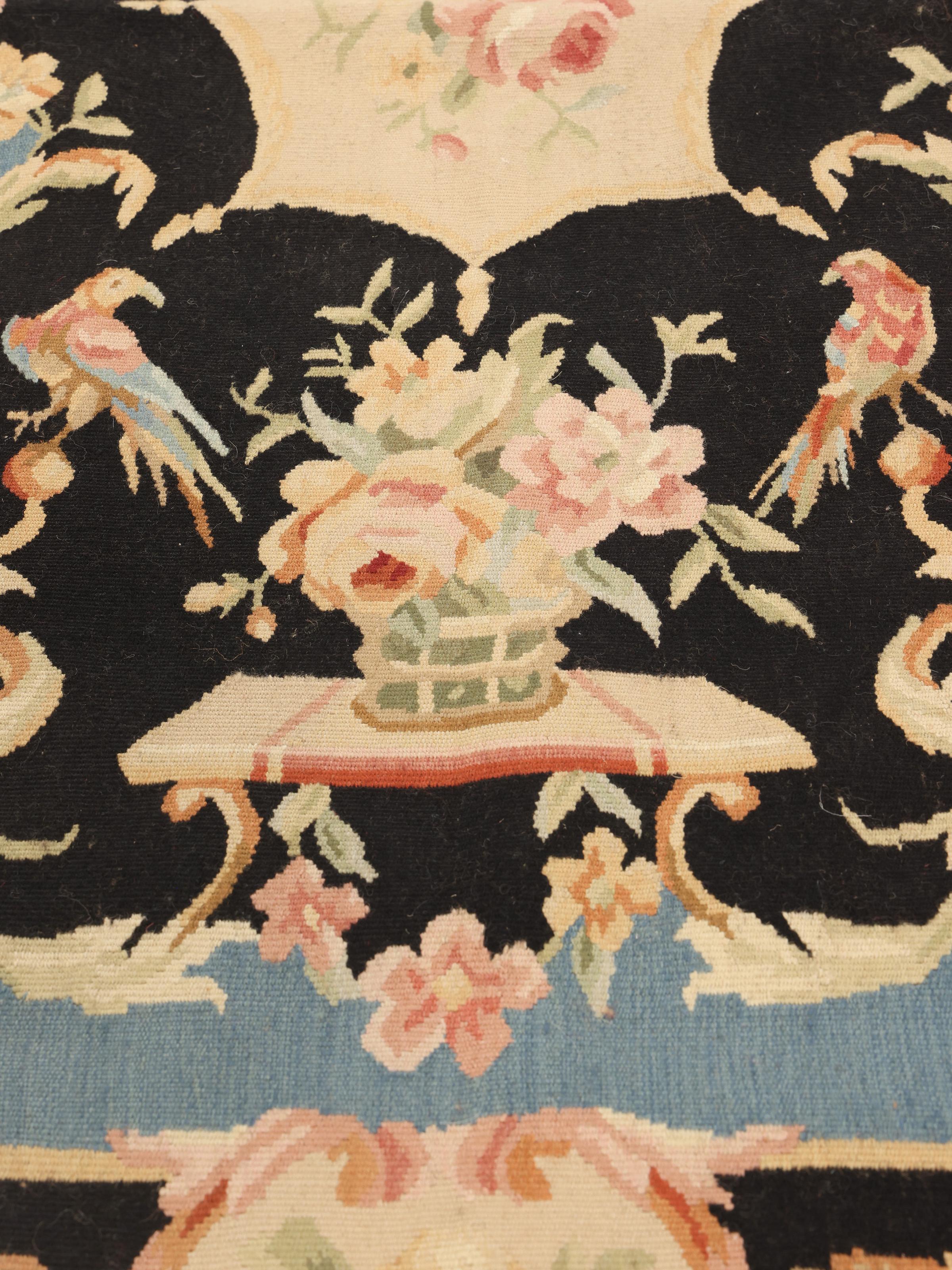
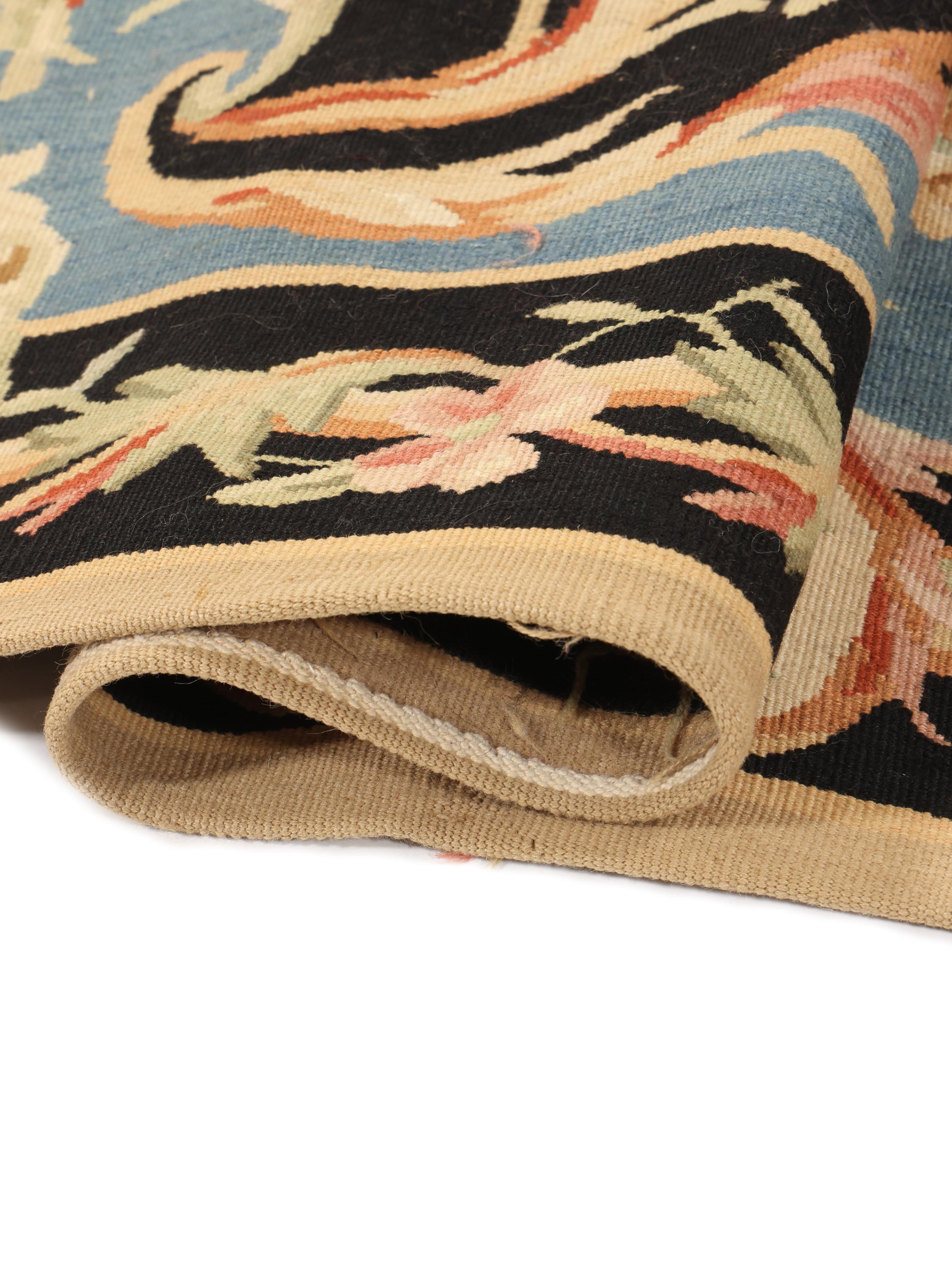
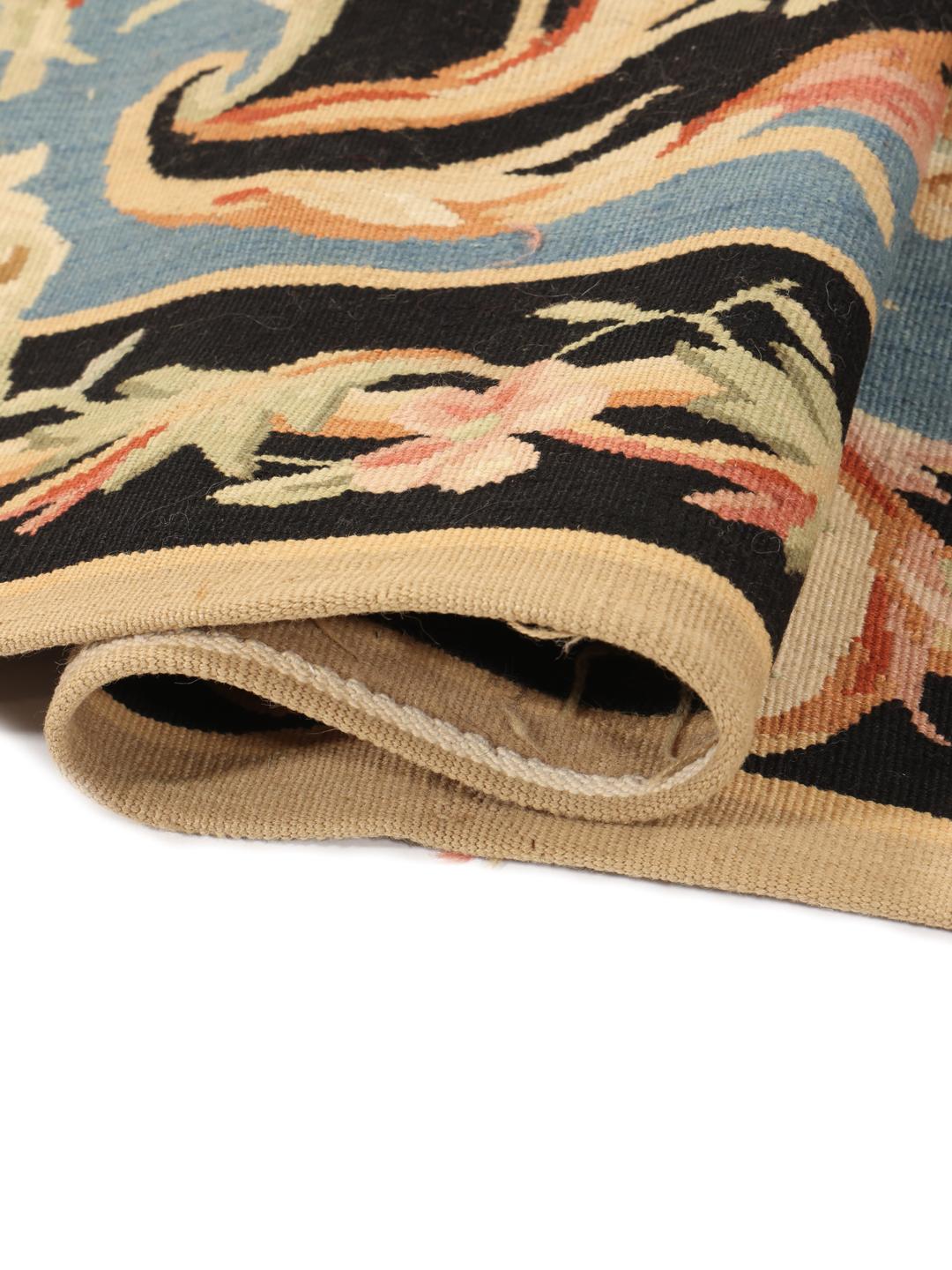
The term refers specifically to a flat-weave technique, which distinguishes these rugs from traditional pile-knotted carpets. By weaving the design directly into the foundation rather than knotting individual tufts of wool, weavers are able to create much finer, more painterly details. This technical distinction is what gives such rugs their signature smooth, lightweight, and versatile feel.
Signature elements of this tradition include the use of neoclassical motifs, such as central medallions, ornate borders, and delicate floral wreaths. The colour palettes are typically sophisticated, often balancing soft pastels with darker, grounding backgrounds to create a sense of depth. While the tradition is rooted in France, it has been embraced and adapted by skilled weavers globally, leading to beautiful reinterpretations that honour the original spirit of the craft.
Collecting an Aubusson-style rug is an investment in a storied design lineage. These pieces are valued not only for their aesthetic beauty but for the skill required to translate complex, painterly designs into a woven format. Owning one is a way to celebrate a long history of European textile art while adding a timeless, elegant layer to your home.