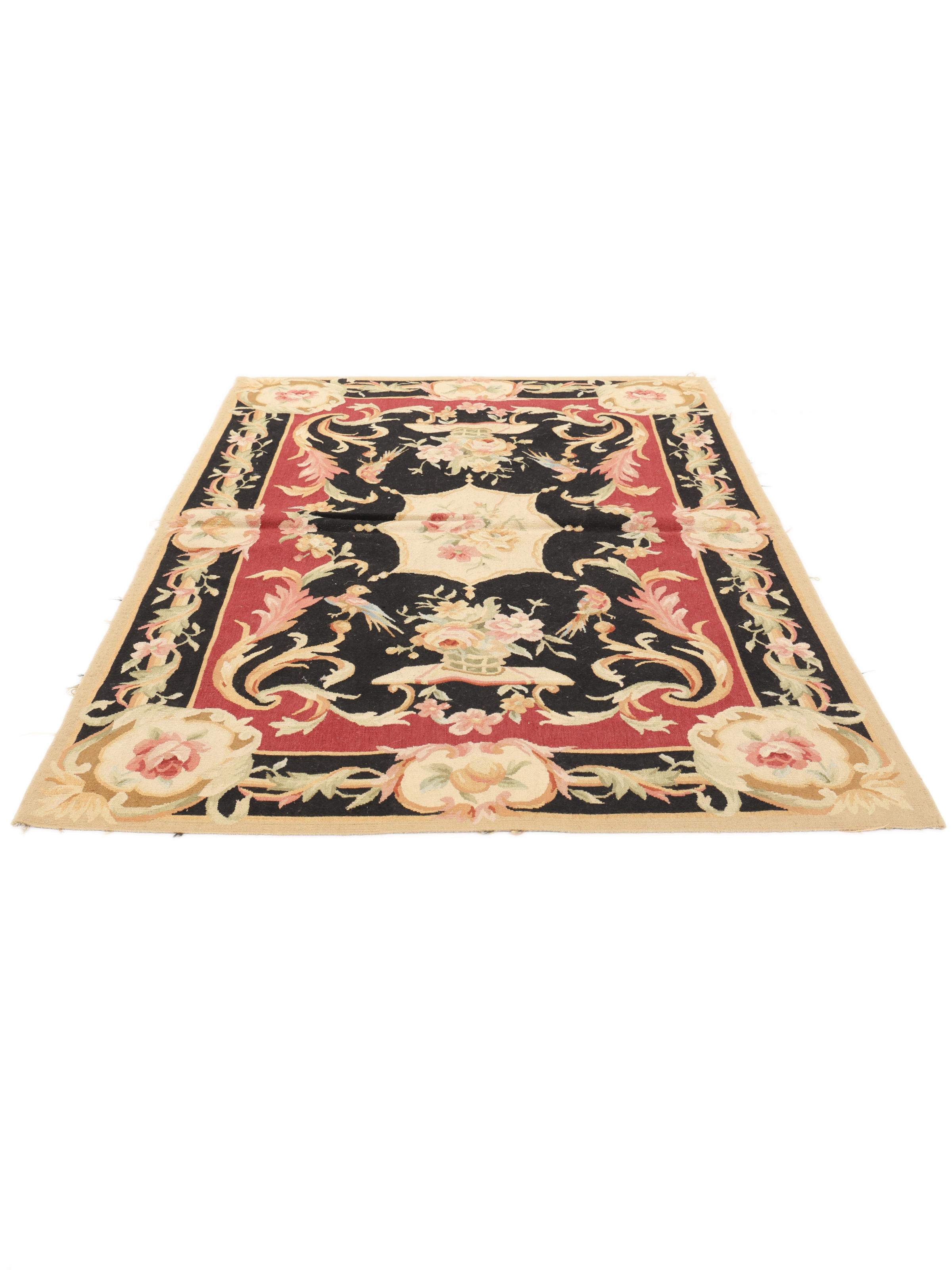
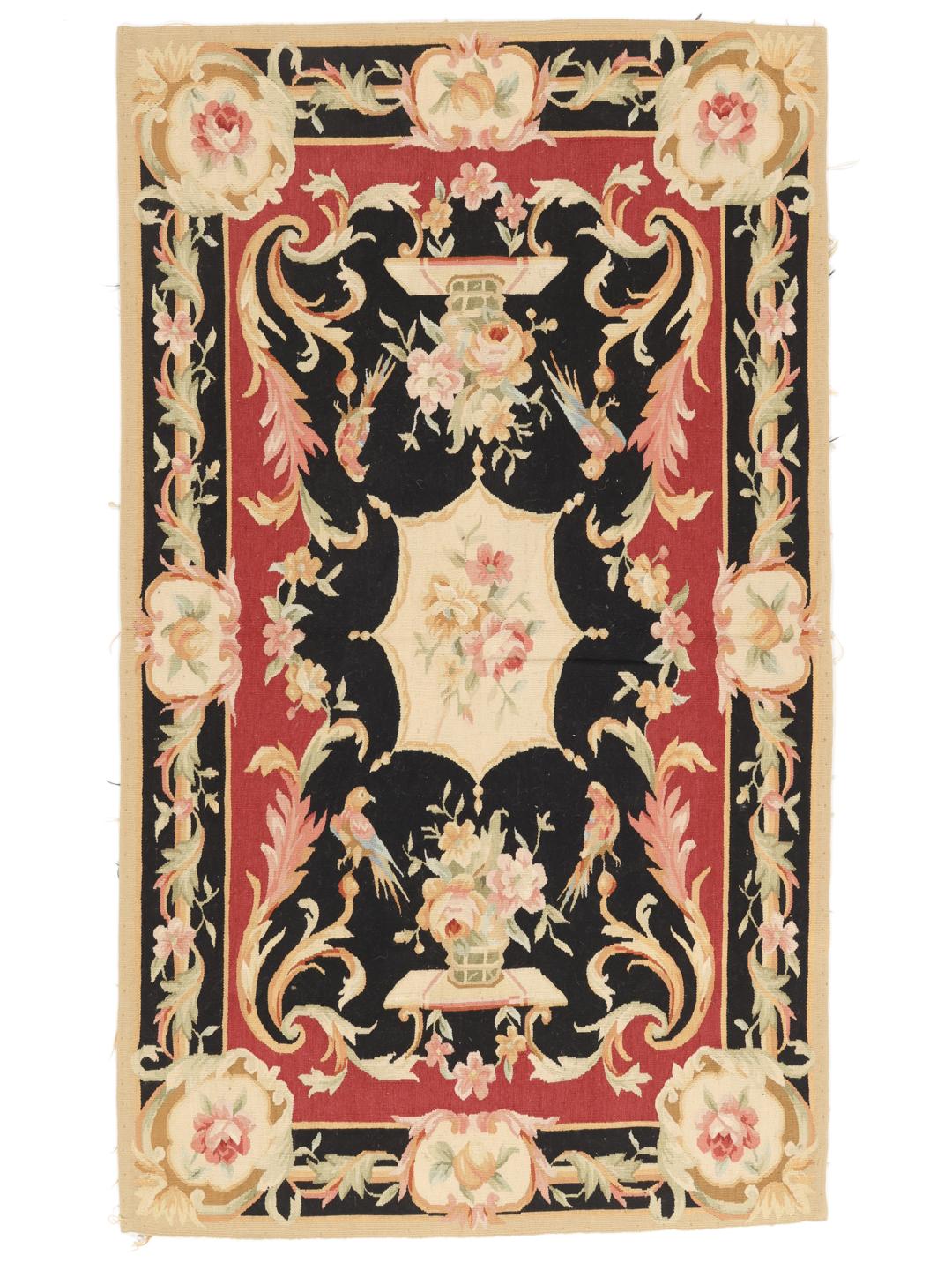
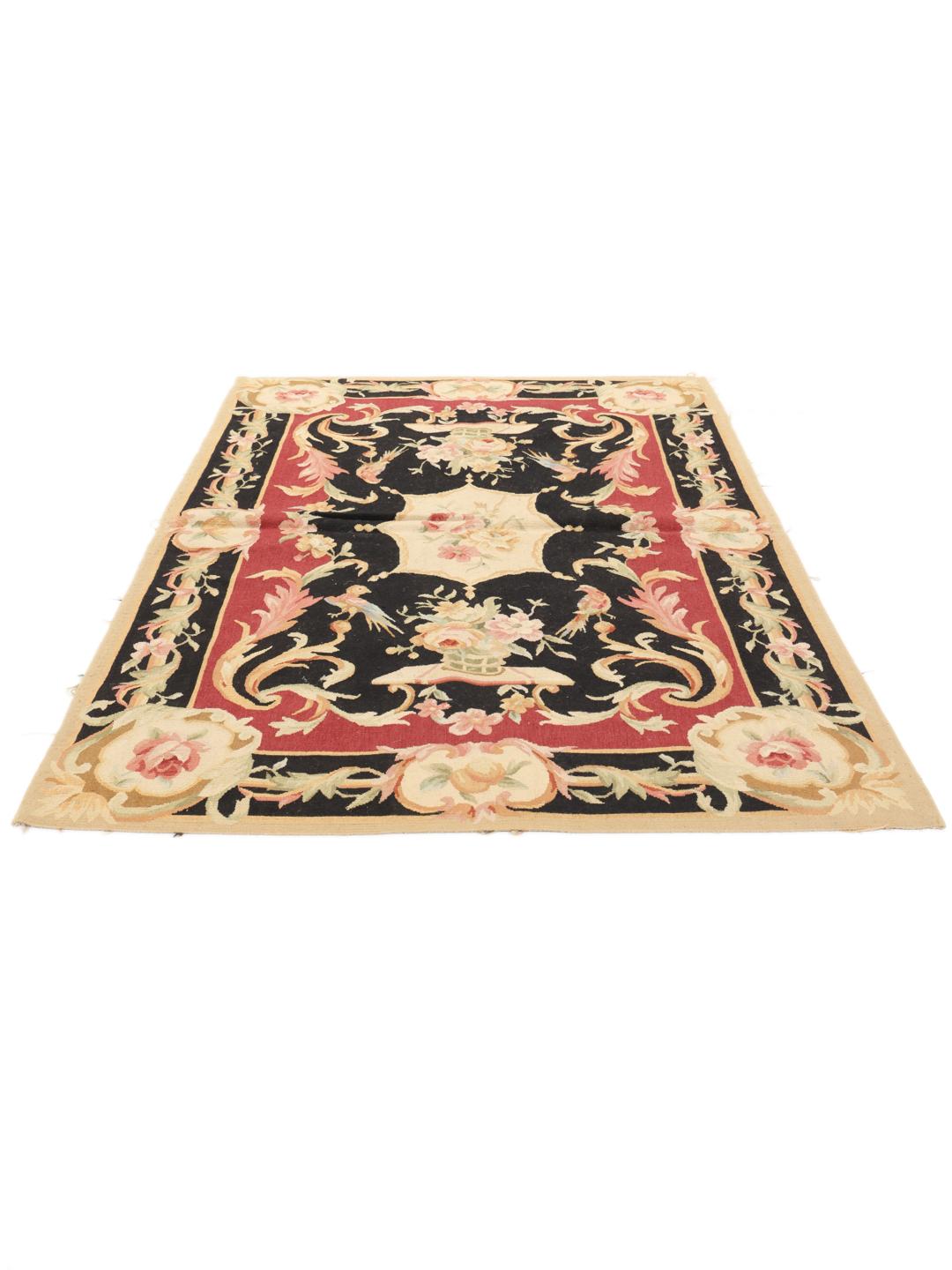
Aubusson rugs are inspired by the historical tapestry traditions of the French town of Aubusson, which gained international acclaim during the 17th and 18th centuries. While originally produced in France, the style has been adopted and adapted by skilled weavers globally, including in China, where modern artisans combine these classical European aesthetics with traditional weaving expertise.
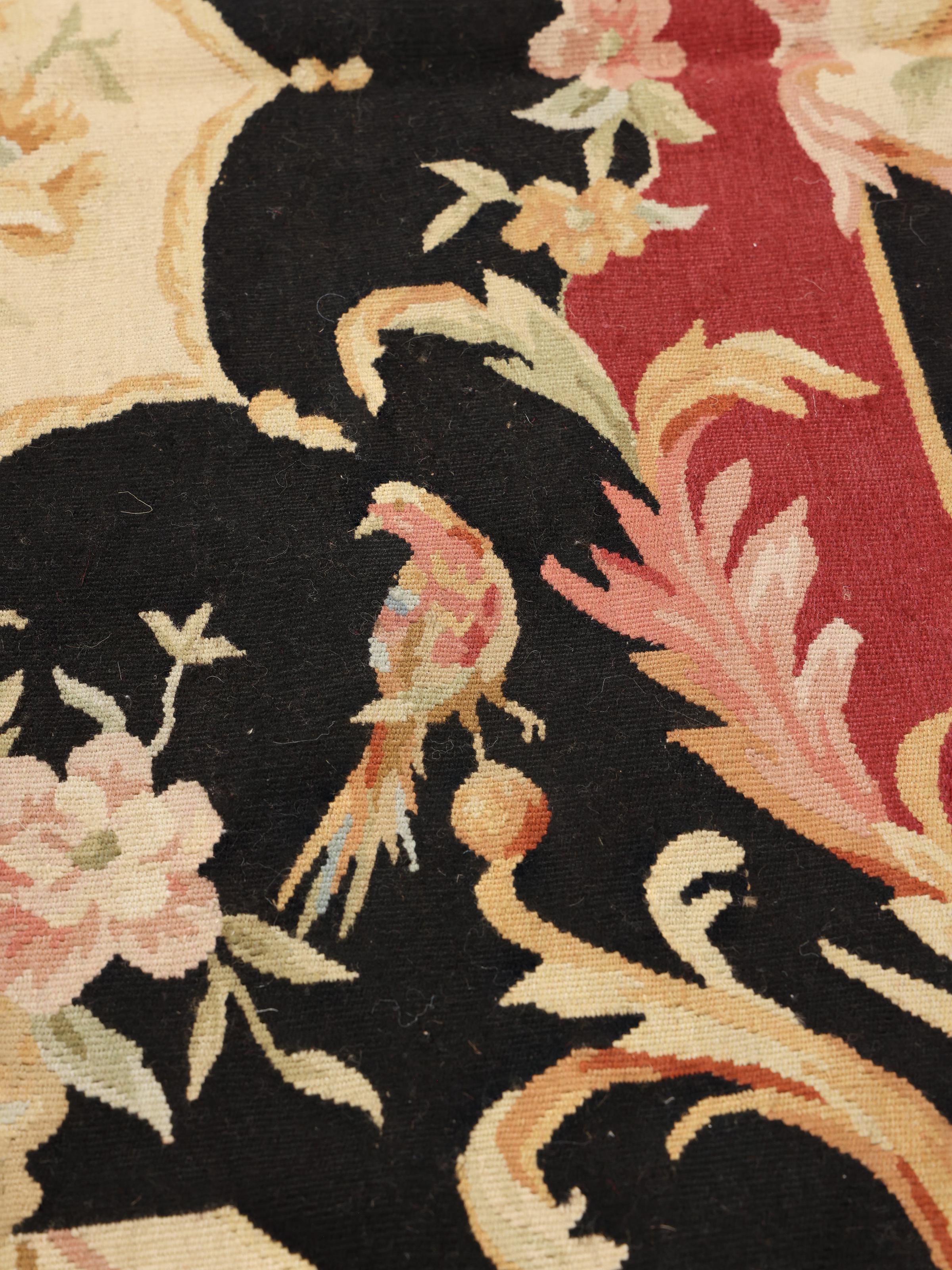
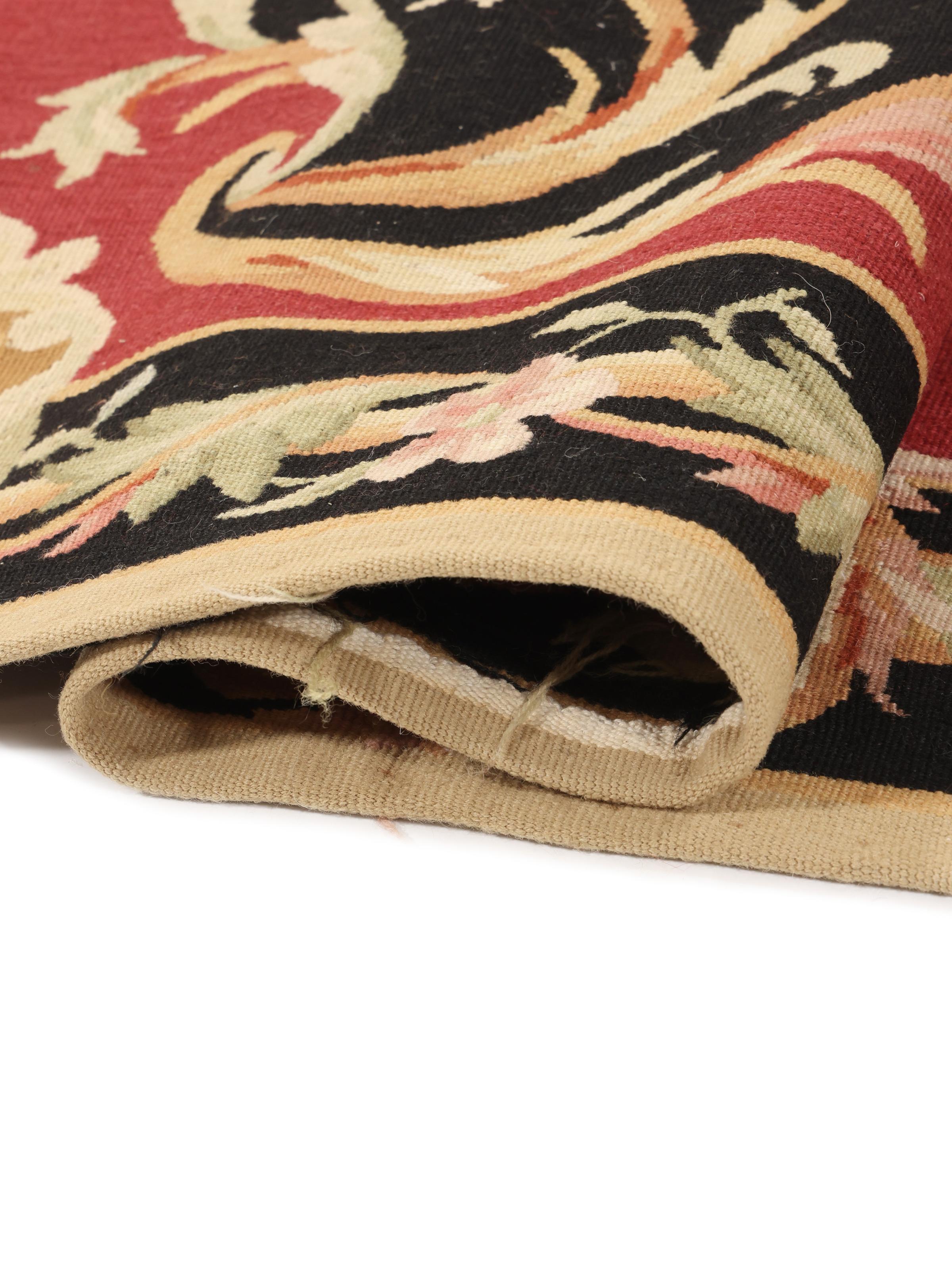
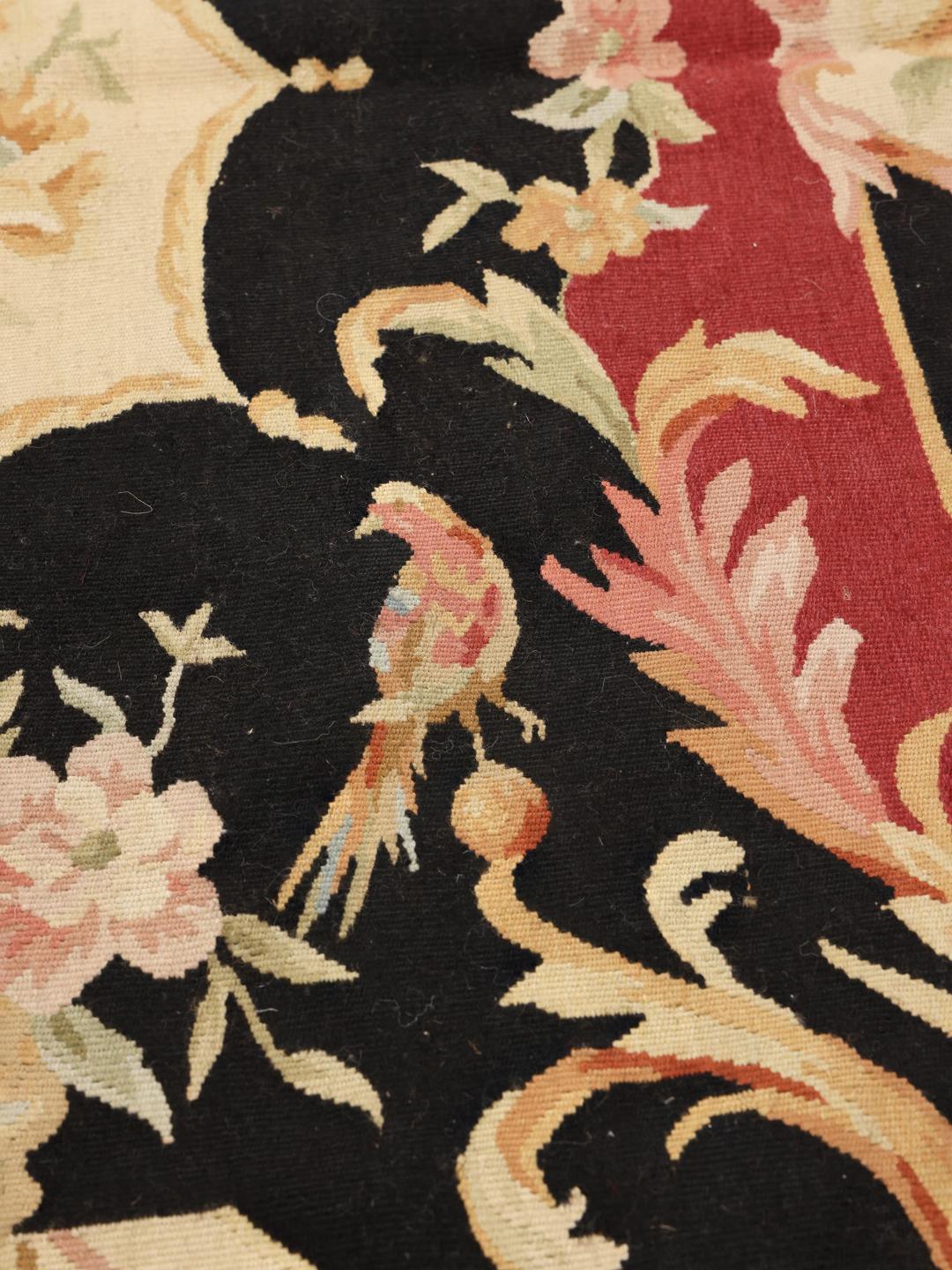
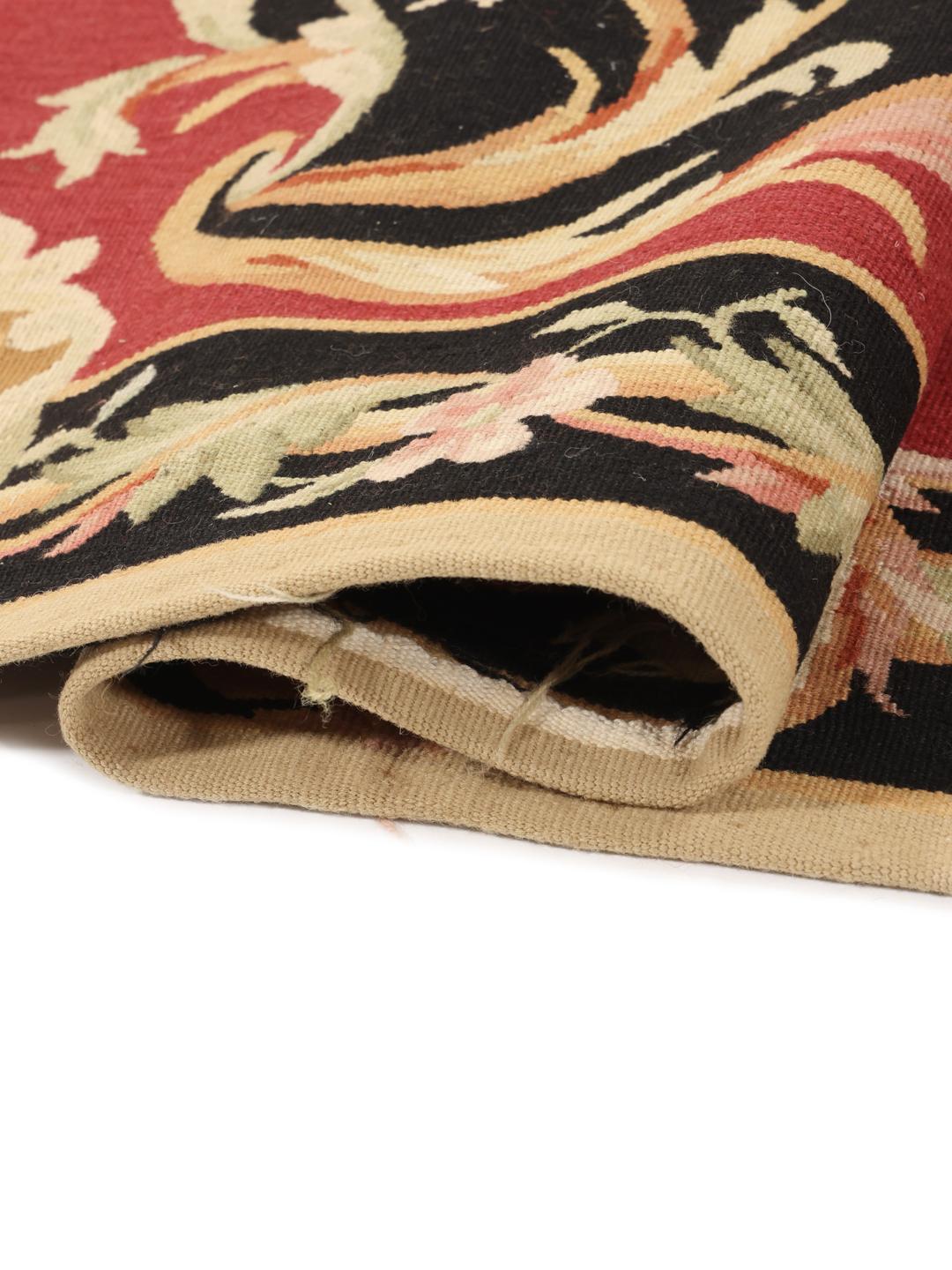
The term Aubusson refers to a flat-weave tapestry technique rather than a knotted pile, known for its ability to render highly detailed, painterly designs. By using a flat-woven construction, the artisans are able to achieve crisp, clear lines in the intricate floral and avian patterns, resulting in a surface that is both durable and visually complex.
Signature design elements of this tradition include a central medallion or decorative field flanked by floral garlands, baskets of blossoms, and often, pastoral or avian motifs. The colour palettes are typically sophisticated, balancing deep, dark fields with lighter, pastel-toned florals to create a sense of harmony and elegance that was highly favoured in European interior design.
Collecting a piece that honours the Aubusson tradition is a way to celebrate centuries of decorative art. These rugs are highly valued for their ability to bring a sense of history and formal beauty into a home, representing a marriage of artistic vision and skilled manual labour that remains as relevant today as it was in the grand salons of the past.