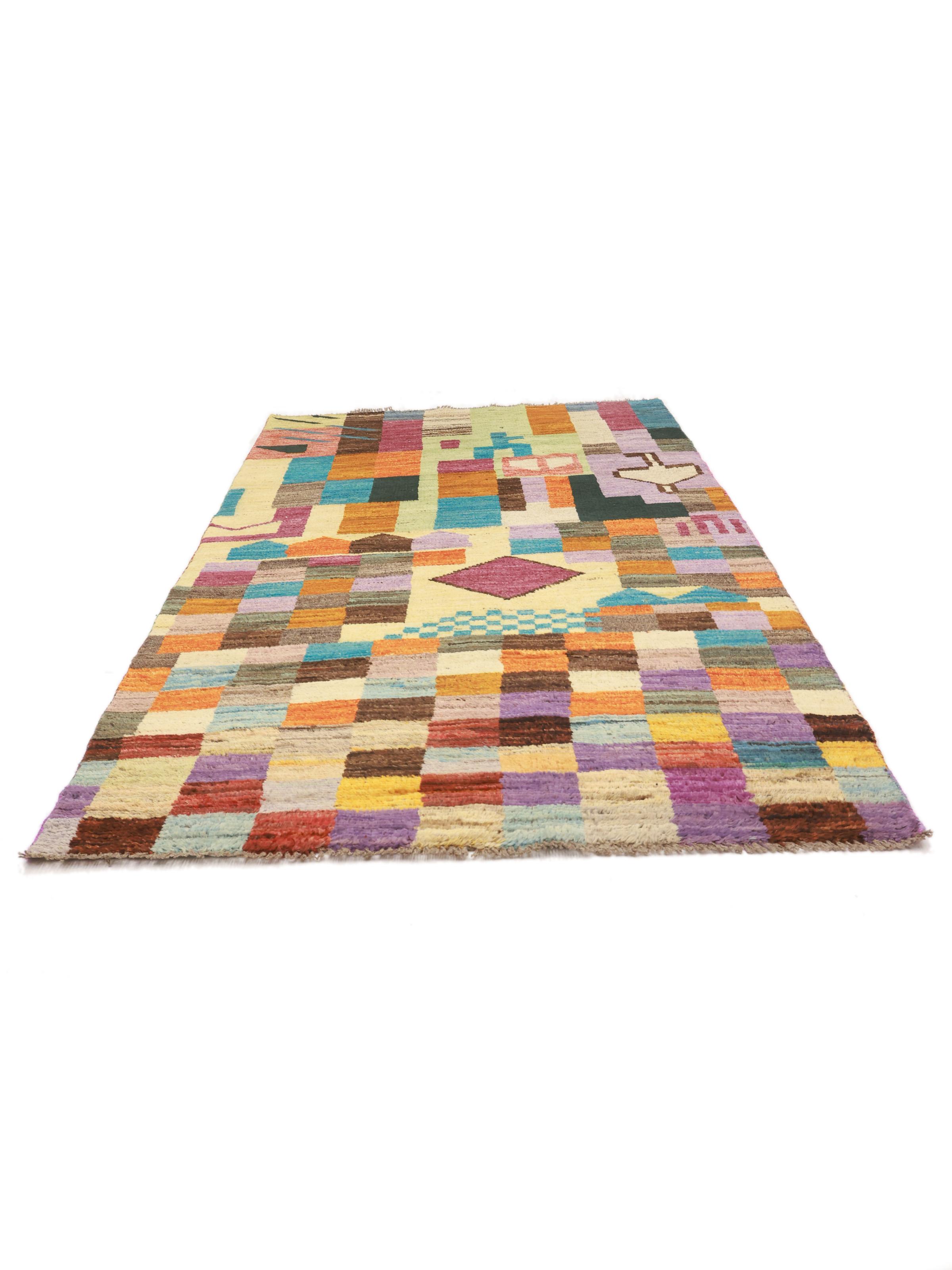
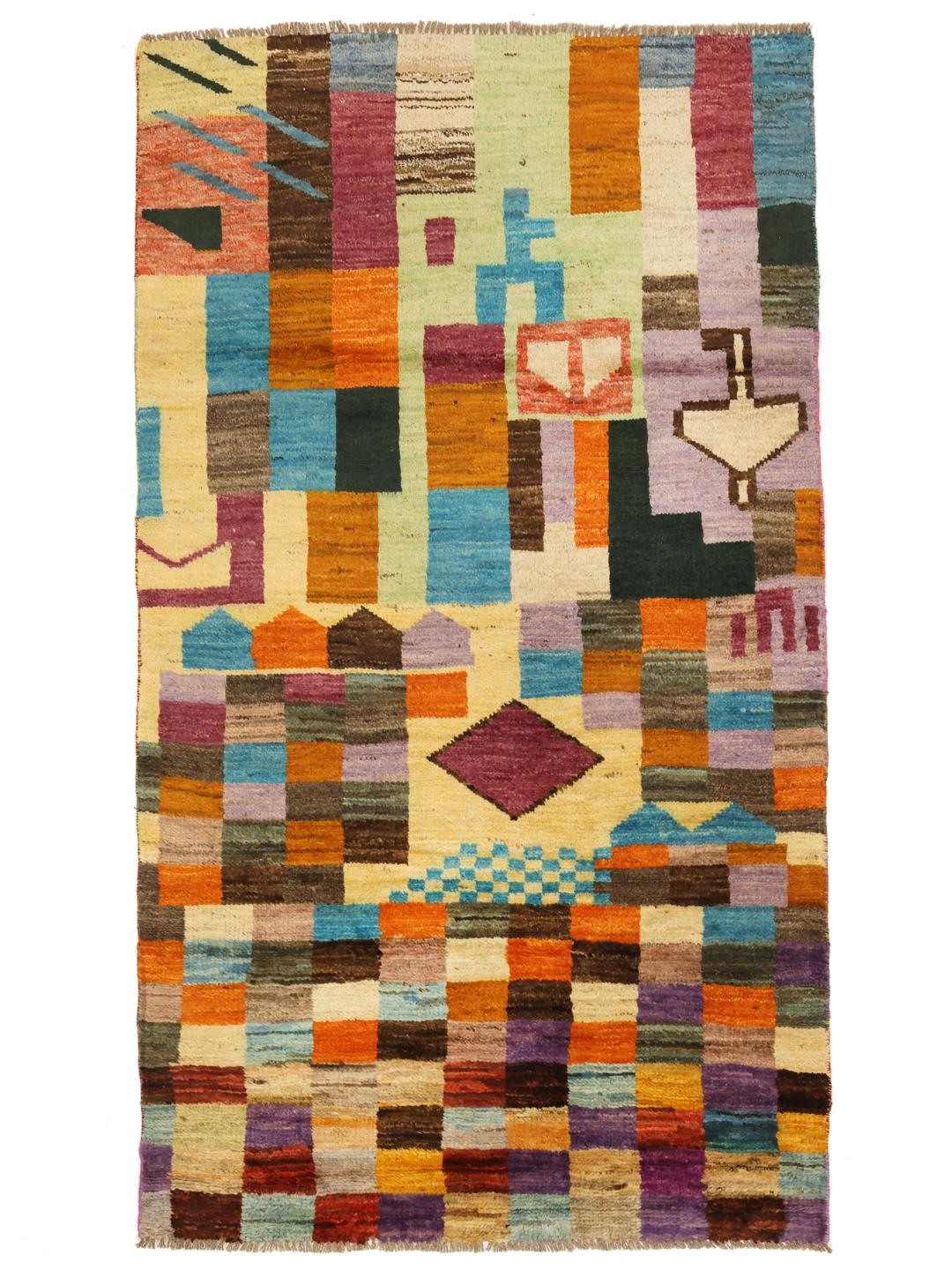
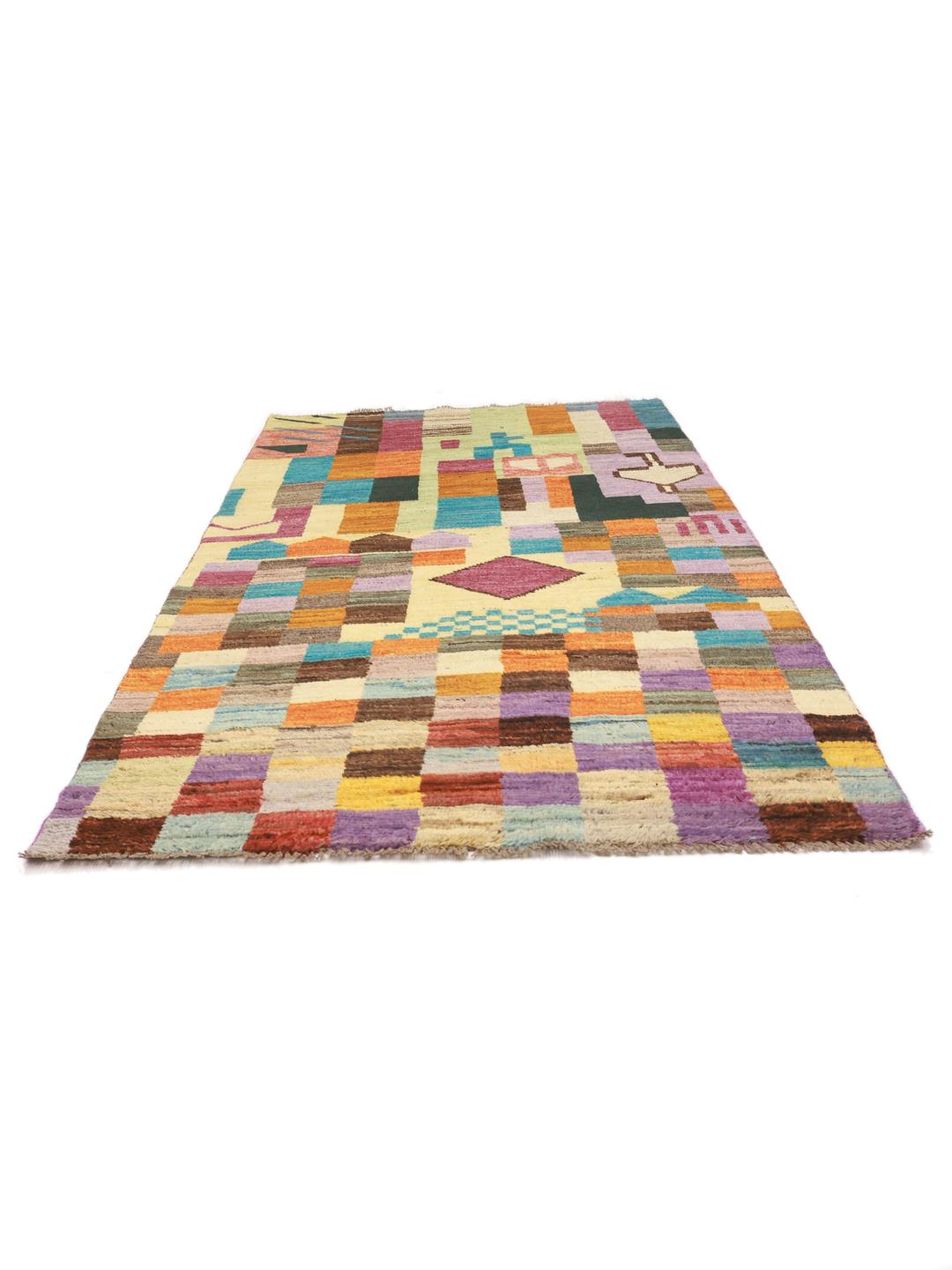
The Berber rug tradition traces its roots to the mountainous regions of North Africa, where nomadic tribes historically wove these pieces for practical warmth and as expressions of cultural identity. Over centuries, these techniques migrated and evolved, finding a vibrant new home in the weaving hubs of the Middle East, where artisans adapted the classic, shaggy aesthetic to include more intricate patterns and sophisticated colour palettes.
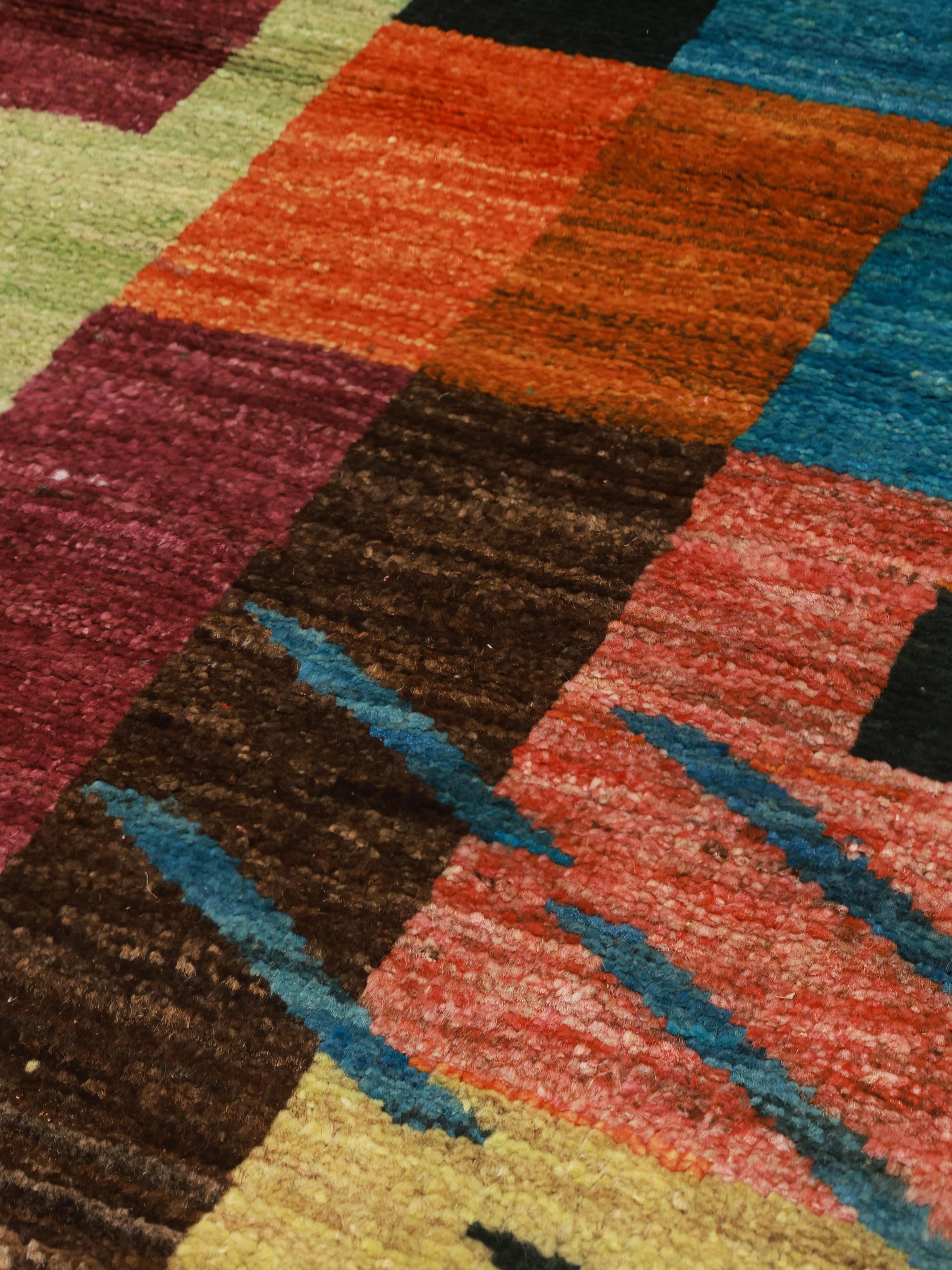
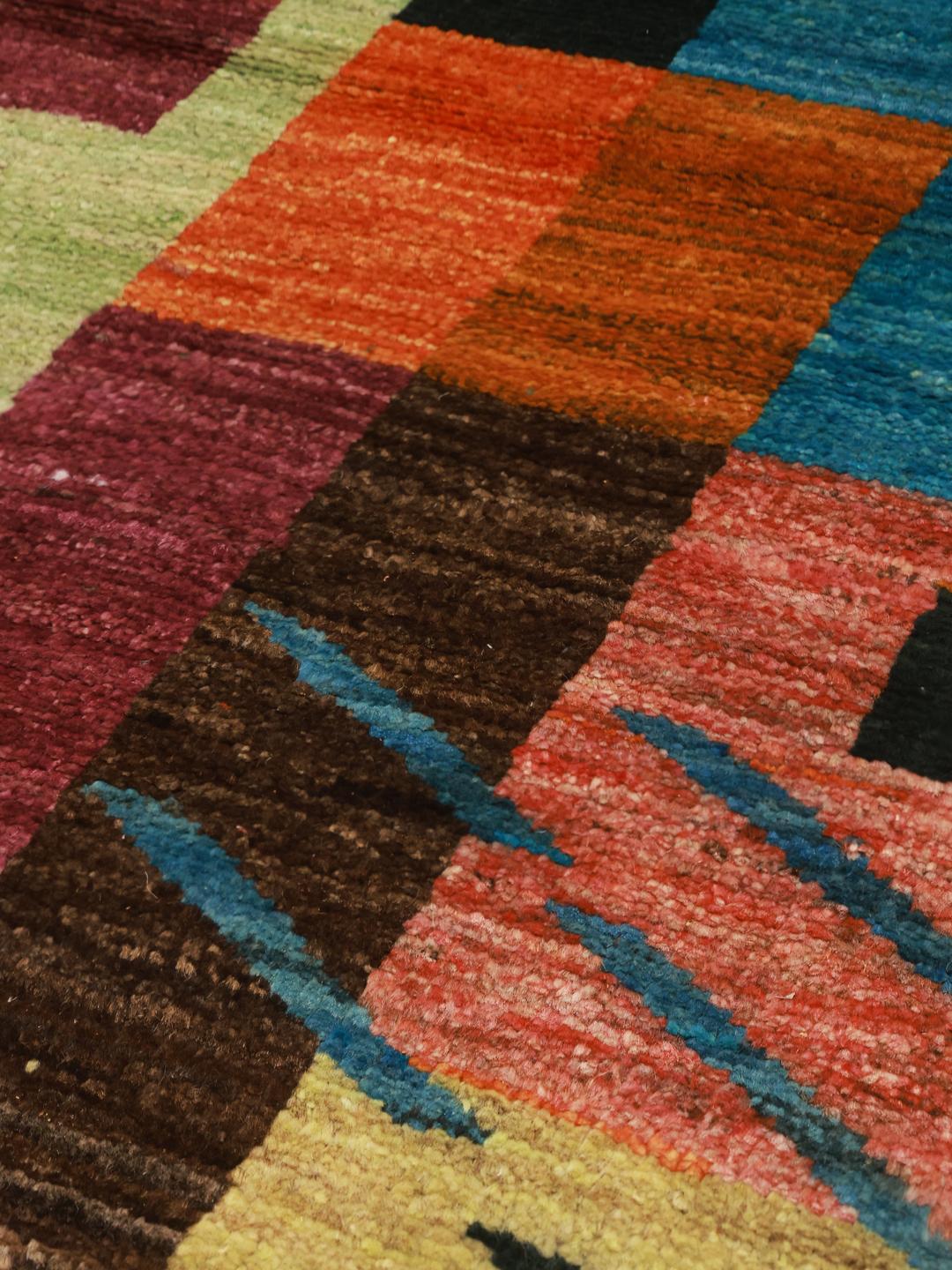
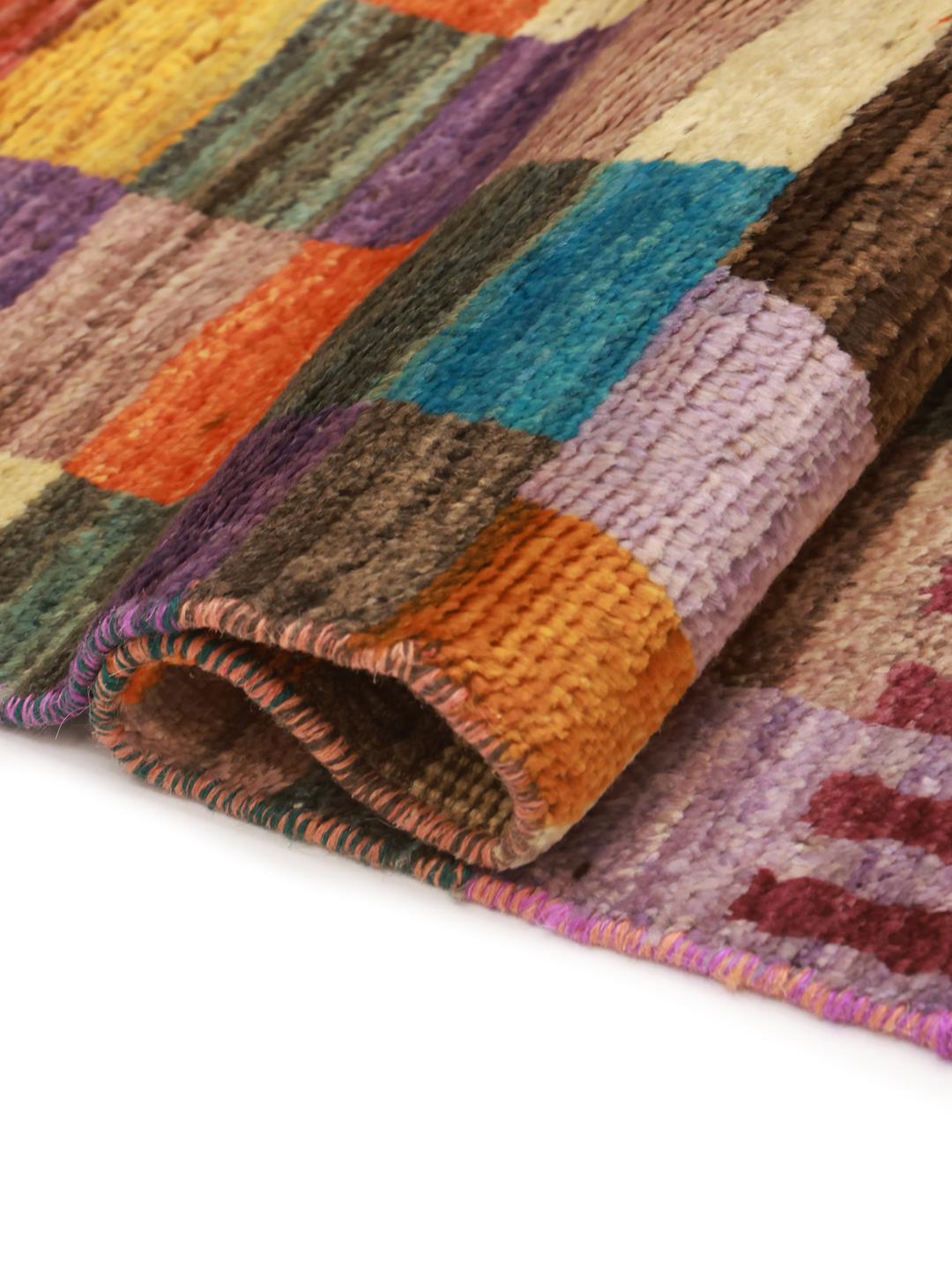
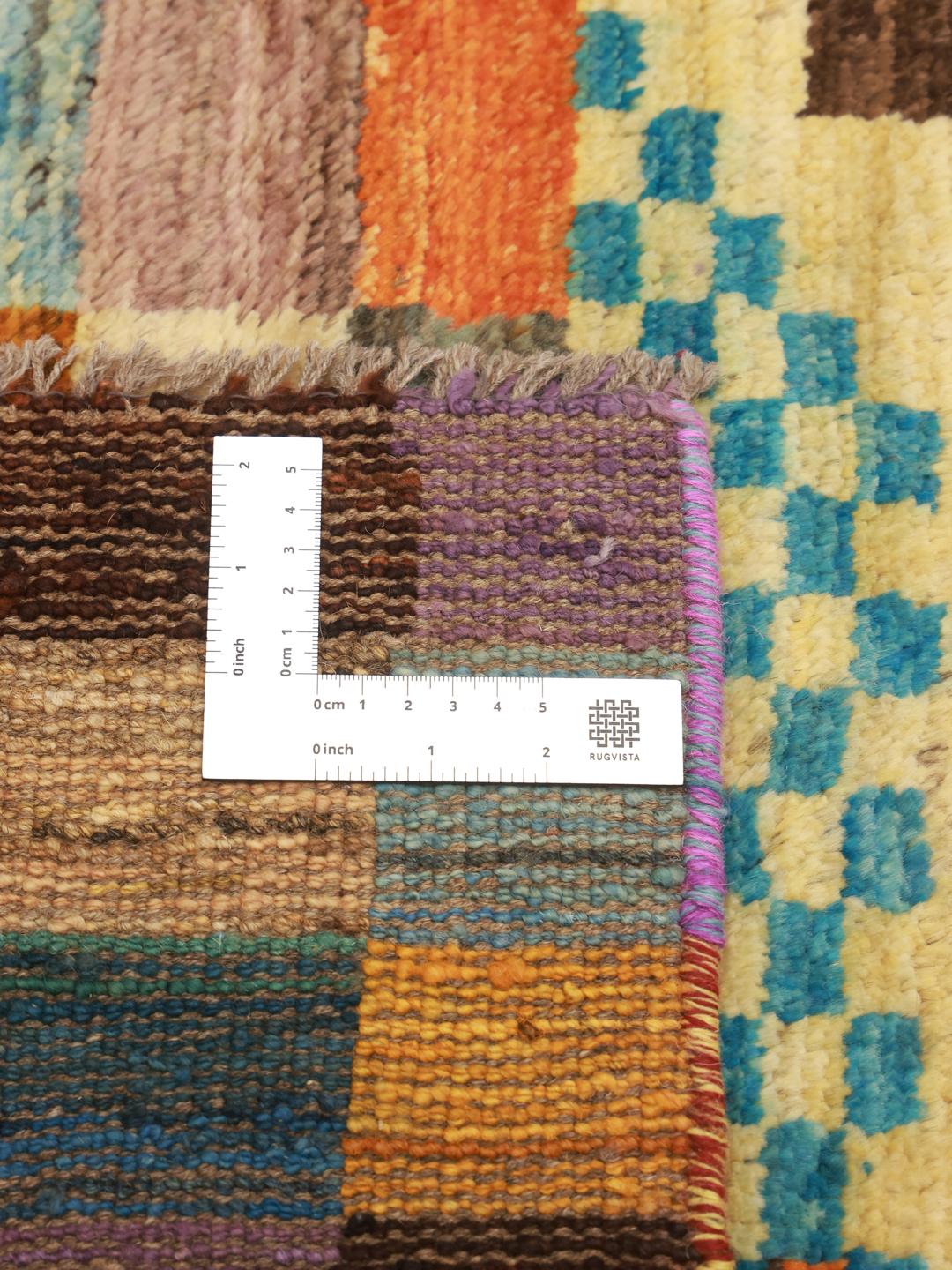
The term 'hand-knotted' refers to the sophisticated technique of securing individual strands of Wool to a foundation. This method is the hallmark of quality in rug making, as it creates a dense, resilient pile that is far more durable than tufted or machine-woven alternatives. The precision of the knotting process allows for the sharp, clear definition of the geometric motifs seen here.
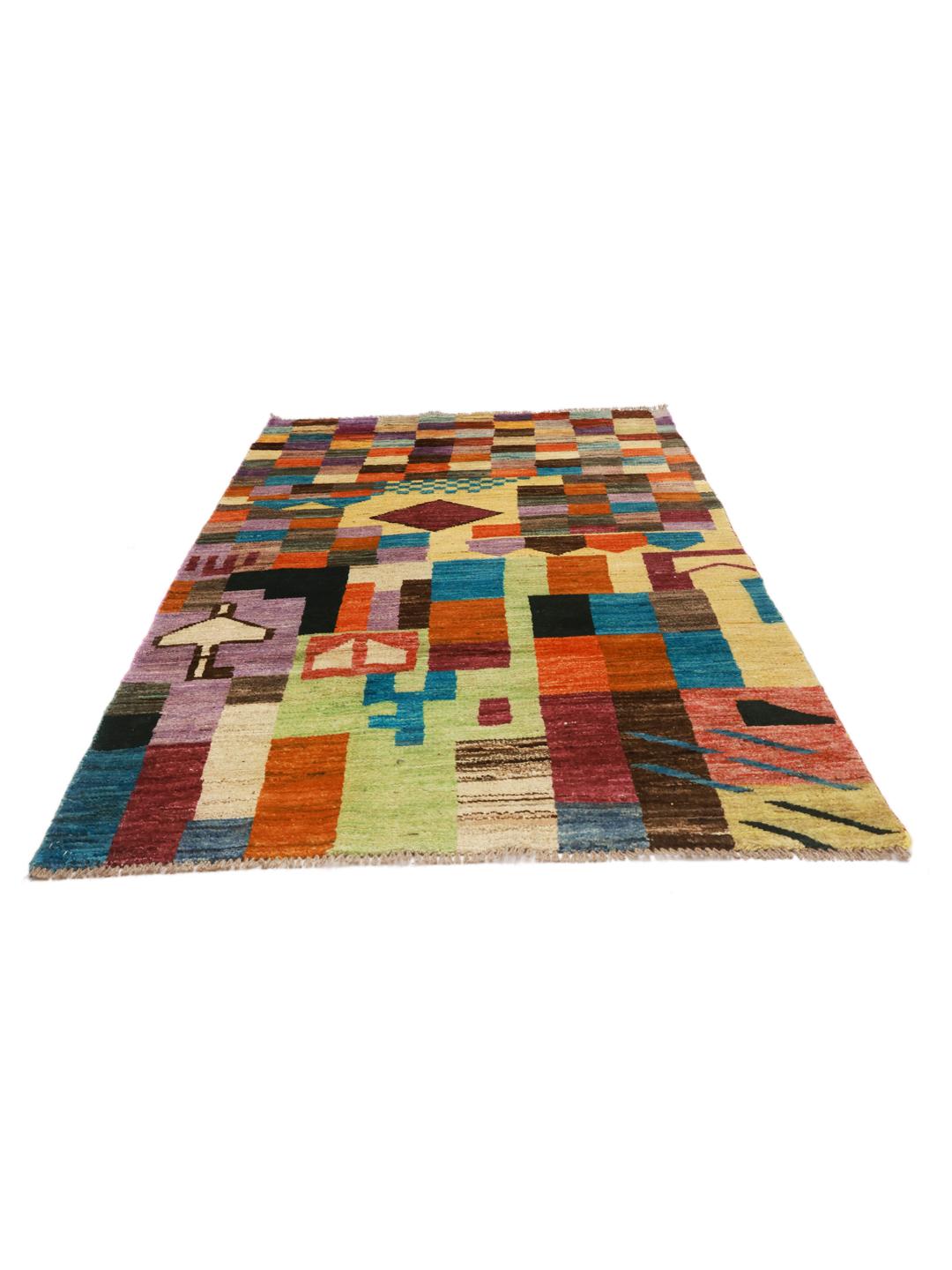
Visually, this rug draws upon the language of abstraction and tribal symbolism. While traditional Berber rugs often favoured monochrome or neutral tones, this contemporary iteration embraces a lively, multicoloured approach. The use of repeating blocks and shapes serves as a modern interpretation of the historic motifs that have defined this craft for generations, blending the old with the new.
Owning a hand-knotted rug from this tradition is an investment in cultural heritage and personal style. These rugs are collected not only for their striking beauty but for the immense skill required to produce them. Each piece represents a bridge between ancient techniques and the modern home, offering a level of authenticity and tactile quality that is increasingly rare in today’s world.