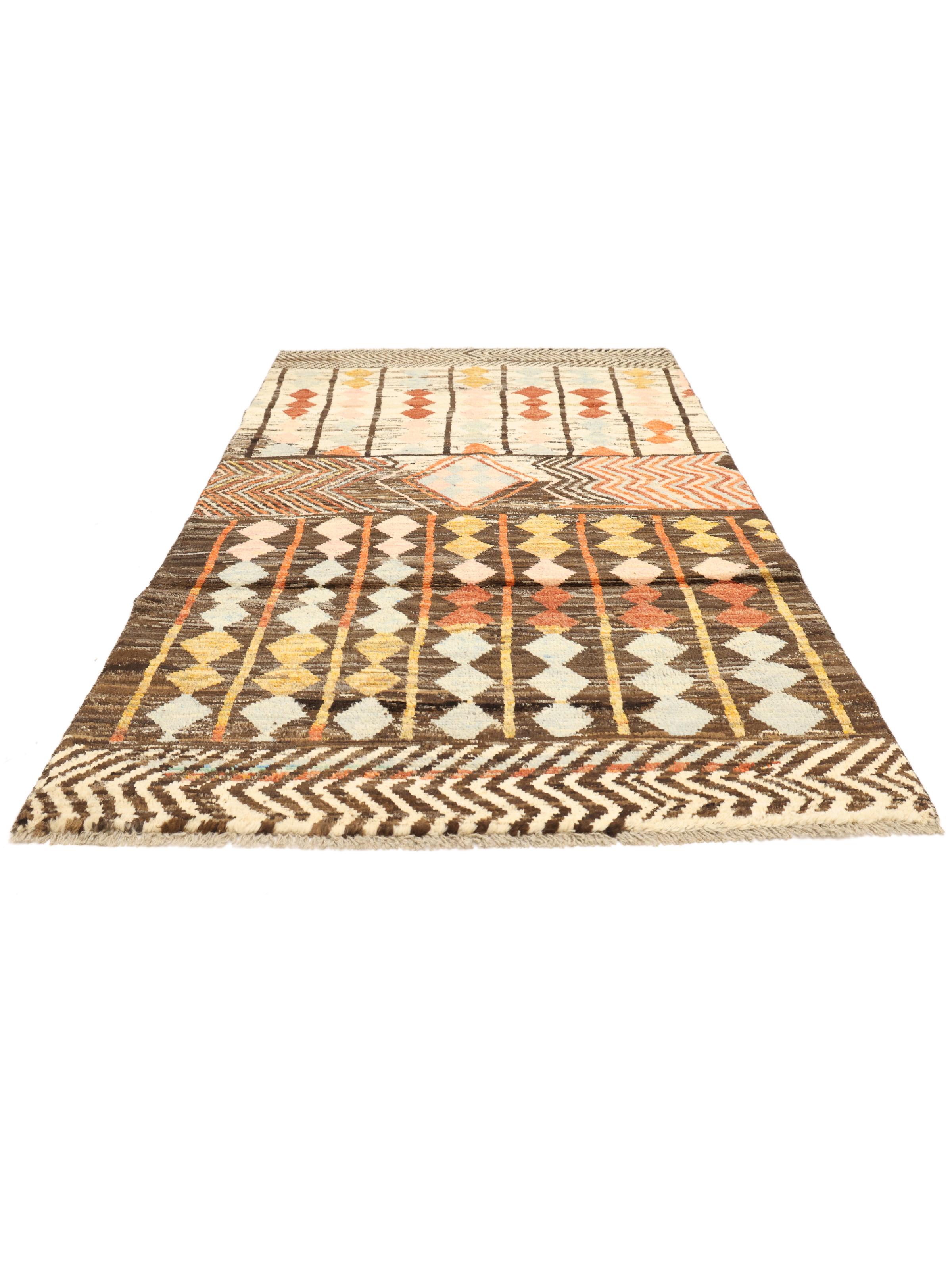
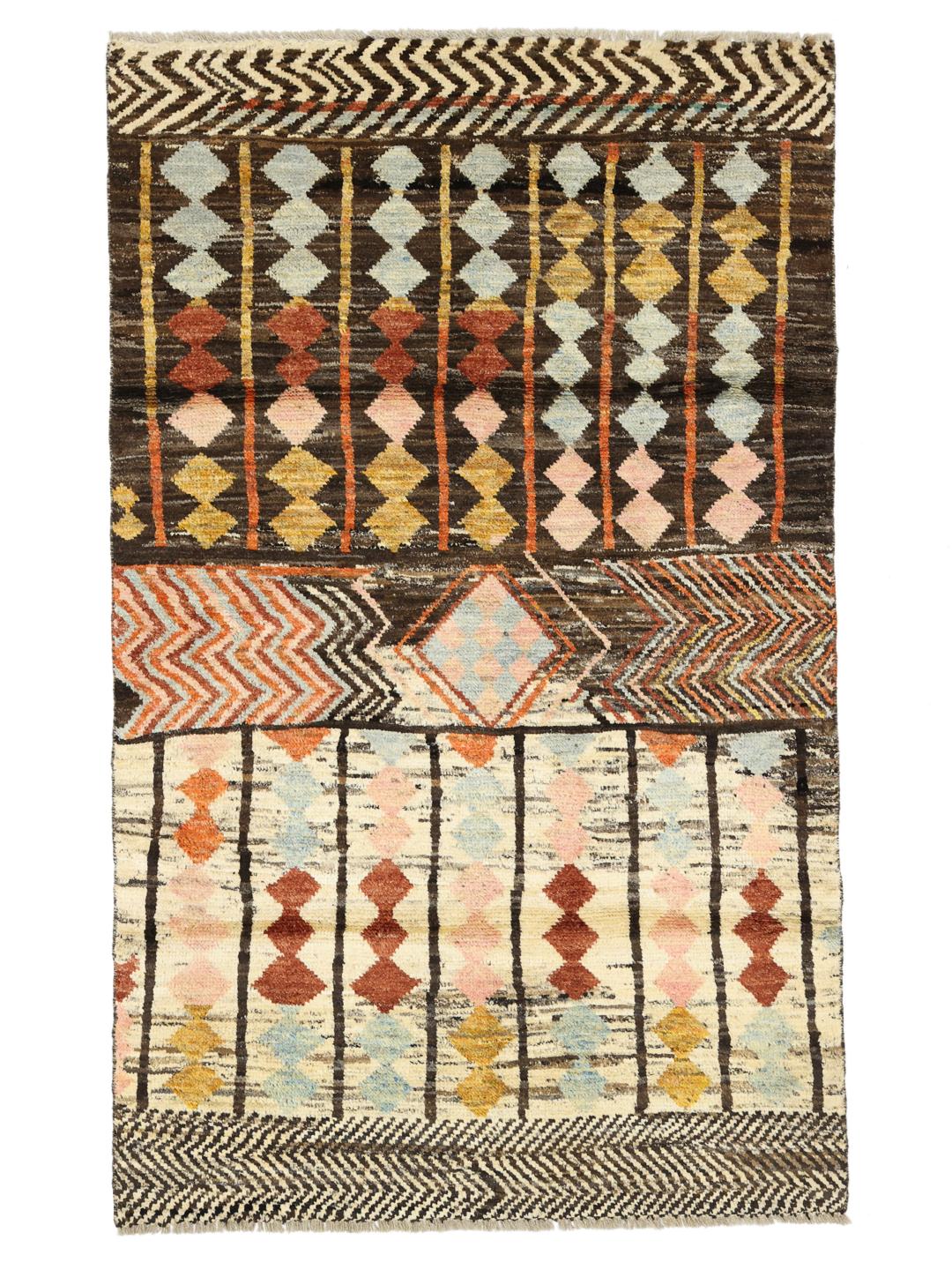
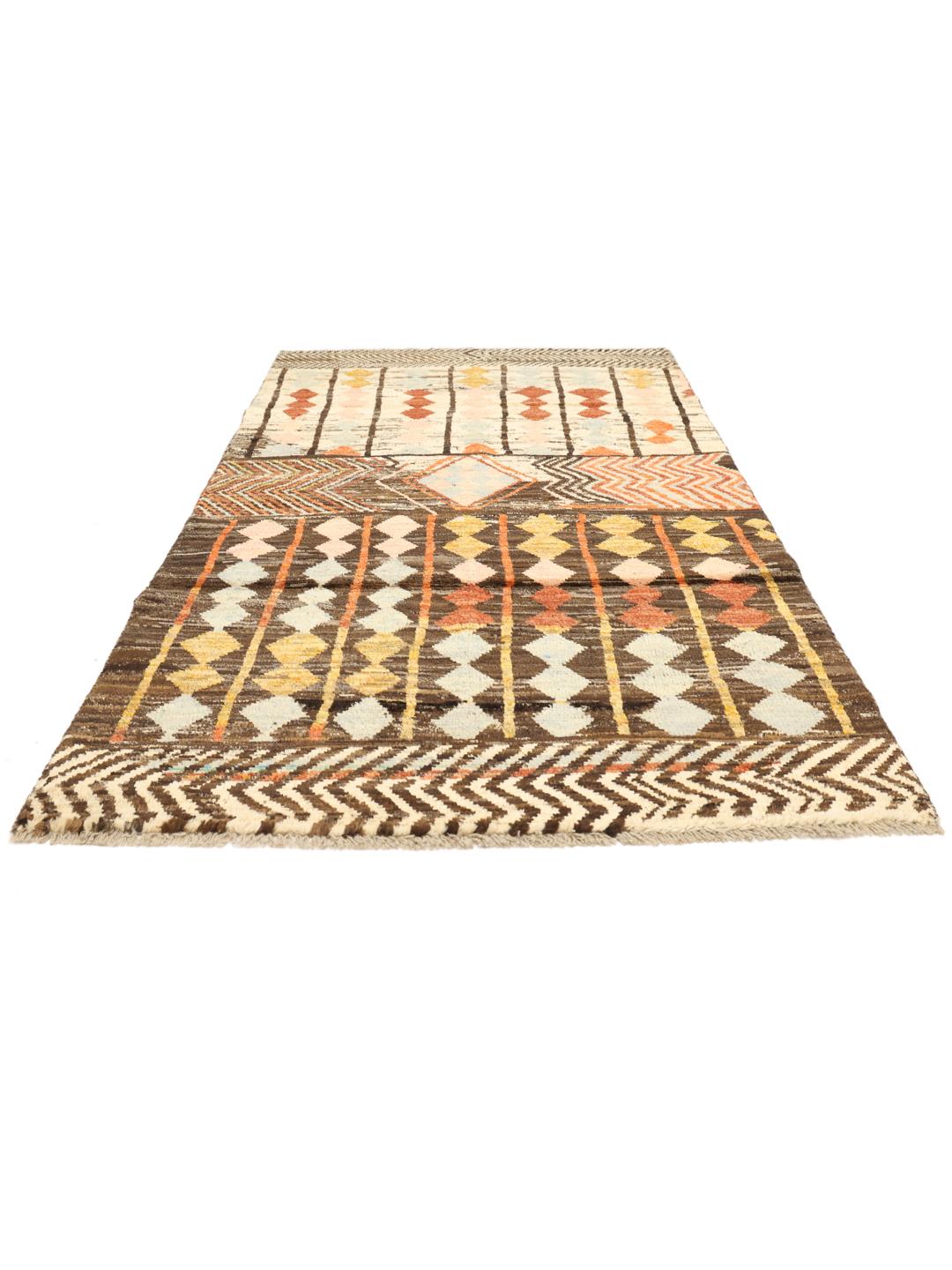
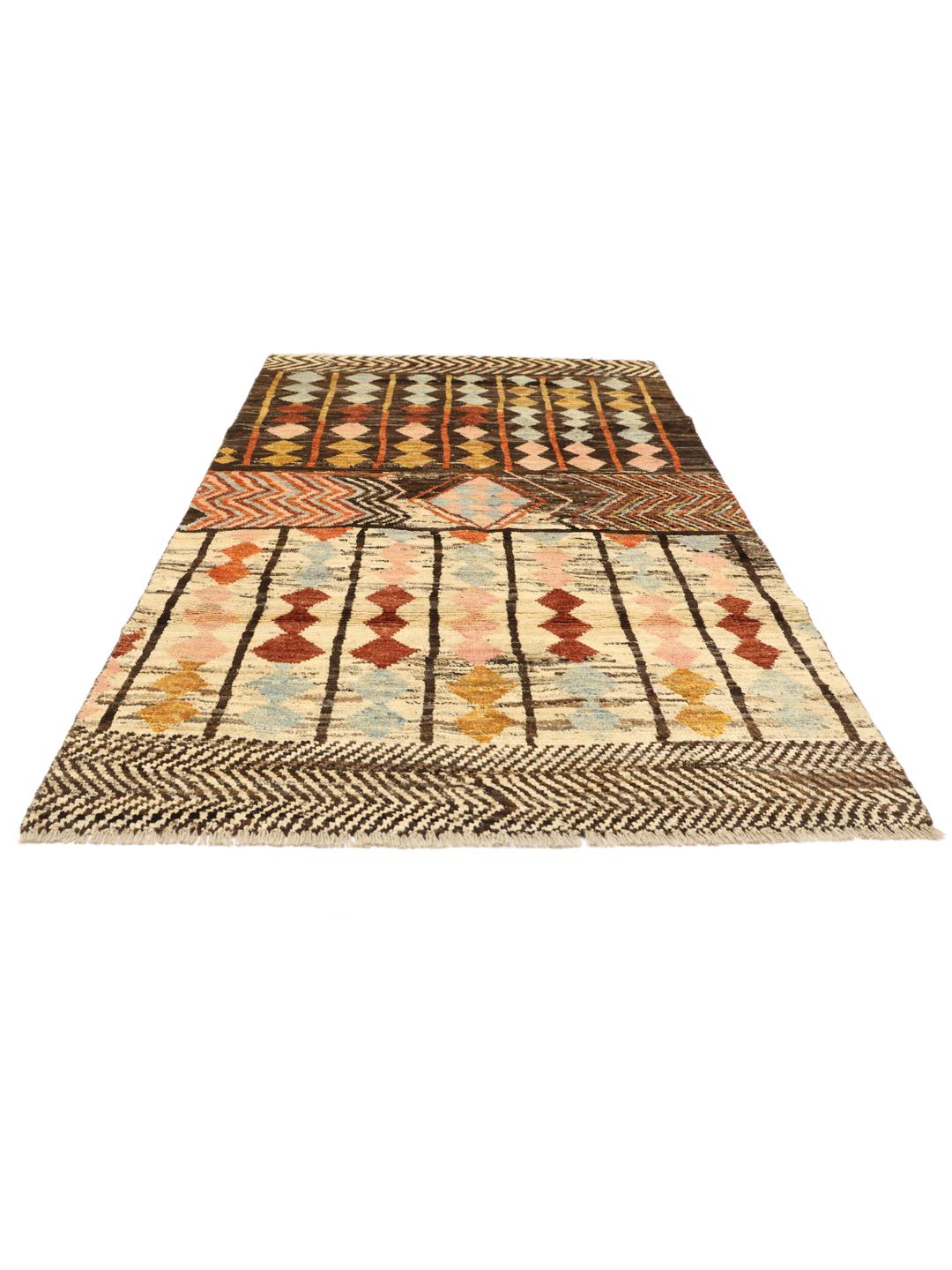
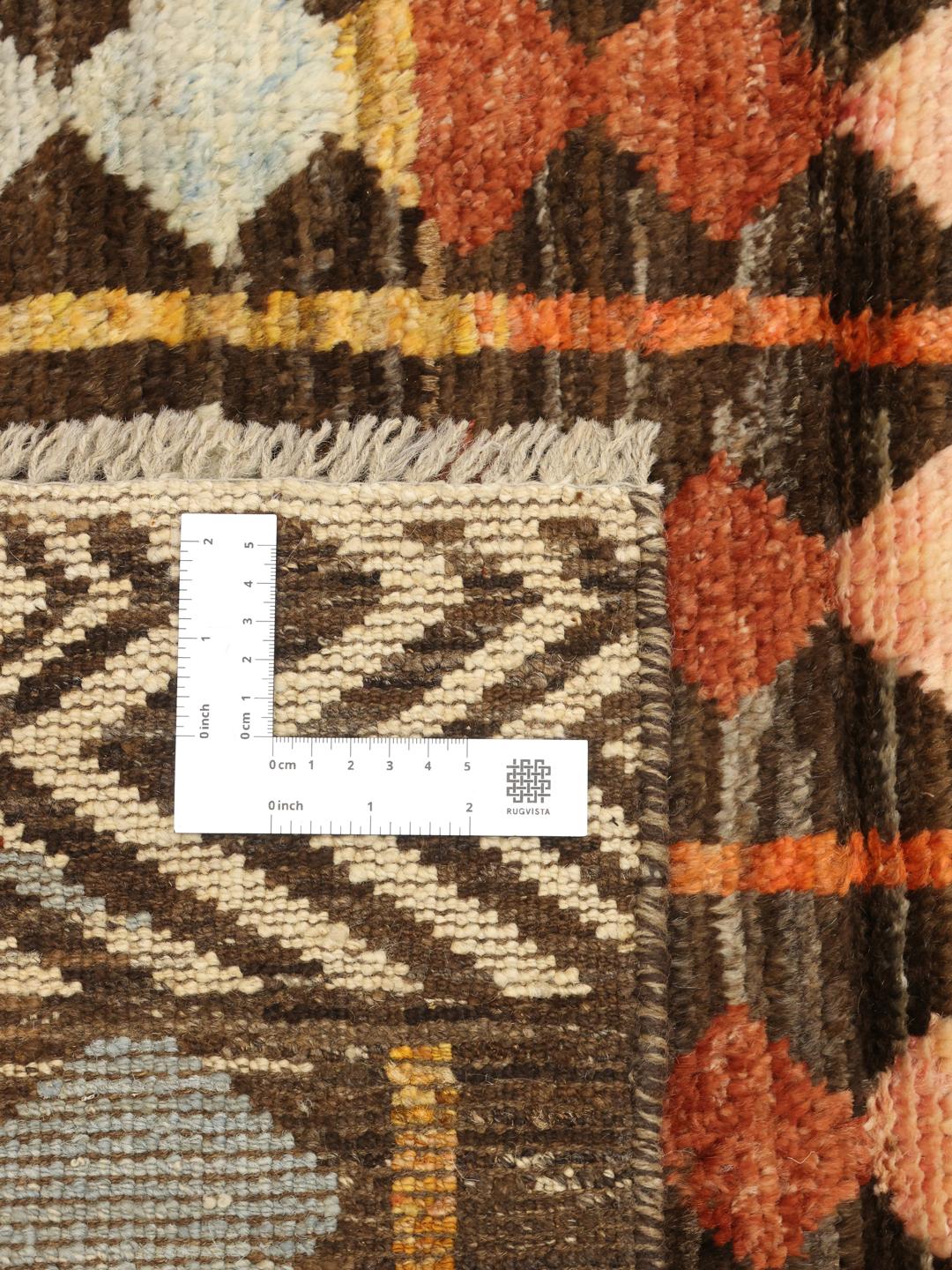
The Berber tradition, while most famously associated with the Atlas Mountains of North Africa, has a fascinating history of cross-cultural influence. The style has evolved through centuries of migration and trade, finding a distinct home in the weaving communities of the Middle East. Here, the traditional Berber aesthetic is reimagined through the lens of local techniques and materials, blending nomadic influences with regional artistry.
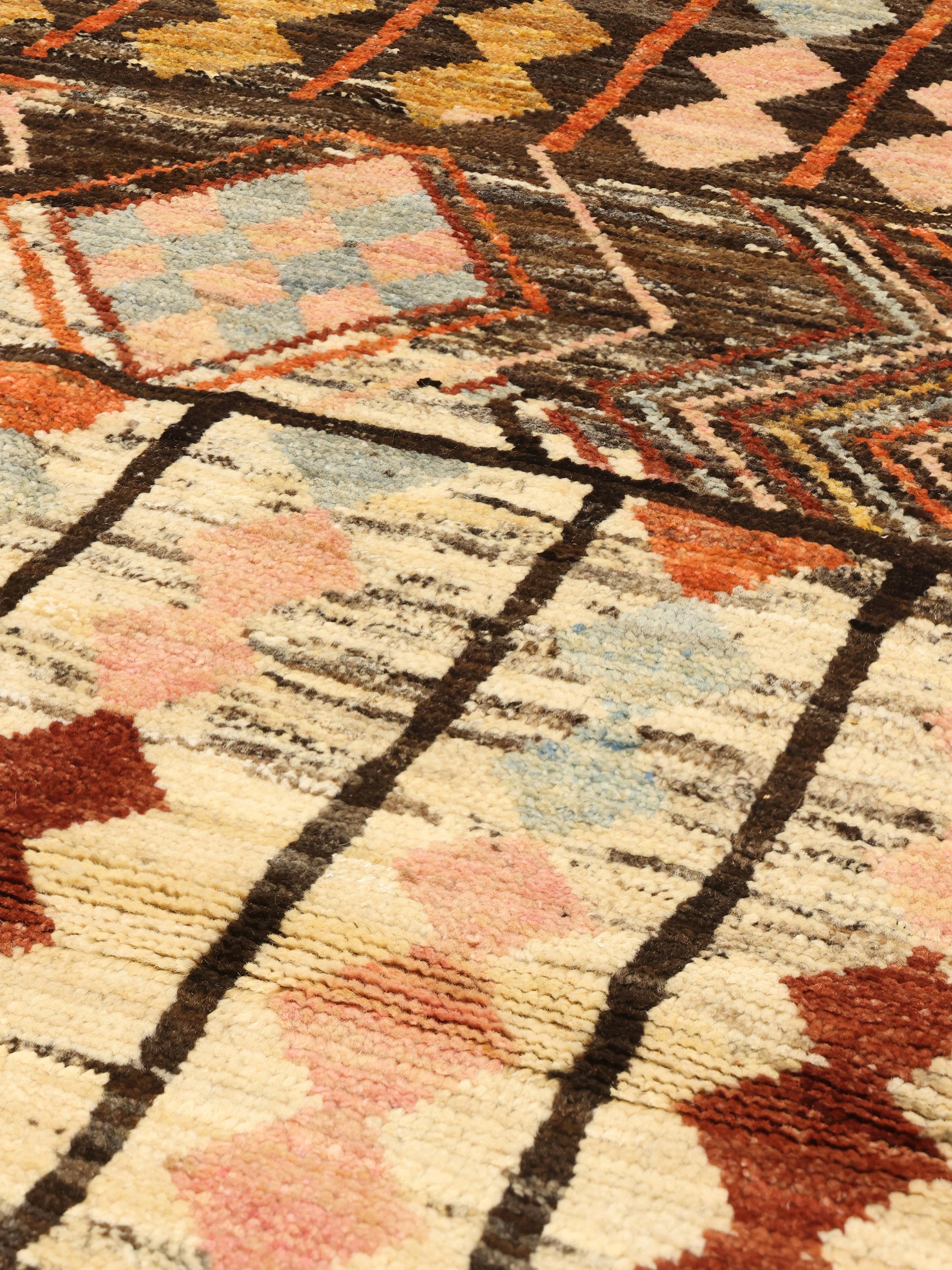
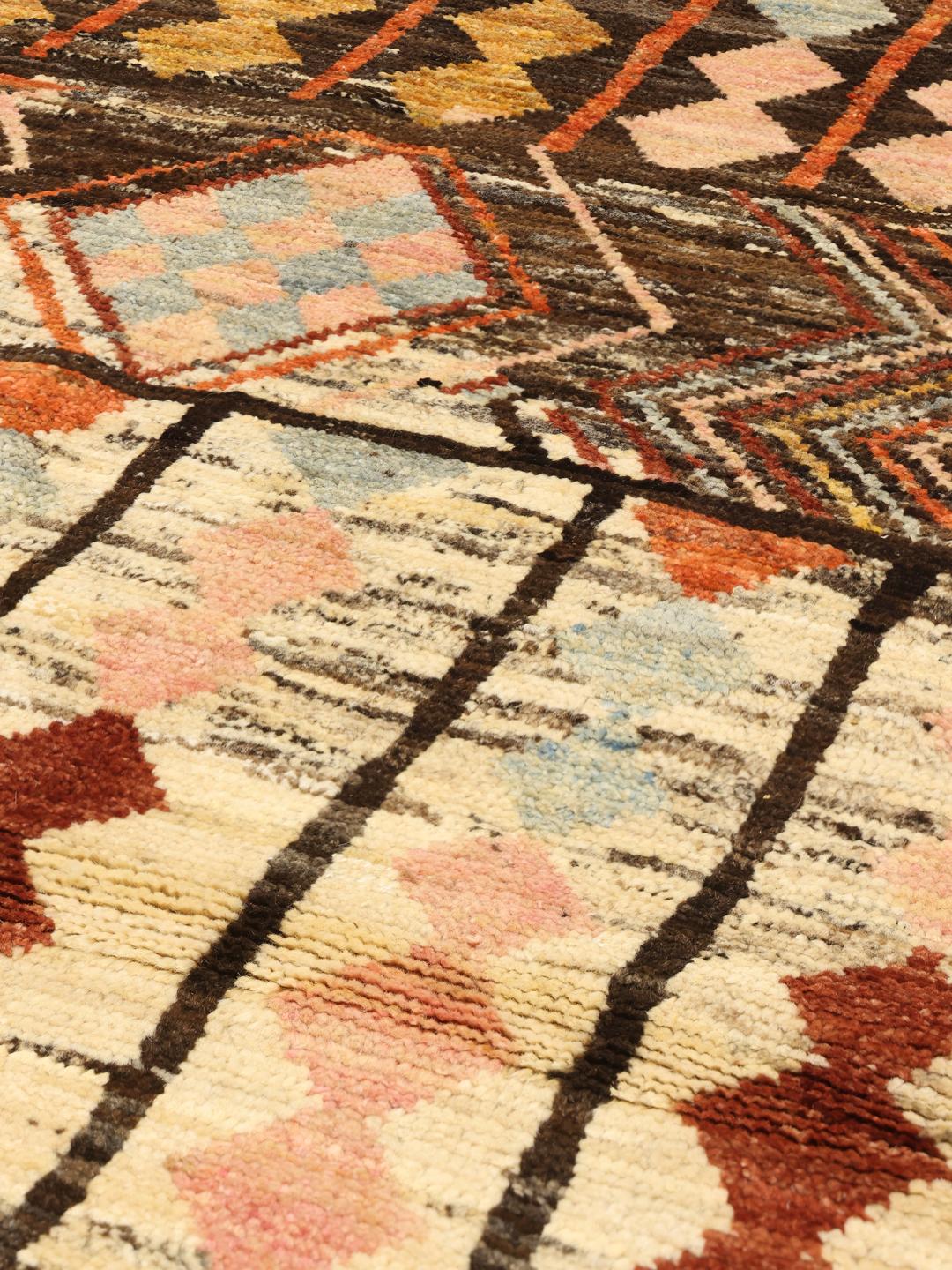
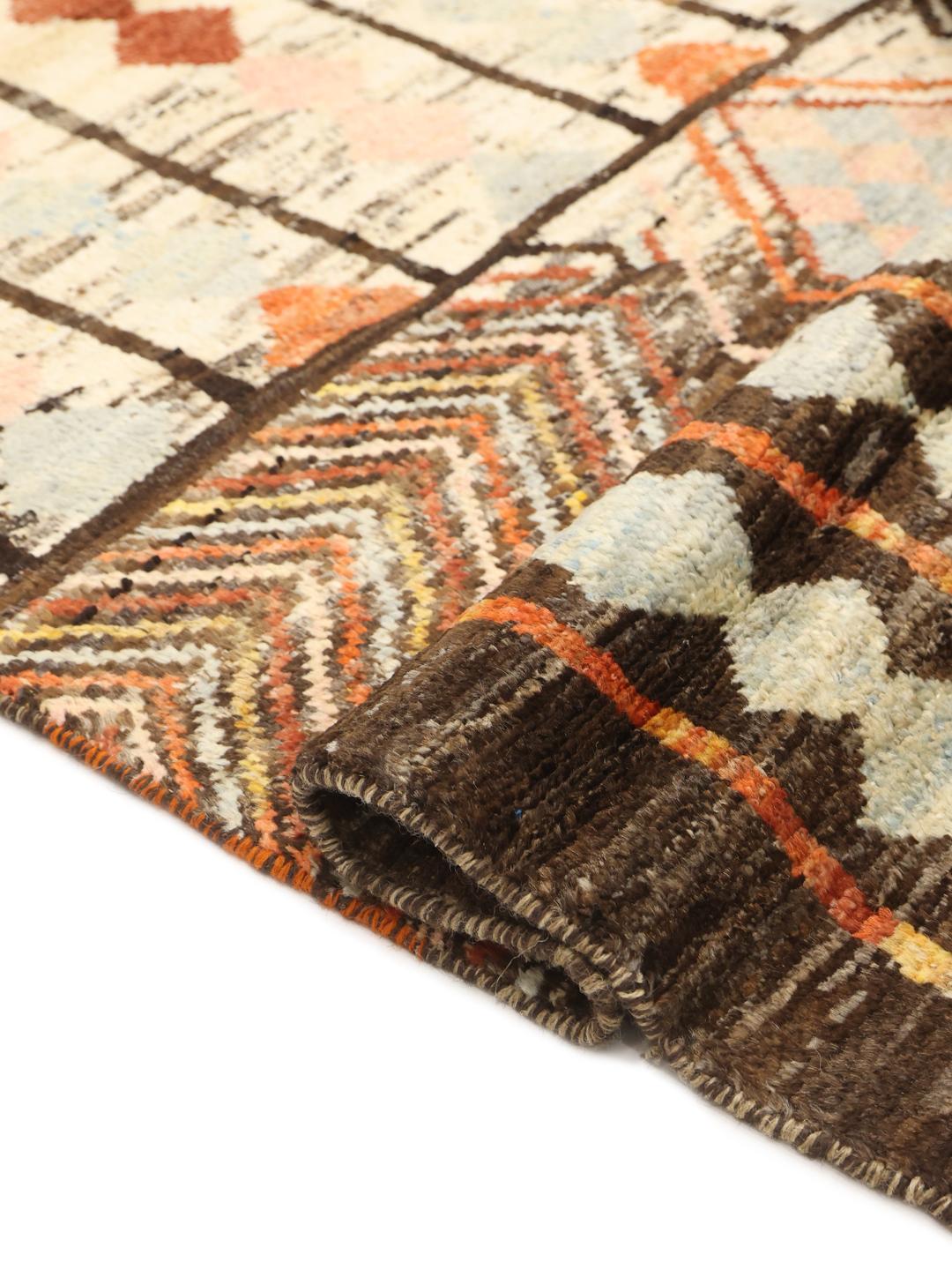
When we refer to hand-knotted construction, we are describing a foundational skill that defines the quality of the rug. Each knot is individually tied by hand, creating a pile that is incredibly durable and rich in texture. This process matters because it allows for intricate pattern work and a density that ensures the rug remains a centrepiece in your home for years to come, rather than just a temporary floor covering.
The design language of this rug is deeply rooted in tribal symbolism. Geometric shapes, such as the diamonds and chevron-like patterns seen here, often serve as protective motifs or representations of the weaver's environment. The use of a bold, multi-coloured palette is a classic hallmark of these traditions, designed to bring life and energy into the home. These patterns are not merely decorative but are a visual language passed down through generations.
Collecting these rugs is about more than just aesthetics; it is about preserving a heritage of human skill. Owning a piece like this means you are a steward of a craft that values individual expression and cultural continuity. Each rug stands as a testament to the weaver's identity, making it a highly valued acquisition for those who appreciate the intersection of utility and fine art.