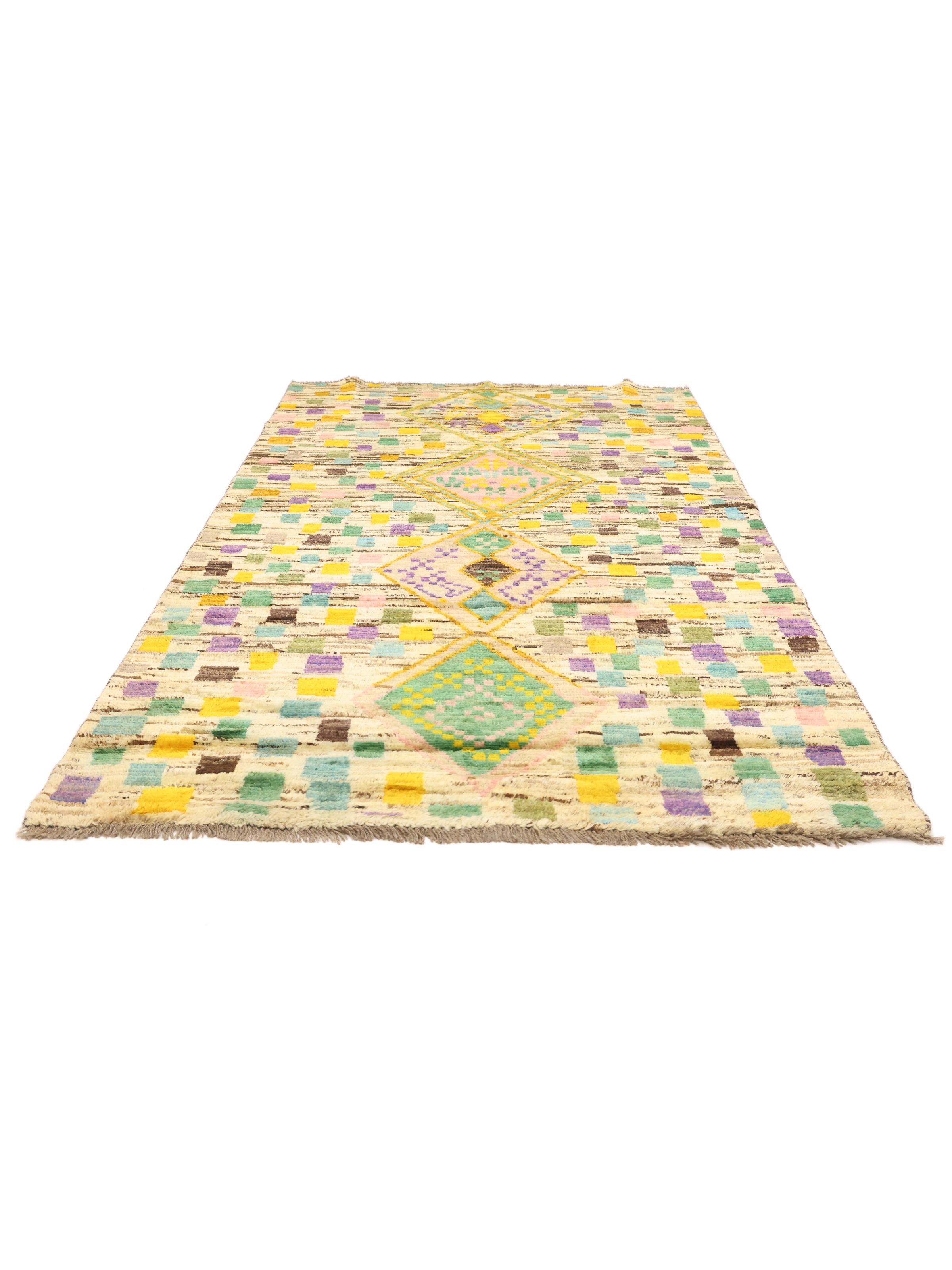
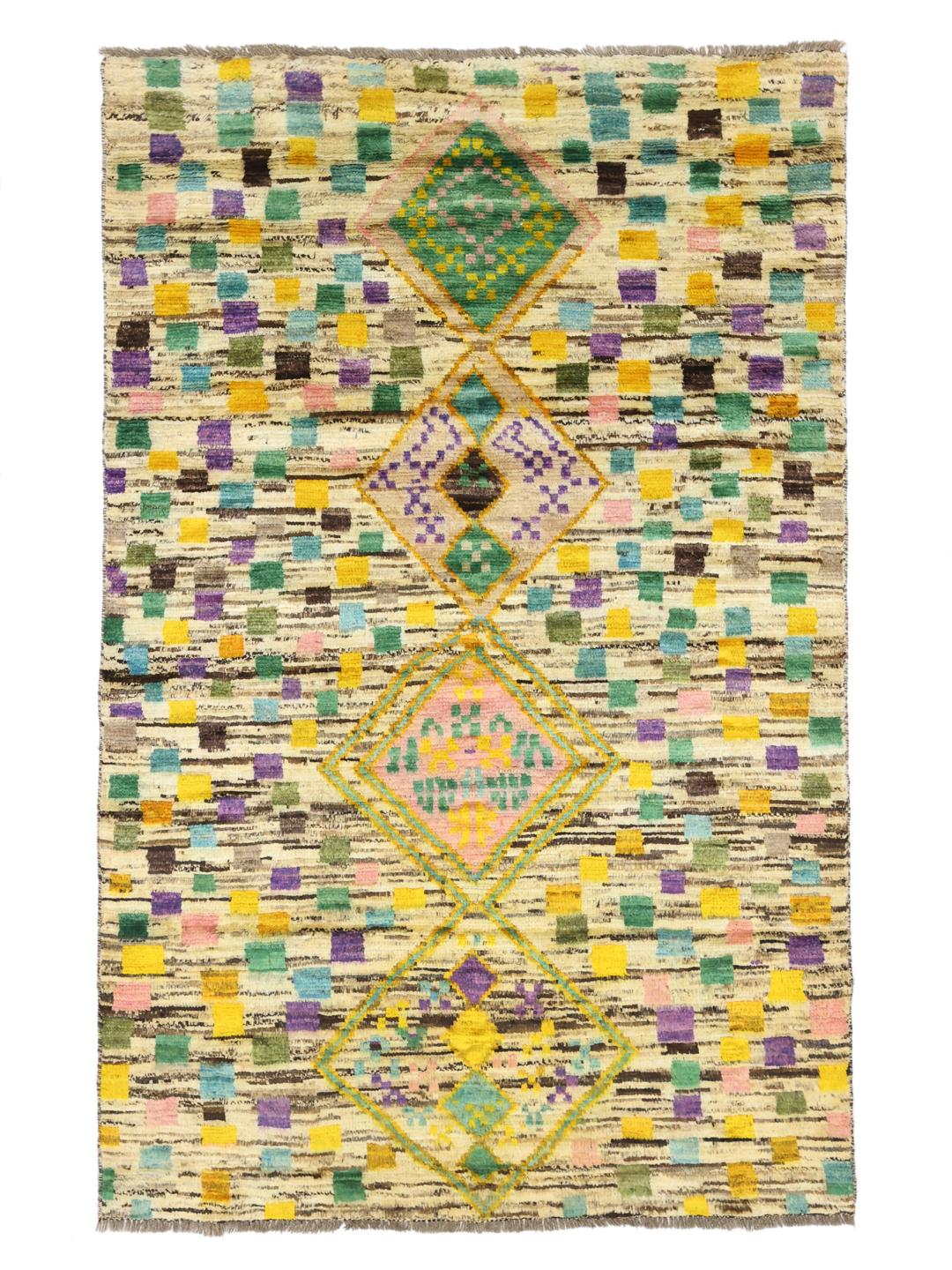
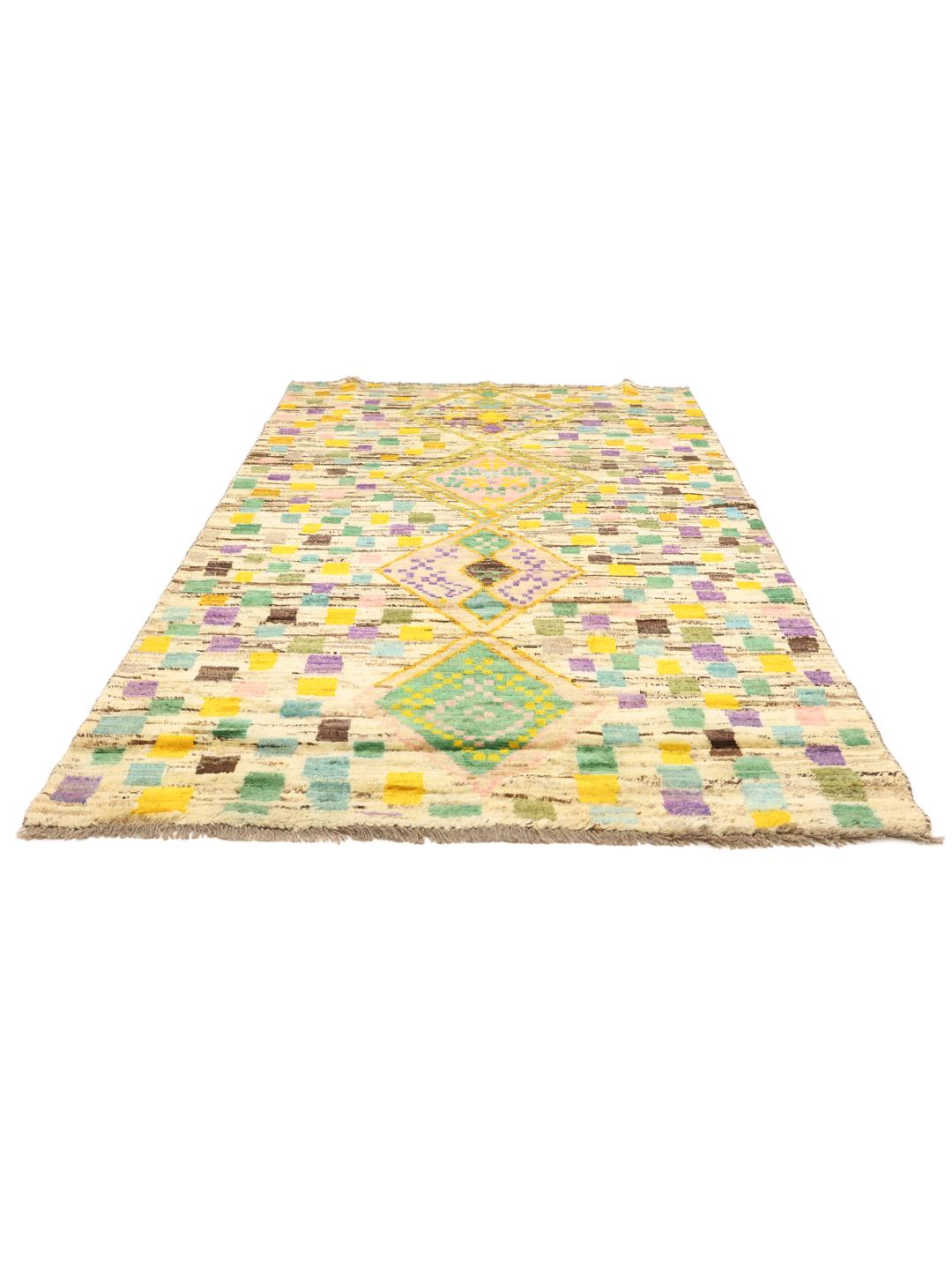
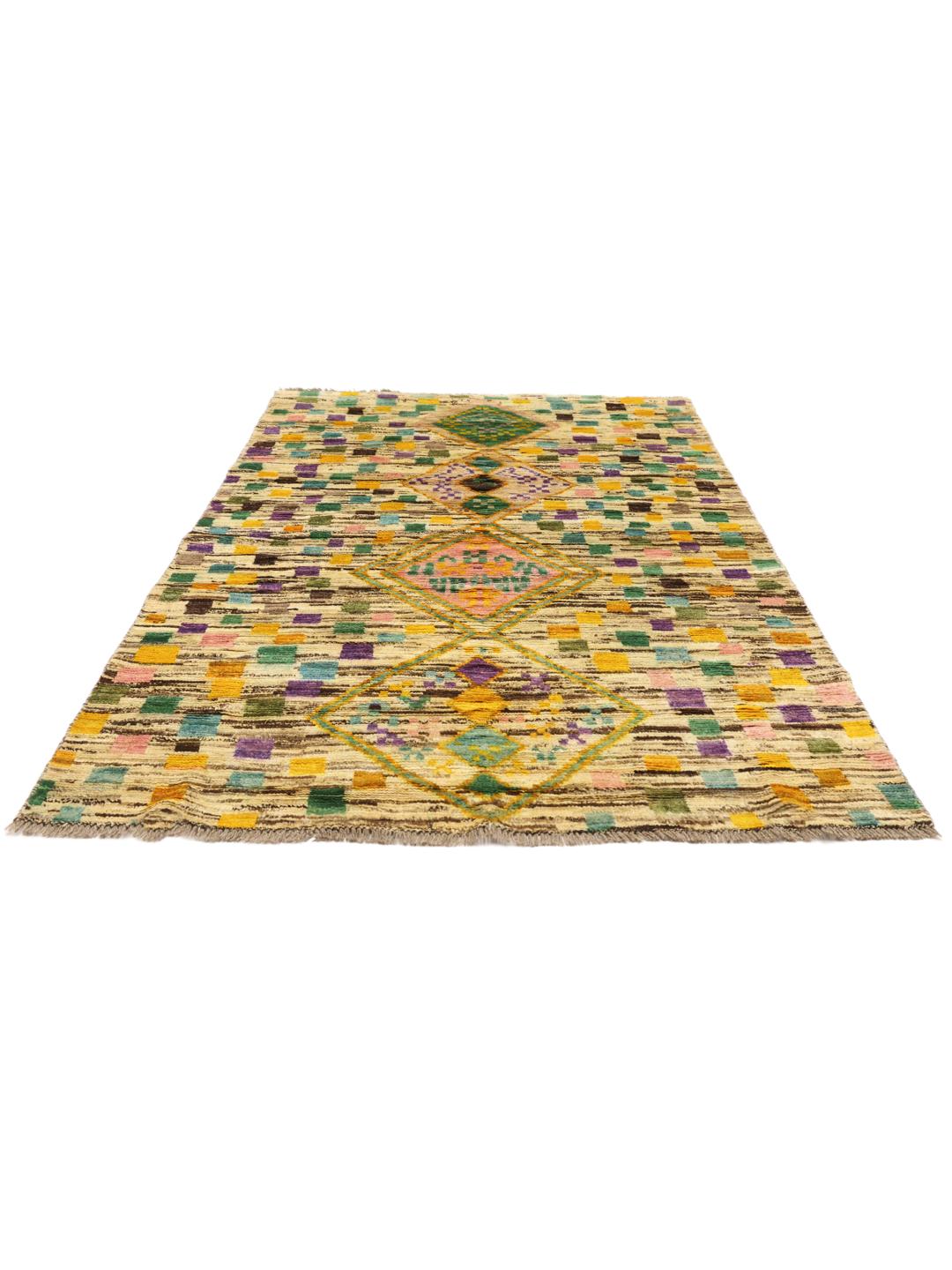
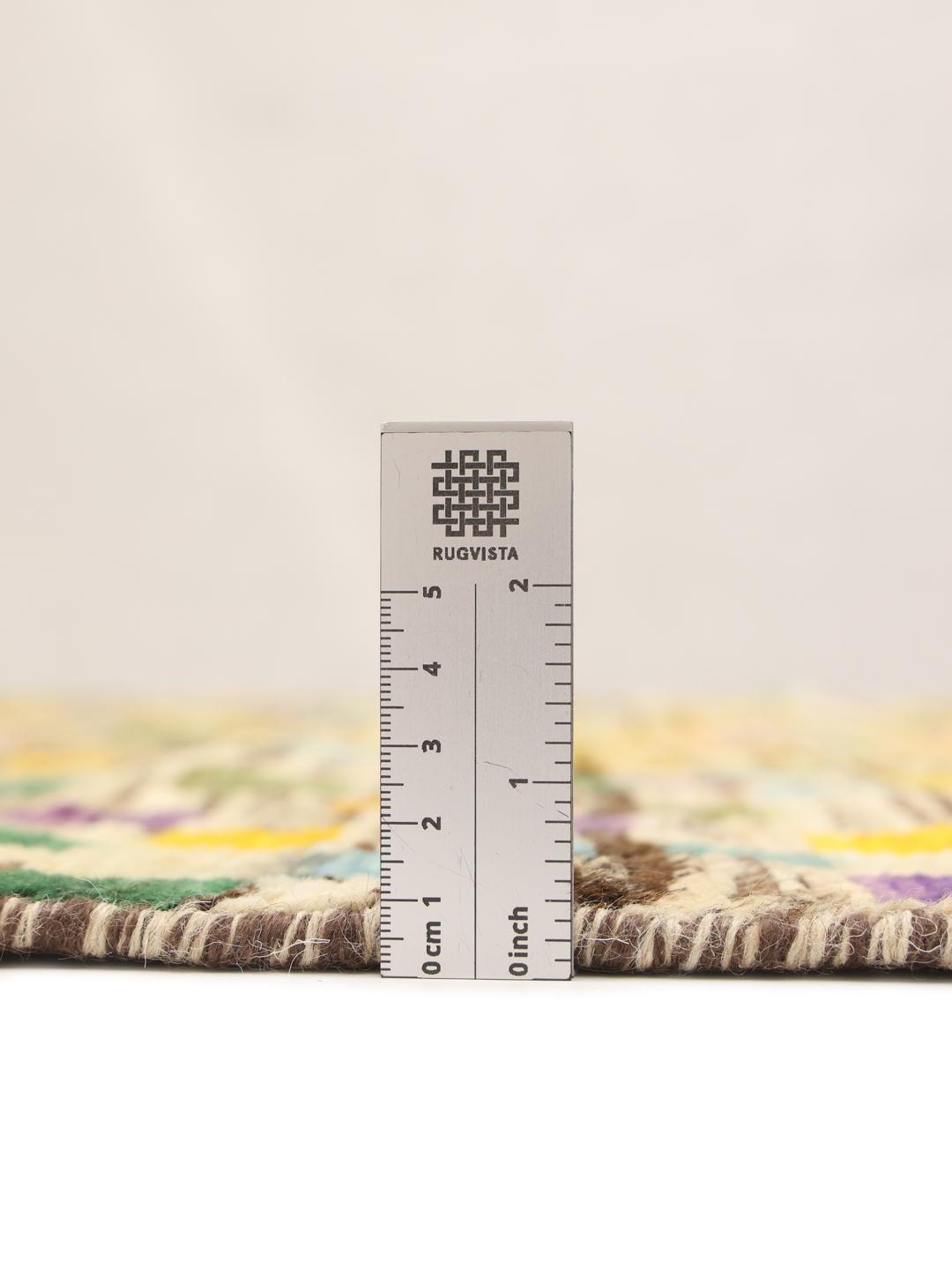
The Berber style of weaving, while deeply associated with the nomadic tribes of North Africa, has inspired artisans across the globe, including the master weavers of Afghanistan. In the Middle Eastern context, these rugs have evolved to incorporate local aesthetics, blending traditional tribal motifs with a more vibrant, expansive colour palette that reflects the diverse landscapes and artistic influences of the region.
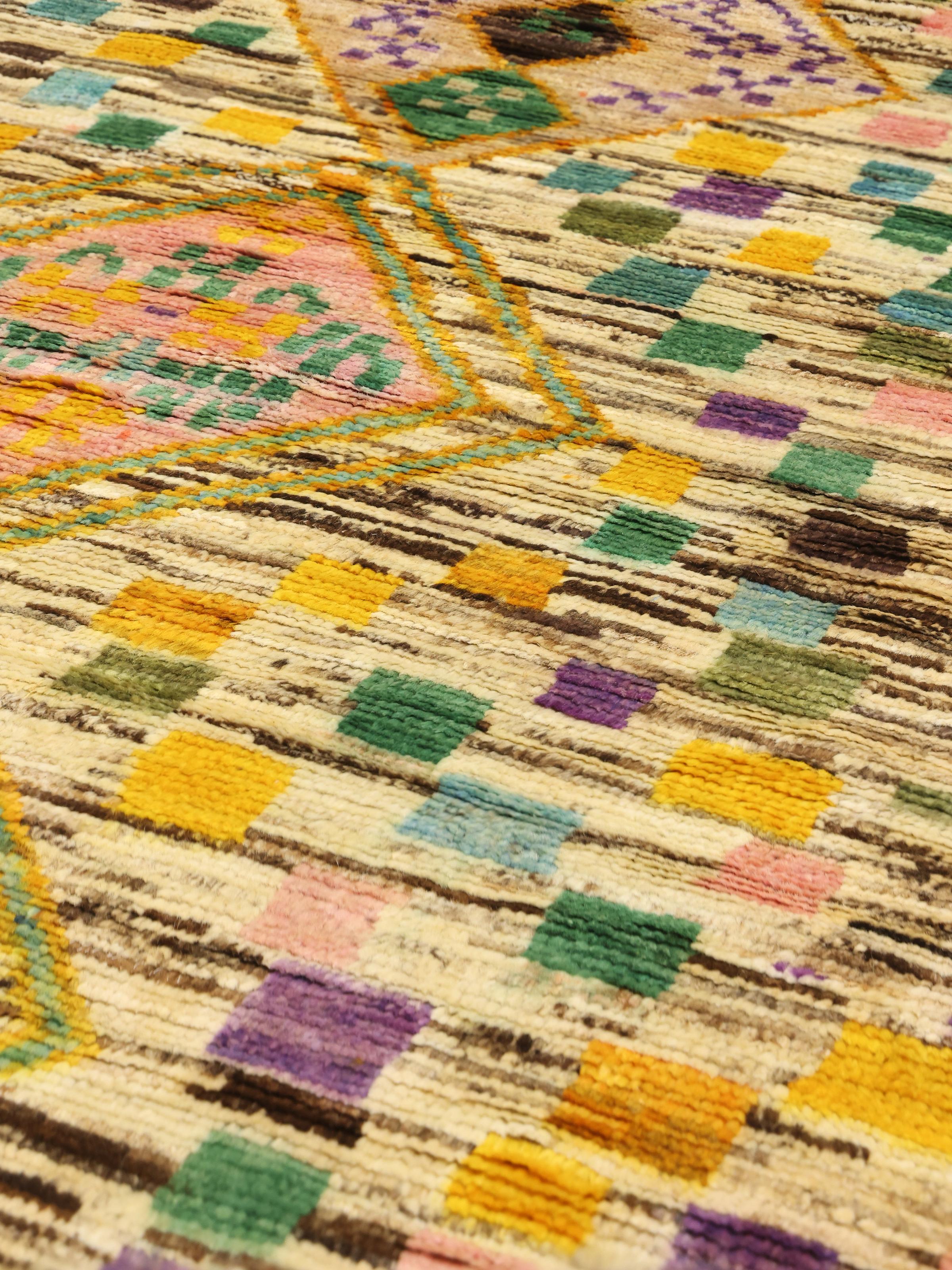
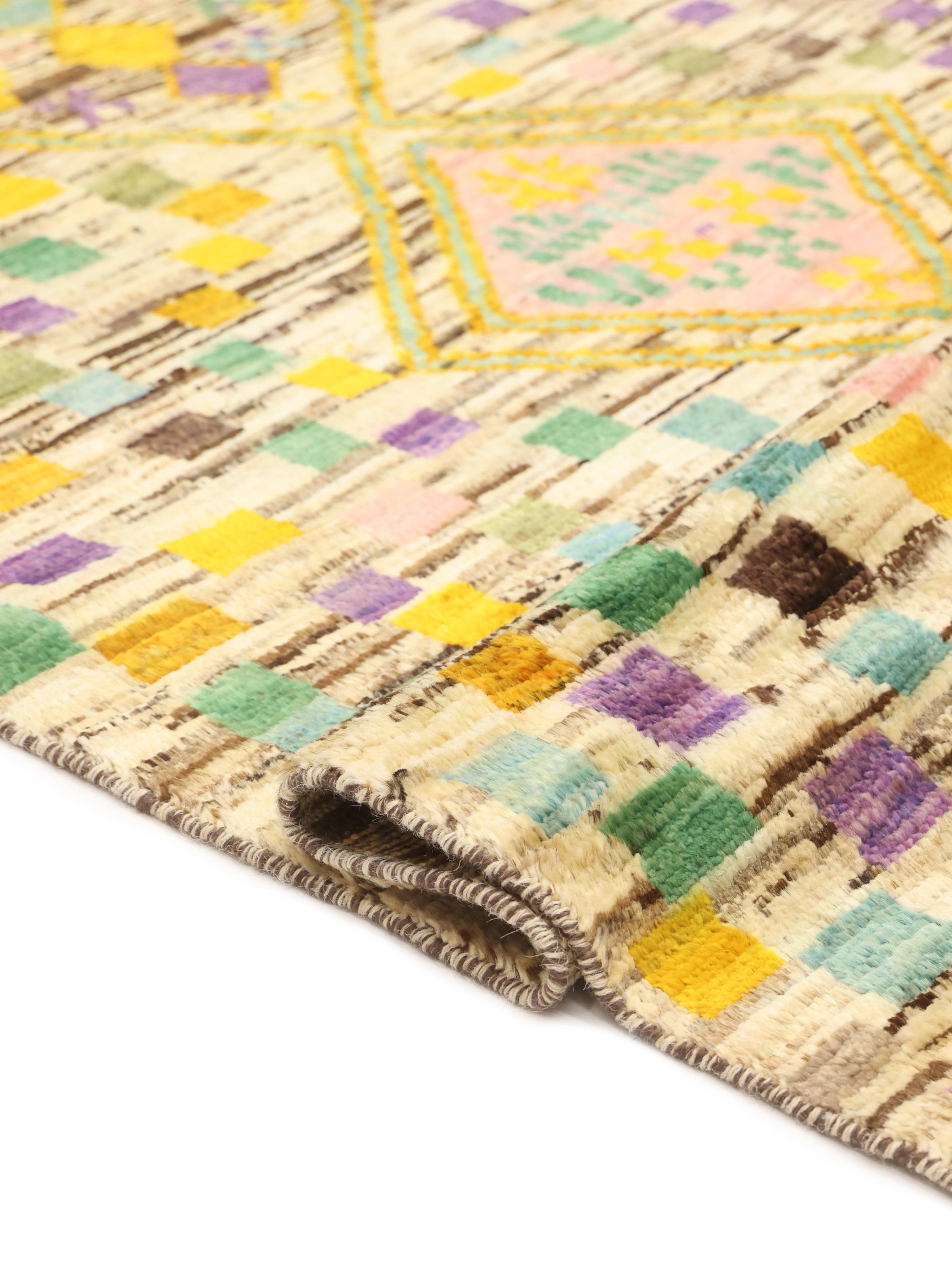
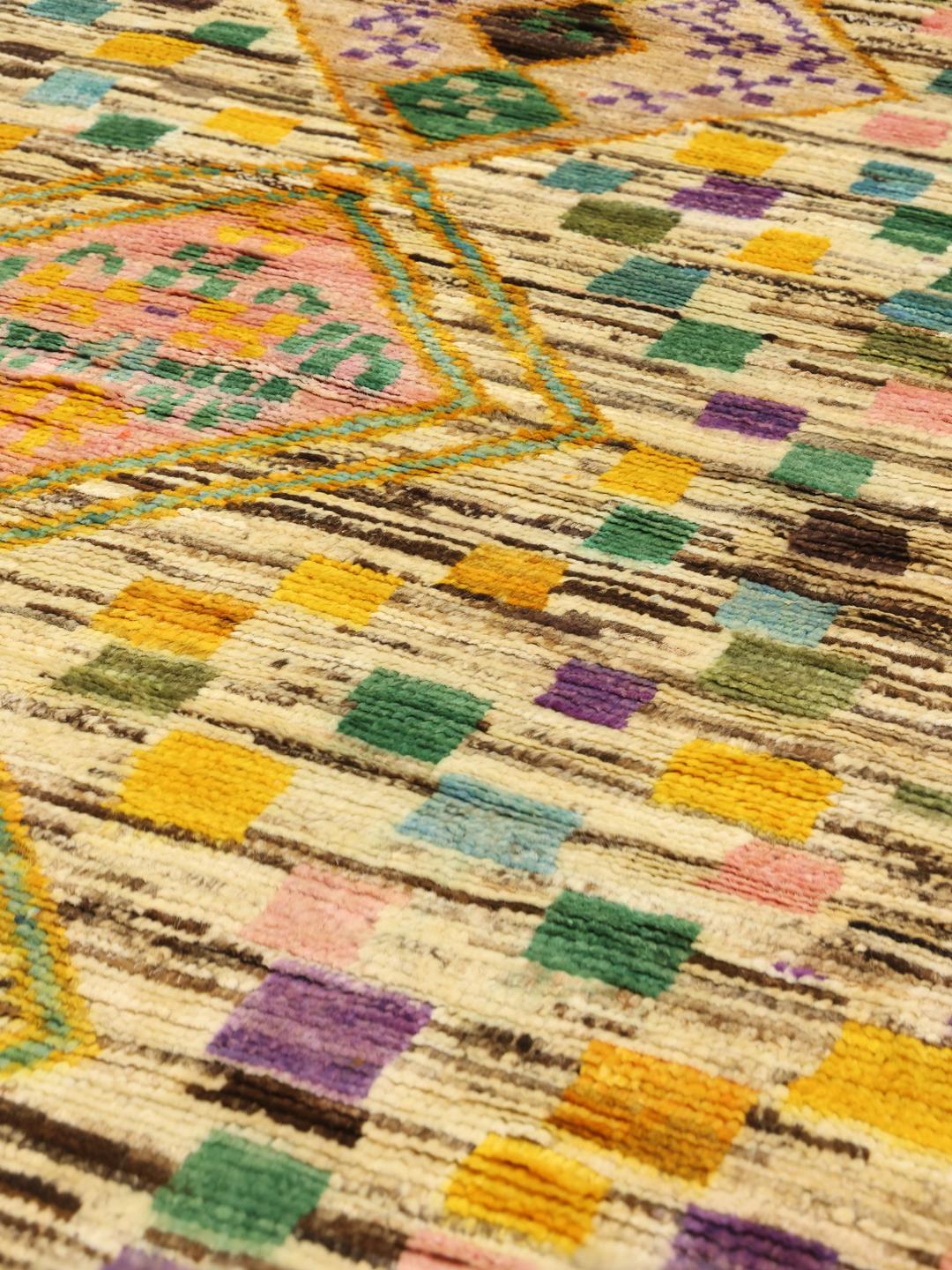
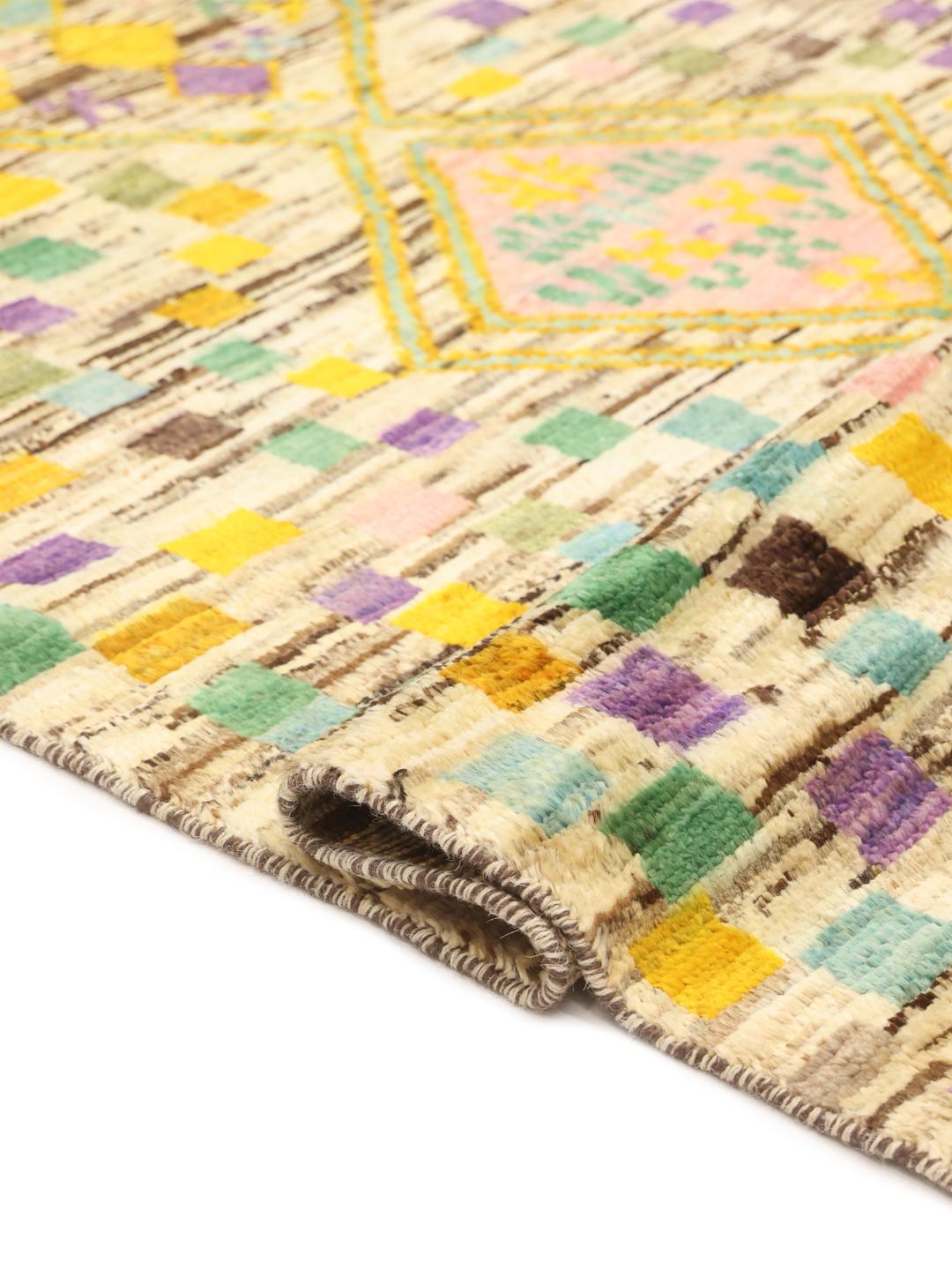
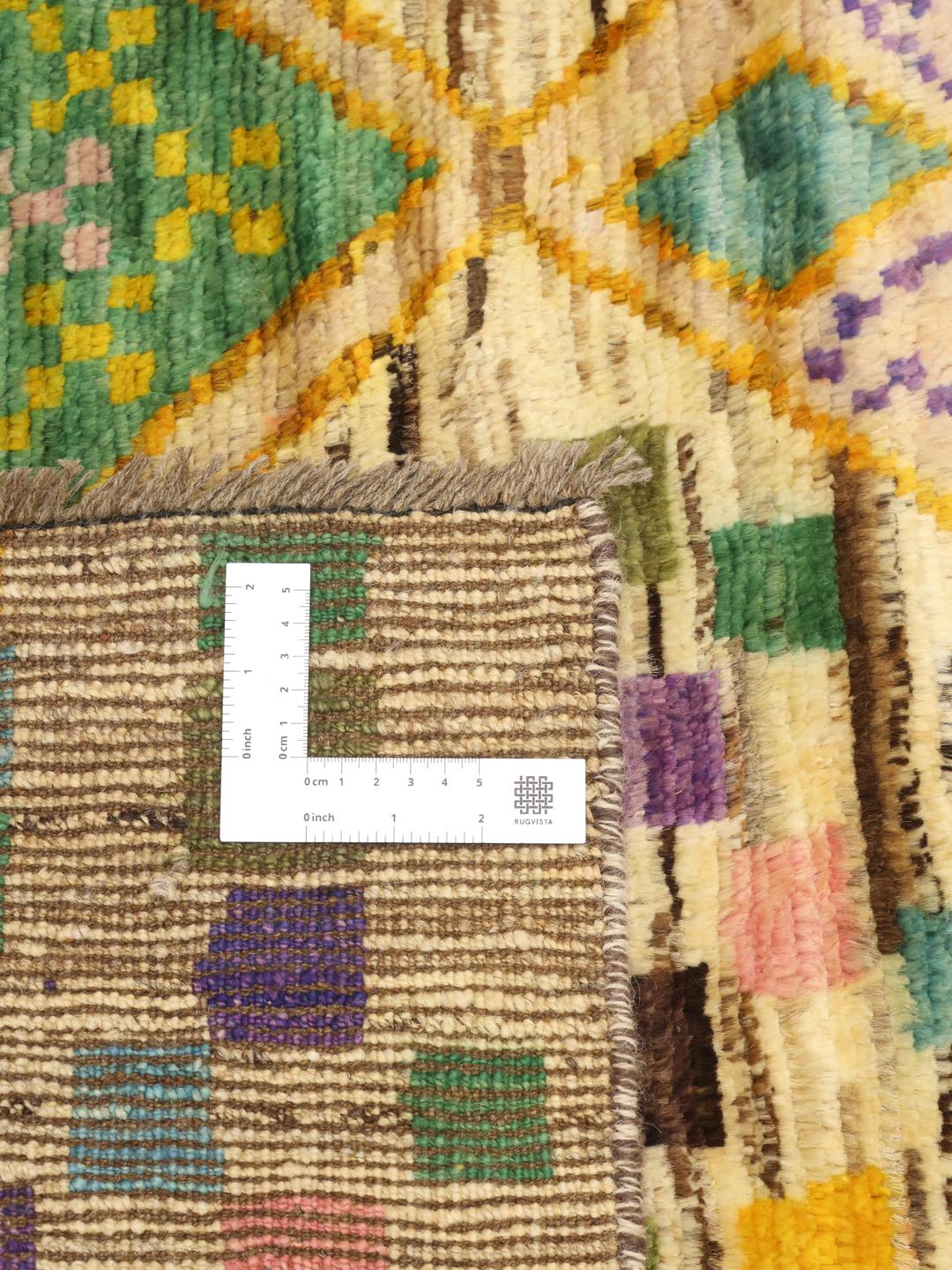
The term hand-knotted refers to the most traditional and enduring method of rug production, where each individual knot is tied by hand onto a foundation. This labour-intensive technique is what gives these rugs their character and strength. A well-knotted rug is not just a floor covering but a structural masterpiece, designed to hold its shape and pile quality even after decades of use.
Signature design elements of this tradition include the use of bold, geometric shapes like the central diamonds seen here, often surrounded by fields of repeating patterns or symbols. The use of vibrant, contrasting colours is a deliberate choice, intended to bring energy and spirit into the living space. These rugs often serve as a canvas for the weaver's personal expression, making each one a unique narrative of cultural heritage.
Collecting a handmade rug from this tradition is an investment in cultural continuity and human skill. These pieces are valued for their authenticity and the way they bridge the gap between ancient craft and modern living. By acquiring such a rug, you are preserving a legacy of artistry, ensuring that these traditional methods continue to be appreciated for their beauty, durability, and the human story woven into every thread.