The origins of these vibrant rugs are deeply intertwined with the semi-nomadic traditions of the Middle East and Central Asia. Berber-style weaving, characterised by its focus on tribal expression and personal storytelling, has evolved significantly as it moved from the mountains to the workshops of Afghanistan. This migration of craft has allowed for a unique fusion where ancient techniques meet a more refined, contemporary aesthetic.
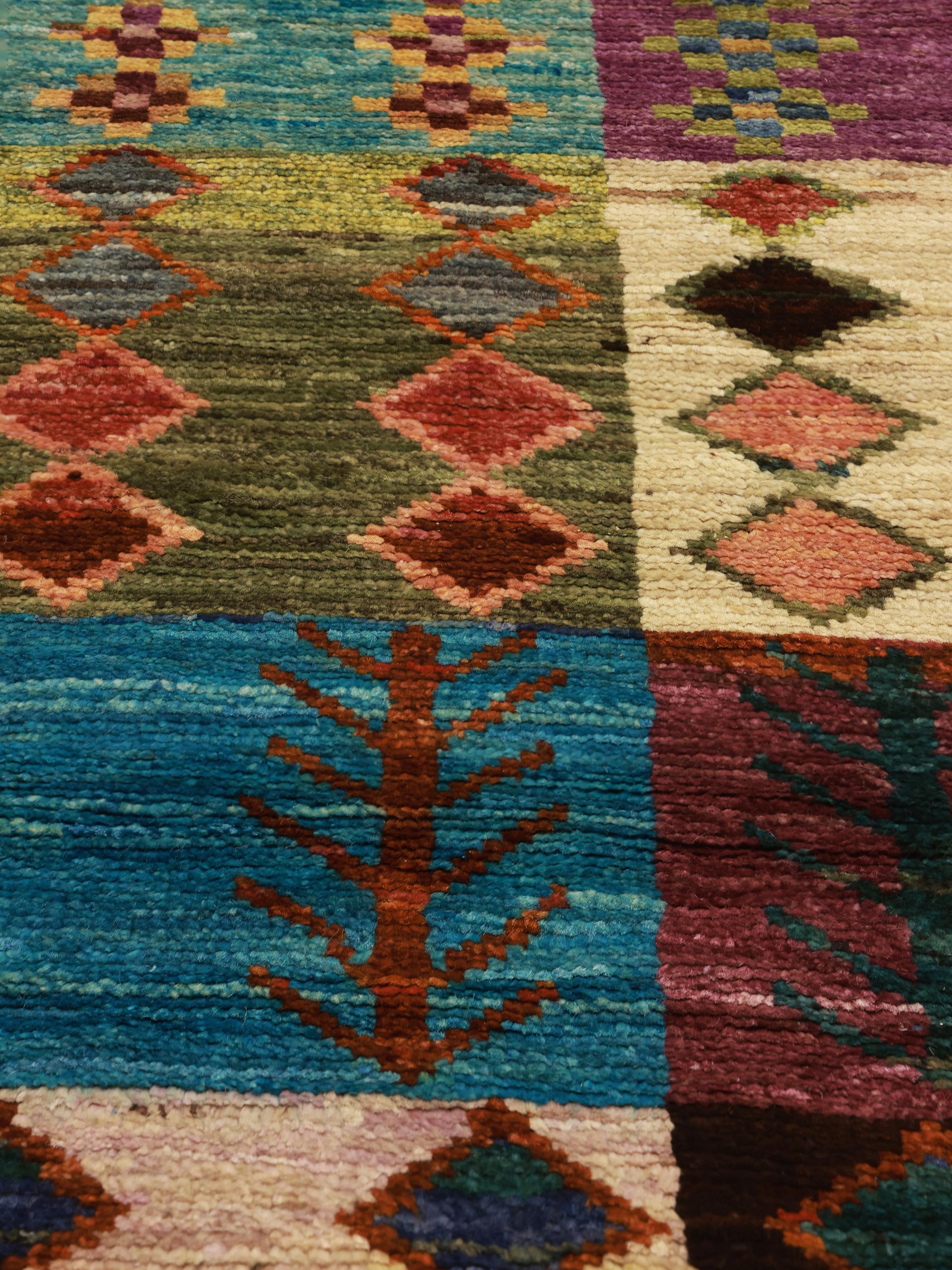
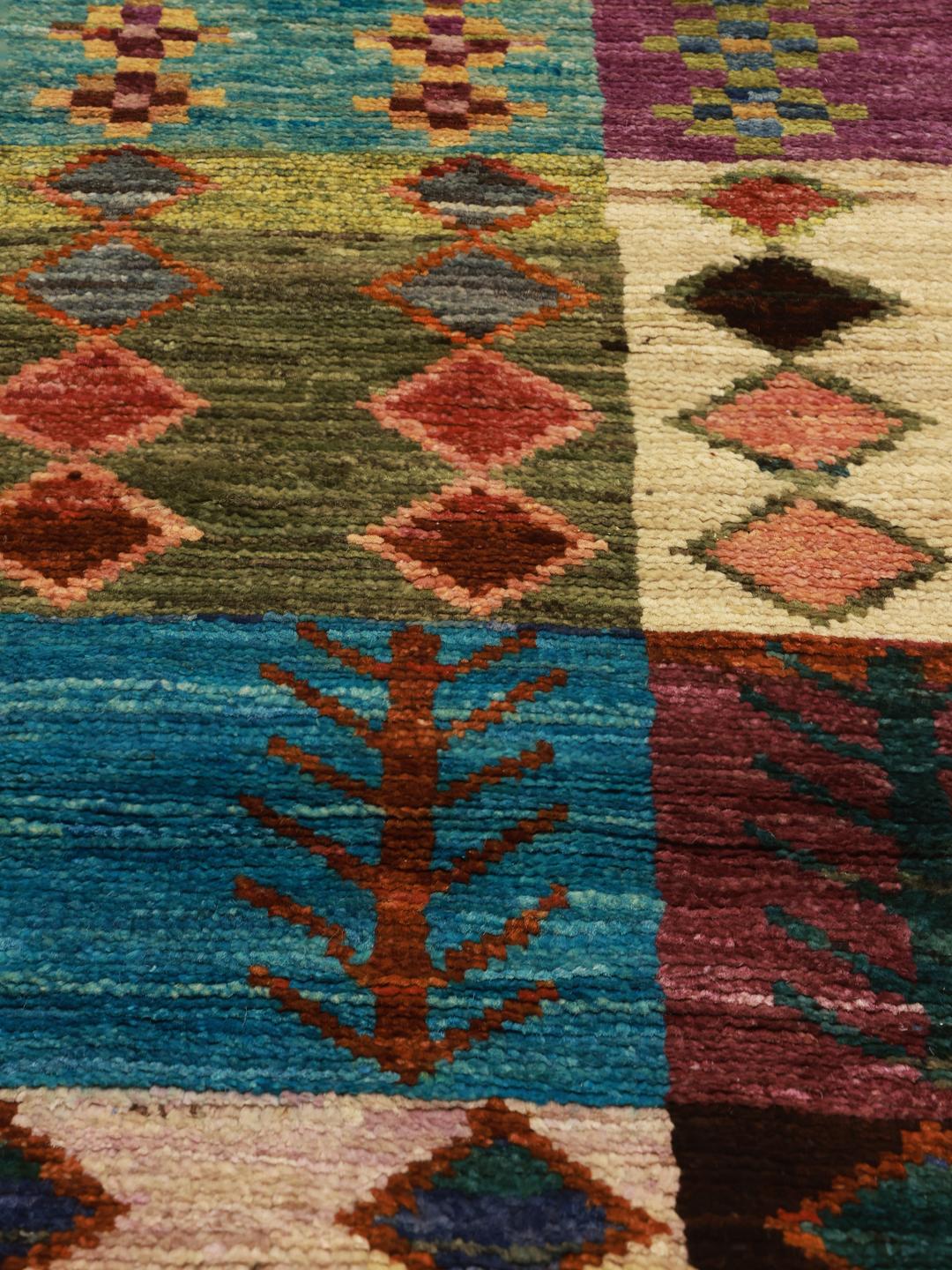
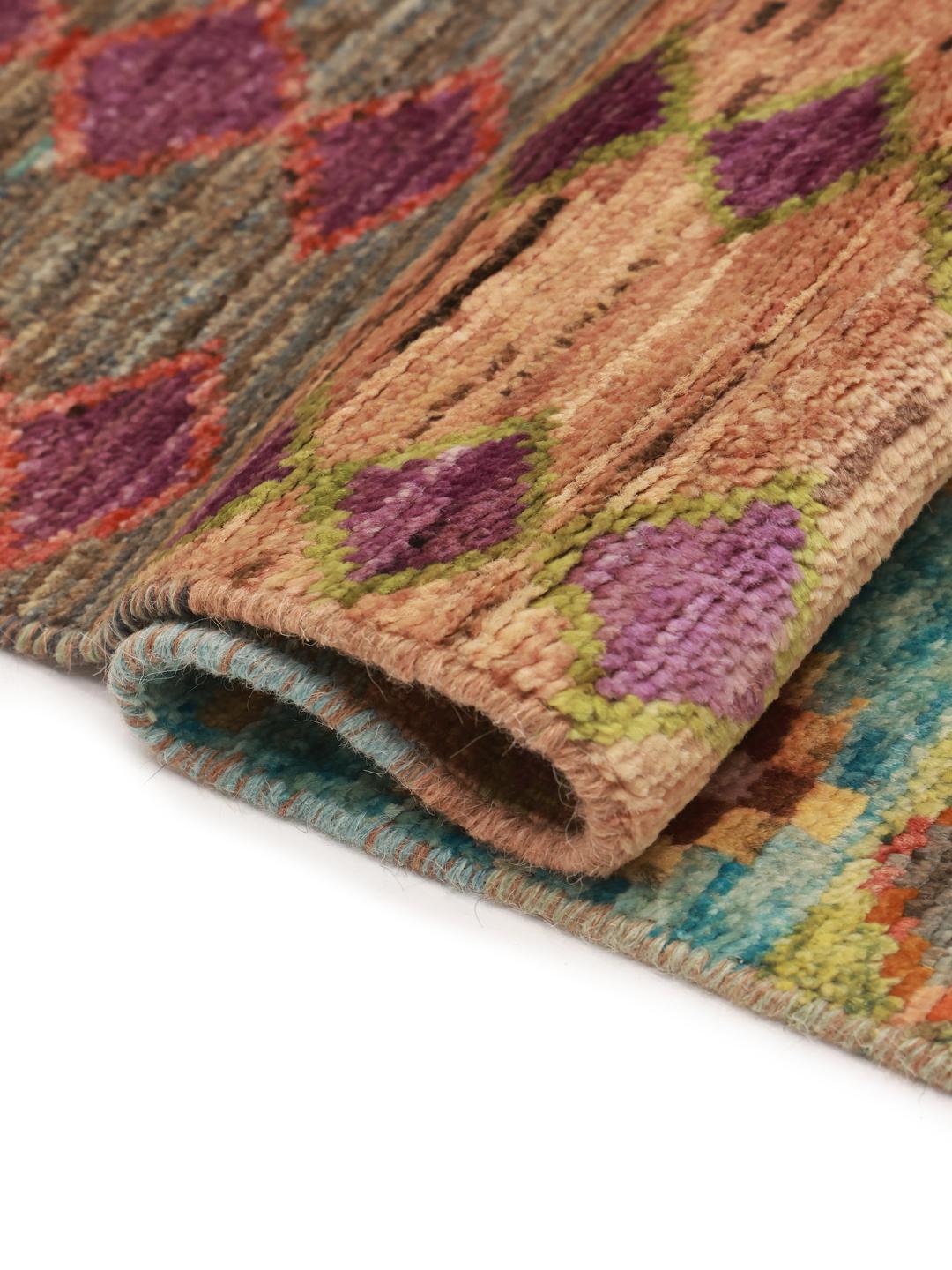
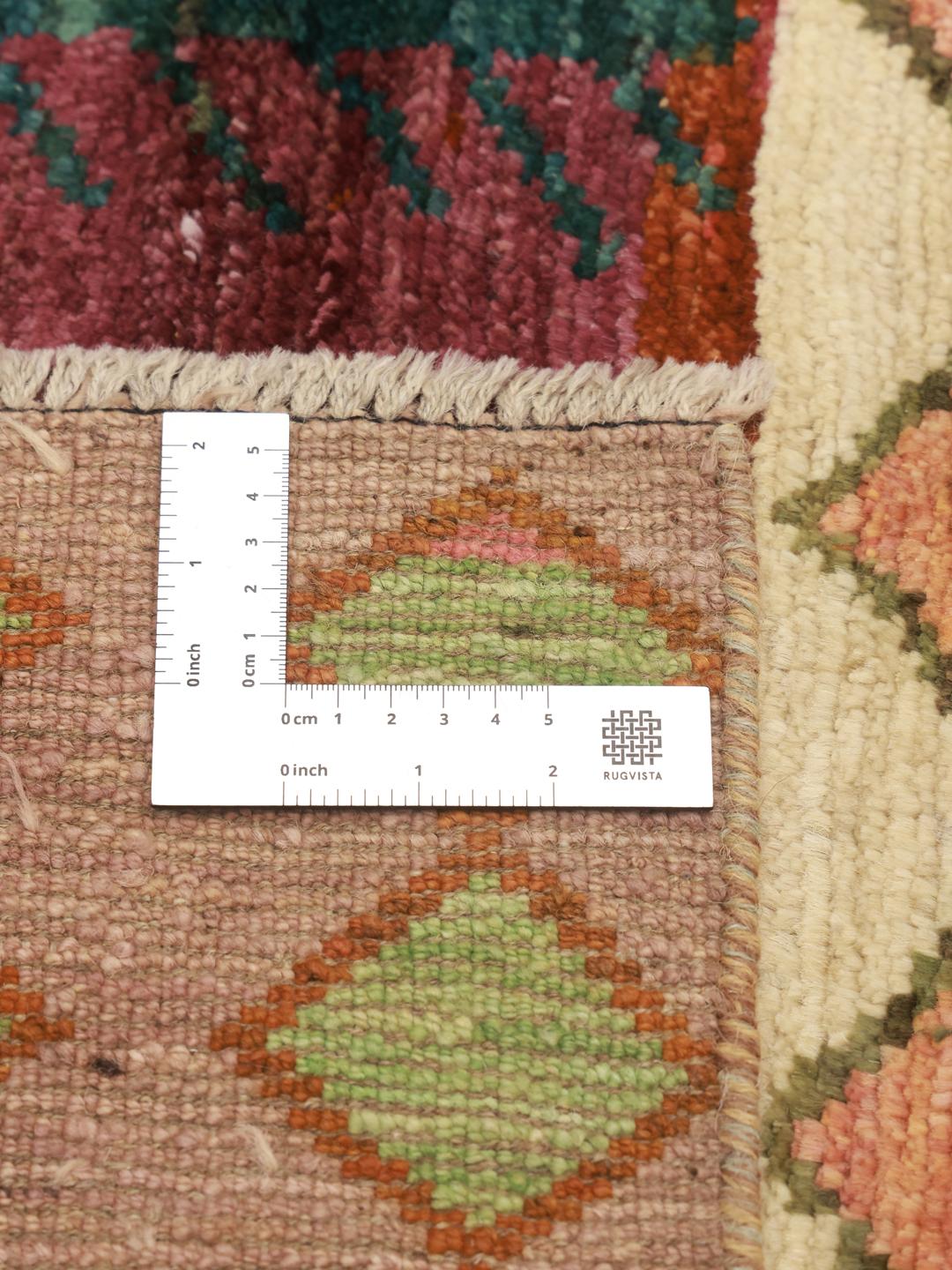
The term 'hand-knotted' refers to the specific technique where artisans tie individual knots of wool onto a warp and weft foundation. This is a time-honoured method that allows for the creation of intricate, durable designs that are significantly more resilient than machine-made alternatives. The quality of a hand-knotted rug is defined by the tension of these knots and the quality of the raw materials, which together determine how the rug will age and perform over time.
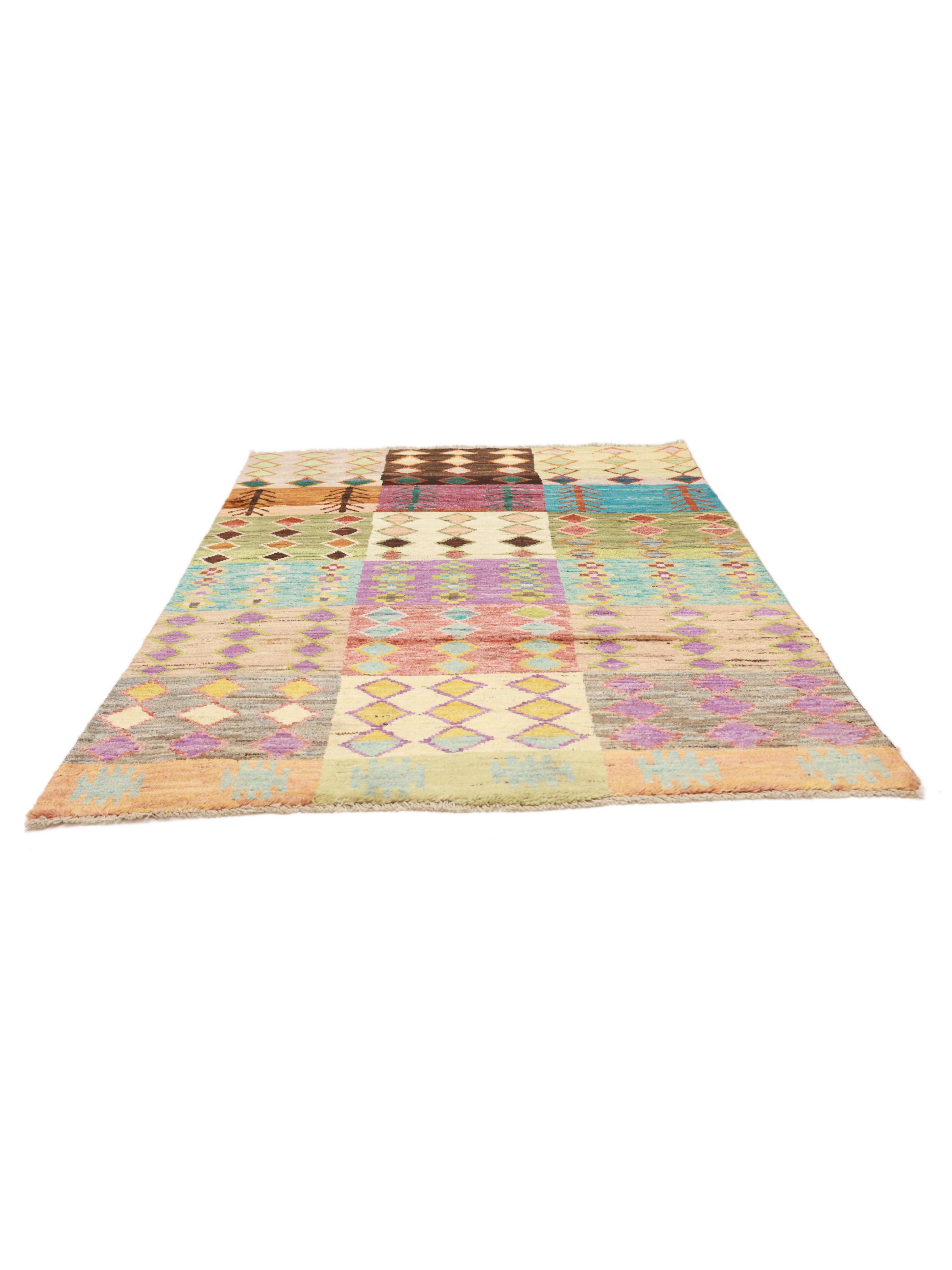
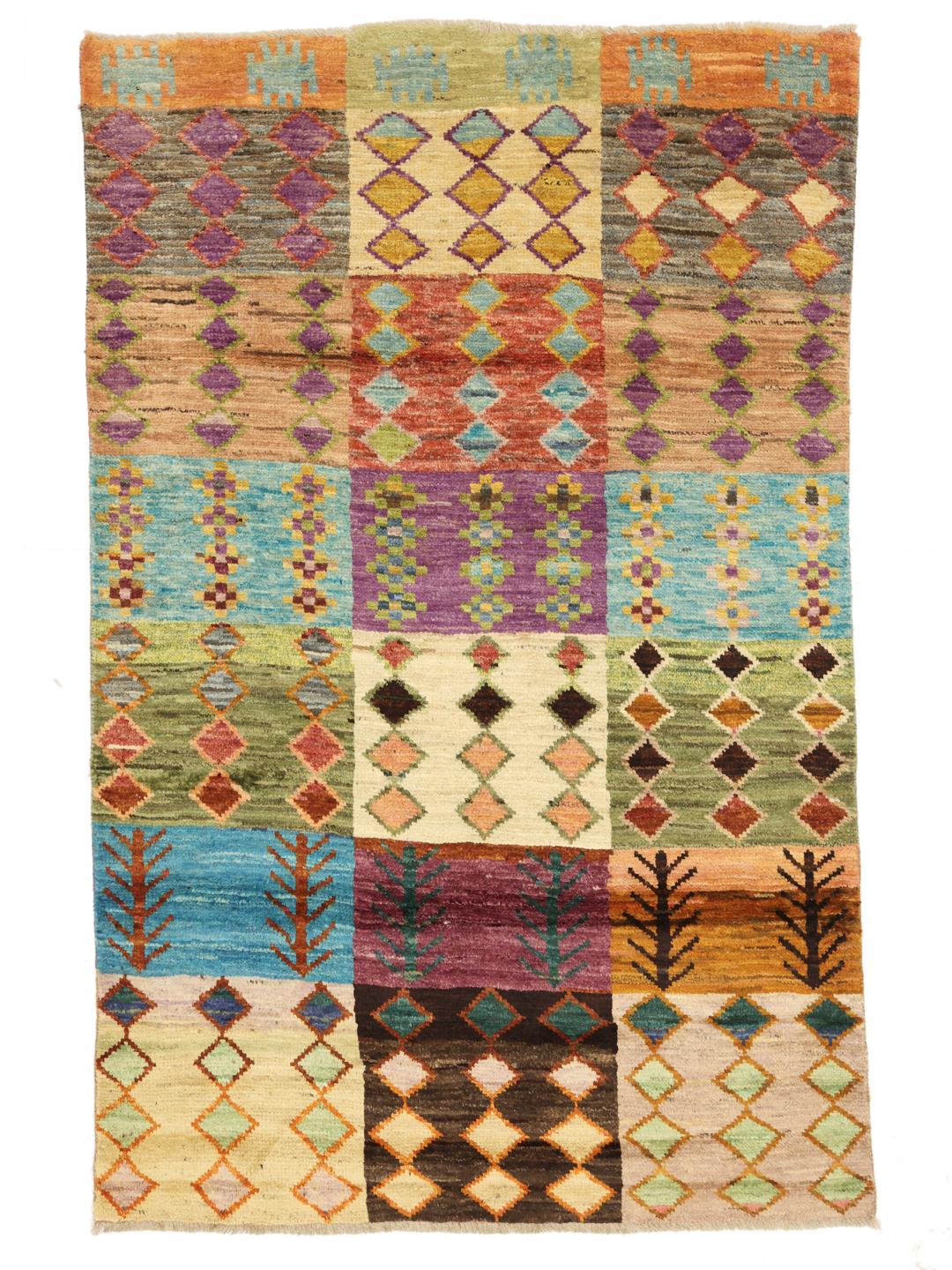
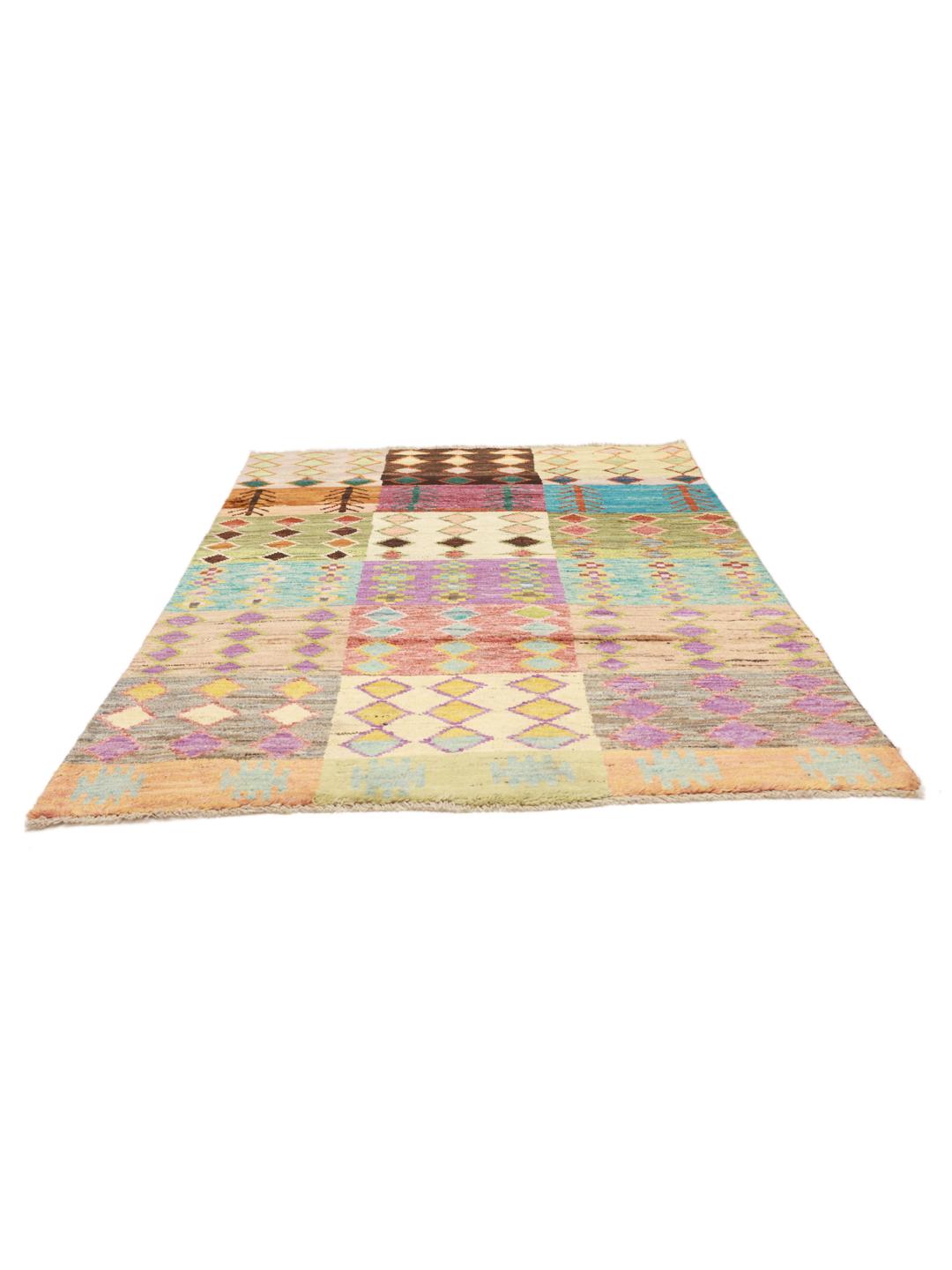
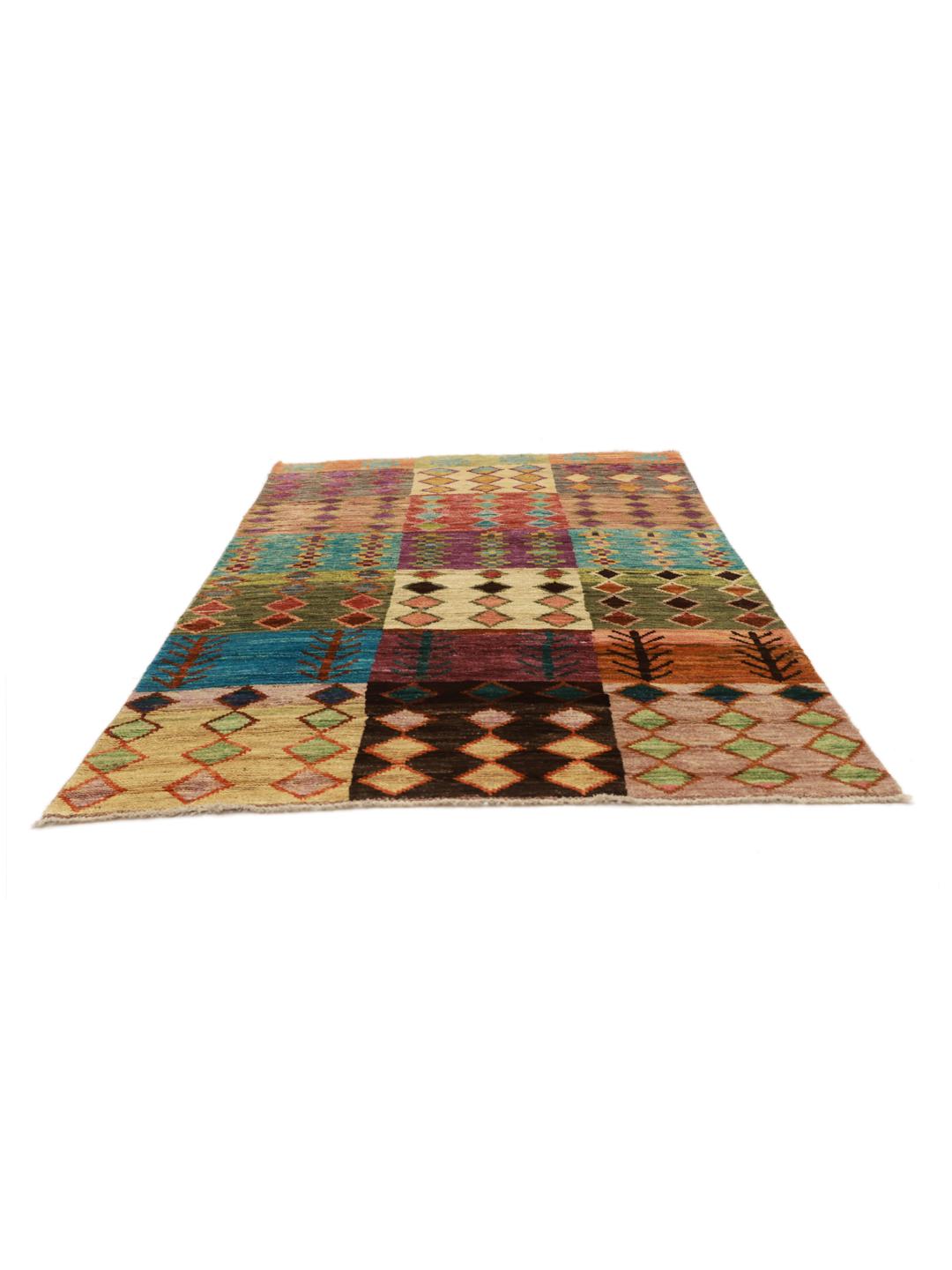
Signature design elements in this category often include bold, geometric motifs and a fearless use of colour. These rugs frequently feature symbols derived from the natural world, such as trees, mountains, and celestial bodies, simplified into abstract forms. The grid-like panelling seen here is a deliberate artistic choice, separating different design themes into a coherent, balanced composition that feels both organised and energetic.
Collecting these rugs is an investment in cultural heritage and human skill. Each piece represents a connection to the artisans who shaped it, preserving techniques that have been passed down through generations. By bringing such a rug into your home, you are not just covering a floor, but celebrating a form of artistic expression that prizes individuality and the beauty of the handmade over the uniformity of the modern world.