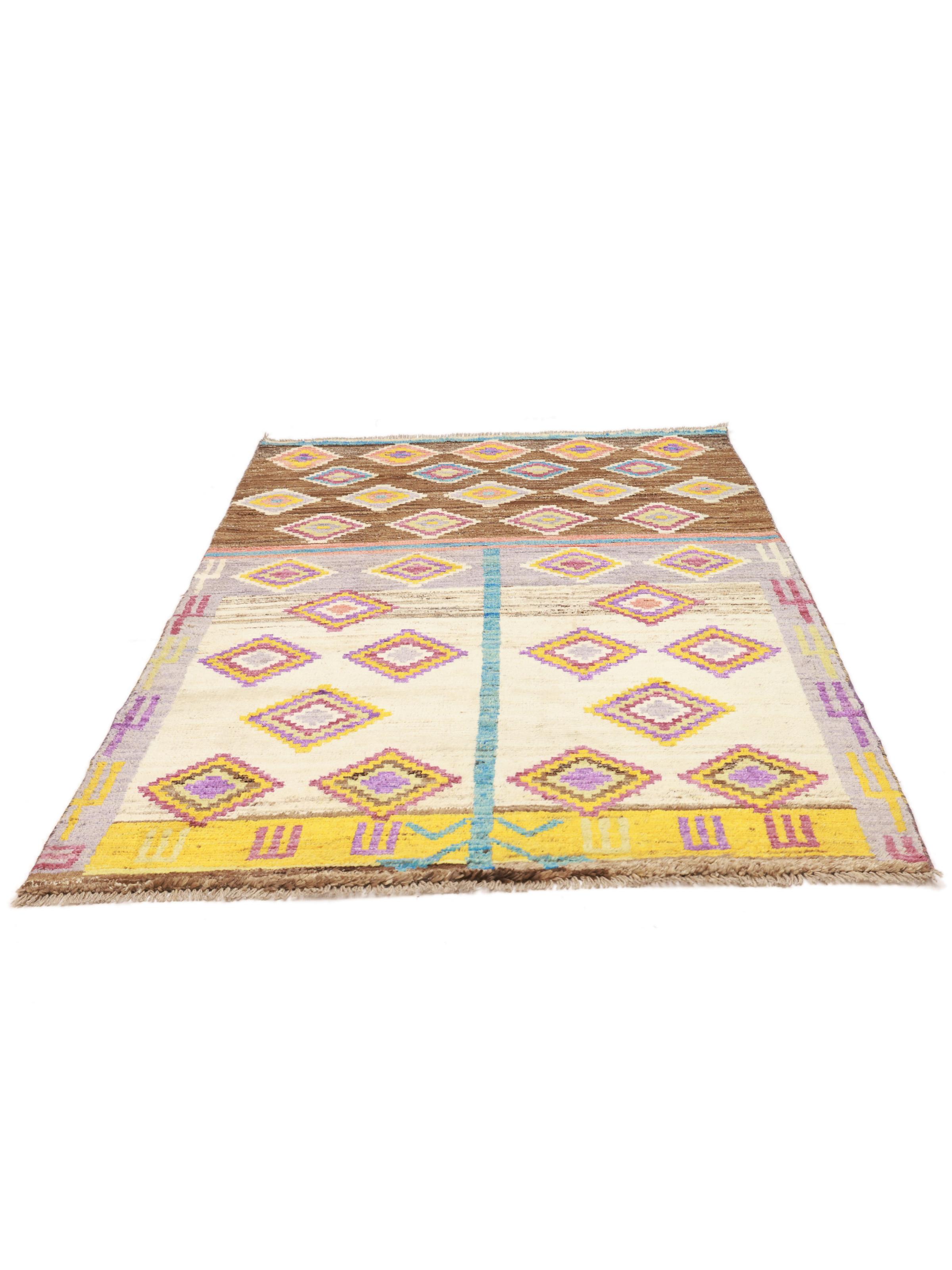
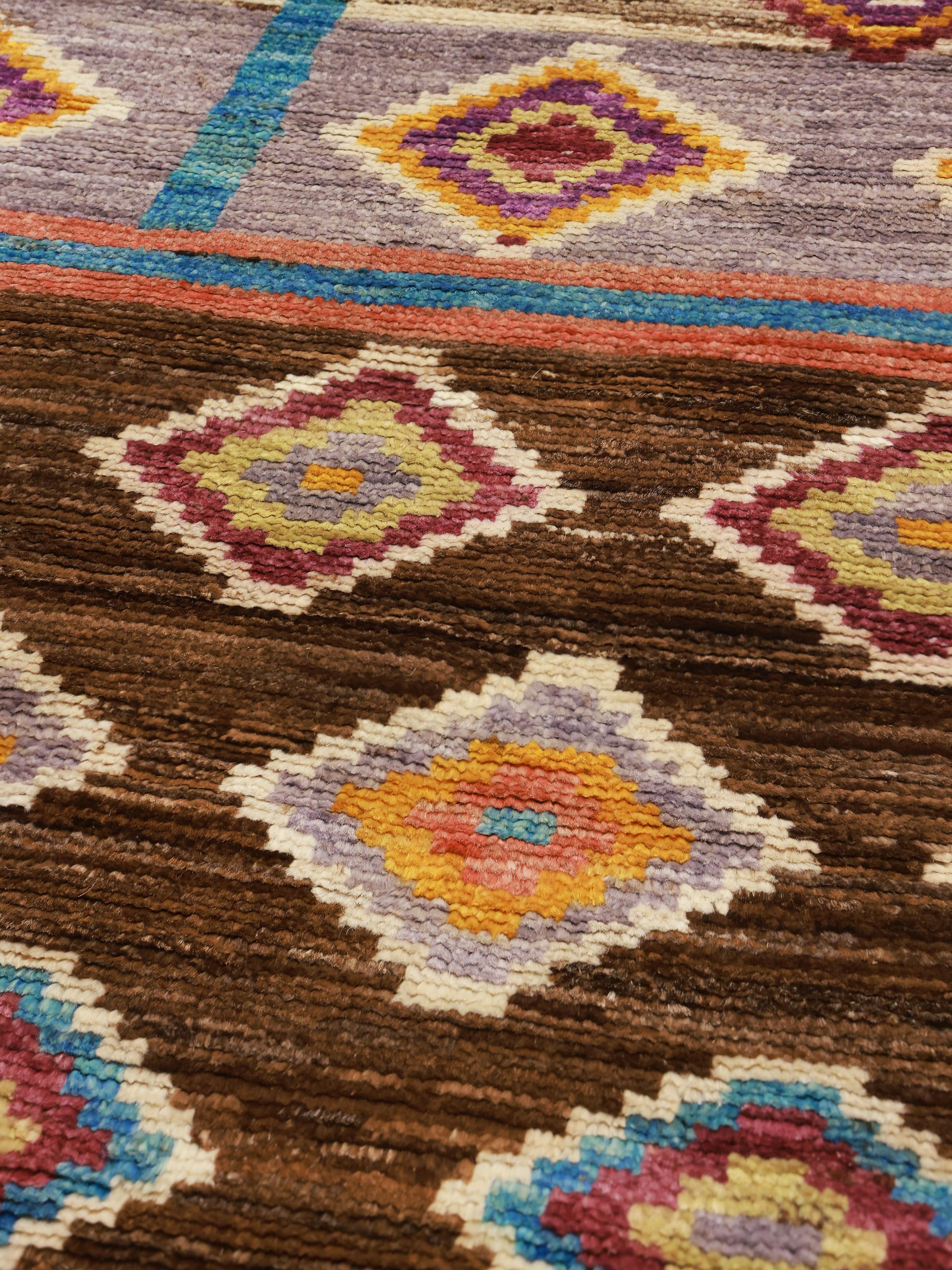
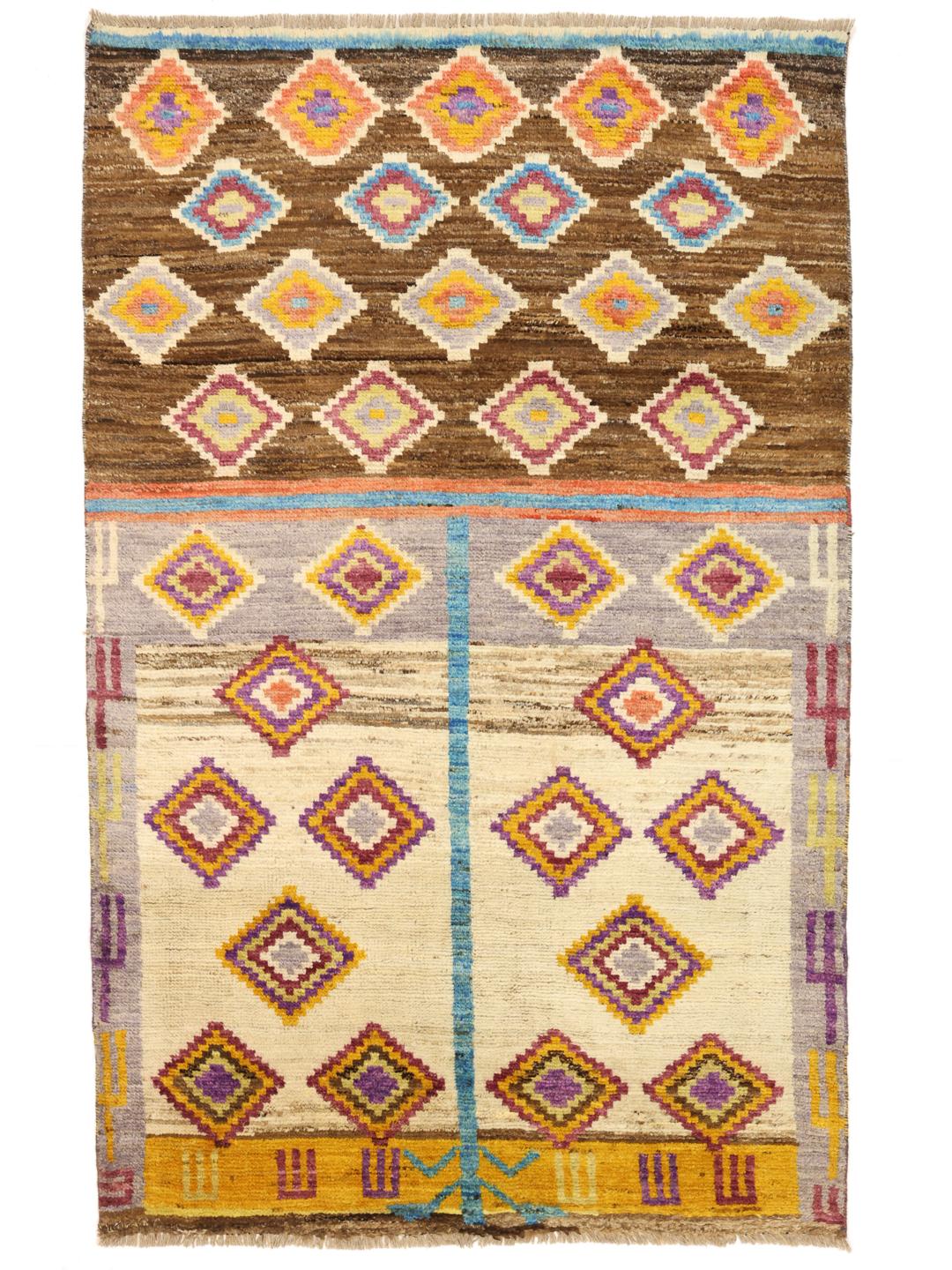
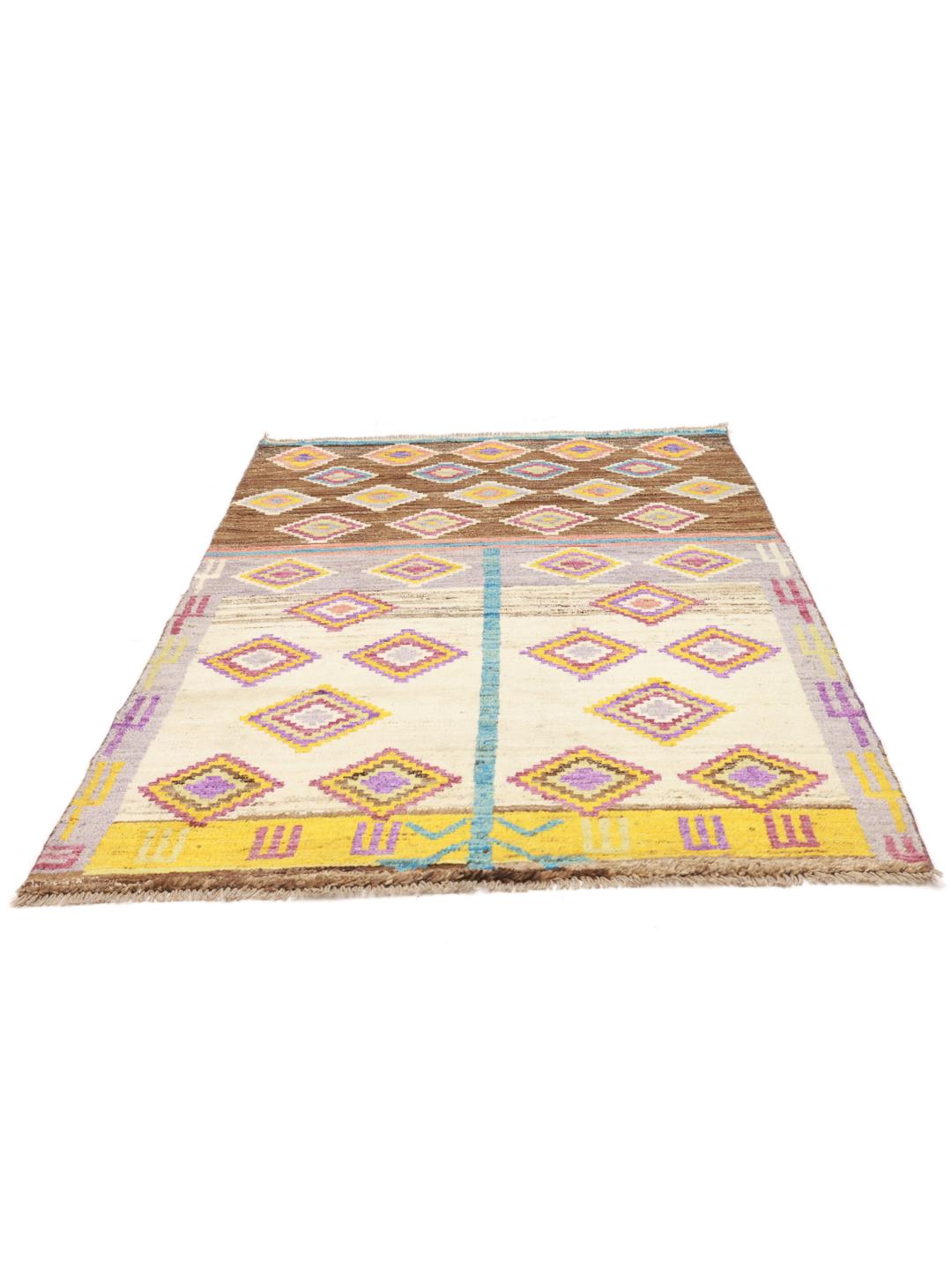
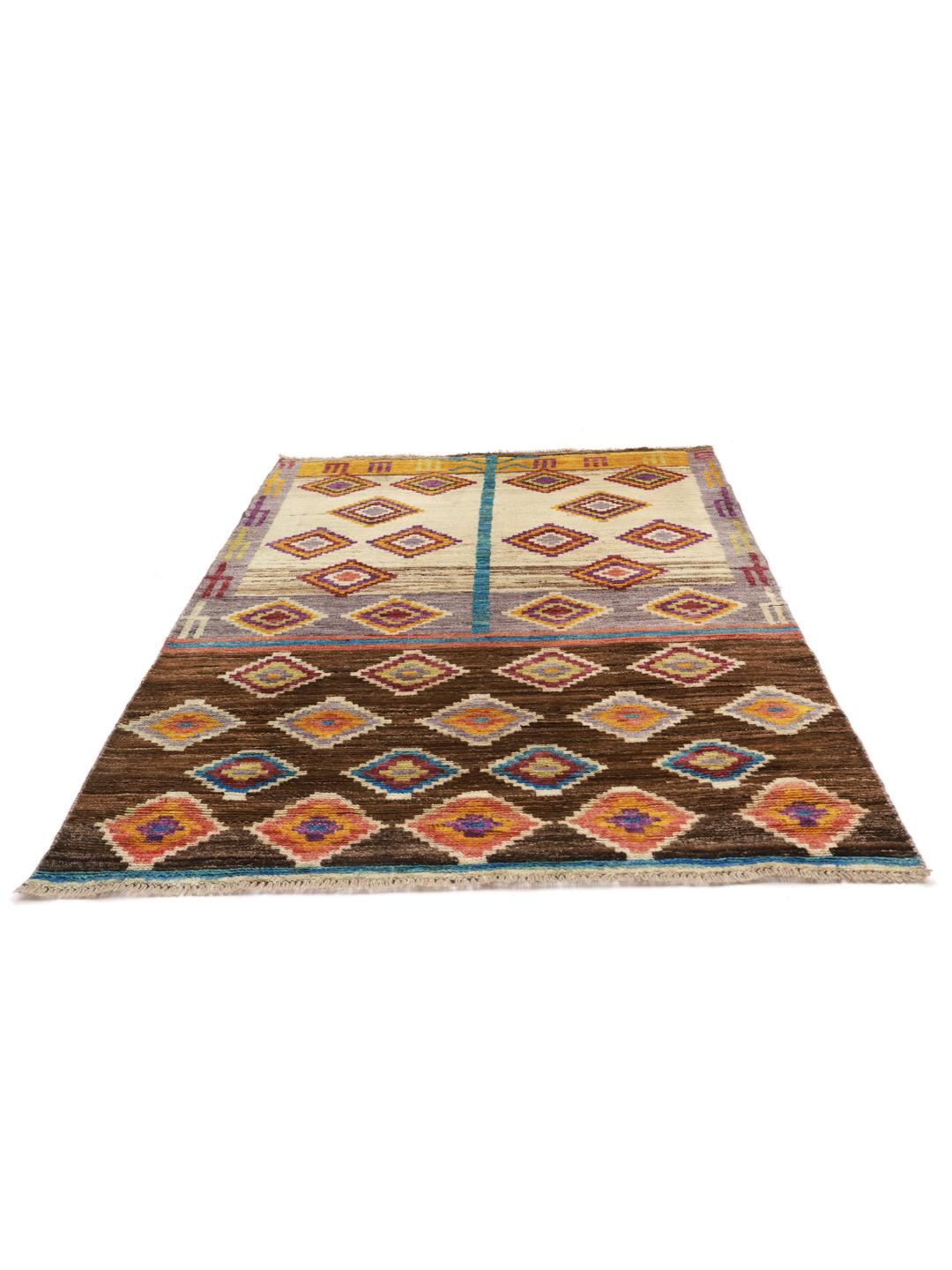
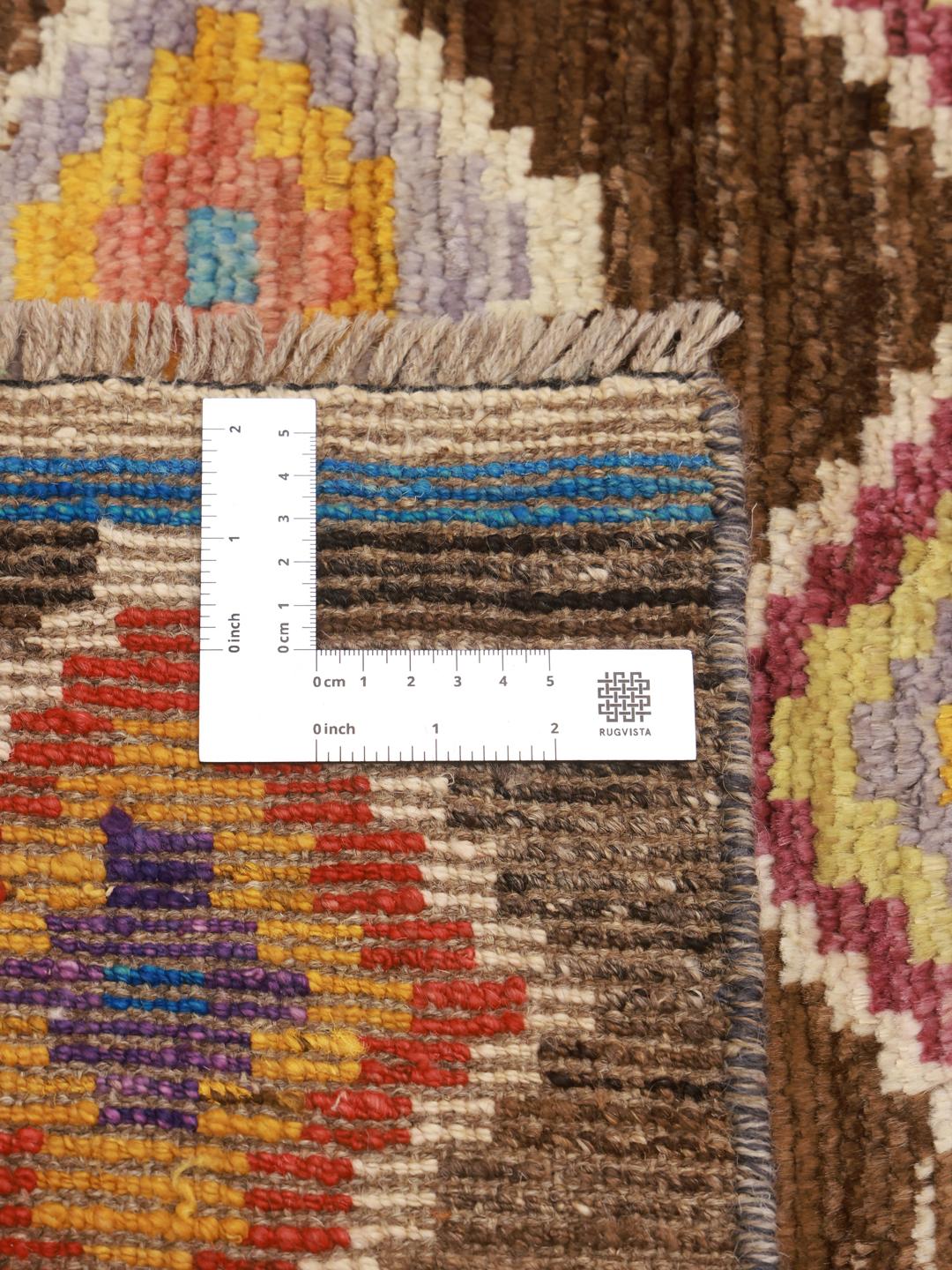
The Berber tradition is deeply rooted in the nomadic history of the Middle East and North Africa, where rugs were originally woven not just for comfort, but as essential tools for survival. These rugs were designed to insulate tents from the cold desert floor, with patterns often serving as a visual language to document tribal heritage, family stories, and local beliefs.
In the context of Afghan weaving, these traditions have evolved into a vibrant fusion of styles. While the term Berber often refers to specific North African roots, the influence has travelled and transformed, with Afghan weavers incorporating their own regional aesthetics, such as these distinct, structured geometric shapes and a more playful approach to colour that breaks away from strictly traditional palettes.
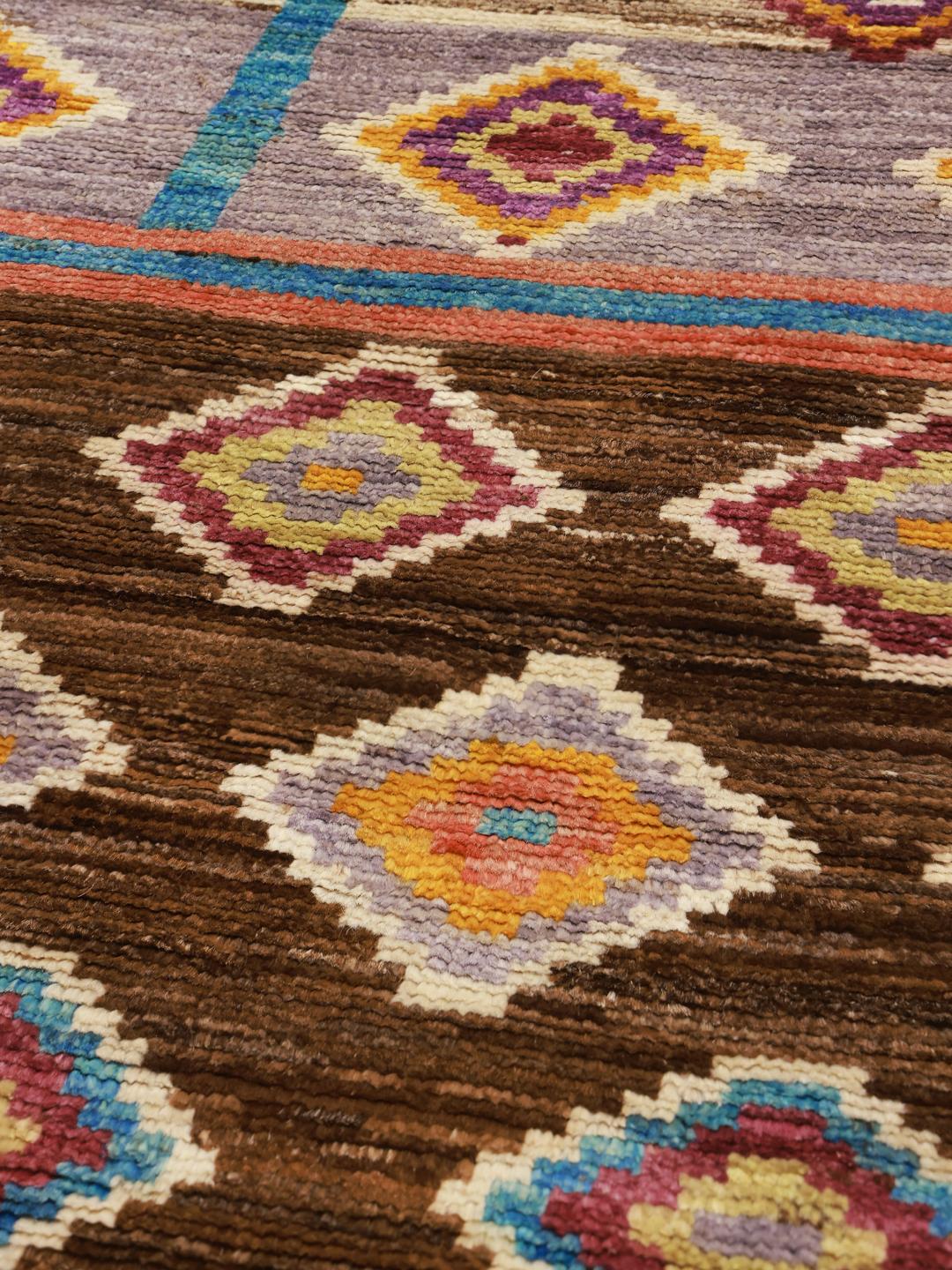
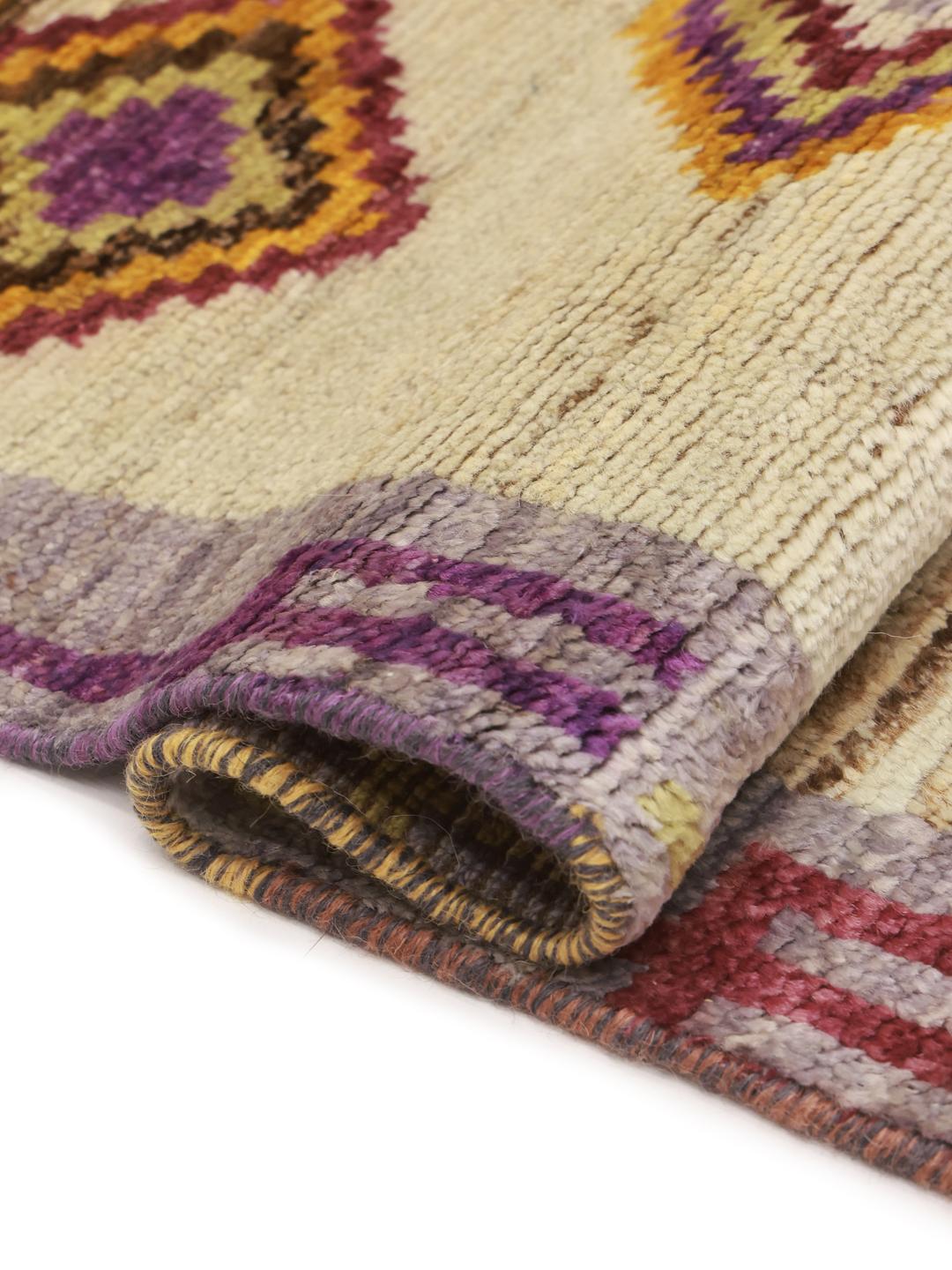
The geometric diamond motifs you see here are a hallmark of this craft, often representing protection or fertility within the weaver's cultural narrative. The use of a repeating, rhythmic pattern creates a sense of order and balance, a design tradition that has been passed down through generations, ensuring that the visual language remains as meaningful today as it was centuries ago.
Collecting a rug from this tradition is an investment in cultural heritage. It represents the skill of the individual weaver and the survival of a craft that prioritises human touch over mass production. By choosing this piece, you are supporting a legacy of artistry that values the preservation of complex, time-honoured techniques in a modern world.