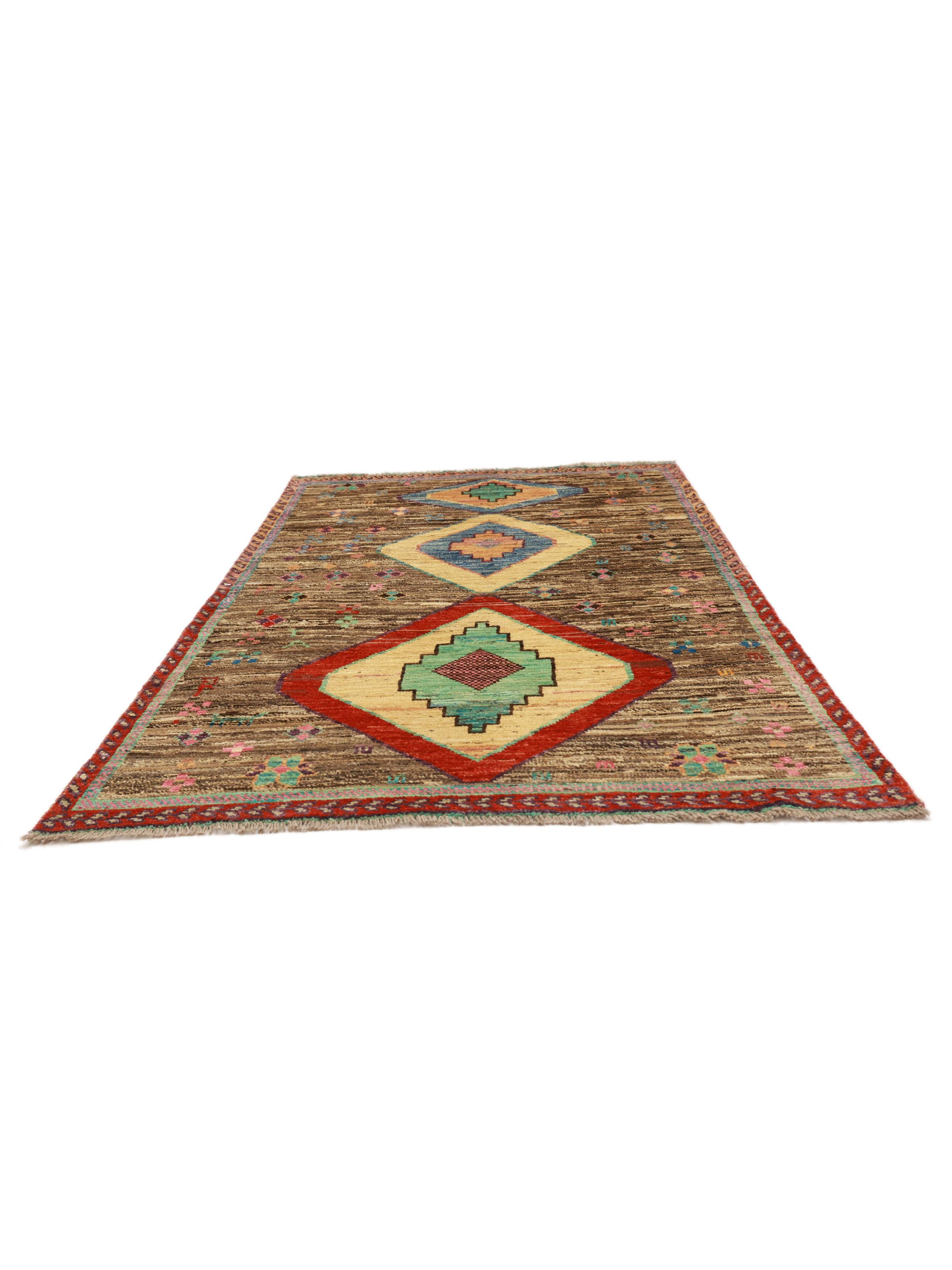
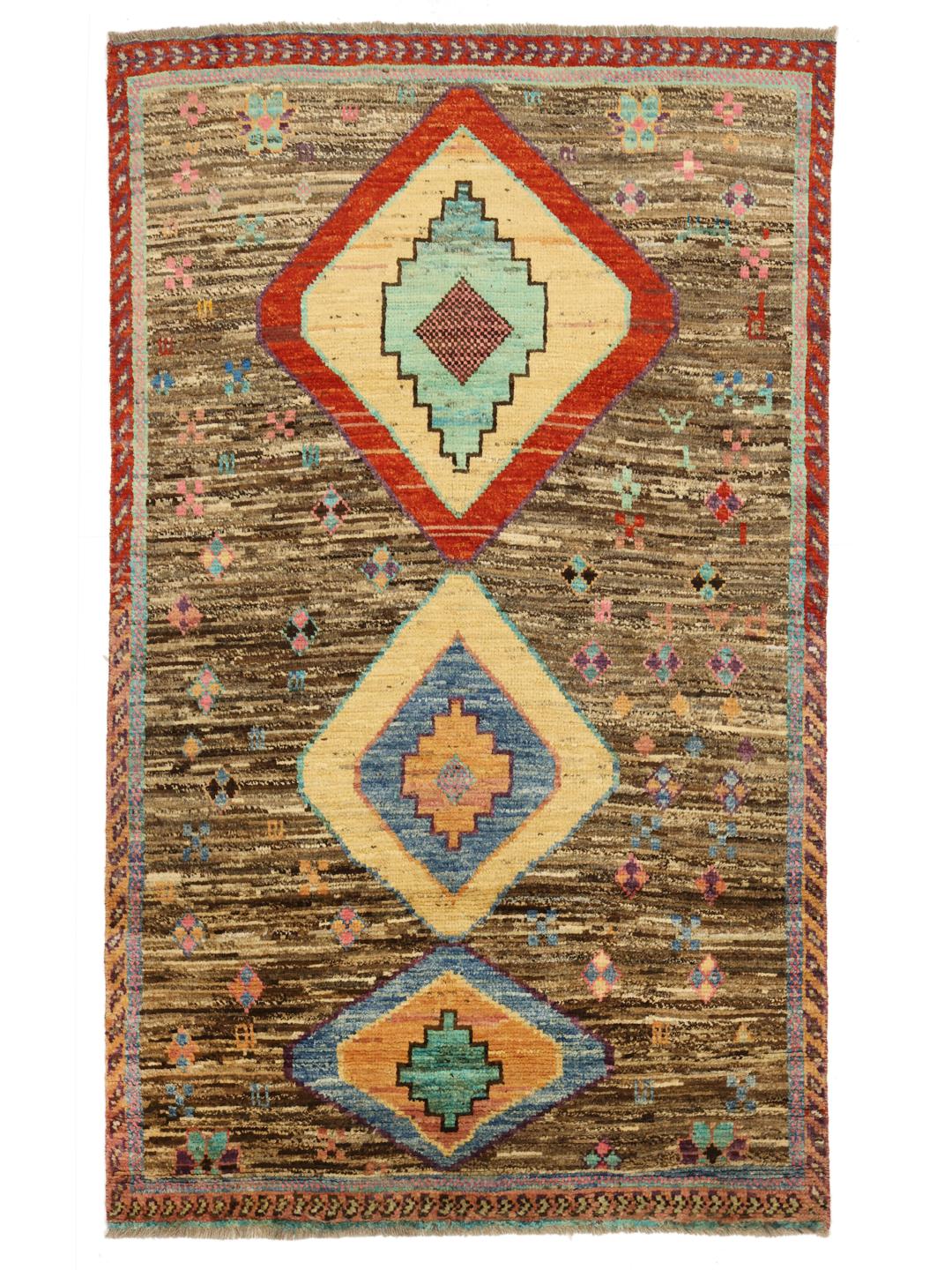
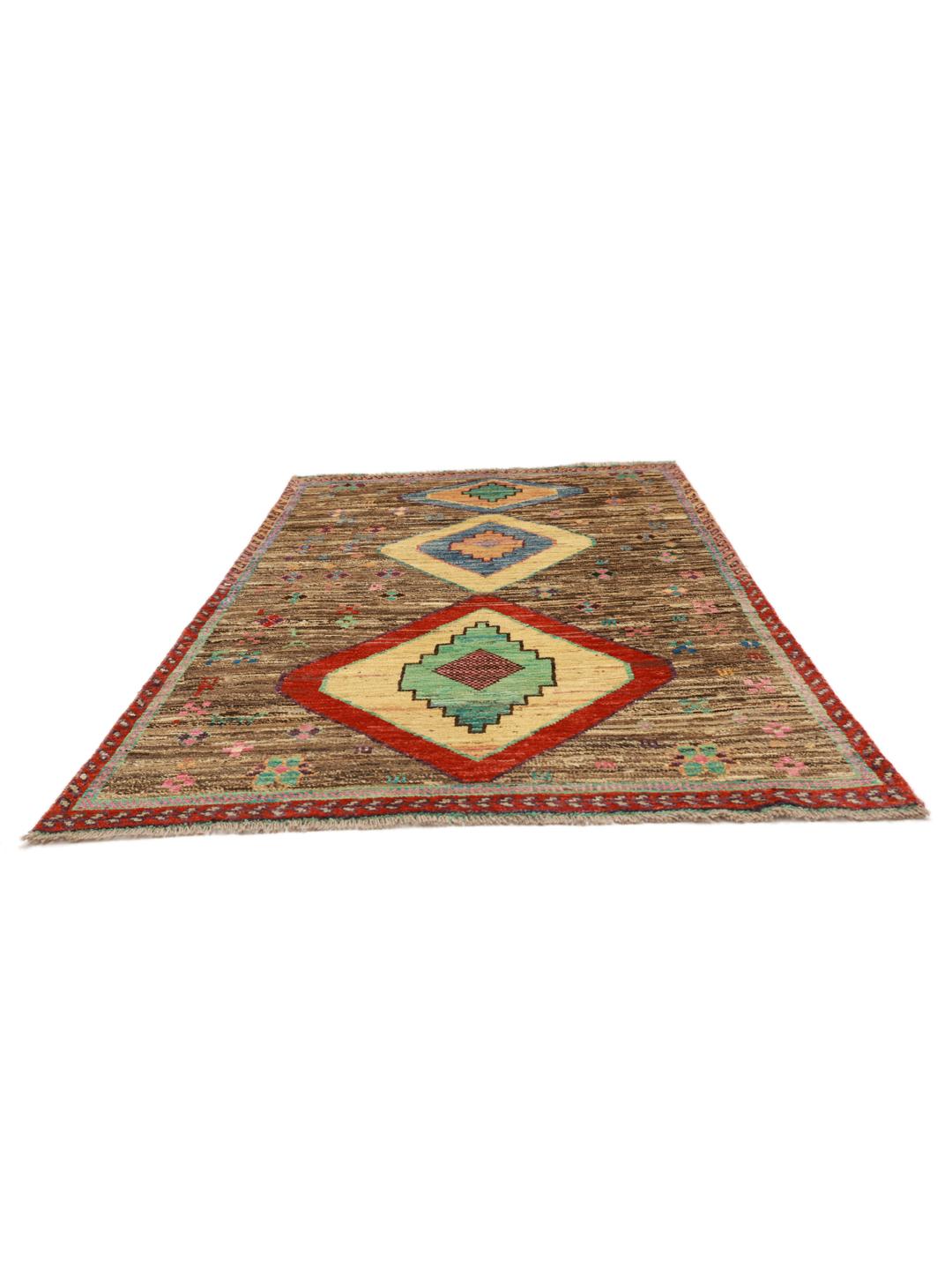
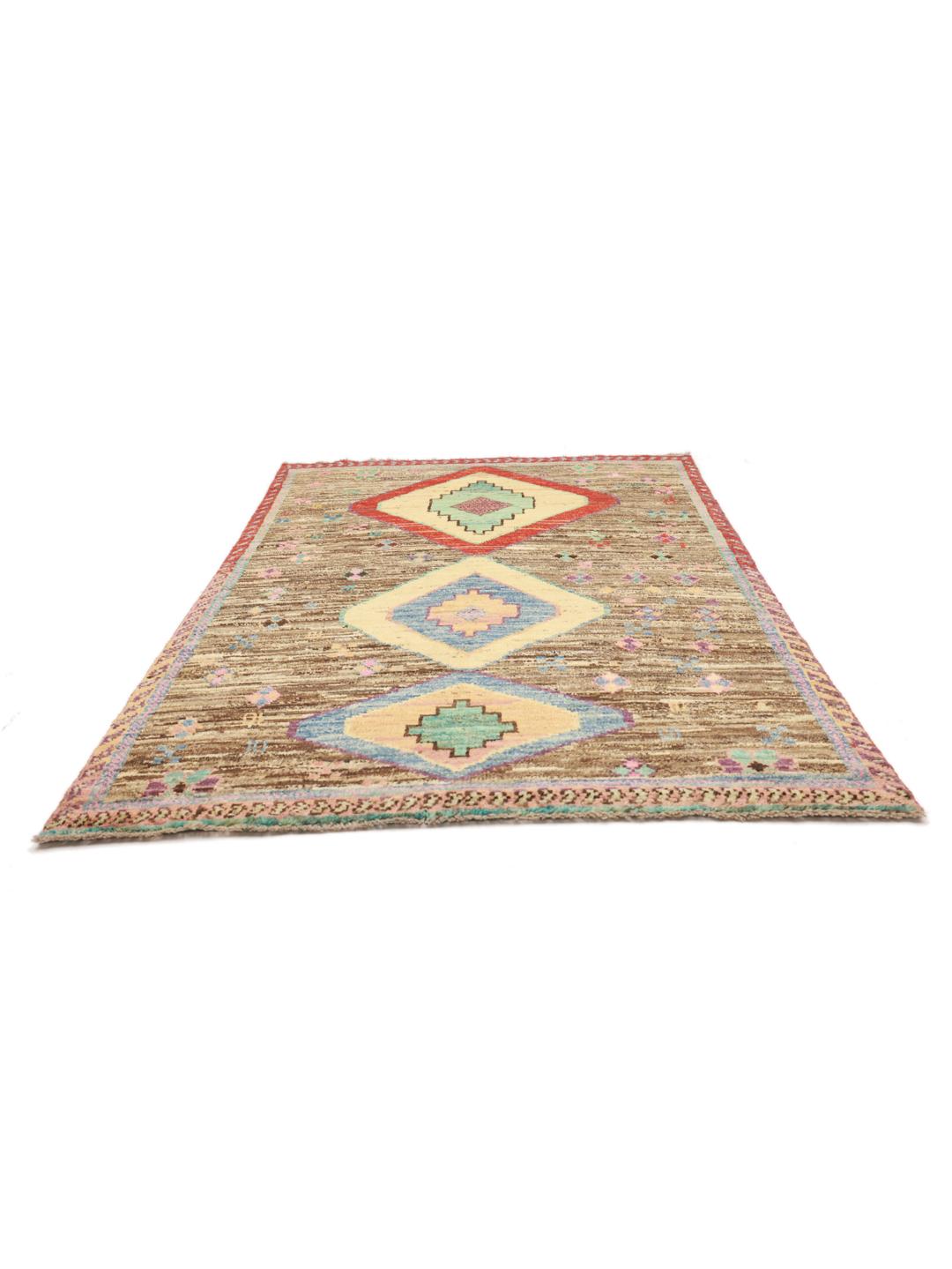
Berber rugs carry a legacy that stretches across vast landscapes, traditionally rooted in the nomadic weaving cultures of North Africa. Over time, these weaving techniques migrated and were adopted by artisans in other regions, including Afghanistan, where they have been adapted to reflect local aesthetics and materials while maintaining the spirit of the original craft.
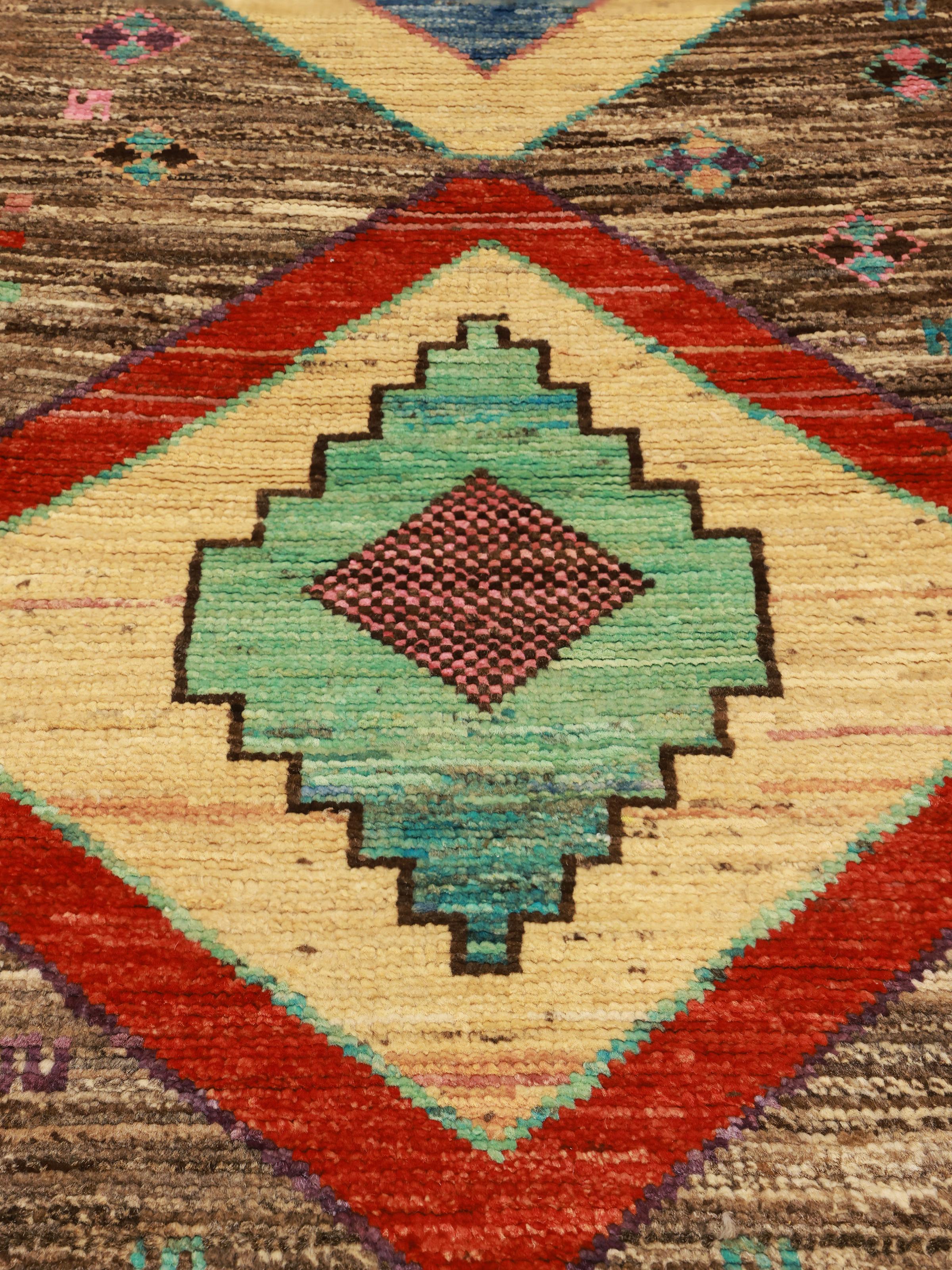
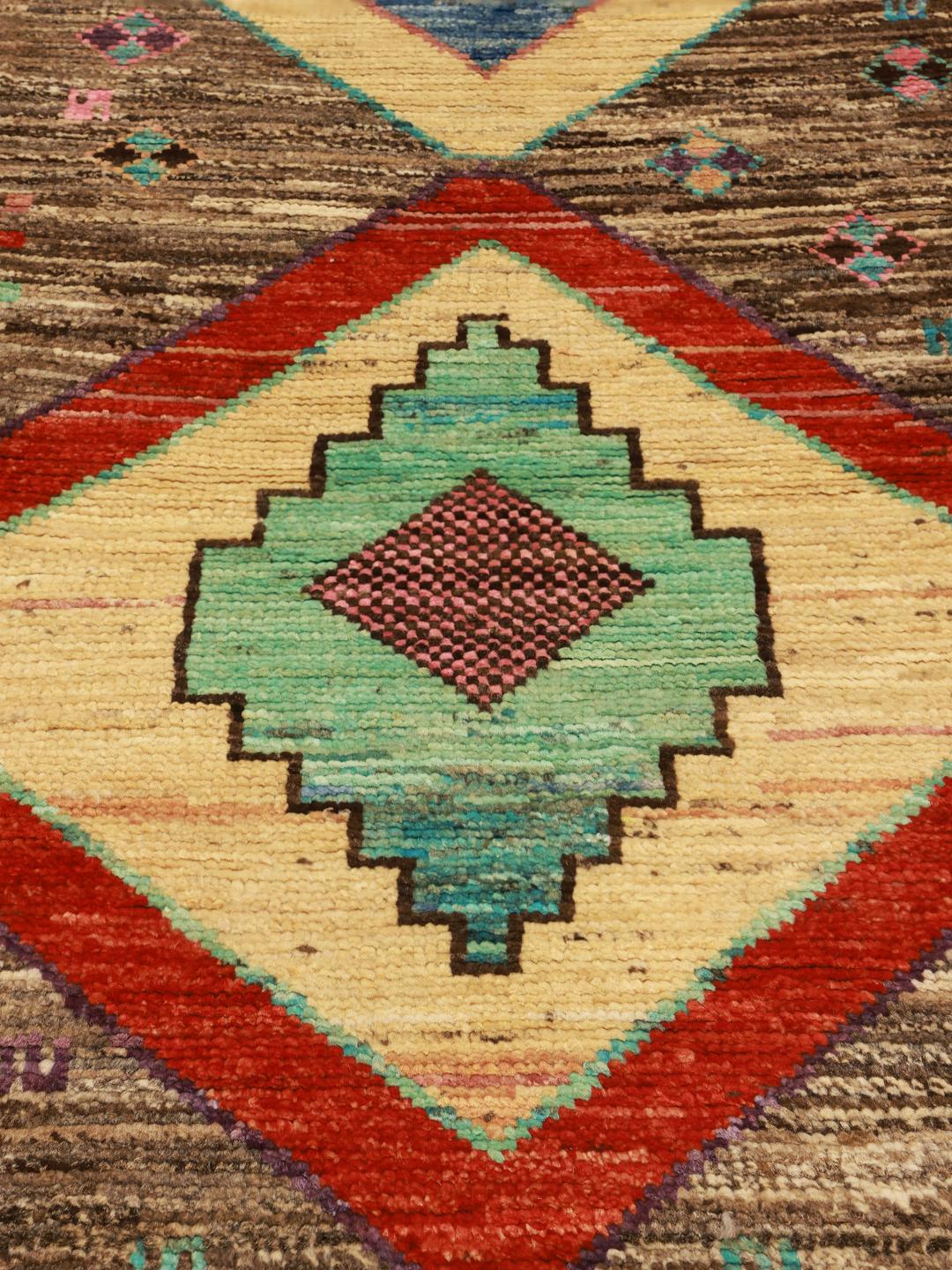
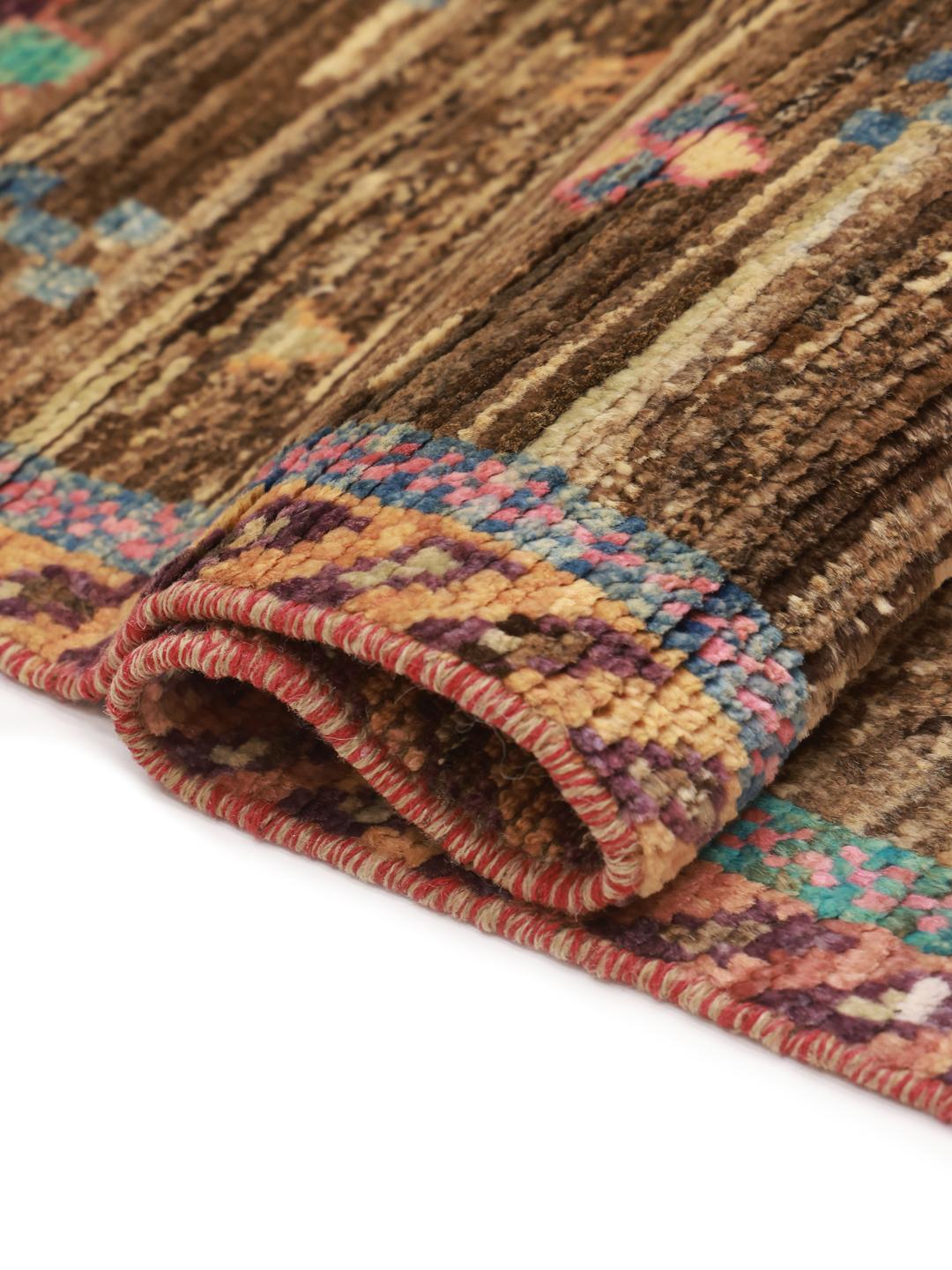
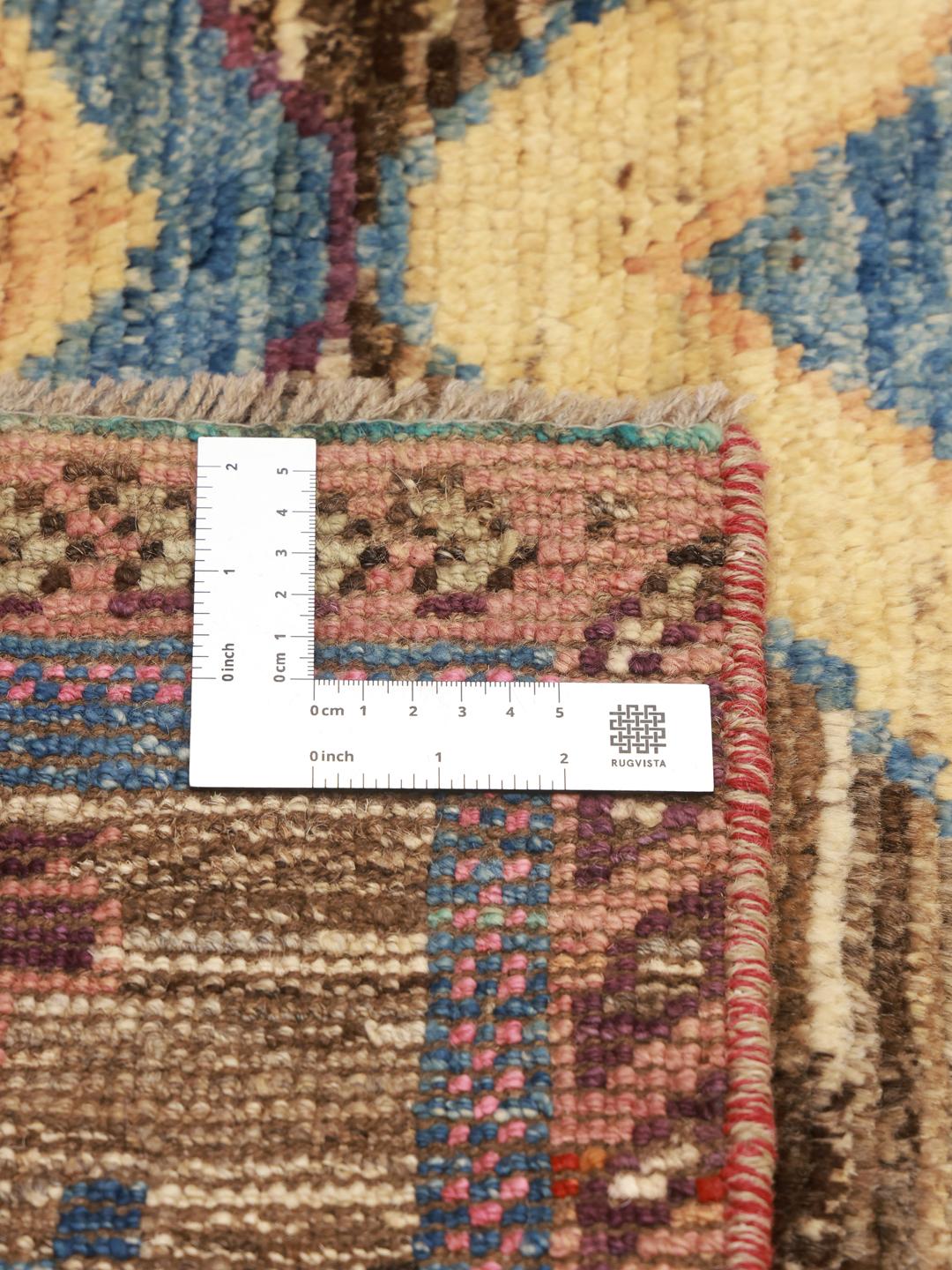
The term hand-knotted denotes a specific, traditional method where artisans tie individual strands of Wool onto a warp foundation. This technique is highly valued because it creates a pile that is incredibly durable and resistant to wear. Unlike mass-produced alternatives, this method allows for a depth of colour and pattern complexity that can only be achieved through the direct touch of a skilled weaver.
The design language of these rugs often centres on geometric symbols, such as the diamonds and medallions featured here. These shapes are more than mere decoration; they are a visual vocabulary that has been passed down through generations, often representing protection, prosperity, or the weaver's own interpretation of the world around them.
Owning a piece from this tradition is an investment in cultural heritage. Collectors and enthusiasts value these rugs for their authenticity and the human story they tell. By bringing this rug into your home, you are participating in a long-standing tradition of craft that celebrates individuality and the enduring beauty of handmade objects.