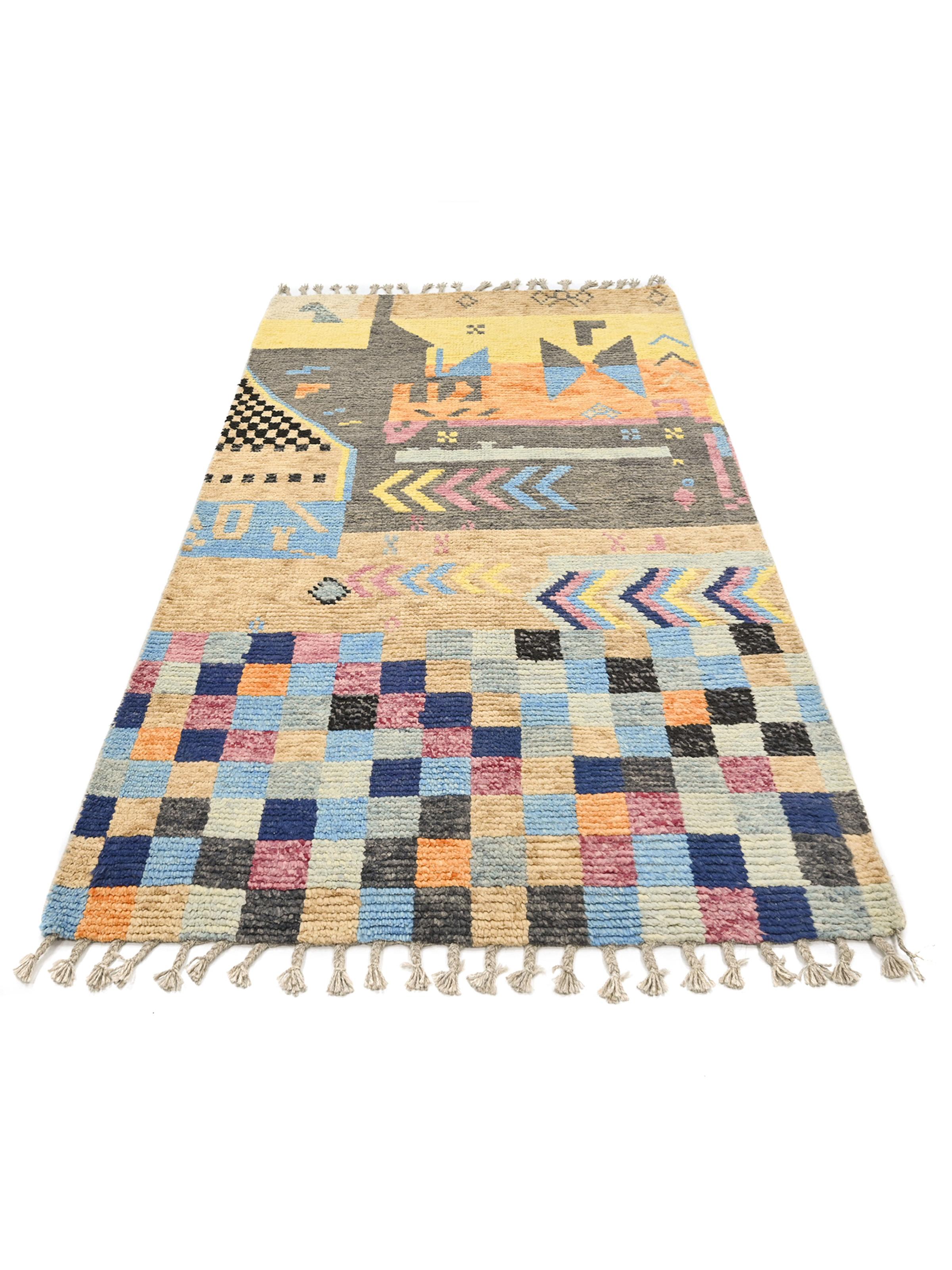
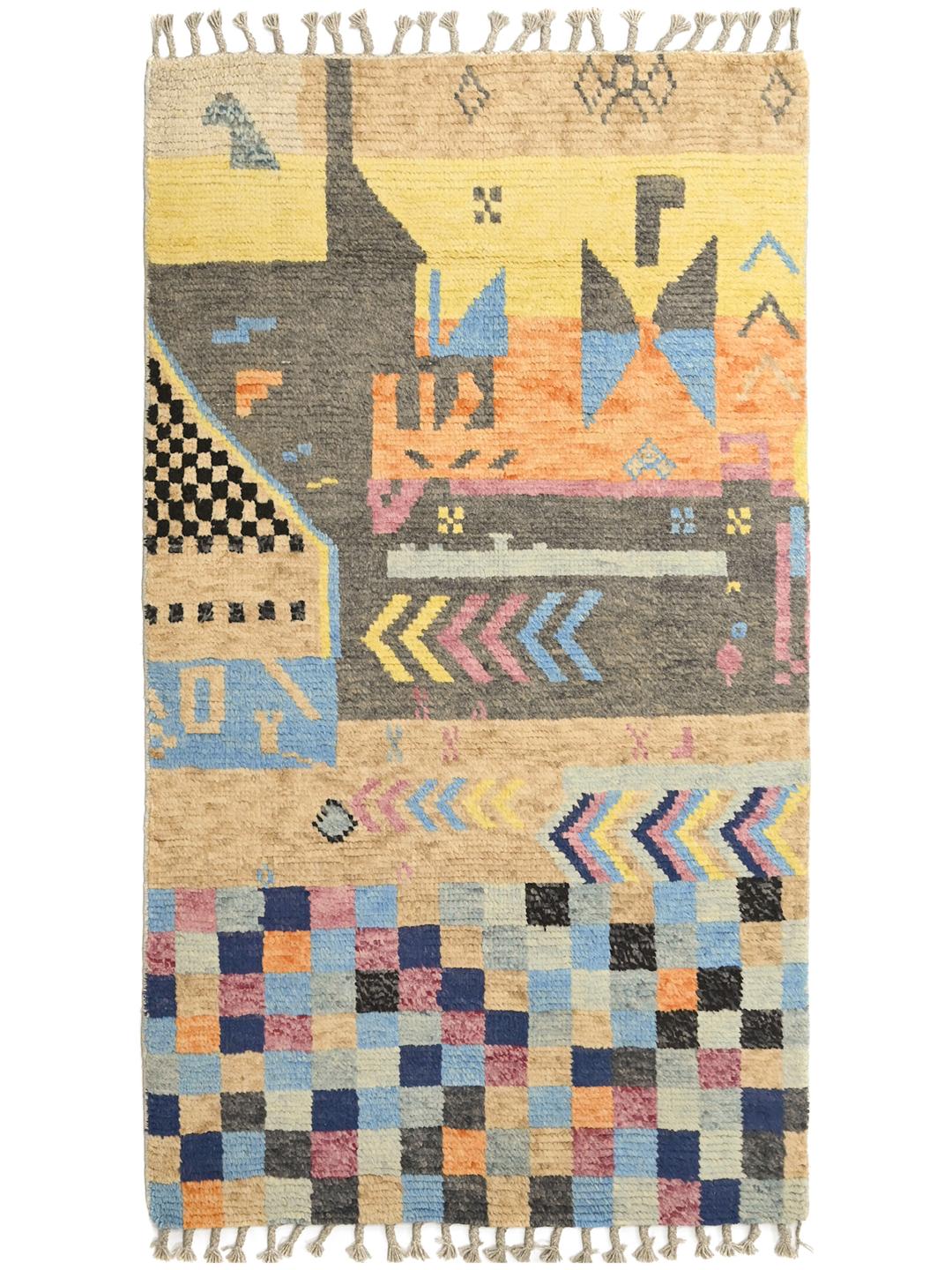
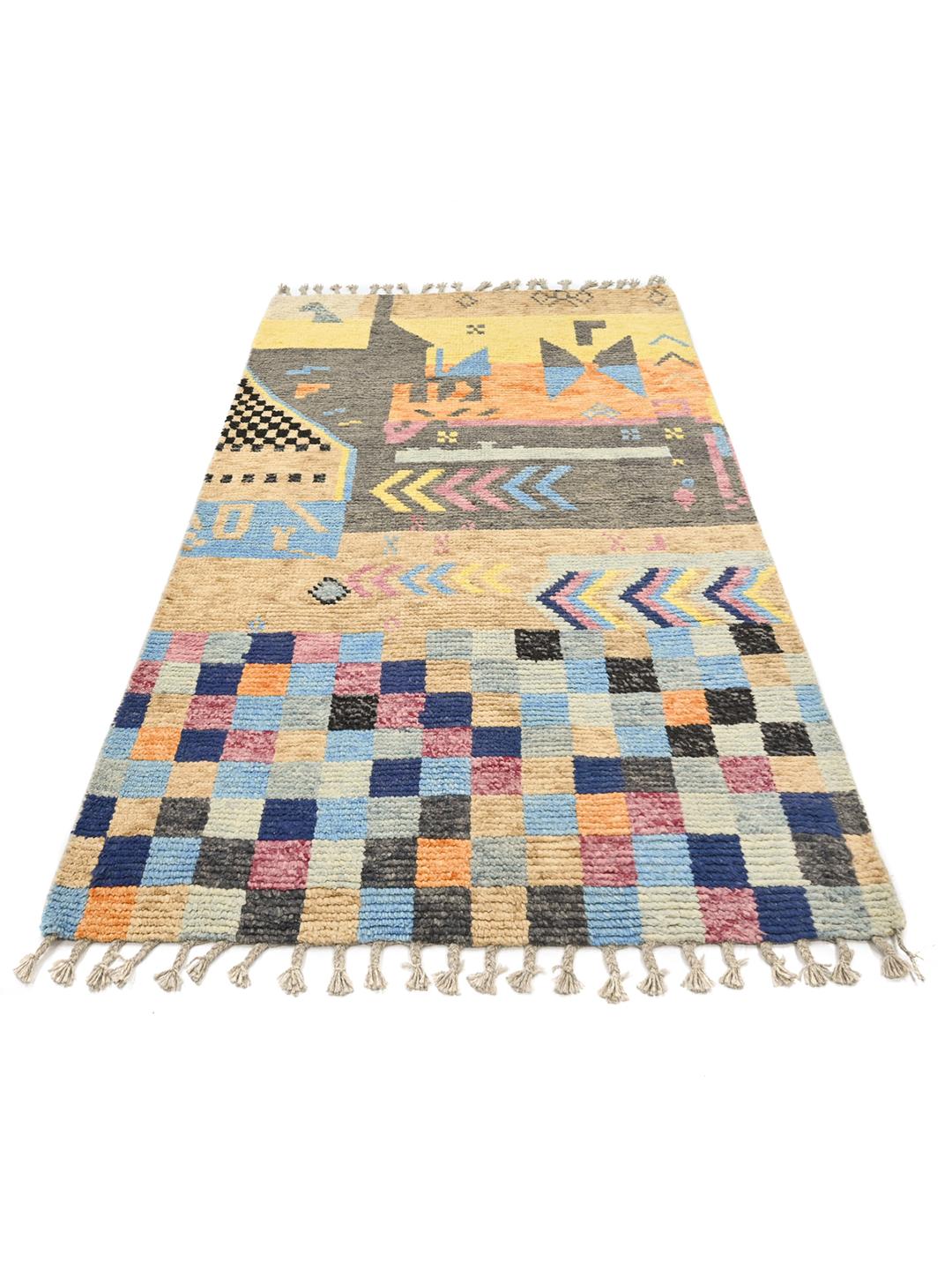
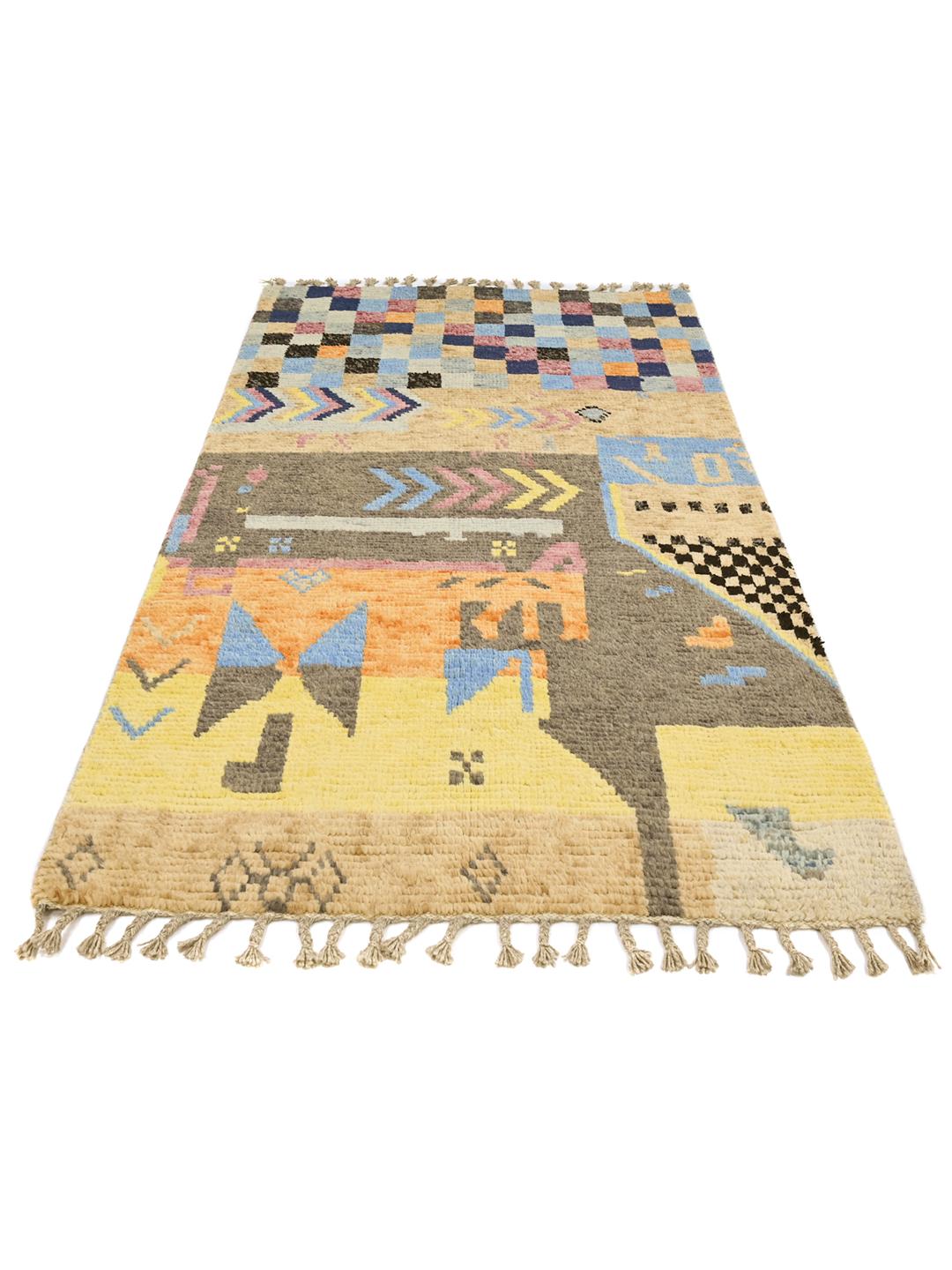
Berber style rugs trace their roots back to the nomadic tribes of North Africa, where hand-woven textiles served as functional floor coverings, bedding, and protective blankets. Over time, weavers across Central Asia and the Middle East adopted and reinterpreted these vibrant tribal styles, blending regional knotting traditions with expressive geometric motifs.
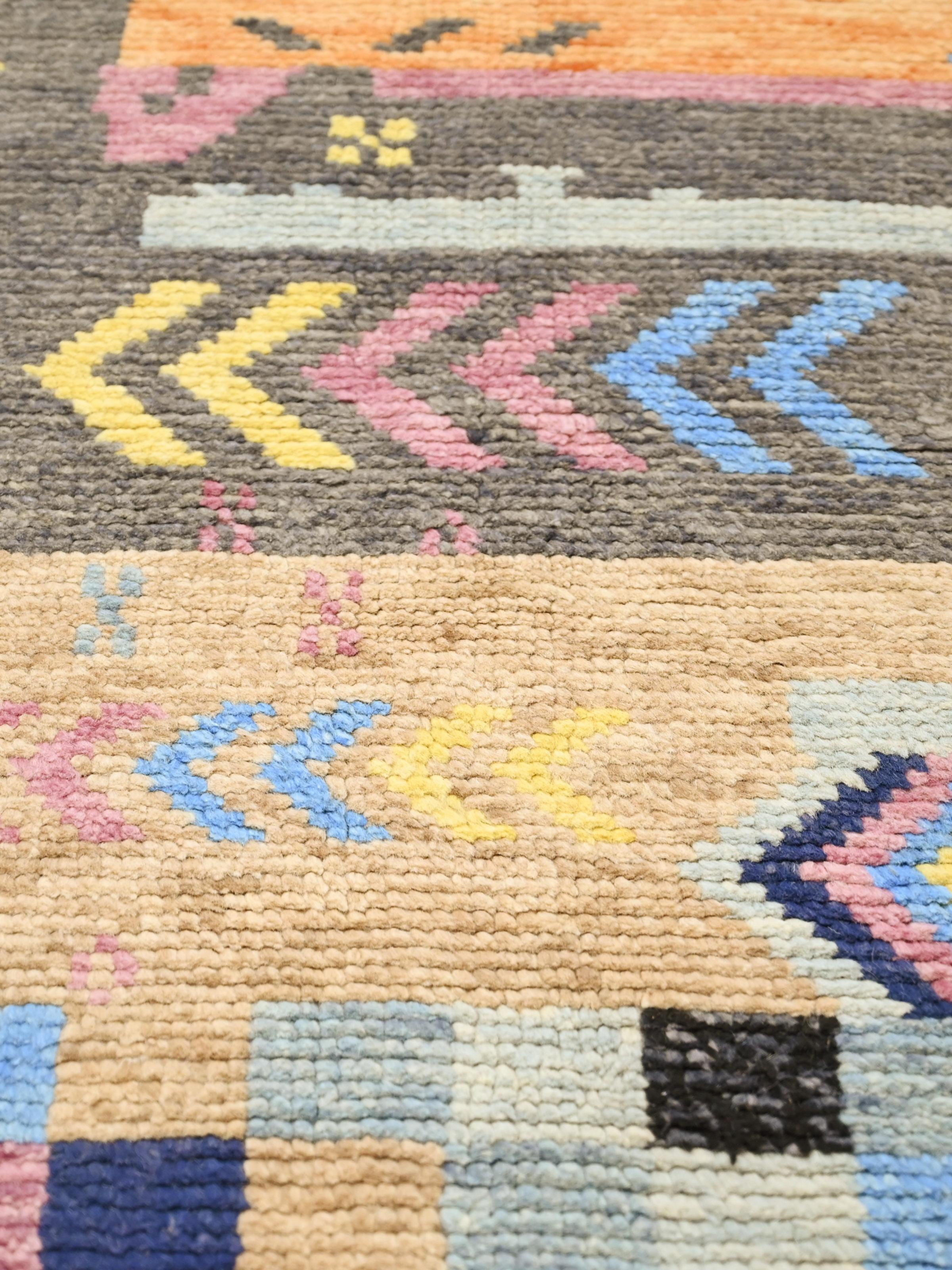
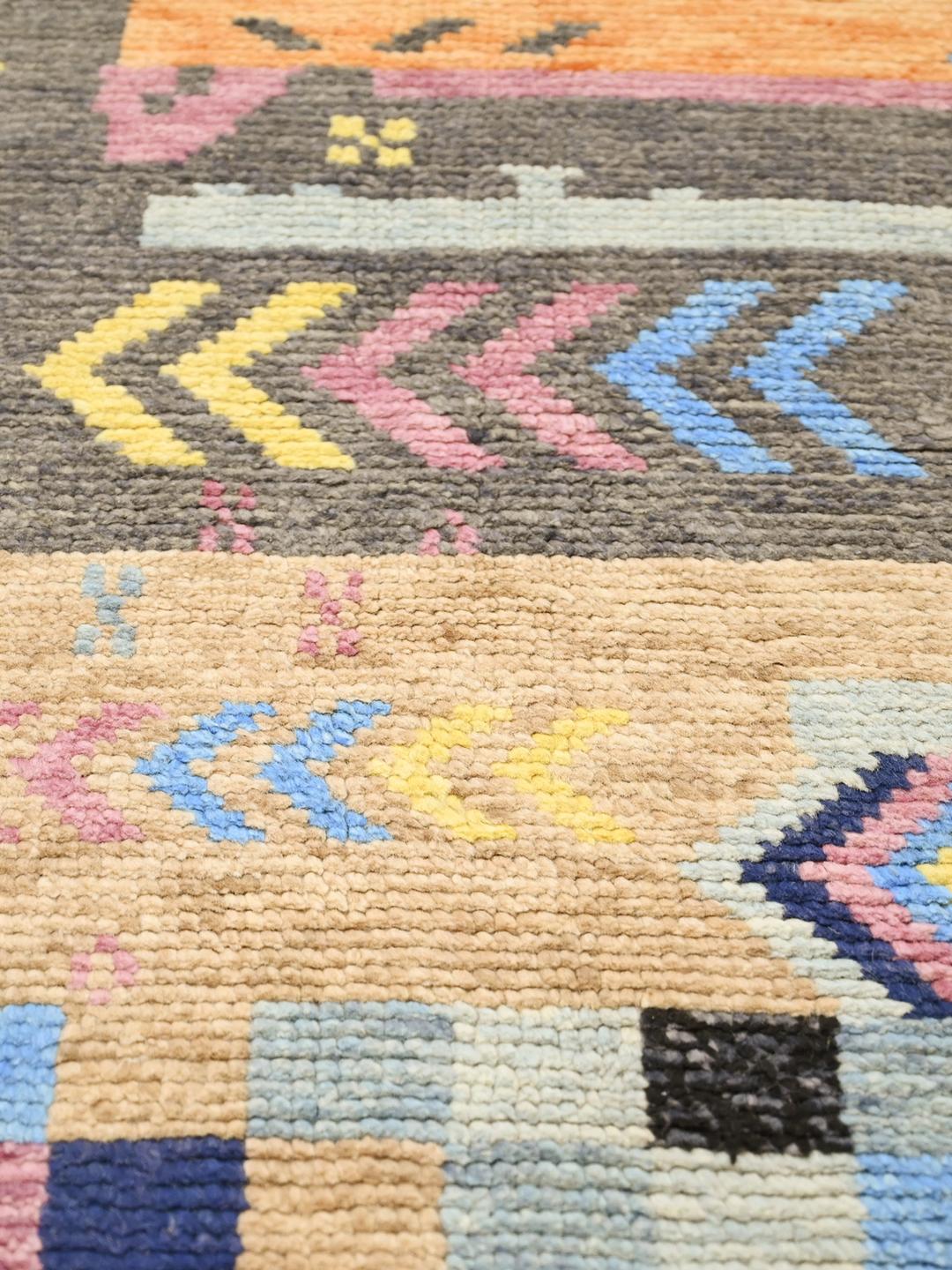
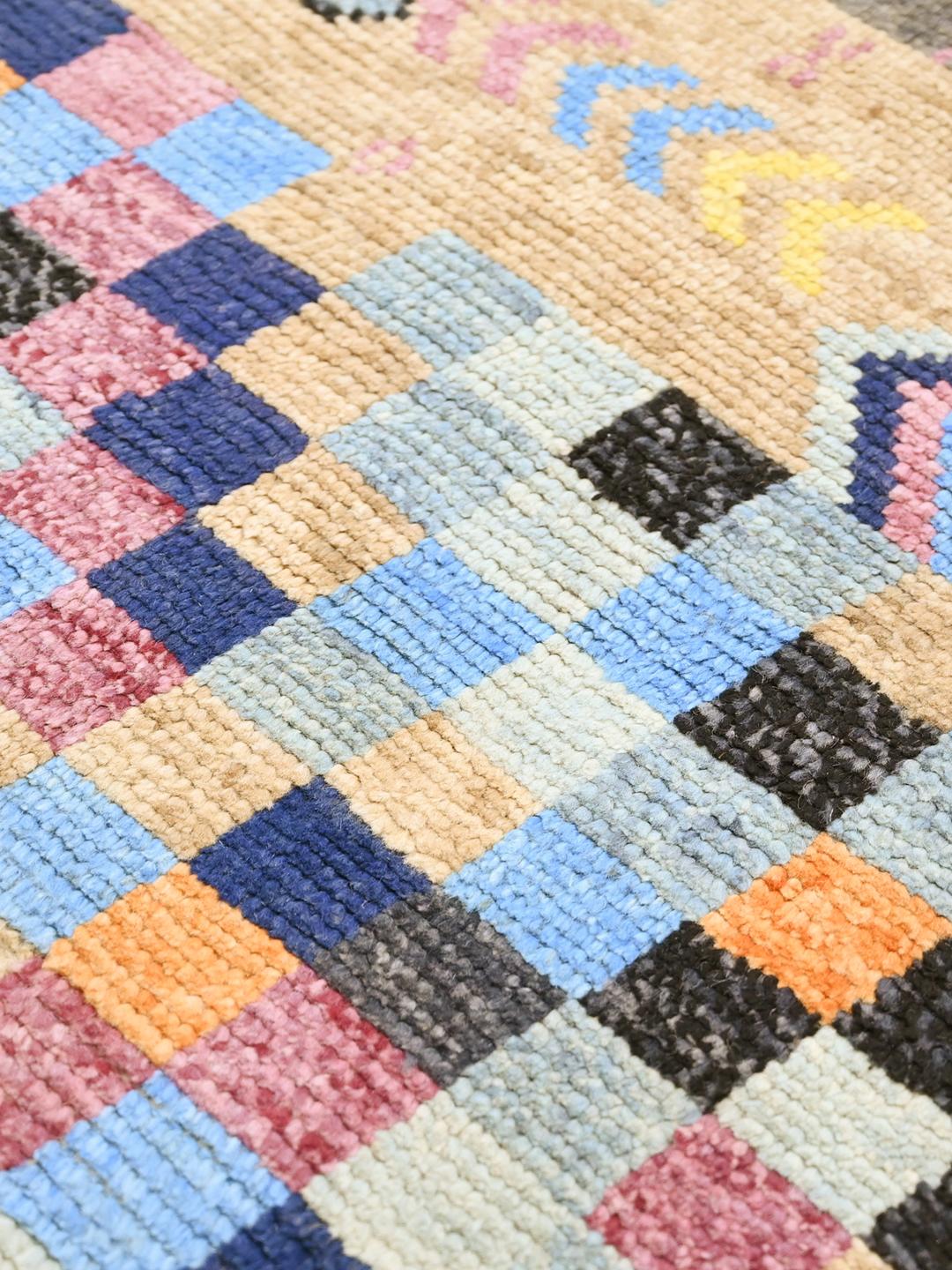
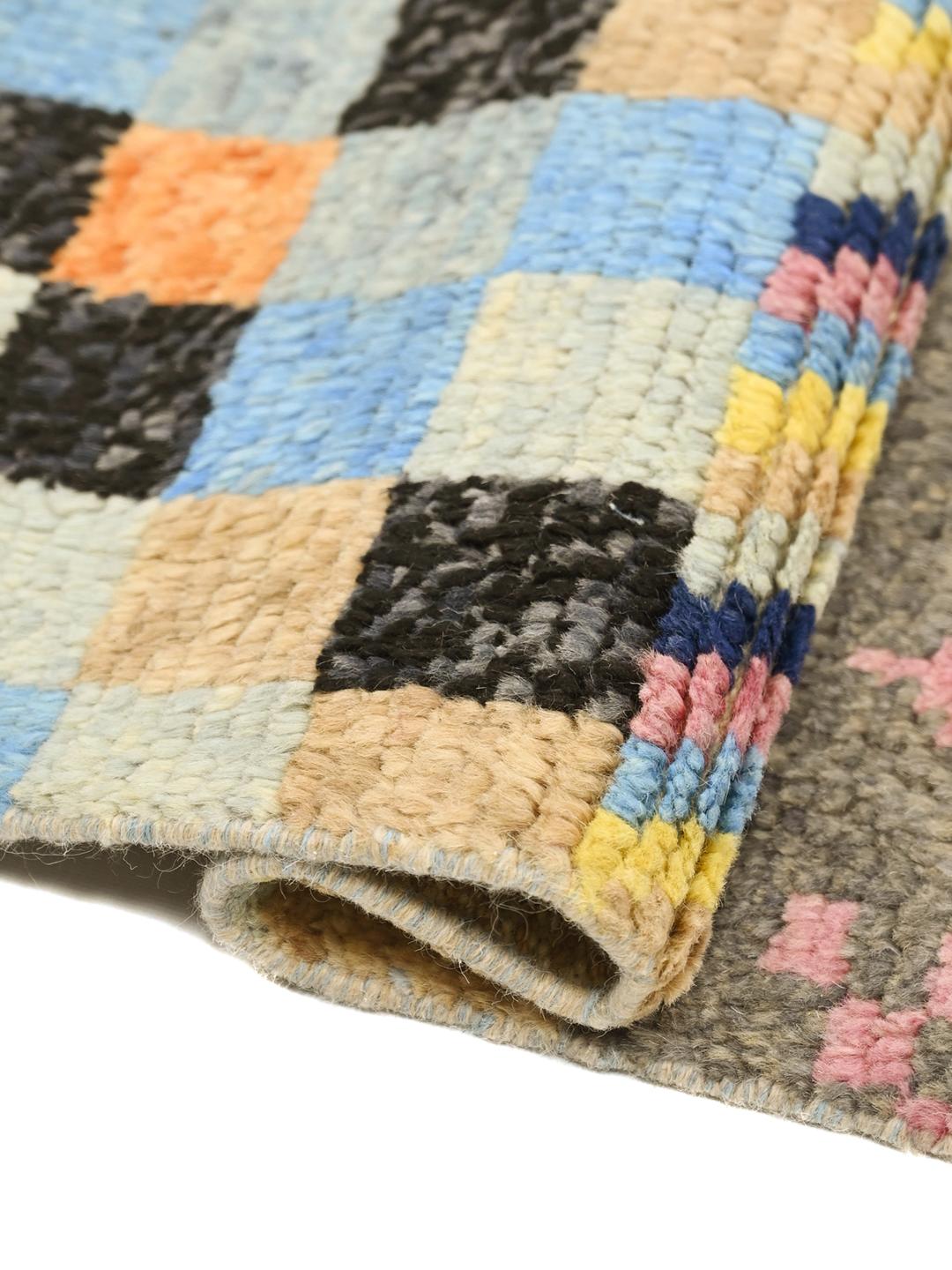
In Afghan knotting traditions, hand-knotting is a craft passed down through generations. Master weavers use local wool spun for resilience and texture. The freedom of design inherent in colorful Berber-inspired rugs allows the weaver to incorporate symbolic shapes, checkerboards, and freeform block patterns as a personal expression during the weaving process.
The signature design elements of this tradition include spontaneous pattern shifts, asymmetrical compositions, and an engaging contrast between neutral grounds and bold accent colors. Warm beige bases paired with cheerful yellow, orange, and blue elements create an inviting visual dialogue that works across modern and traditional interiors.
Collectors and design enthusiasts value Berber-style textiles for their authenticity and individual expression. Free from rigid factory templates, each completed piece stands as an unrepeatable record of the weaver's time, creativity, and regional heritage.