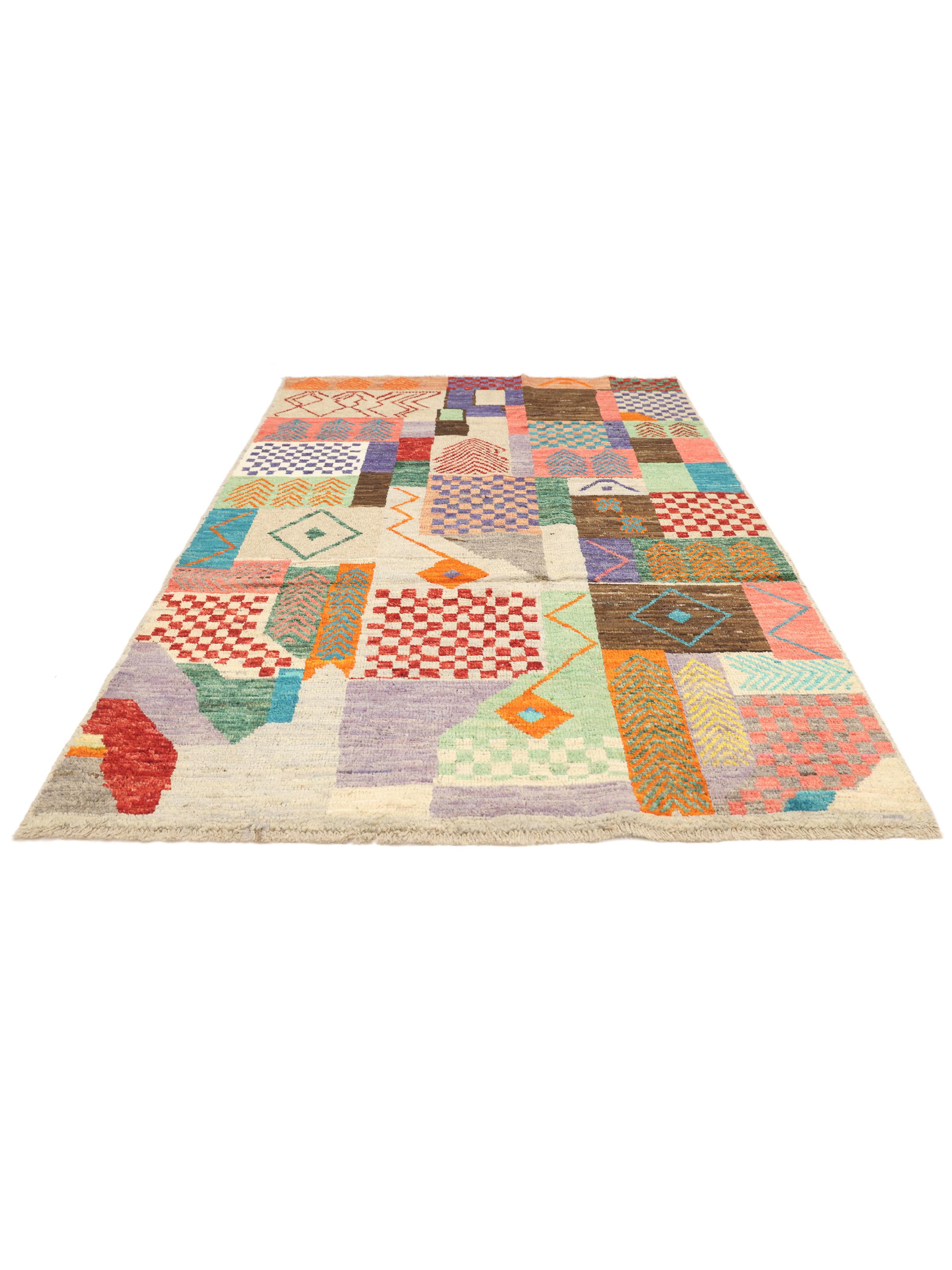
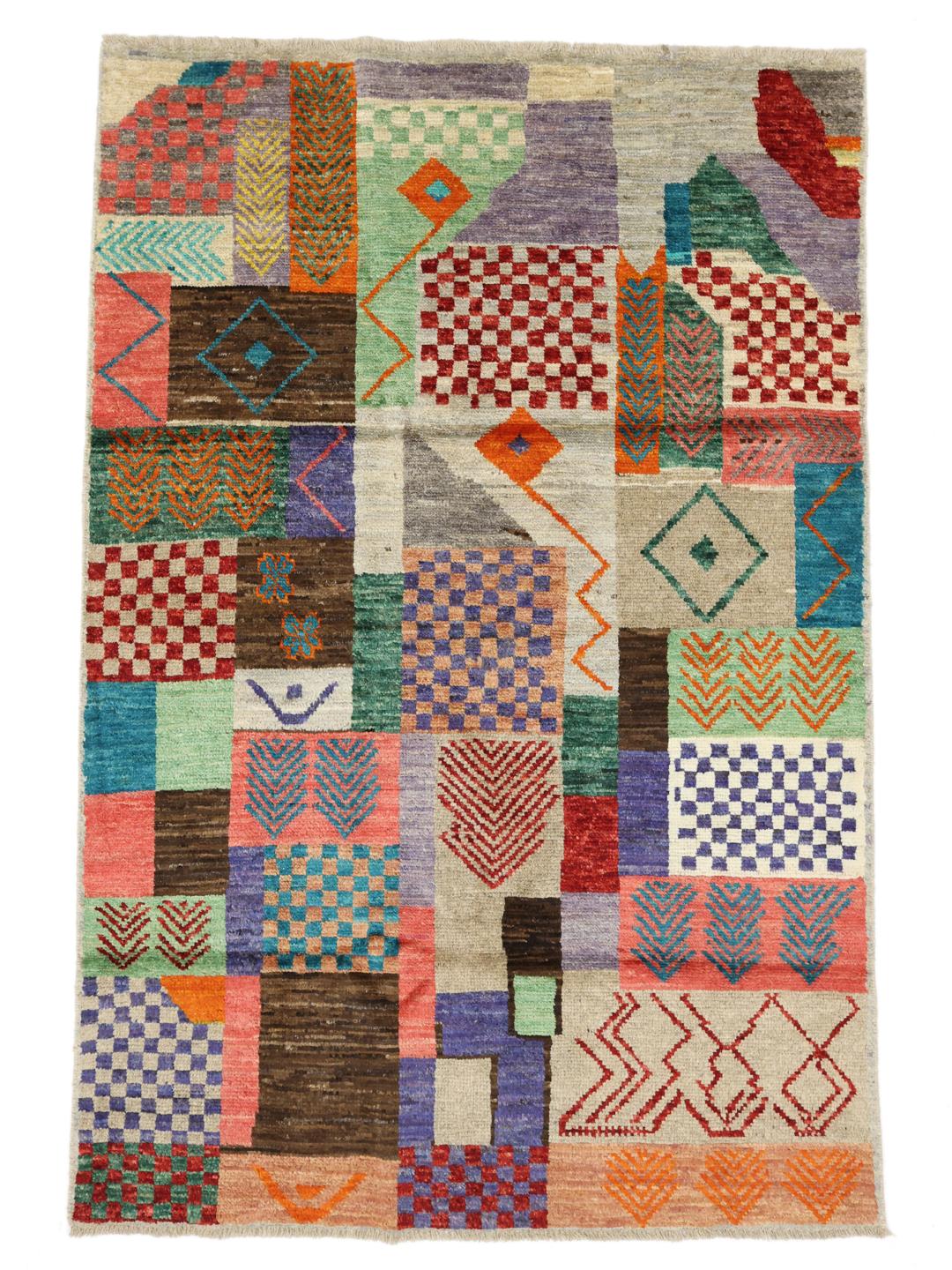
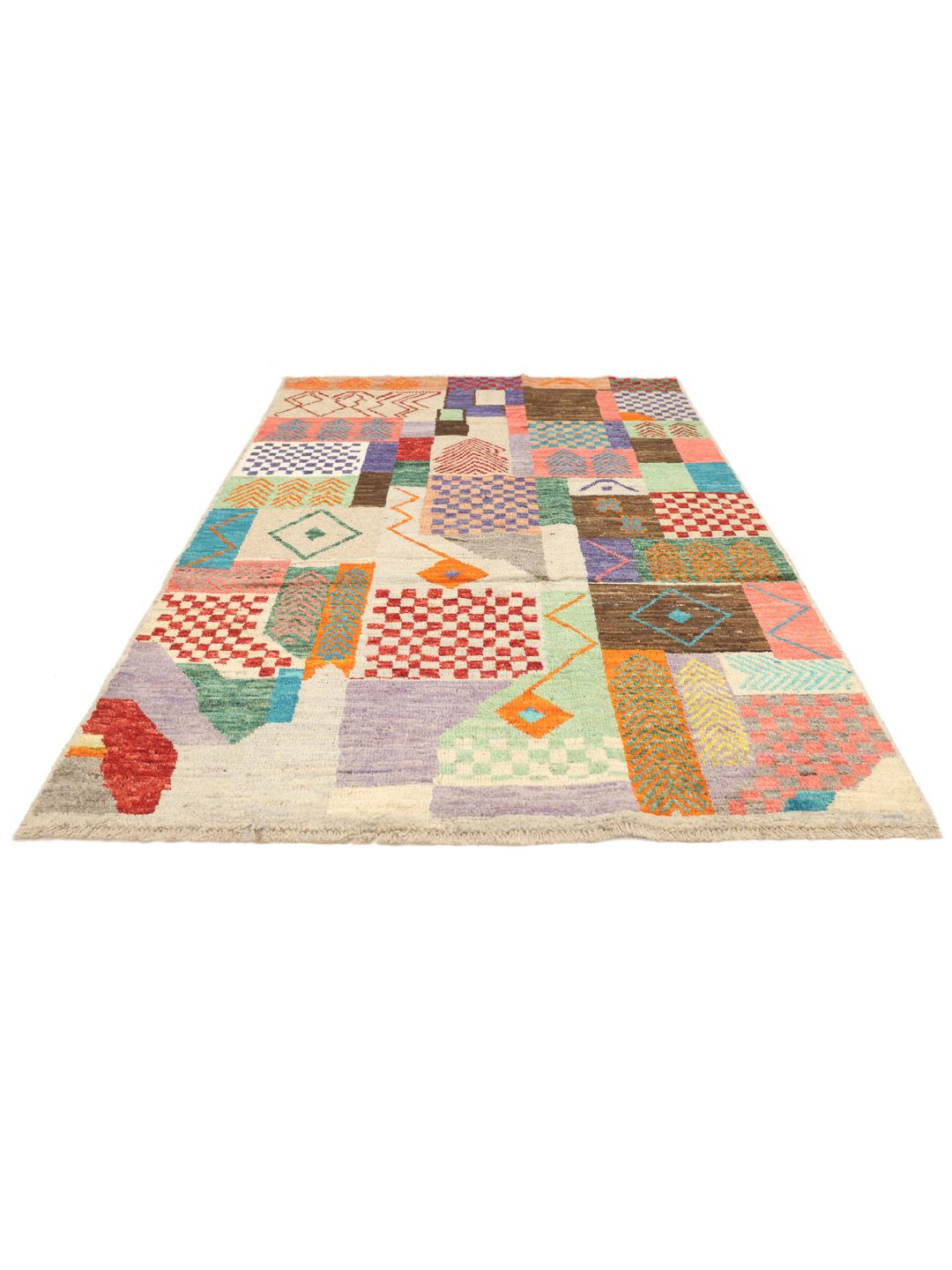
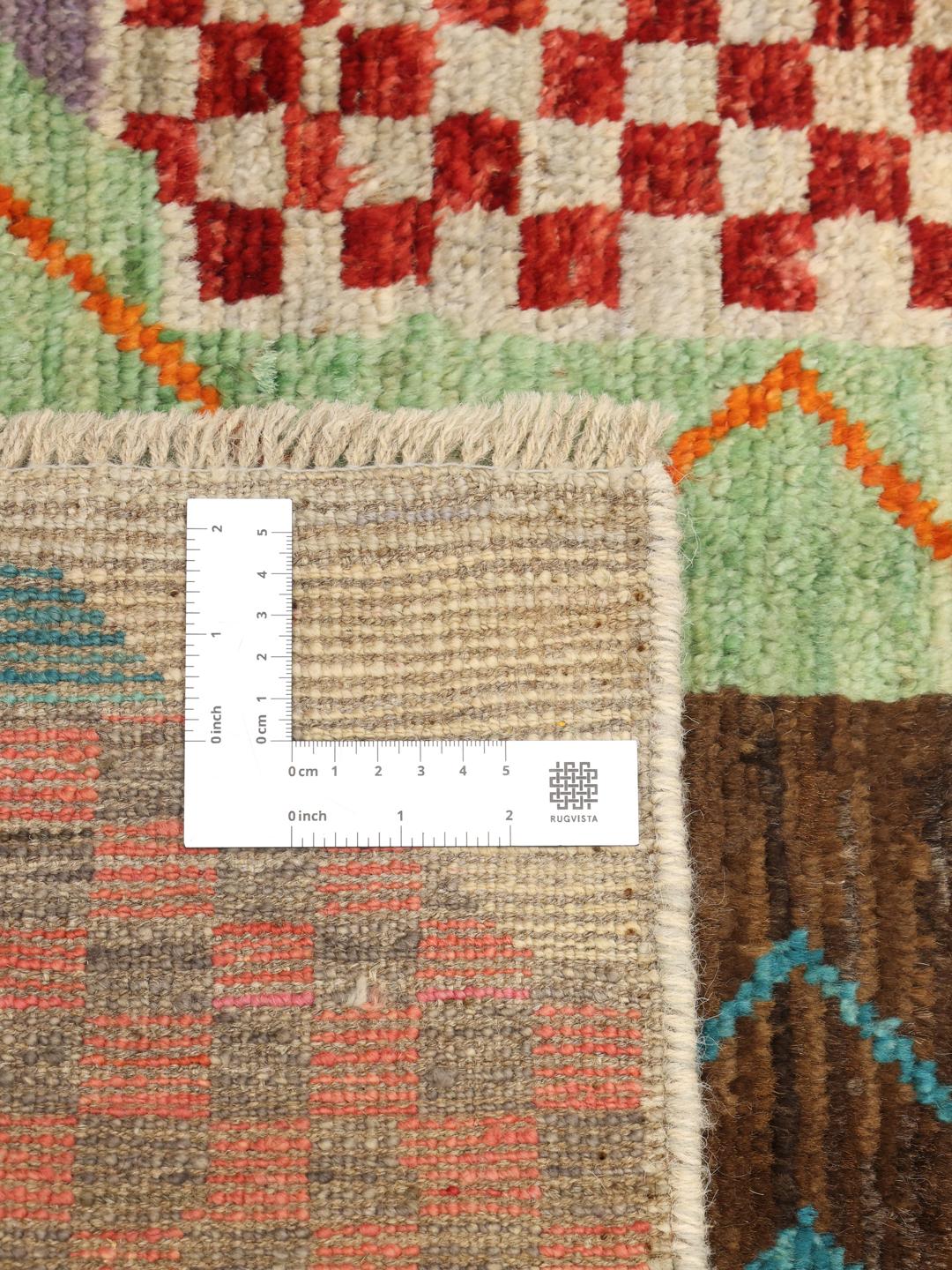
Berber-style rugs from the Middle Eastern region, particularly those crafted in Afghanistan, are deeply rooted in nomadic traditions. While the term Berber originally refers to the indigenous peoples of North Africa, the style has evolved into a global design language characterised by bold, geometric abstraction and a focus on natural, hand-spun materials.
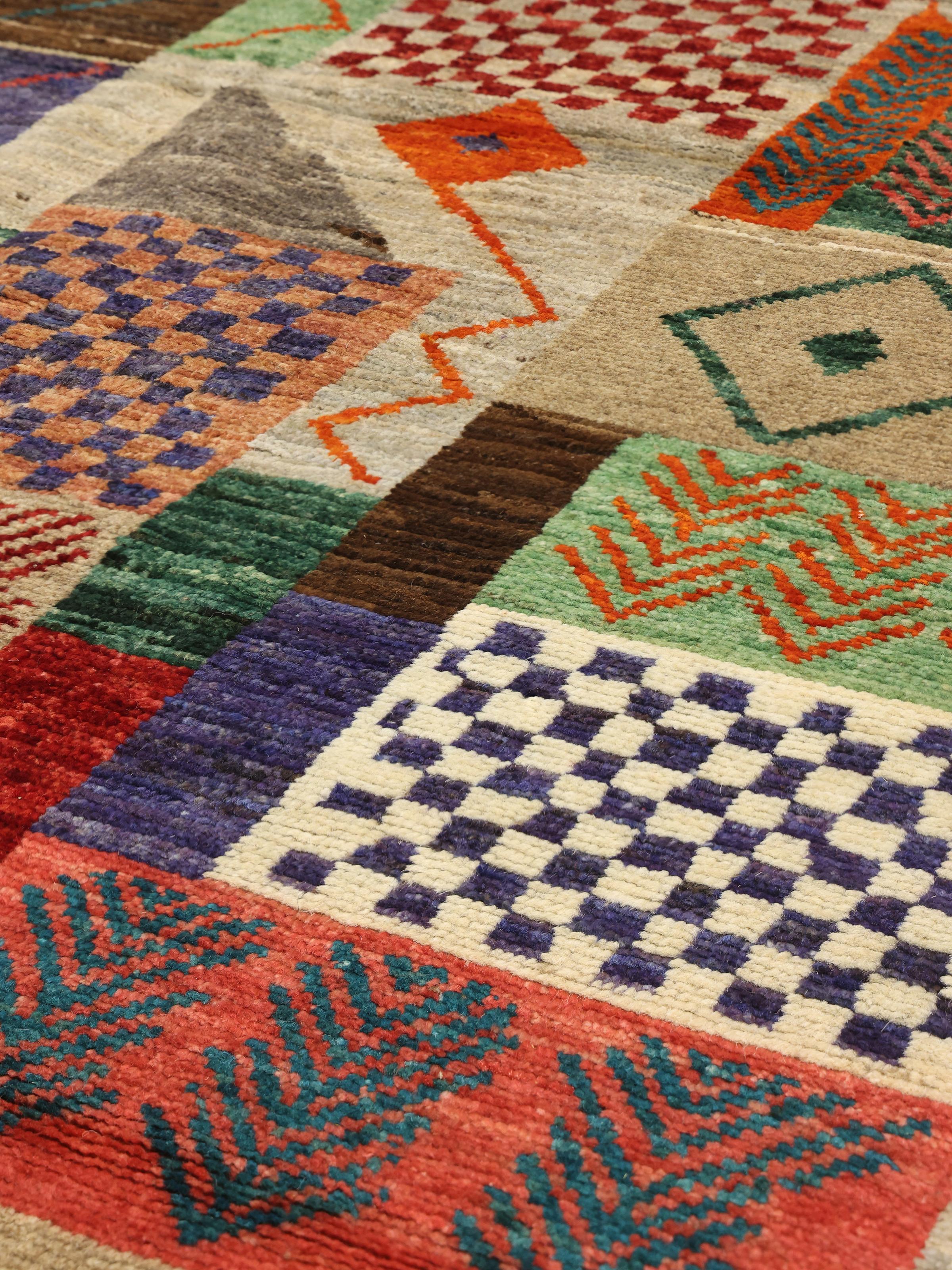
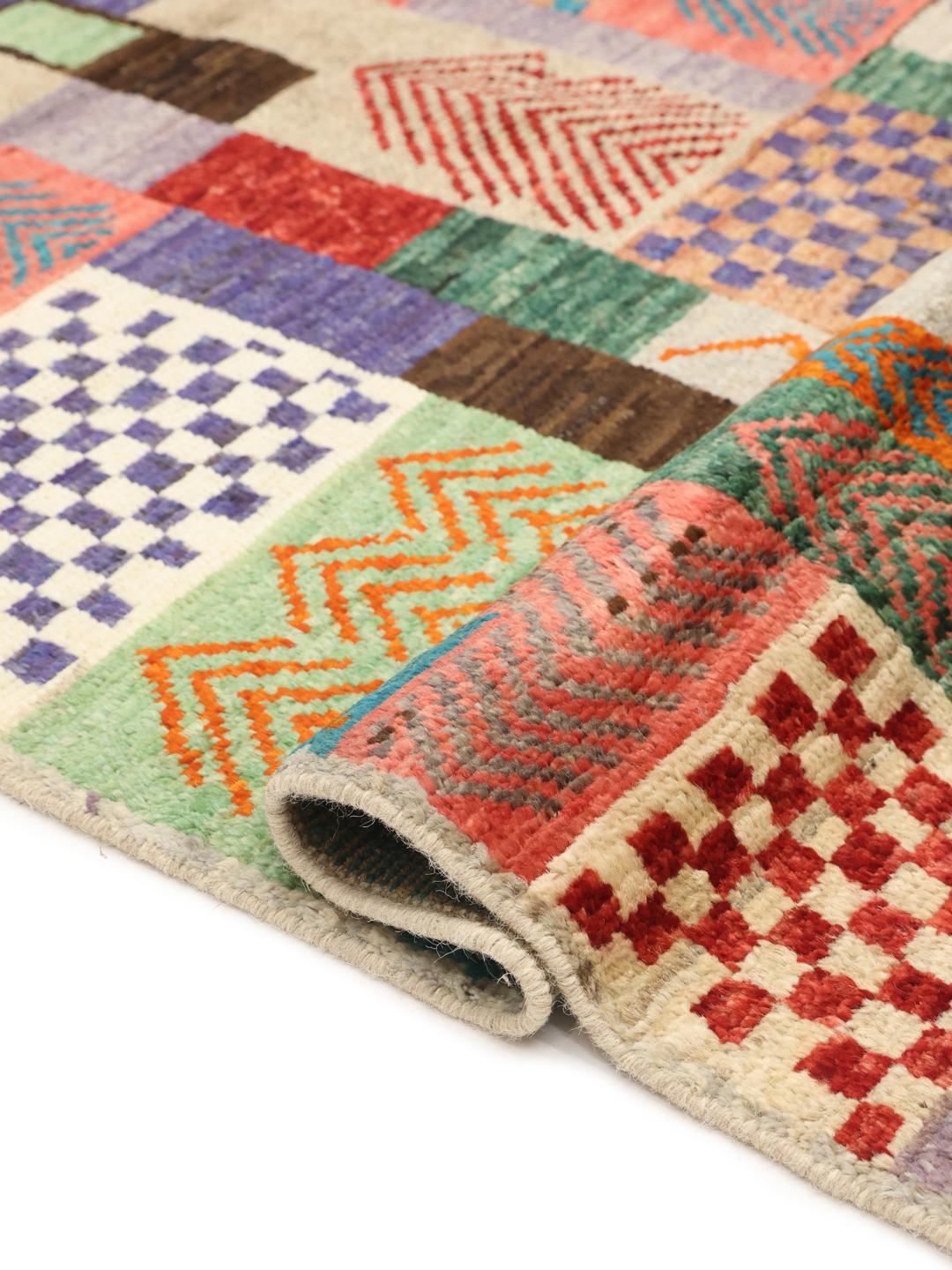
The craft relies on specific techniques that emphasise the strength of the foundation and the quality of the wool. By using traditional hand-knotting methods, artisans ensure that the rug maintains its structure and lustre over time. This approach to construction is not just about aesthetics; it is a functional choice that creates a long-lasting, resilient floor covering.
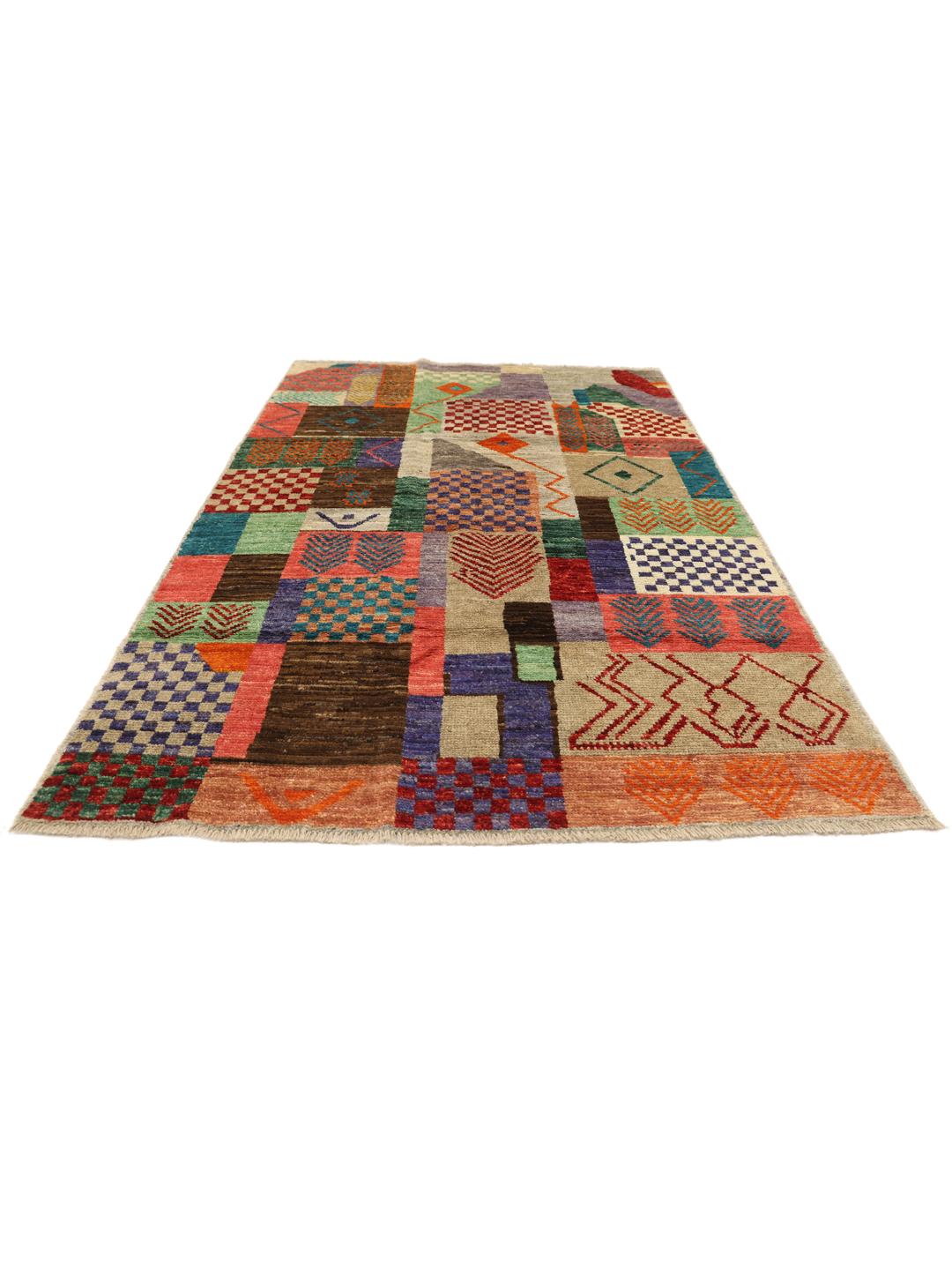
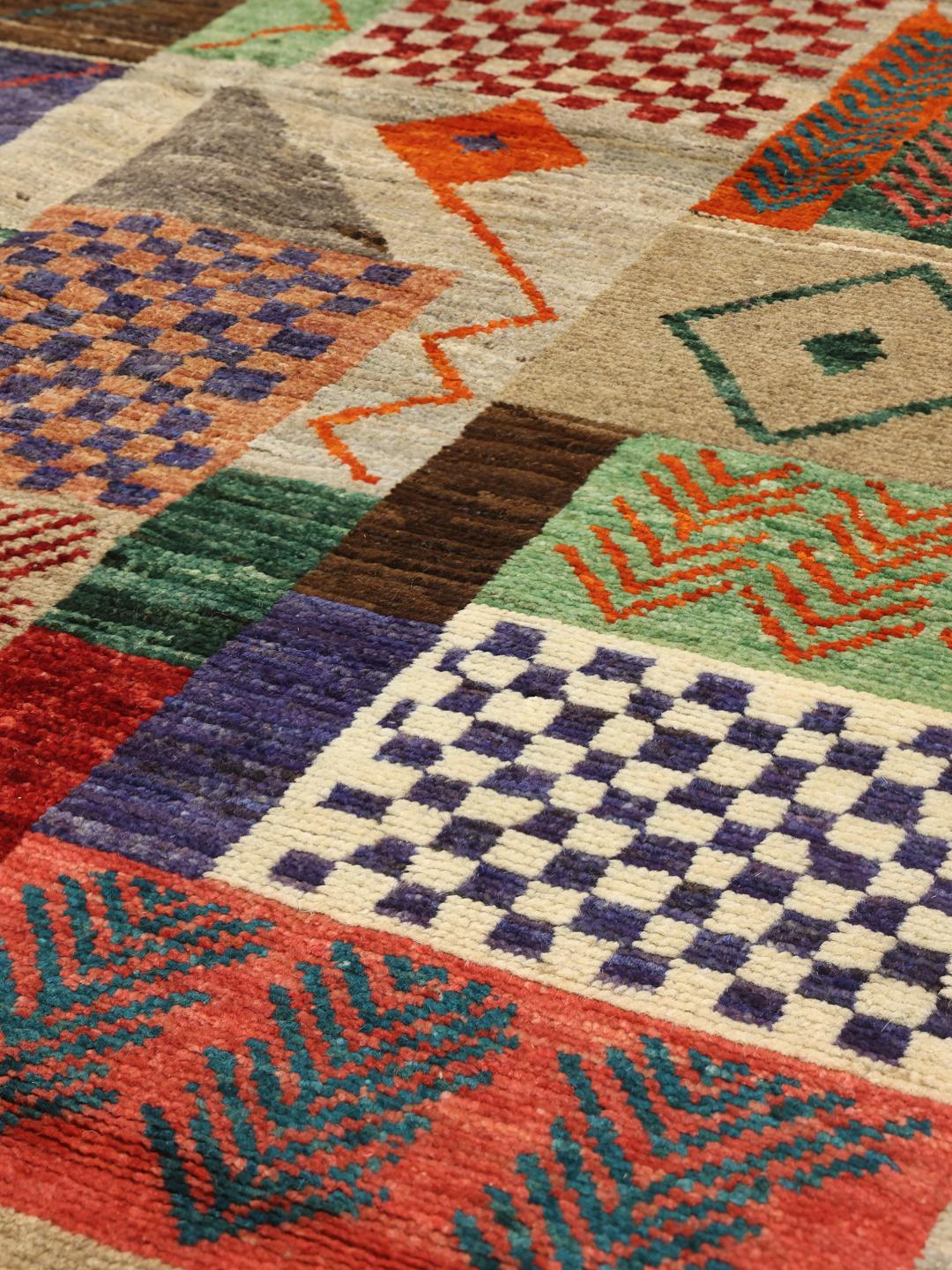
Visually, these rugs are defined by their expressive use of colour and symbolic motifs. Patchwork designs like this one often incorporate a variety of shapes, from diamonds and chevrons to repeating checkerboards, each telling a story or representing a protective symbol within the weaver's cultural heritage. The use of multiple colours in a single field creates a dynamic, modern look that contrasts beautifully with the ancient techniques used to make it.
Collecting a rug from this tradition is an investment in cultural history and human skill. These pieces are valued for their authenticity and the way they bridge the gap between historic craft and contemporary home design. When you own such a rug, you are preserving a legacy of artistry that honours the connection between the maker and the home.