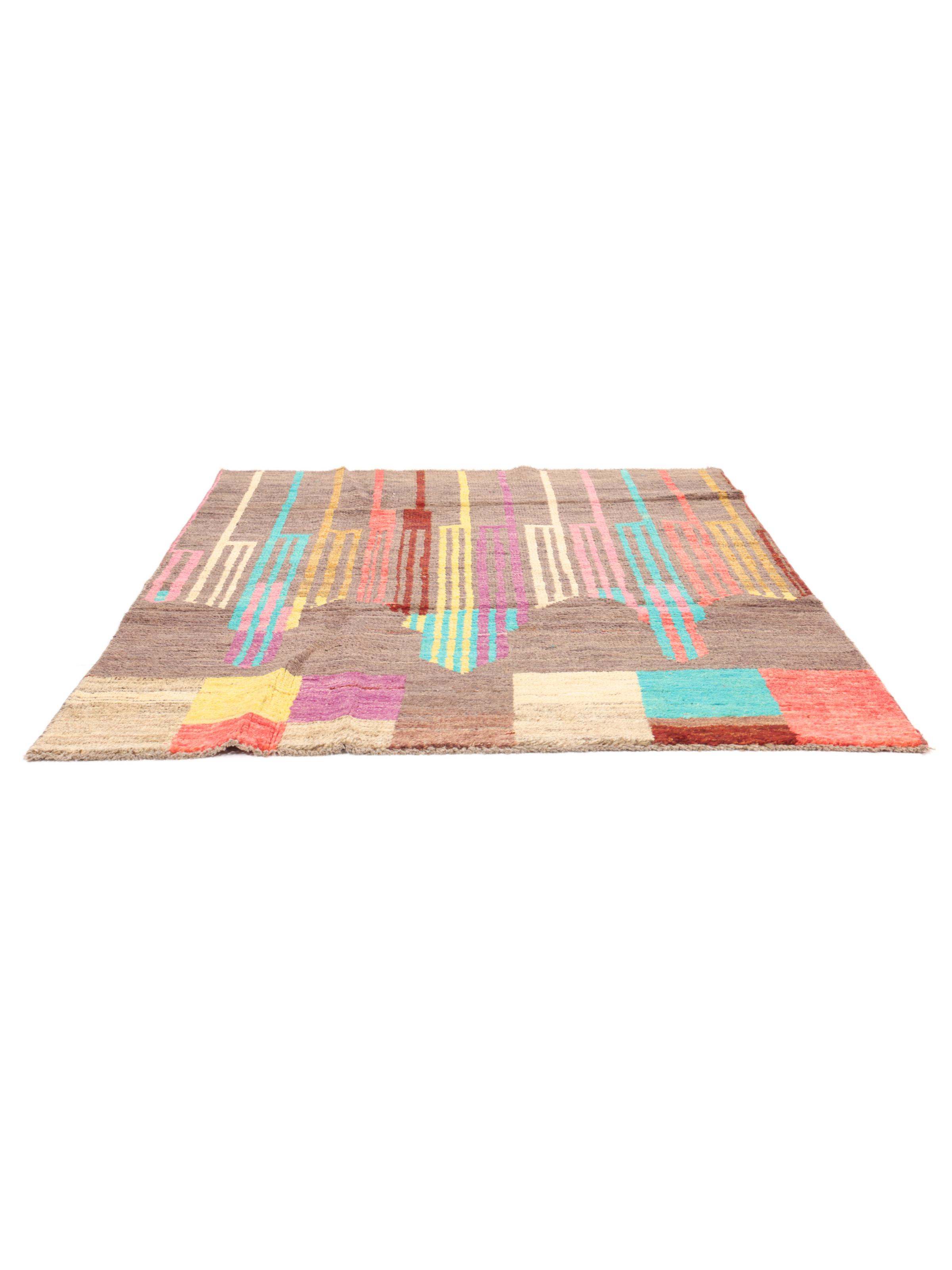
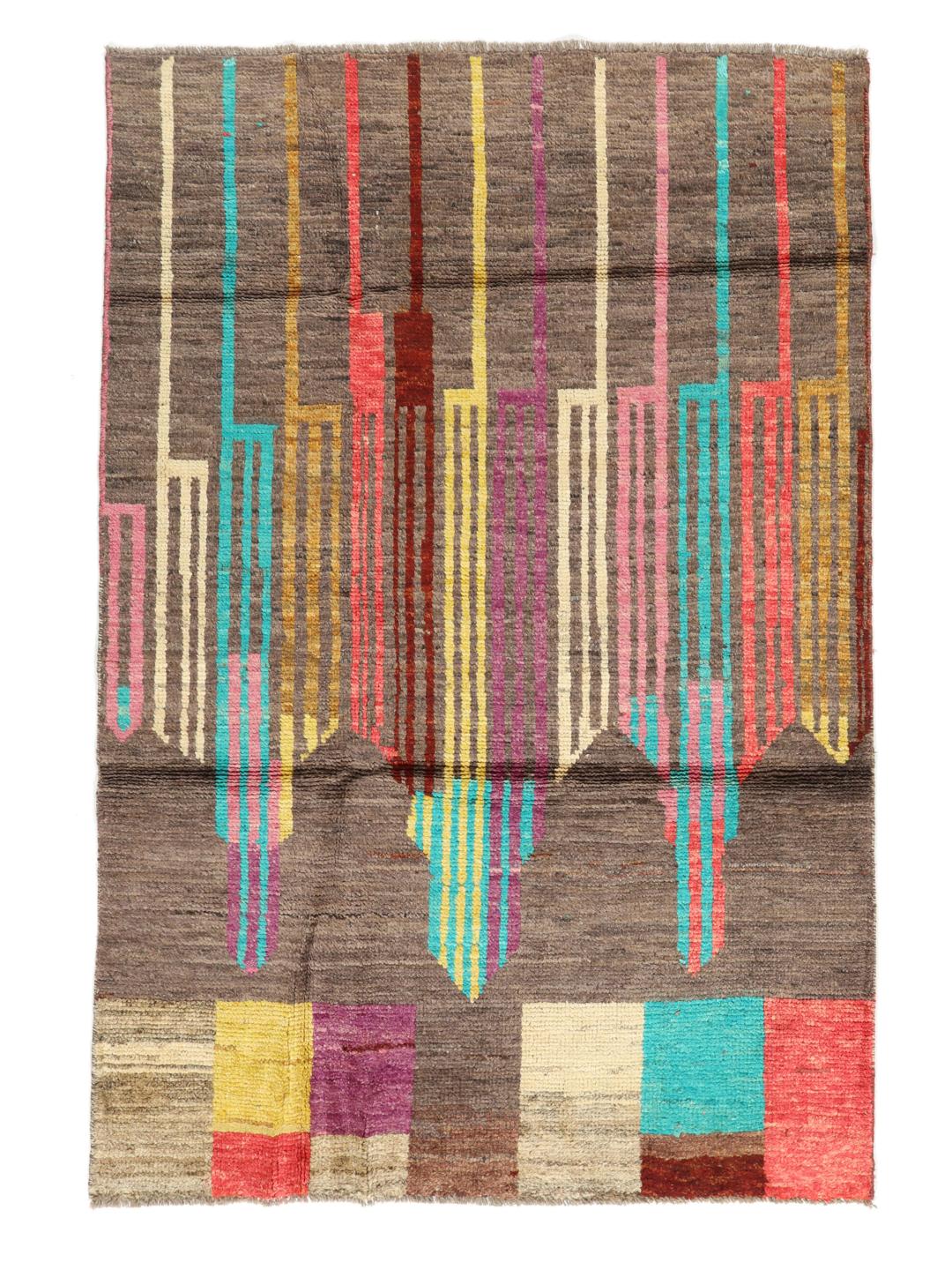
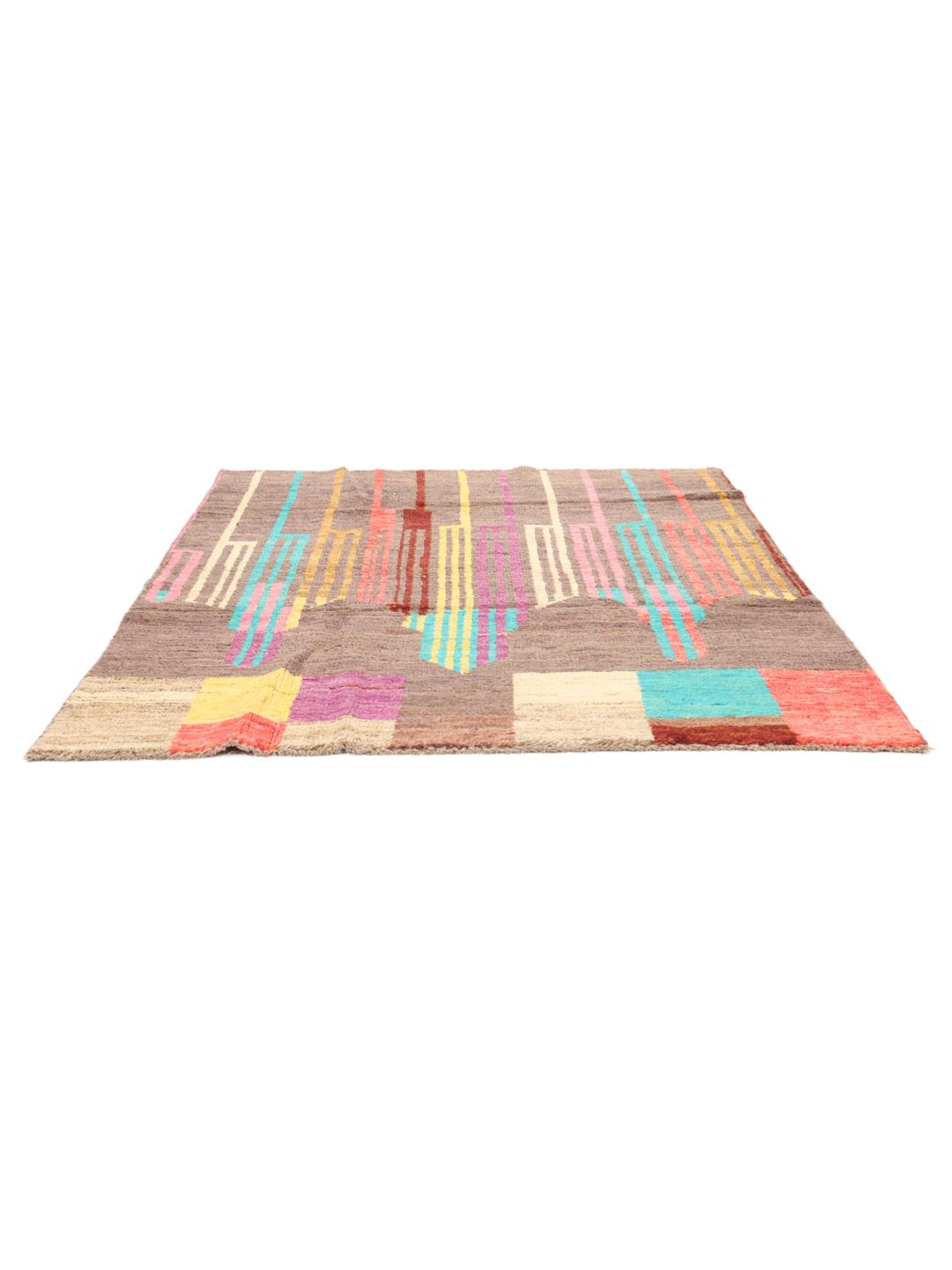
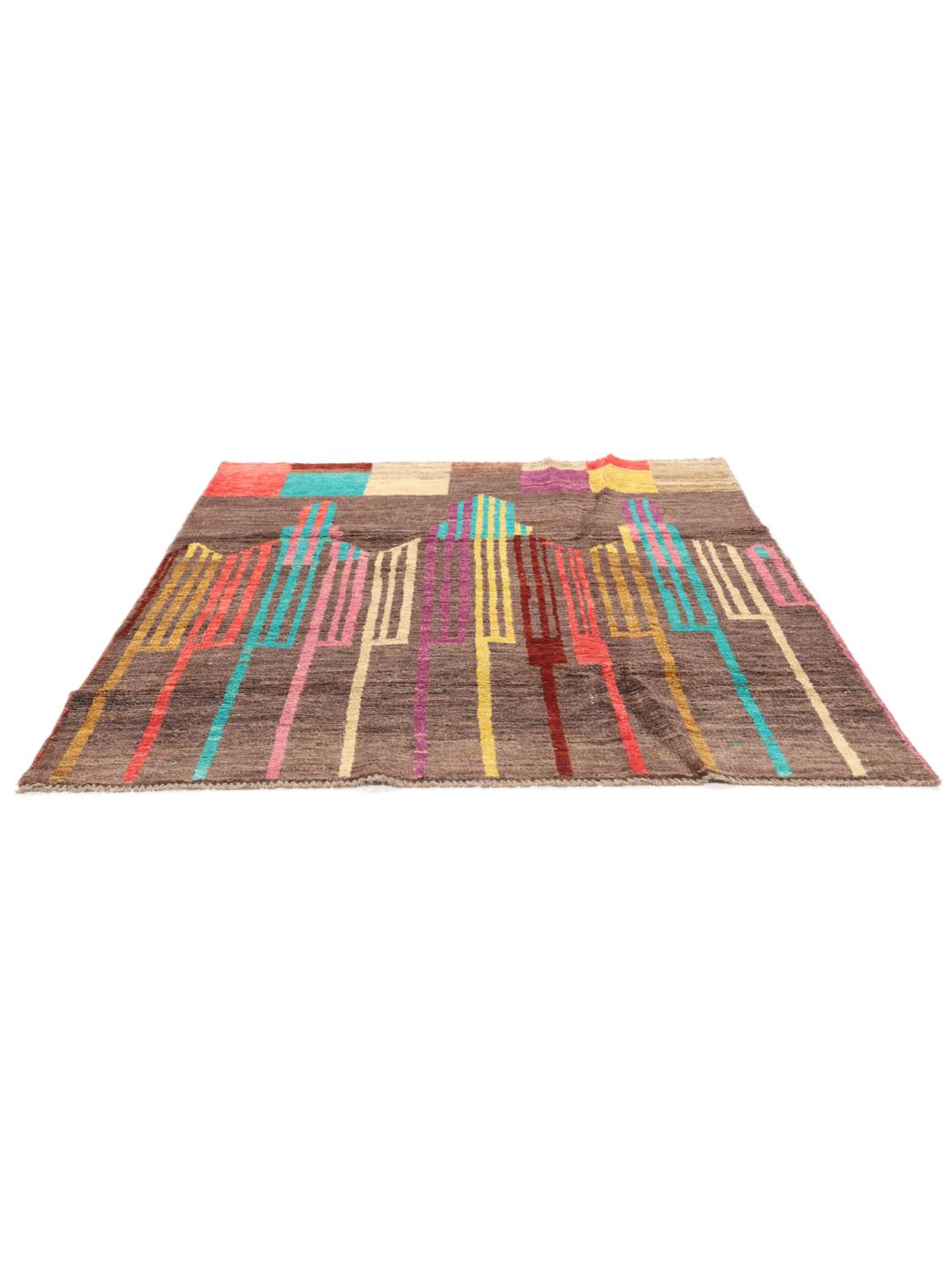
The Berber tradition, while historically rooted in the mountainous regions of North Africa, has inspired a rich global evolution of weaving techniques. In contemporary contexts, particularly in regions like Afghanistan, artisans have embraced this heritage by blending ancient knotting methods with vibrant, modern design sensibilities. This evolution demonstrates how traditional crafts can remain relevant and dynamic, adapting to diverse aesthetic preferences across the world.
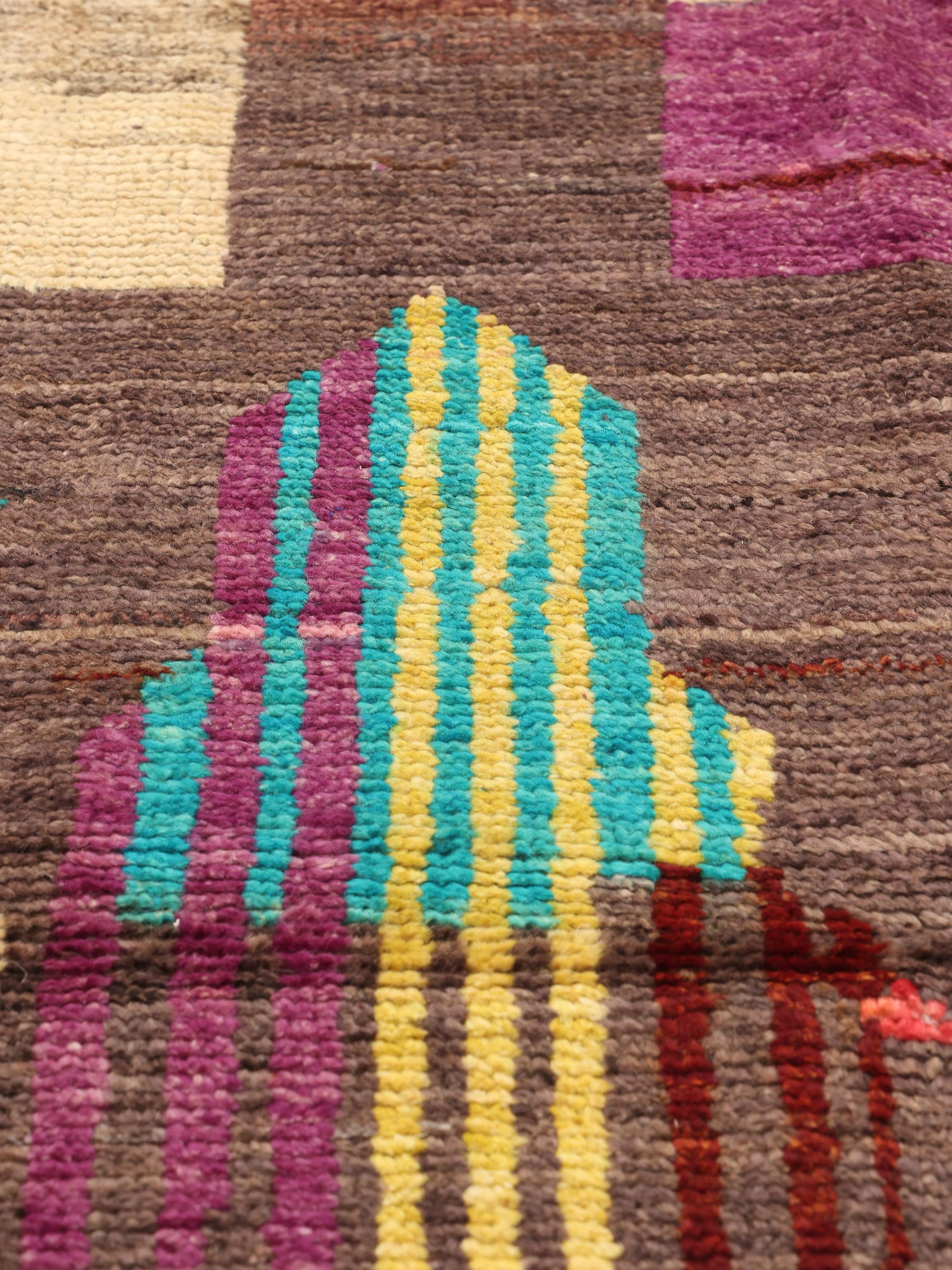
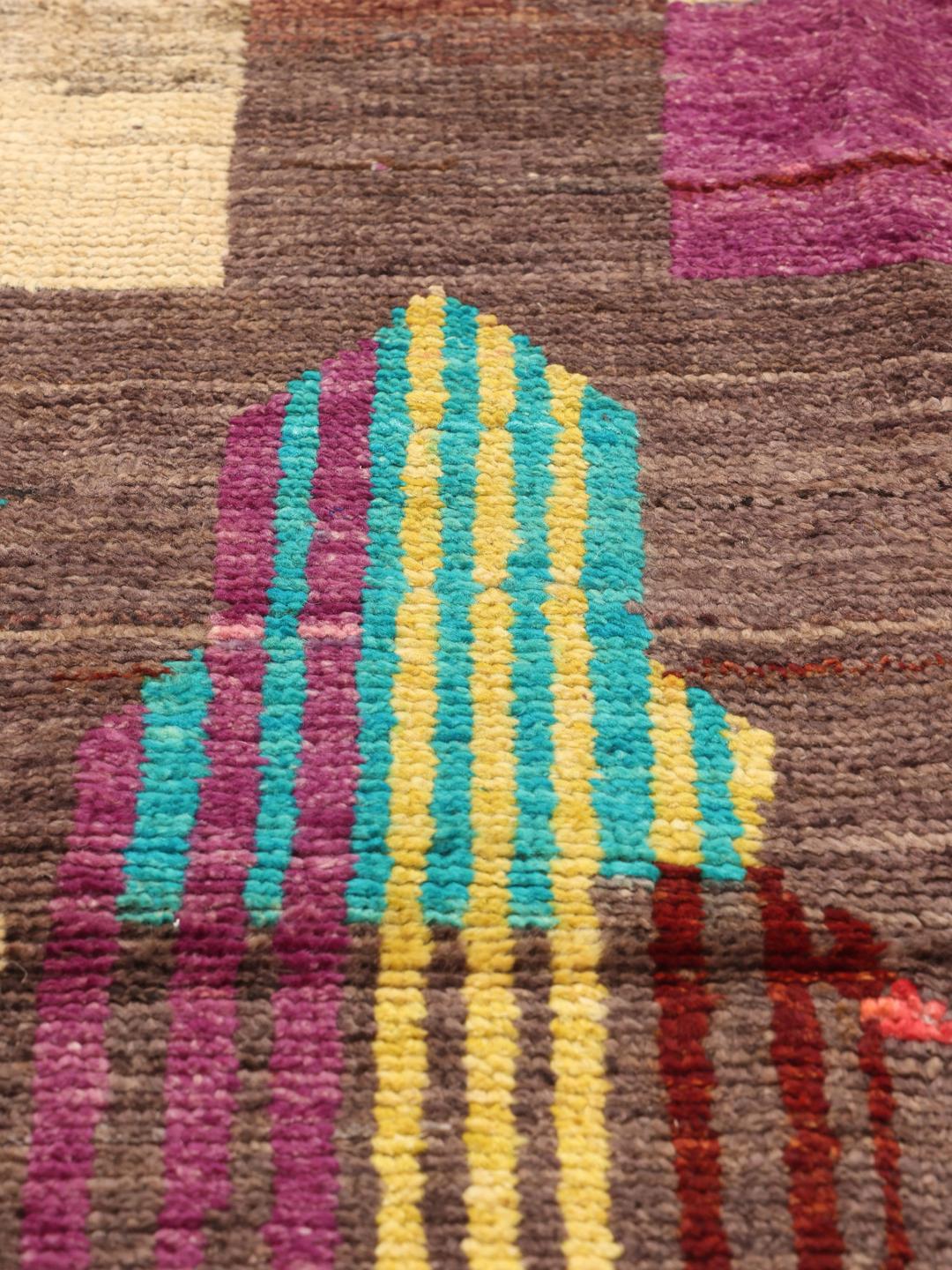
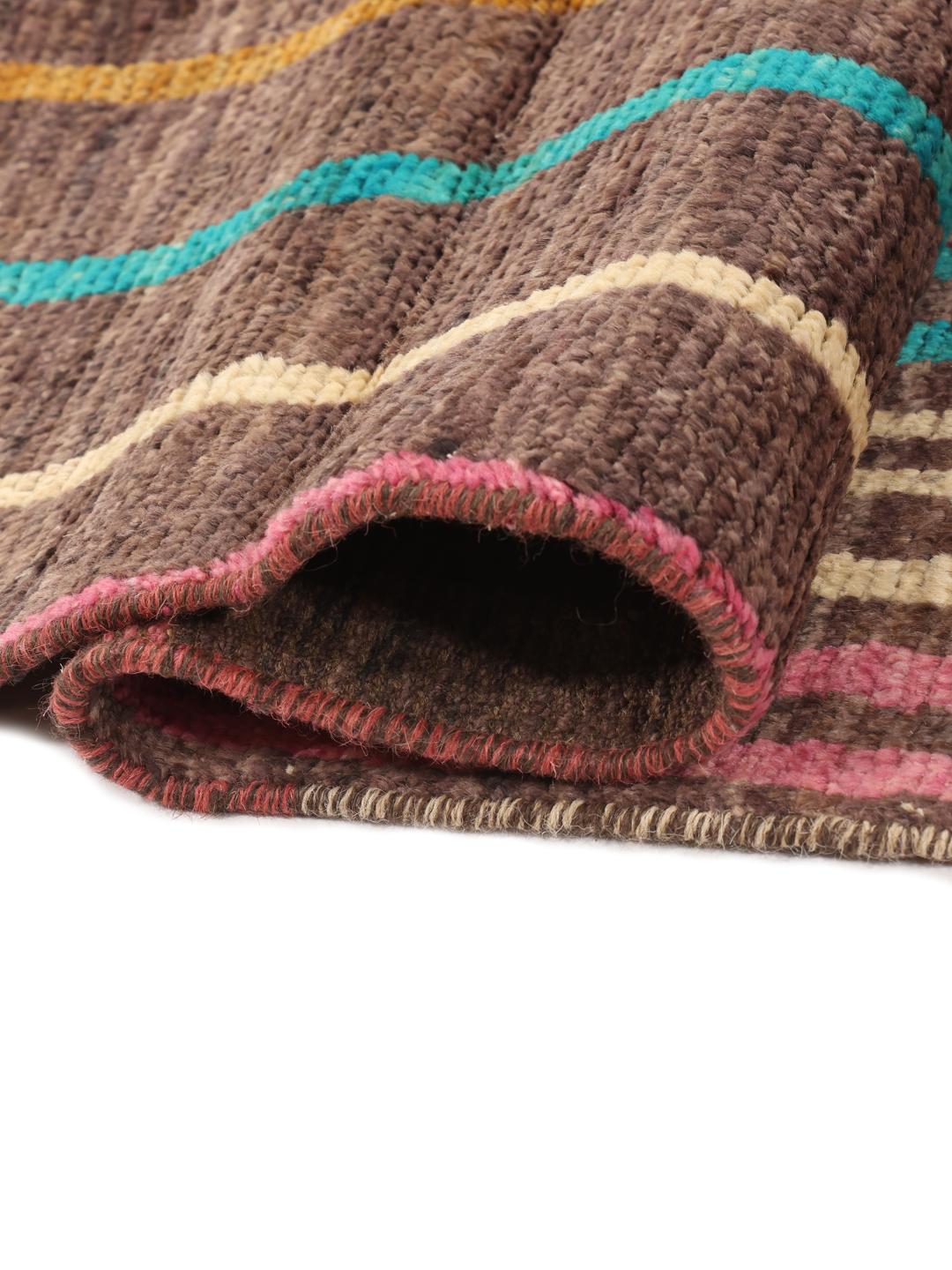
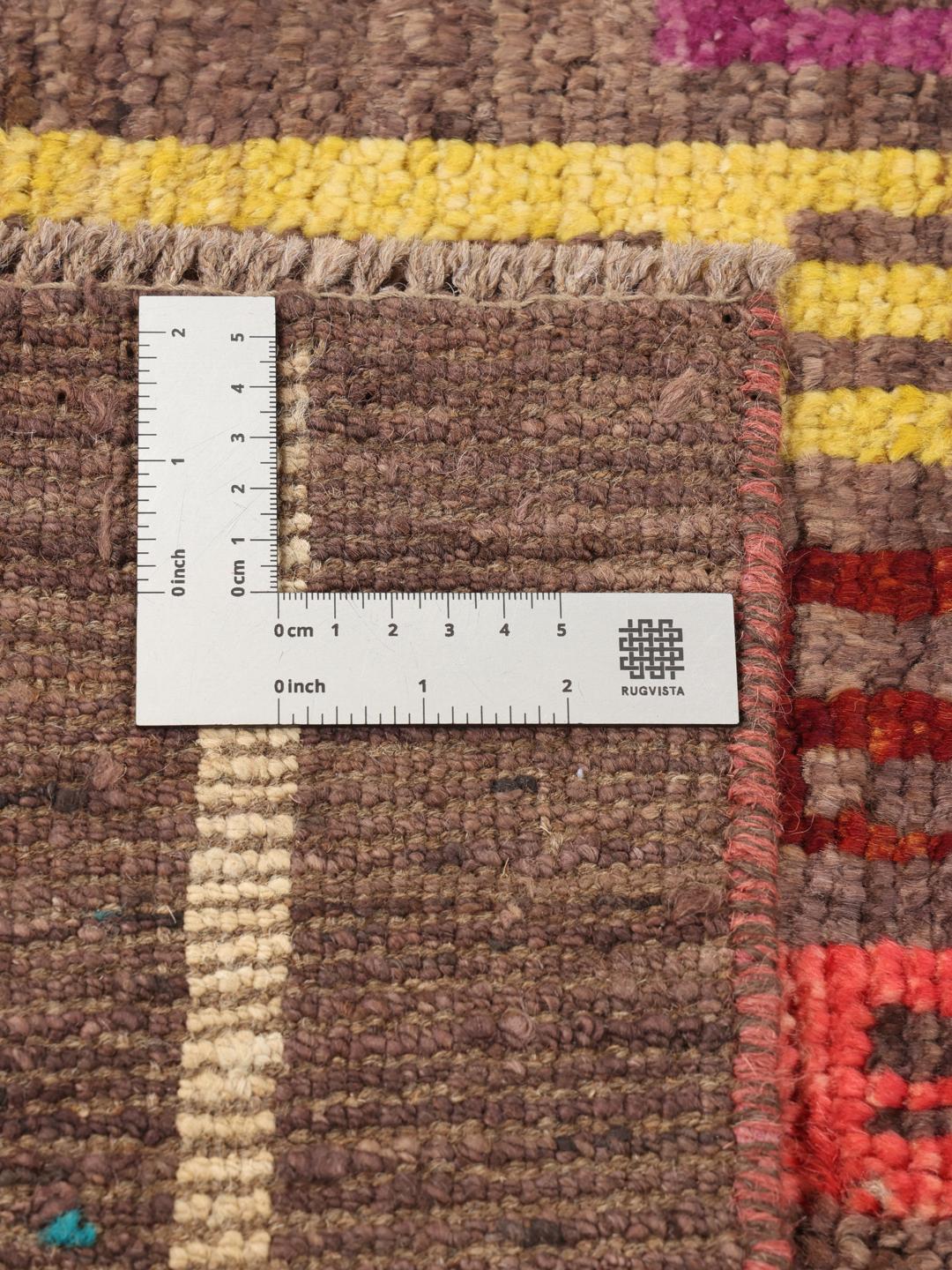
The term hand-knotted refers to the time-honoured practice where each individual knot is tied by hand onto the warp threads. This method is the hallmark of quality in the world of fine rugs, as it allows for intricate designs and a dense, lasting pile. Unlike other methods, hand-knotting creates a structure that is both flexible and incredibly strong, ensuring the rug remains a beautiful part of your home for many years.
Visually, this piece draws from a tradition of bold, abstract expression. While many traditional rugs rely on symmetrical medallions or floral motifs, the Berber style often favours geometric shapes, lines, and playful arrangements that reflect the weaver's personal vision. The use of vibrant colours against a natural, undyed wool base is a signature look that highlights the raw beauty of the materials.
Owning a hand-knotted piece from this tradition is an investment in human skill and cultural heritage. These rugs are valued not only for their aesthetic appeal but for the immense effort and tradition woven into every inch. By choosing such a piece, you are supporting a legacy of craft that prioritises quality, individuality, and the artistic expression of the maker.