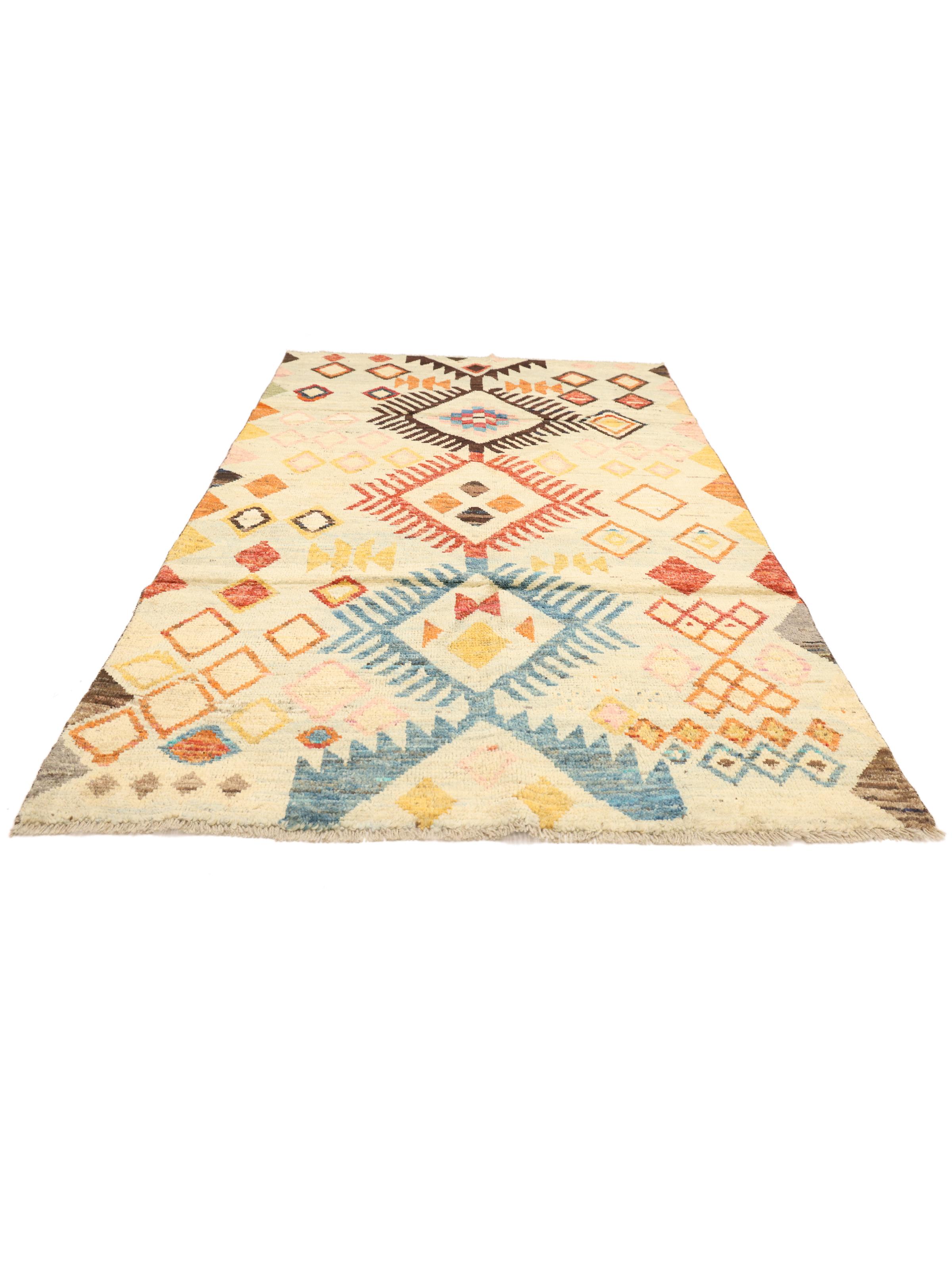
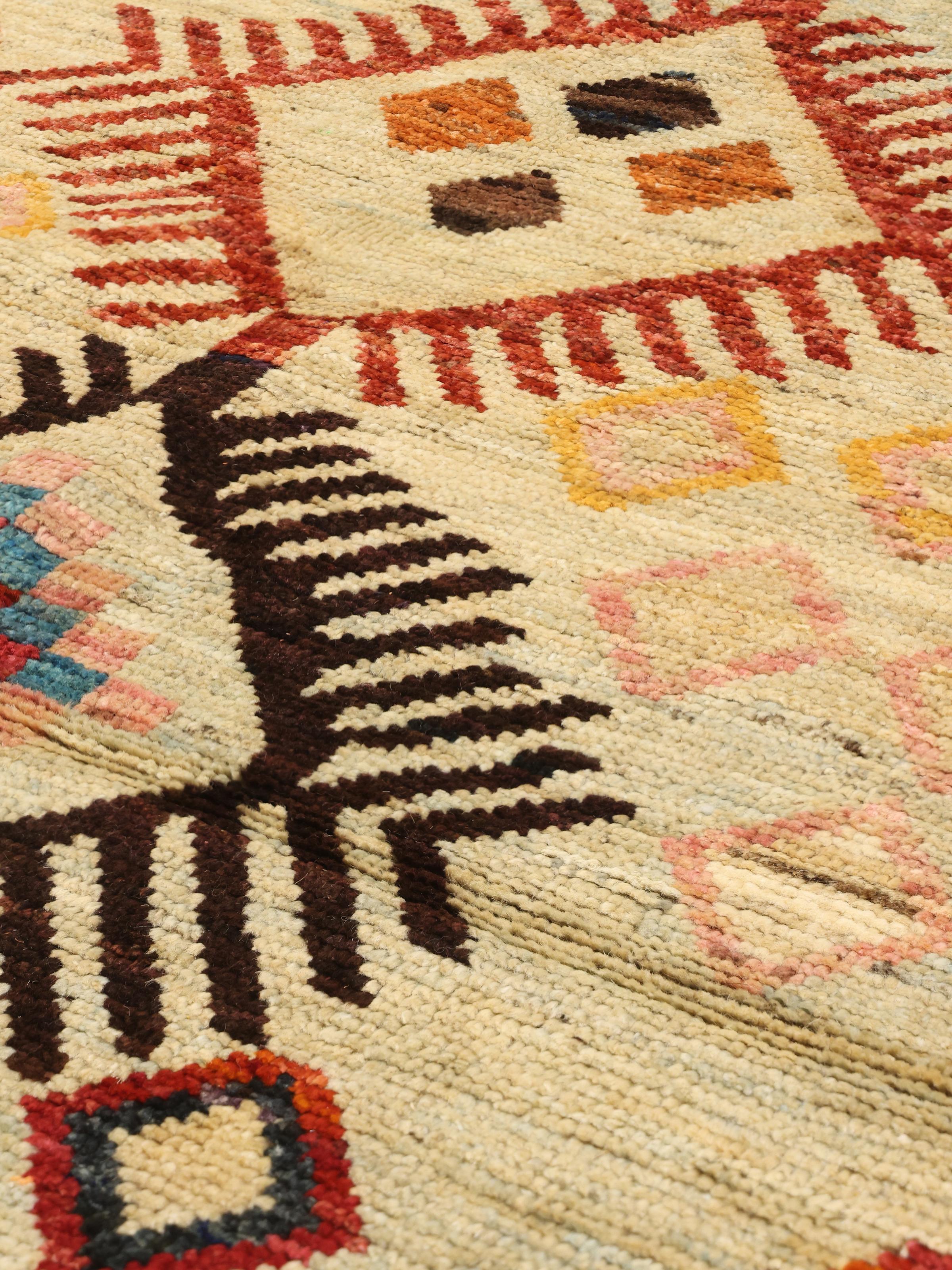
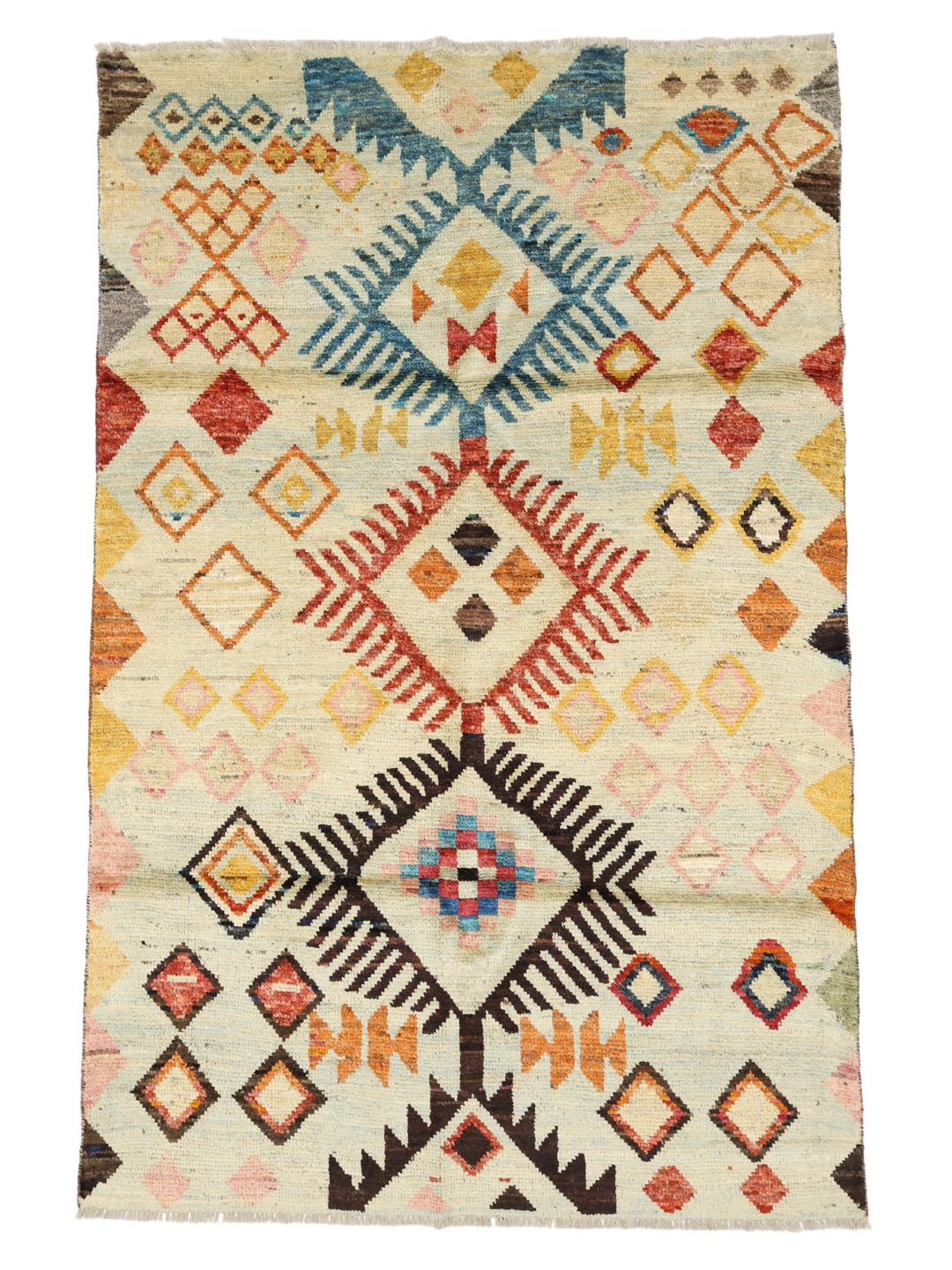
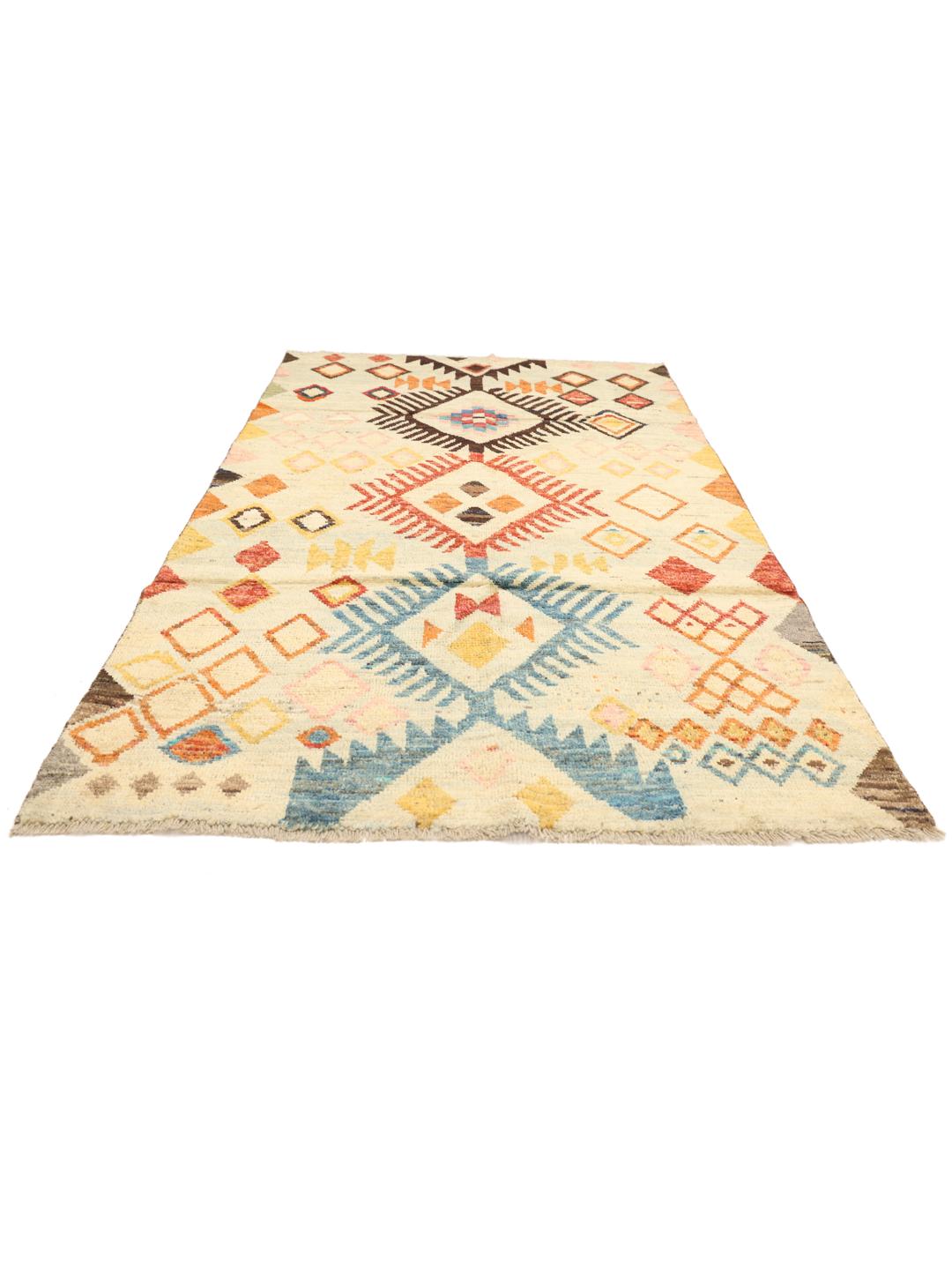
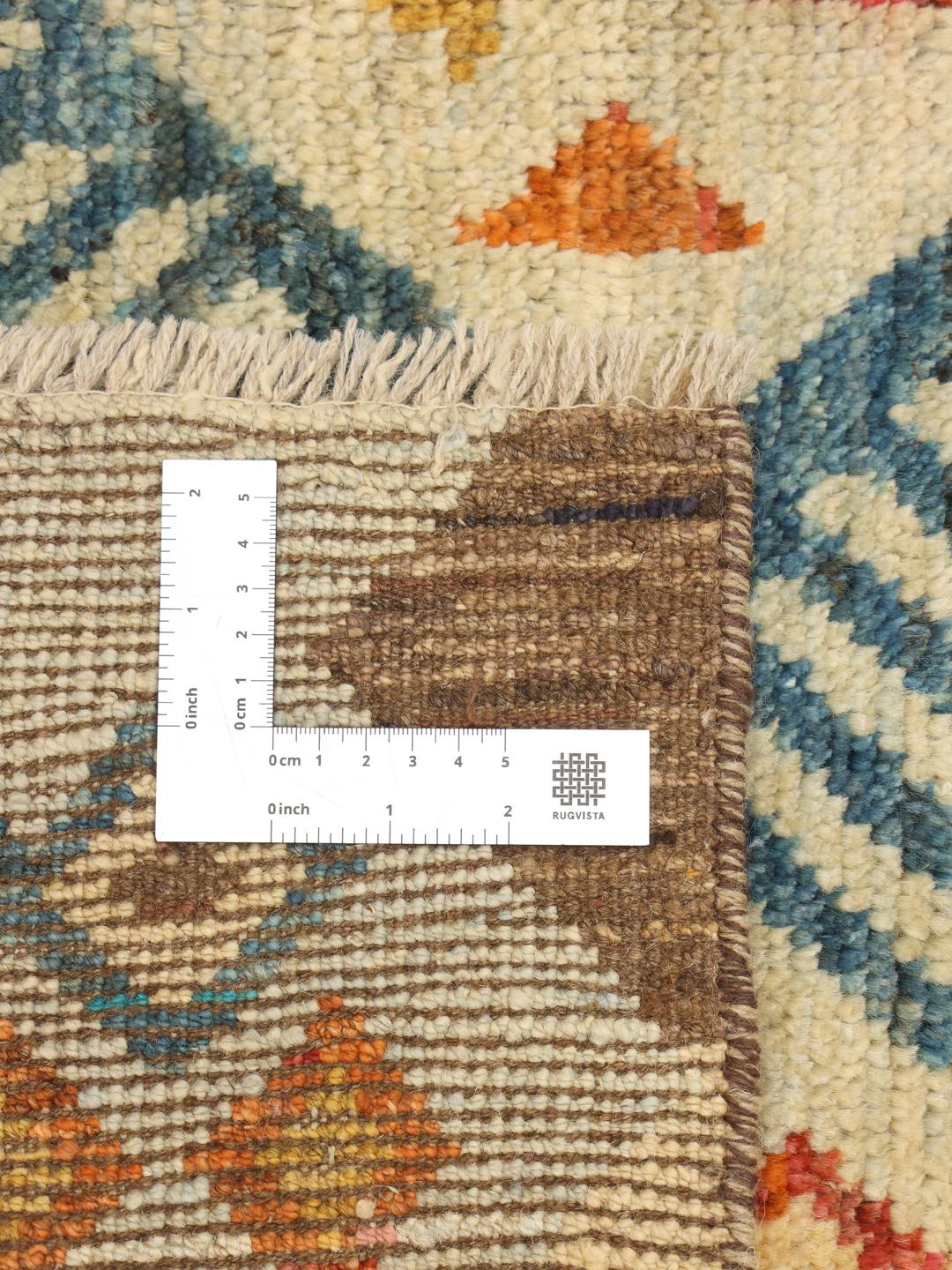
The tradition of weaving rugs in Afghanistan is deeply rooted in the history of the Middle East, drawing on centuries of nomadic and settled craft practices. These rugs are often inspired by the aesthetic heritage of the region, where weavers interpret their surroundings through symbols and motifs that have been passed down through generations.
While the term Berber often evokes North African roots, the Afghan interpretation of this style has evolved into a unique expression of its own. Afghan weavers have adapted these traditional, high-pile aesthetics to incorporate local sensibilities, resulting in rugs that feel both ancient and contemporary in their approach to colour and form.
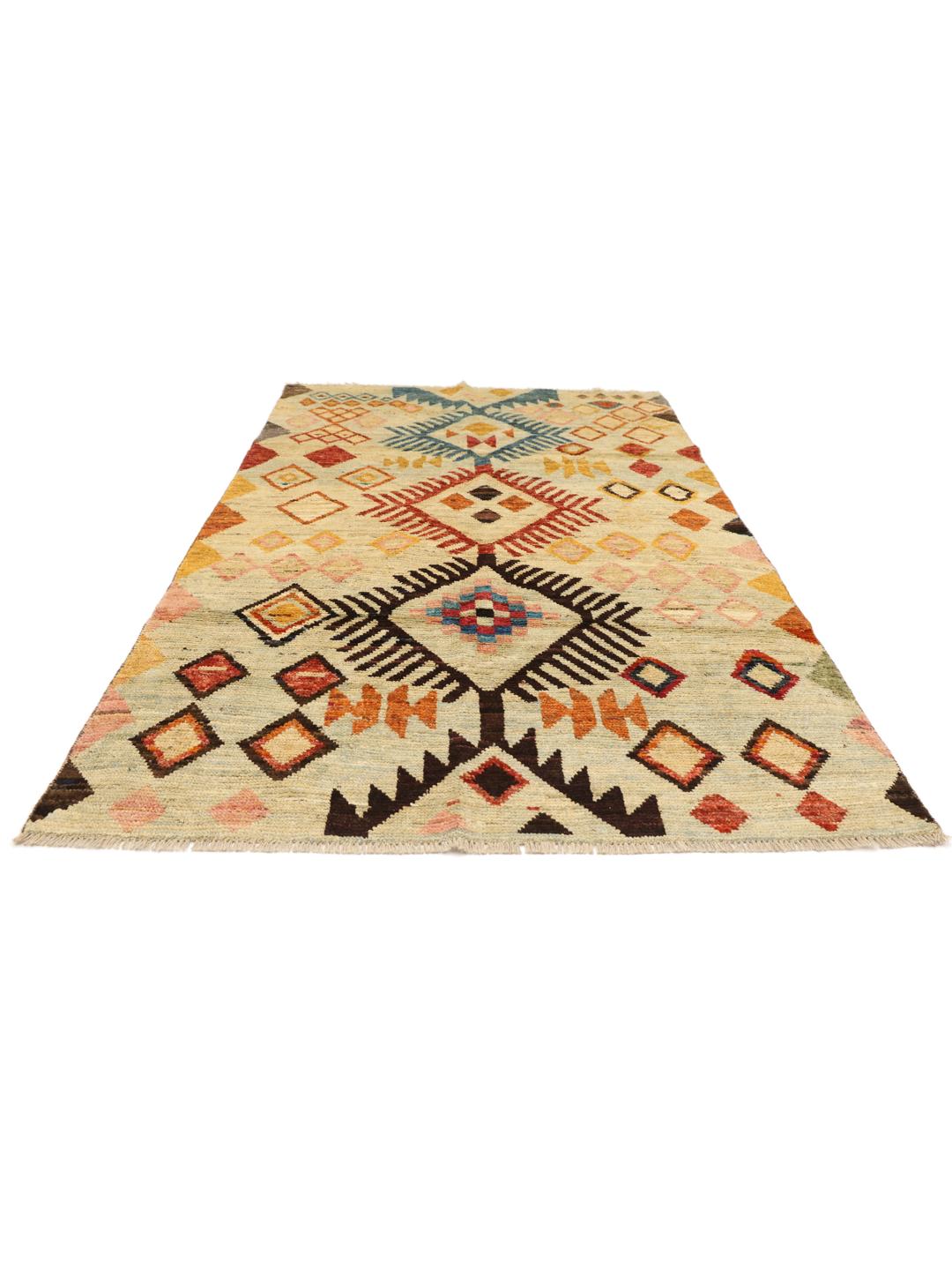
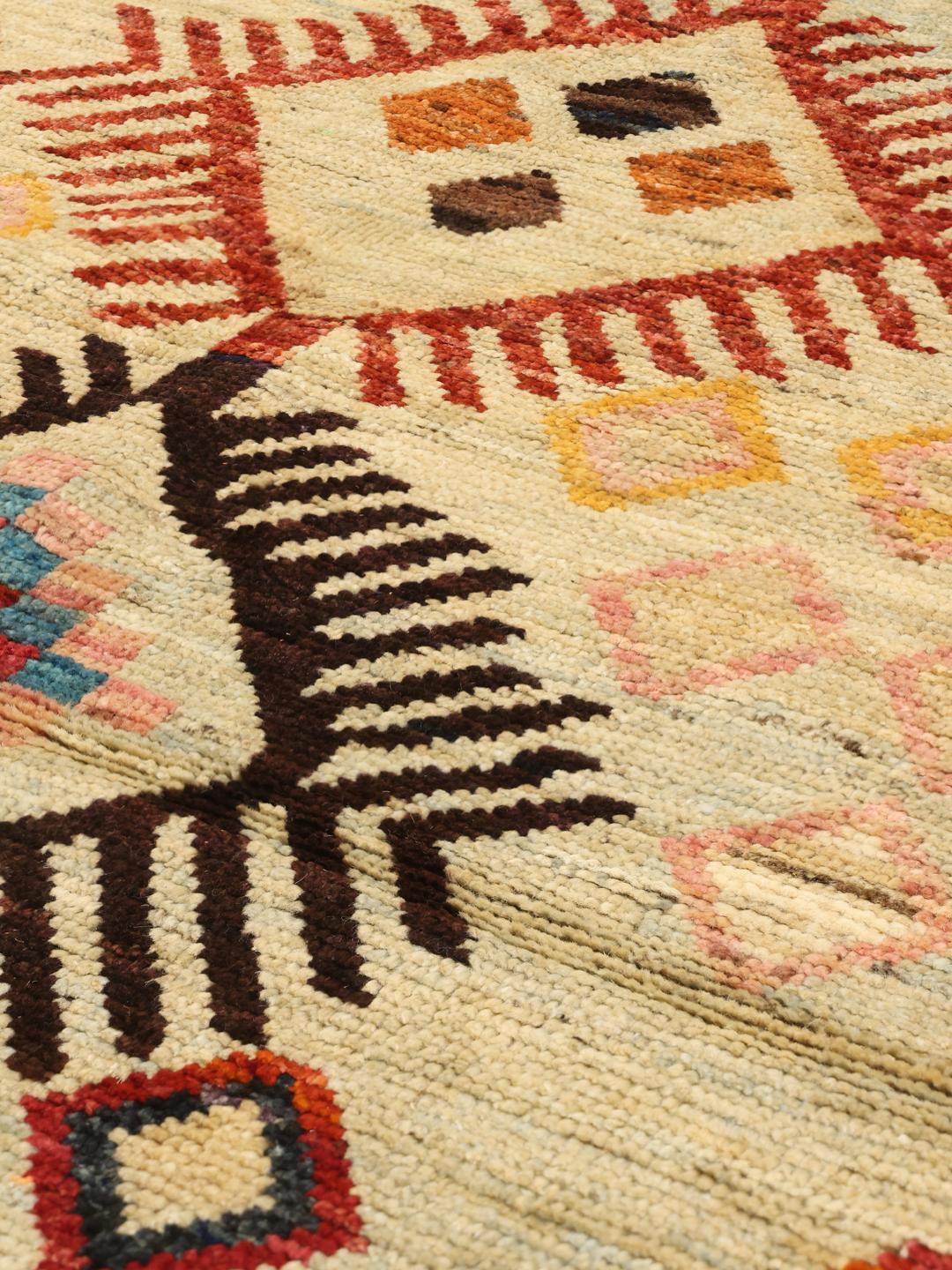
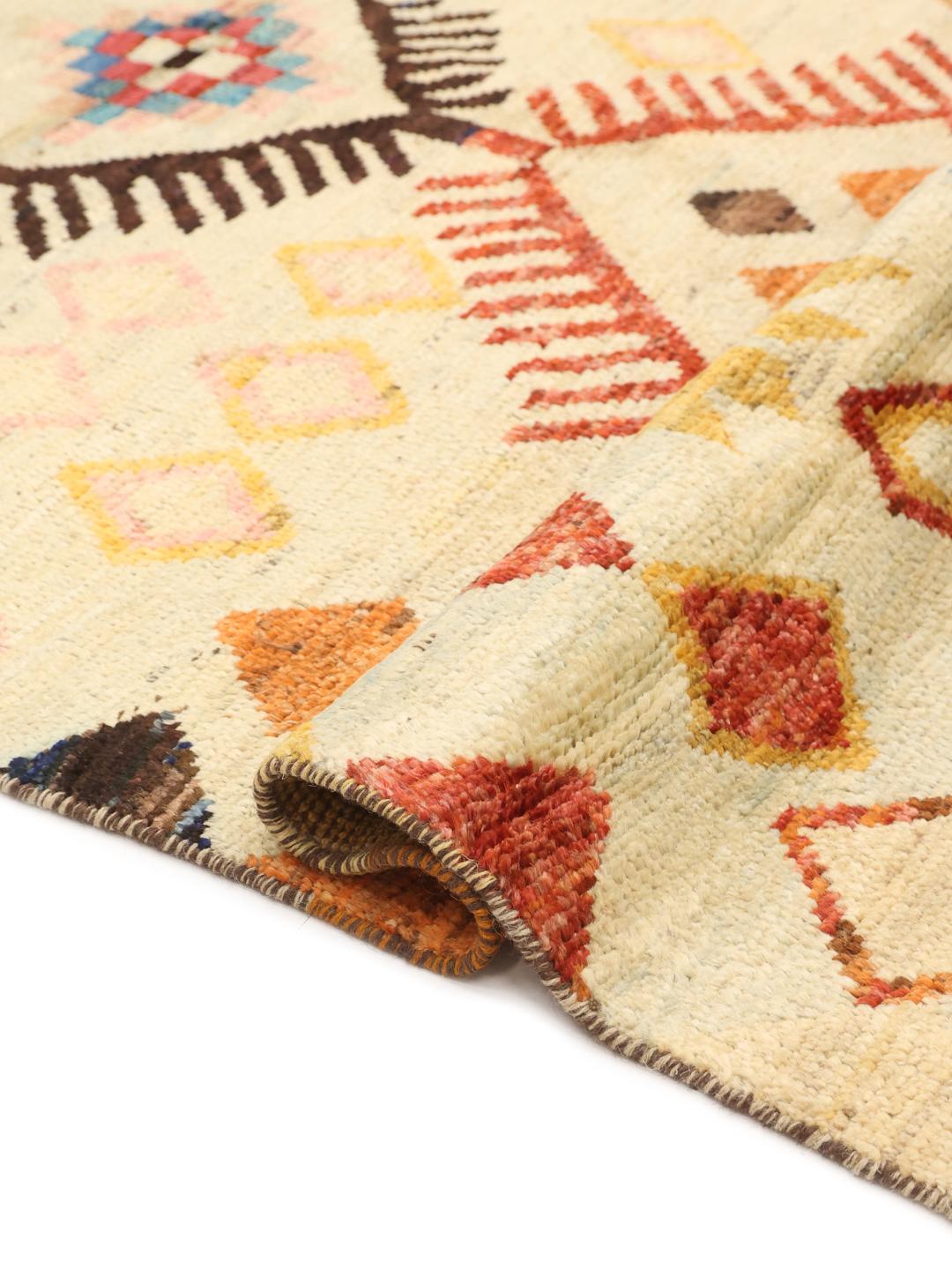
The visual language of this rug is characterised by its bold, geometric motifs. Diamonds, chevrons, and stylised tribal symbols are common, often arranged in rhythmic, repeating patterns that guide the eye across the surface. These designs are not merely decorative but often hold cultural meaning, reflecting the weaver's environment and personal history.
Collecting a piece from this tradition is an investment in cultural continuity. These rugs are valued for their raw, authentic feel and the human stories woven into their structure. By choosing a hand-knotted piece, you are preserving a craft that prioritises patience, skill, and the artistic expression of the individual weaver.