Berber-style rugs are deeply rooted in the nomadic and semi-nomadic traditions of the Middle East and Central Asia. While the style is traditionally associated with the Berber tribes of North Africa, the migration of weaving techniques across the Silk Road led to the evolution of these rugs in countries like Afghanistan, where local artisans adapted the aesthetic to reflect their own regional identity.
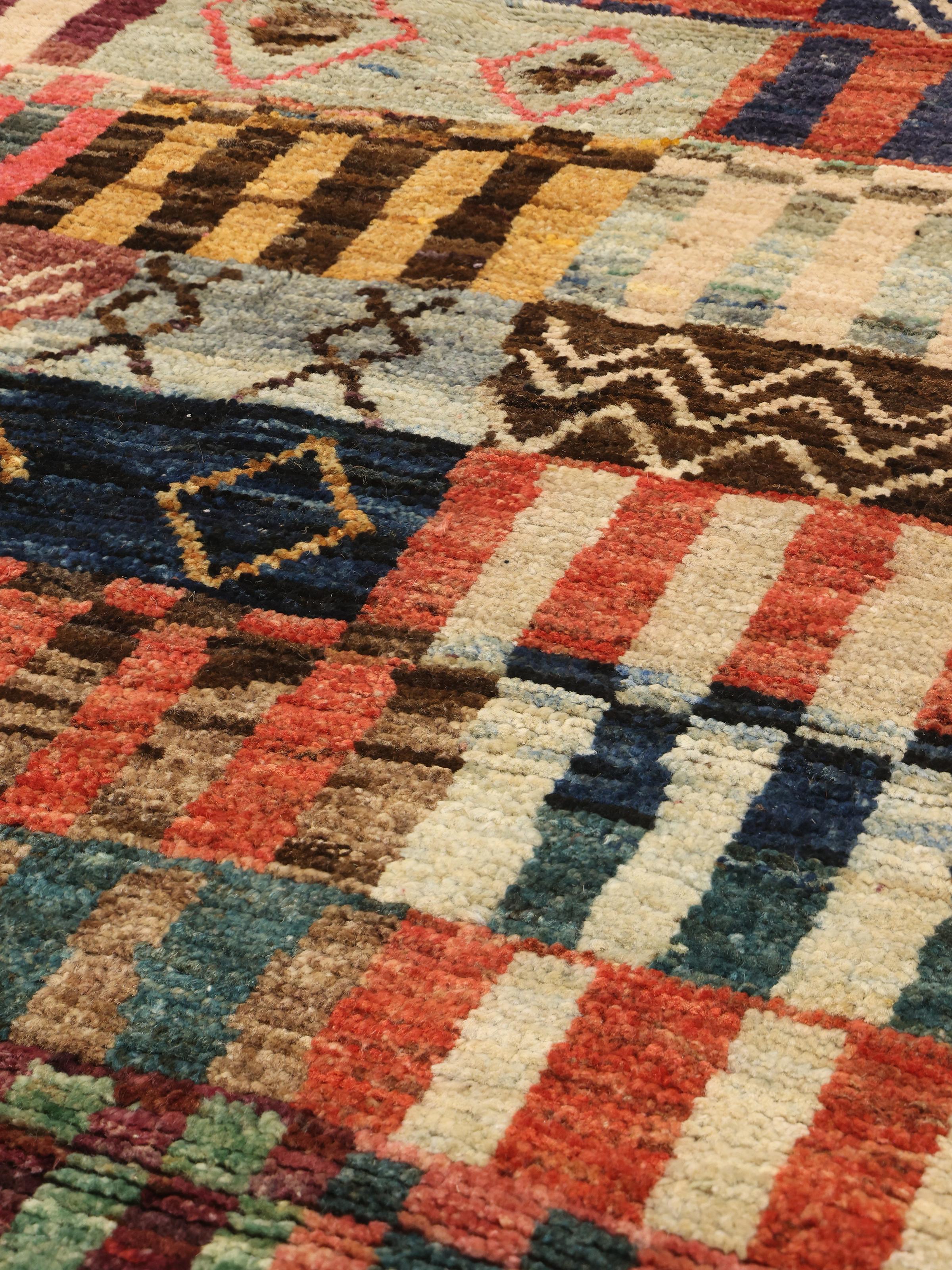
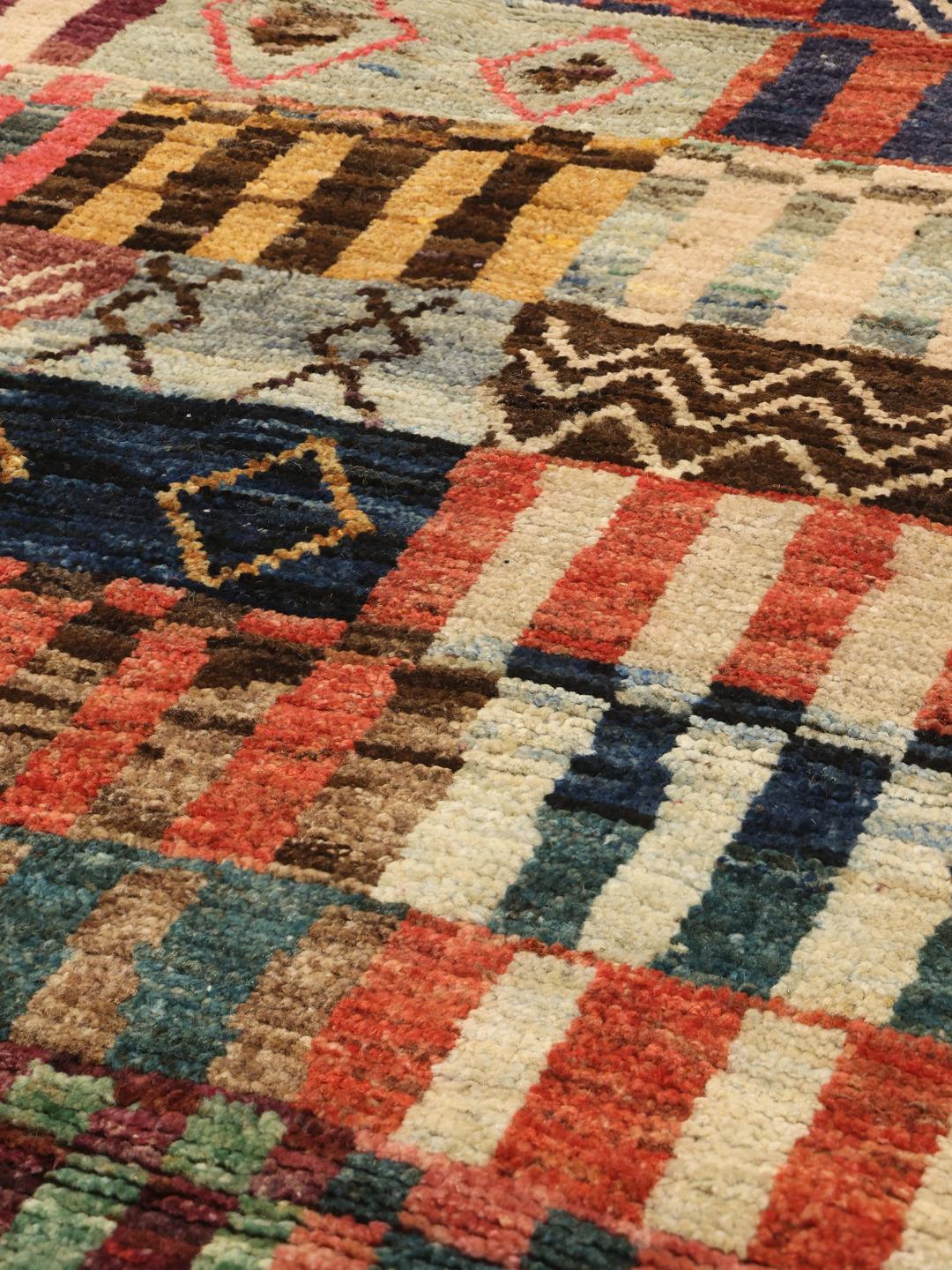
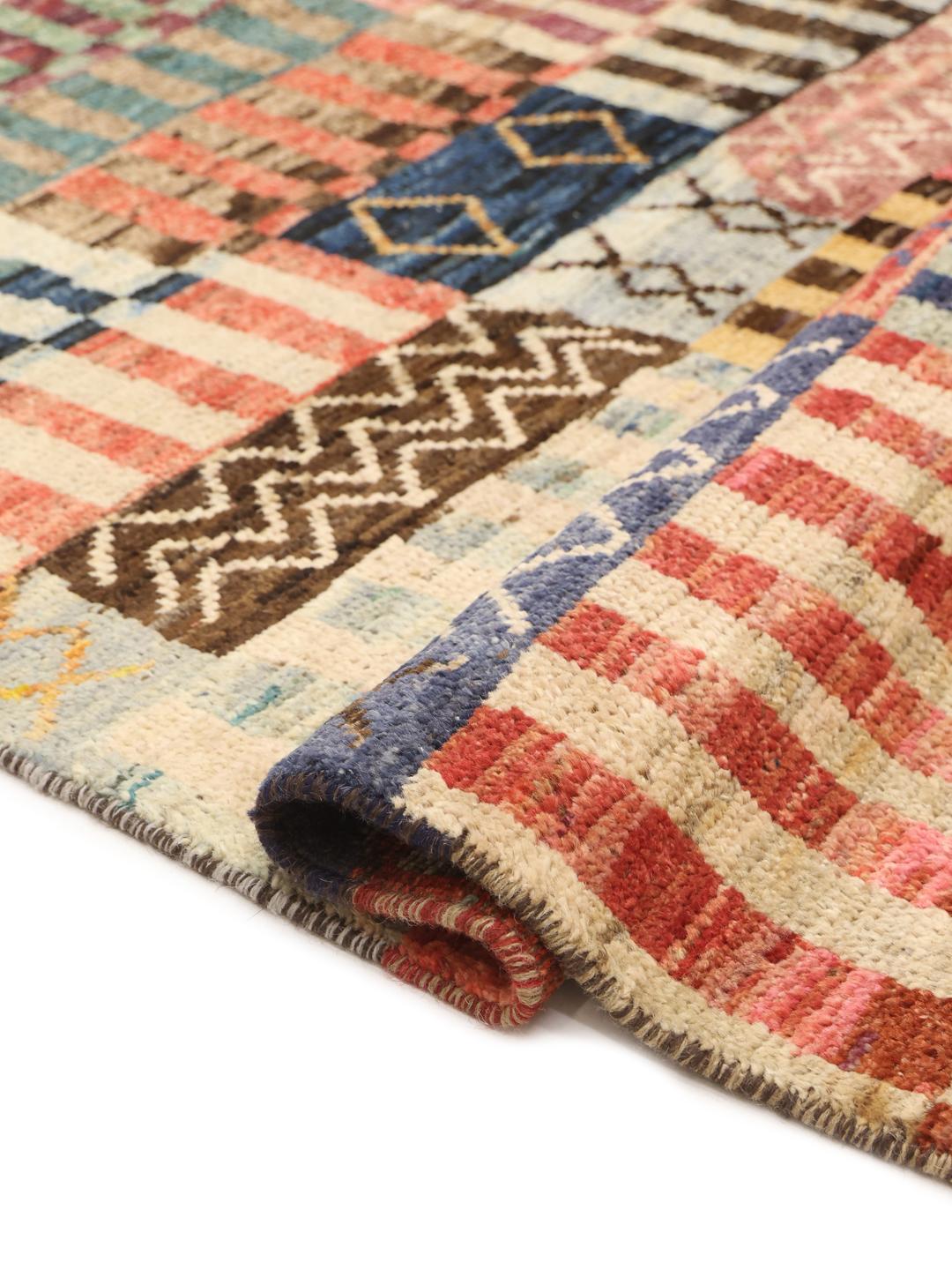
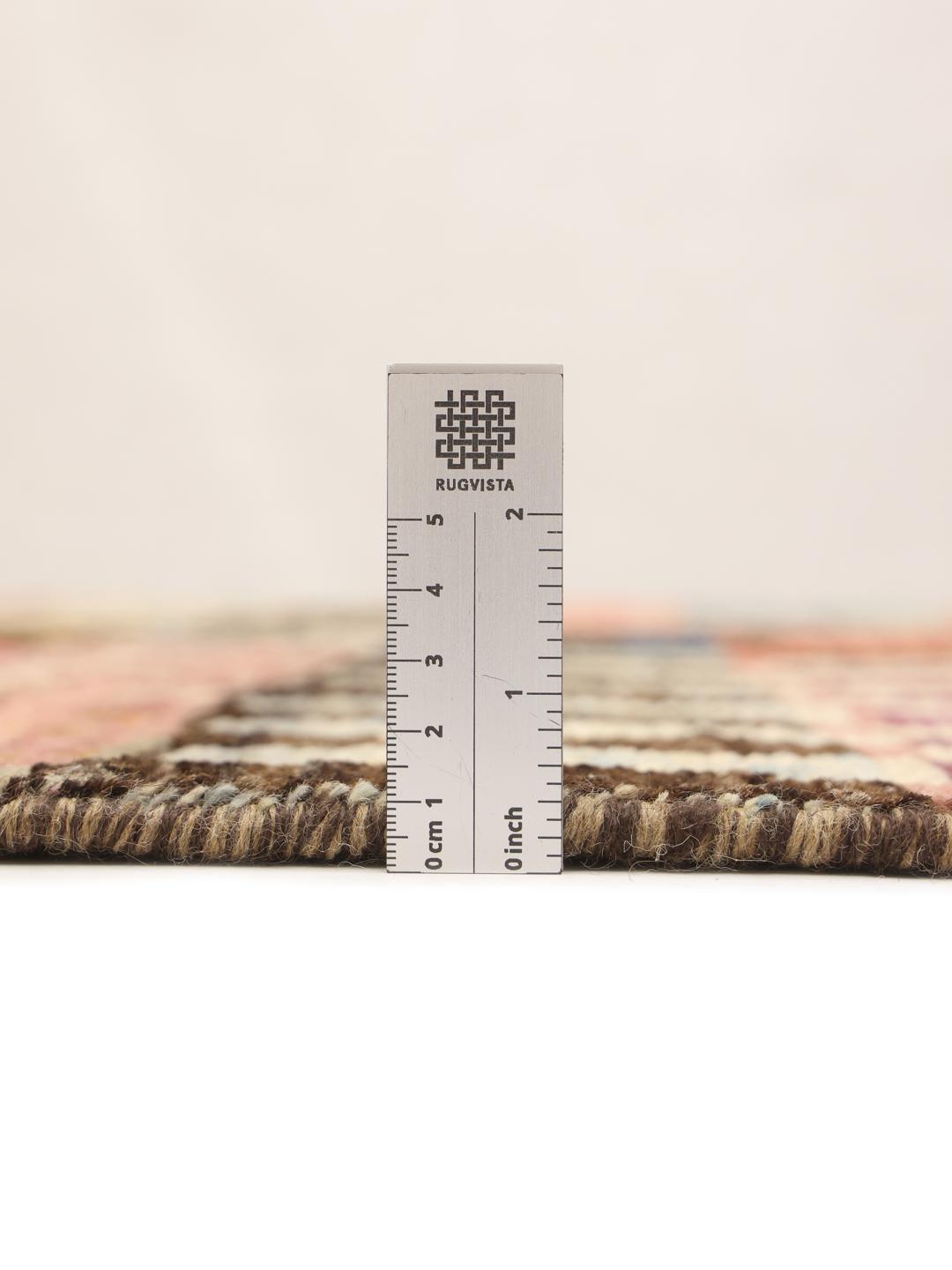
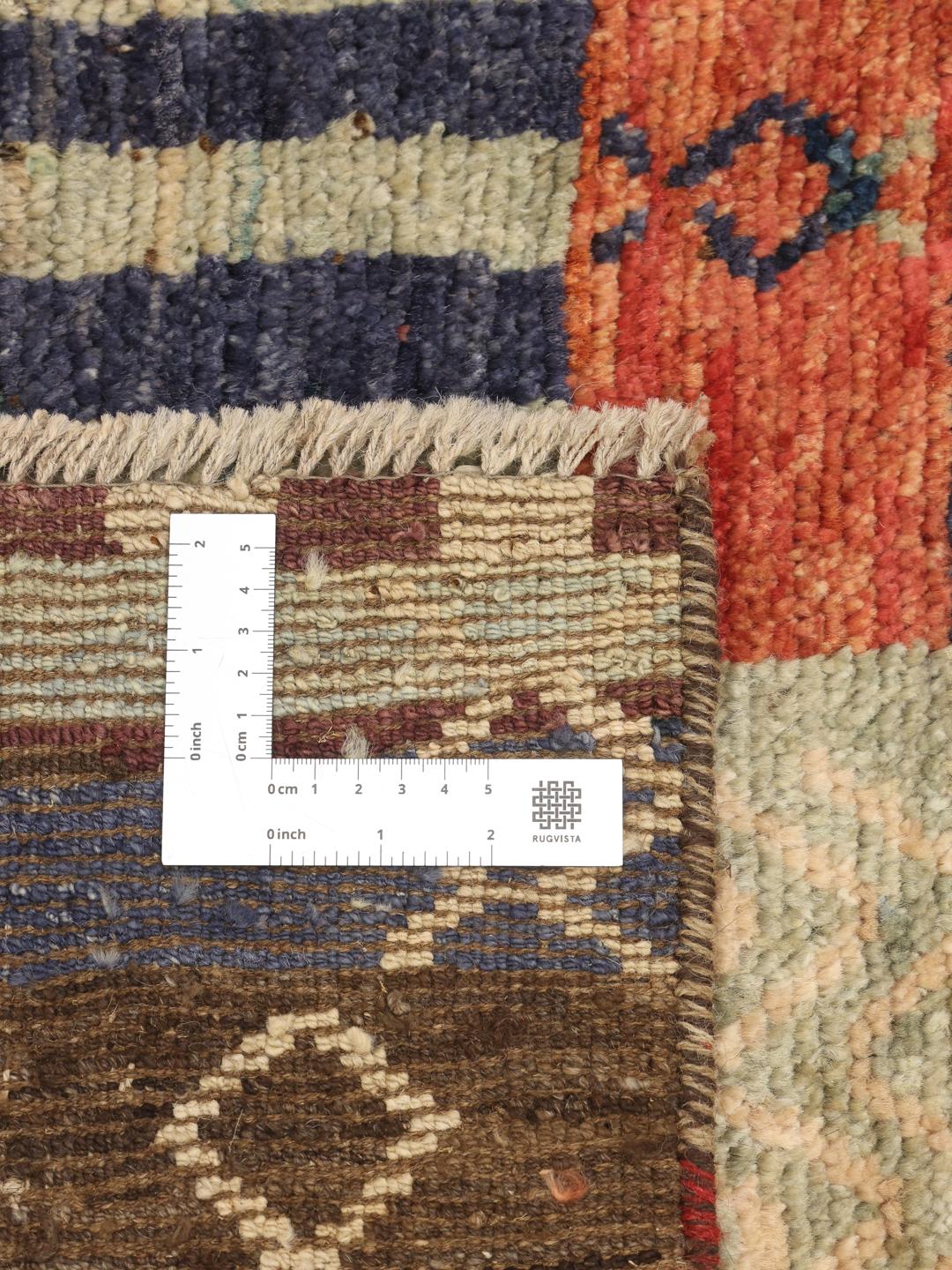
The term hand-knotted refers to the traditional method where artisans tie individual strands of Wool onto a foundation of warp and weft threads. This labour-intensive process is what gives these rugs their distinctive durability and texture. Unlike mass-produced alternatives, a hand-knotted rug possesses a natural variation in tension and knot placement, which is a hallmark of authentic craftsmanship.
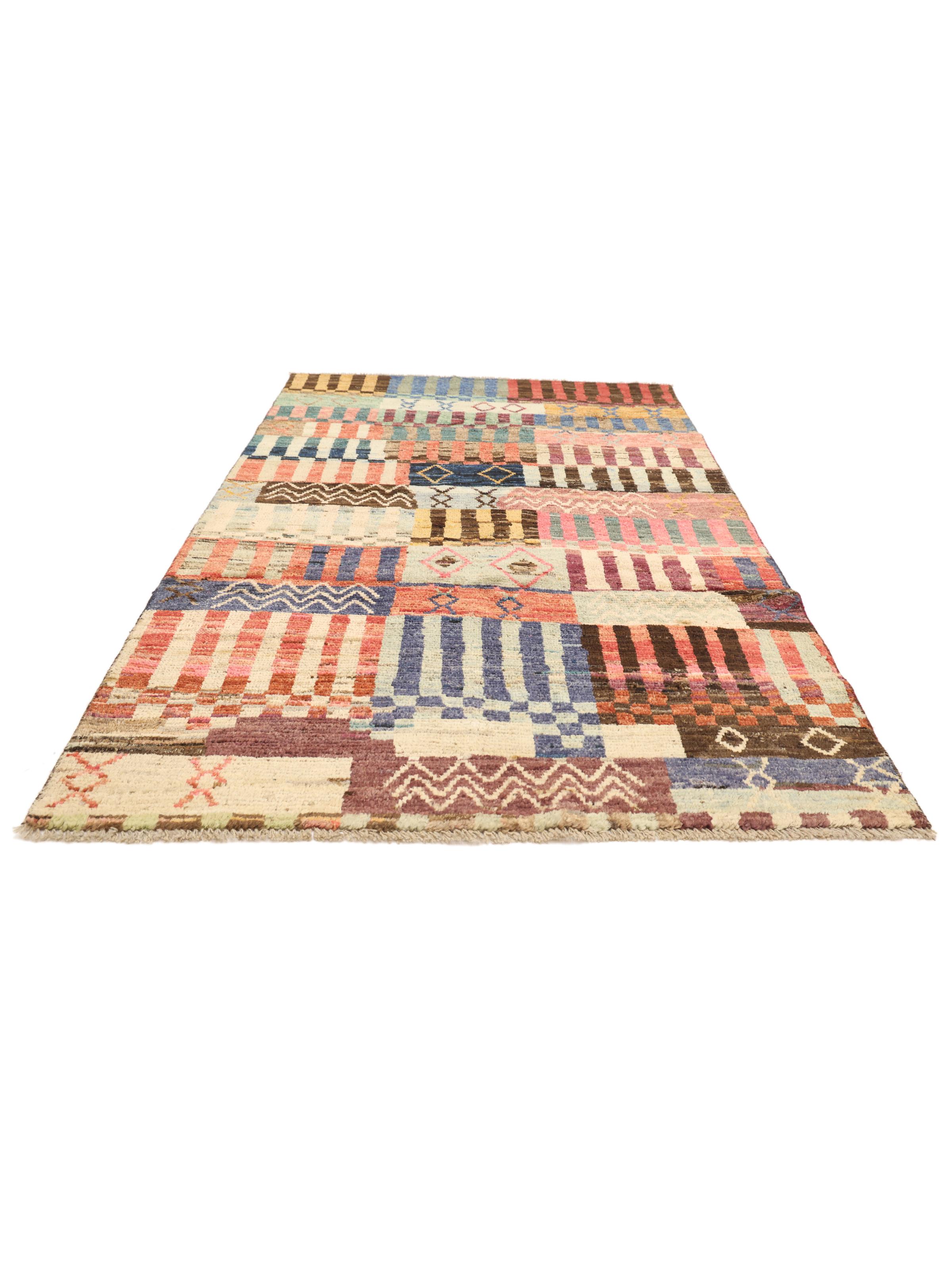
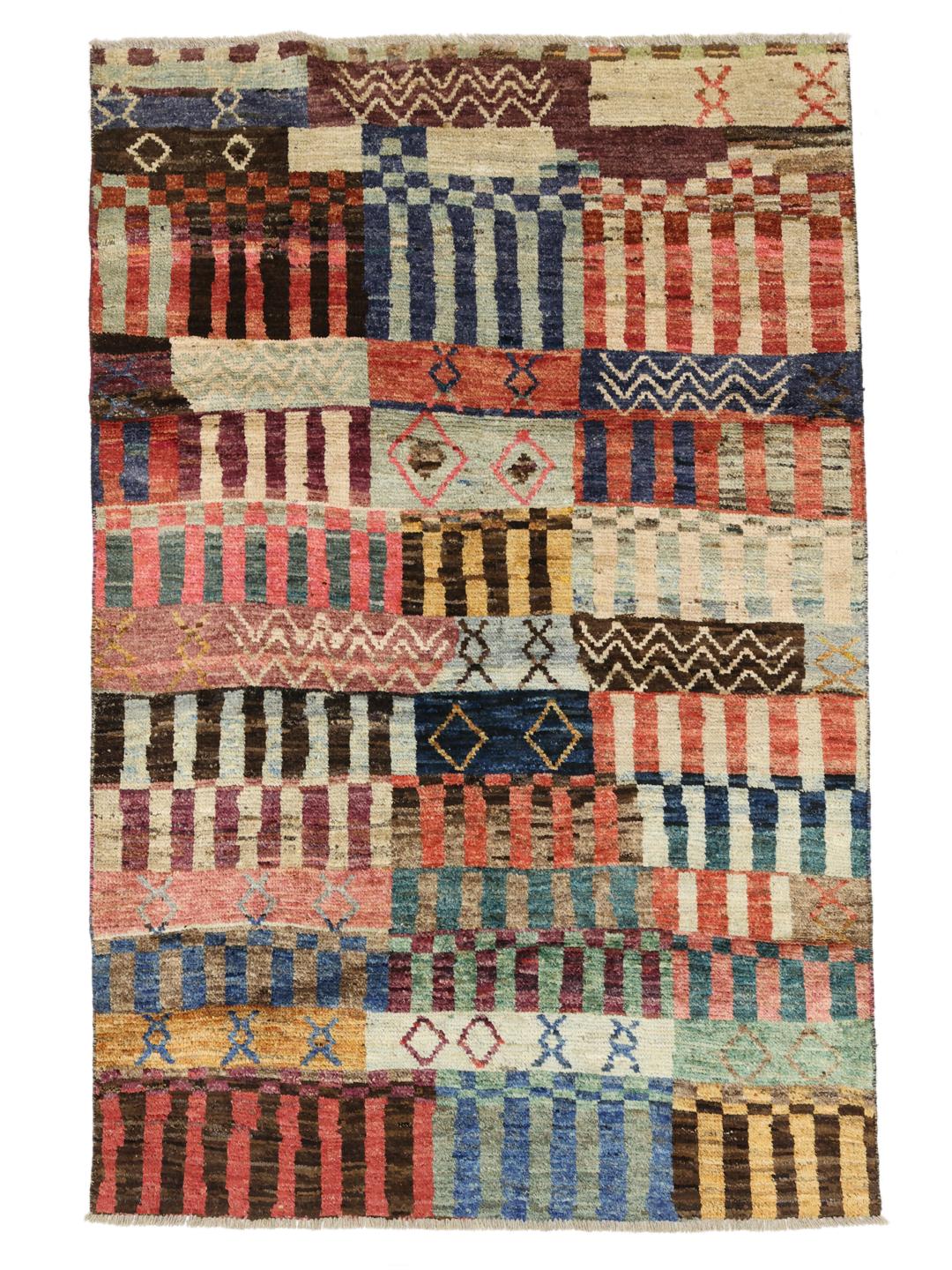
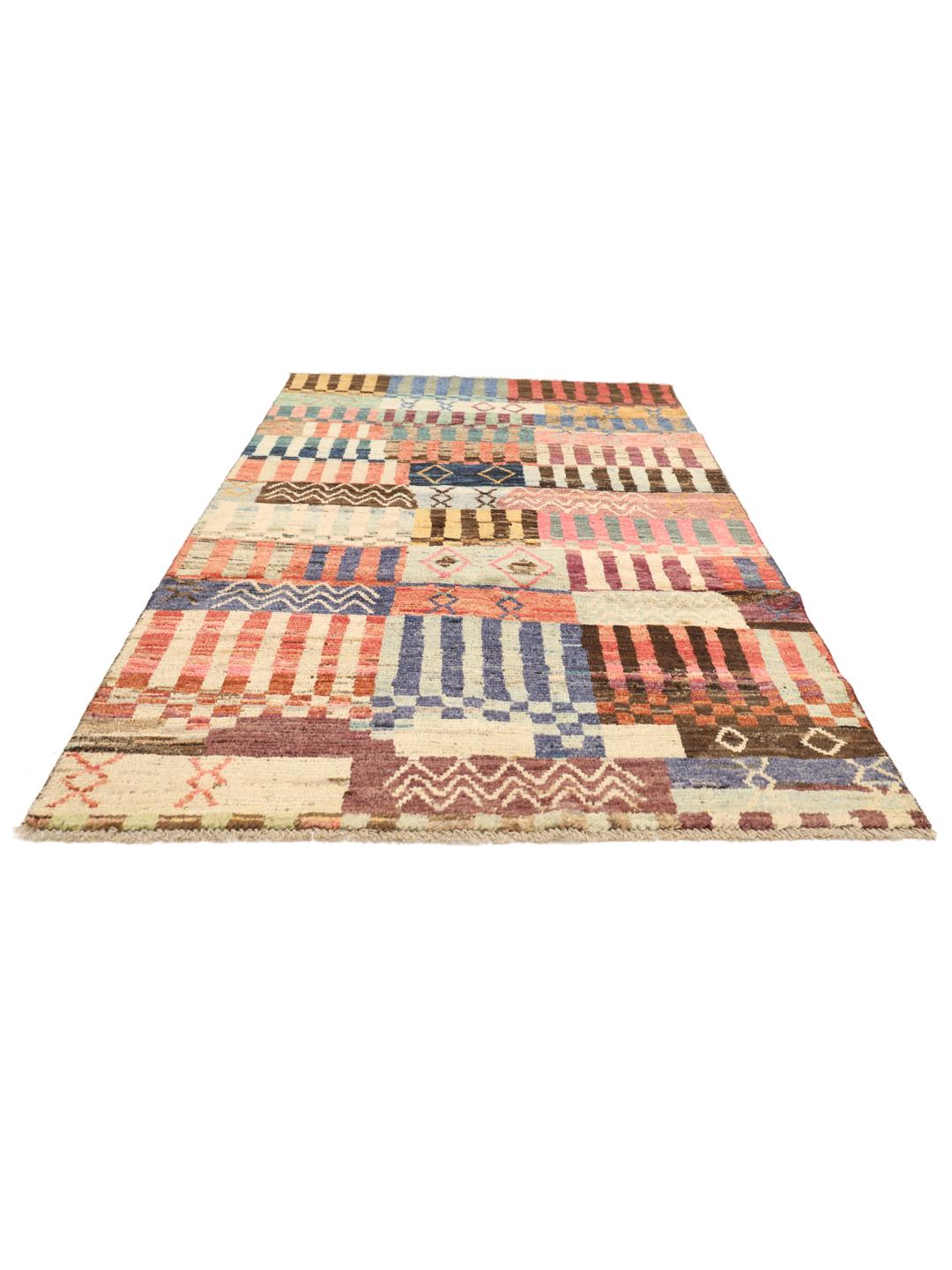
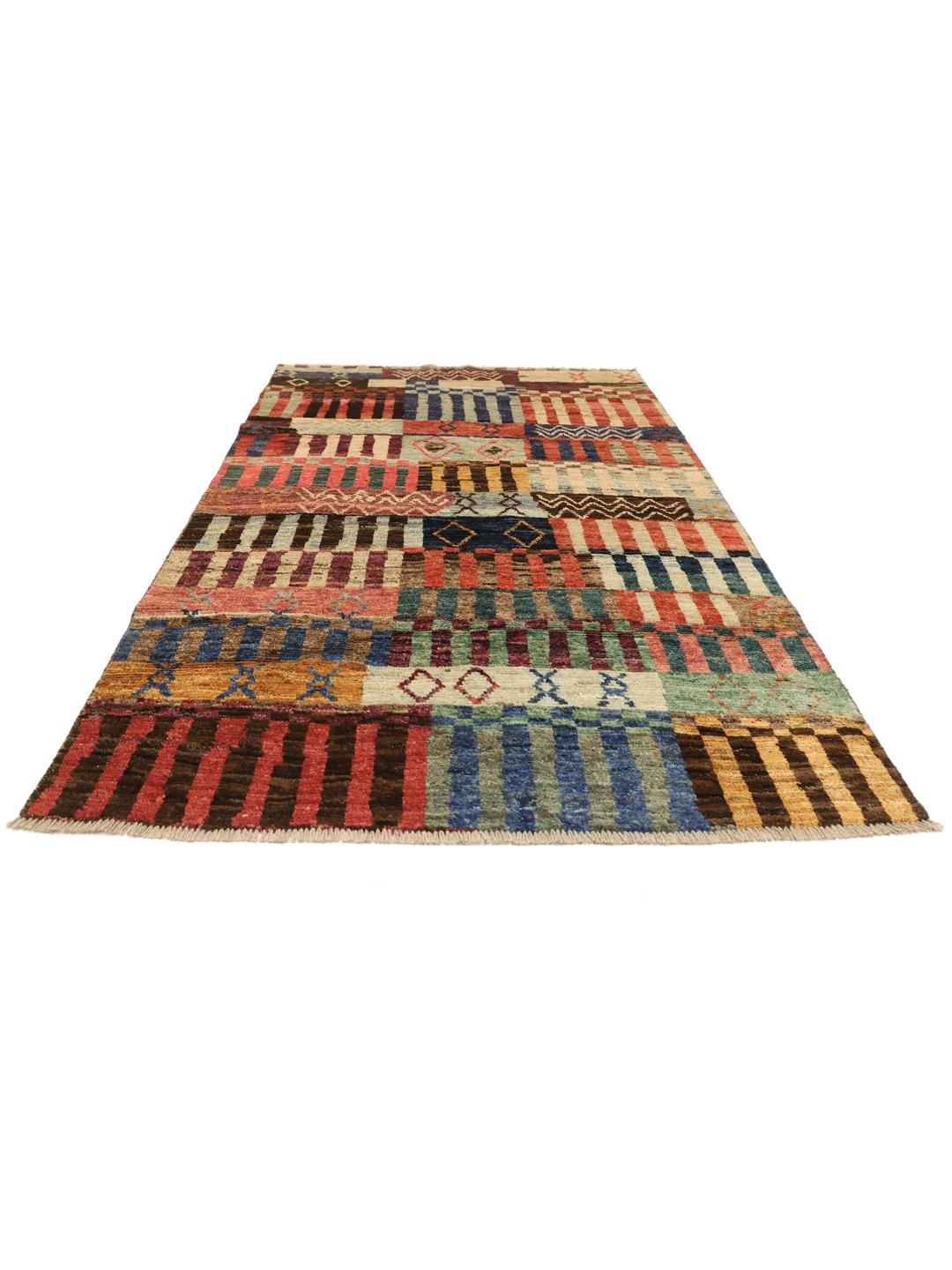
Visually, this rug draws upon a language of geometric symbols and tribal motifs. The repeating blocks of colour and zigzag lines are characteristic of traditional weaving, where each shape often held symbolic meaning, such as protection or fertility. The bold, unconventional colour palette found here highlights the creative freedom of the weaver, who blends traditional techniques with a personal, expressive flair.
Today, these rugs are highly valued by collectors and interior enthusiasts alike for their cultural weight and connection to ancient craft. Owning a piece from this tradition is an investment in human skill, representing a bridge between ancestral knowledge and contemporary living. It is a functional piece of history that brings a layer of soul and narrative to any modern home.