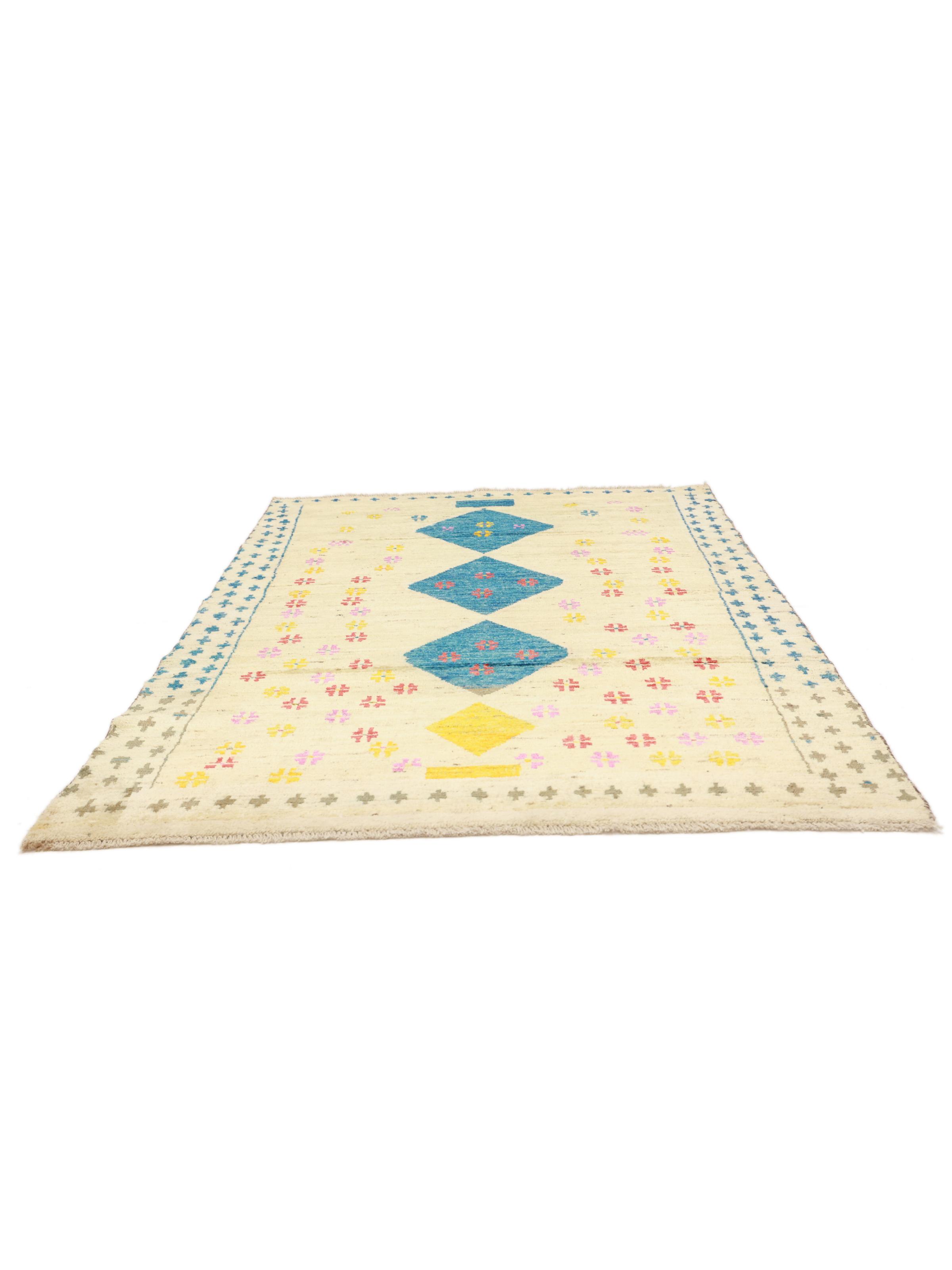
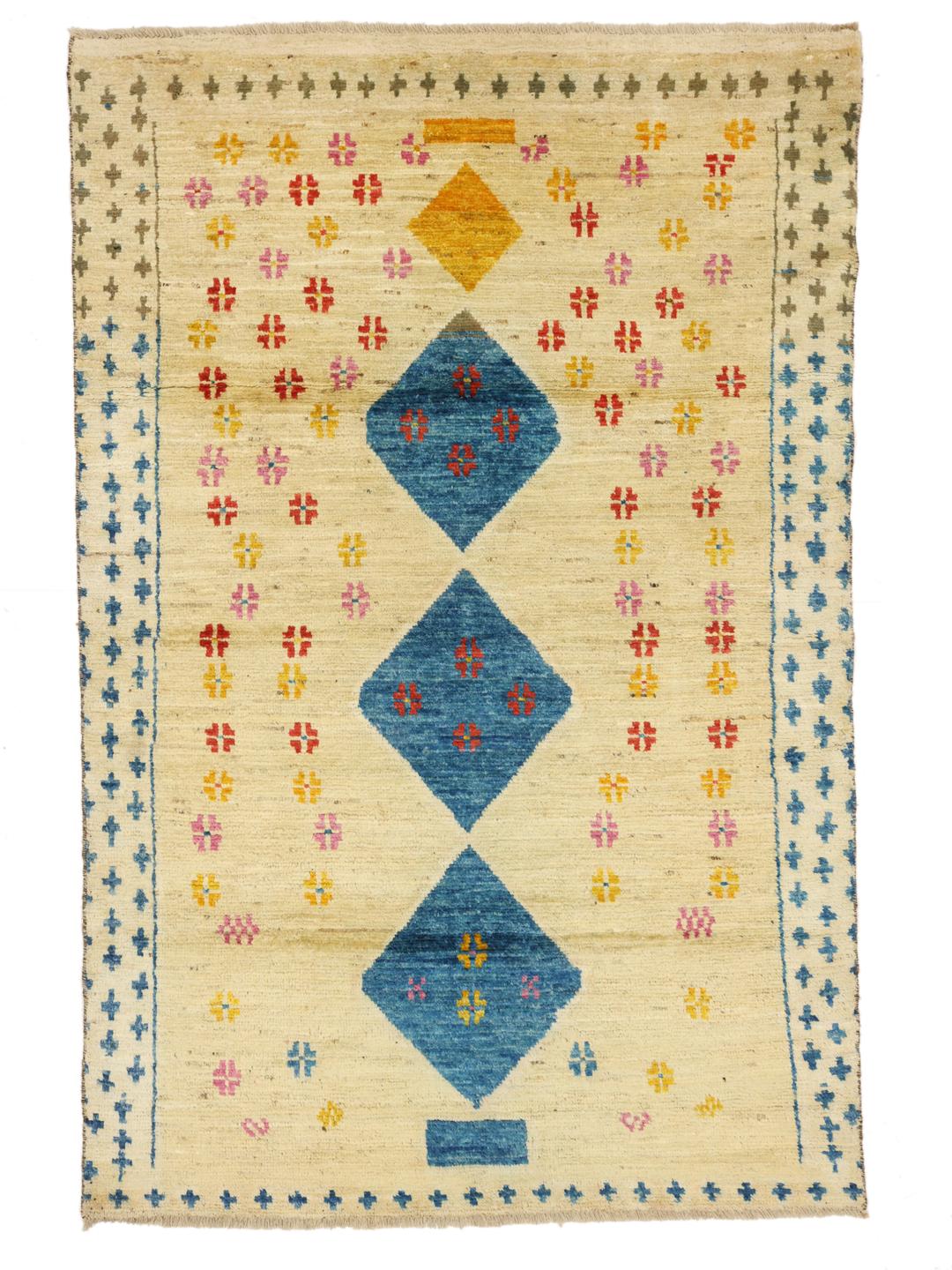
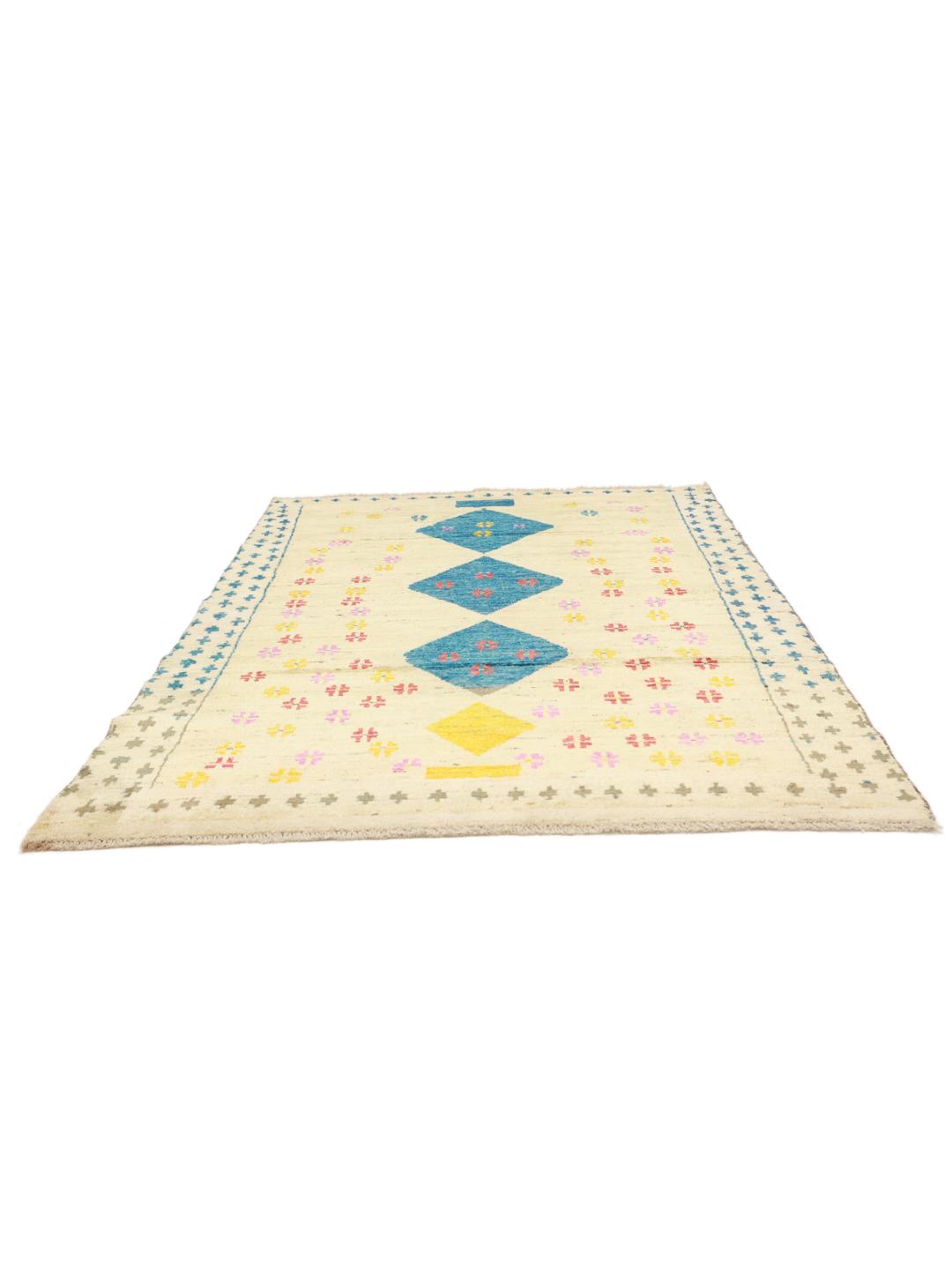
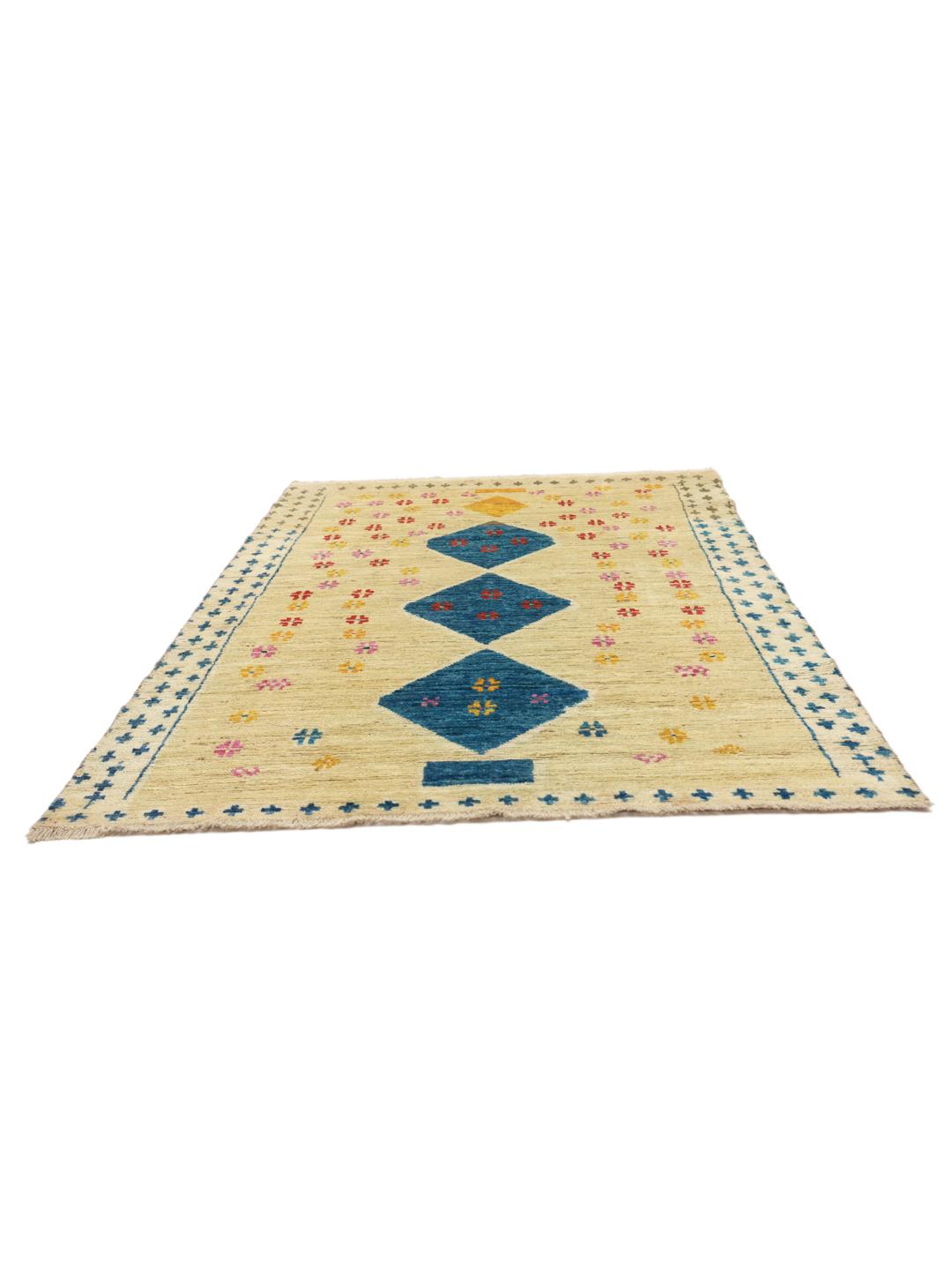
The Berber rug tradition traces its roots to the indigenous populations of North Africa, where these textiles were originally woven for warmth and utility rather than as decorative items. Over centuries, these techniques travelled and evolved, finding a home in the high-altitude regions of Afghanistan. Here, local weavers have adapted these ancient styles, blending them with regional aesthetics to create rugs that are celebrated for their thick, plush wool and expressive, tribal-inspired designs.
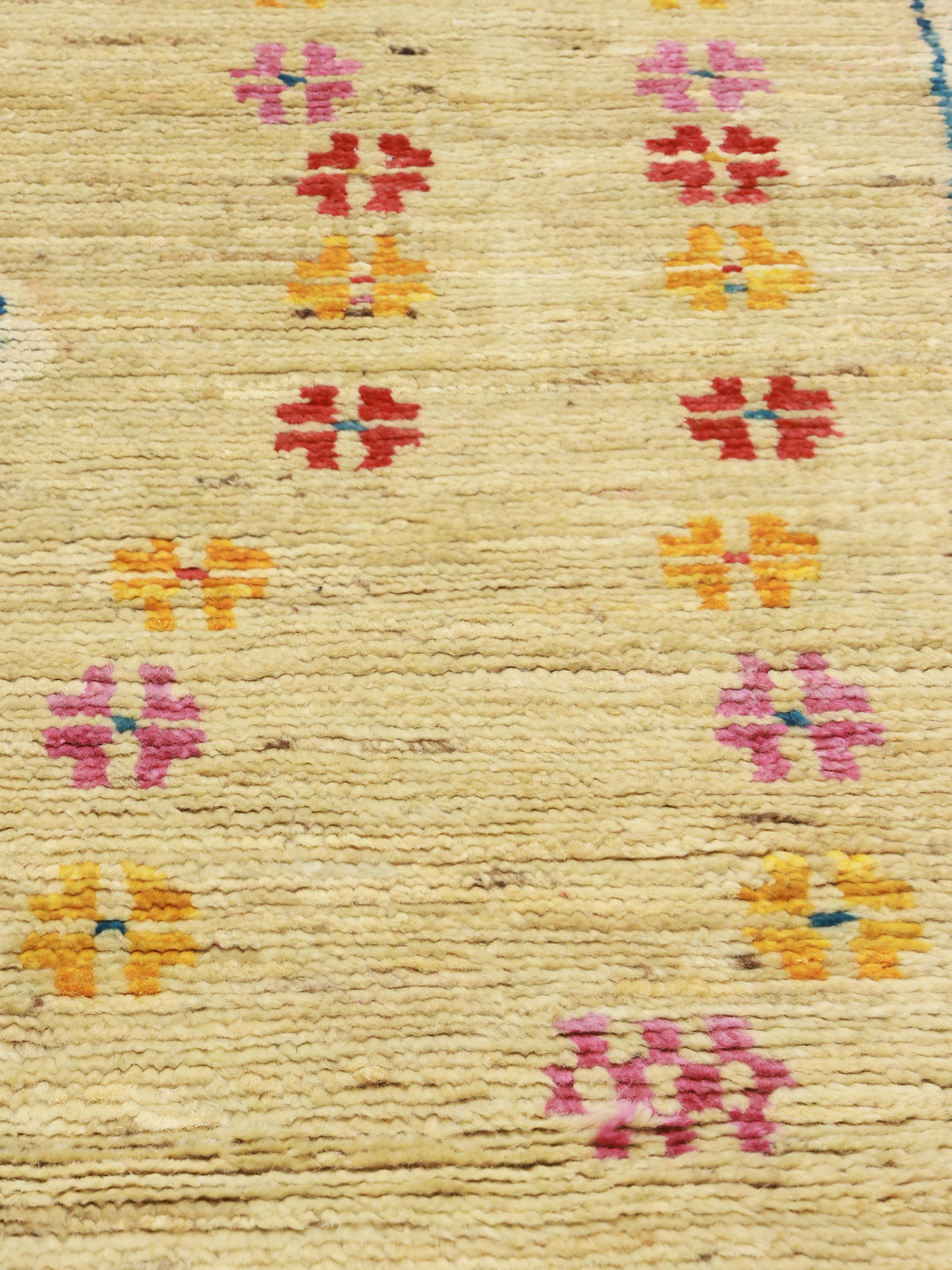
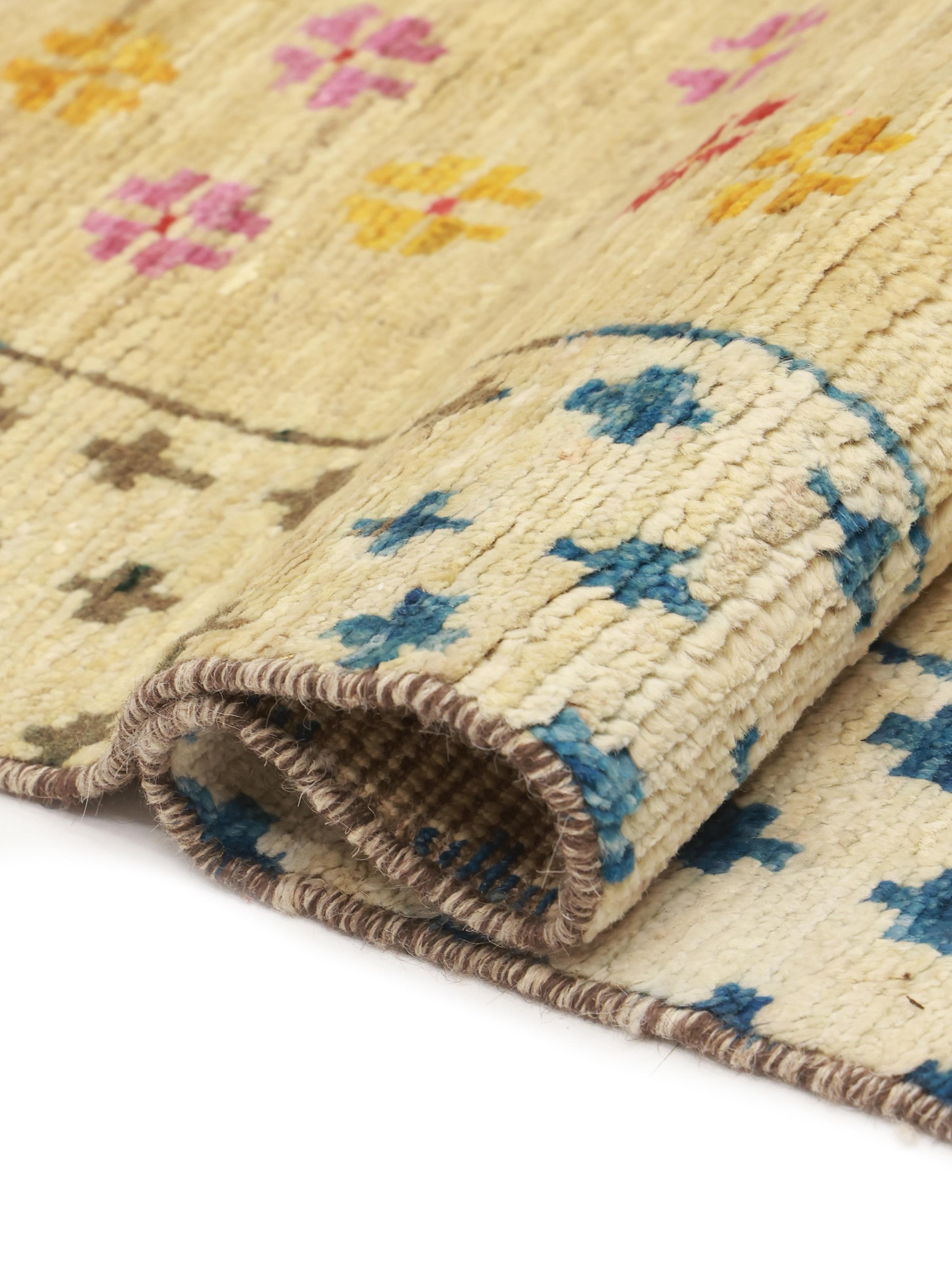
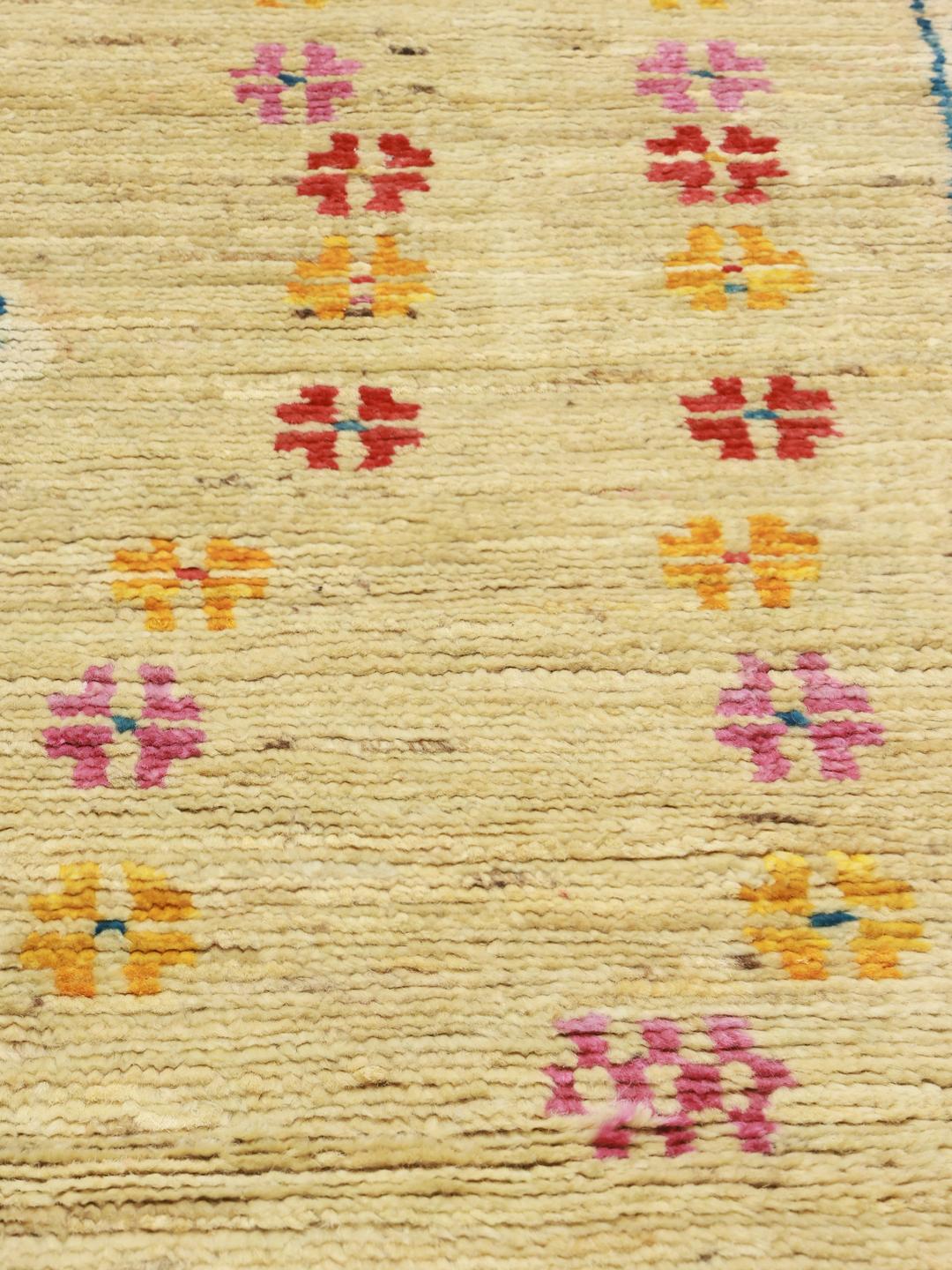
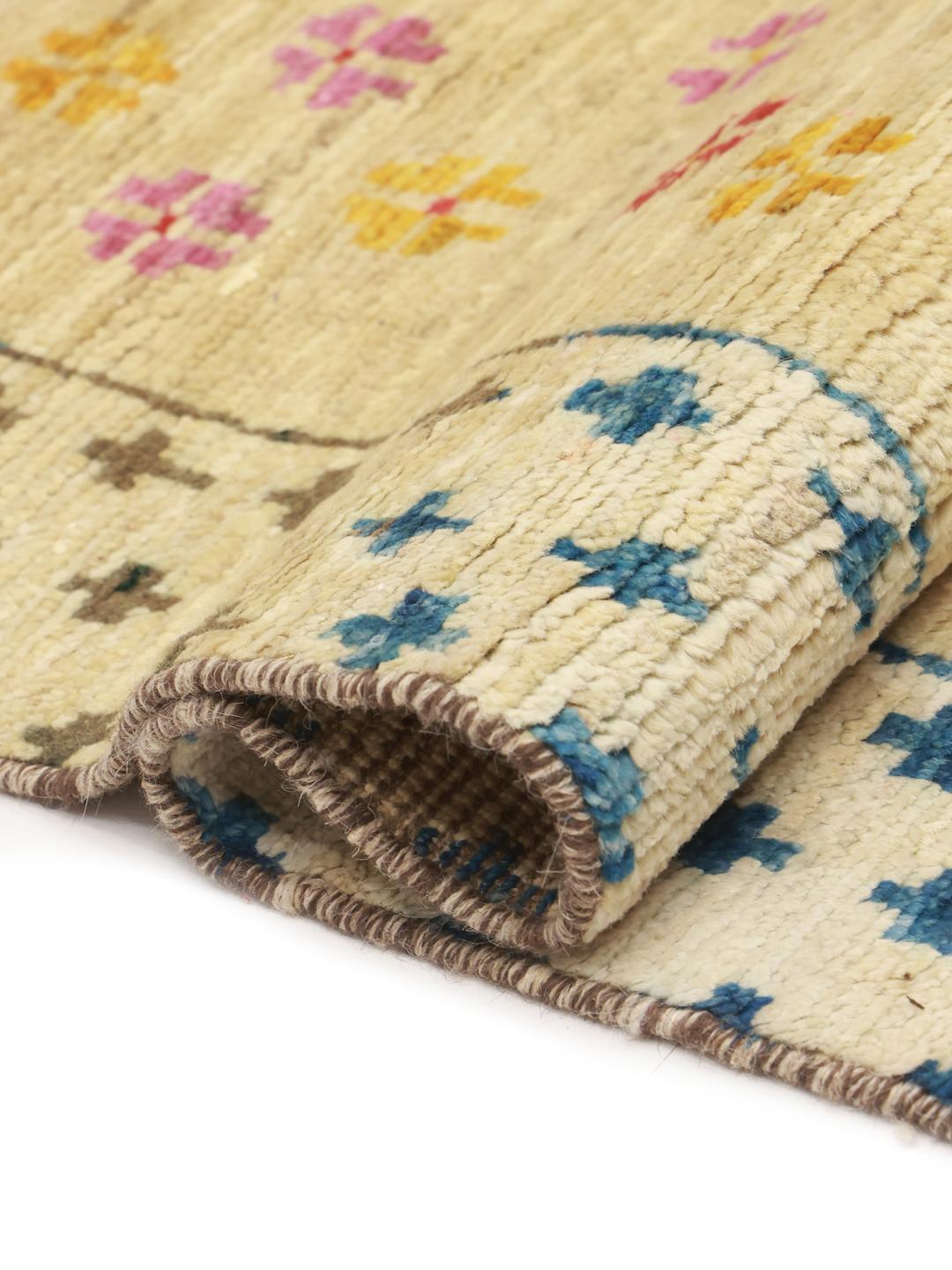
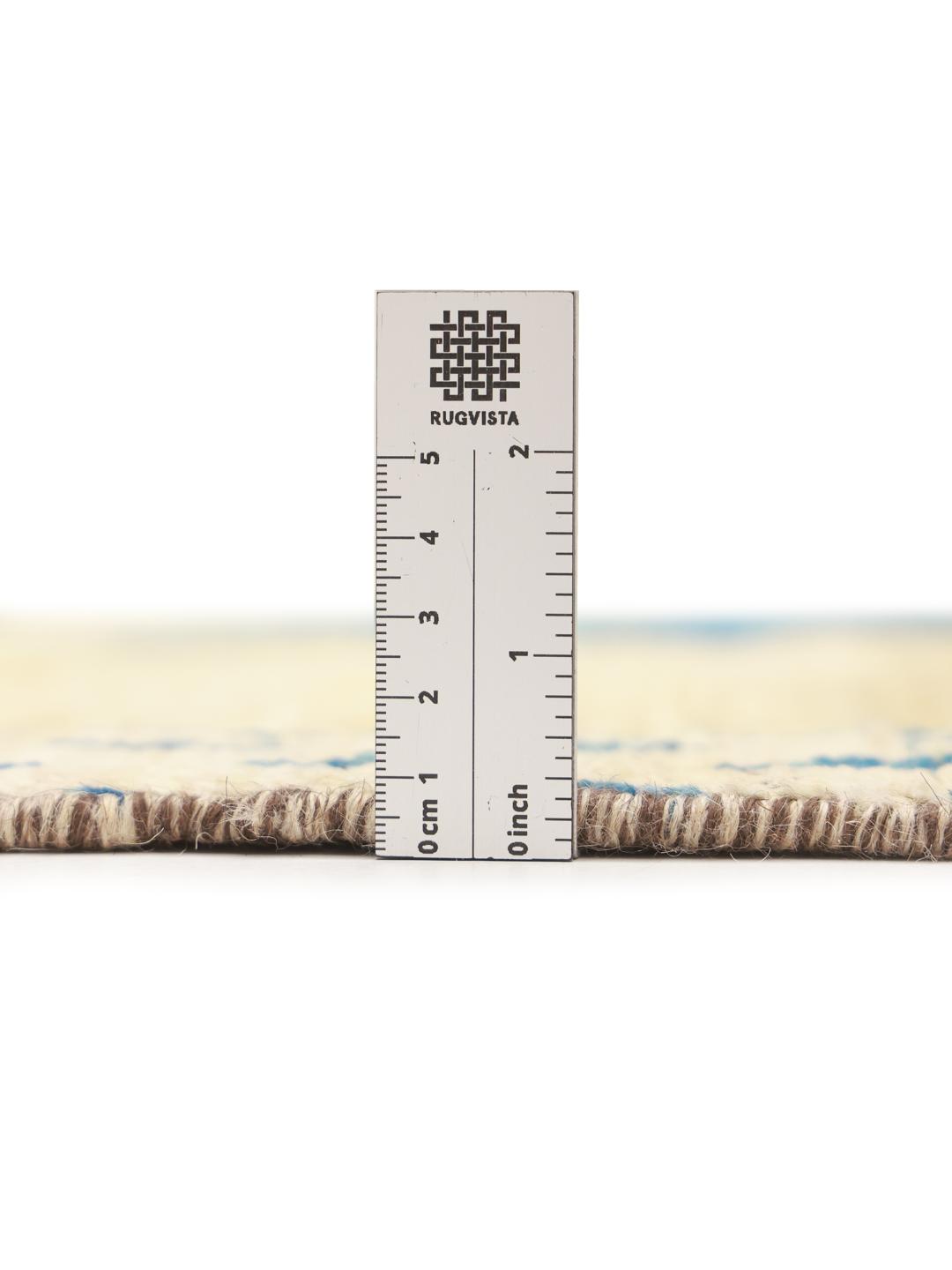
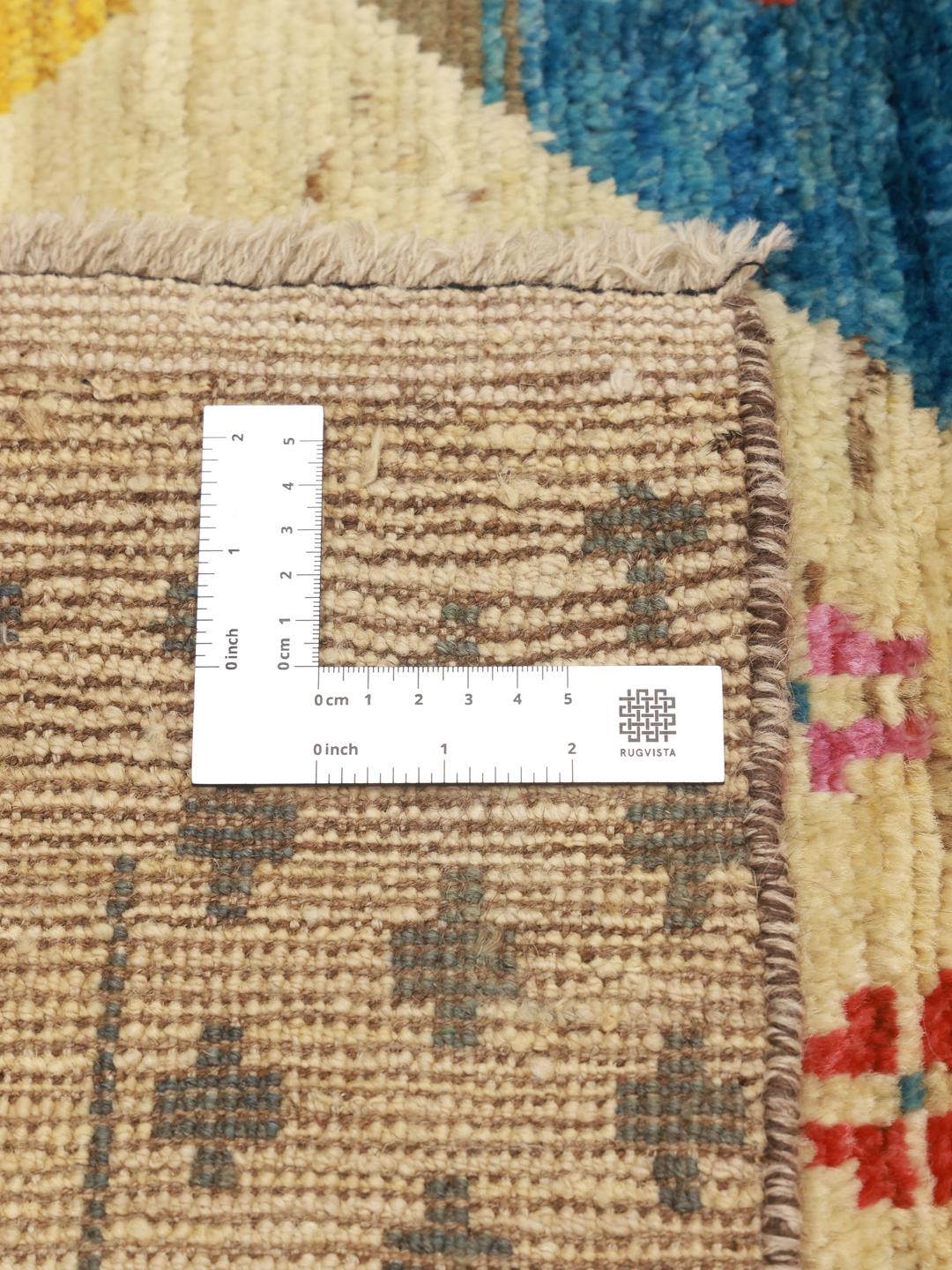
The term hand-knotted refers to the traditional, labour-intensive method of creating a rug by tying individual knots of wool onto a warp and weft foundation. This construction is highly valued because it creates a pile that is incredibly durable and resistant to wear. Unlike other methods, the knotted structure allows for intricate pattern definition and a deep, luxurious pile that improves with age, making it a preferred choice for those who value longevity.
The visual language of this rug is deeply rooted in geometric symbolism, with diamonds and cross motifs serving as traditional emblems of protection and fertility. While the patterns are ancient, the use of vibrant, contrasting colours gives this piece a contemporary energy. The deliberate spacing of these motifs against the natural, undyed wool of the field is a hallmark of the style, creating a look that is both balanced and visually engaging.
Collecting these rugs is an act of preserving a heritage of skill and artistic expression. Each piece acts as a vessel for the weaver's personal vision, making them highly prized by those who value authentic craft over mass production. Owning a piece from this tradition means bringing a storied, cultural artifact into your home, ensuring that this ancestral skill continues to be honoured and enjoyed by new generations.