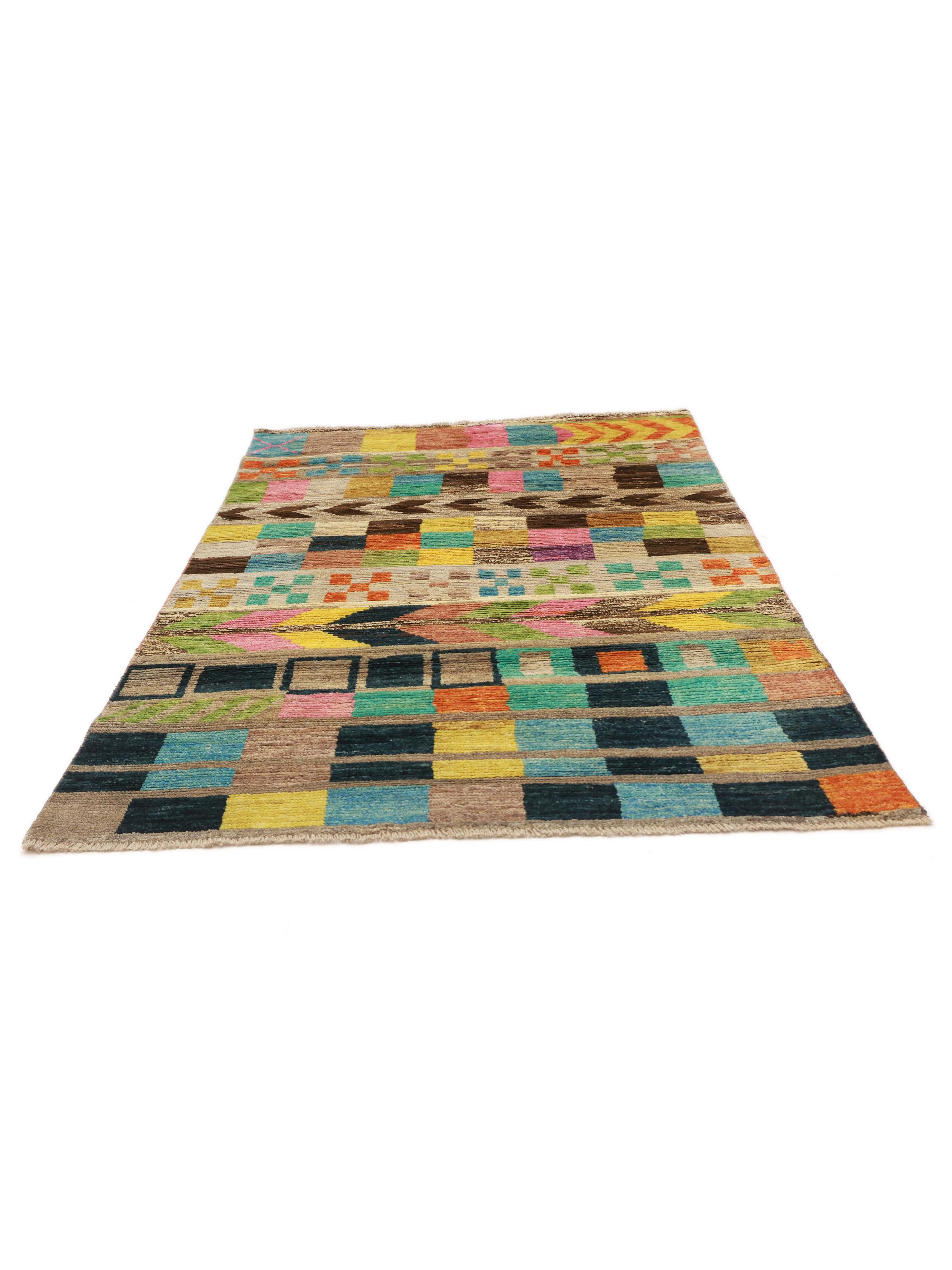
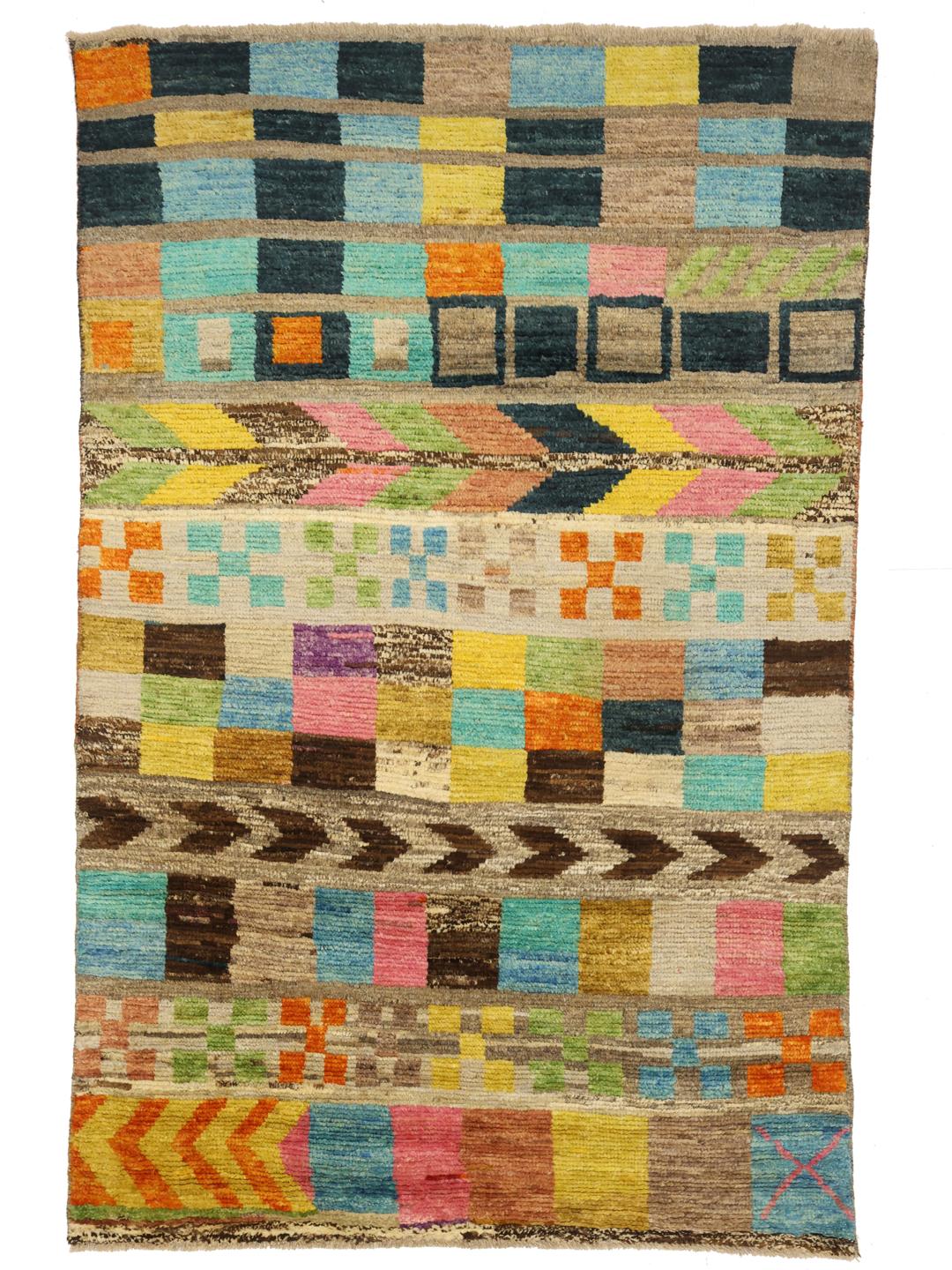
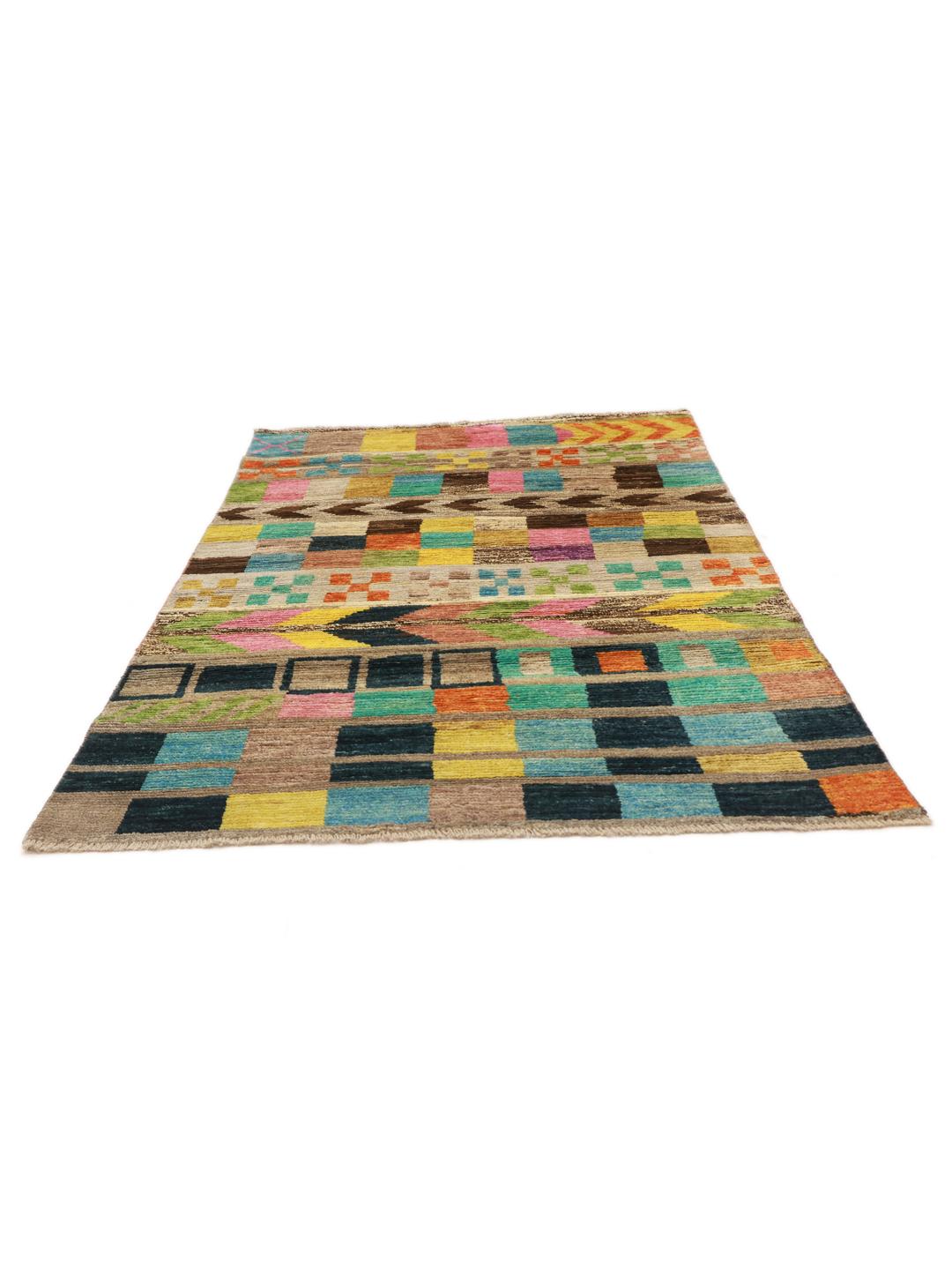
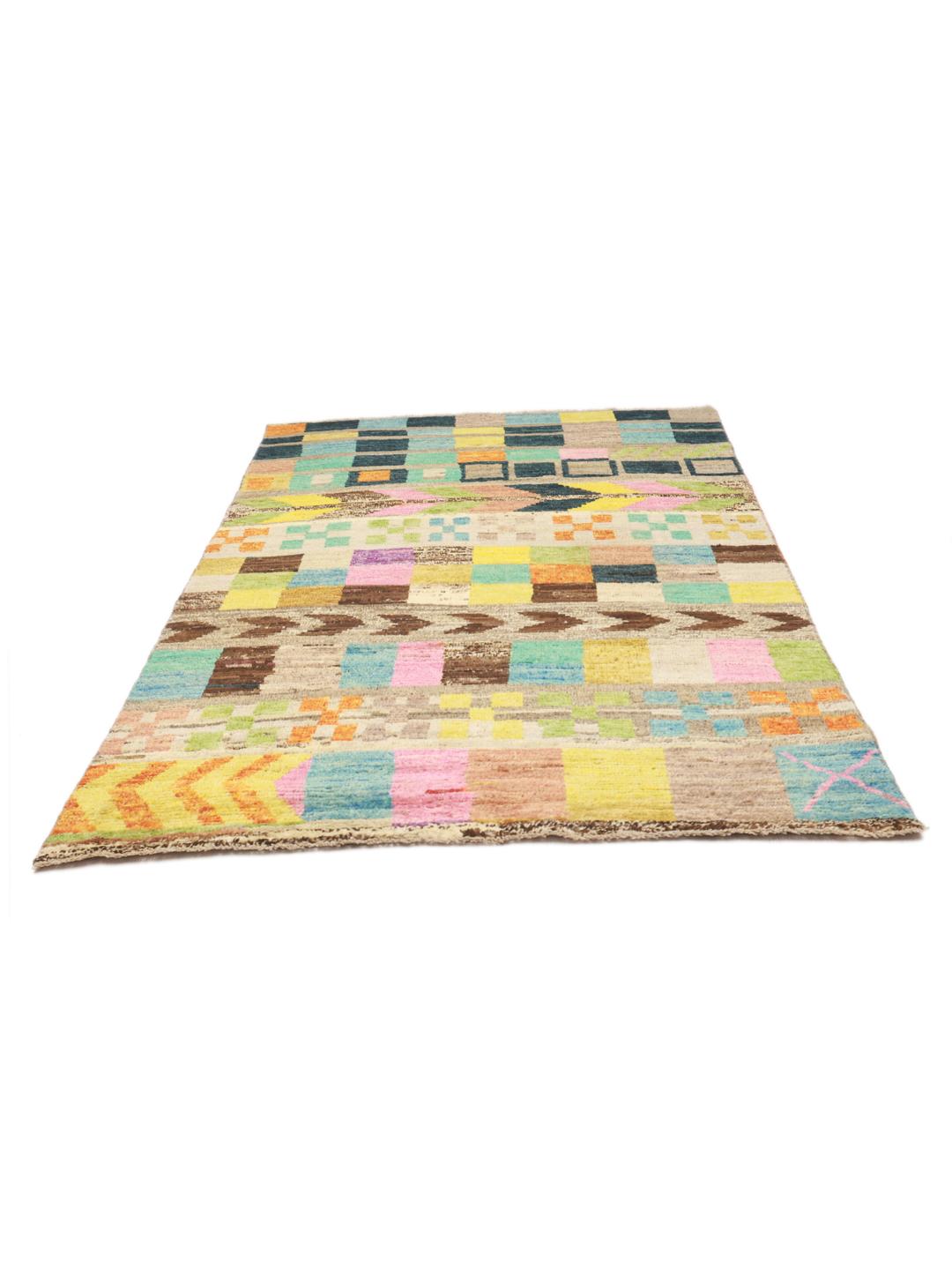
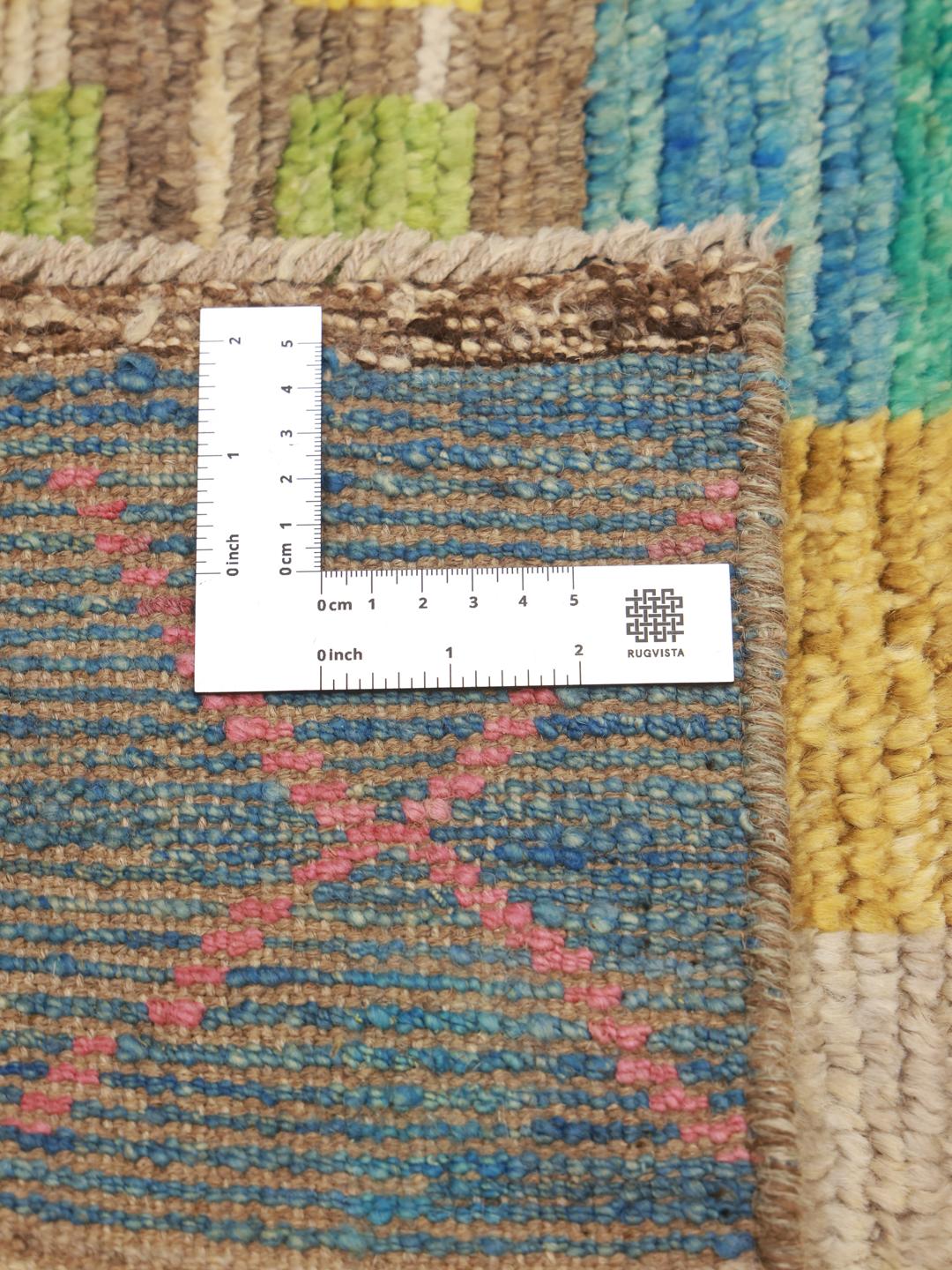
The Berber tradition, while historically rooted in the mountainous regions of North Africa, has evolved through centuries of cultural exchange to find expression in diverse weaving communities. In Afghanistan, weavers have adopted these classic design principles, infusing them with local techniques and a distinct approach to colour that sets their work apart in the global rug market.
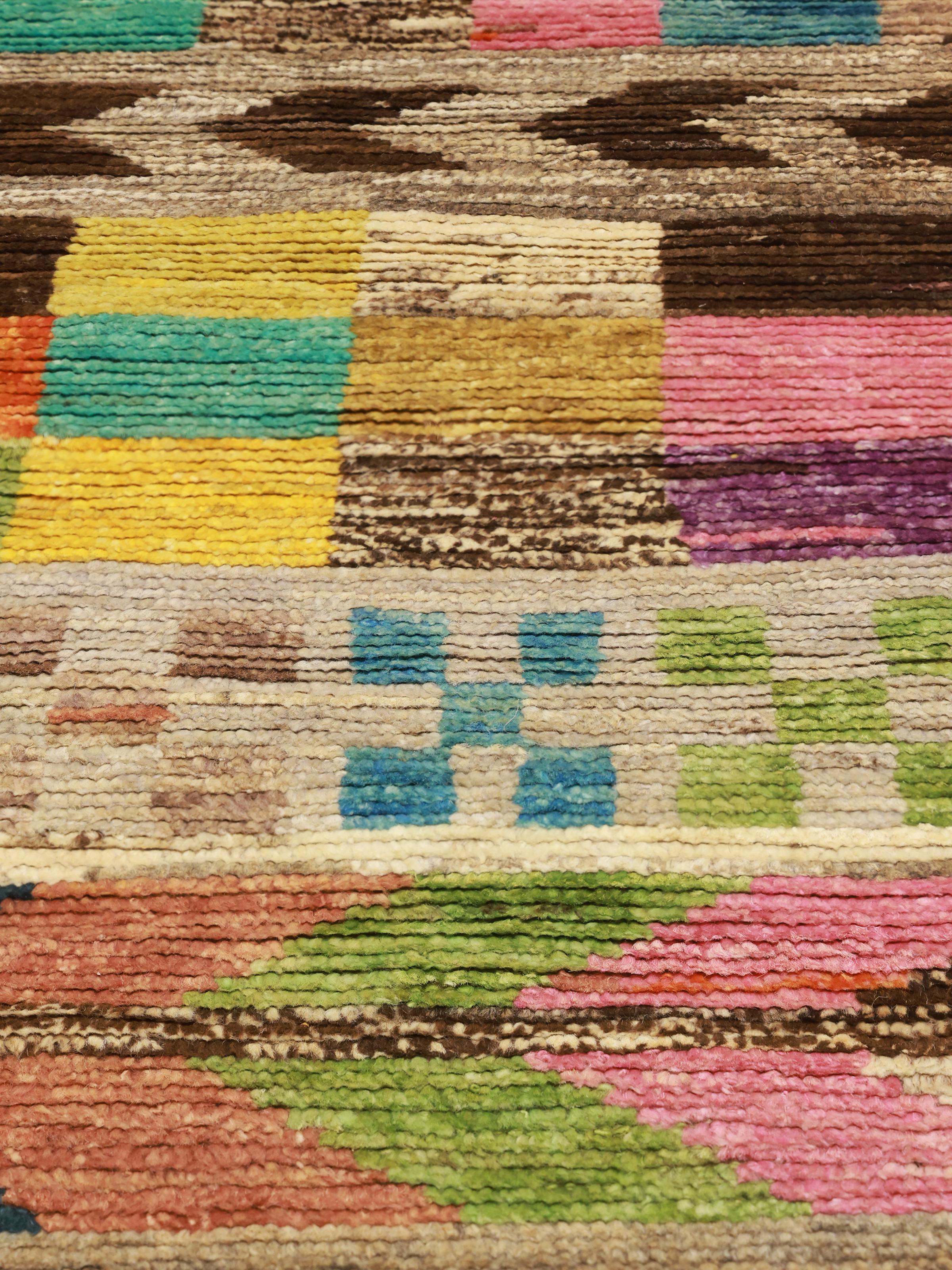
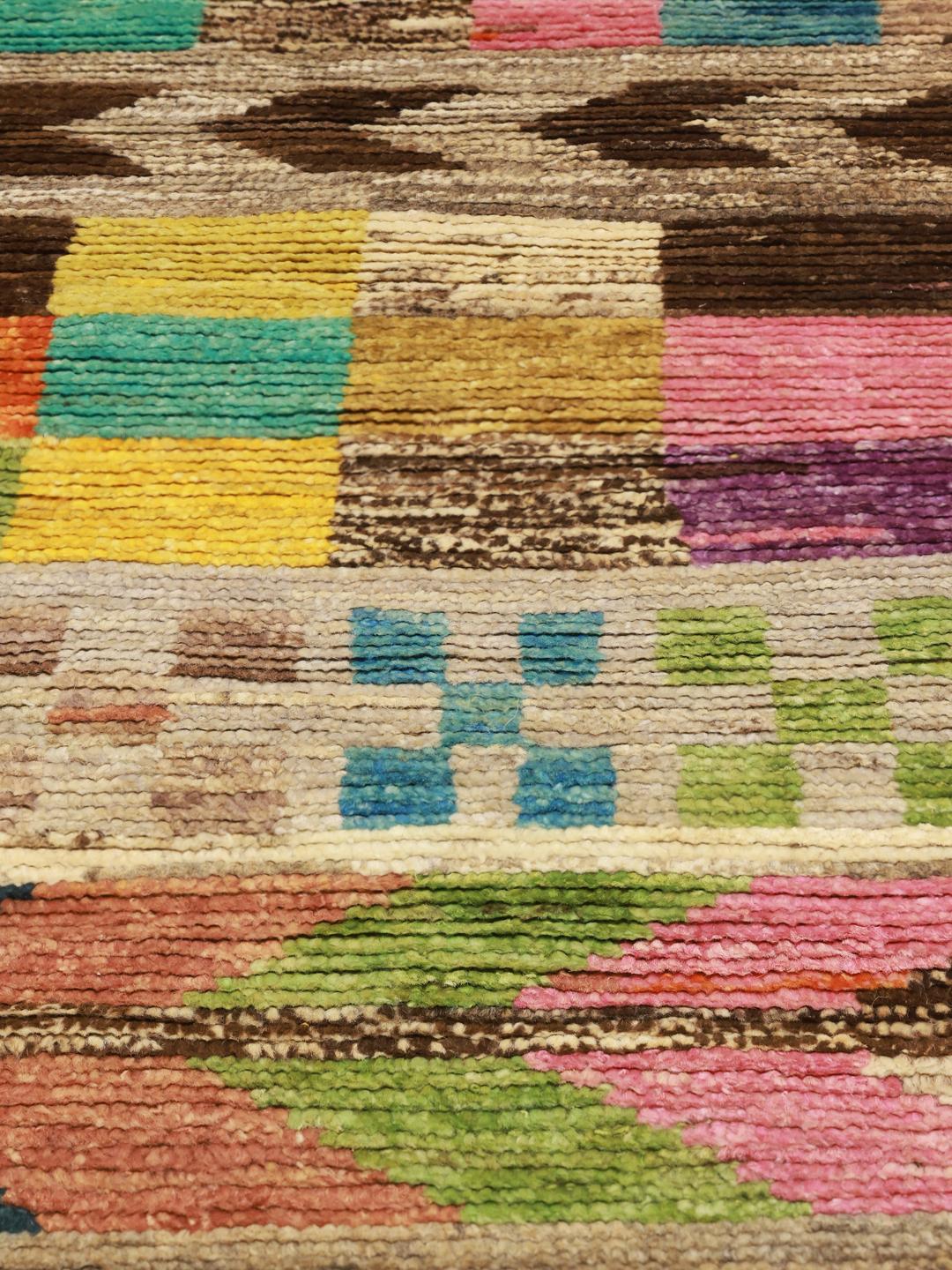
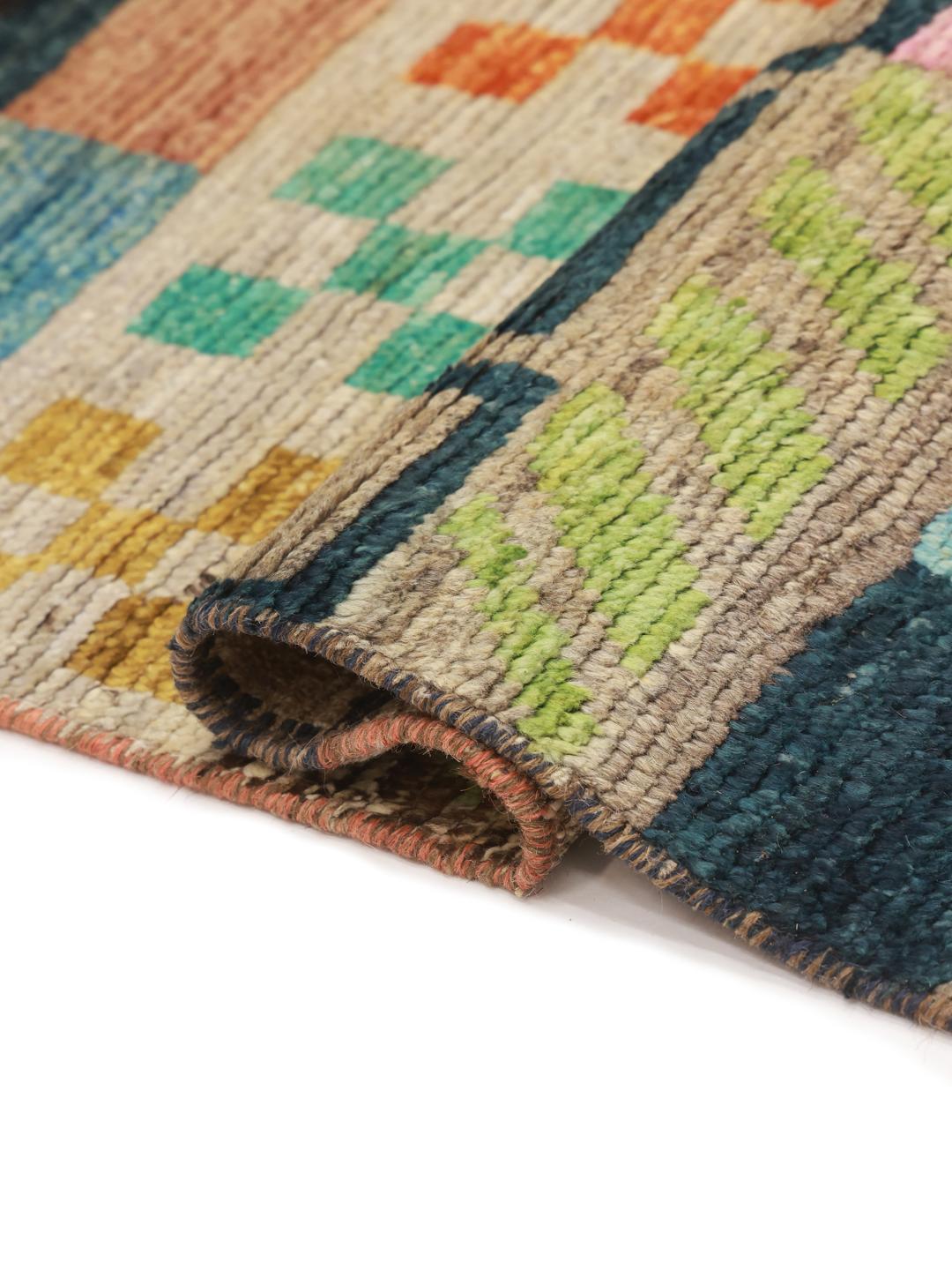
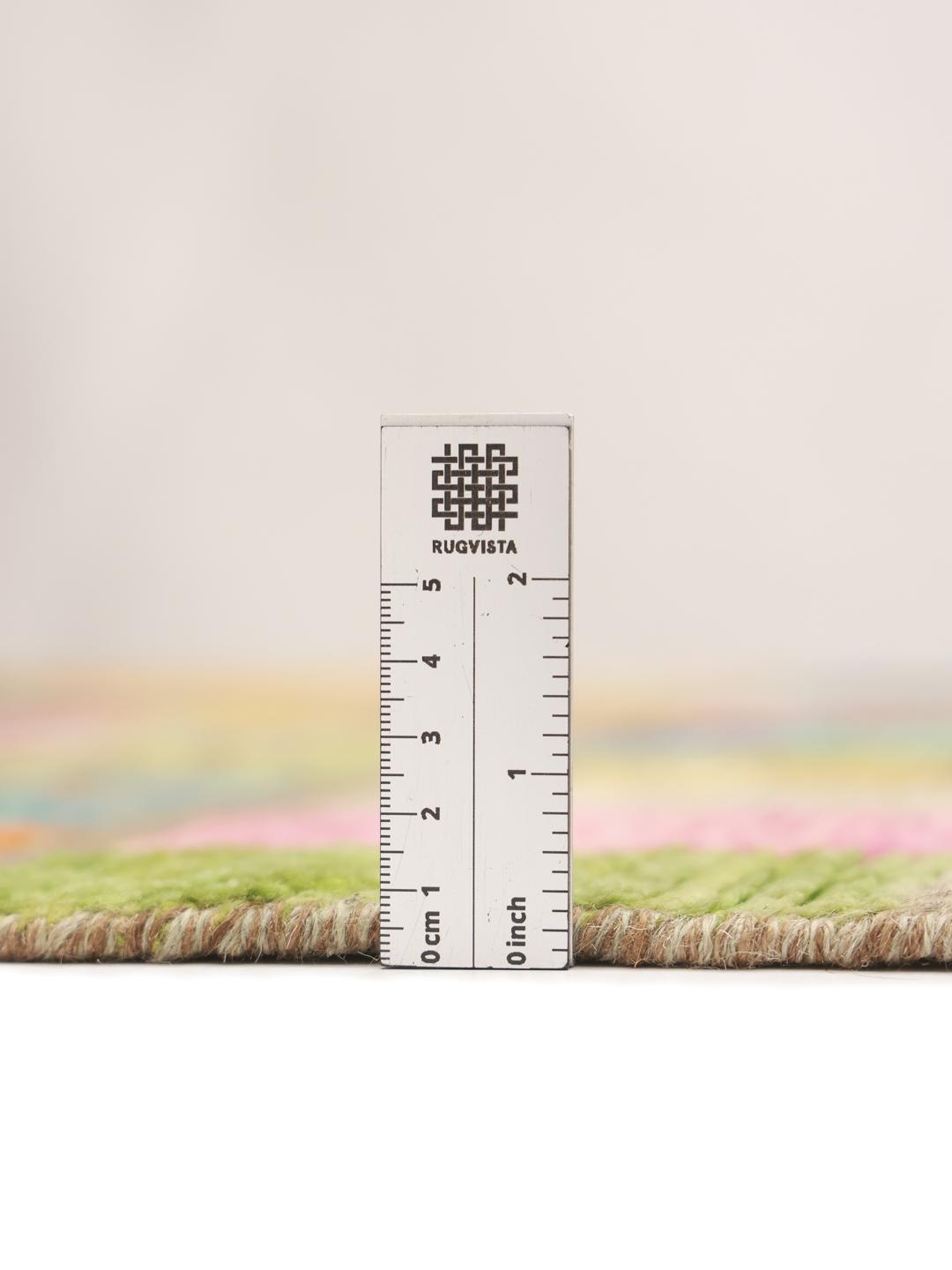
The term 'Berber' often refers to a style characterised by a thick, comfortable pile and a focus on nomadic, geometric aesthetics. These rugs are traditionally constructed using a strong, multi-strand Wool foundation, which provides the necessary support for the dense pile. This quality of construction is what allows such rugs to remain resilient and soft even after decades of use.
Visually, this tradition is famous for its use of symbolic motifs and high-contrast colour palettes. While traditional palettes often leaned toward earthy tones, modern interpretations like this one embrace a wider spectrum of vibrant colours, utilising them to create rhythmic patterns that feel both ancient and contemporary.
Collecting a rug from this tradition is an investment in heritage and human skill. These pieces are valued not only for their aesthetic impact but for the cultural history they represent. Owning one is a way to preserve a centuries-old craft that prioritises patience, precision, and the artistic expression of the weaver over the speed of industrial production.