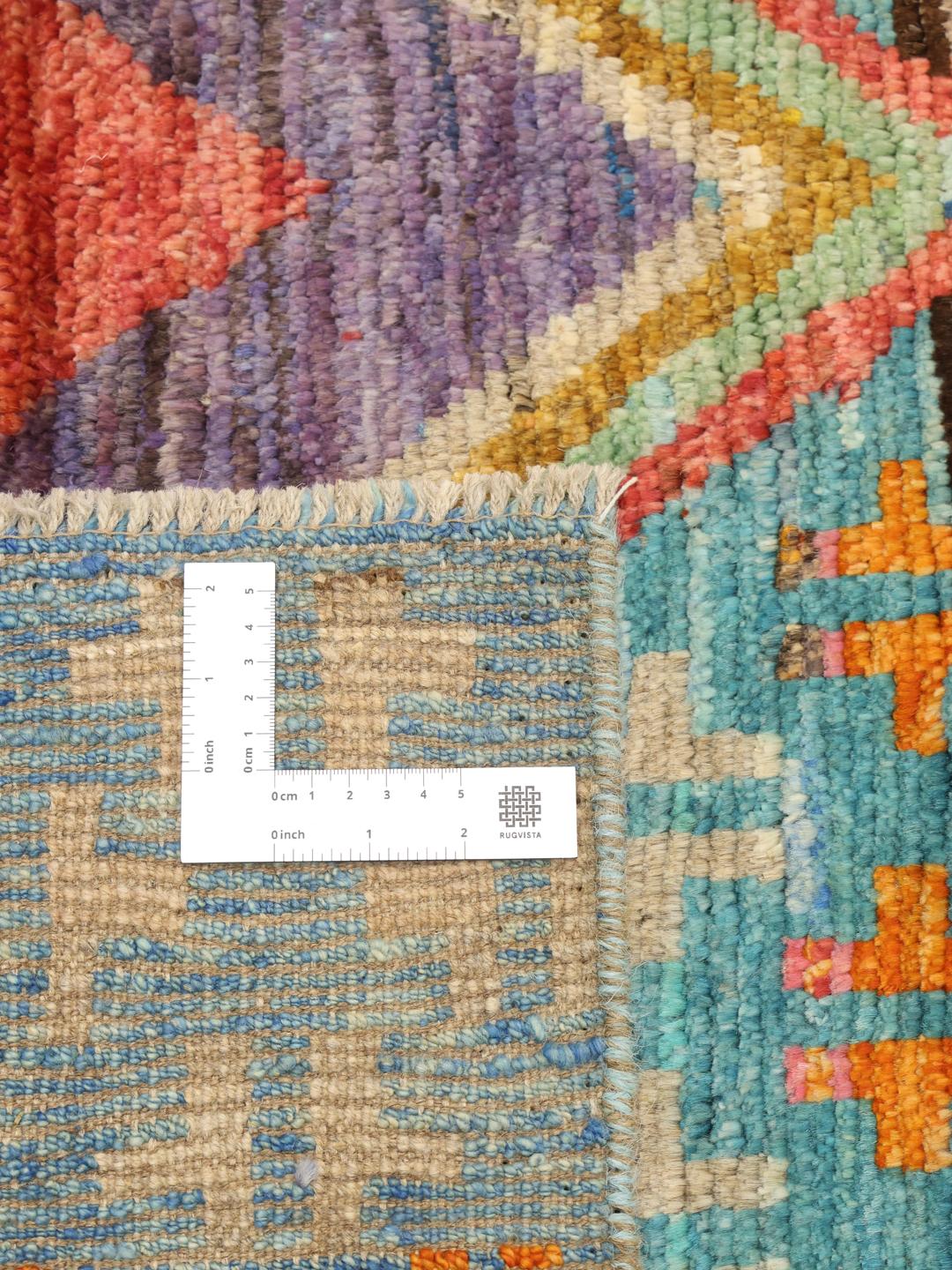
Berber rugs originate from the nomadic traditions of North Africa, where they were traditionally crafted for warmth and practical use in harsh climates. While the style is deeply tied to the Atlas Mountains, the tradition has inspired weavers across the globe, including in Afghanistan. These rugs are celebrated for their ability to blend ancestral motifs with contemporary aesthetics, evolving from purely functional items into highly sought-after decorative art.
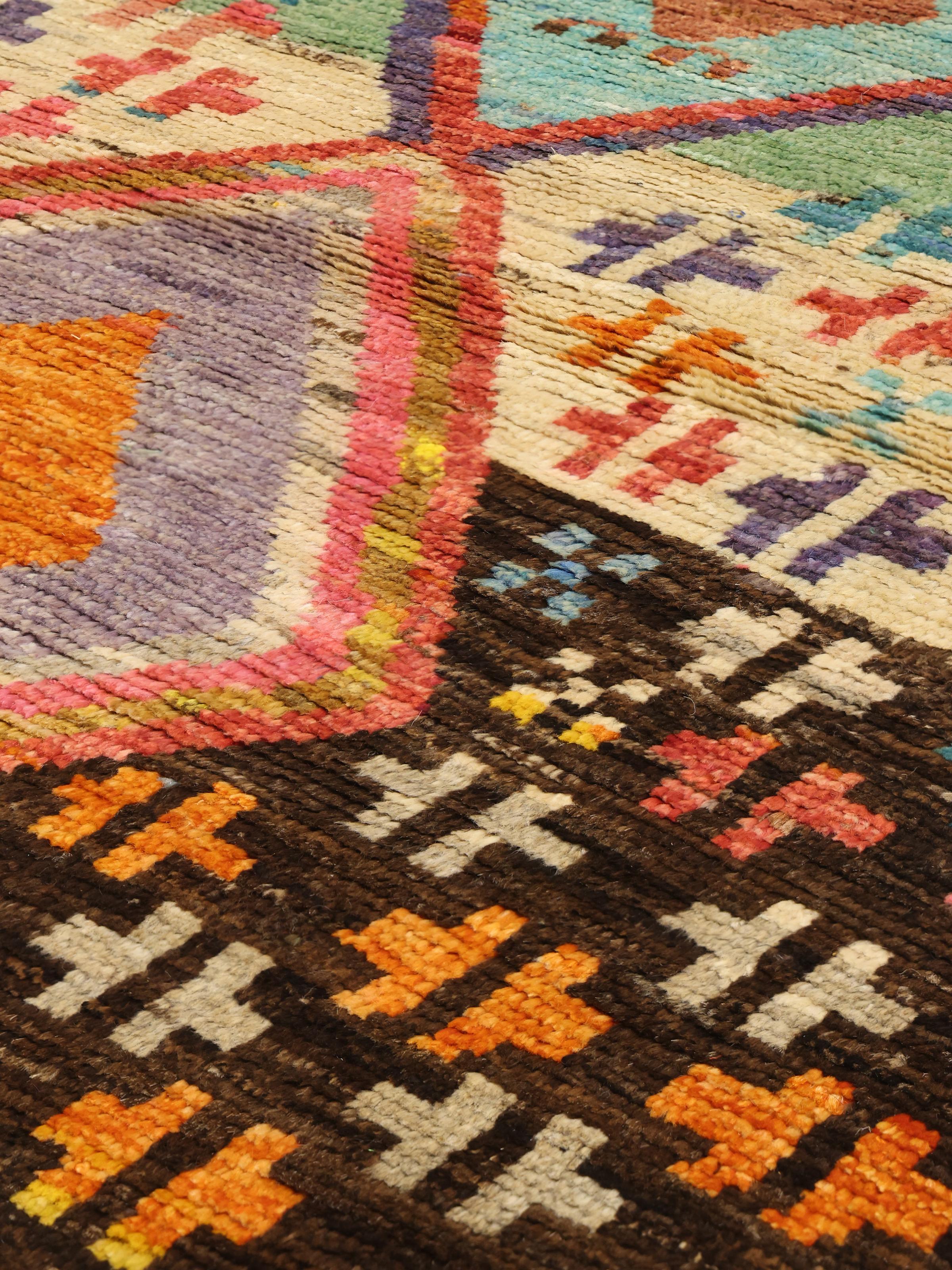
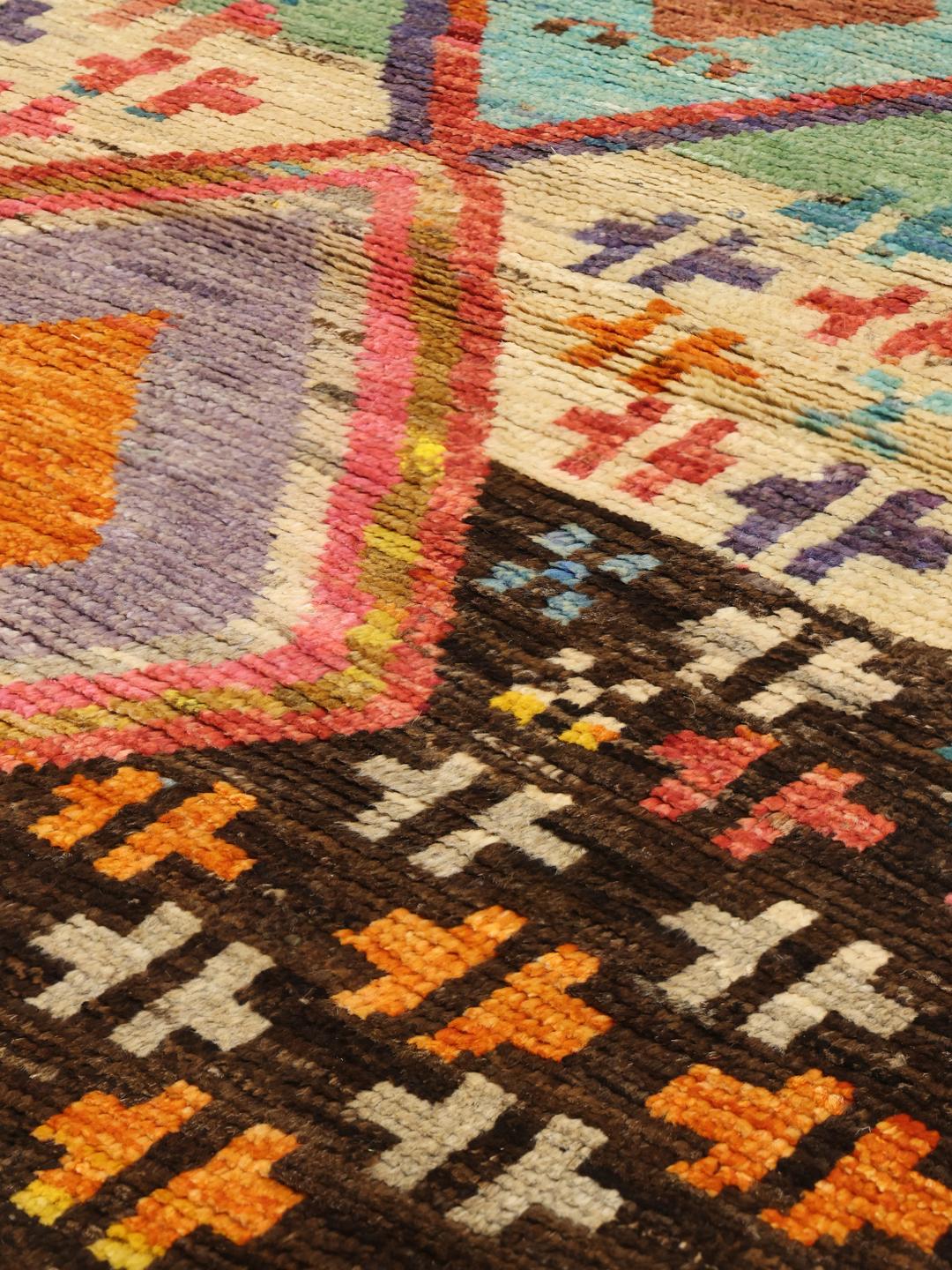
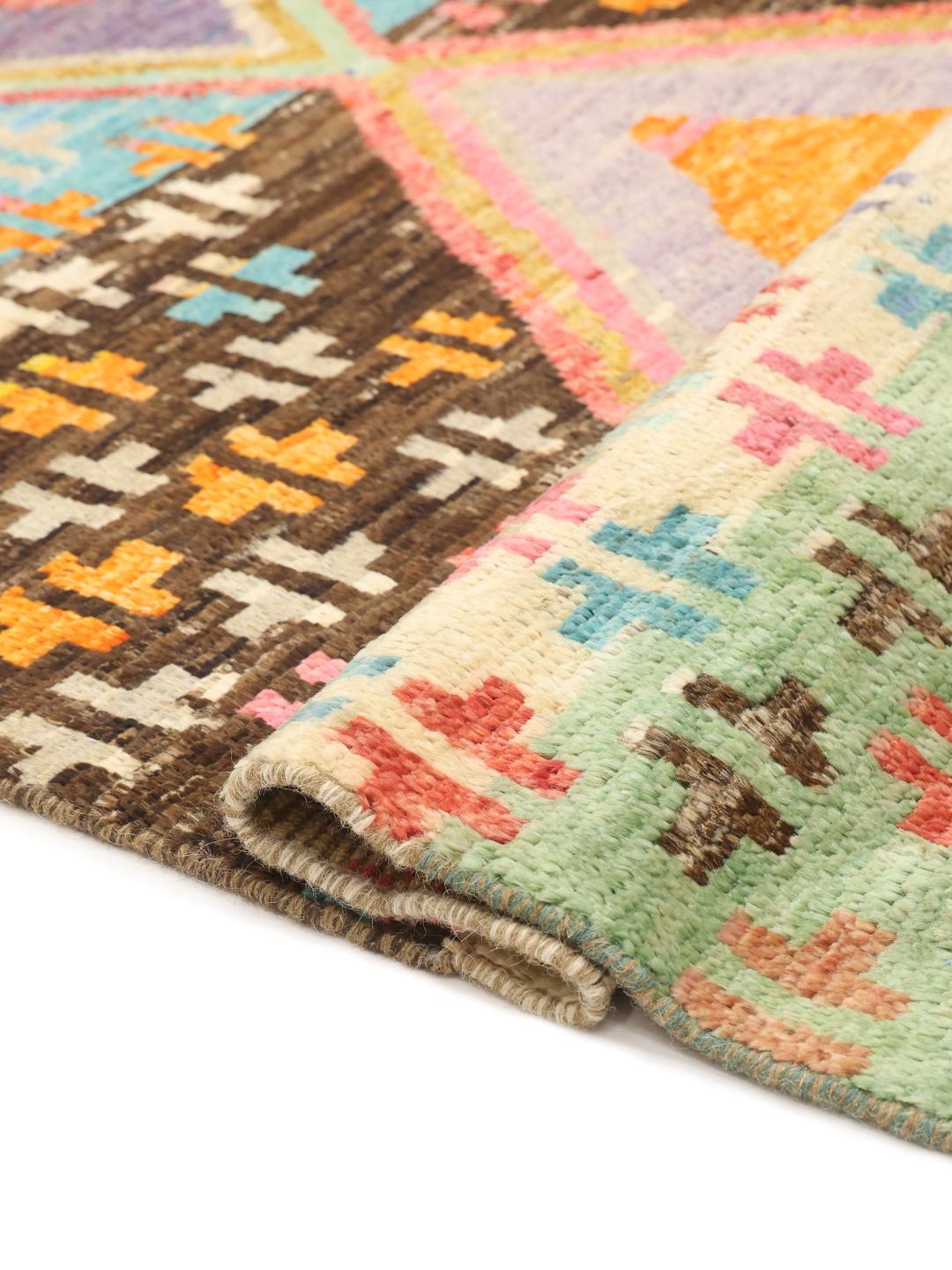
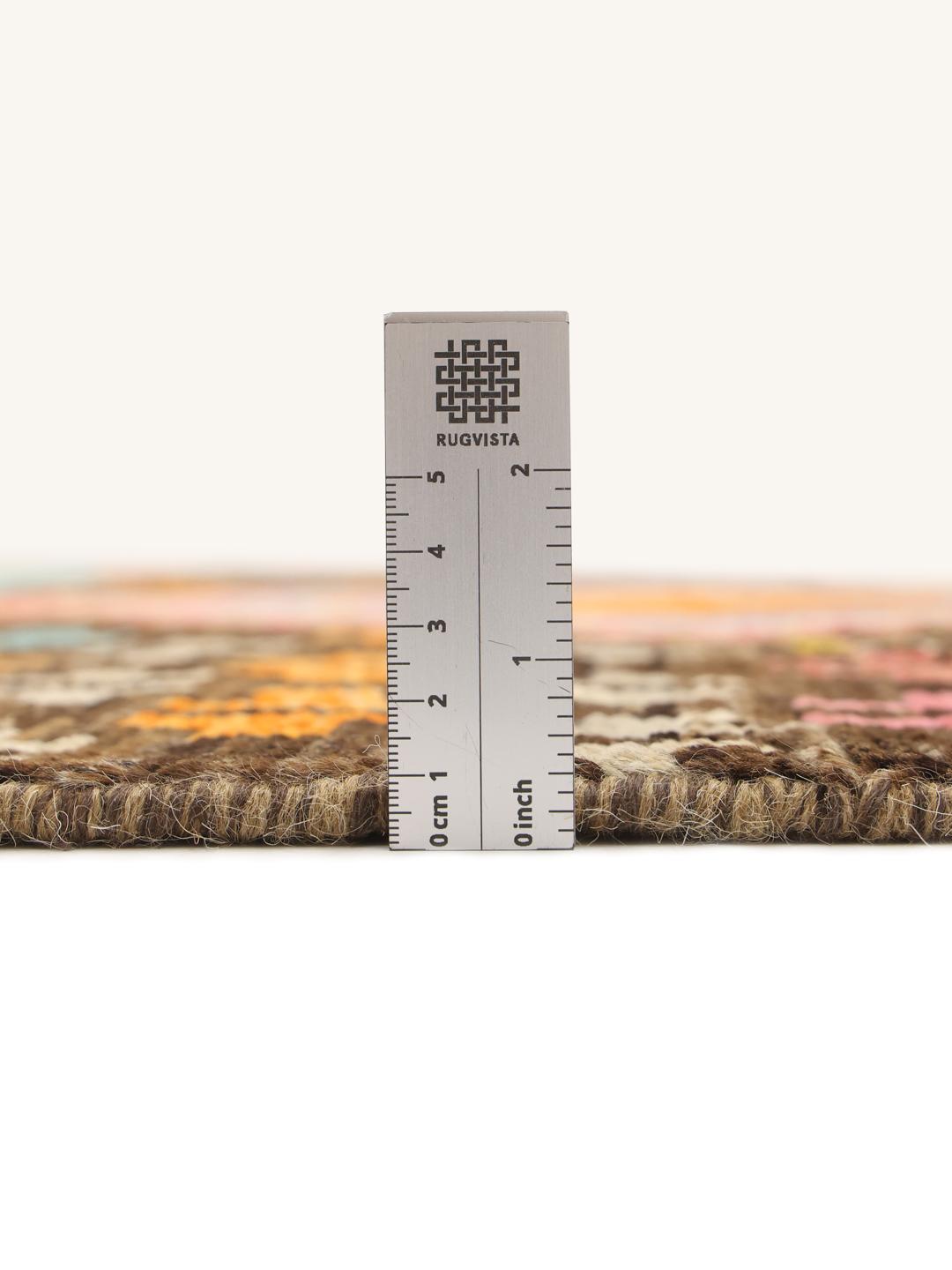
The term hand-knotted refers to the classic technique where individual strands of wool are tied by hand to the warp and weft foundation. This method is the hallmark of quality in the world of rugs, as it allows for intricate designs and a pile that is far more durable than machine-made alternatives. A hand-knotted rug is built to endure, often becoming a family heirloom that gains character over time.
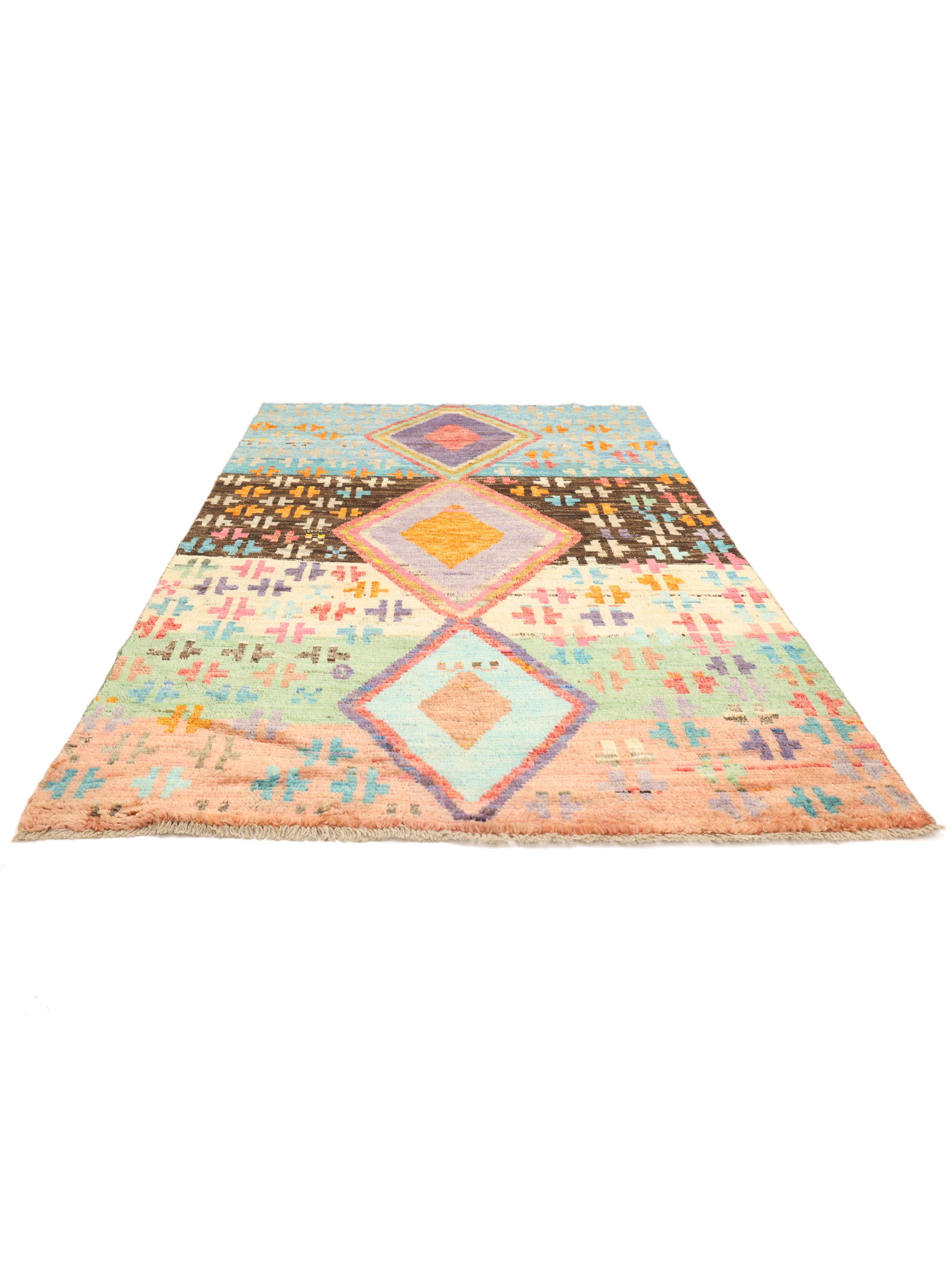
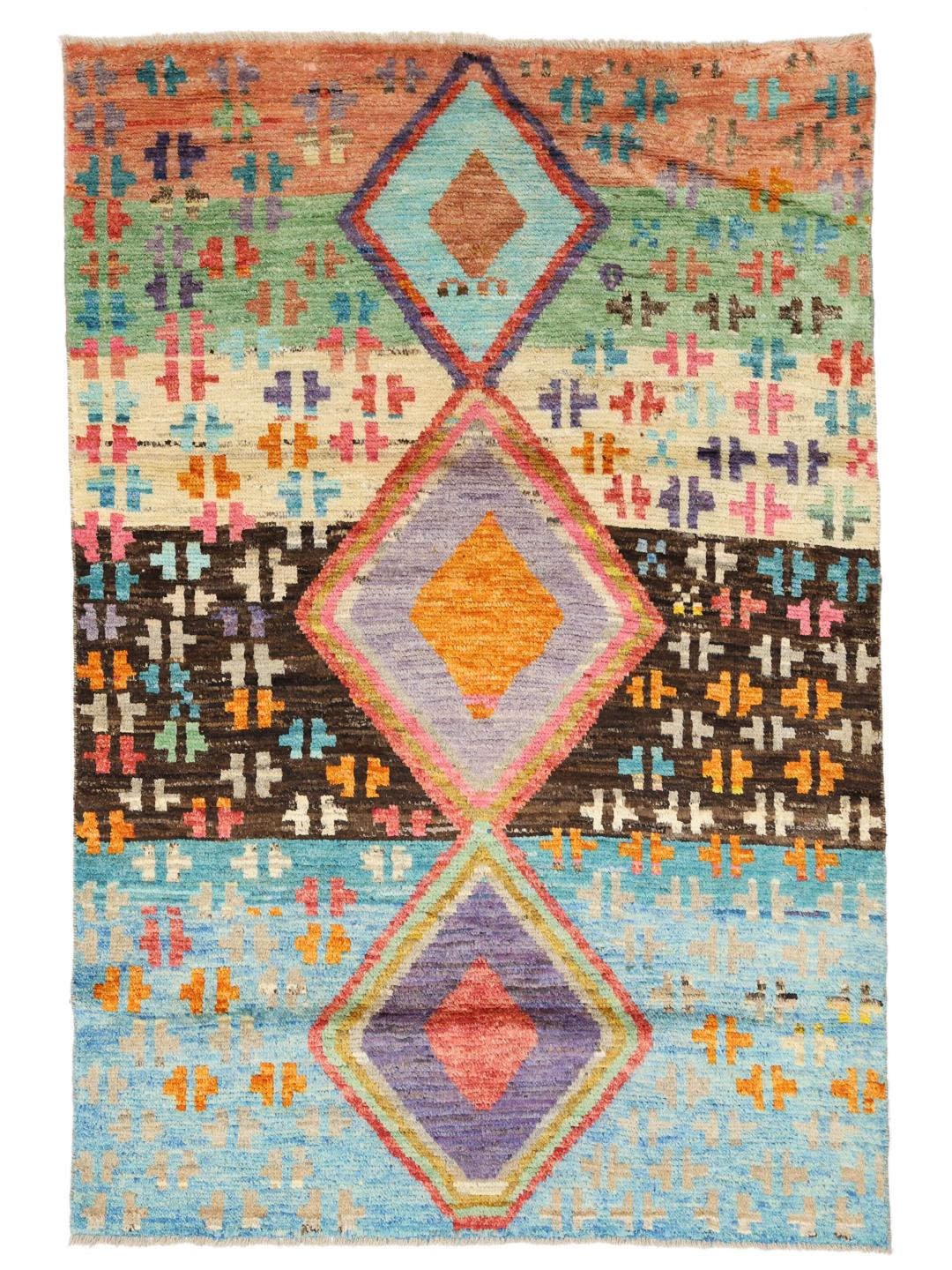
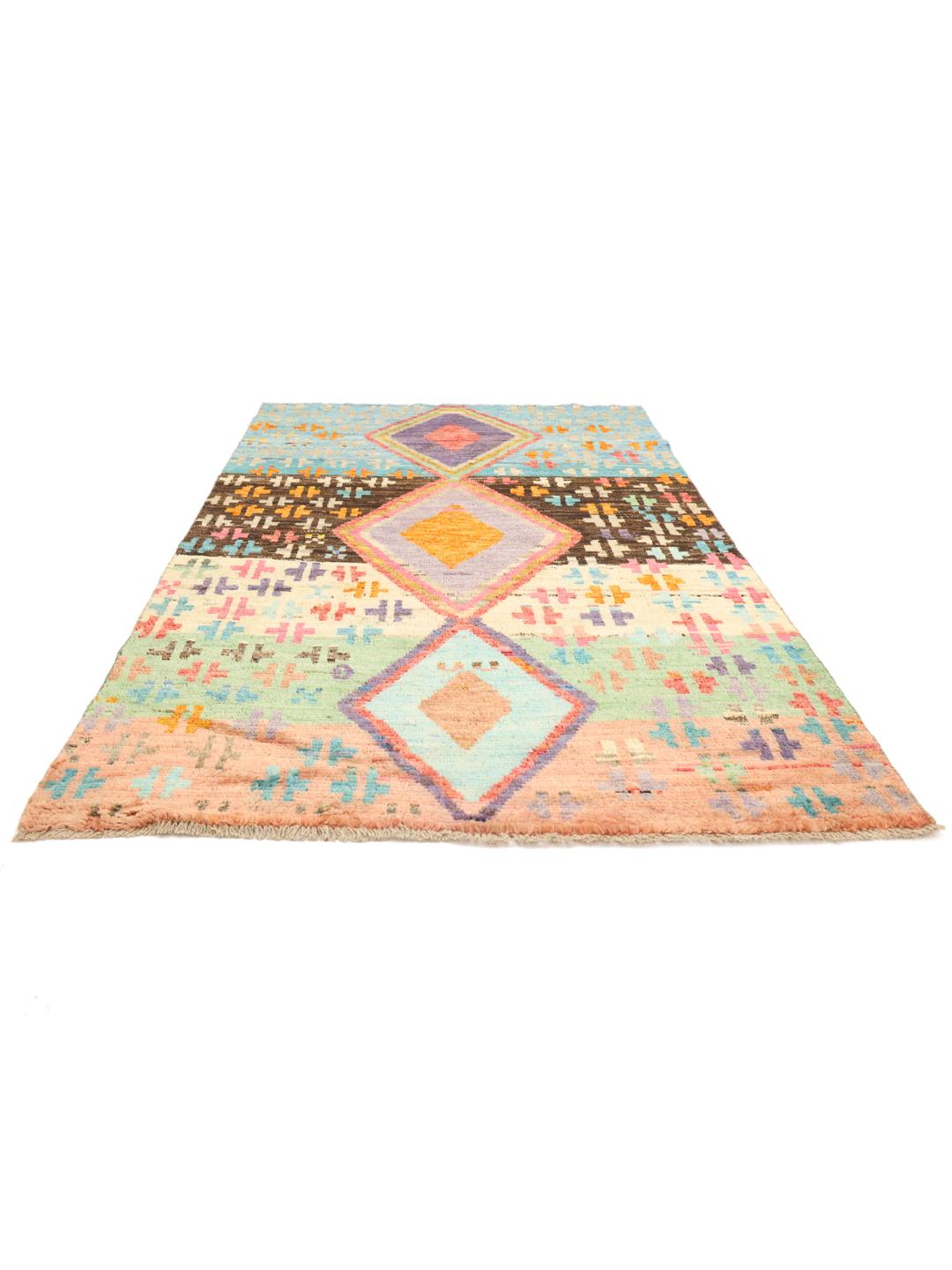
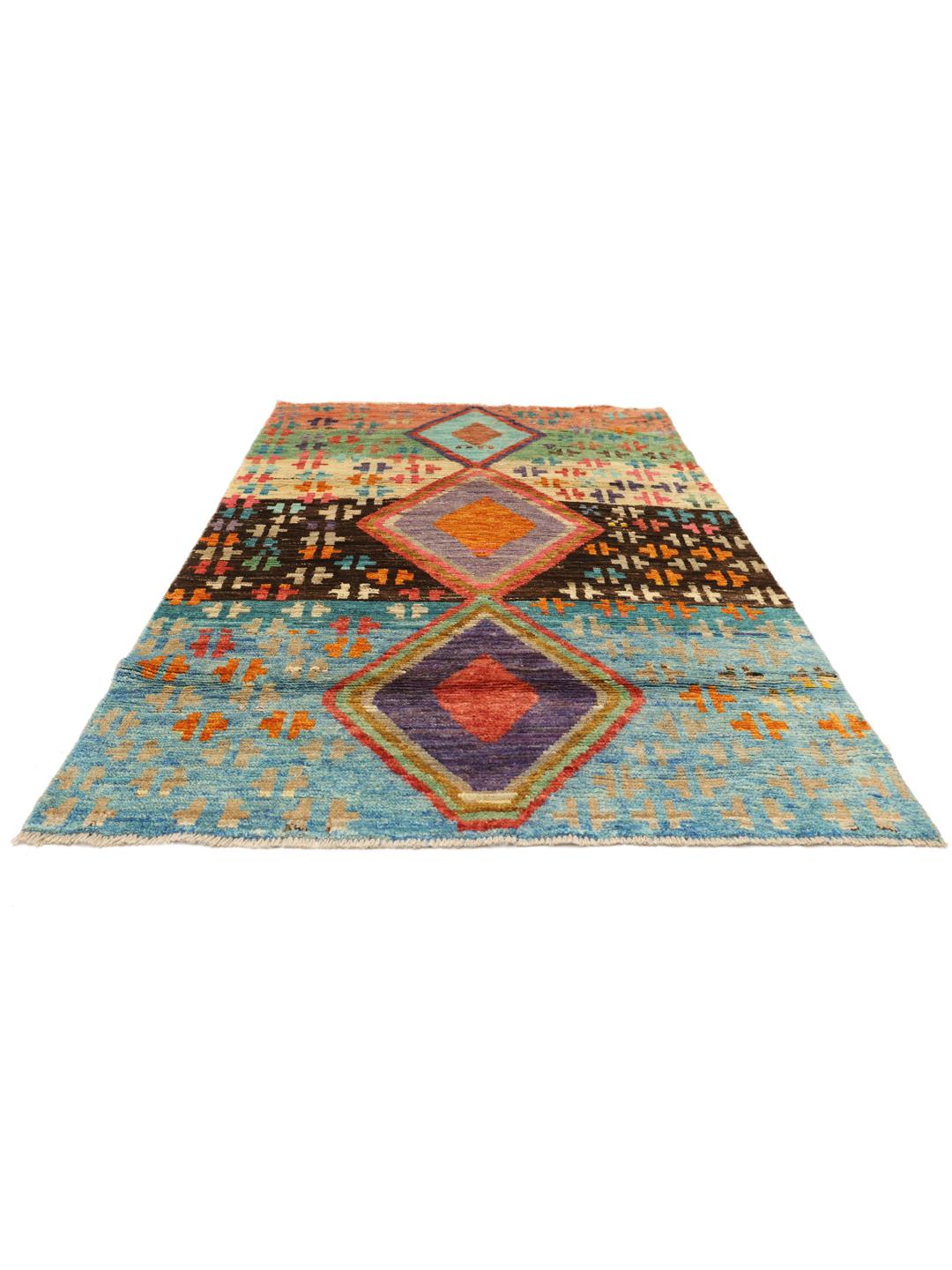
The design of this rug is defined by its bold geometric patterns, particularly the diamond motifs that are central to the Berber visual language. These shapes are often symbolic, representing protection and fertility, and are arranged here in a dynamic, colourful composition that feels both ancient and modern. The contrast of the dark, moody background against the vibrant, playful shapes creates a visual tension that is typical of the most expressive examples of this style.
Collecting a rug from this tradition is an investment in human skill and cultural heritage. Each piece acts as a physical record of the weaver's creative choices and technical mastery. By welcoming this rug into your home, you are not just adding a decorative element, but participating in a long lineage of craft that values the beauty of the handmade over the uniformity of mass production.