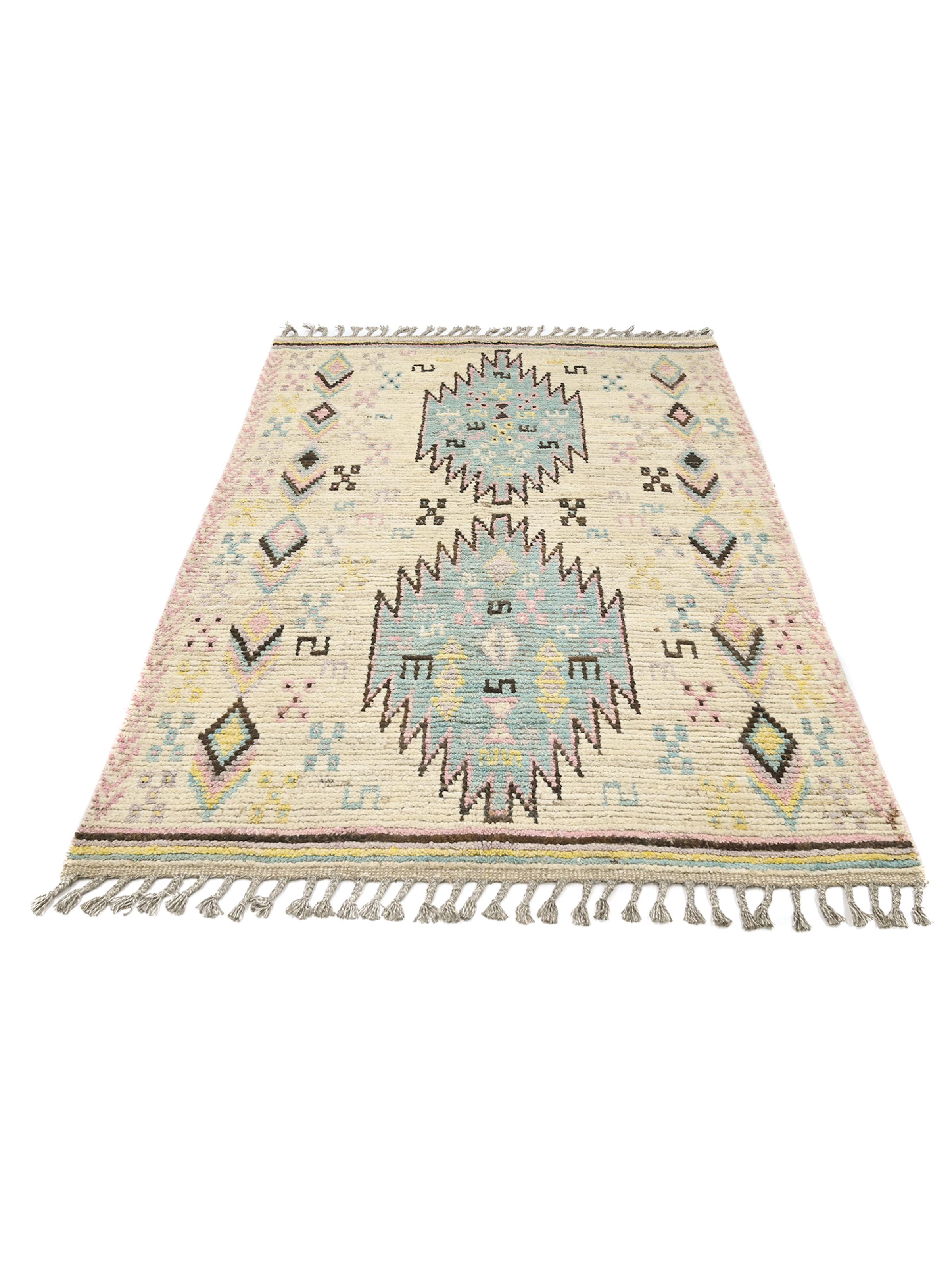
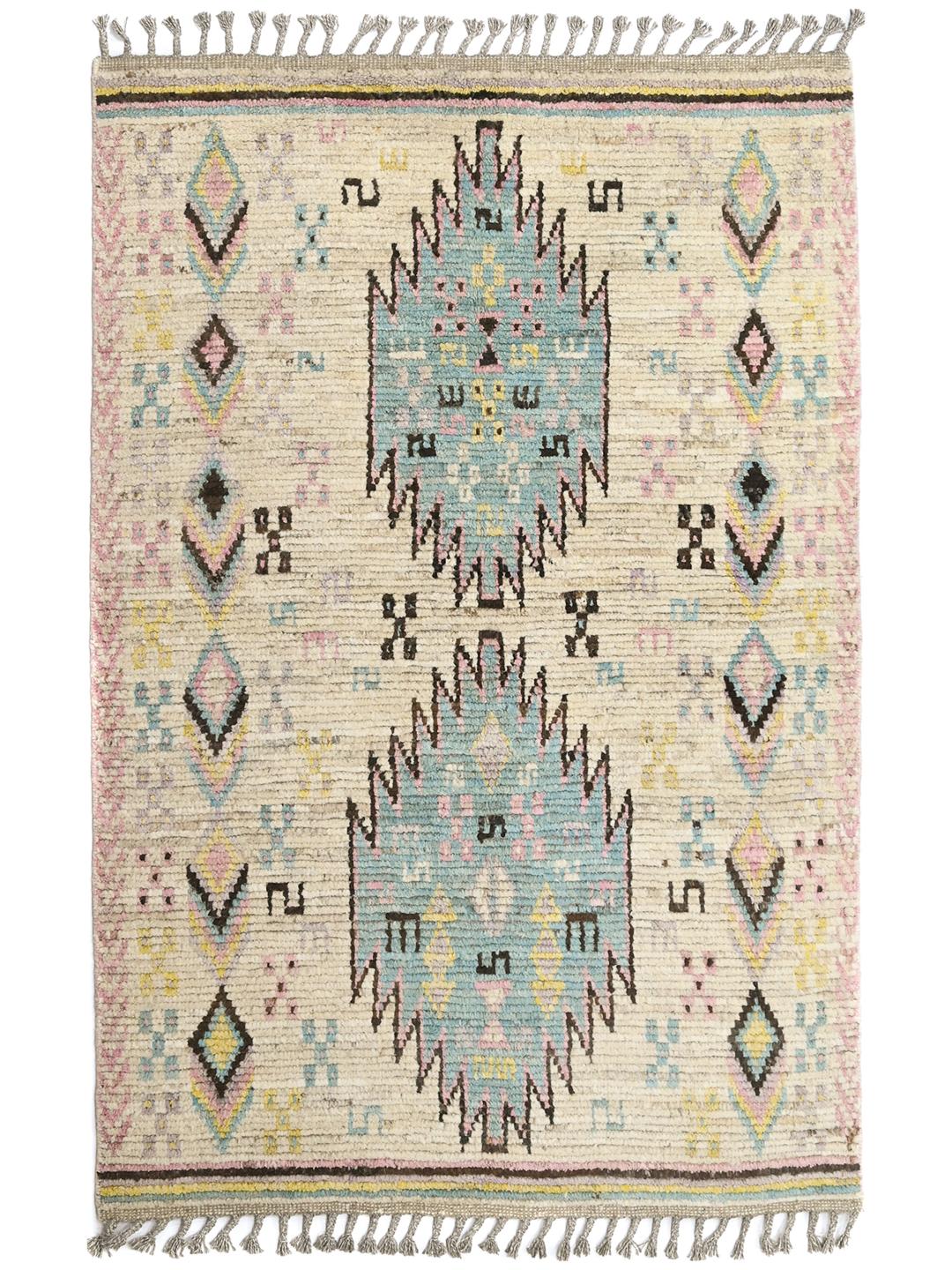
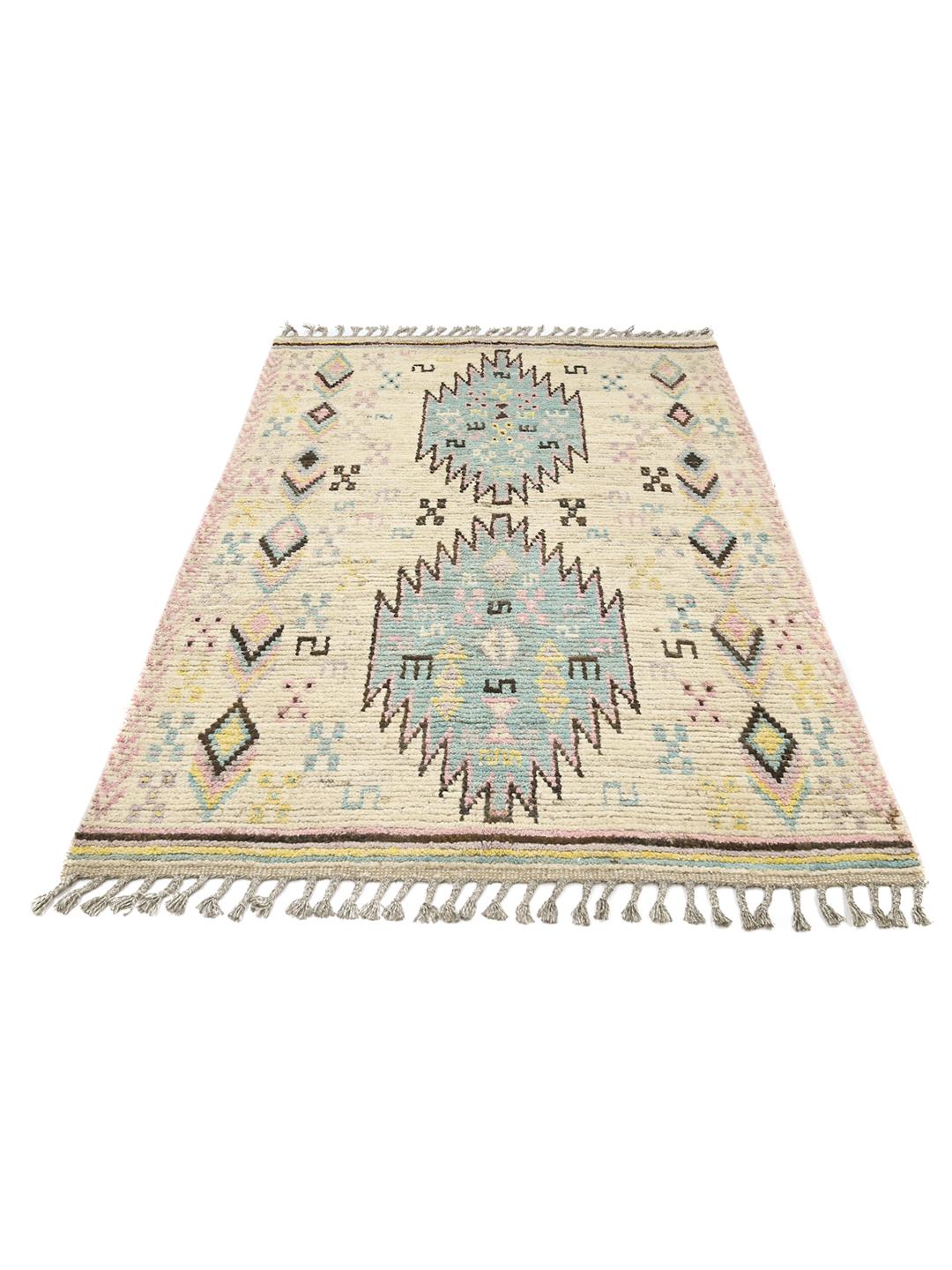
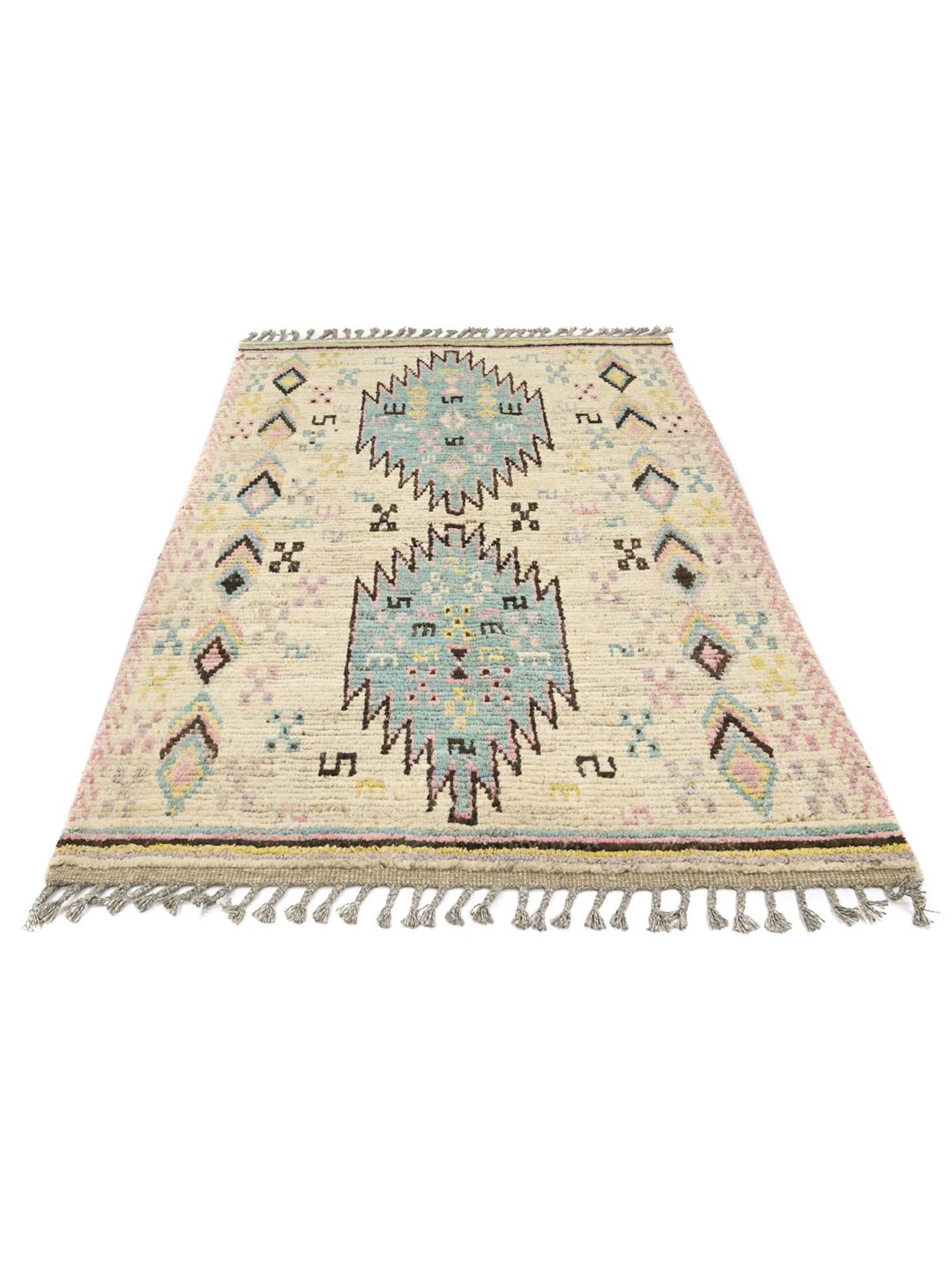
Berber weaving traditions trace back to nomadic tribes across North Africa, though modern adaptations of the style are now crafted by master weavers in regions like Afghanistan. Afghan artisans have embraced the expressive, tribal geometry of traditional Berber patterns, combining those motifs with their own time-honored knotting techniques.
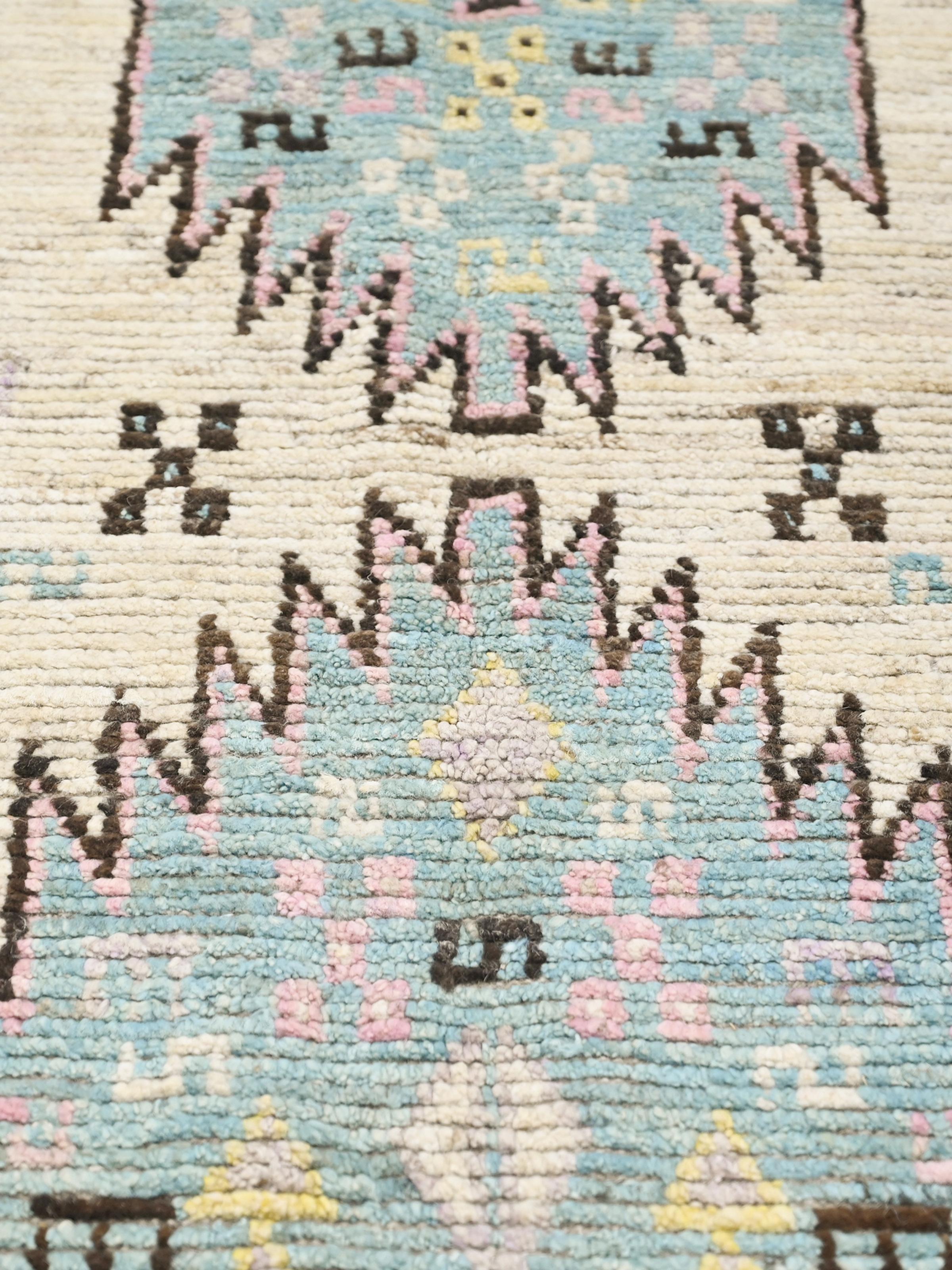
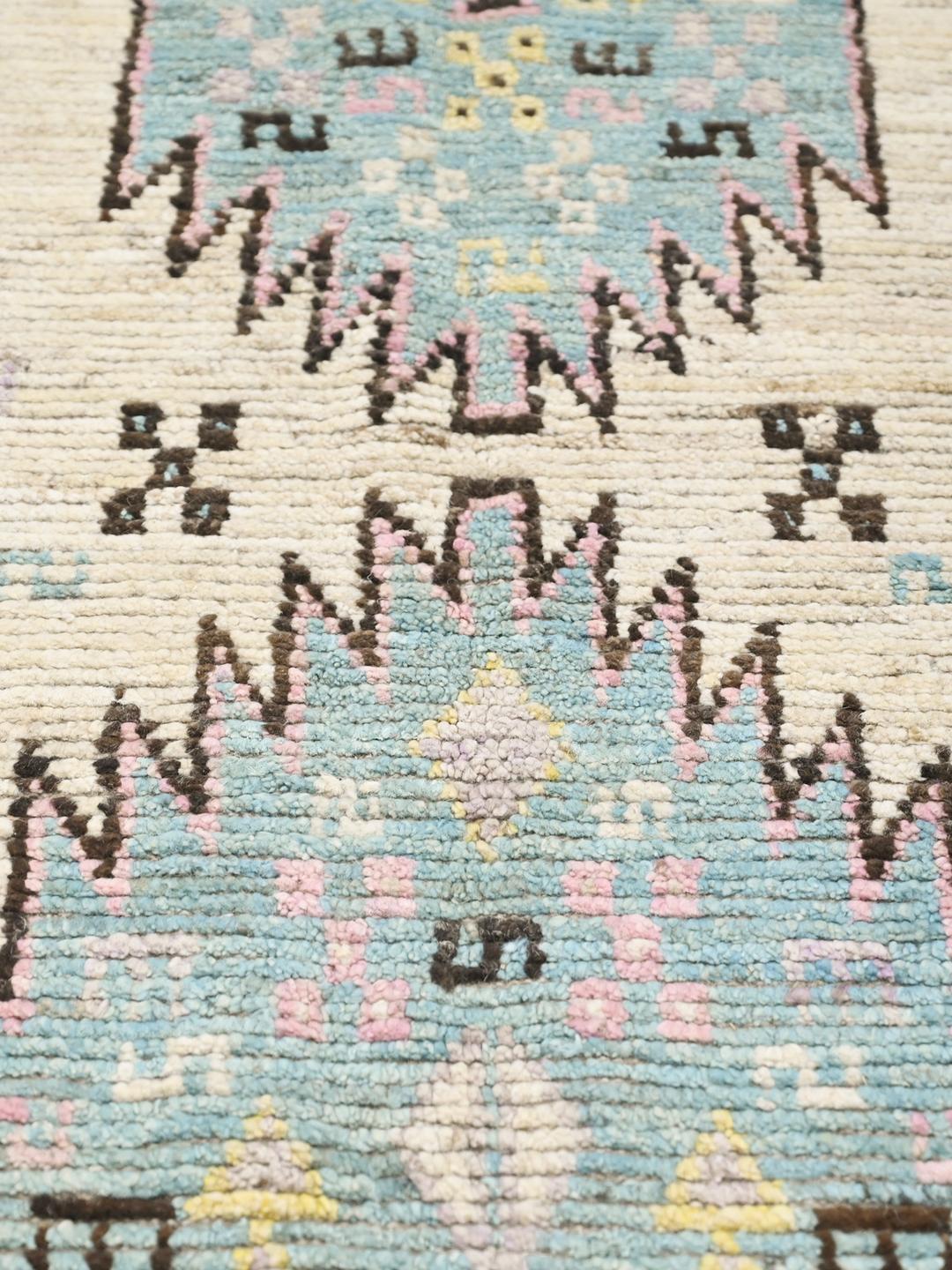
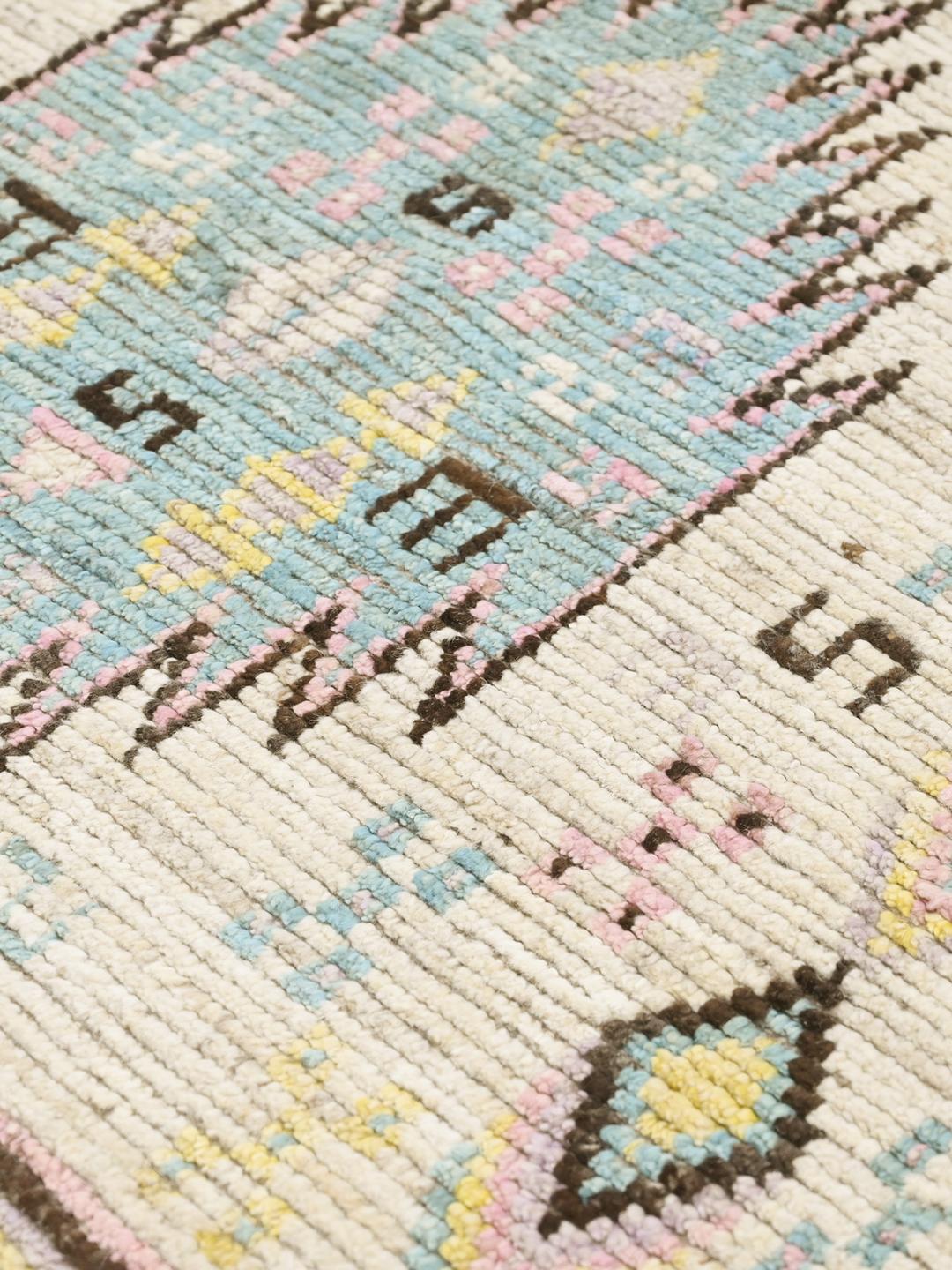
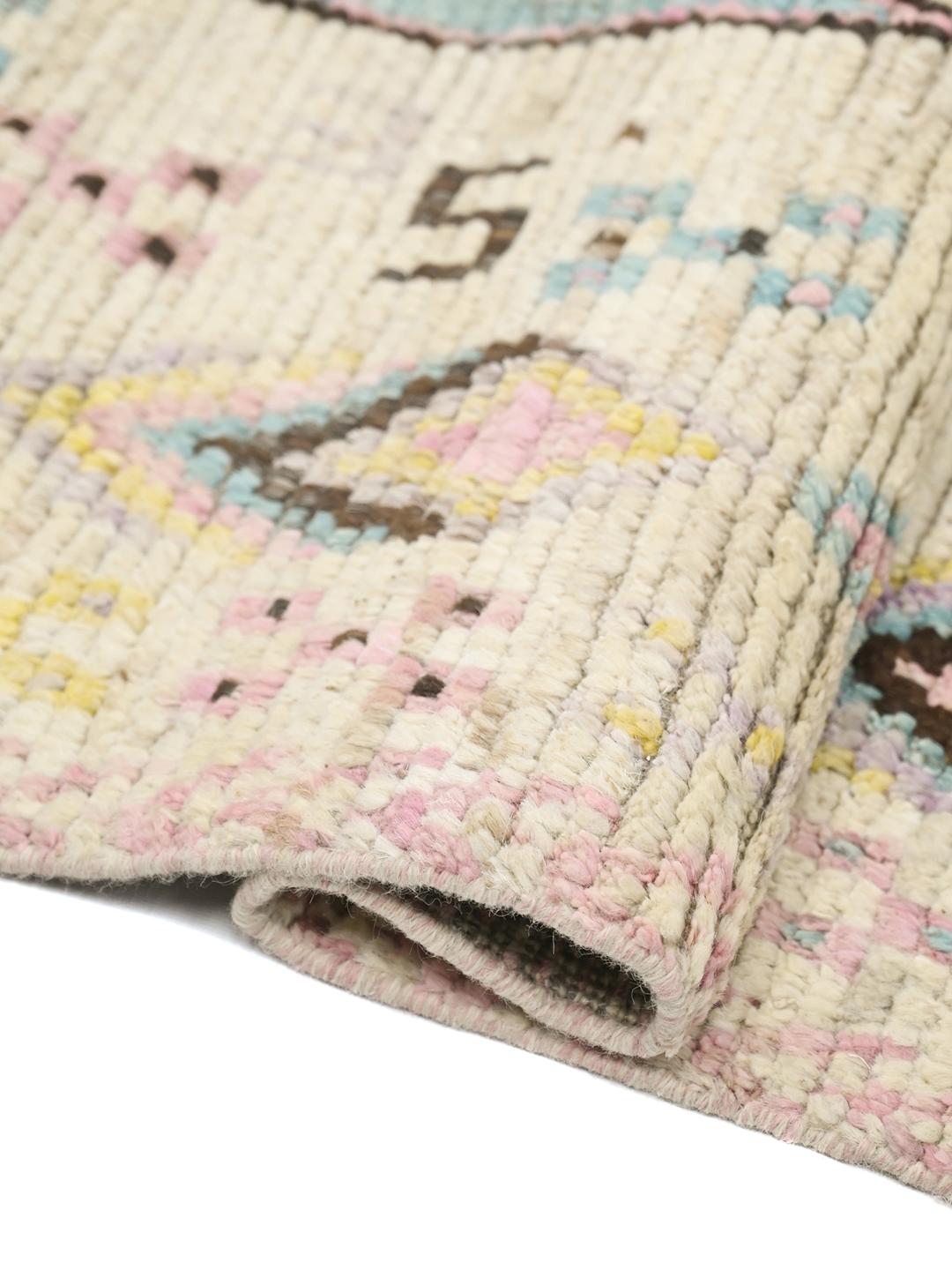
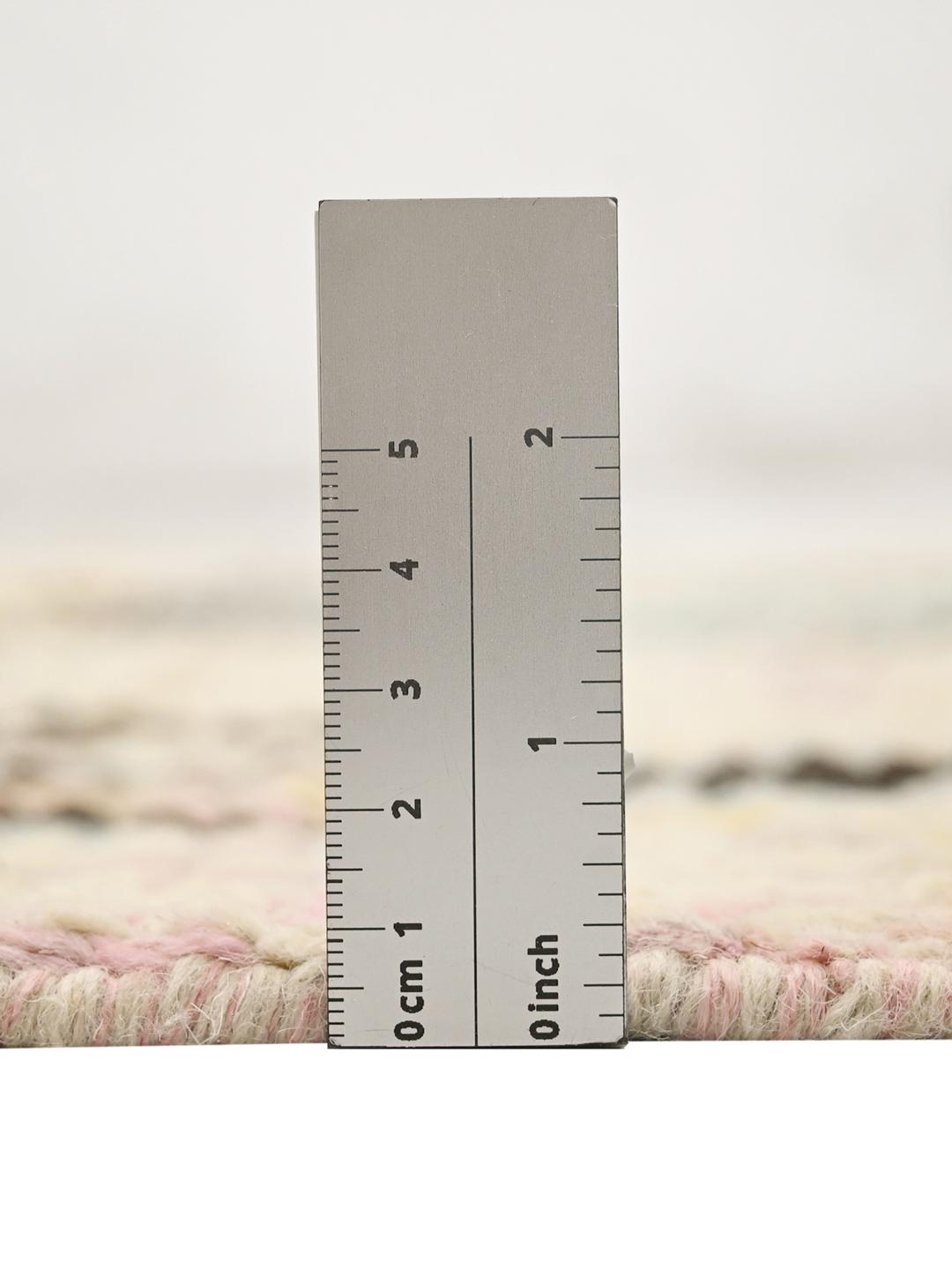
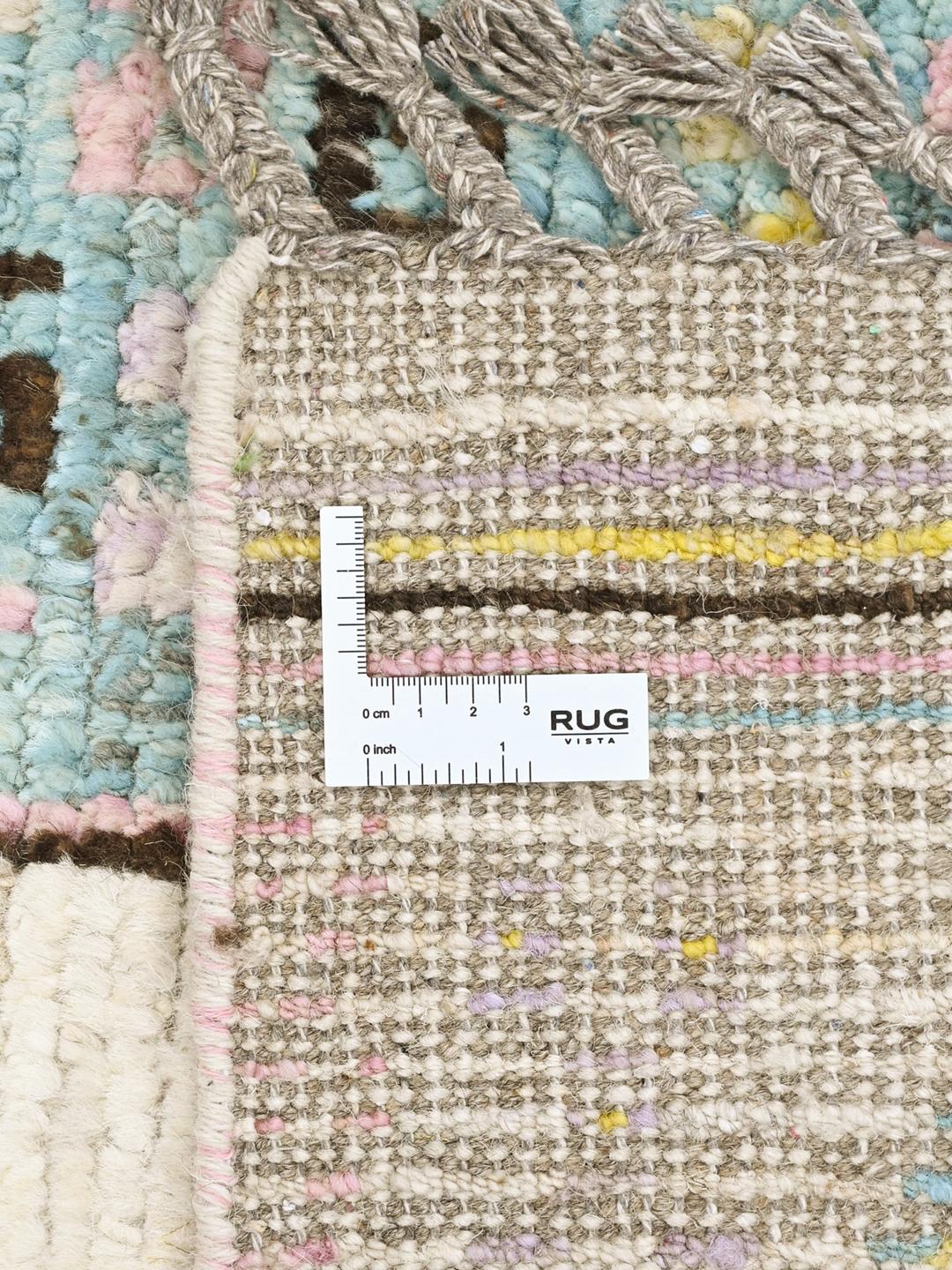
The term hand-knotted refers to a construction method where warp and weft threads form a sturdy grid, around which individual knots of wool yarn are tied by hand. This process creates a dense surface that resists flattening over years of use, making hand-knotted textiles some of the most durable floor coverings available.
Visual language in Berber-inspired rugs revolves around symbolic geometry. Diamond grids, central medallions, and outer border lines often represent protective symbols, nature, or tribal identities. In this piece, the traditional beige ground acts as a canvas for vibrant accent motifs, offering a distinctive twist on classic neutral floor coverings.
Handmade Afghan rugs remain highly valued for their honest materials and authentic regional character. Acquiring a piece from this tradition brings a tangible sense of craft history into the home, celebrating human skill over mass production.