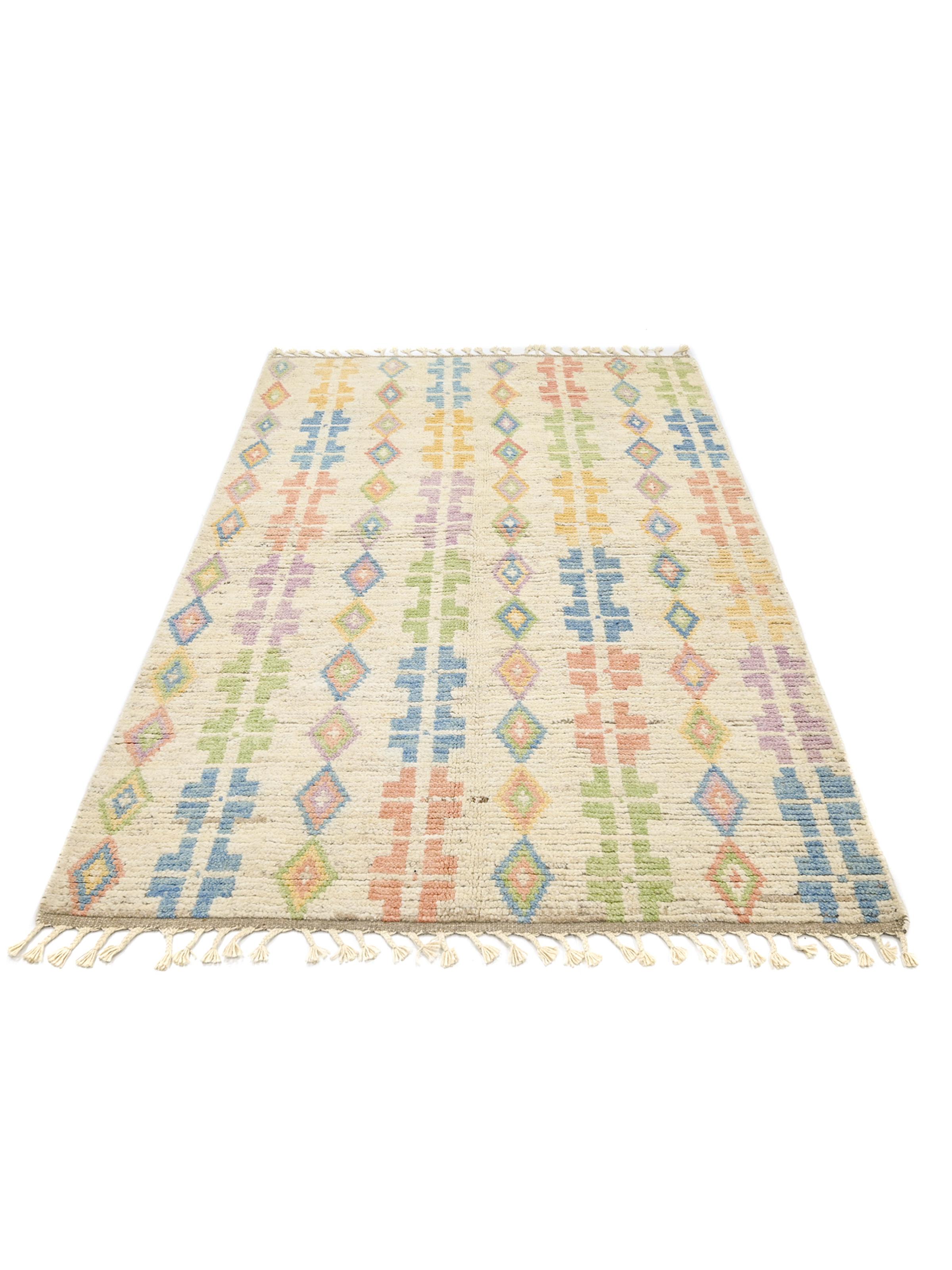
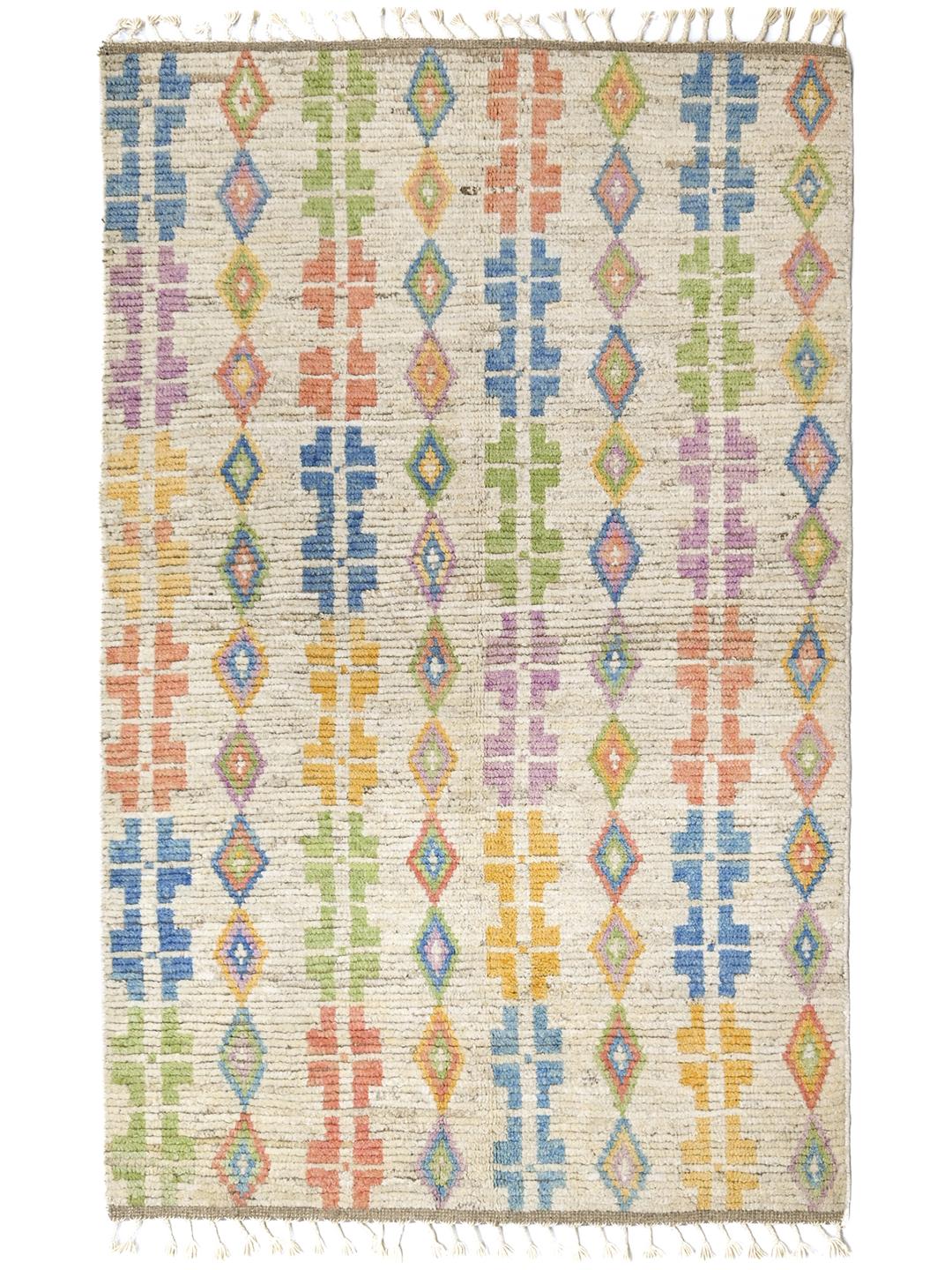
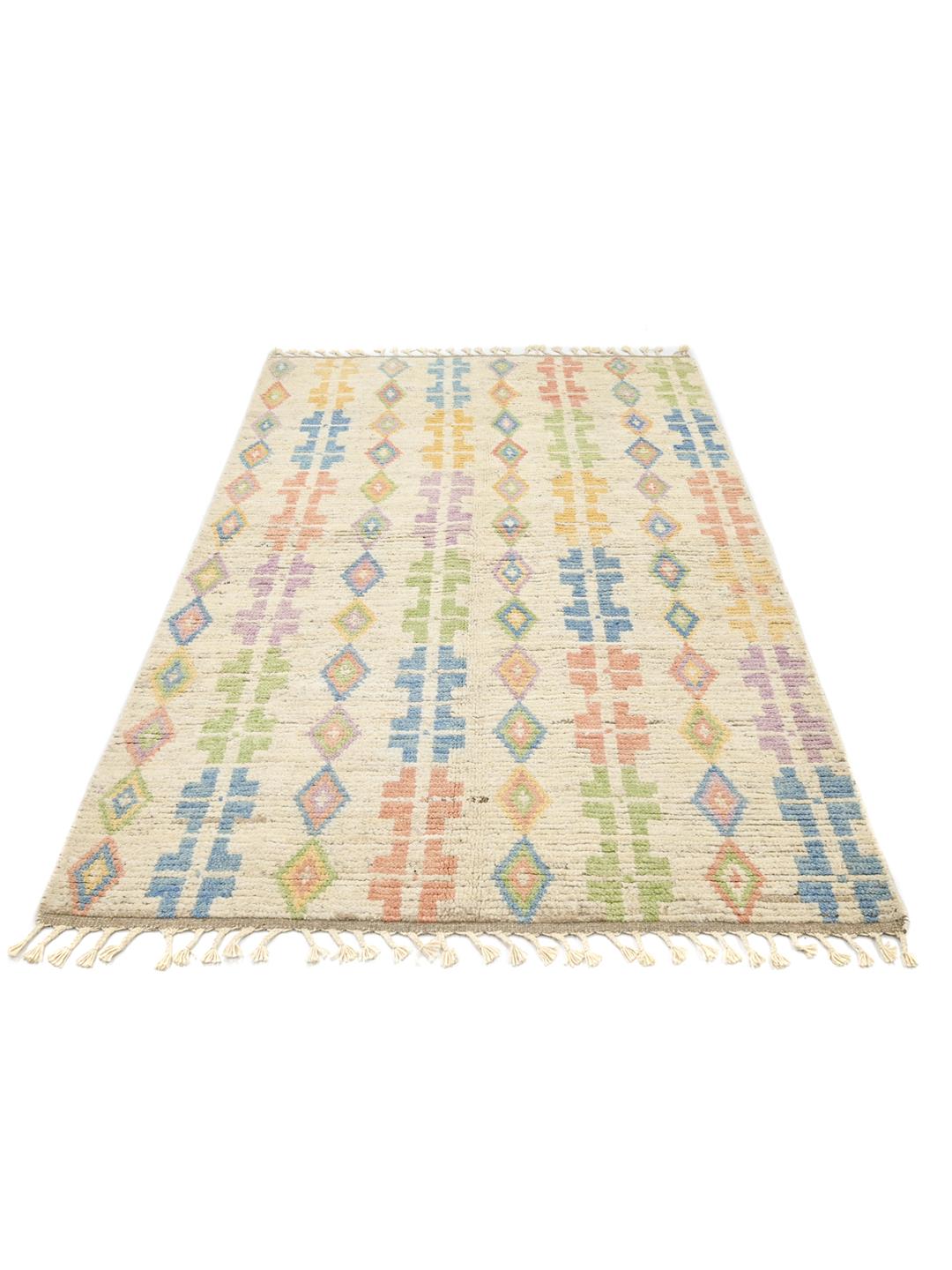
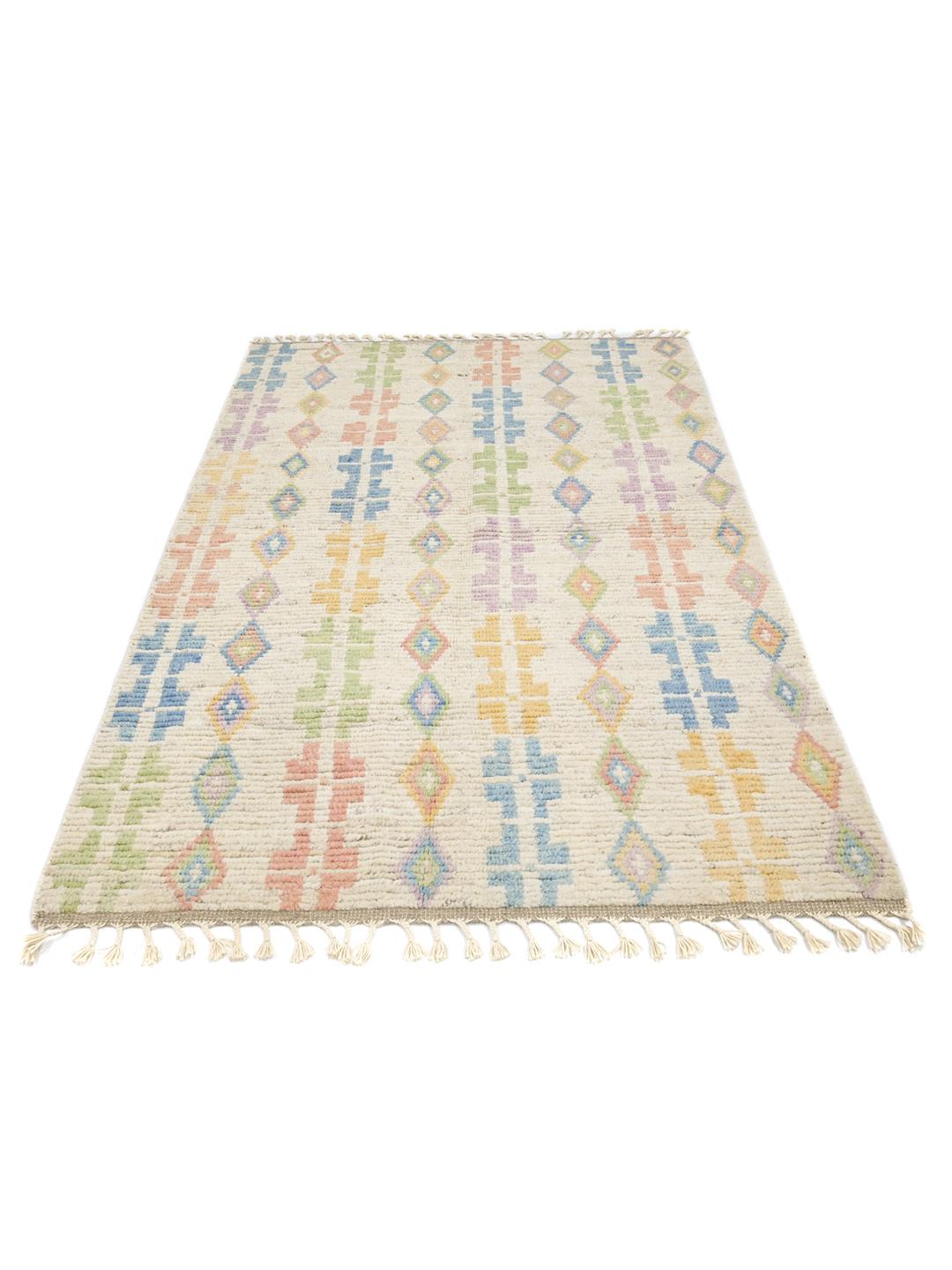
Berber style rugs trace their roots to the nomadic communities of North Africa, where hand-woven textiles served as essential floor coverings, bedding, and protective blankets. Over time, these distinct geometric design traditions spread across weaving regions worldwide, inspiring craftspeople in places like Afghanistan to blend local wool-knotted skills with classic tribal motifs.
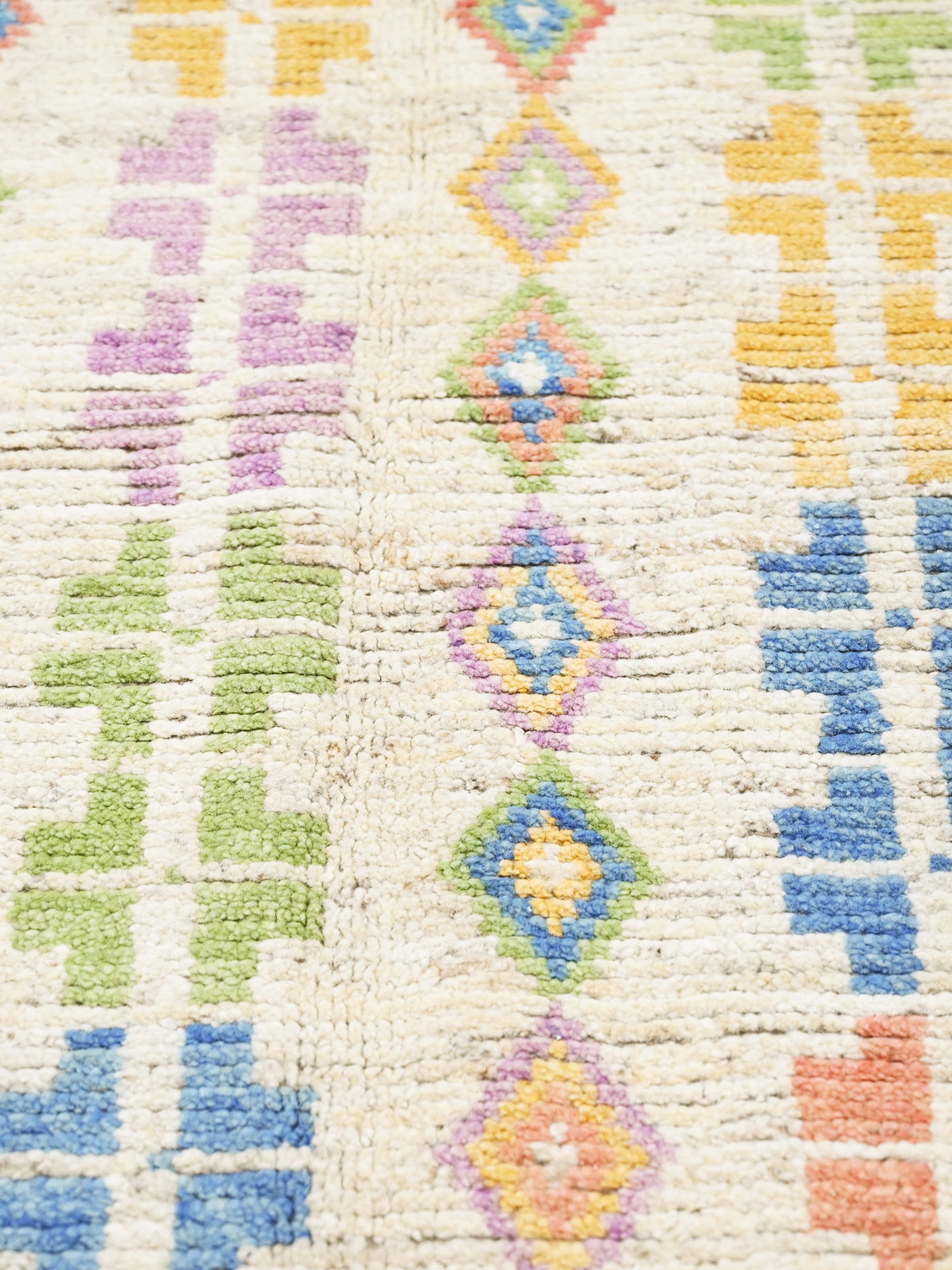
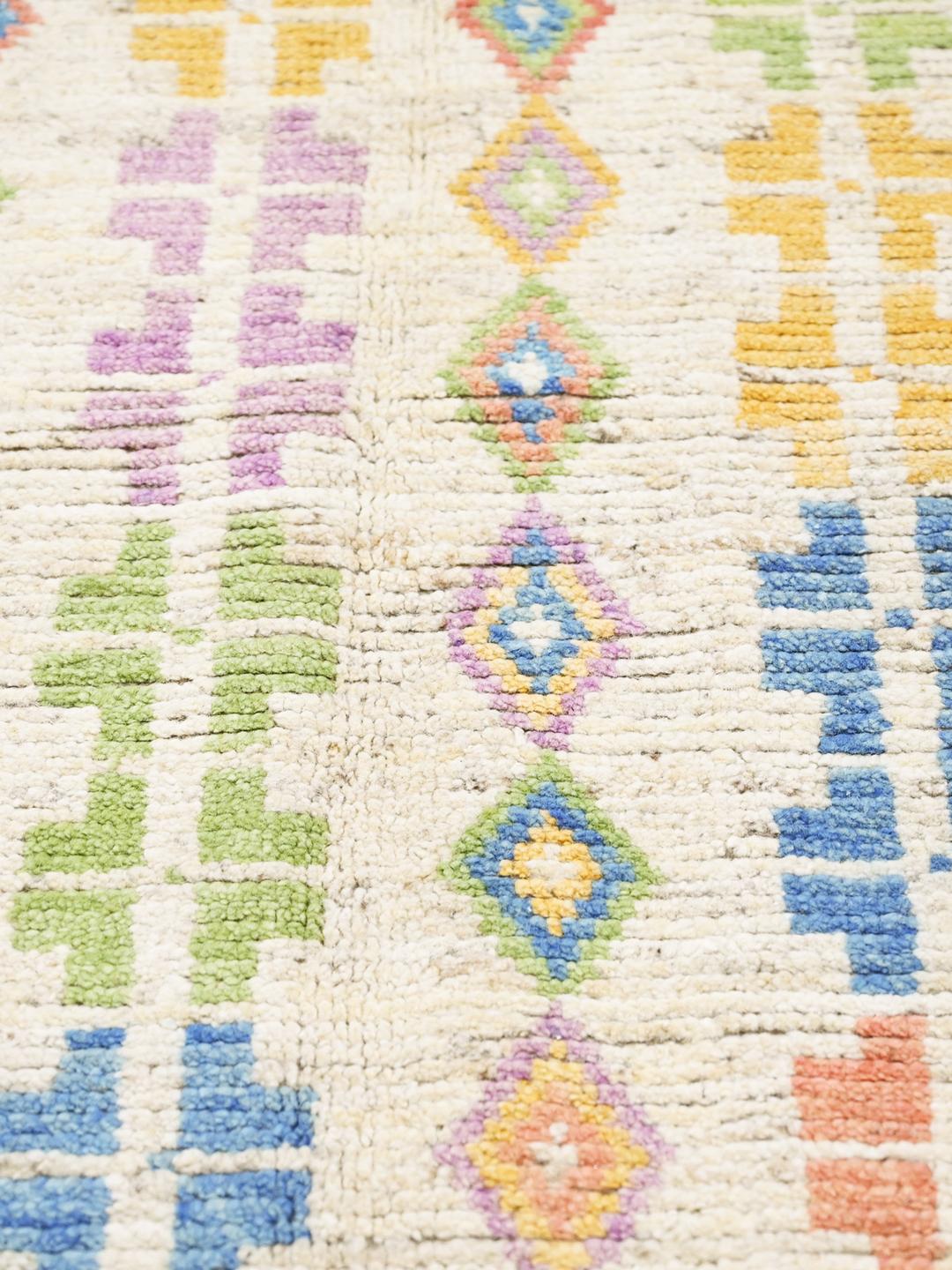
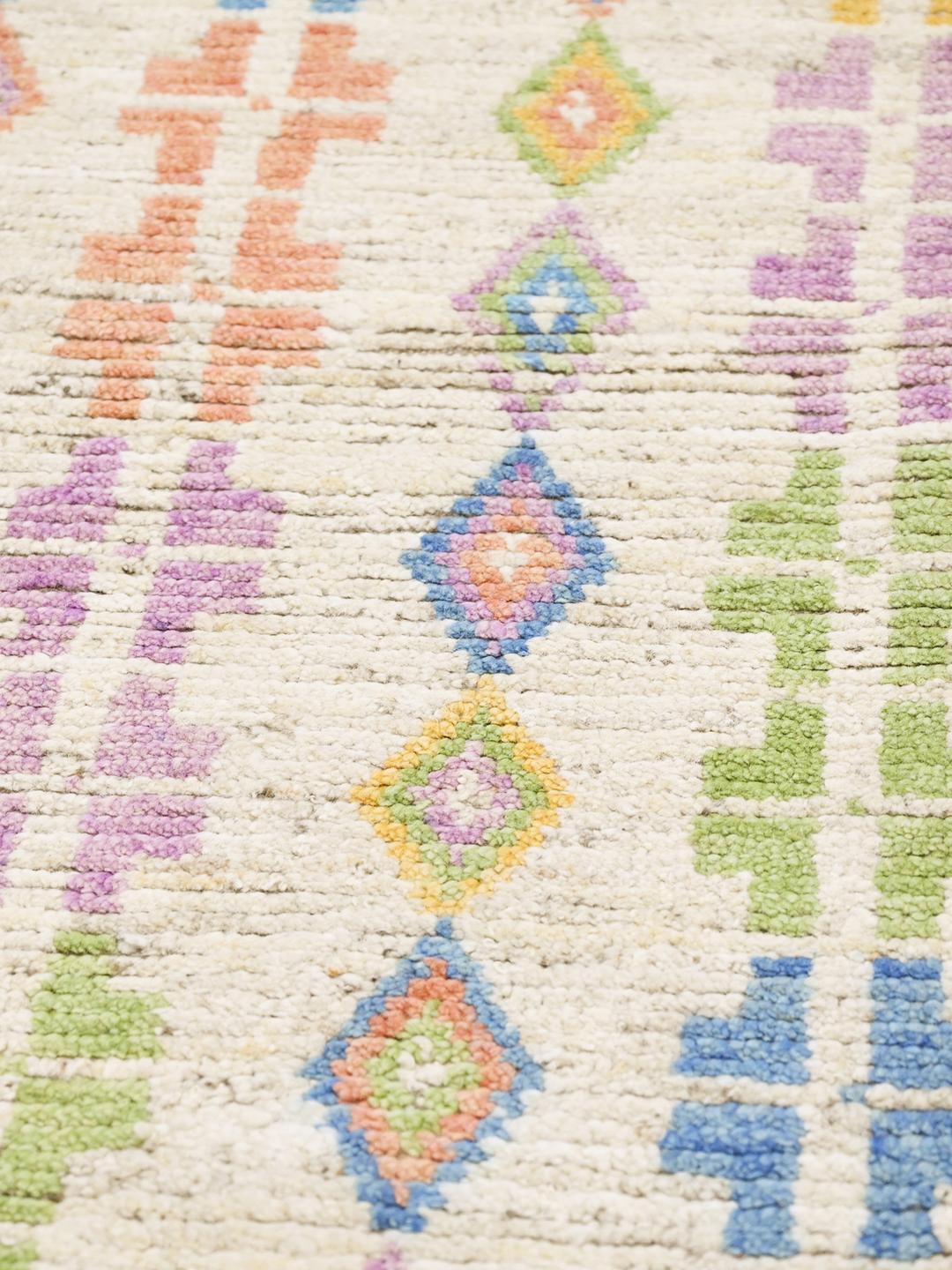
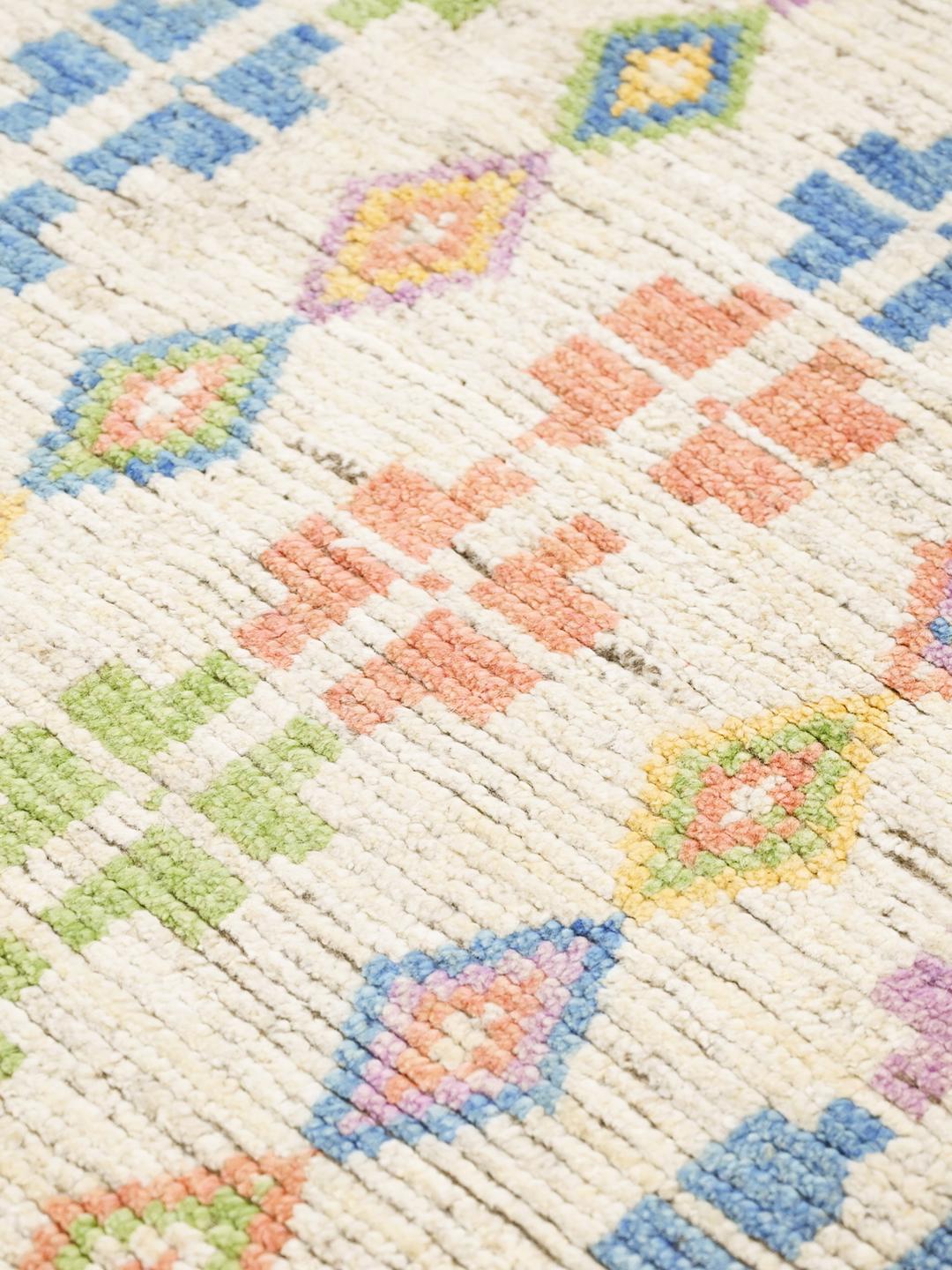
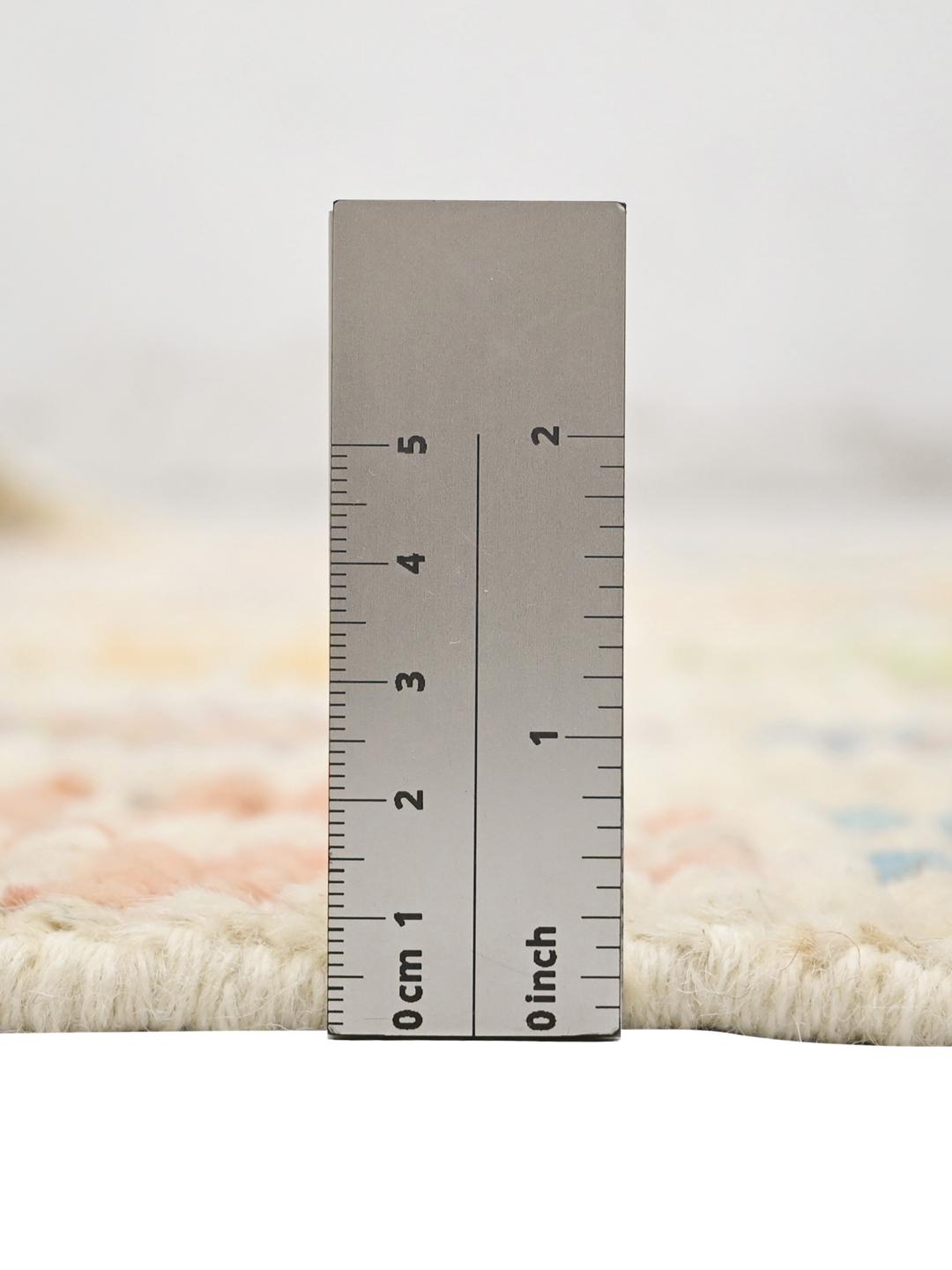
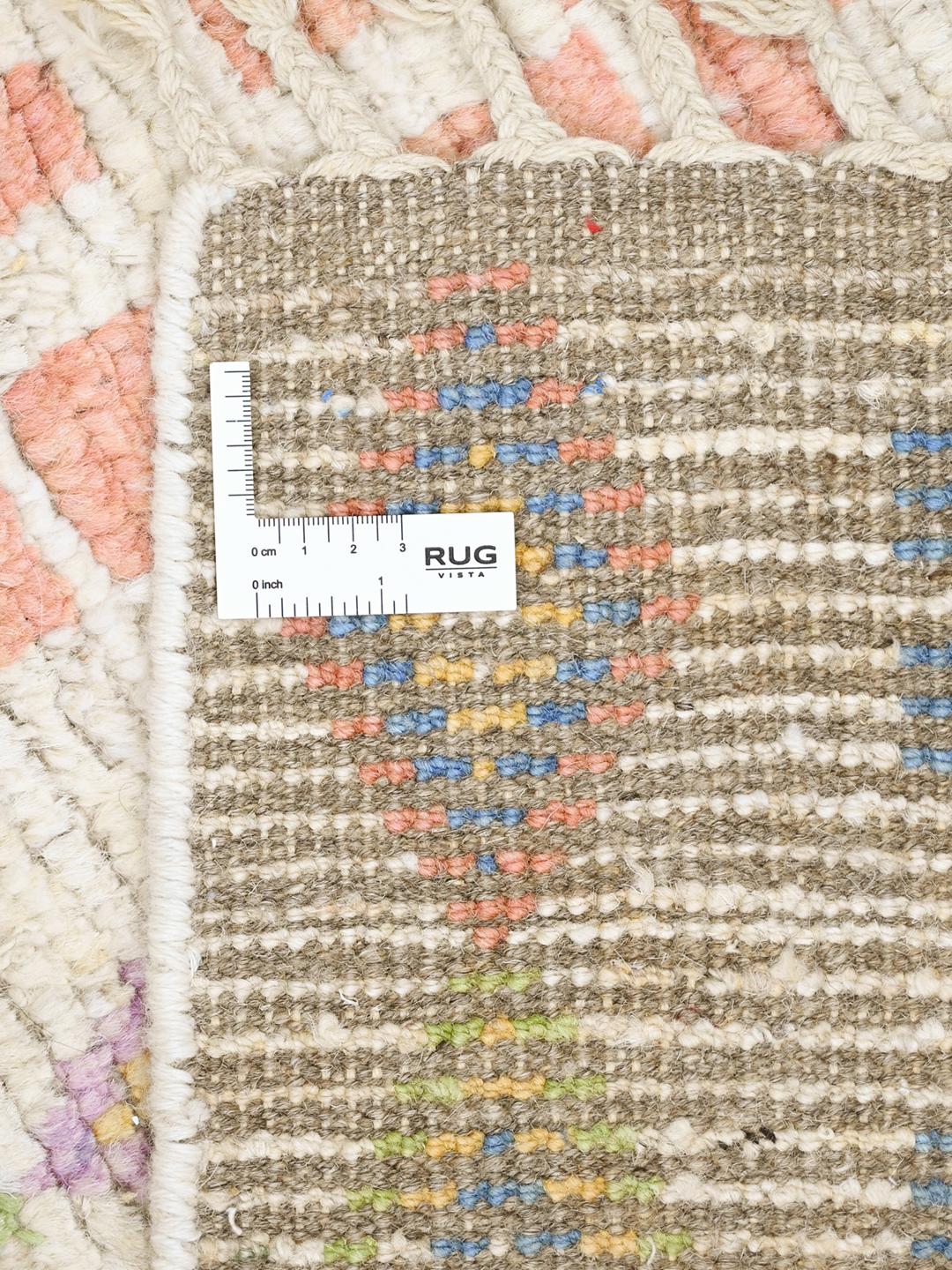
Hand-knotted pile construction is central to this tradition. By tying individual knots of wool yarn onto a sturdy structure, weavers create a surface that is both tactile and highly durable. The technique allows for clear definition in geometric patterns while ensuring the rug retains its plush character over long periods of use.
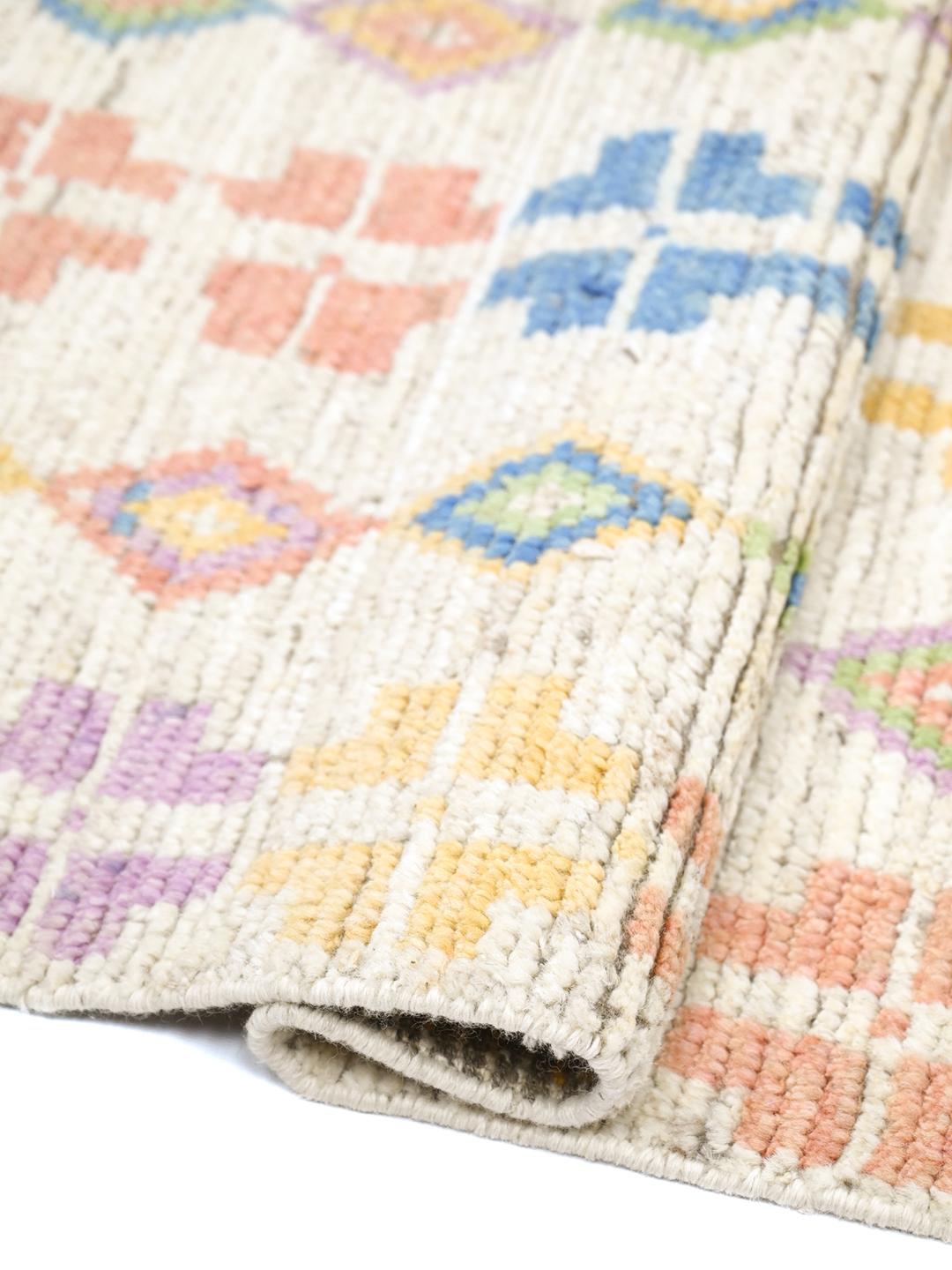
Visual storytelling defines the Berber style, which frequently uses symbols like diamonds, crosses, and linear patterns. While traditional Berber pieces often featured muted or natural tones, contemporary interpretations like this Berber Colourful style introduce playful accent shades of blue, green, and orange against a soft neutral background to create a lively balance.
Rugs from this tradition are widely appreciated by collectors and homeowners alike for their honest, human feel. Owning a hand-knotted piece brings an authentic sense of story and craft history into modern interiors, making it far more than just a functional floor covering.