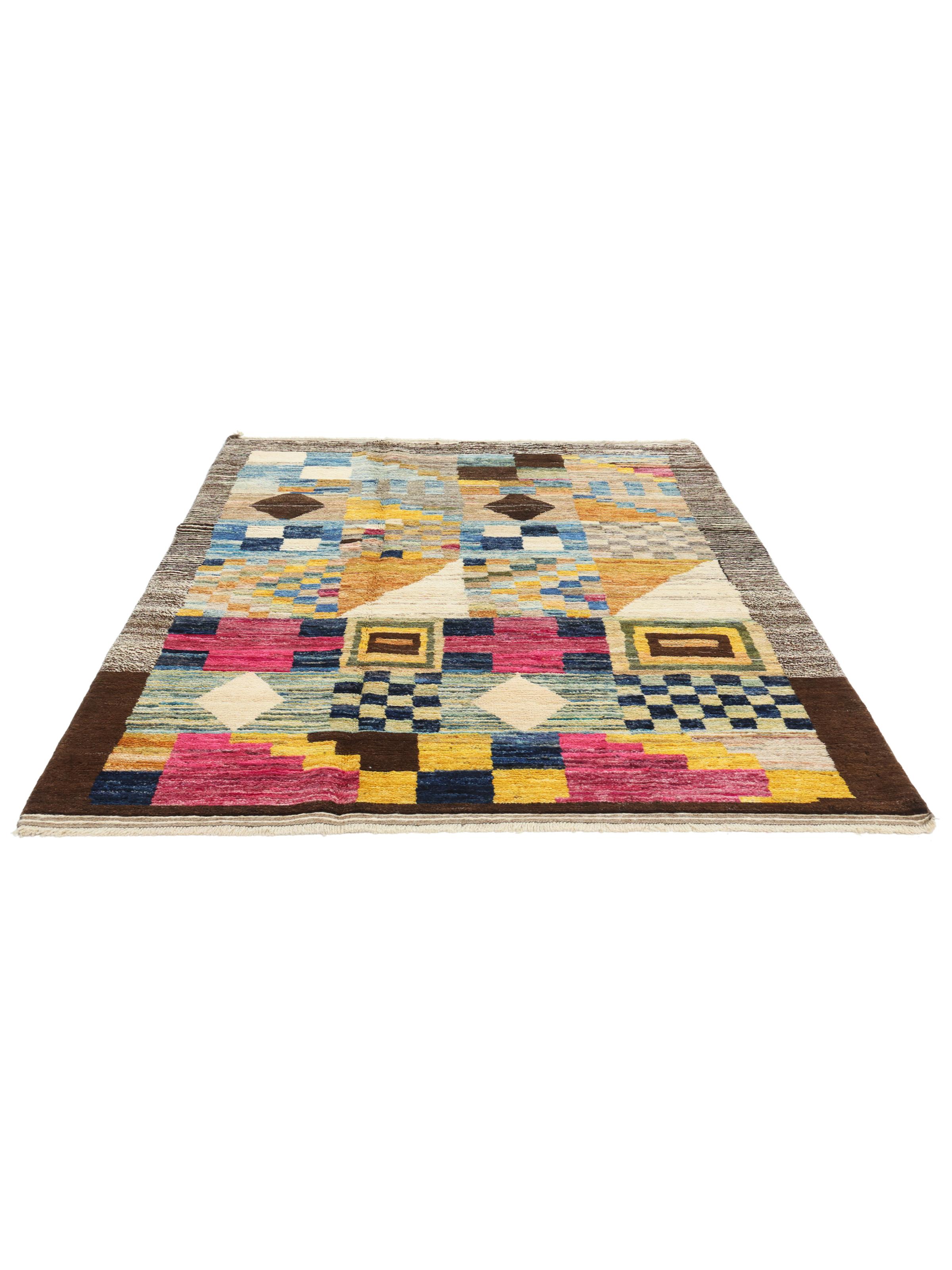
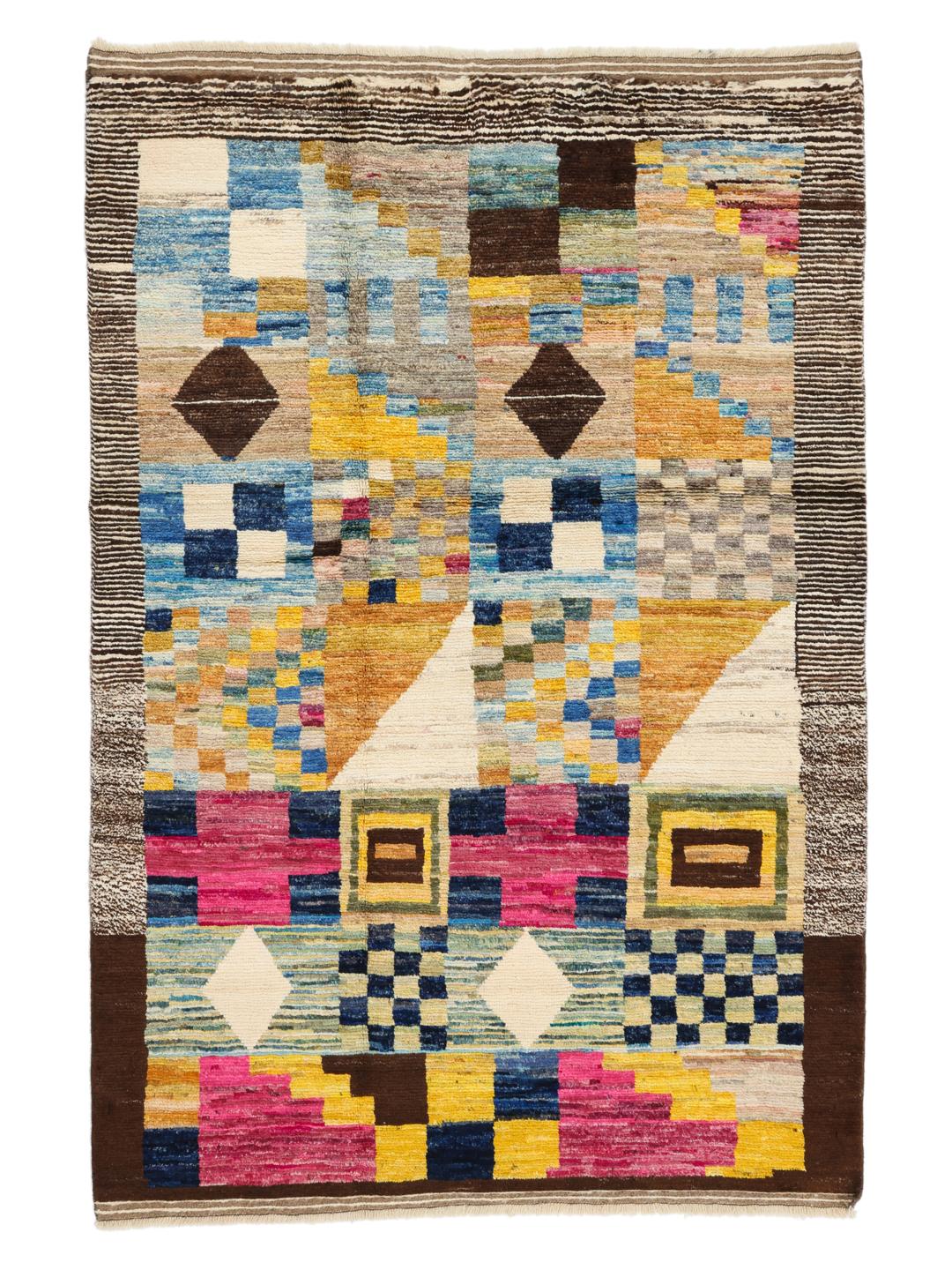
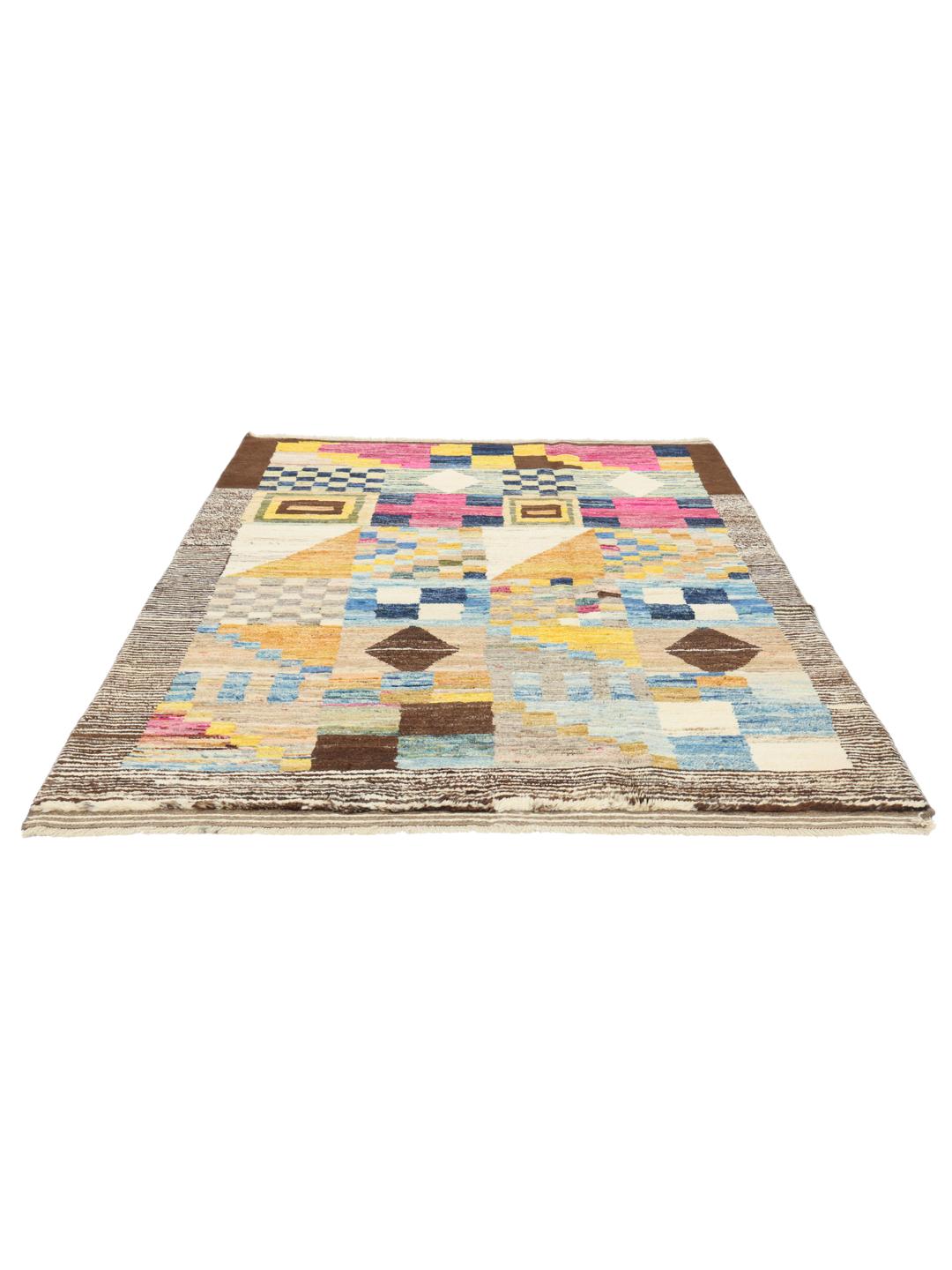
Berber rugs are rooted in a centuries-old tradition originating from the nomadic tribes of North Africa, known for their expressive, geometric storytelling. Over time, these weaving techniques migrated and were adopted by artisans in other regions, including Afghanistan. The resulting rugs maintain the spirit of the original craft while incorporating the unique regional influences and colour palettes characteristic of their new home, bridging cultural boundaries through textile art.
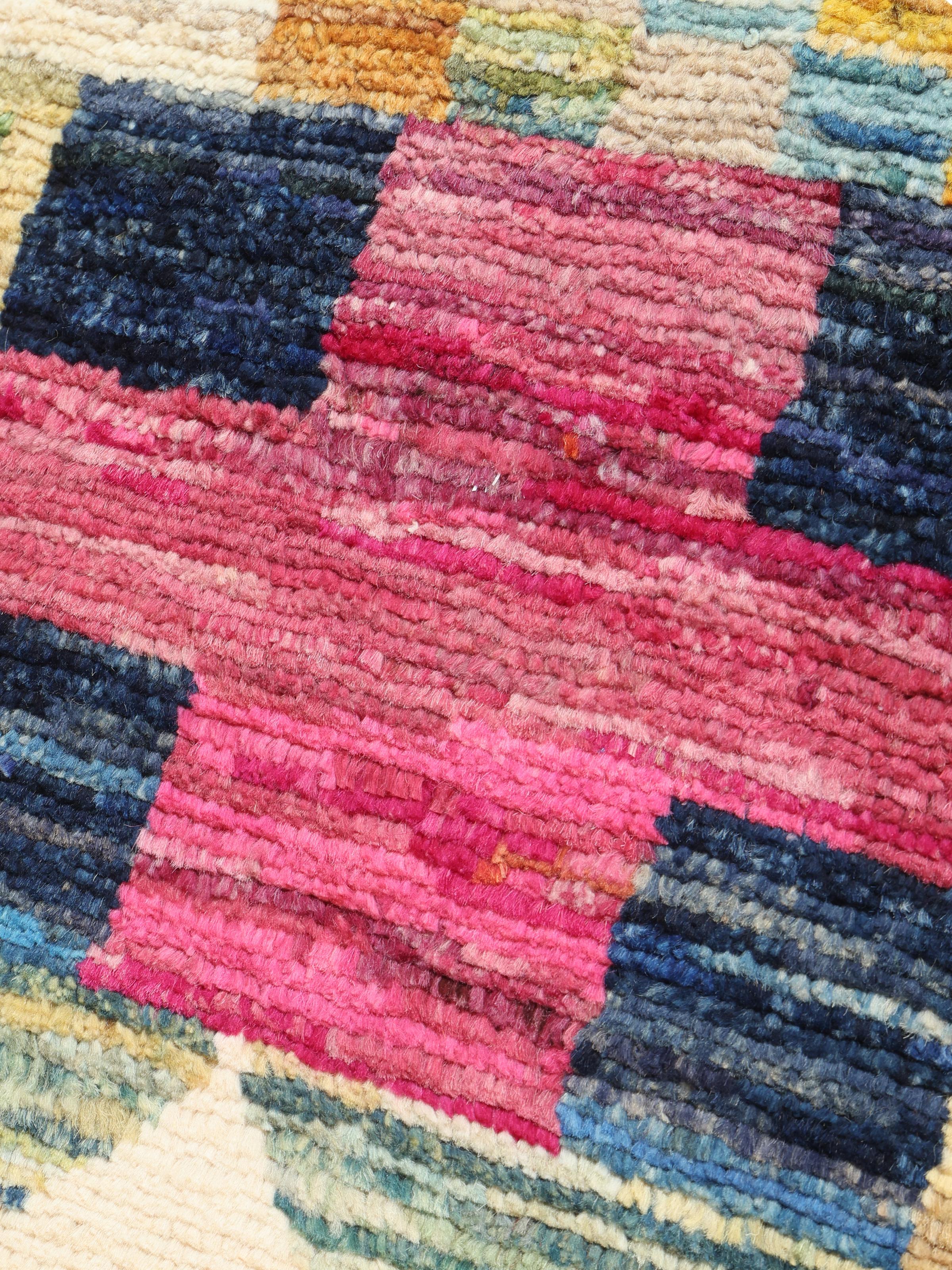
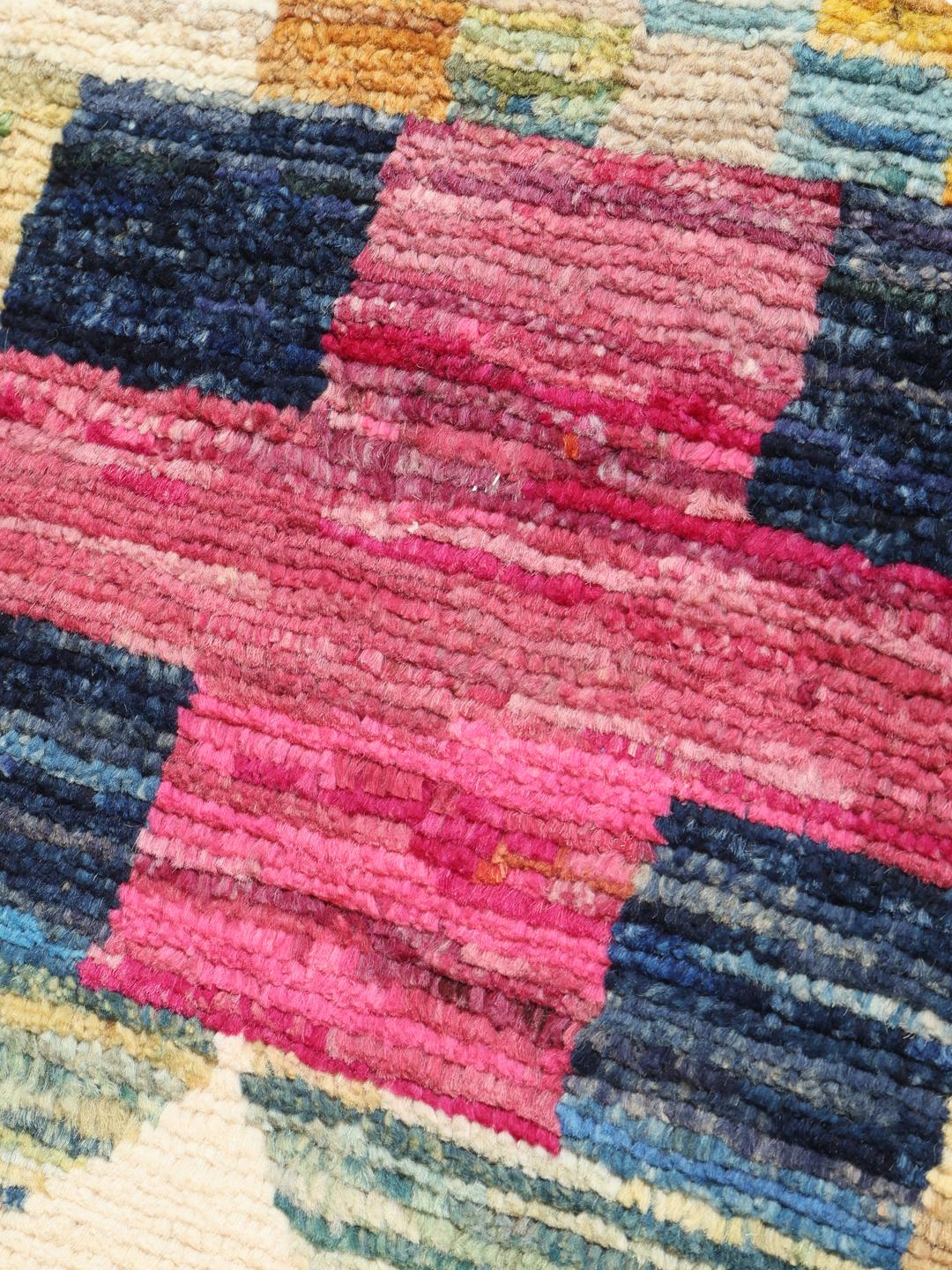
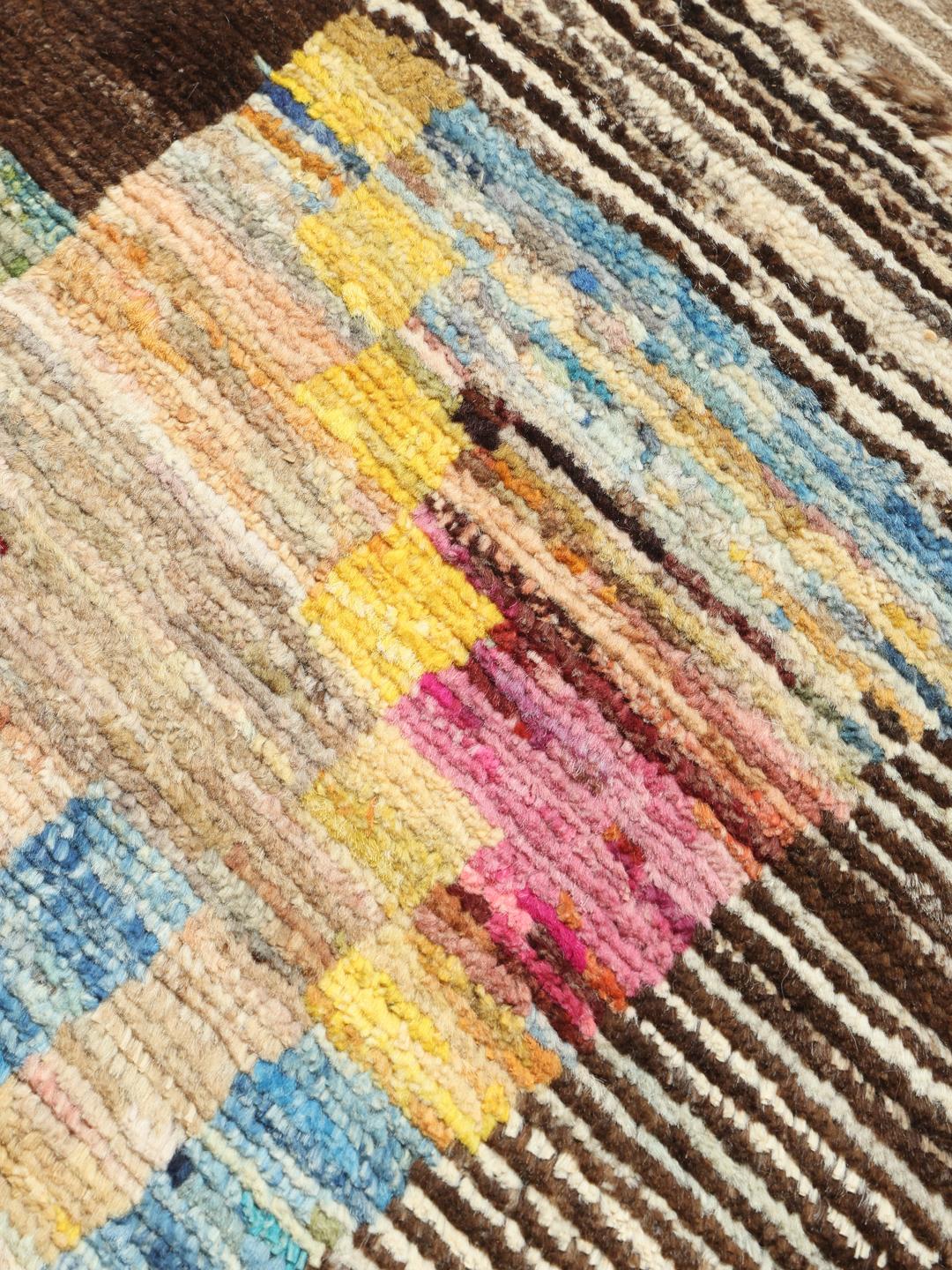
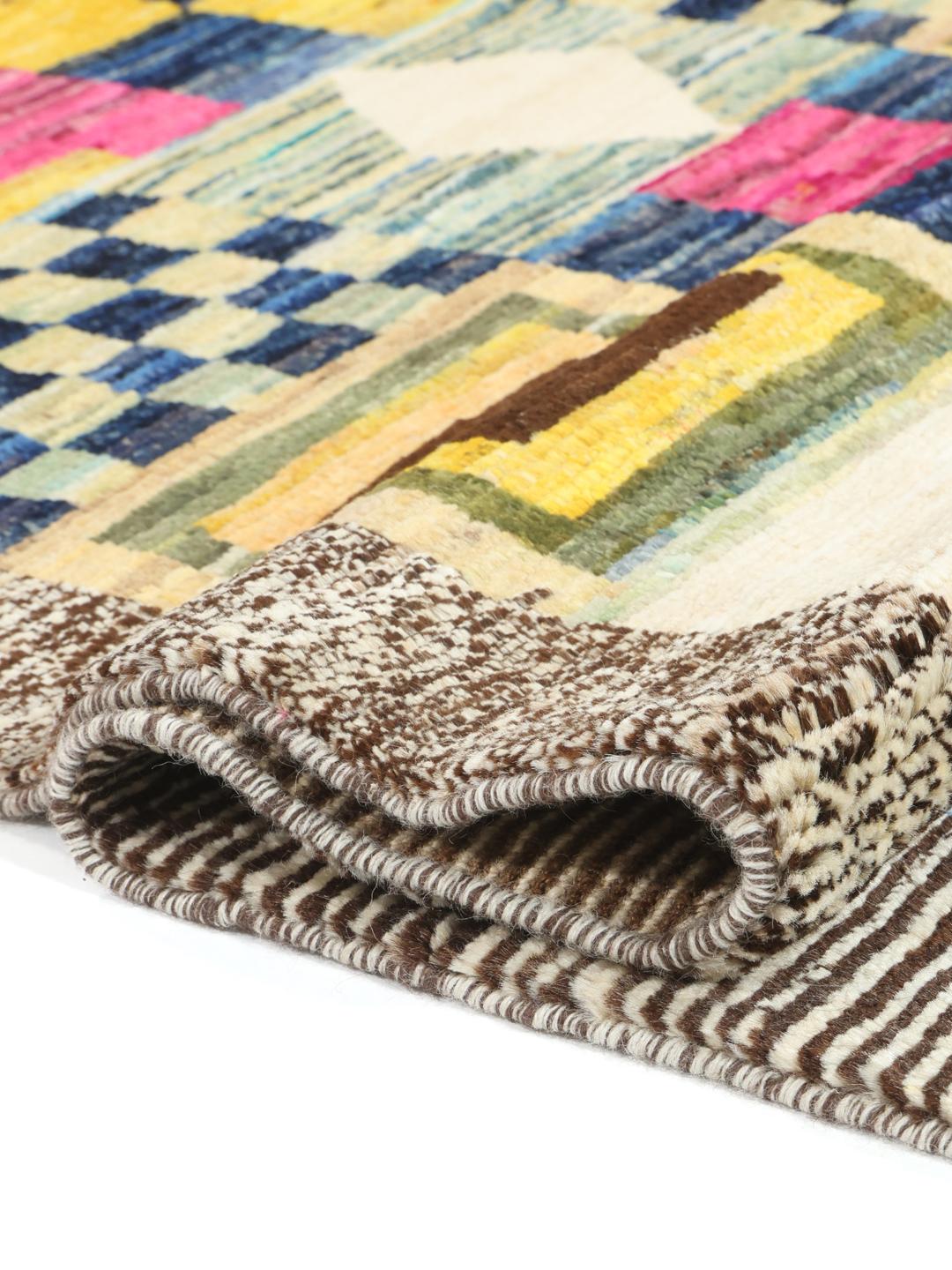
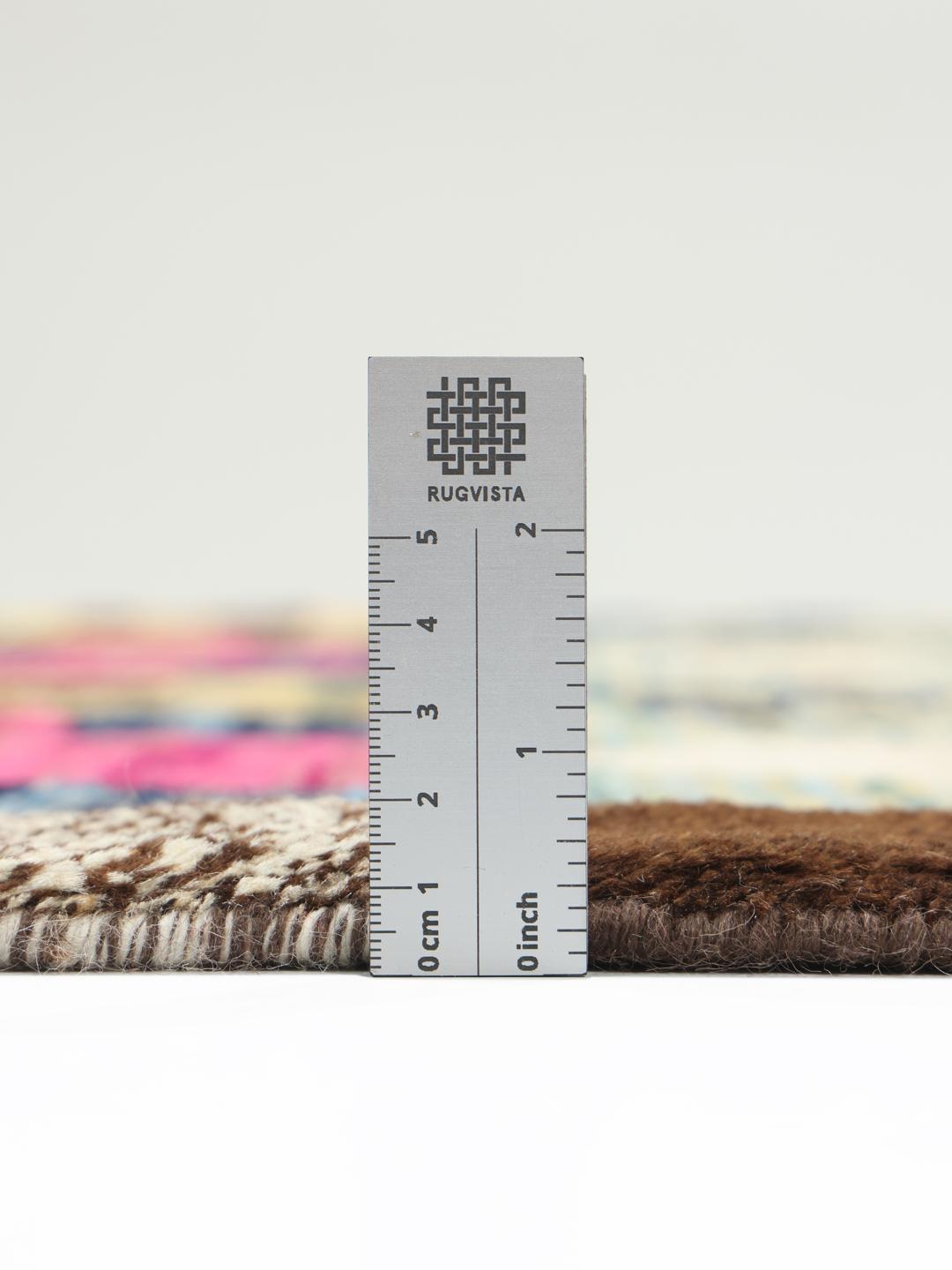
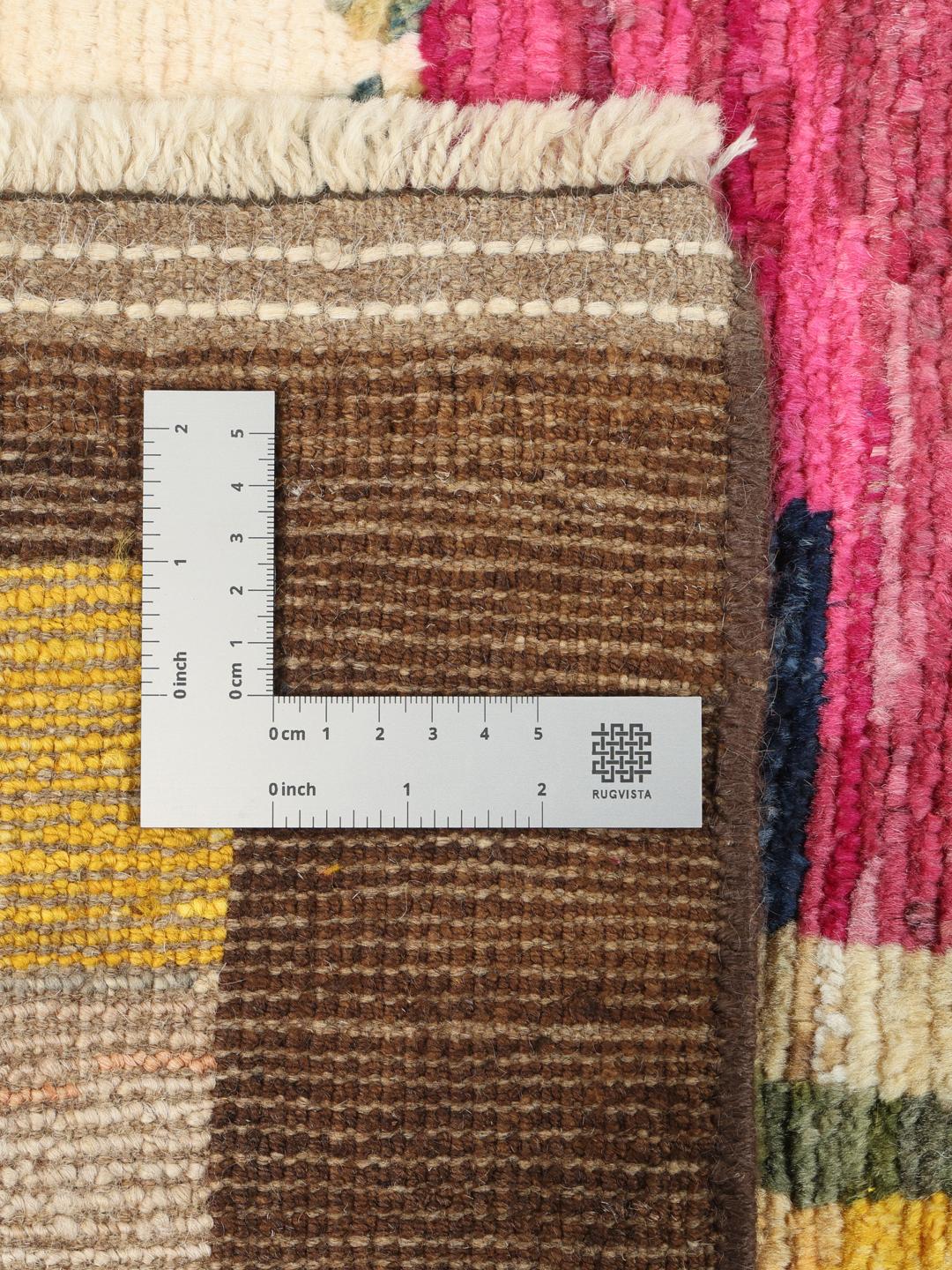
The term hand-knotted refers to the classic technique where individual knots are tied onto the foundation of the rug, a method that defines the highest standard of rug-making. This process allows for intricate patterns and a dense, luxurious pile that is far more durable than mass-produced alternatives. For the owner, this means a rug that retains its form, texture, and brilliance for years, standing as a testament to the artisan's patience and technical skill.
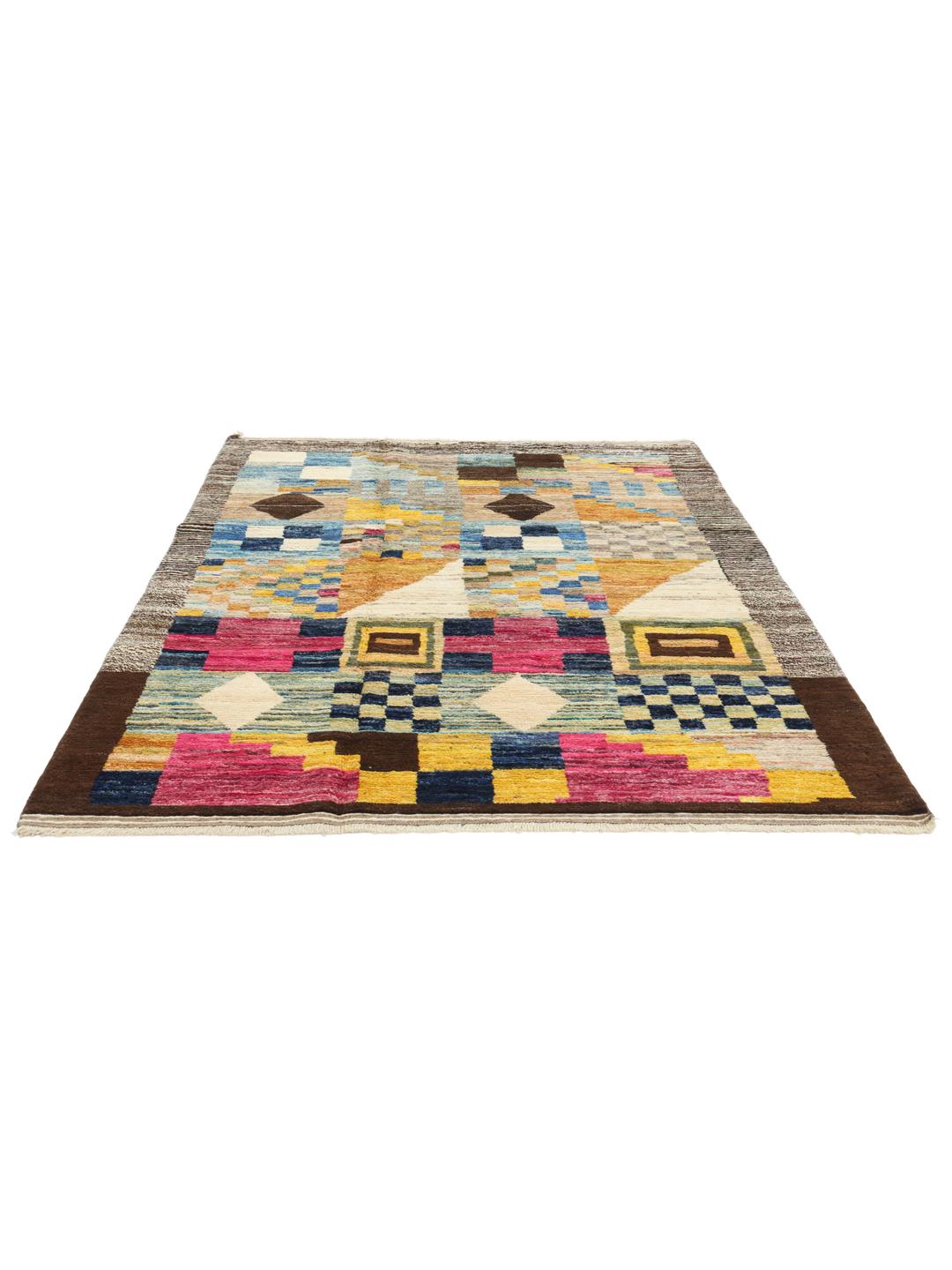
Visually, these rugs are defined by their bold use of geometric motifs, such as diamonds, squares, and abstract shapes that often hold symbolic meaning within the weaving tradition. The colour palettes are typically vibrant, reflecting the natural dyes historically used to create these pieces. This specific rug stands out for its particularly lively composition, which breaks away from traditional muted tones to offer a modern, spirited aesthetic that feels both fresh and timeless.
Owning a hand-knotted rug from this tradition is an act of supporting a long-standing heritage of craftsmanship. These rugs are highly valued by collectors and interior designers alike for their ability to add human warmth and narrative depth to a space. By bringing such a piece into your home, you are continuing a story that spans generations, celebrating the skill of the weaver and the lasting beauty of handmade textiles.