Berber weaving traditions originated with the nomadic tribes of North Africa, renowned for their expressive geometric patterns, symbolic tribal motifs, and thick tactile piles. Over time, these classic design languages have crossed regional borders, inspiring rug artisans across Middle Eastern weaving centers like Afghanistan to interpret these traditions through their own local craft methods.
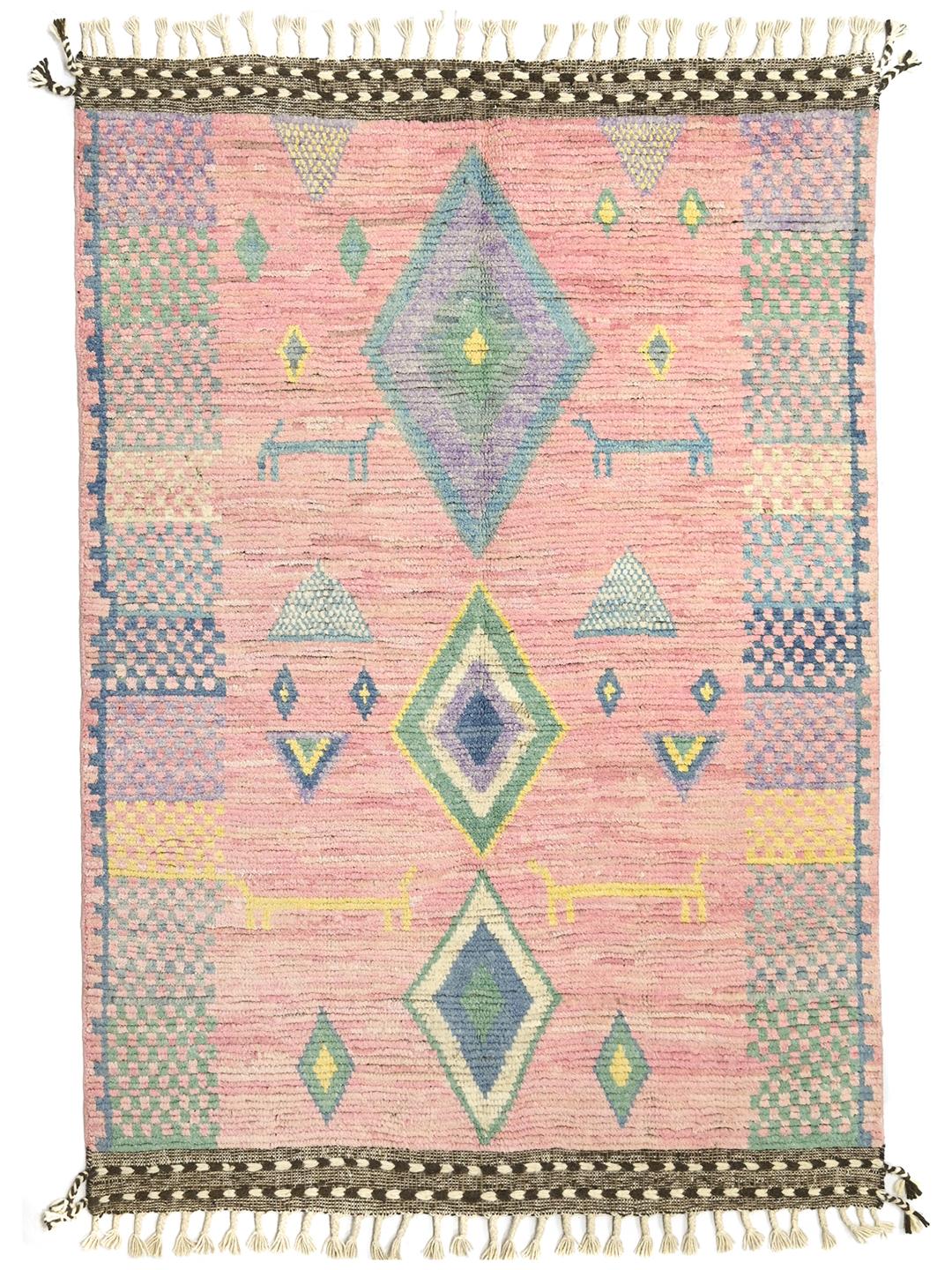
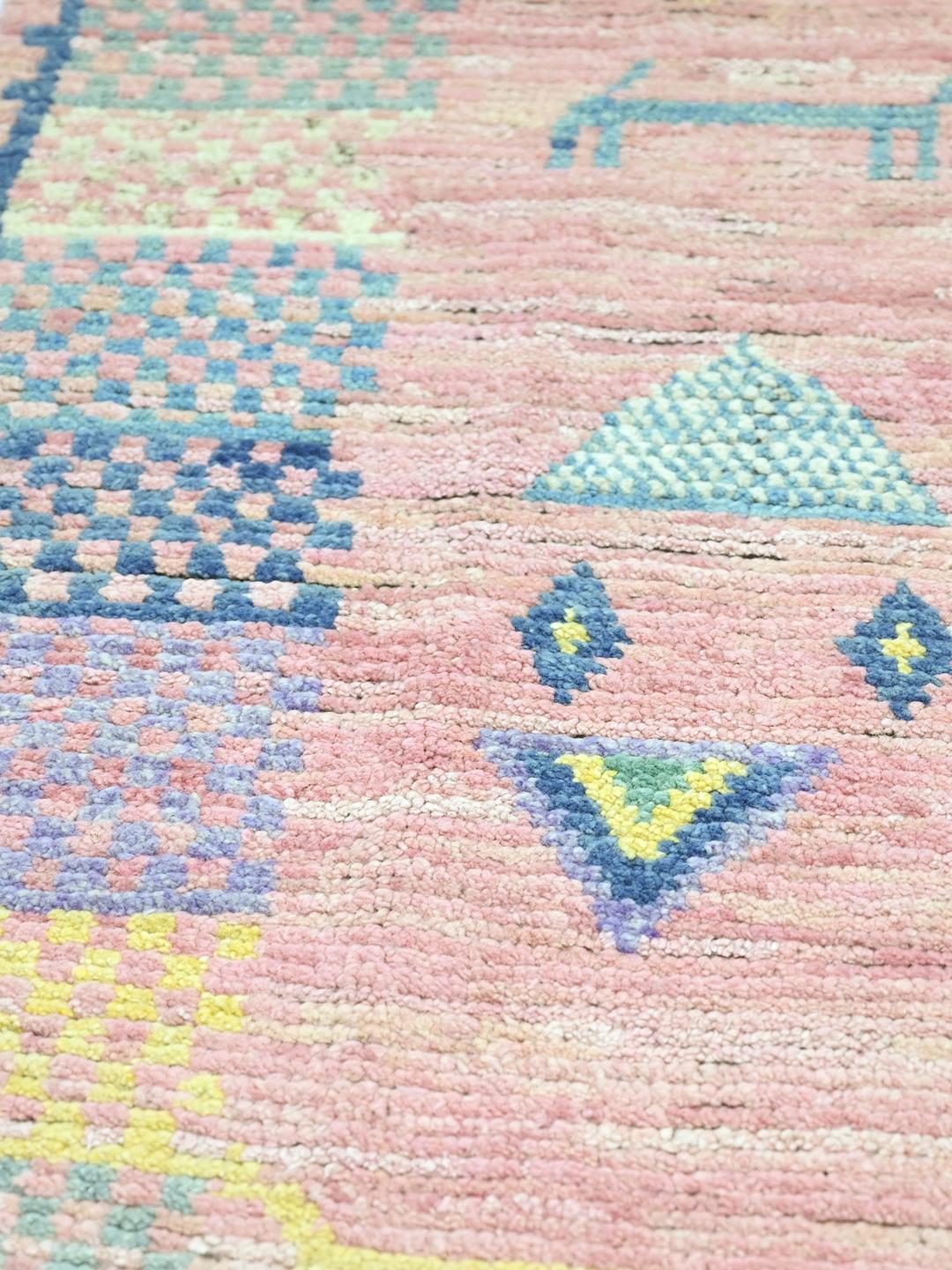
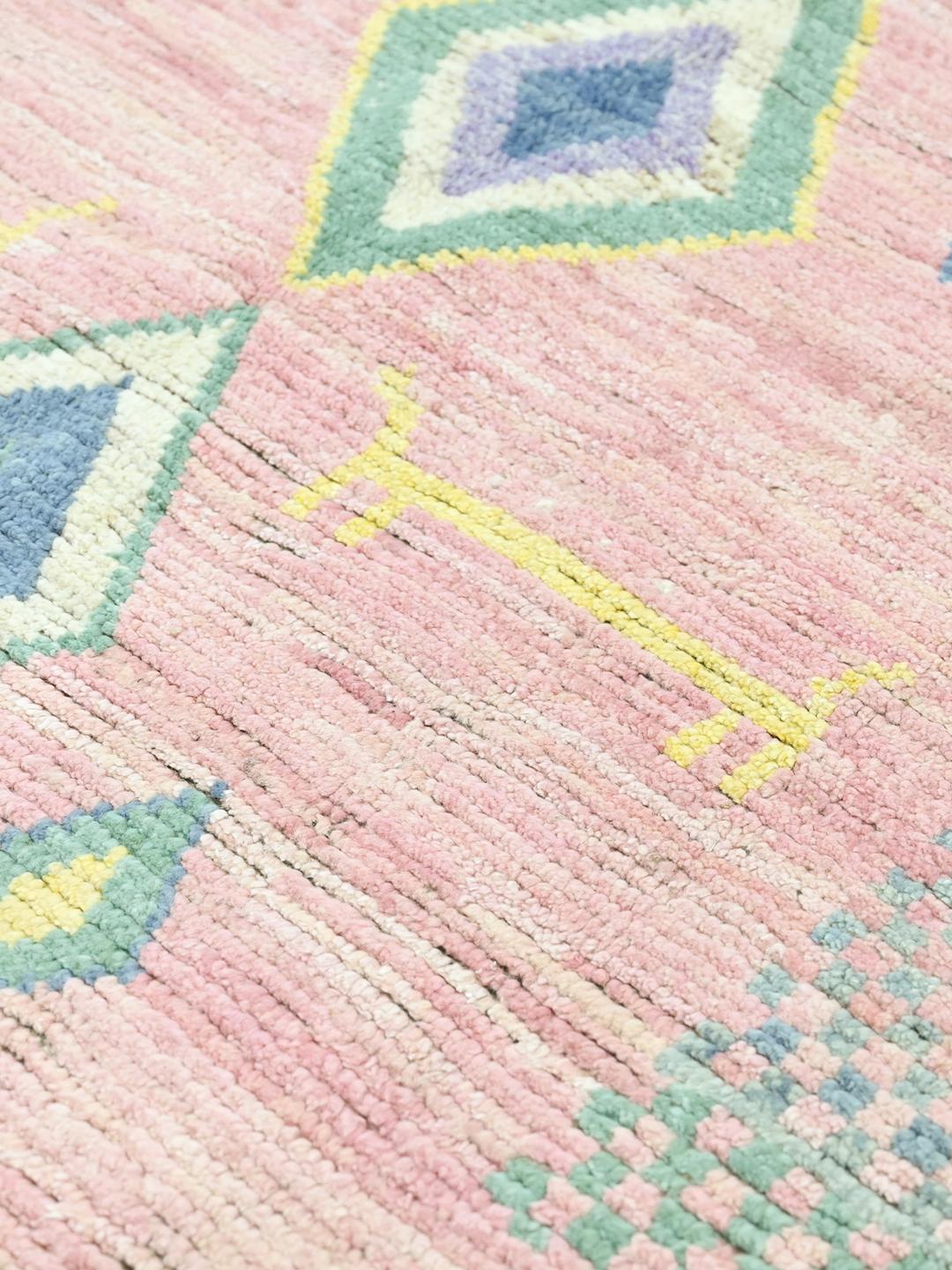
While traditional Berber pieces often feature neutral ivory and black tones, colourful adaptations celebrate a modern evolution of the genre. Weavers incorporate vibrant palettes alongside ancestral symbols such as diamonds and animal figures, which historically served as protective emblems or reflections of everyday rural life.
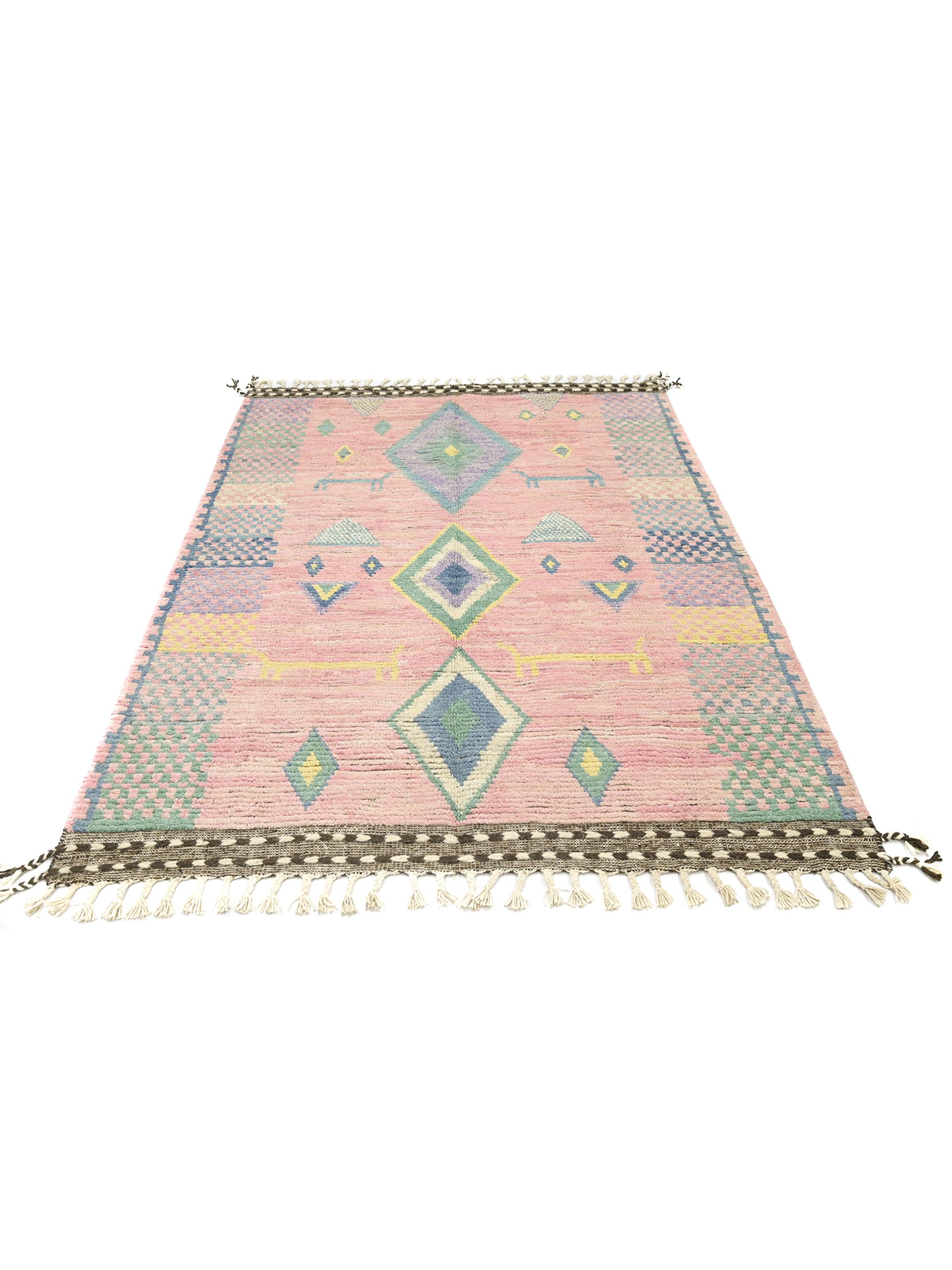
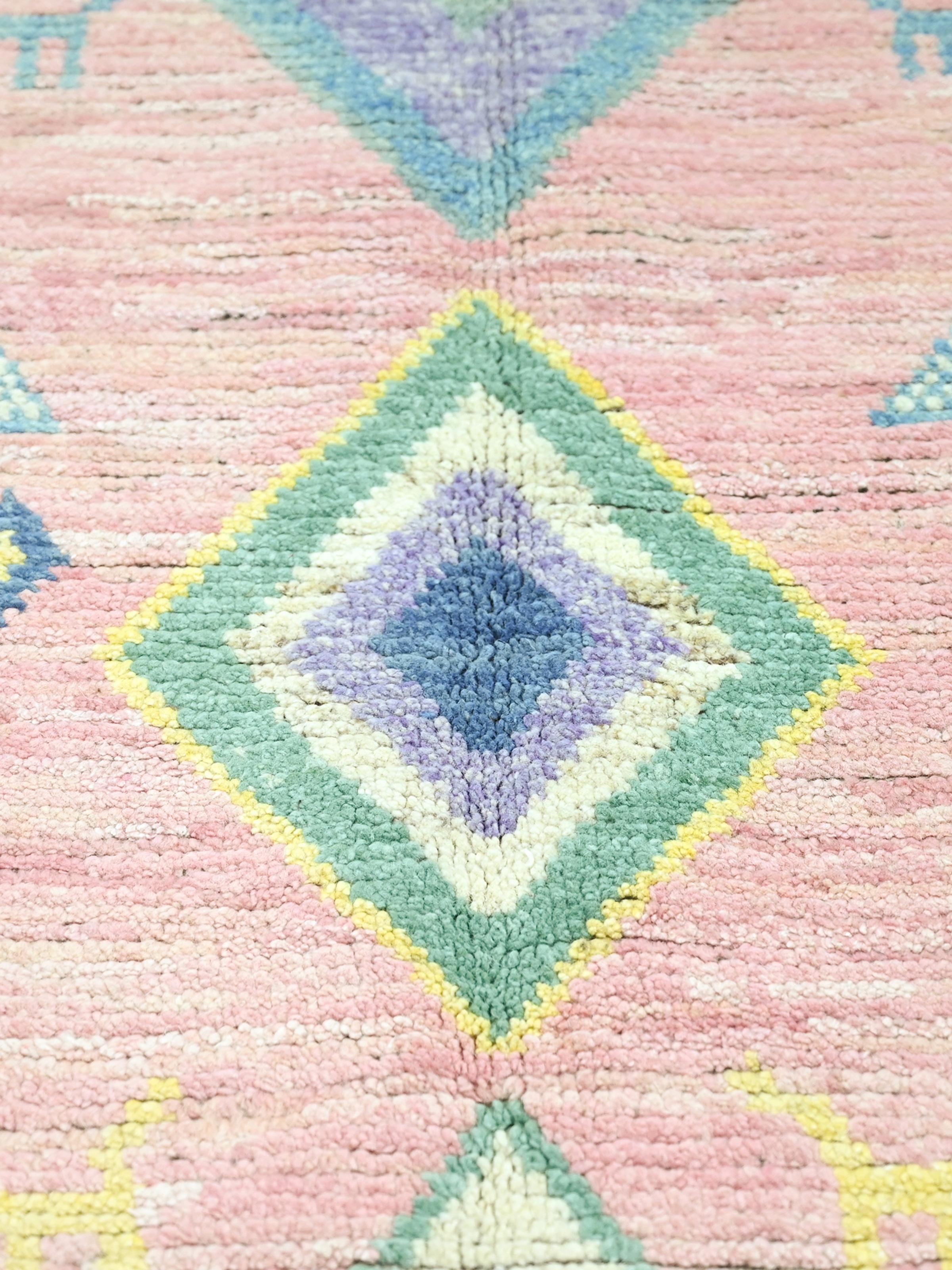
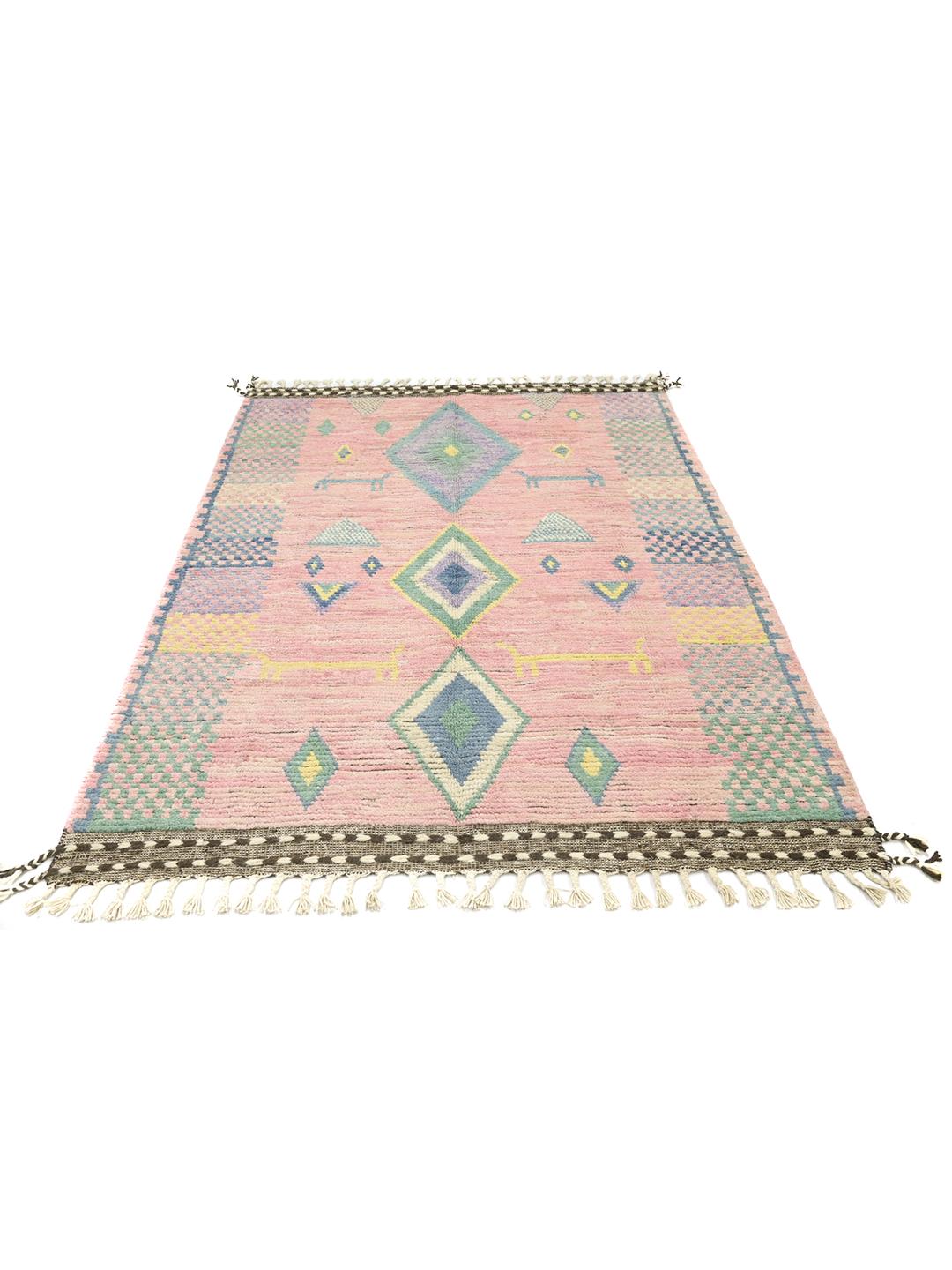
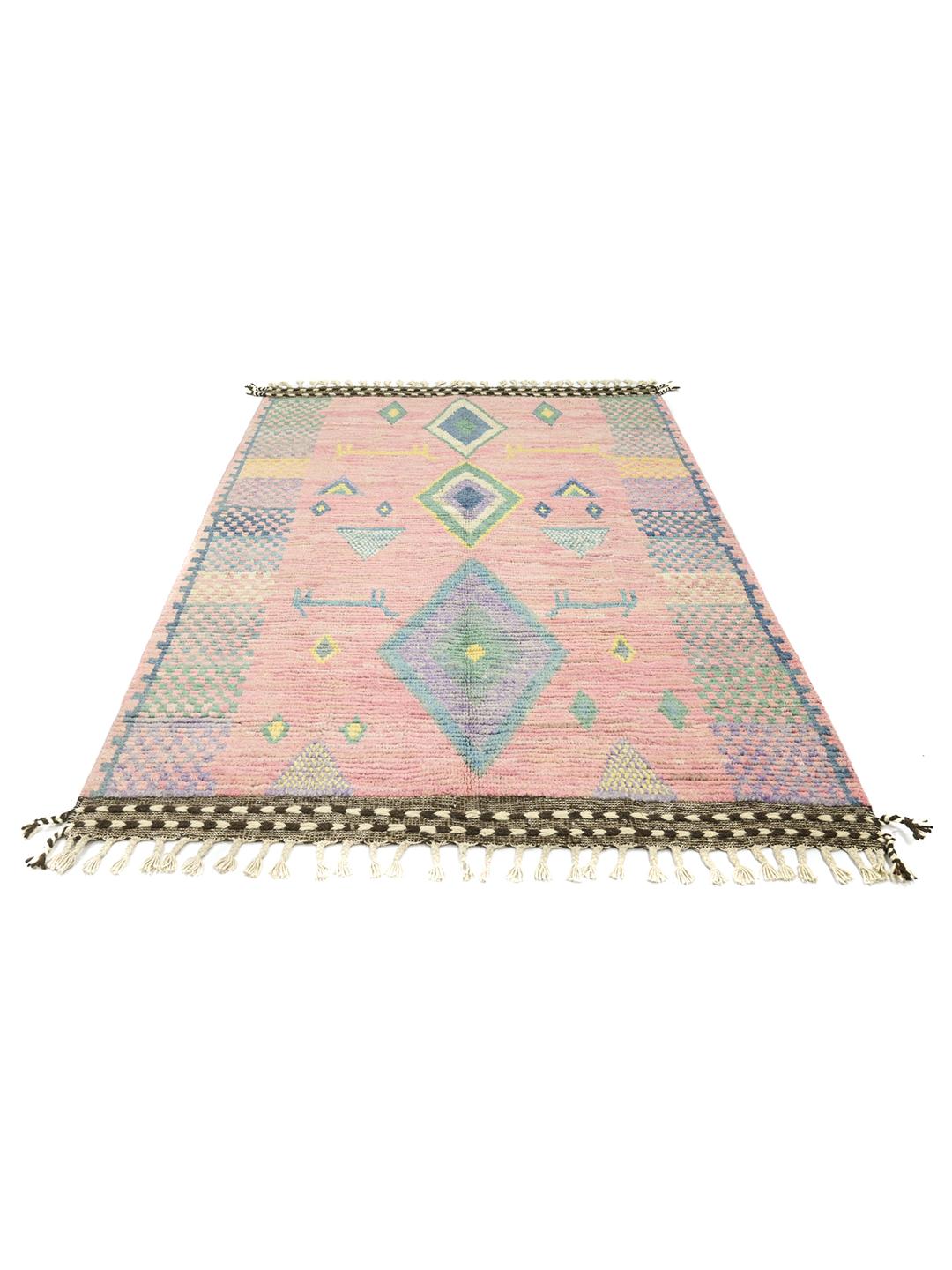
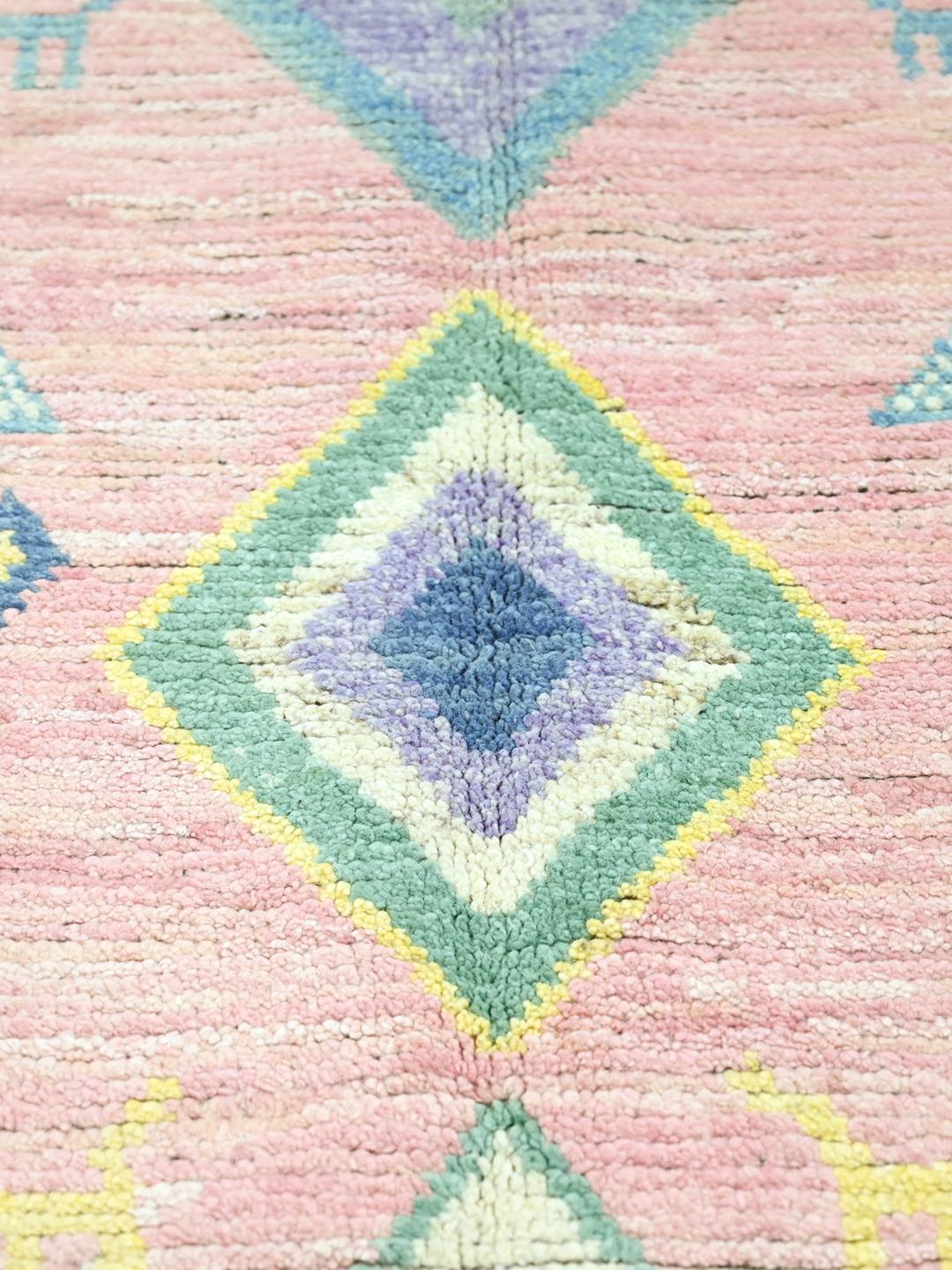
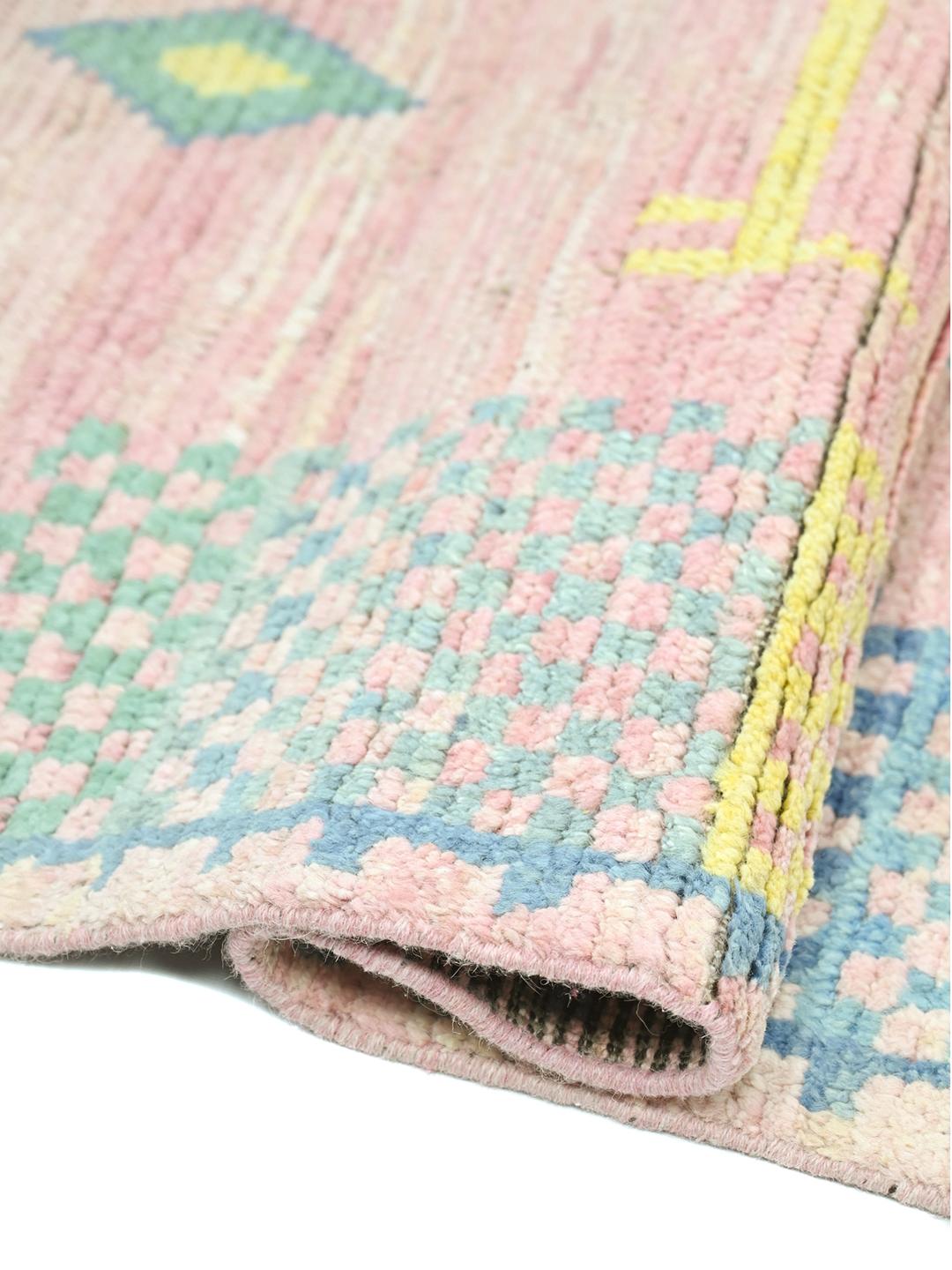
The signature design of this piece centers around stacked diamond medallions and playful geometric shapes. The use of soft pastel blues, greens, and purples against a deep pink field provides a contemporary twist on tribal art, framed by structured block borders and finished with delicate fringe details.
Rugs from this tradition are prized by collectors and design enthusiasts alike for their creative freedom. Unlike formal urban carpets that follow strict workshop grids, tribal-inspired hand-knotted rugs allow individual weavers to express personal storytelling, giving each completed piece distinct cultural weight.