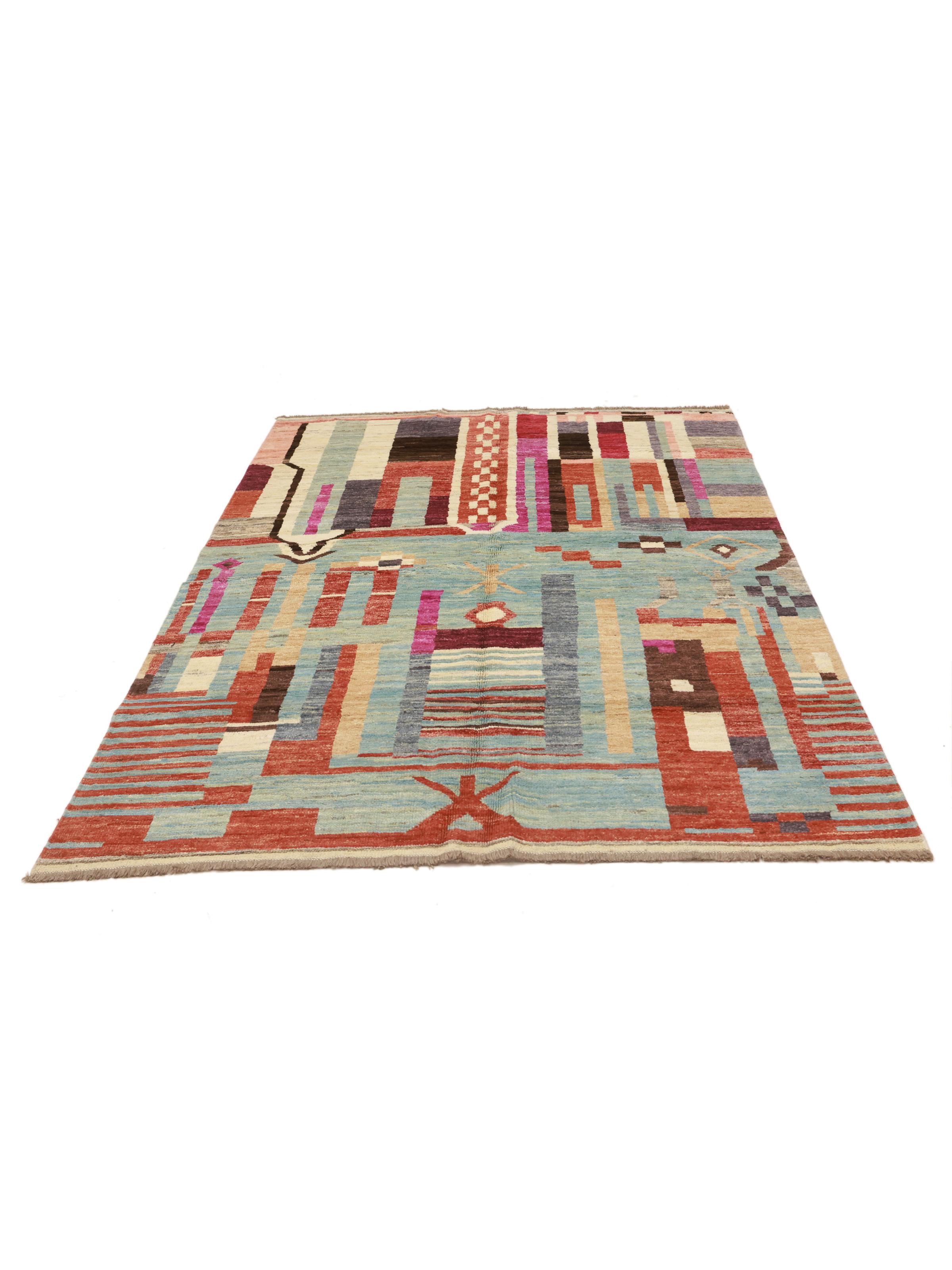
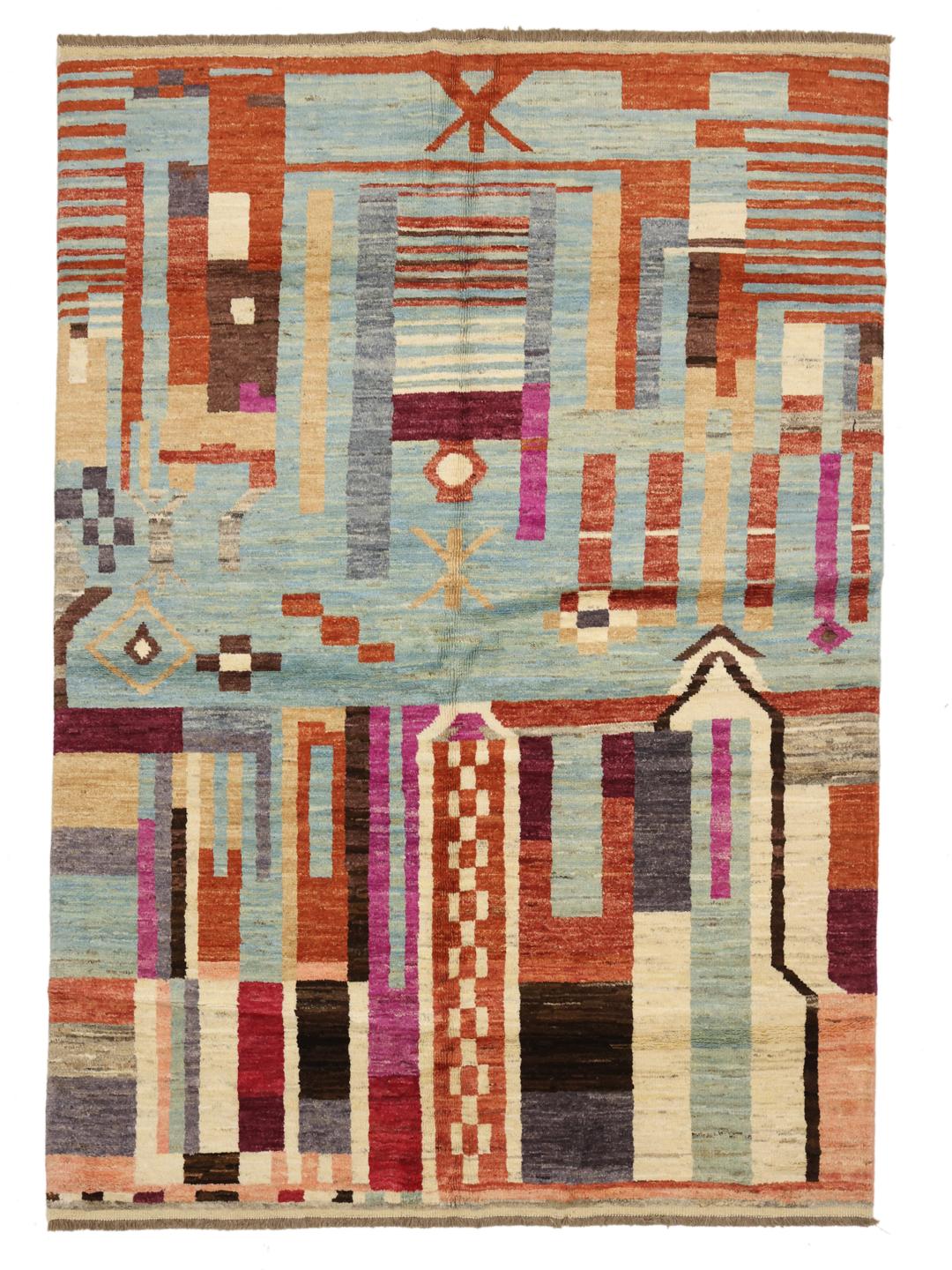
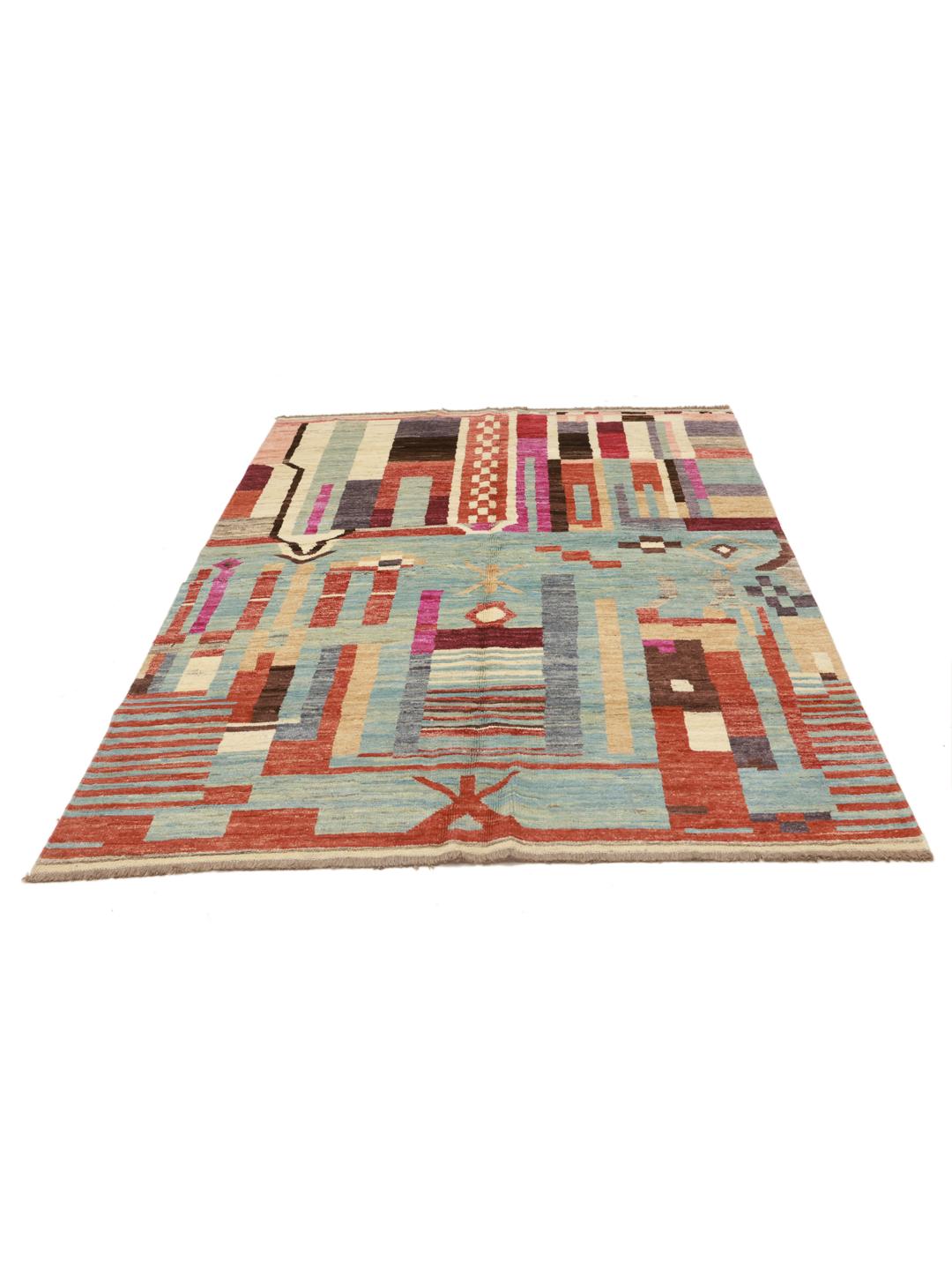
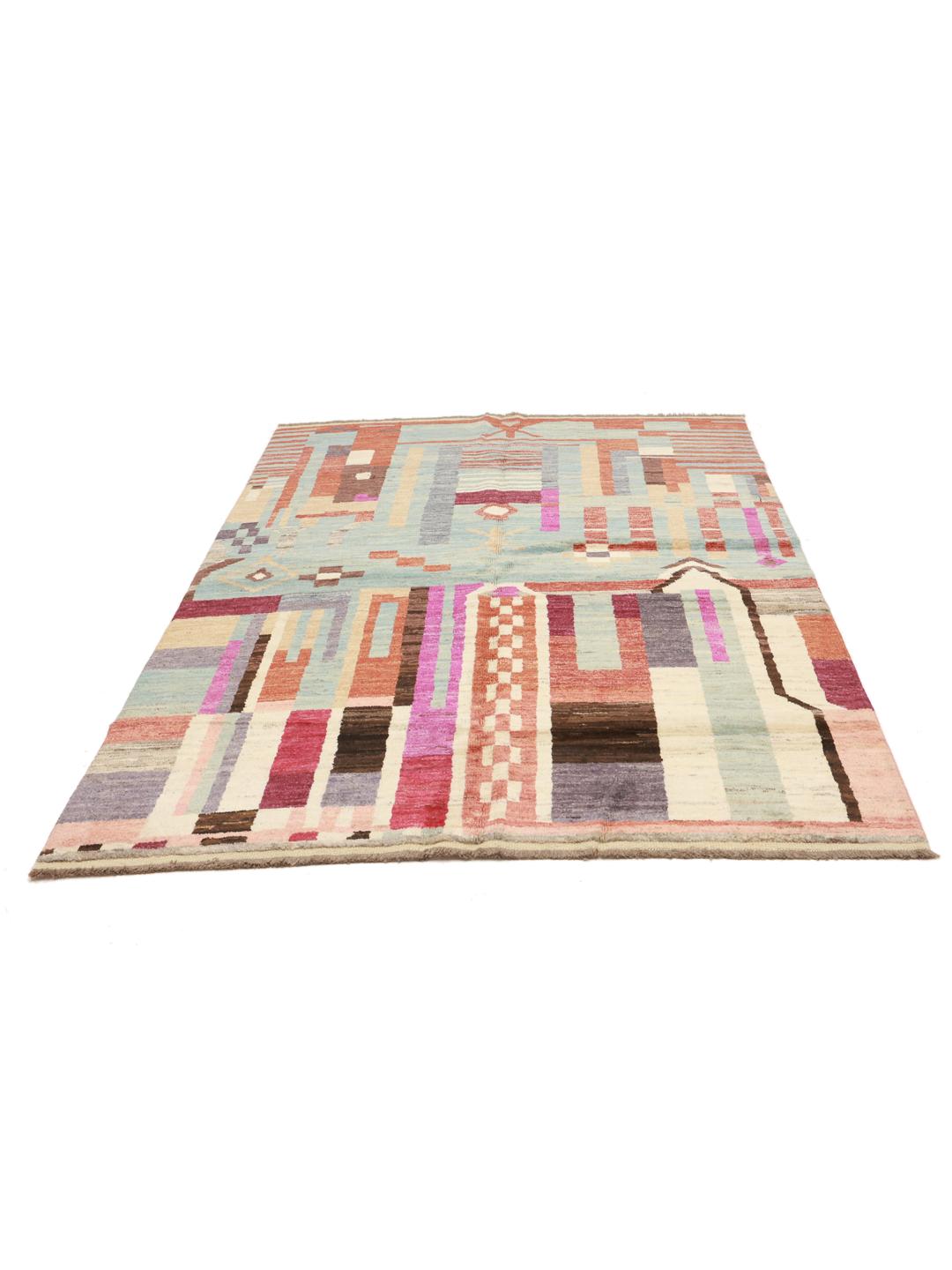
The Berber tradition has long been synonymous with the nomadic tribes of North Africa, known for their expressive, geometric textiles. Over time, these weaving techniques migrated and were adopted by artisans in other regions, including Afghanistan, where they have been adapted to incorporate local materials and aesthetic sensibilities.
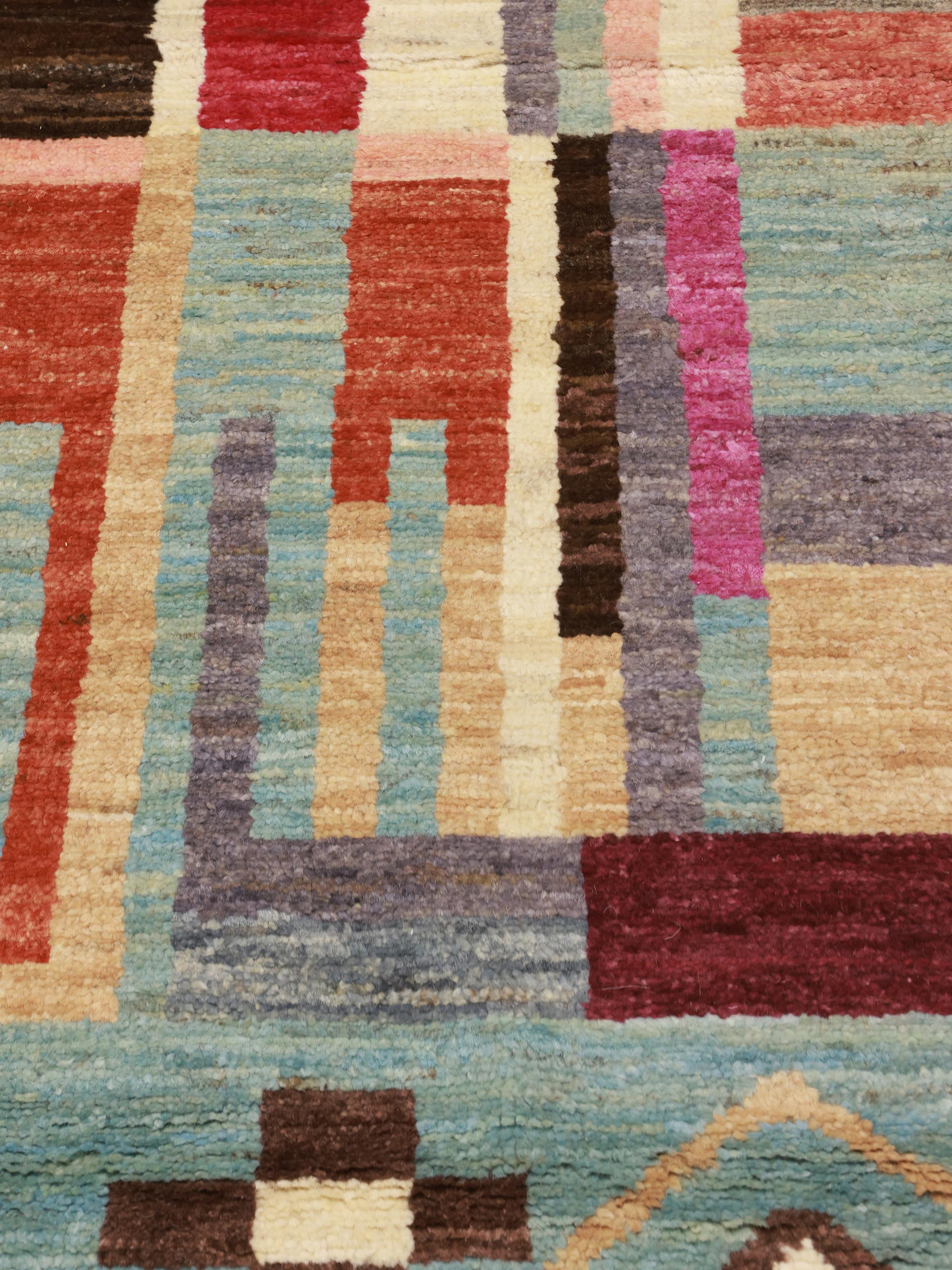
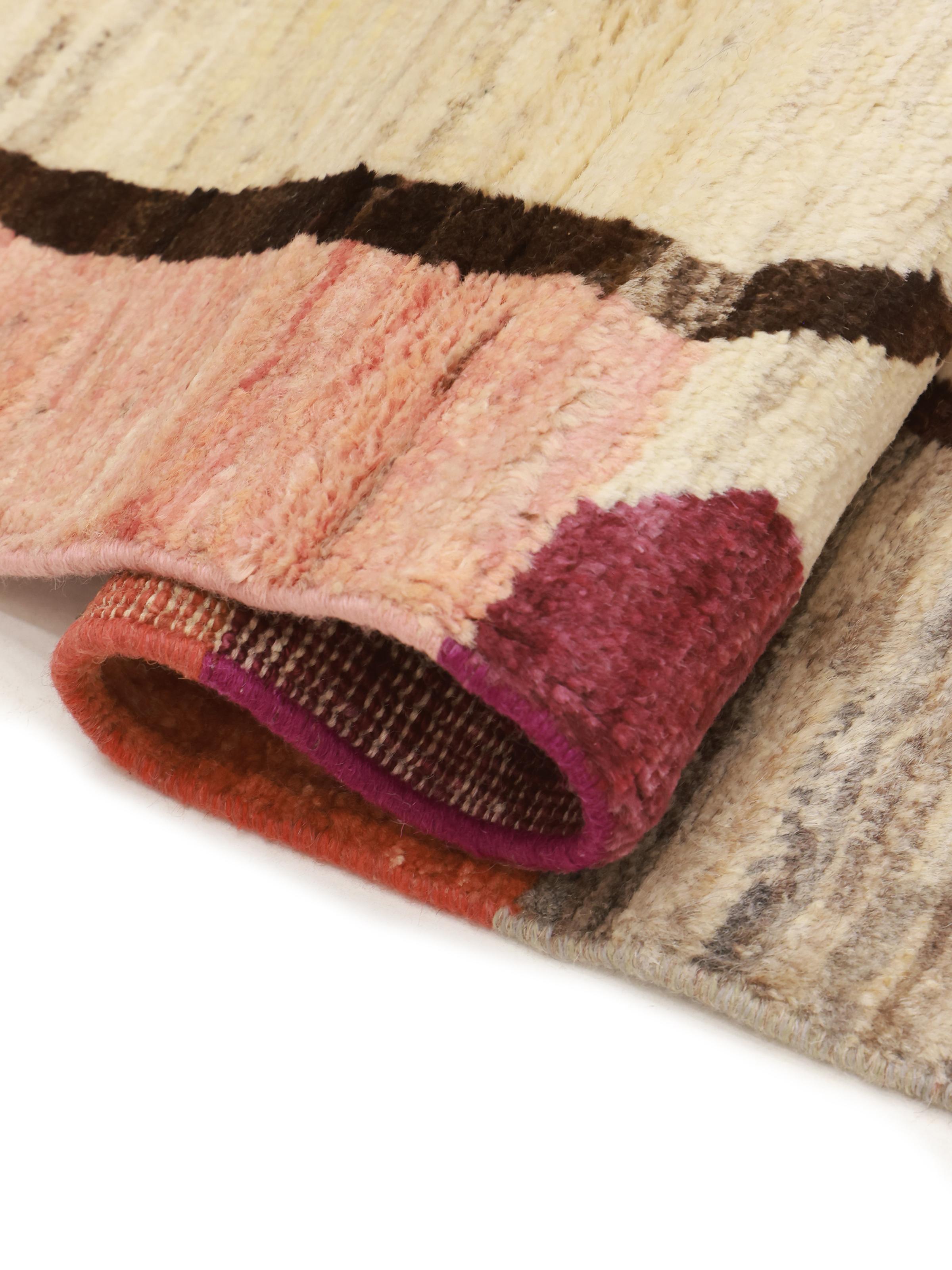
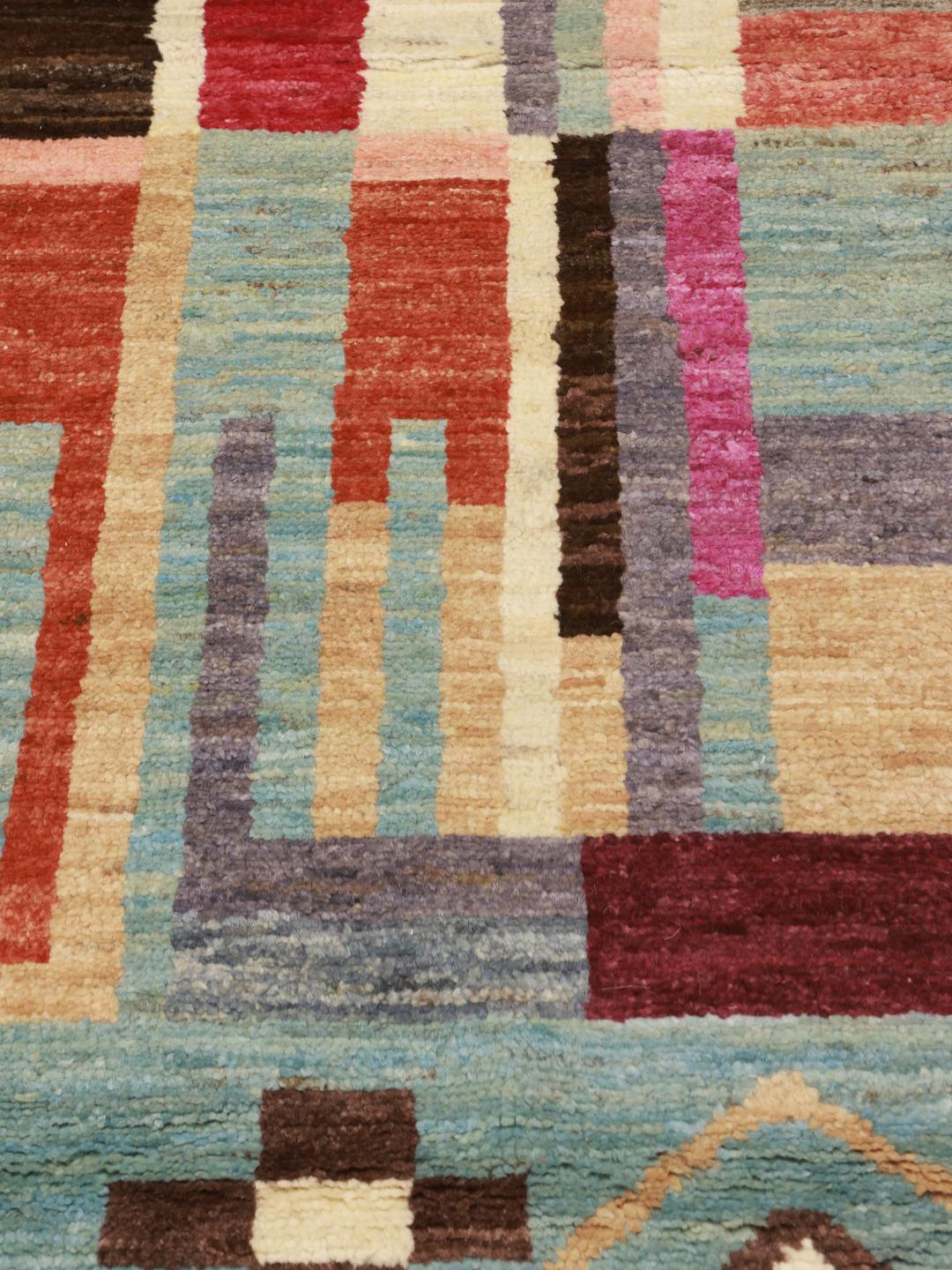
The term 'Berber' originally referred to the tribal weaving style characterised by thick, hand-spun Wool and spontaneous, often symbolic motifs. In the context of contemporary Afghan production, this tradition has evolved into a sophisticated blend of heritage techniques and modern colour palettes, resulting in rugs that feel both grounded in history and fresh for today's homes.
Signature elements of this style include a focus on geometric abstraction, where shapes like diamonds, lines, and blocks are used to tell a story or represent the weaver's environment. The use of varied, vibrant colours is a hallmark of the 'Colourful' aesthetic, allowing the rug to serve as a lively, artistic centrepiece rather than just a functional floor covering.
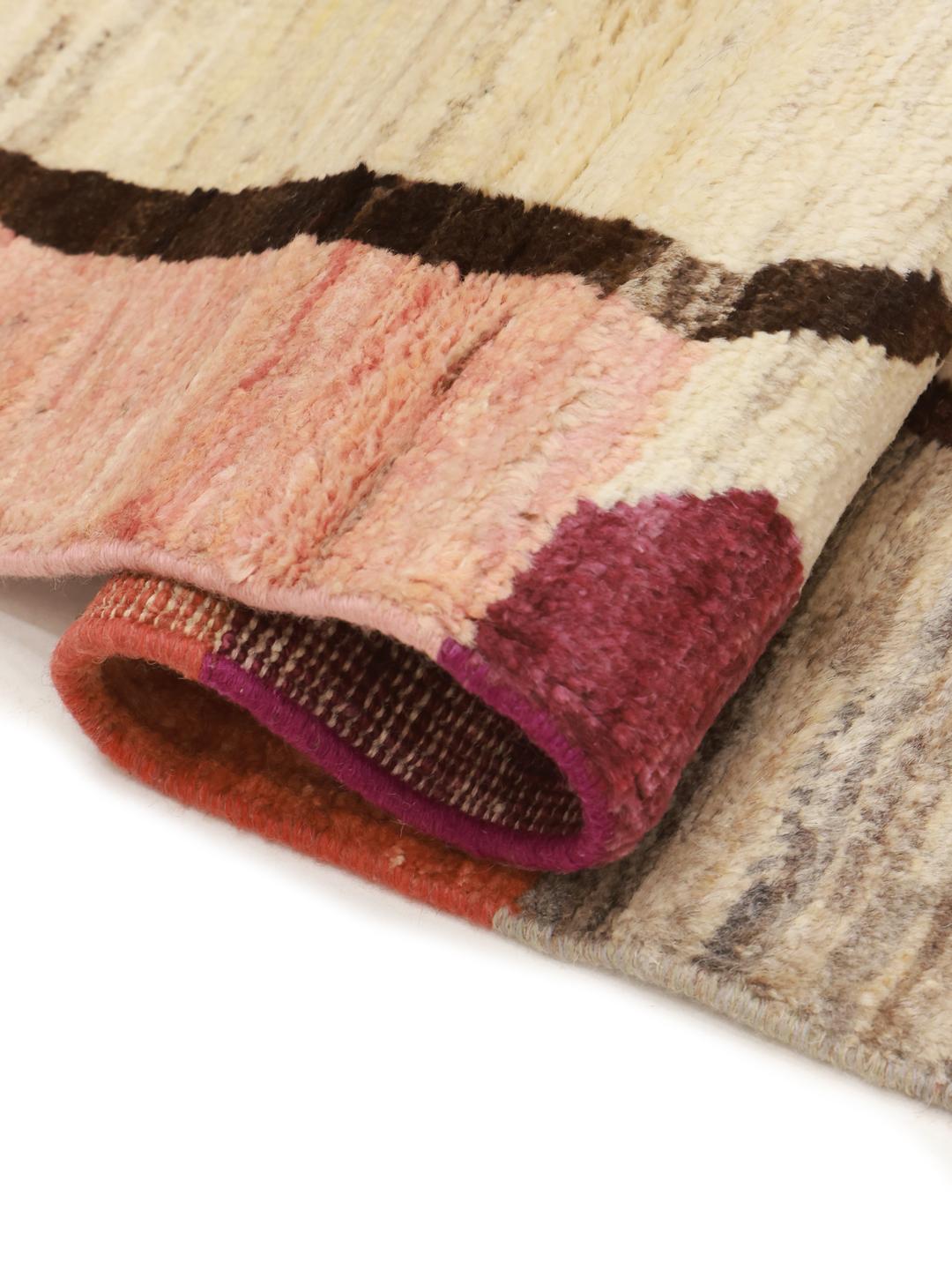
Owning a hand-knotted rug from this tradition is an investment in cultural heritage and human skill. These pieces are highly valued by collectors not only for their visual impact but for the history and craftsmanship they represent, ensuring that your home is enriched by a product of genuine character and enduring quality.