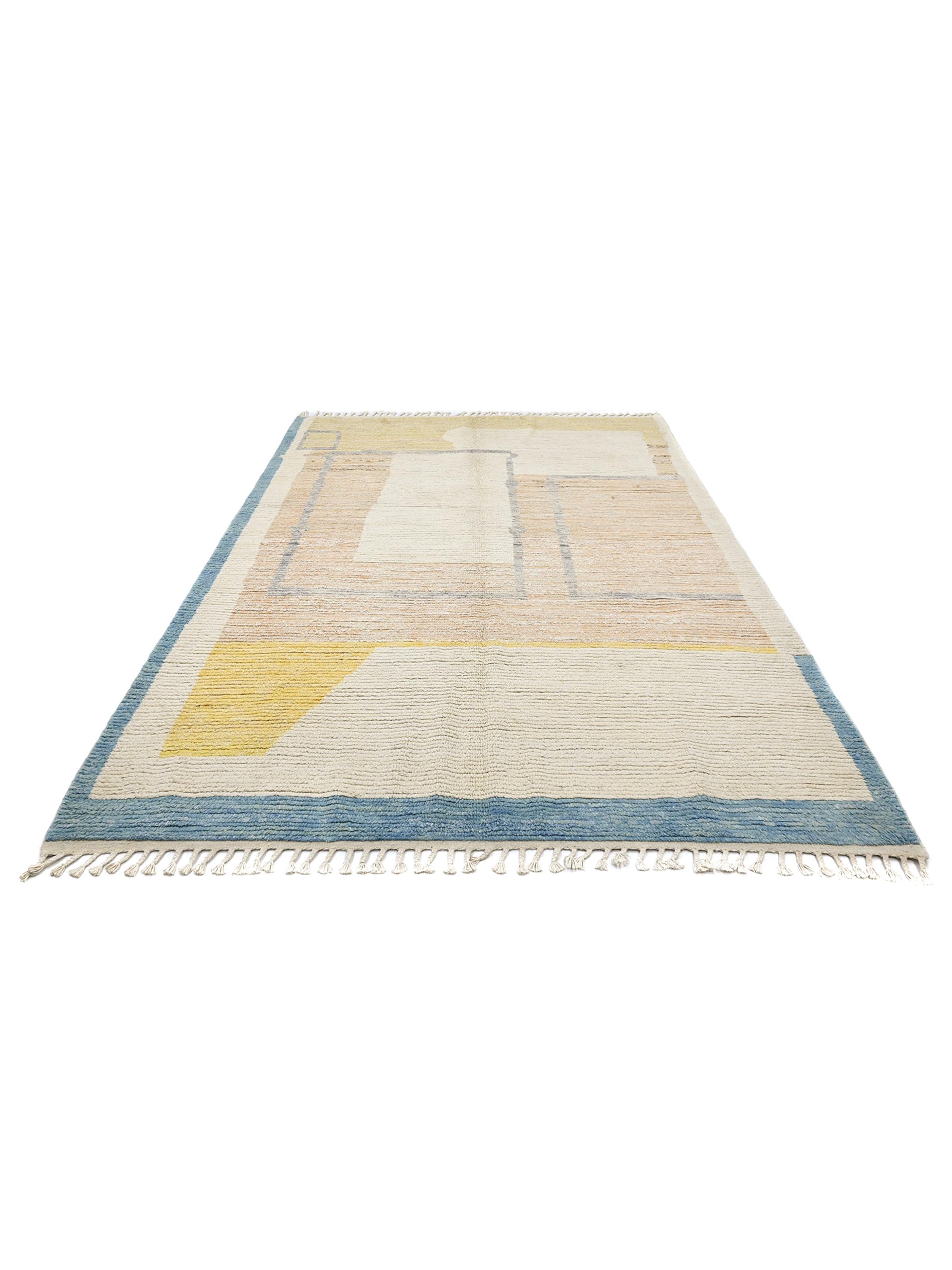
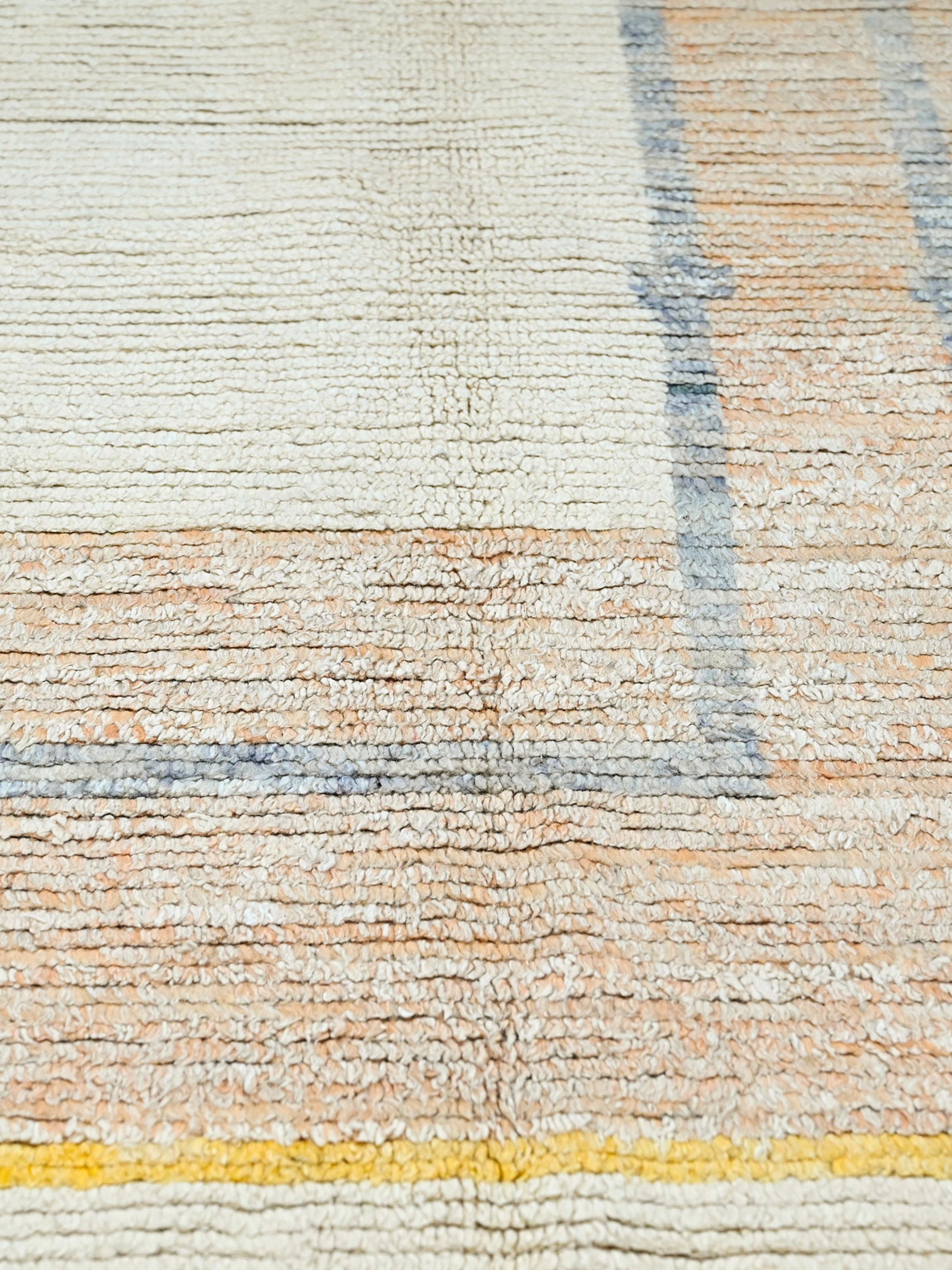
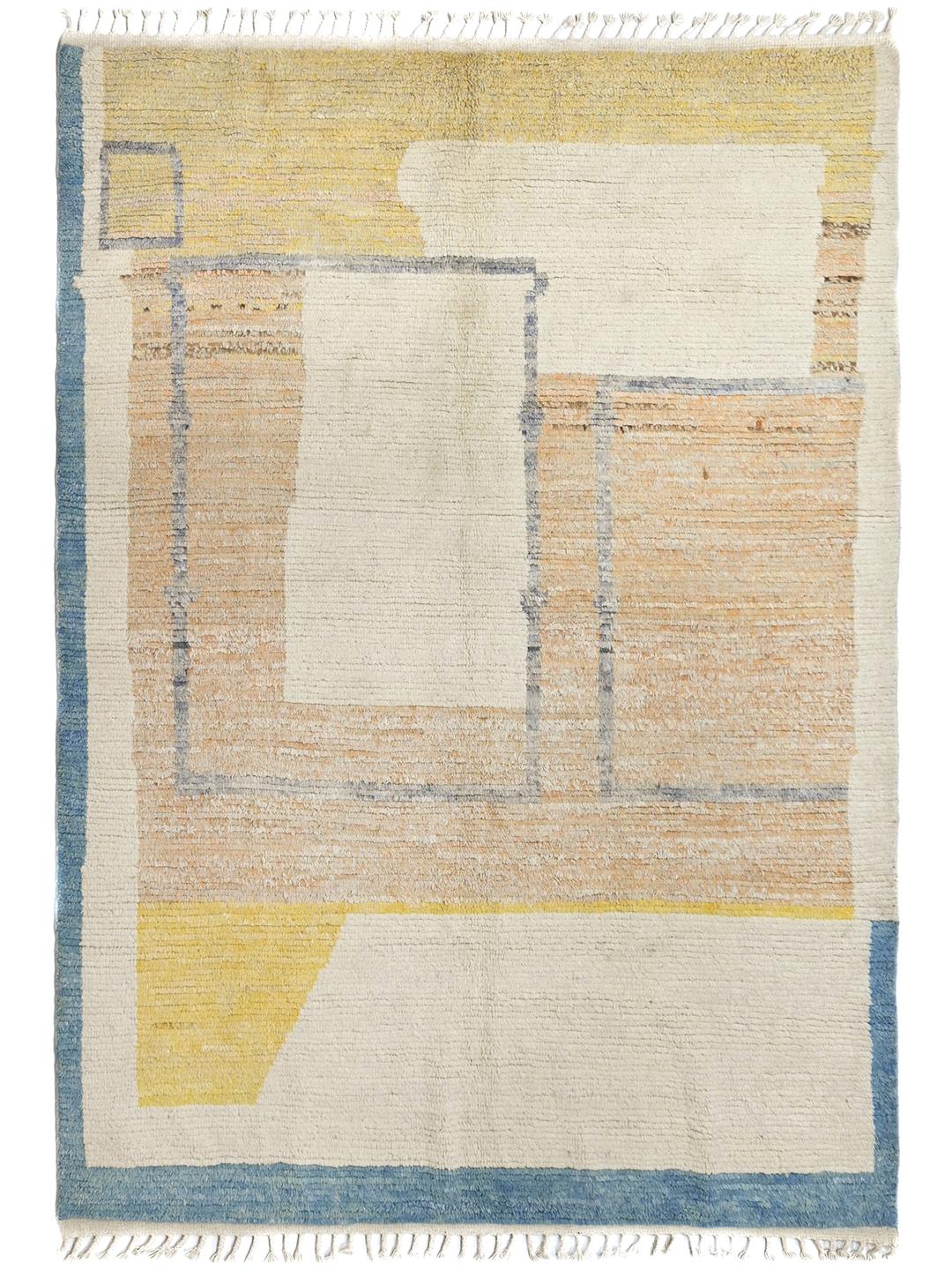
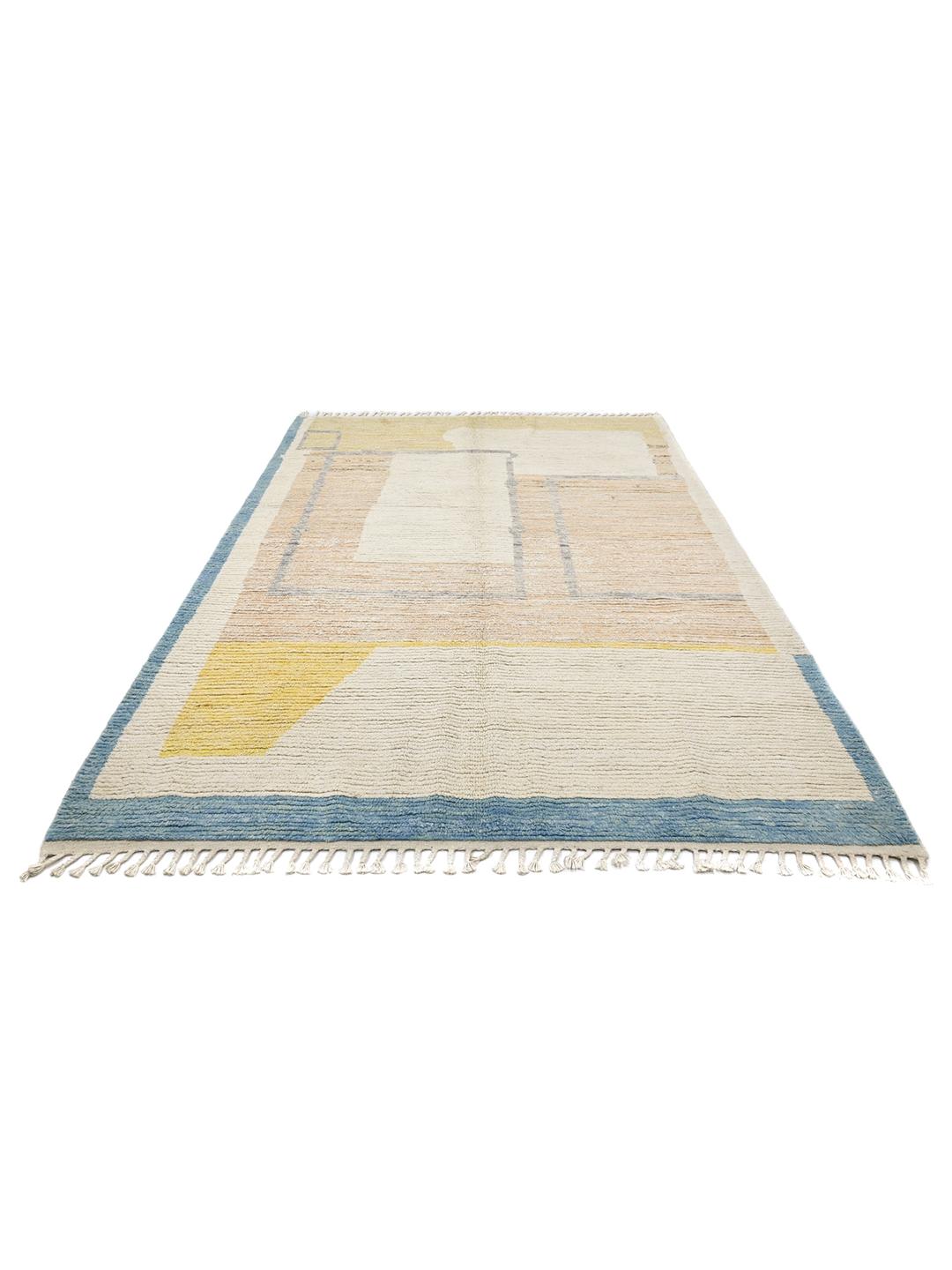
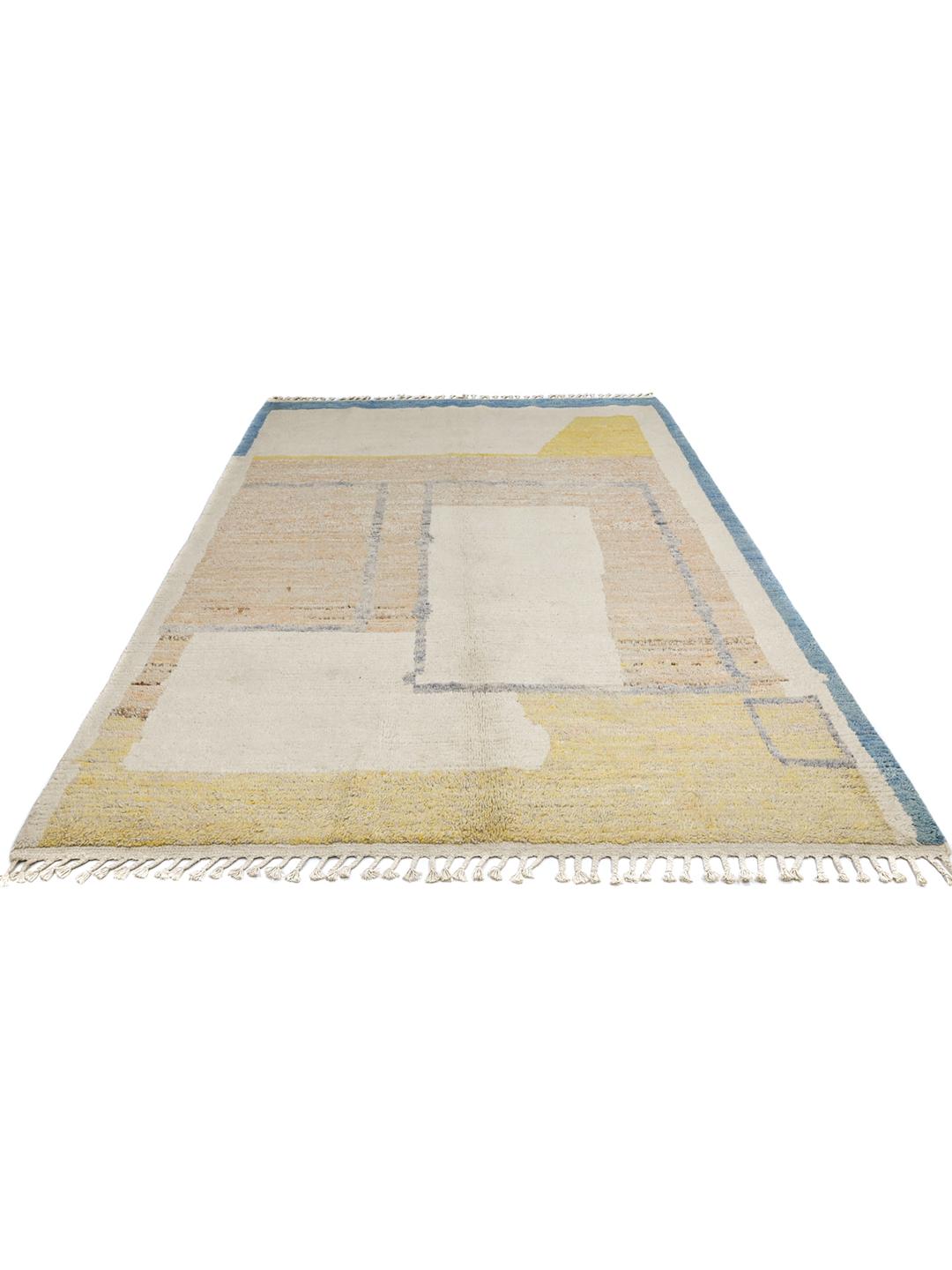
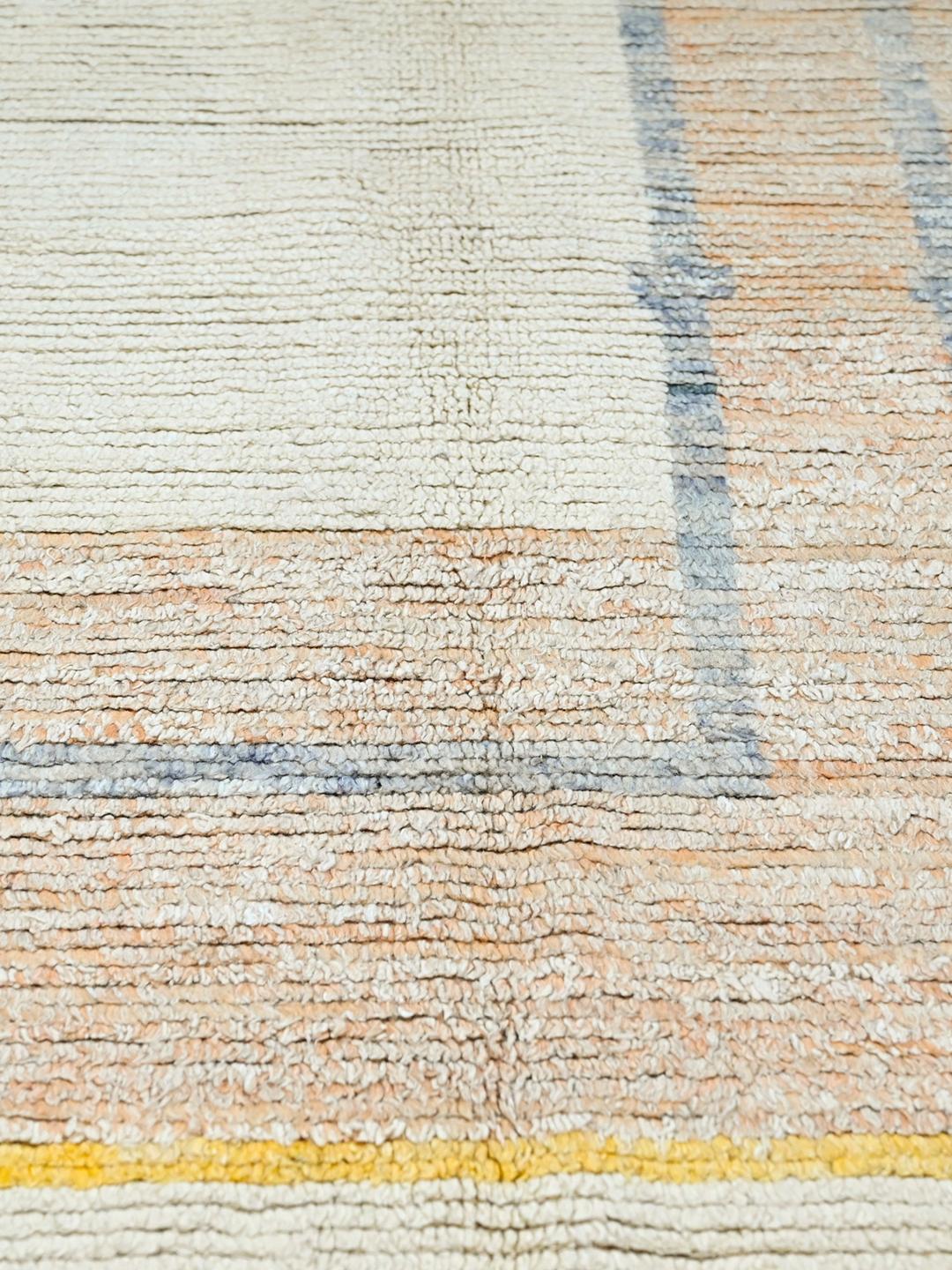
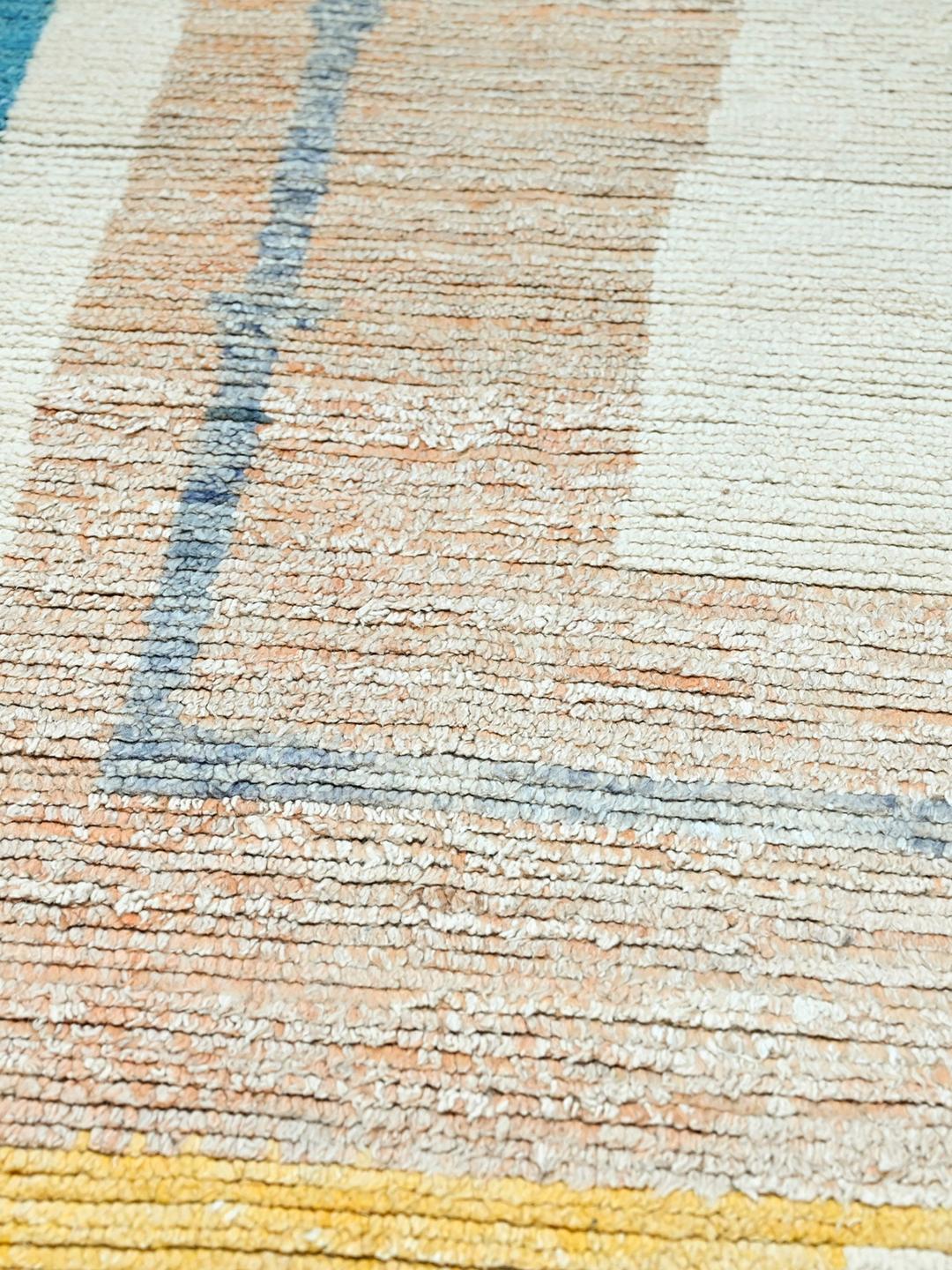
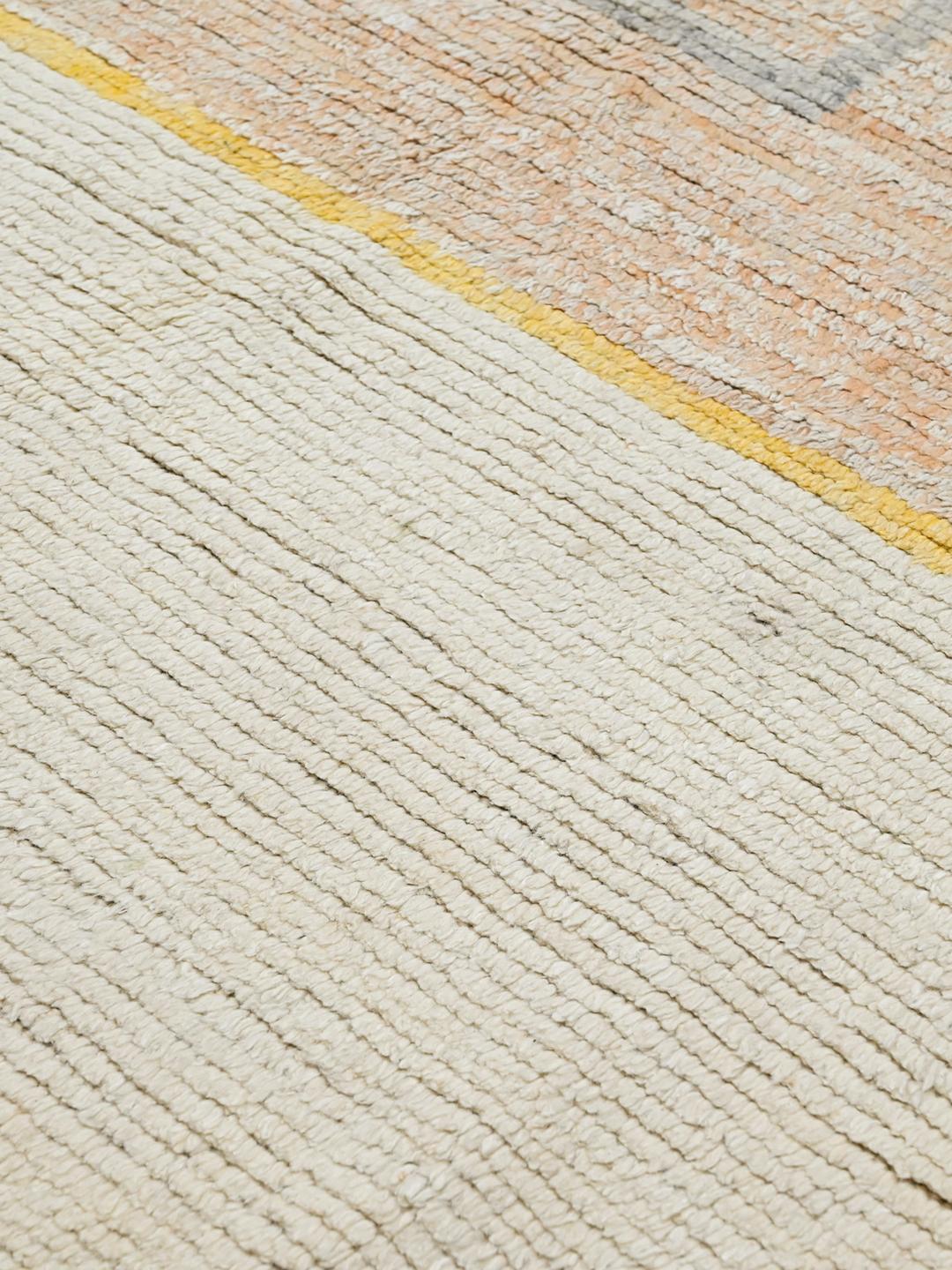
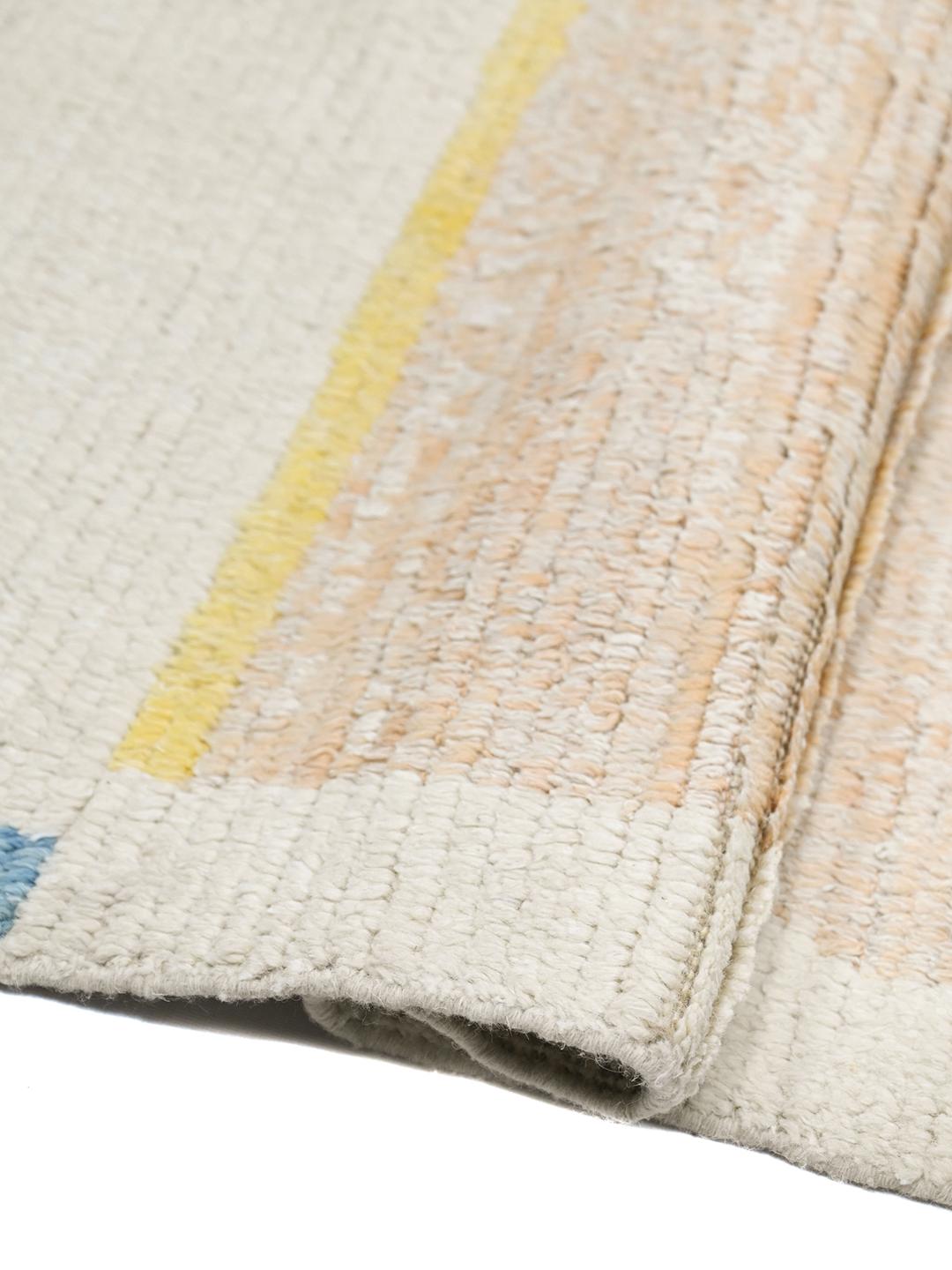
Berber rug traditions originated among the indigenous tribes of North Africa, renowned for their minimalist geometric motifs and deep pile constructions suited to mountain life. Over time, the distinctive aesthetic of soft abstract framing and expressive asymmetry inspired weaving communities across other historic textile regions, including Afghanistan.
In Afghan craft centers, artisans have adopted these freer design principles while applying their own legendary hand-knotting expertise. Using regional wool and structural techniques, Afghan weavers reinterpret the traditional Berber style, pairing open fields with delicate modern line work.
The visual language of Berber Colourful rugs focuses on open space, off-center geometric shapes, and subtle shifts in tone. Rather than rigid symmetry, the patterns flow naturally, using simple lines and color blocking to create rhythm and balance across the woven field.
Today, modern Berber-inspired rugs are highly valued by collectors and design enthusiasts alike. They combine centuries of regional knotting heritage with a contemporary artistic freedom, bringing authentic warmth, historical craft, and individual expression into contemporary interiors.