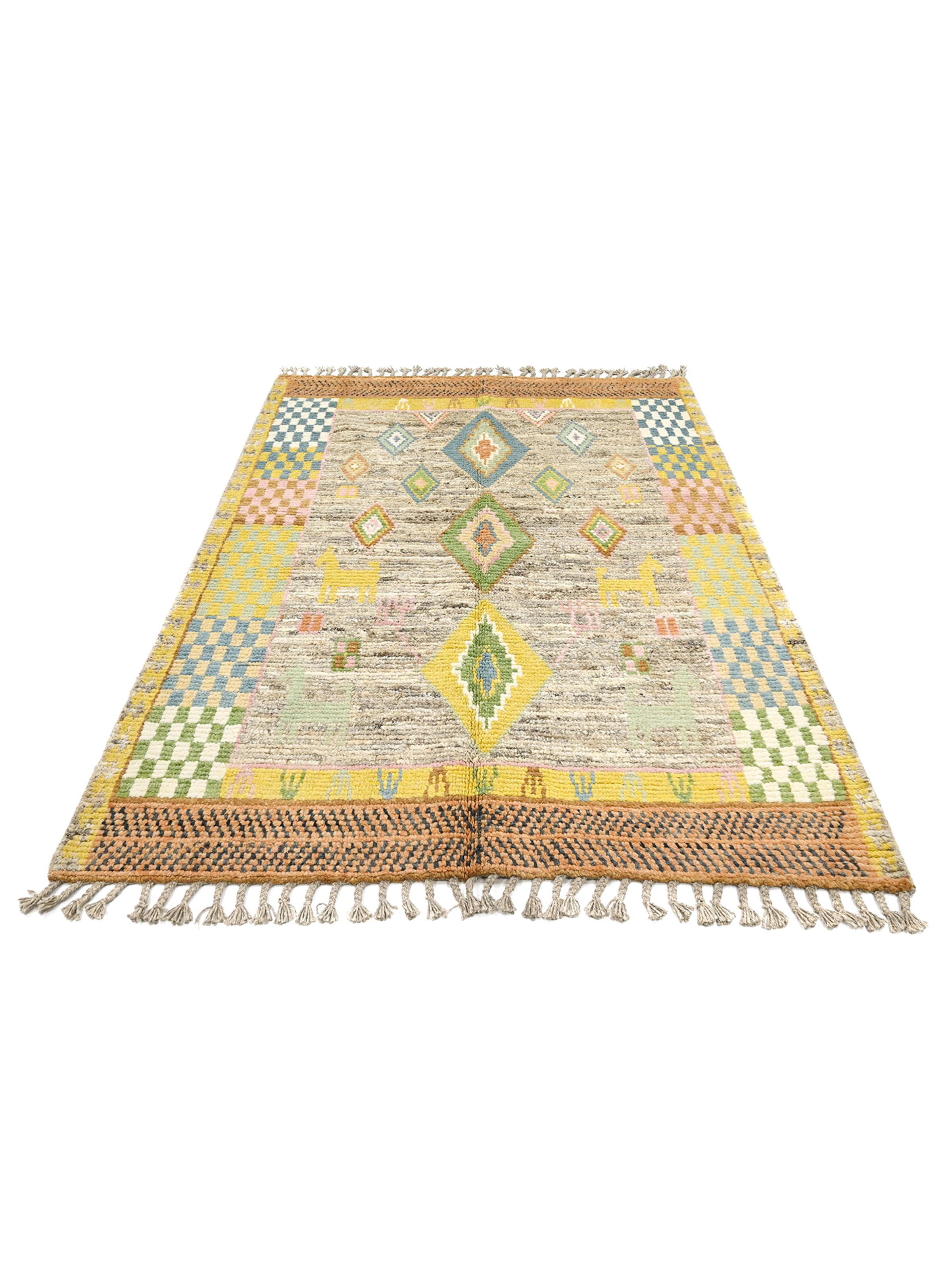
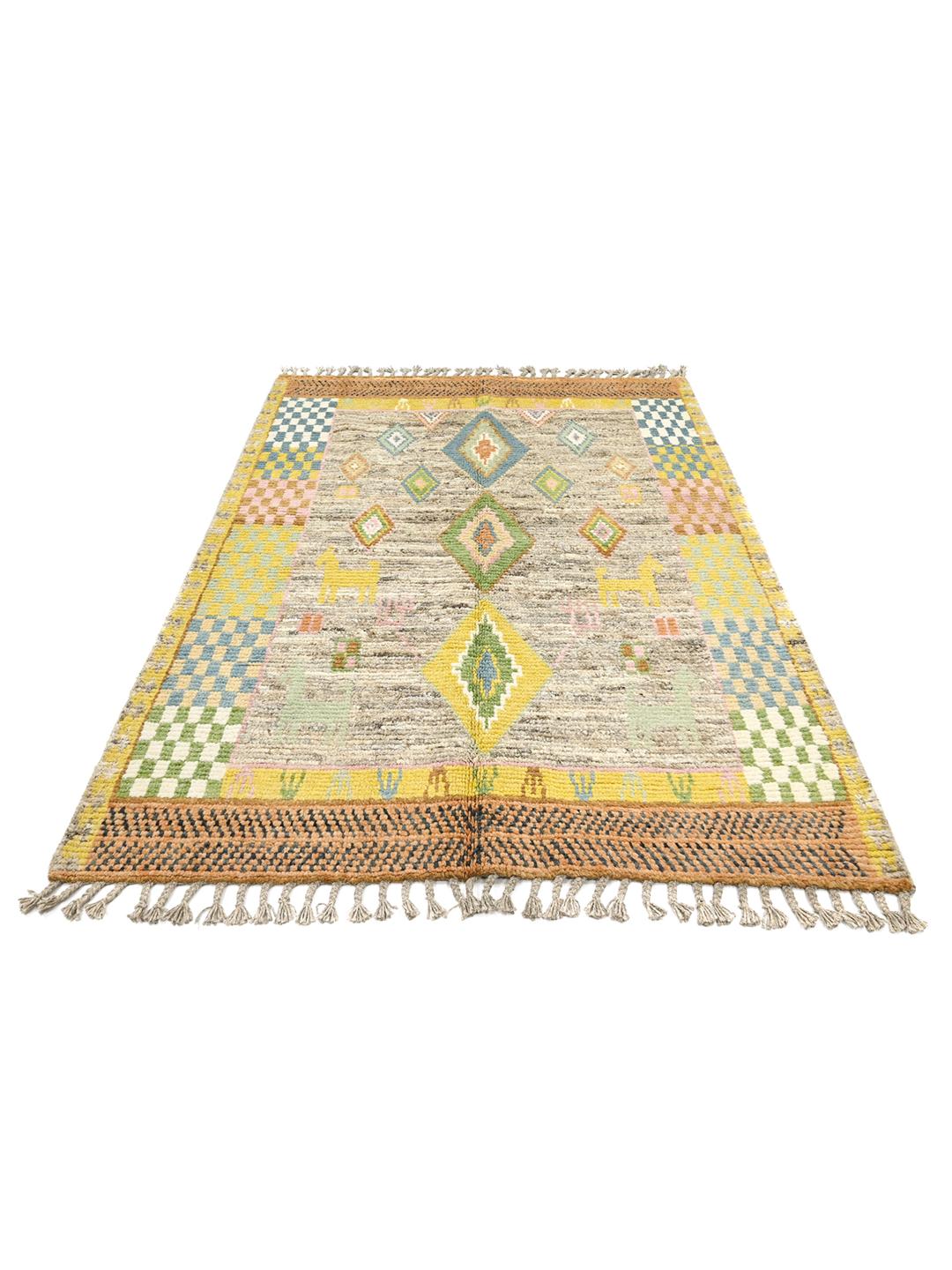
Berber style rugs trace their roots to North African nomadic communities, but their expressive visual language and knotting techniques have inspired weaving centers across the broader region, including Afghanistan. Afghan weavers have embraced these freeform design traditions, weaving heavy wool piles decorated with personal symbols and geometric forms.
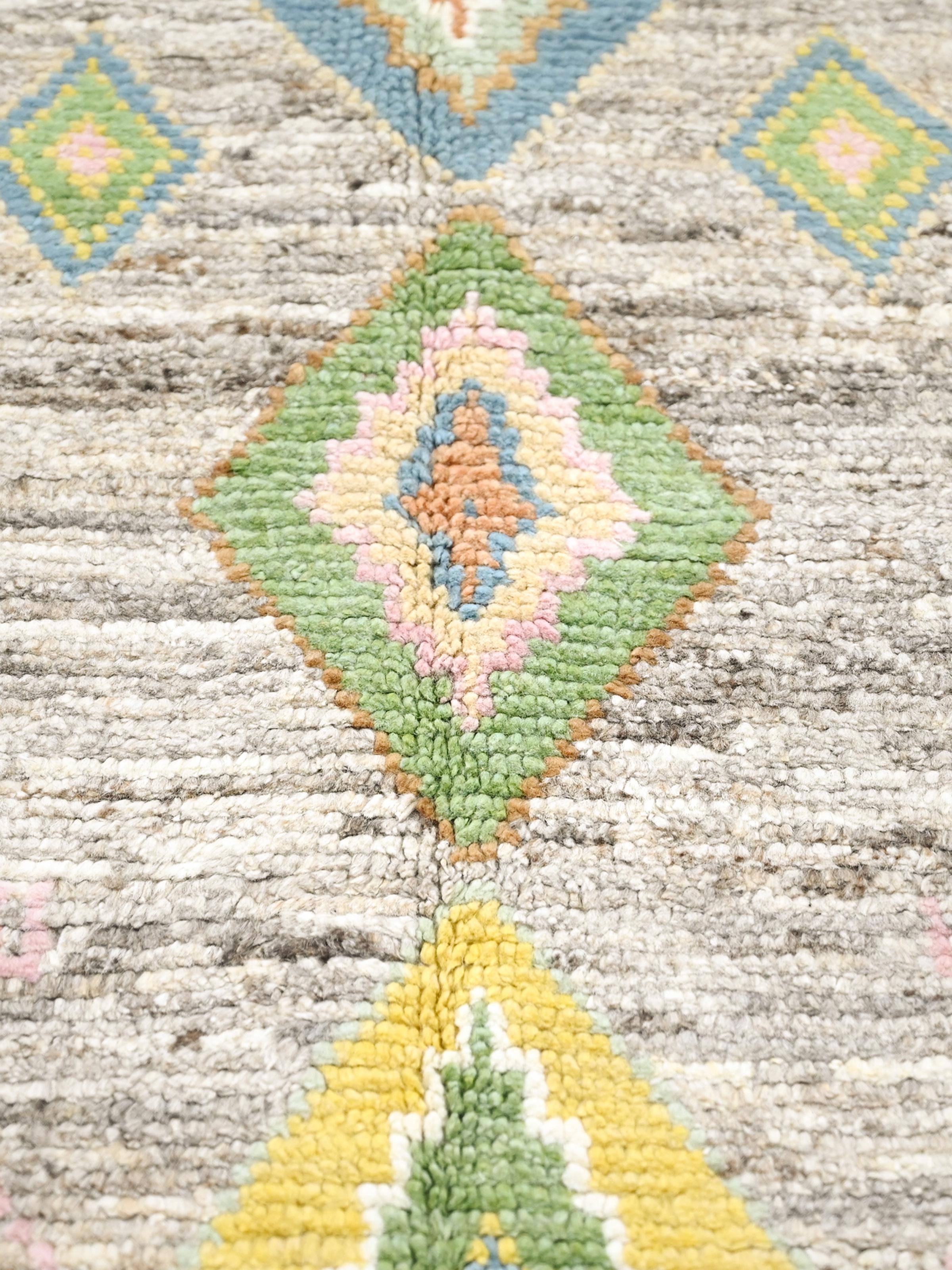
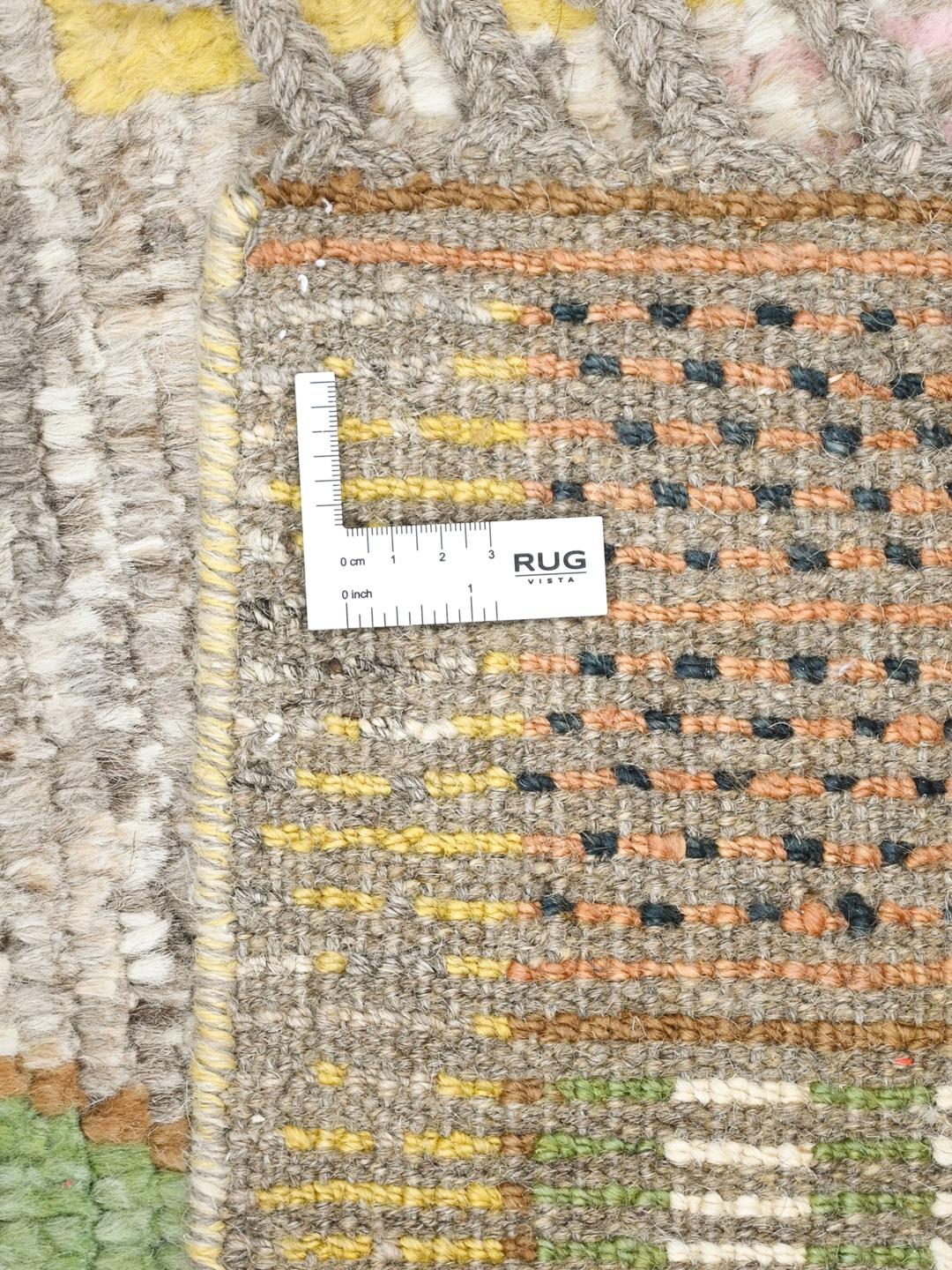
Hand knotting is one of the oldest textile techniques known, relying entirely on human dexterity rather than mechanical assistance. In hand-knotted construction, continuous warp threads form the structural spine of the rug while hand-tied wool knots form the decorative surface, creating a structural bond that machine looms cannot match.
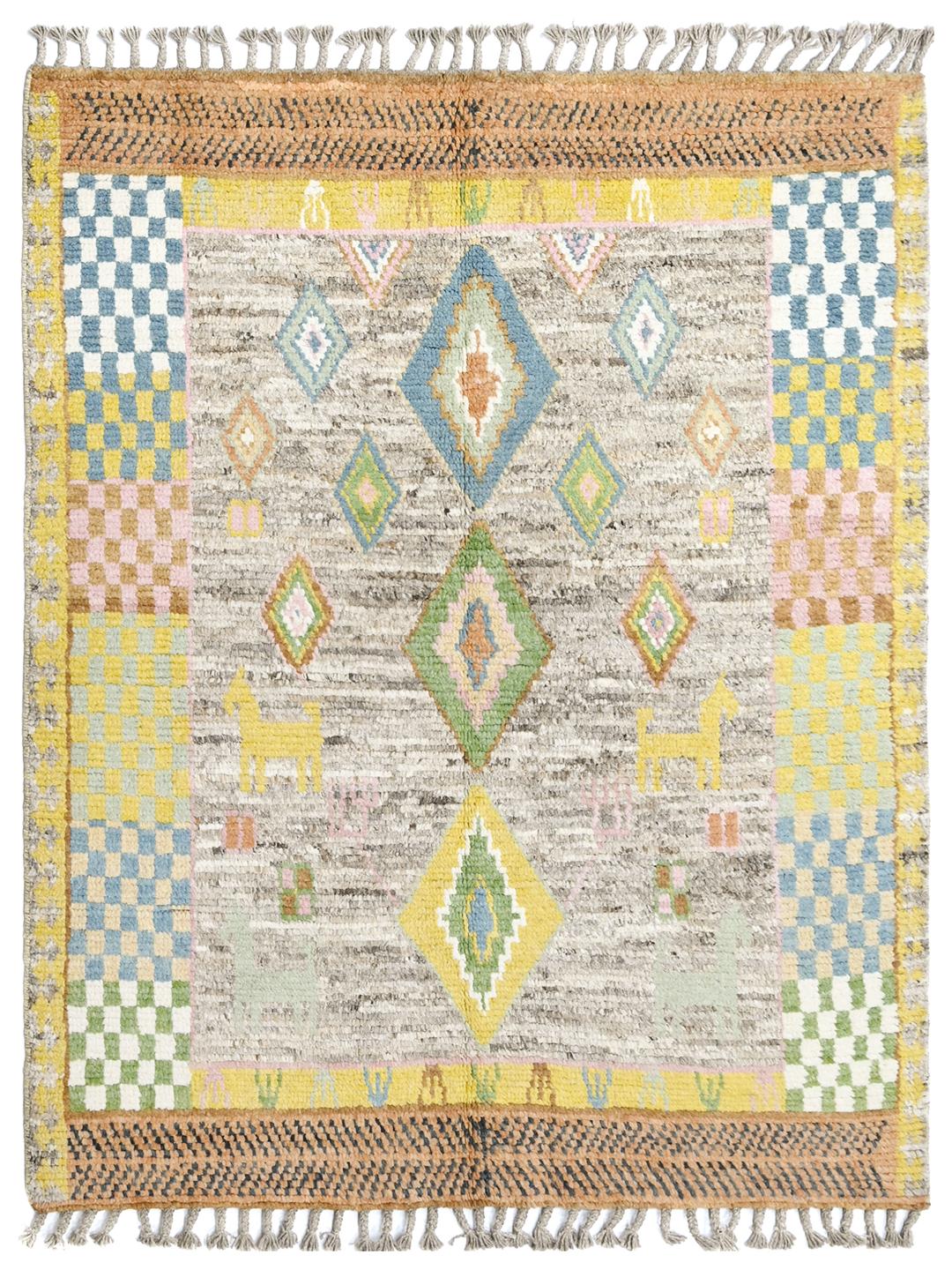
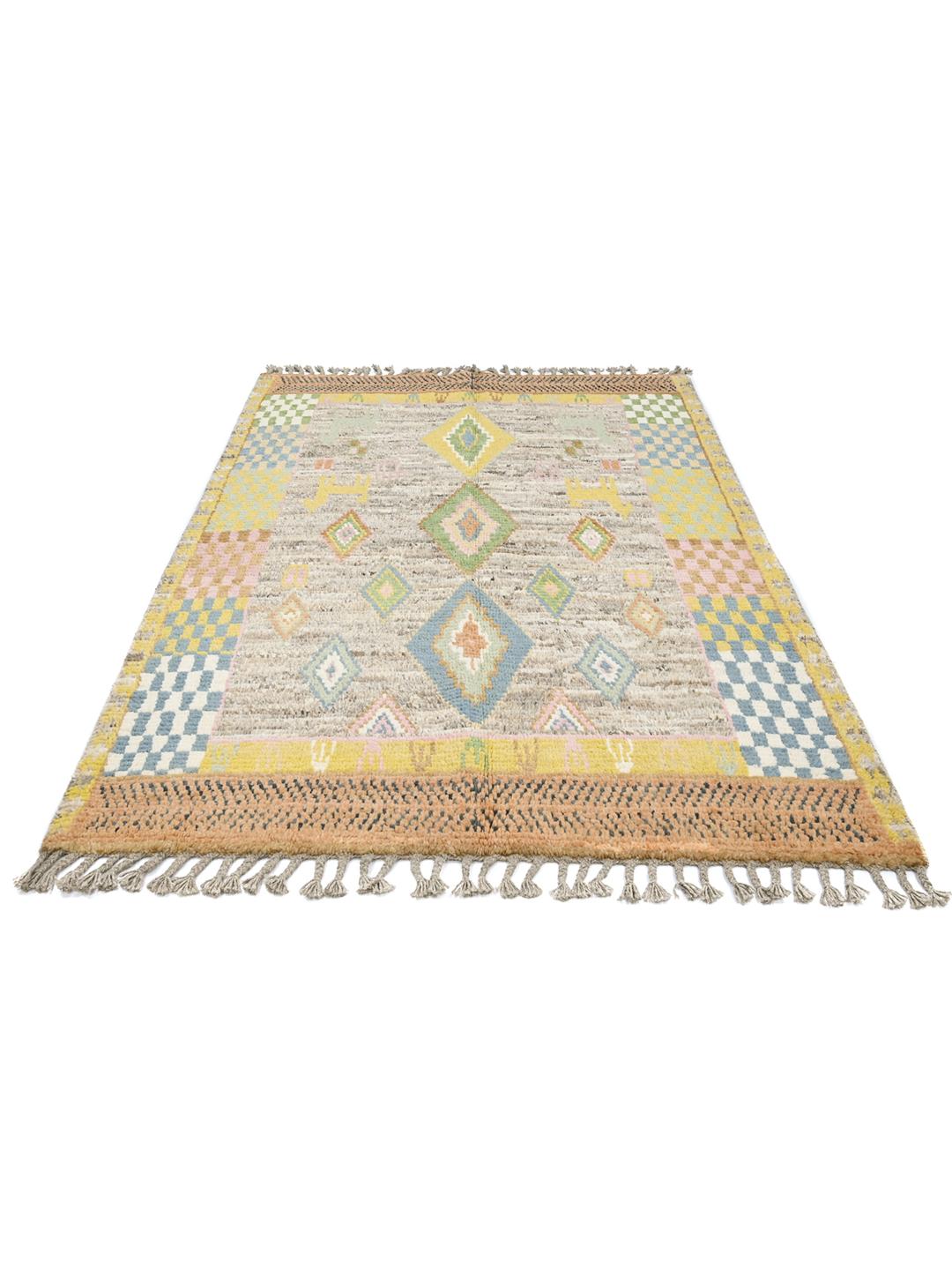
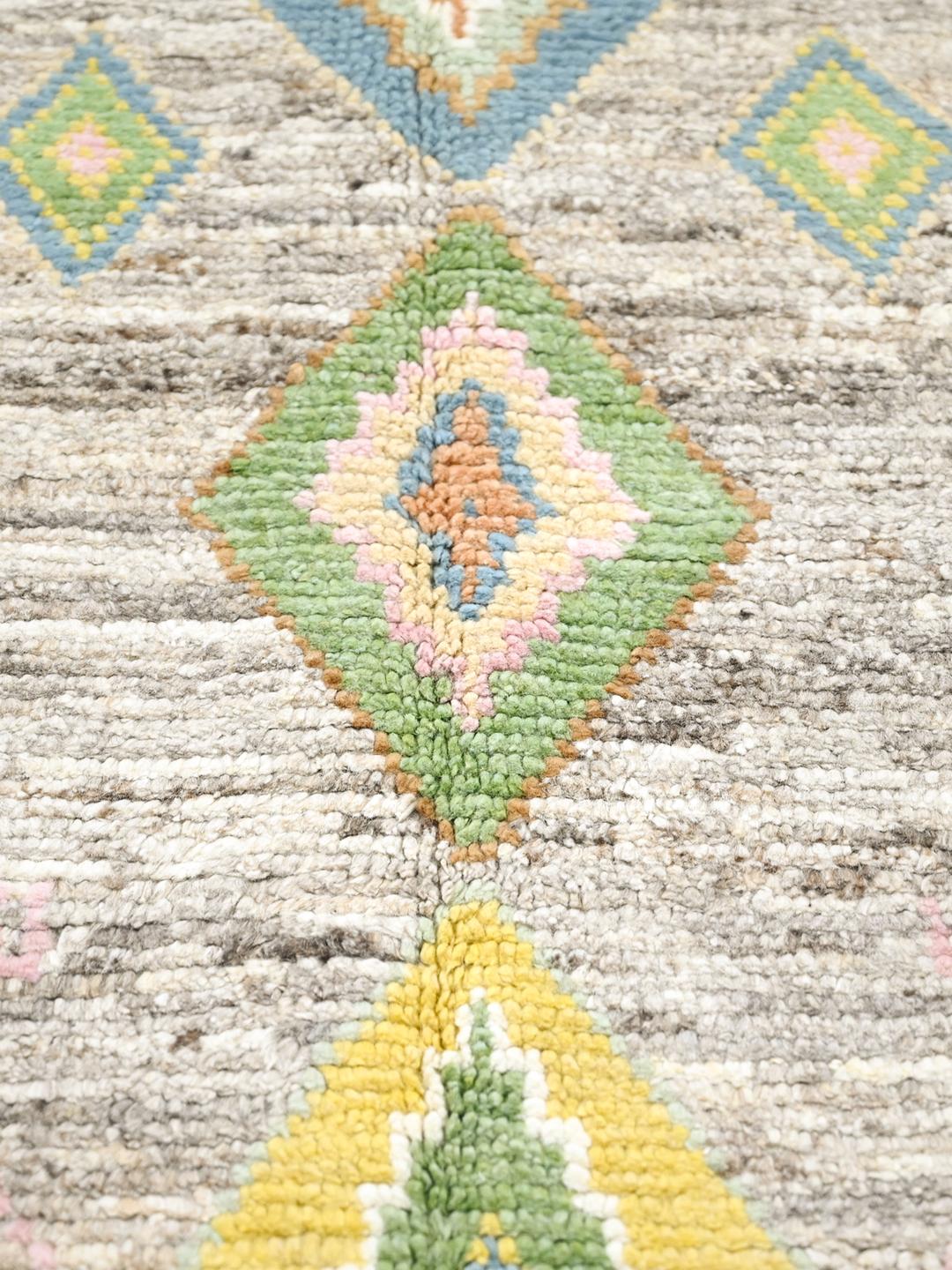
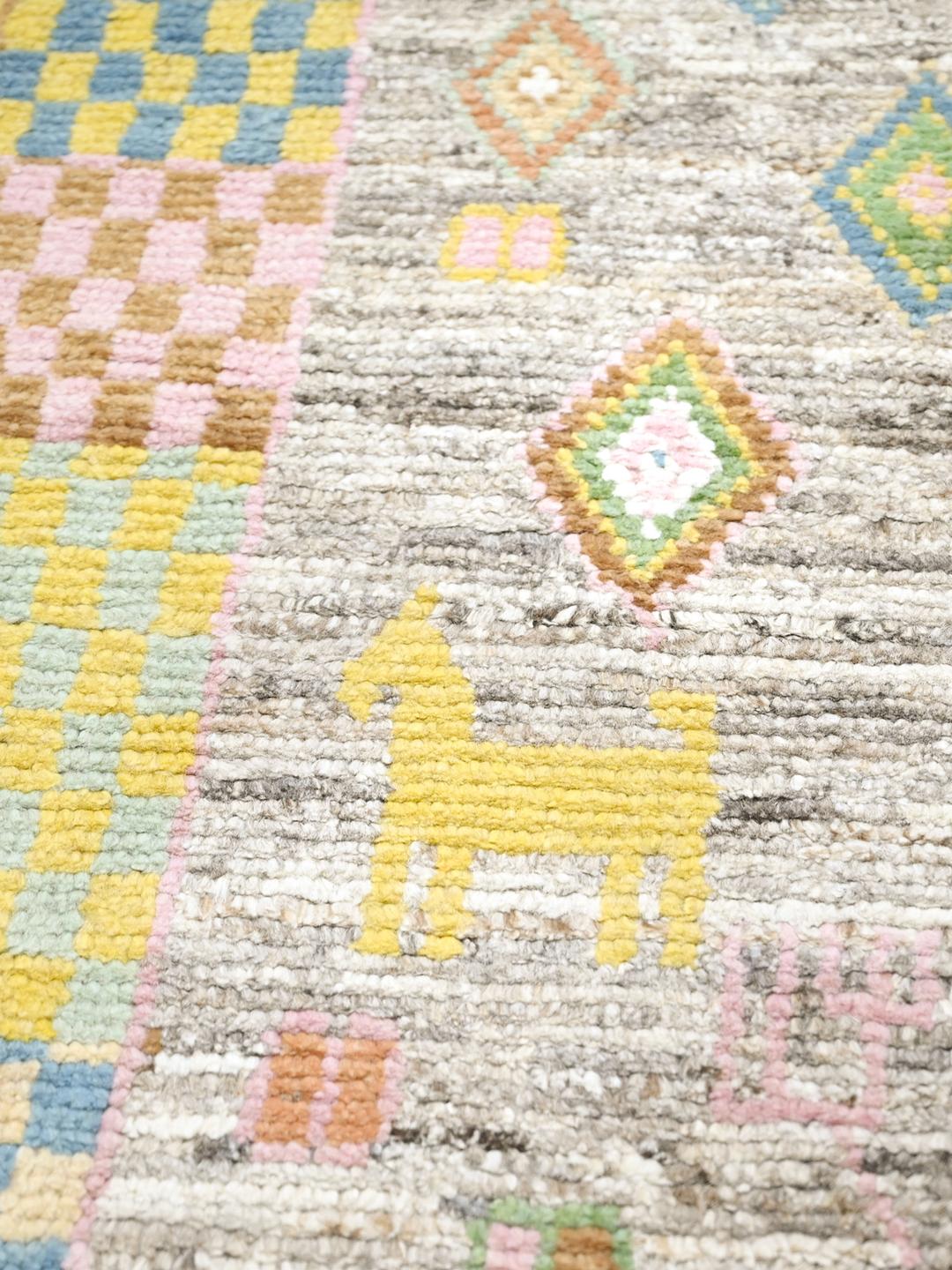
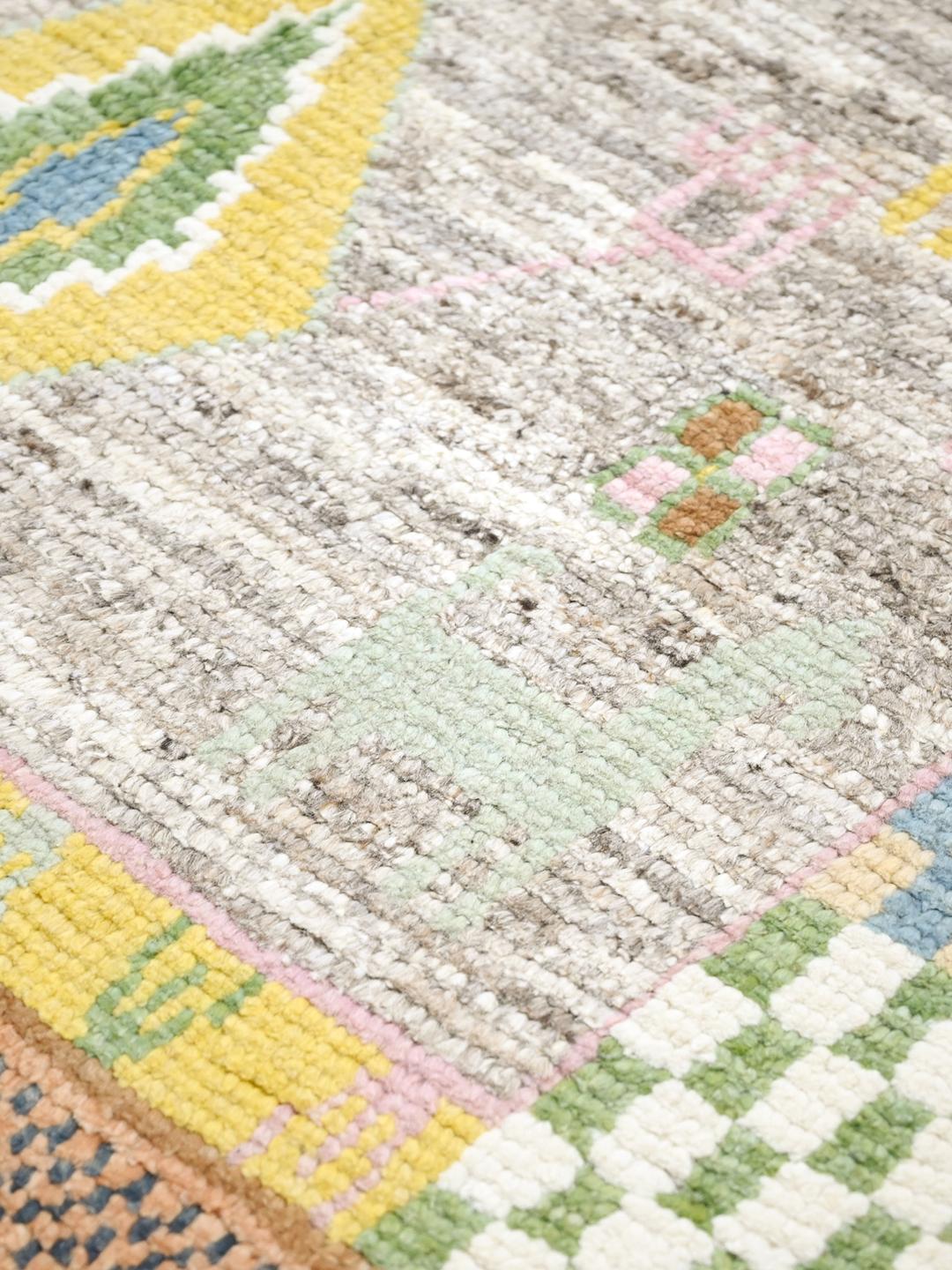
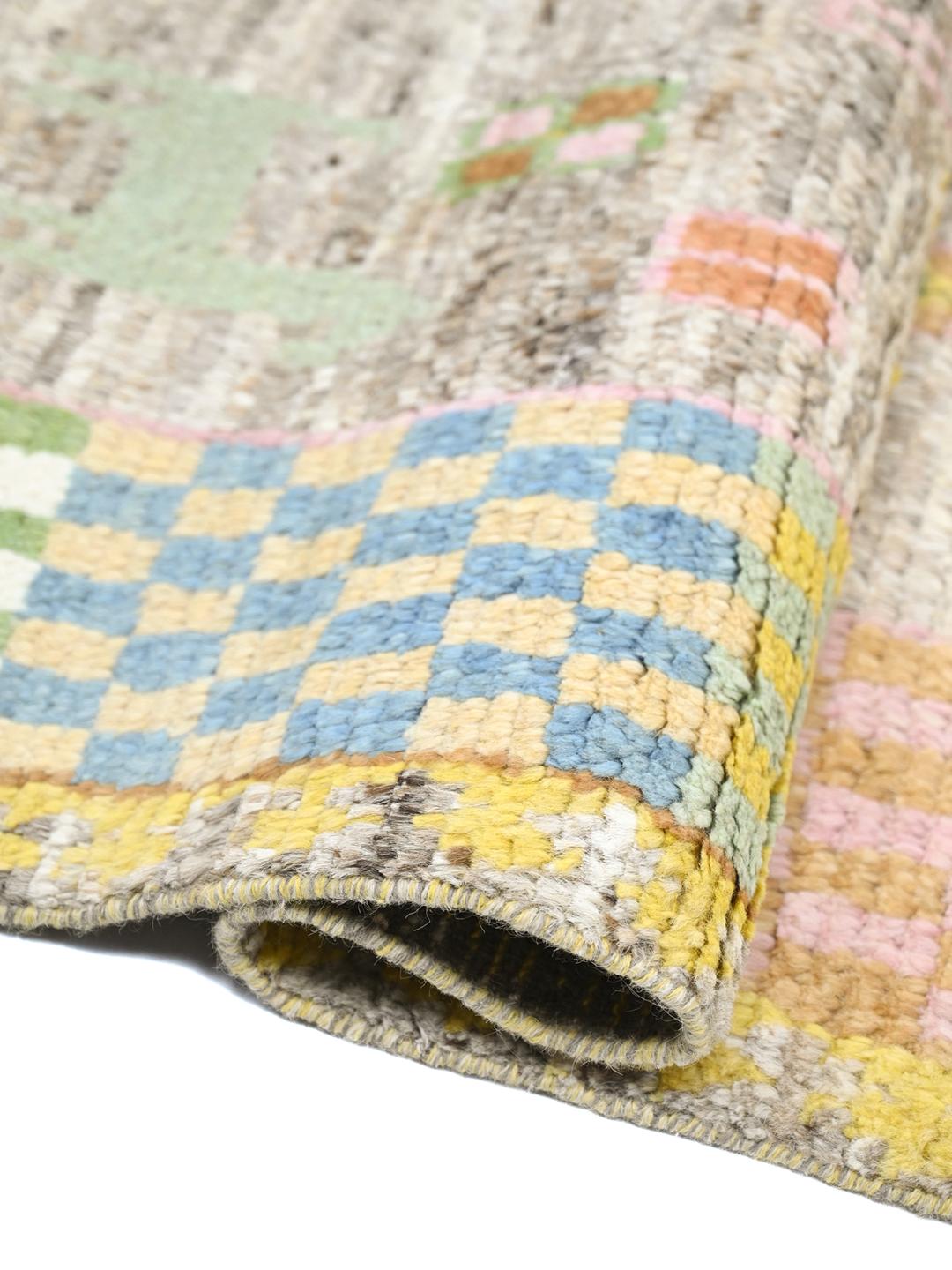
The design of this piece revolves around central diamond motifs, playful animal figures, and framed geometric block borders. Traditional Berber iconography often uses diamonds to signify protection and family, while animal forms add a touch of storytelling and individuality to the composition. The cool grey ground balances the energetic pops of yellow, blue, pink, and green.
Acquiring an Afghan Berber rug allows you to own a bridge between ancient symbolic storytelling and contemporary interior styling. Valued for their durable wool and spontaneous artistic expression, these rugs remain sought-after pieces for those looking to add real personality to their living spaces.