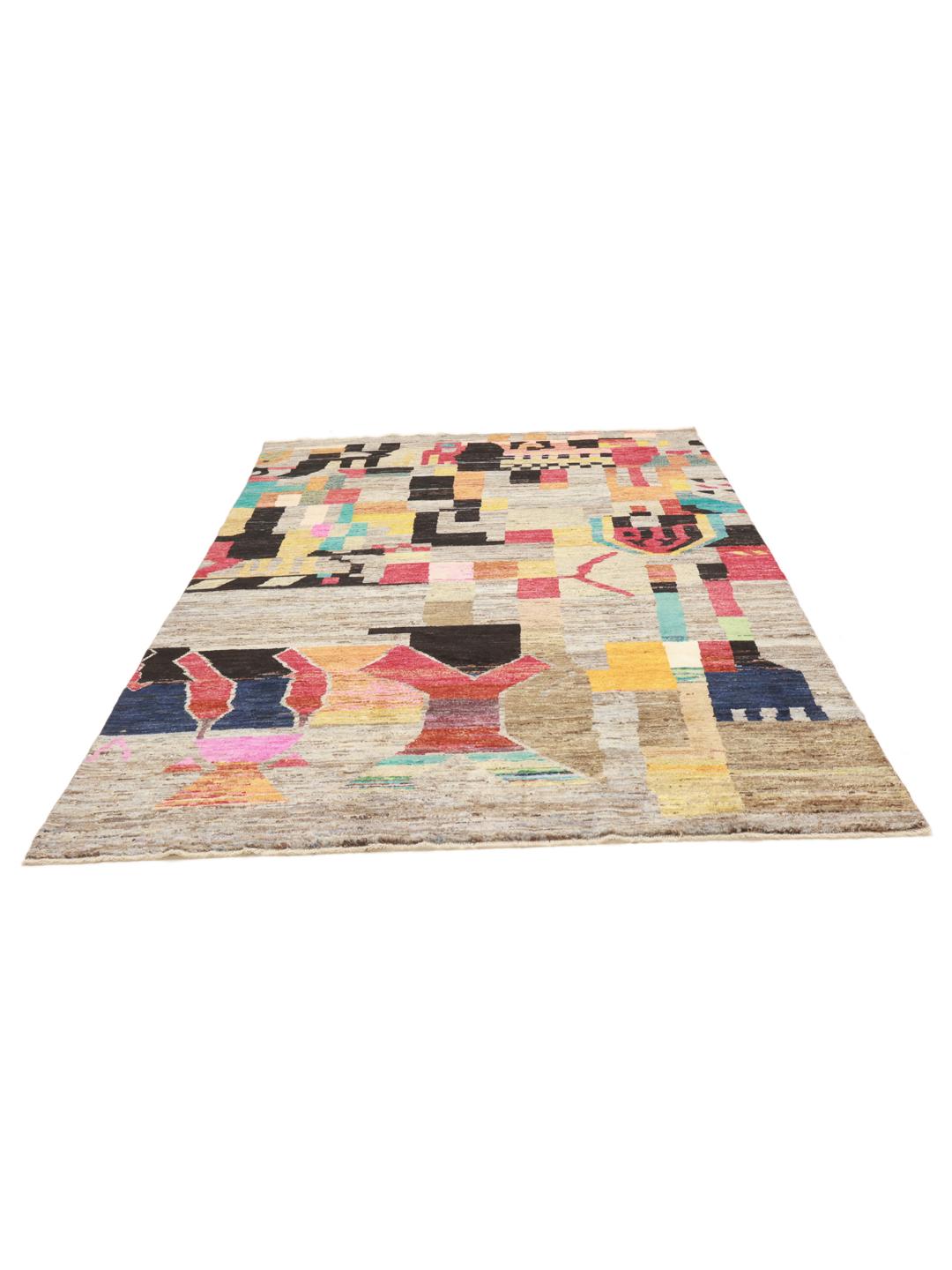
Berber-style rugs have evolved significantly from their North African origins, finding a new and vibrant home in the weaving communities of Afghanistan. While the traditional Berber aesthetic is often celebrated for its minimalist, high-contrast geometric patterns, this Afghan interpretation embraces a more expansive and colourful visual language.
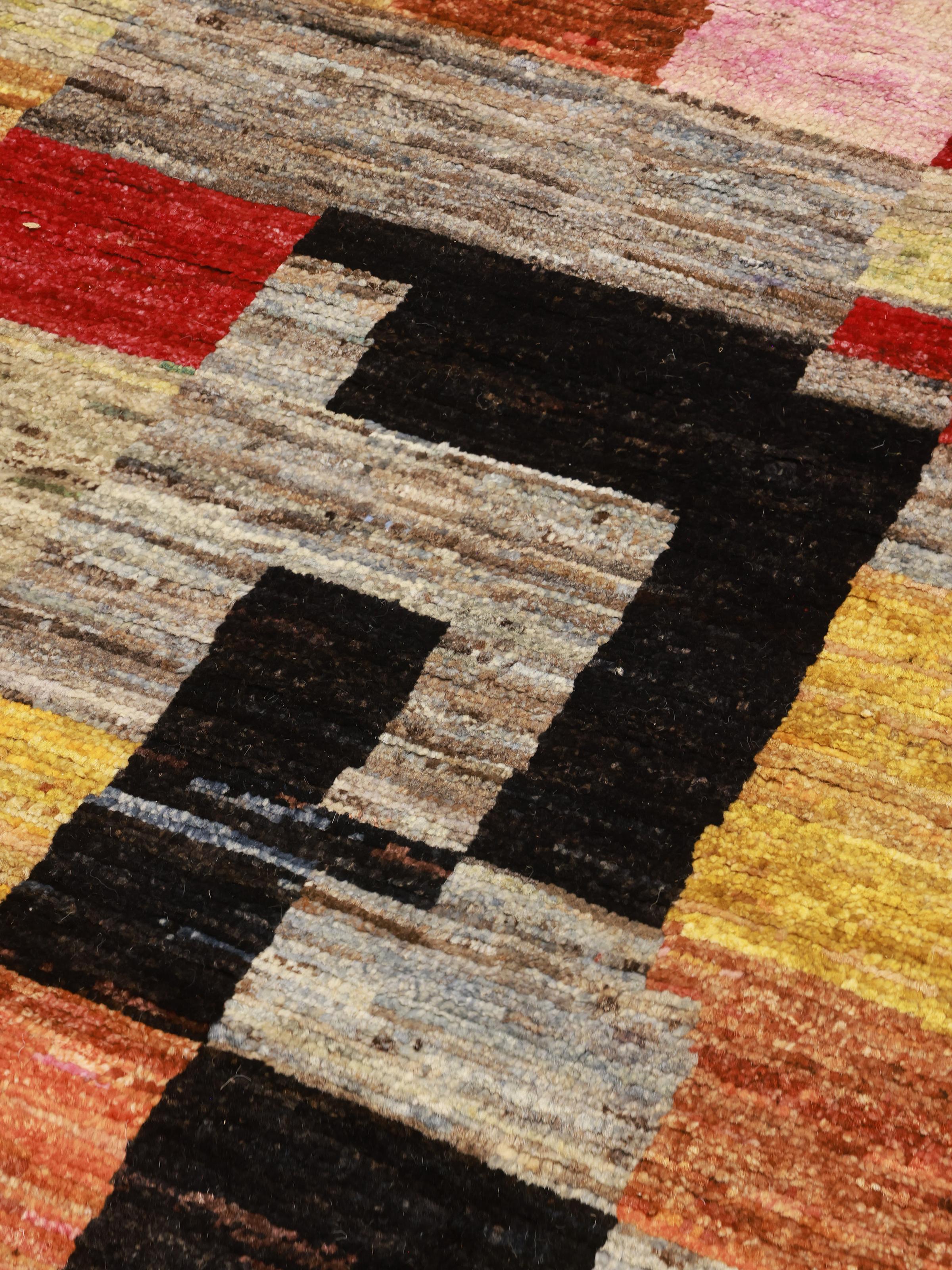
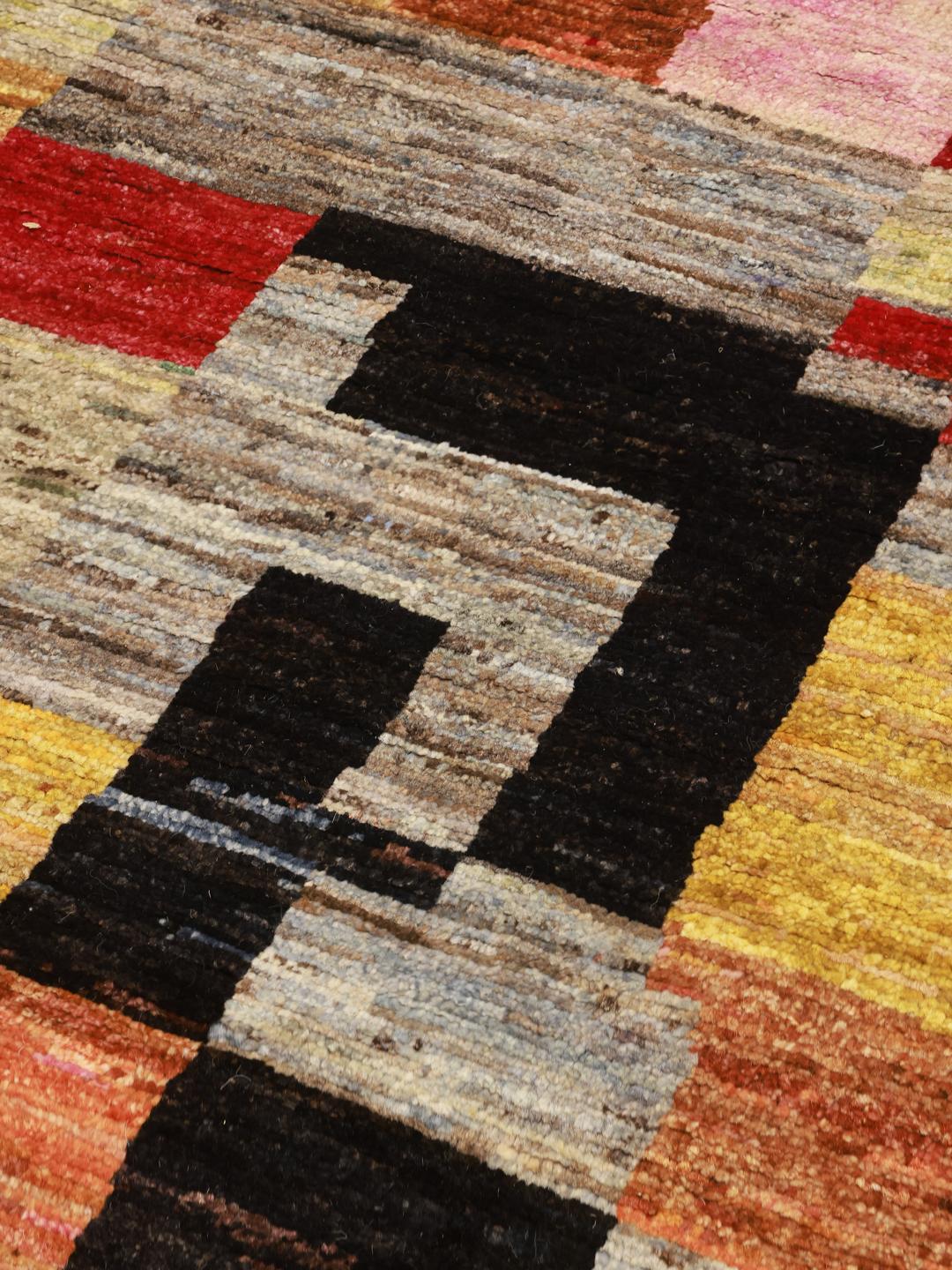
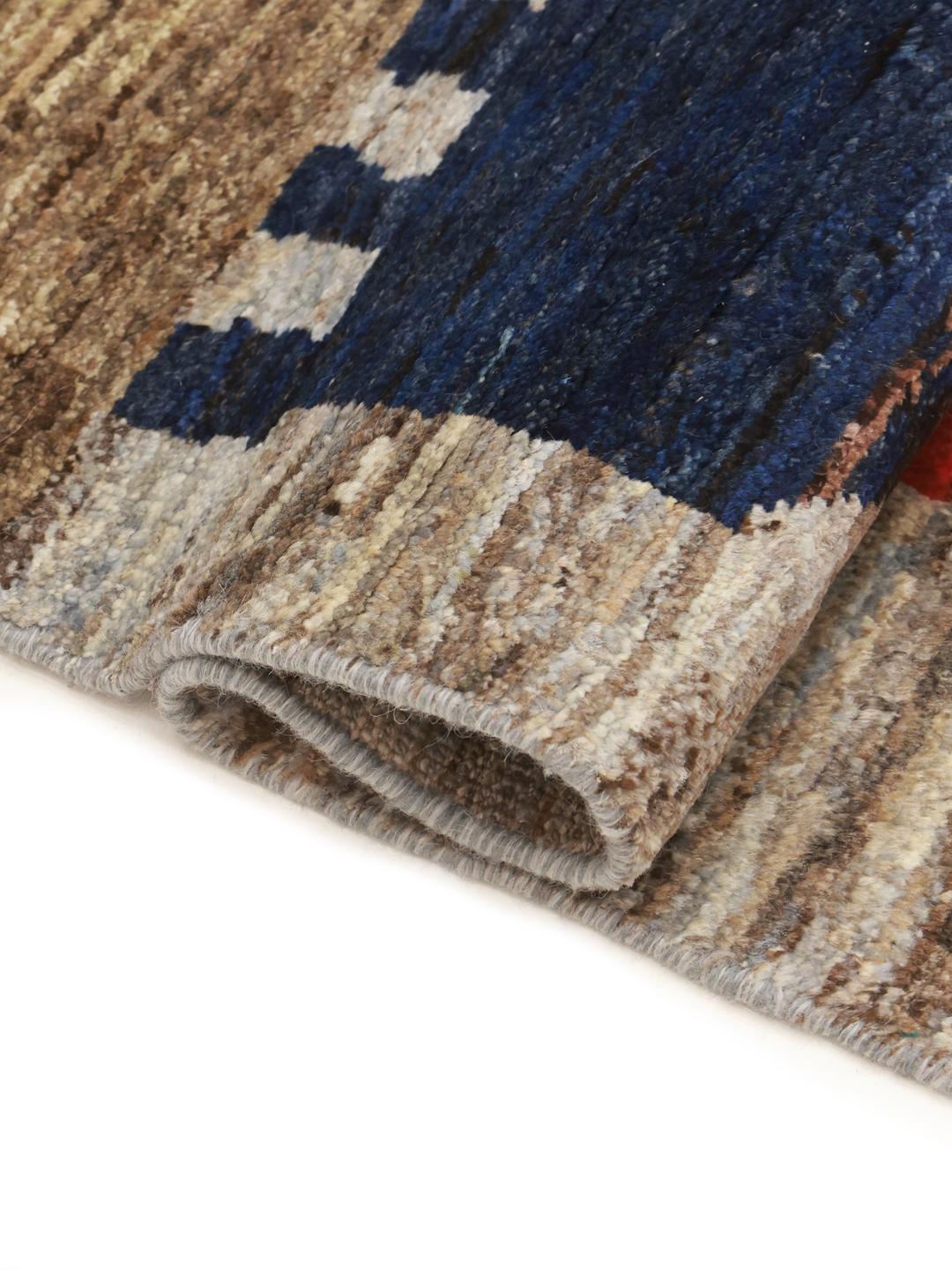
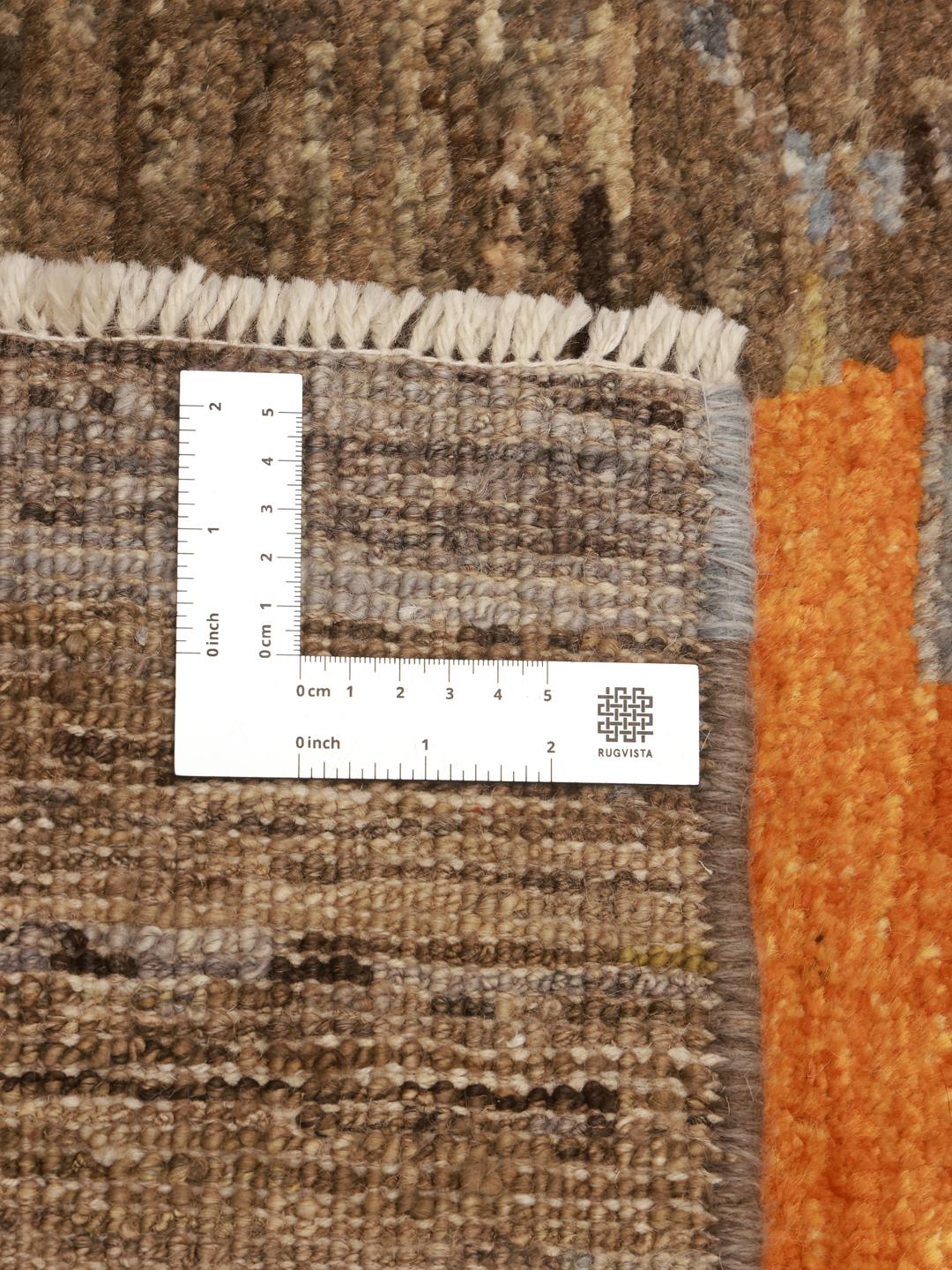
The craft of hand-knotting in this region is deeply rooted in heritage, utilising techniques that emphasise the natural qualities of Wool. By using Wool as both the pile and the foundation, the weavers ensure a sturdy, consistent construction that balances softness with a resilience suited for high-traffic areas in a modern home.
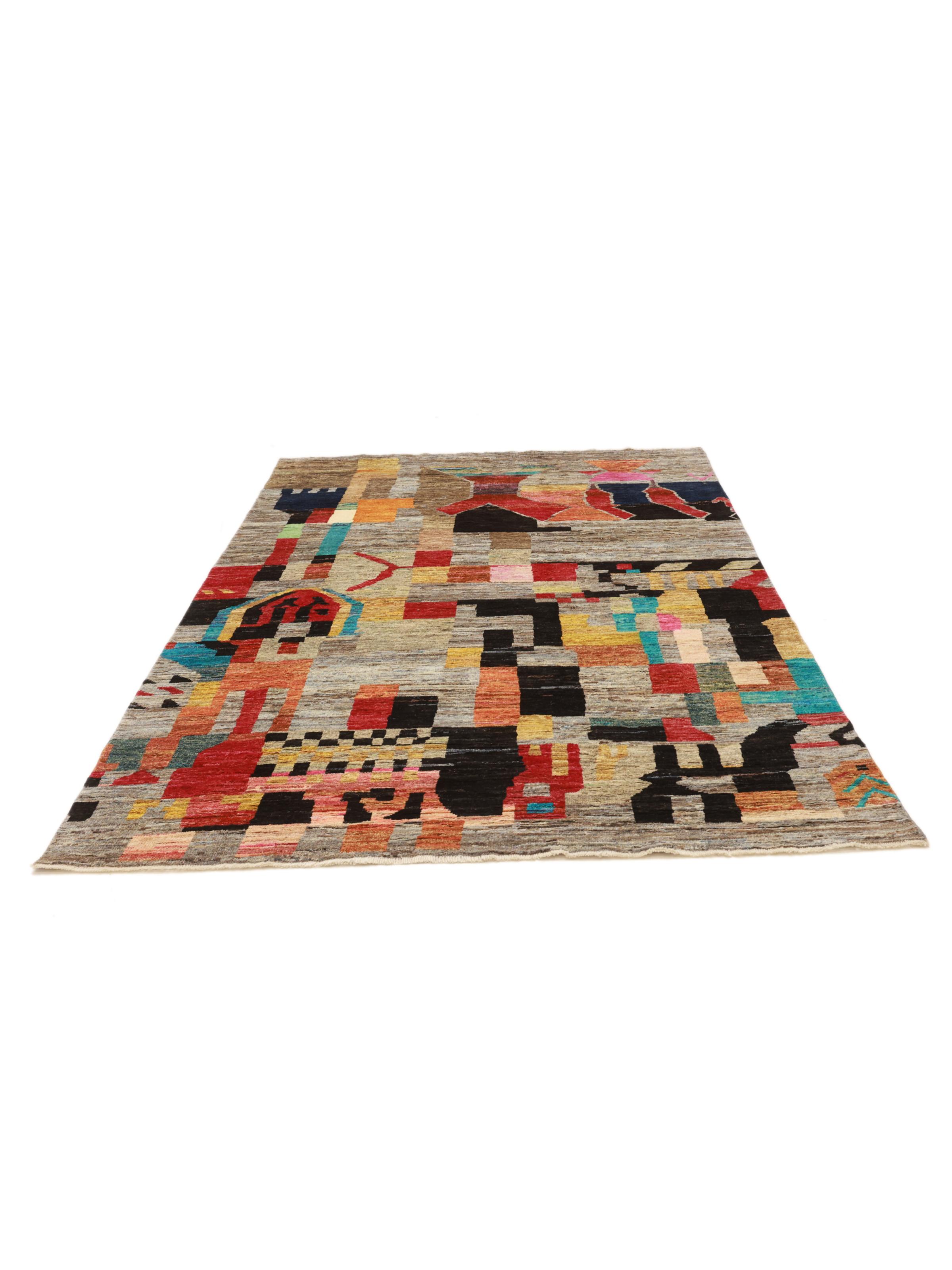
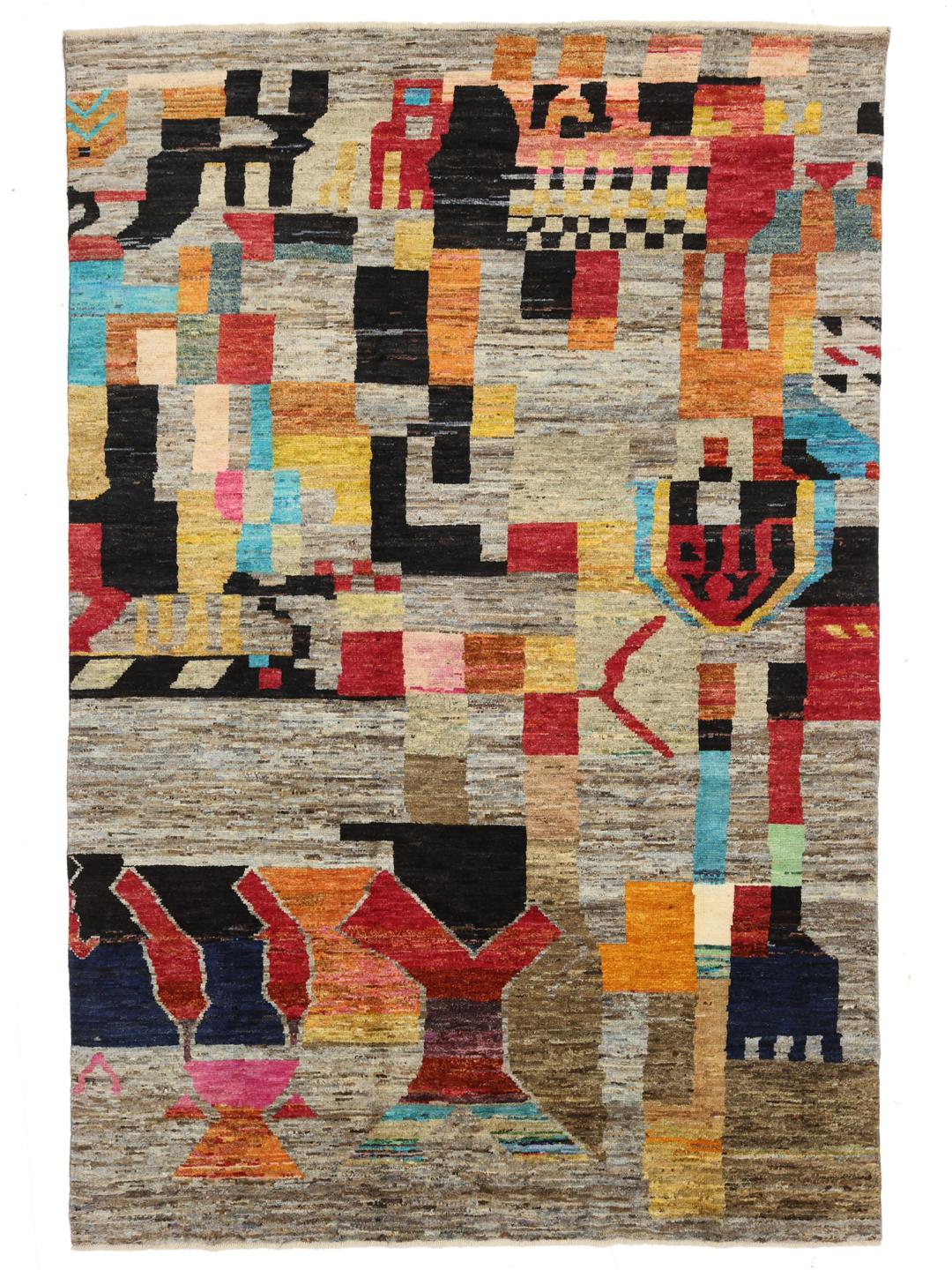
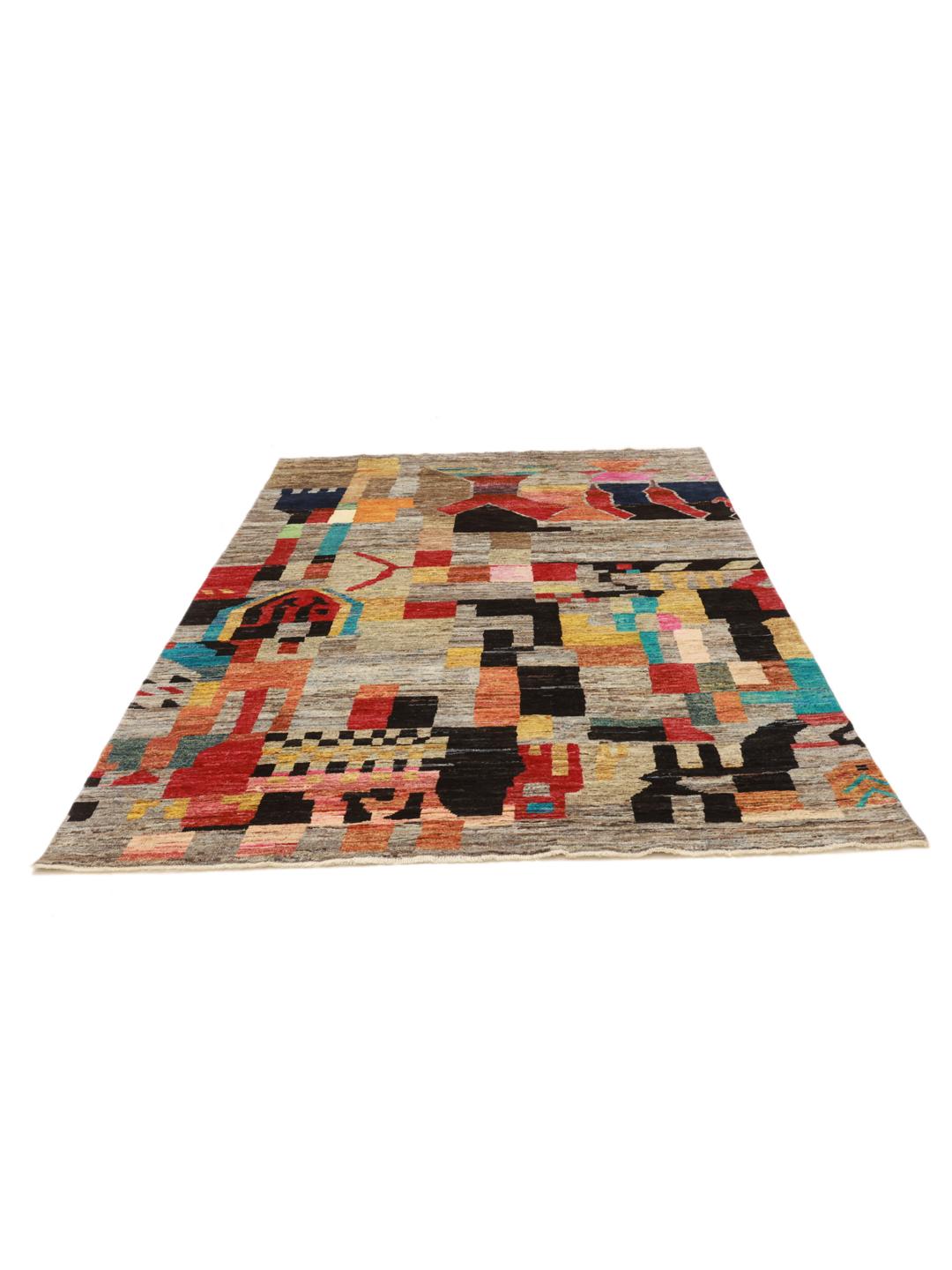
Visually, this piece breaks away from rigid historical motifs, opting instead for an abstract, artistic composition. The use of bold colour blocks and varied shapes reflects a contemporary evolution of rug design, where the weaver acts as an artist, using the loom as a canvas to explore form and spontaneity rather than repeating ancient, standardised symbols.
Collectors value these rugs for their ability to bridge the gap between ancient craft and modern design. By choosing a piece like this, you are supporting a living tradition that values the individual touch of the maker over the uniformity of the machine, resulting in a floor covering that carries a genuine sense of cultural and creative weight.