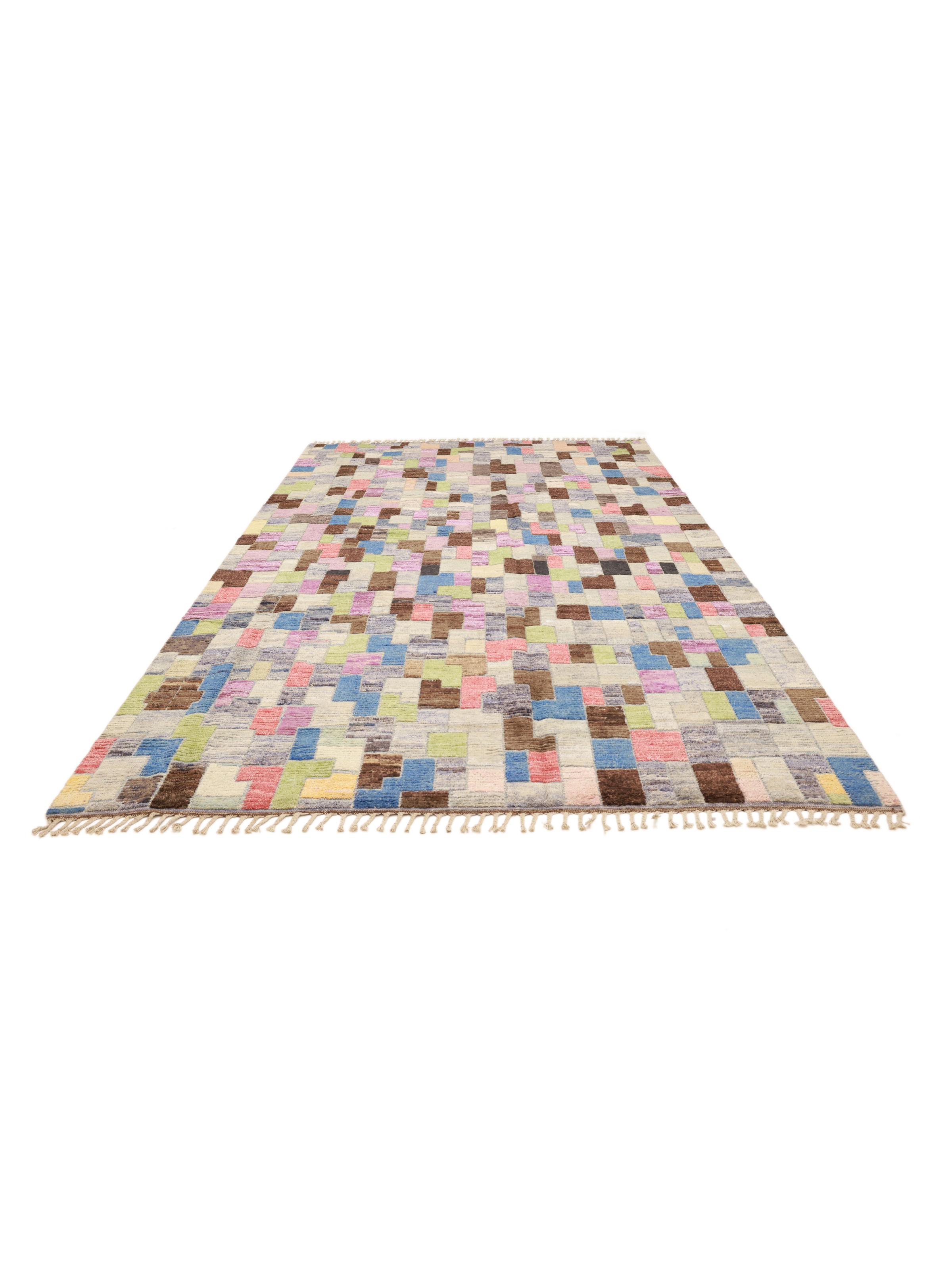
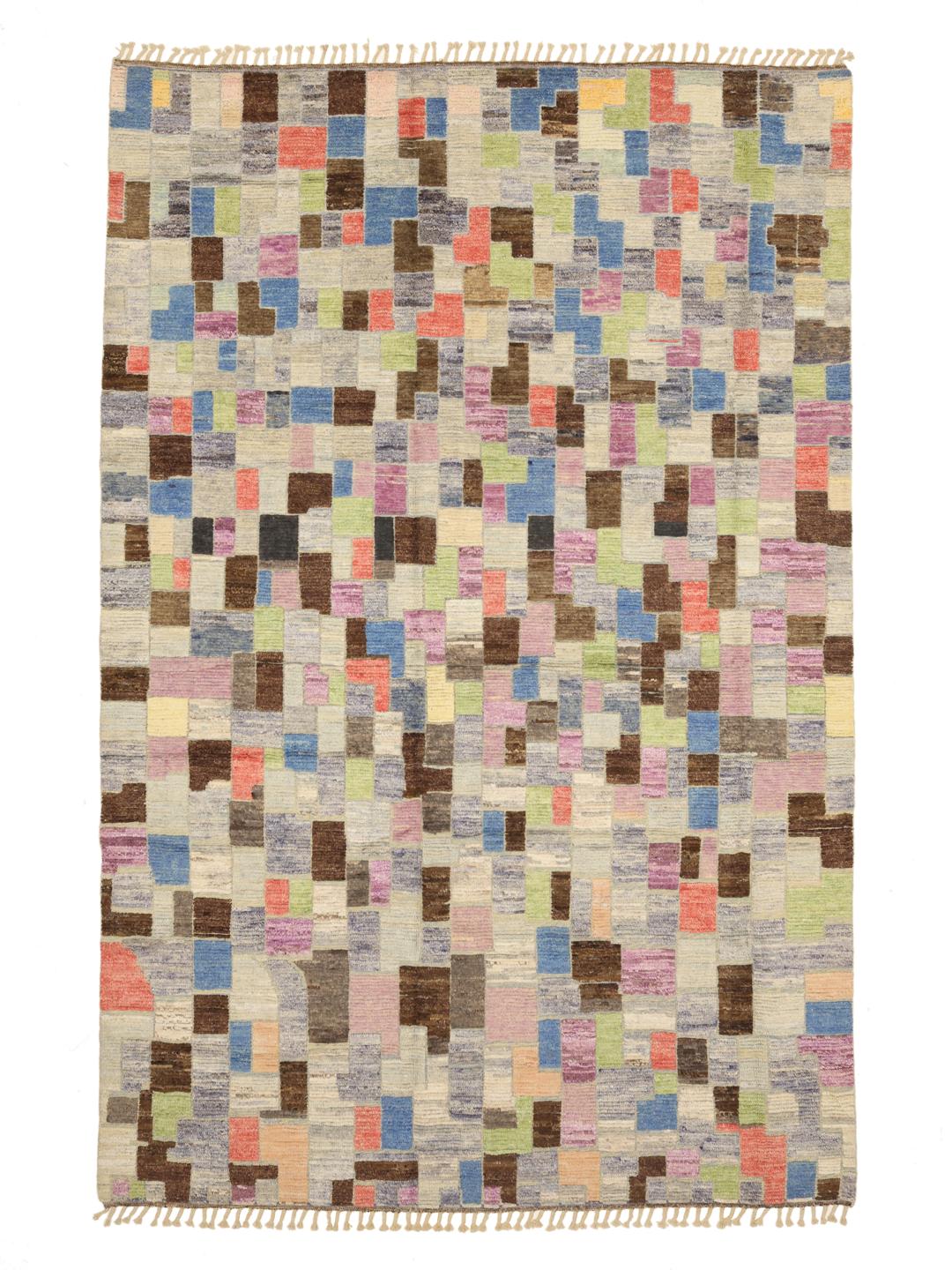
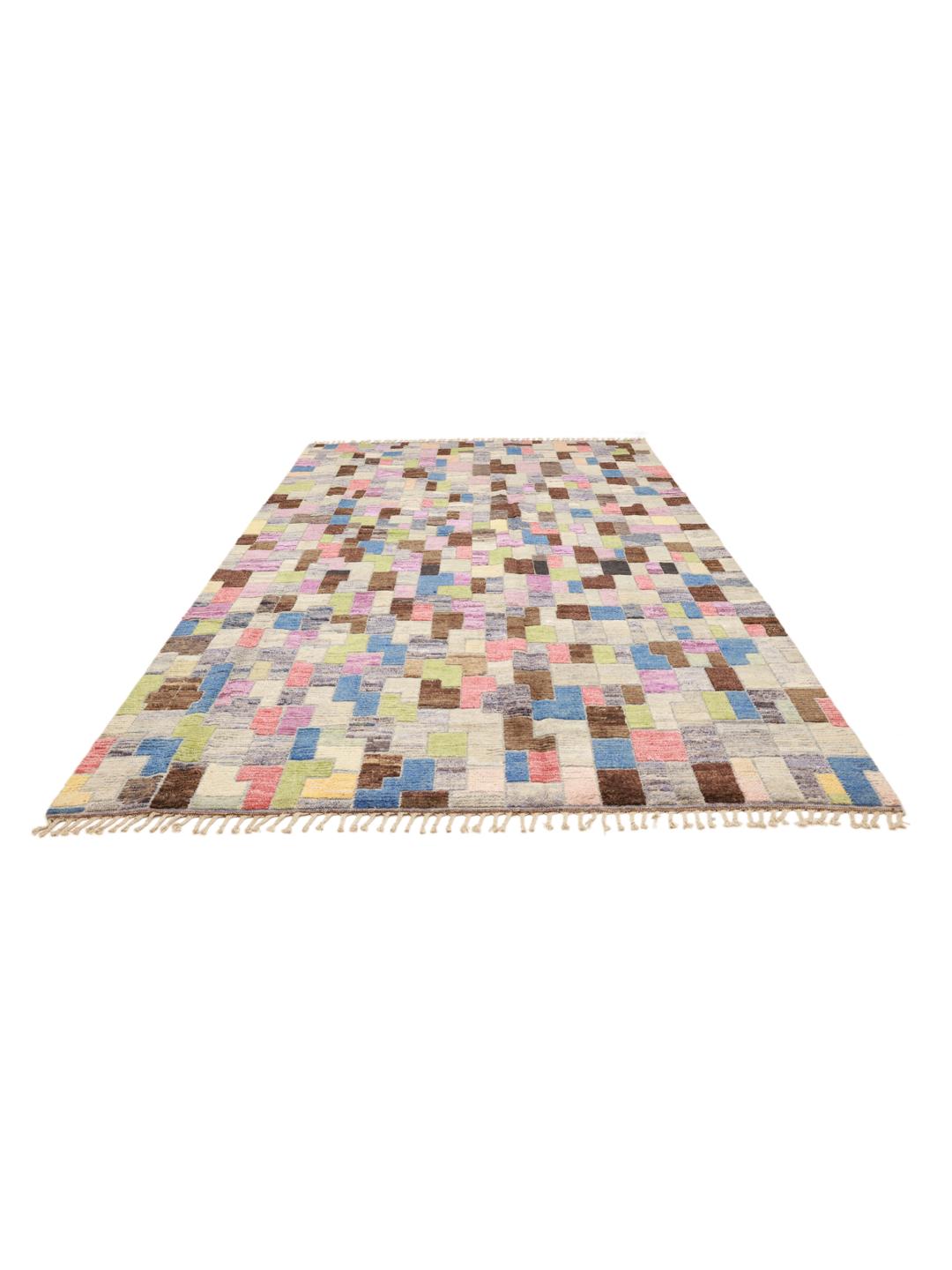
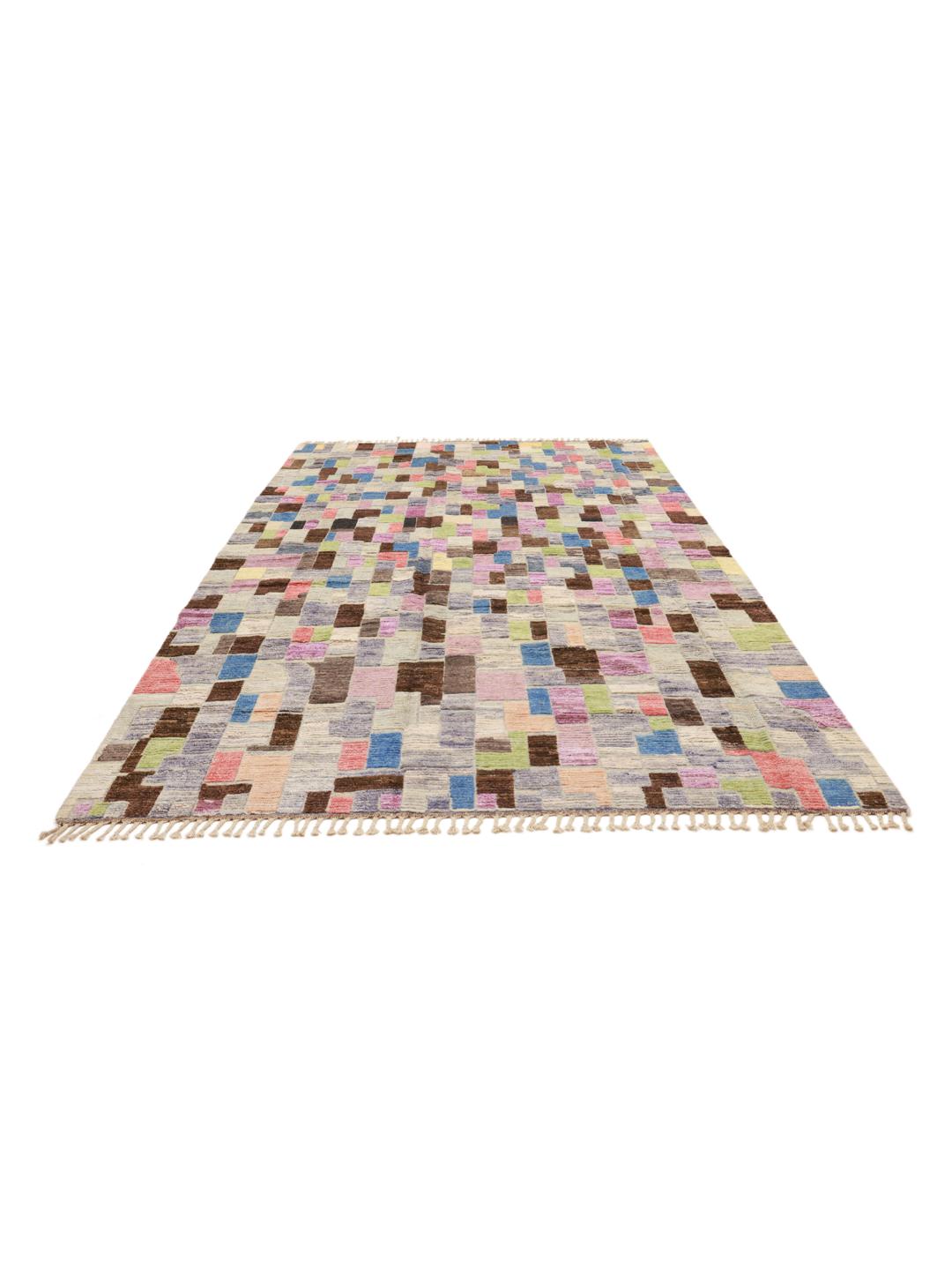
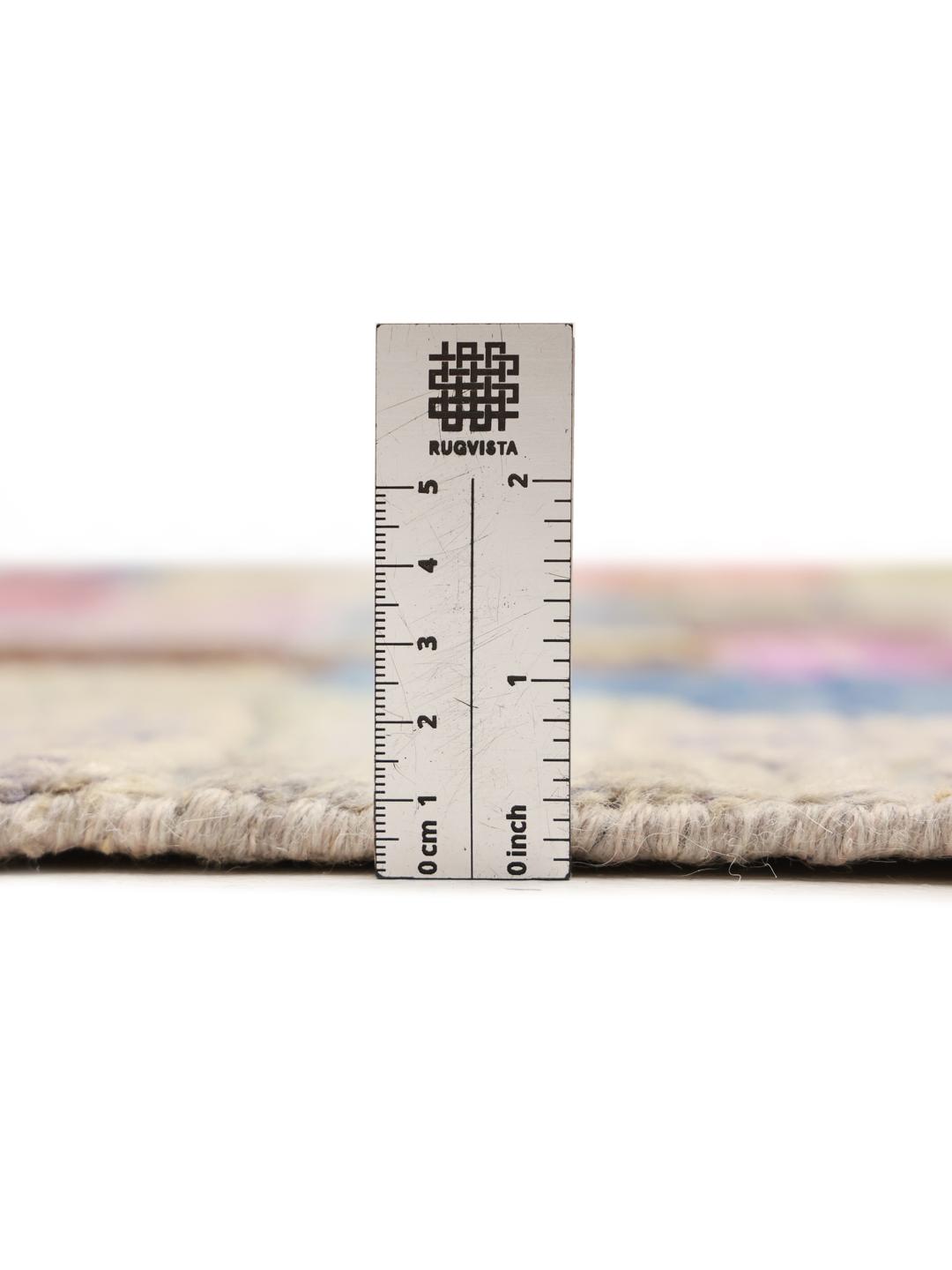
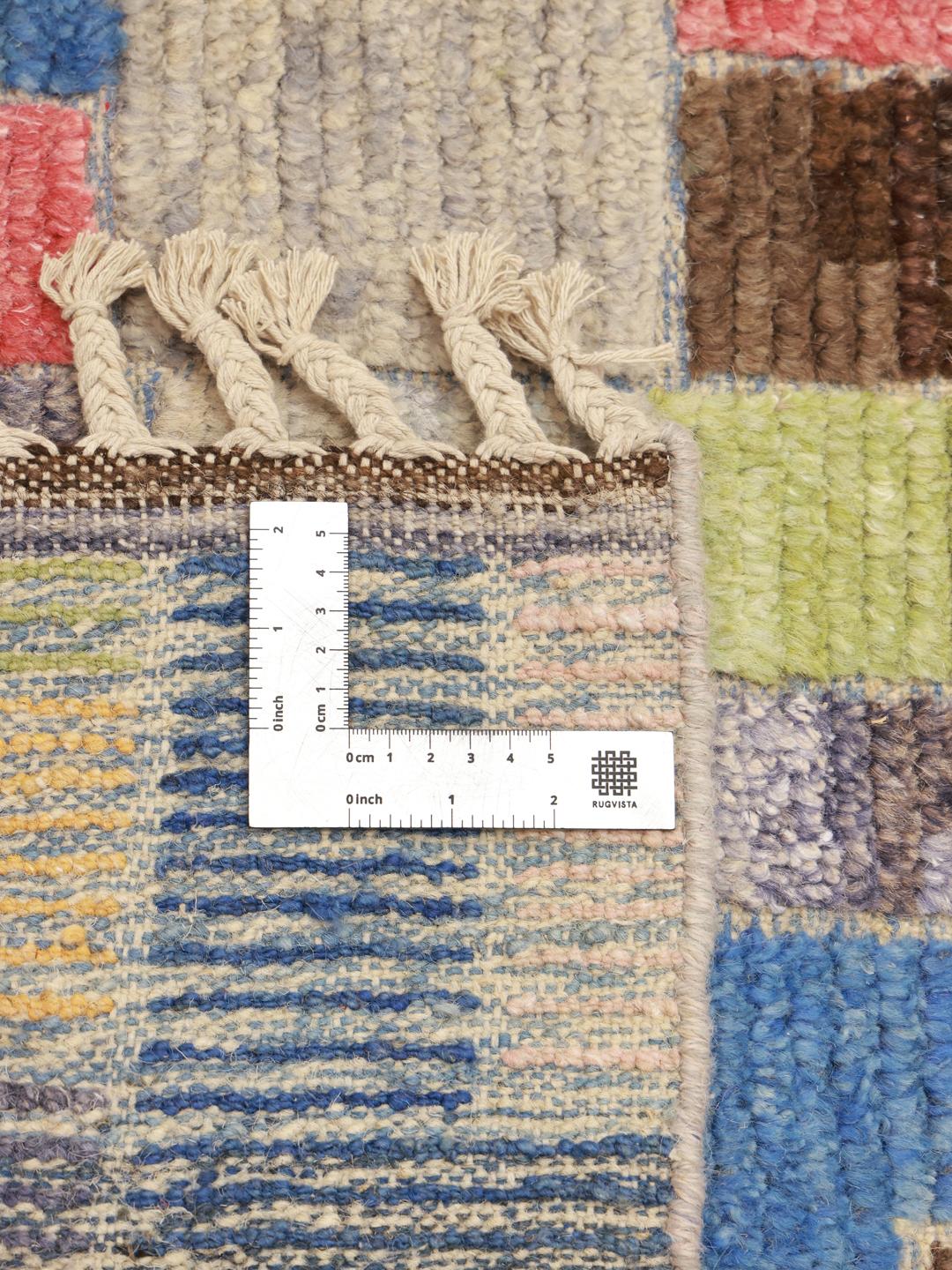
The art of rug weaving in the Middle East is deeply rooted in the traditions of the Central Asian steppes, where nomadic life and stationary craft have intertwined for centuries. These rugs are born from a culture that values the rug as a central part of the home, serving as insulation, seating, and a canvas for storytelling. The evolution of these styles has seen a graceful transition from traditional tribal motifs to the vibrant, experimental patterns seen today.
The term 'Berber' in this context refers to a style inspired by the iconic, thick-piled rugs of North Africa, yet reimagined through the skilled lens of Middle Eastern weavers. This cross-pollination of styles highlights the global nature of rug design, where techniques like hand-knotting are adapted to new visual languages. It is this adaptability that keeps the craft relevant and exciting for modern collectors.
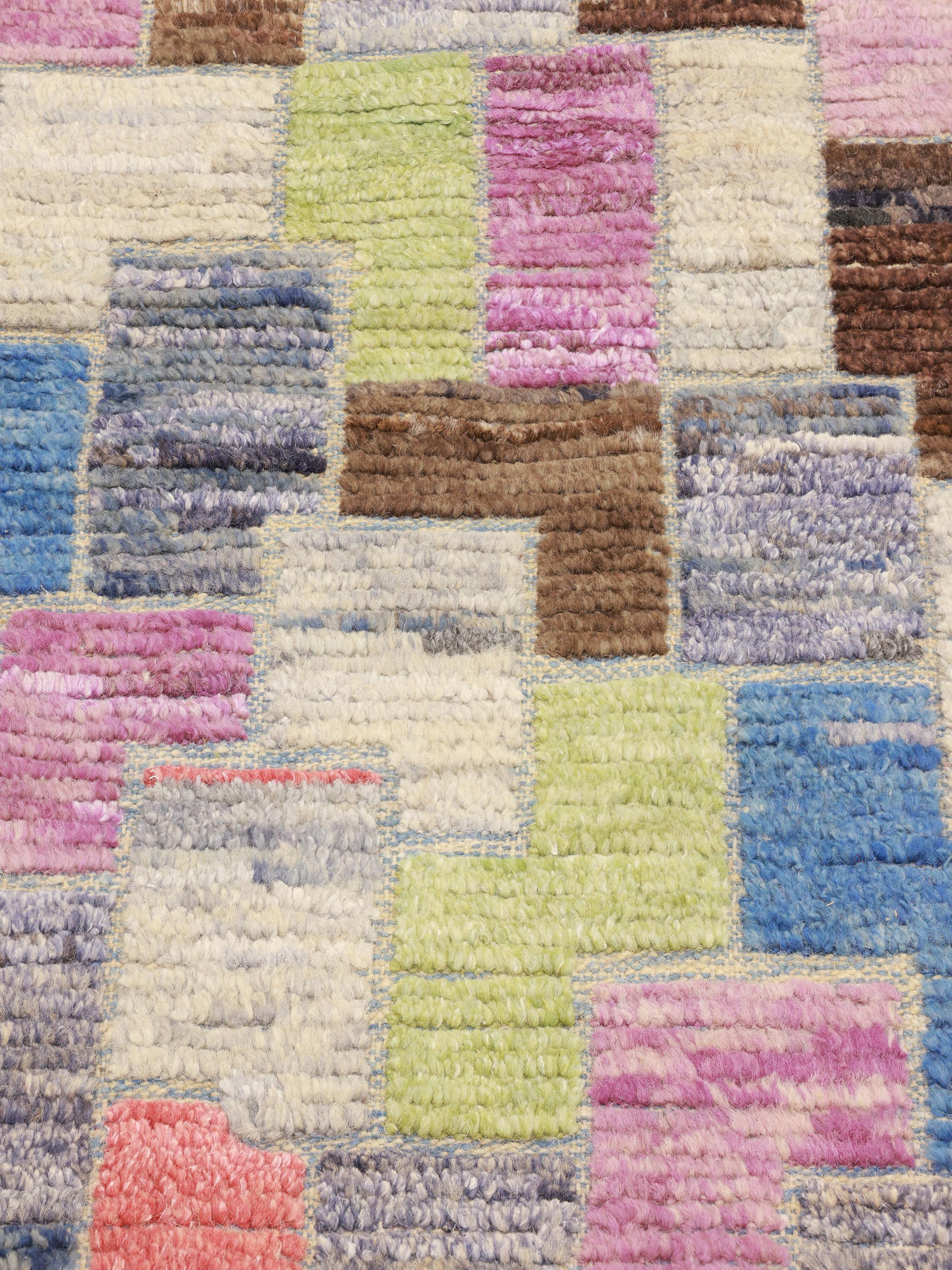
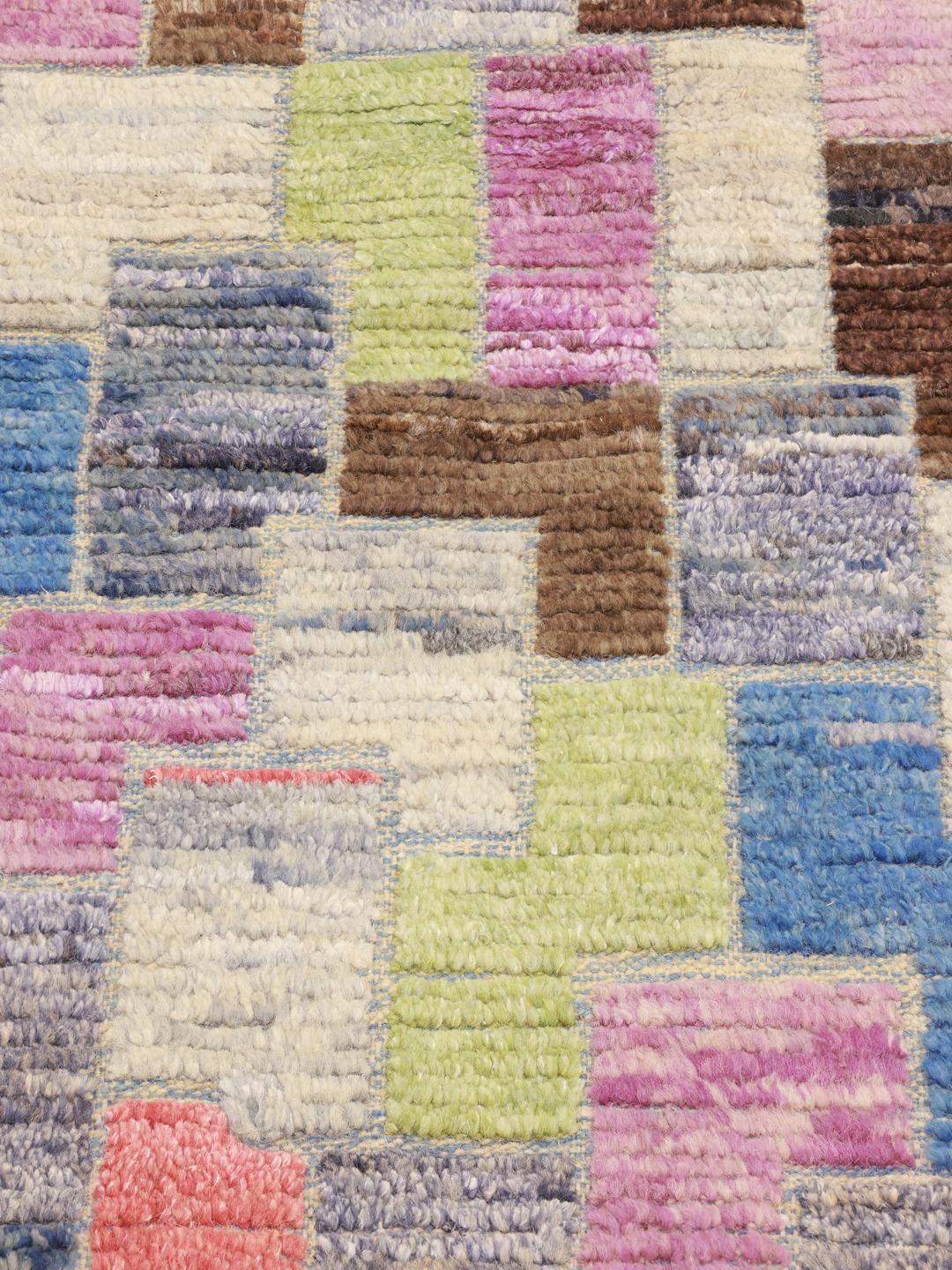
Signature design elements often involve bold, geometric shapes and an uninhibited use of colour. While traditional rugs might favour deep, muted earth tones, this piece embraces a full spectrum of colour, turning the rug into a contemporary statement. The blocks and squares are not merely decorative but reflect a playful approach to symmetry and balance that contrasts beautifully with the rug's traditional construction.
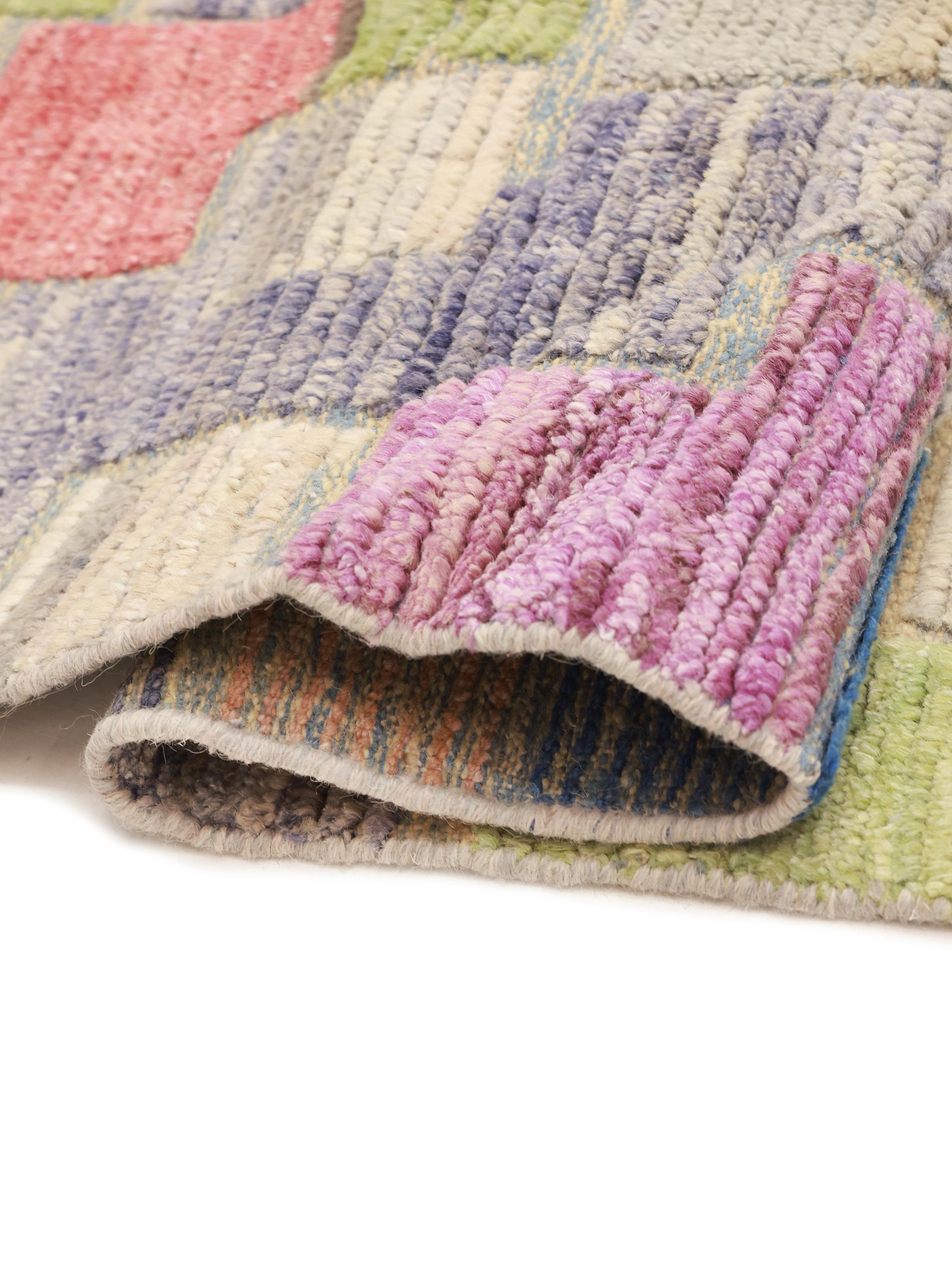
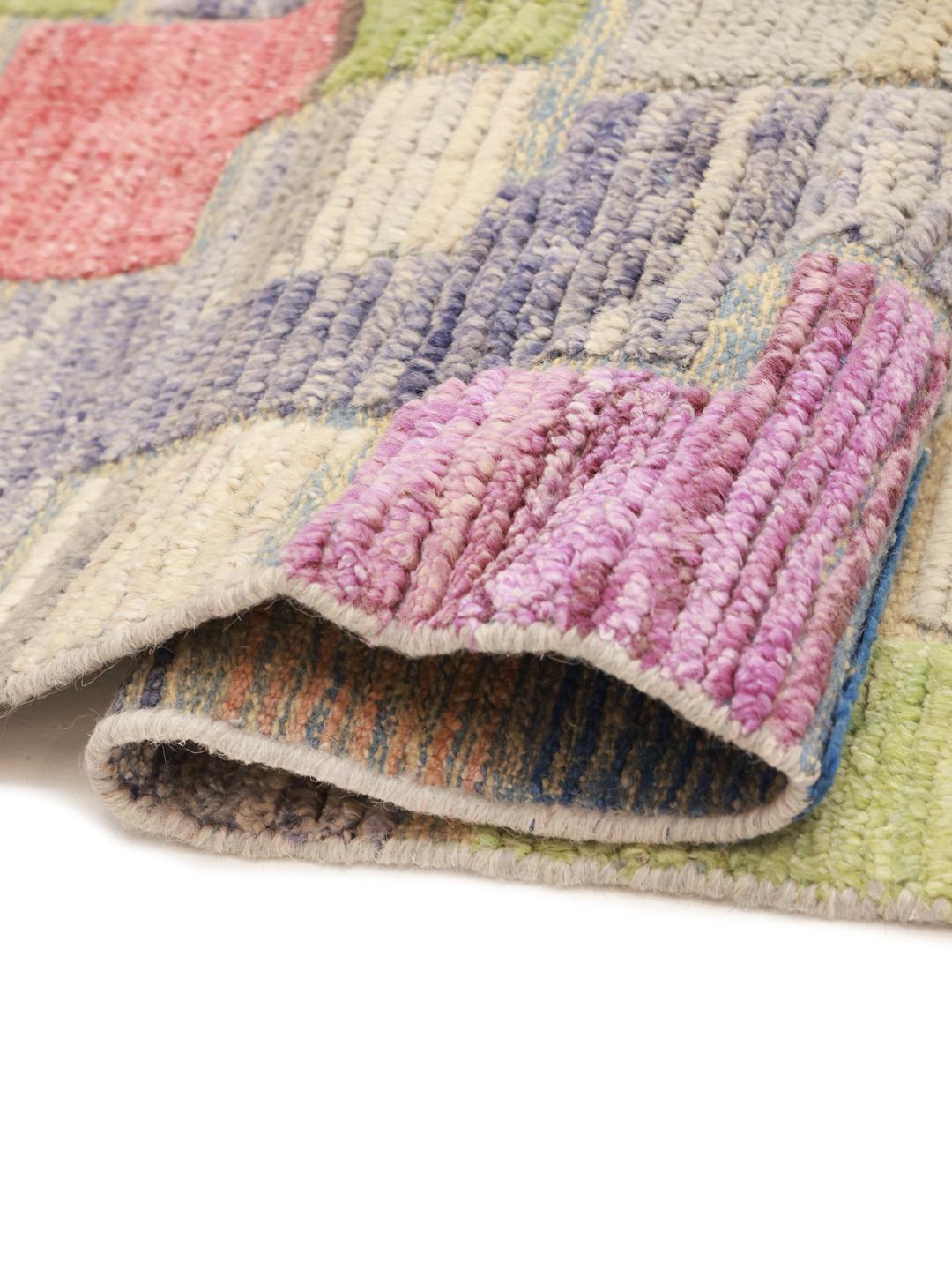
Owning a piece from this tradition is an act of supporting a long lineage of craft. These rugs are highly valued for their authenticity and the sheer skill required to produce them. By bringing such a piece into your home, you are not just acquiring a floor covering but a tangible connection to a storied history, preserved in the knotting and the high-quality wool.