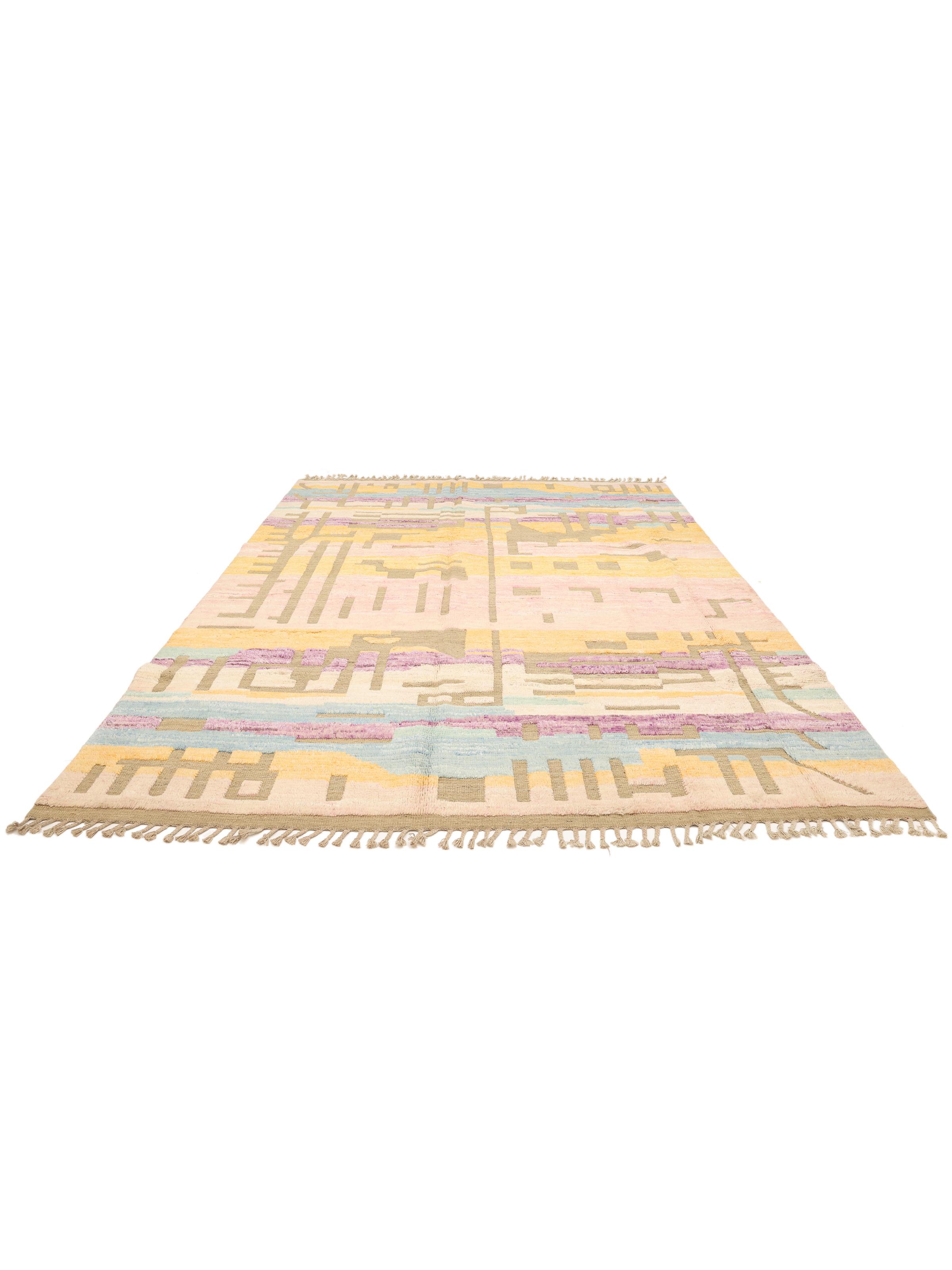
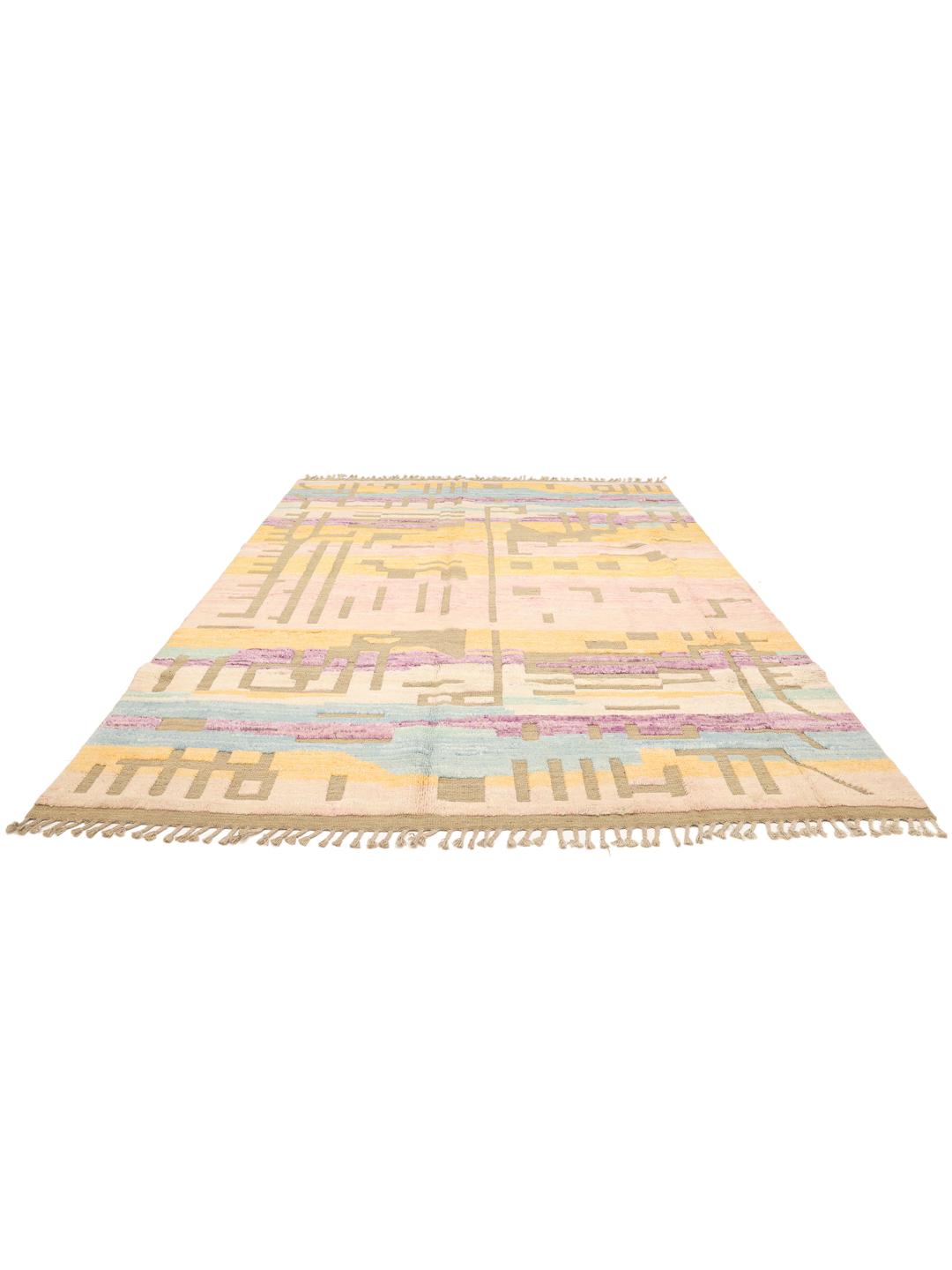
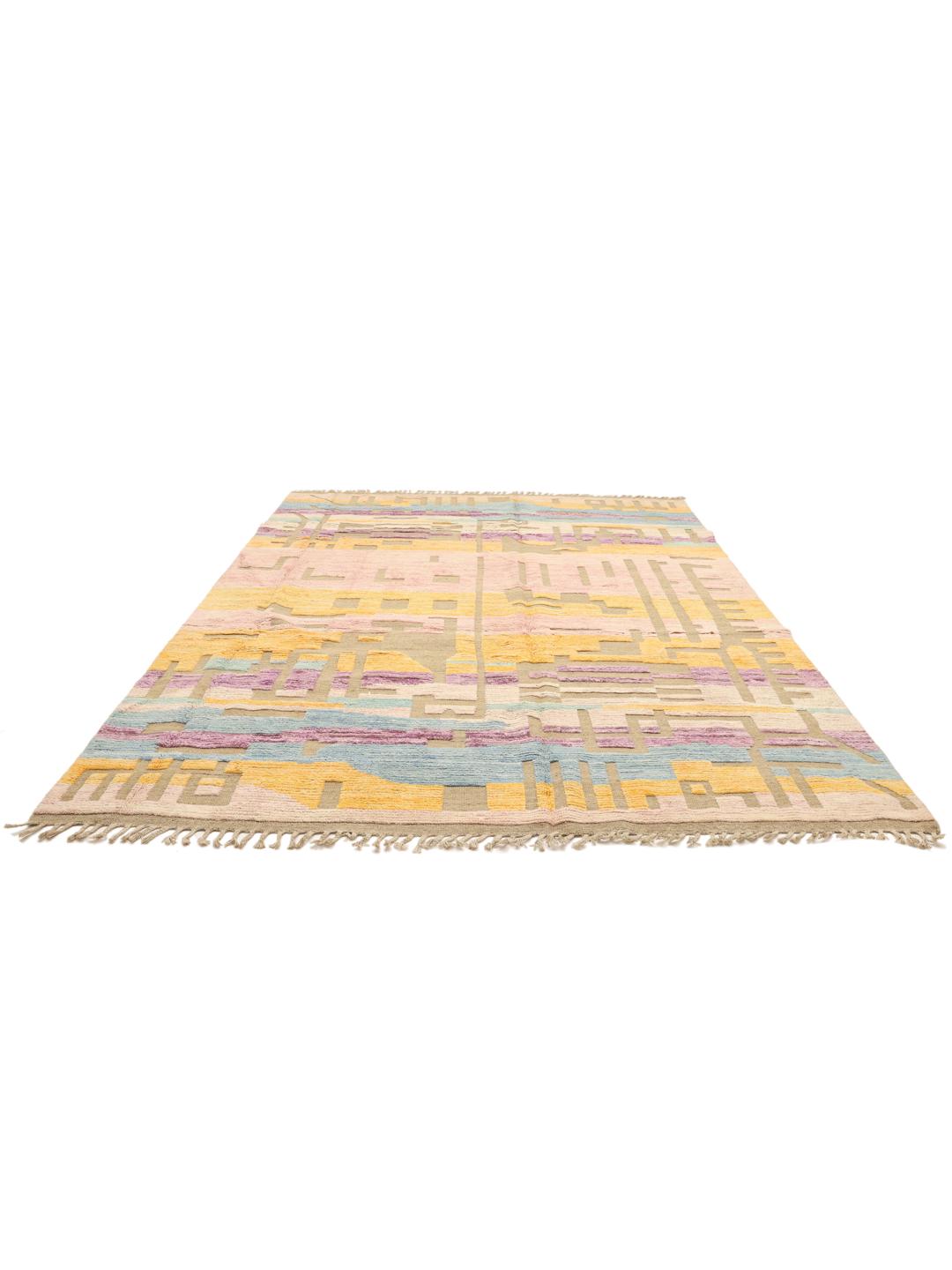
The Berber tradition, while historically rooted in the mountainous regions of North Africa, has evolved through centuries of cultural exchange and migration. Today, the influence of these iconic designs has spread far beyond their original geography, inspiring weavers in regions like the Middle East to adapt these classic styles with their own local techniques and perspectives.
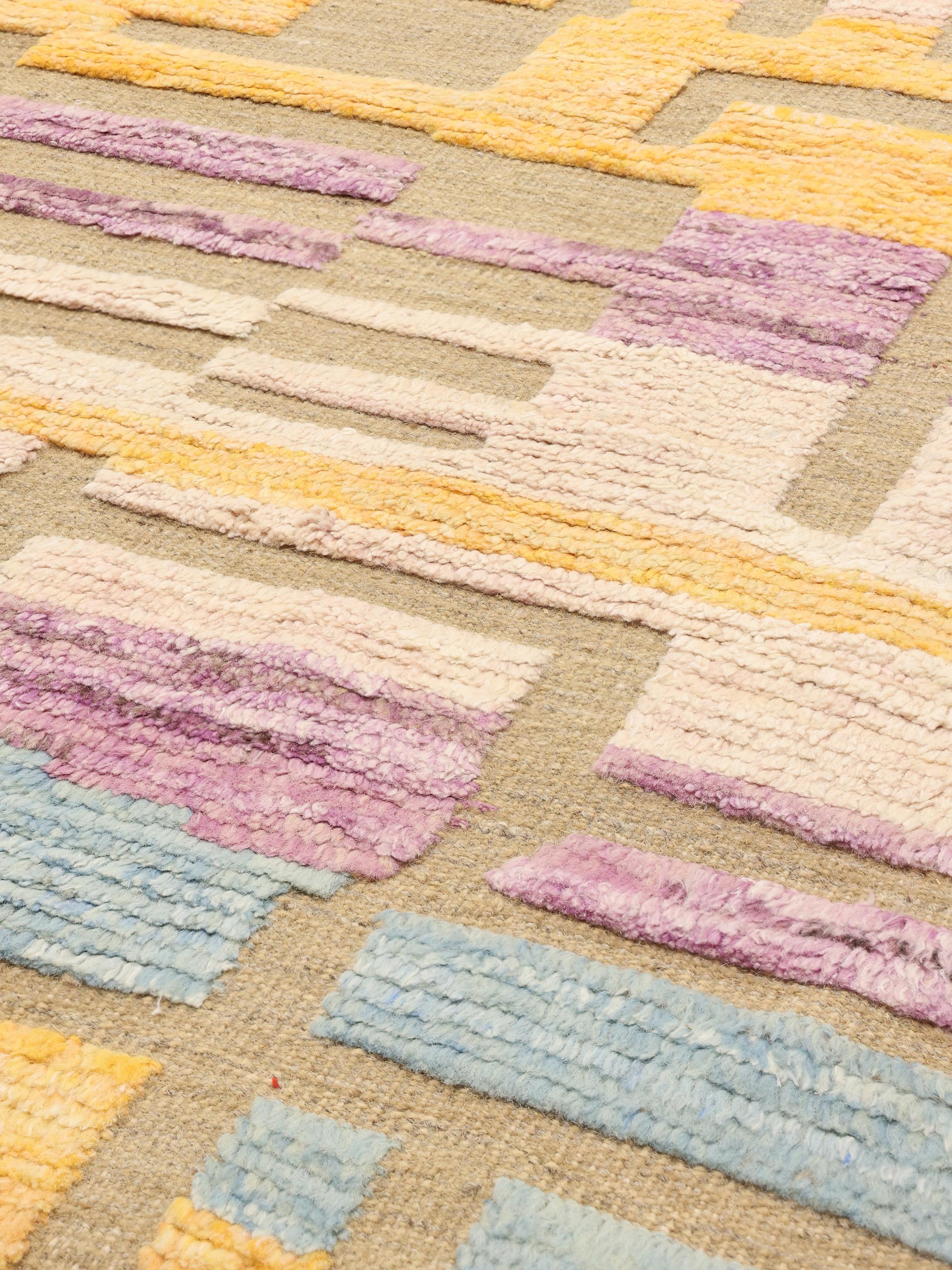
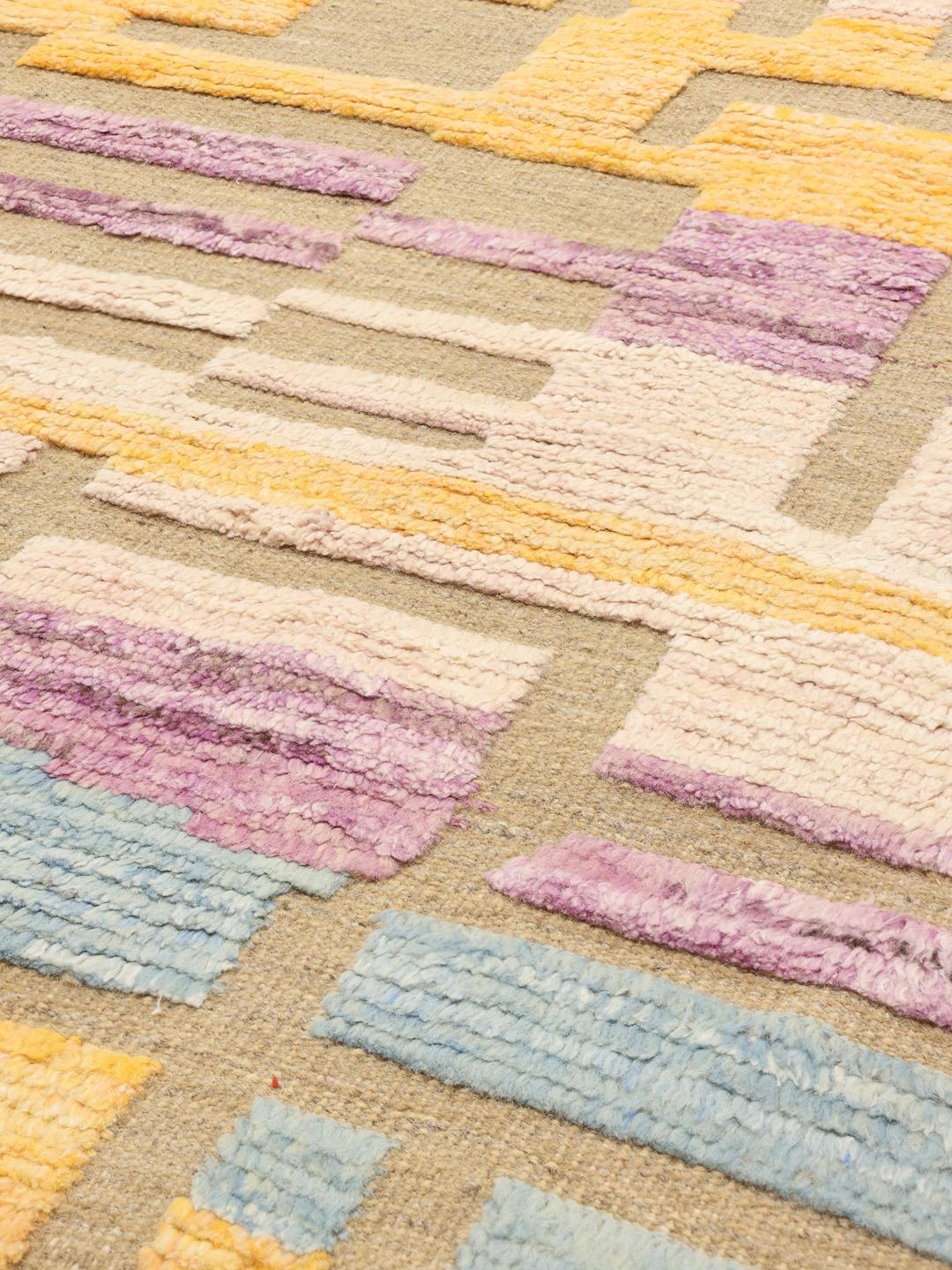
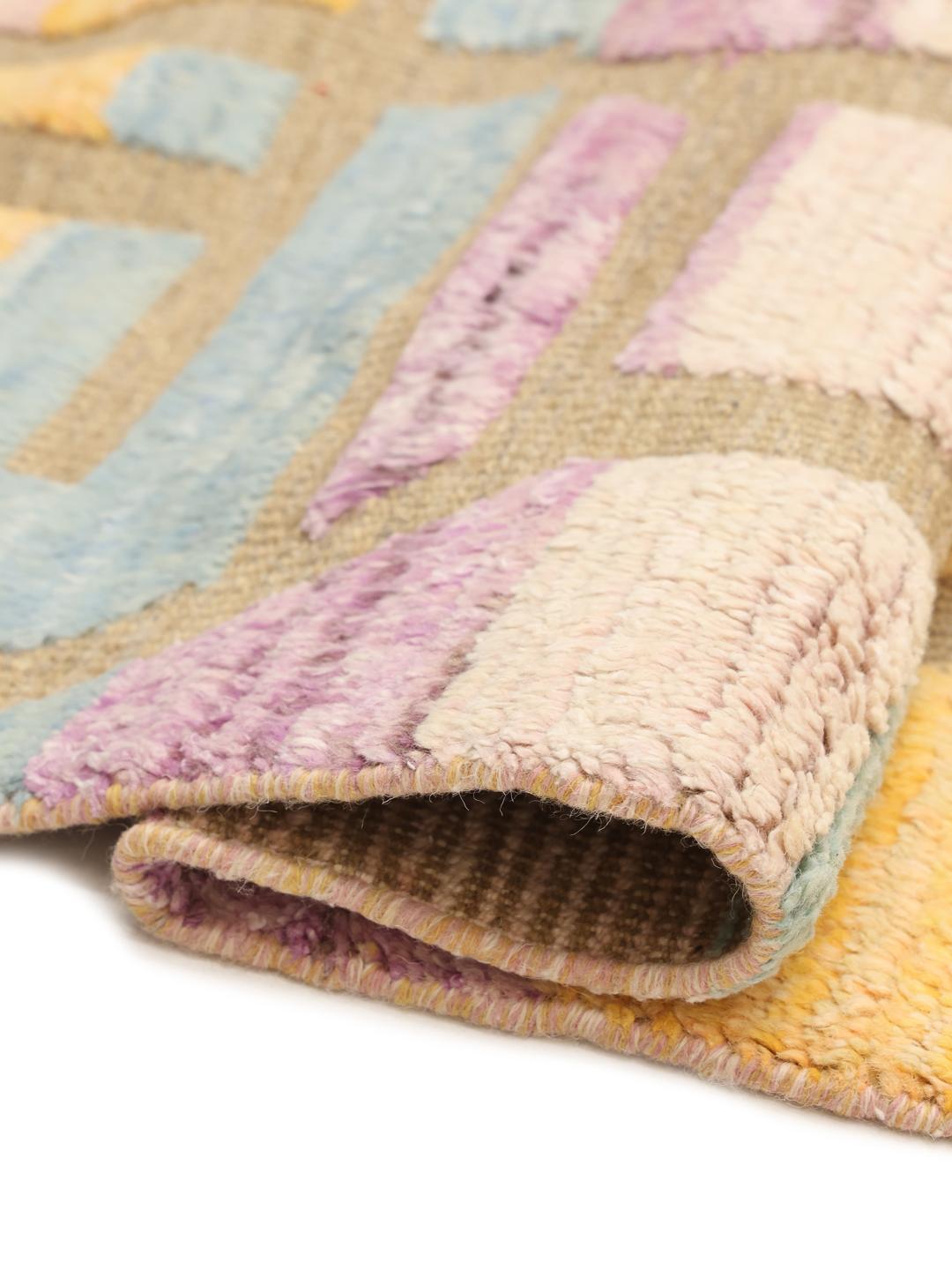
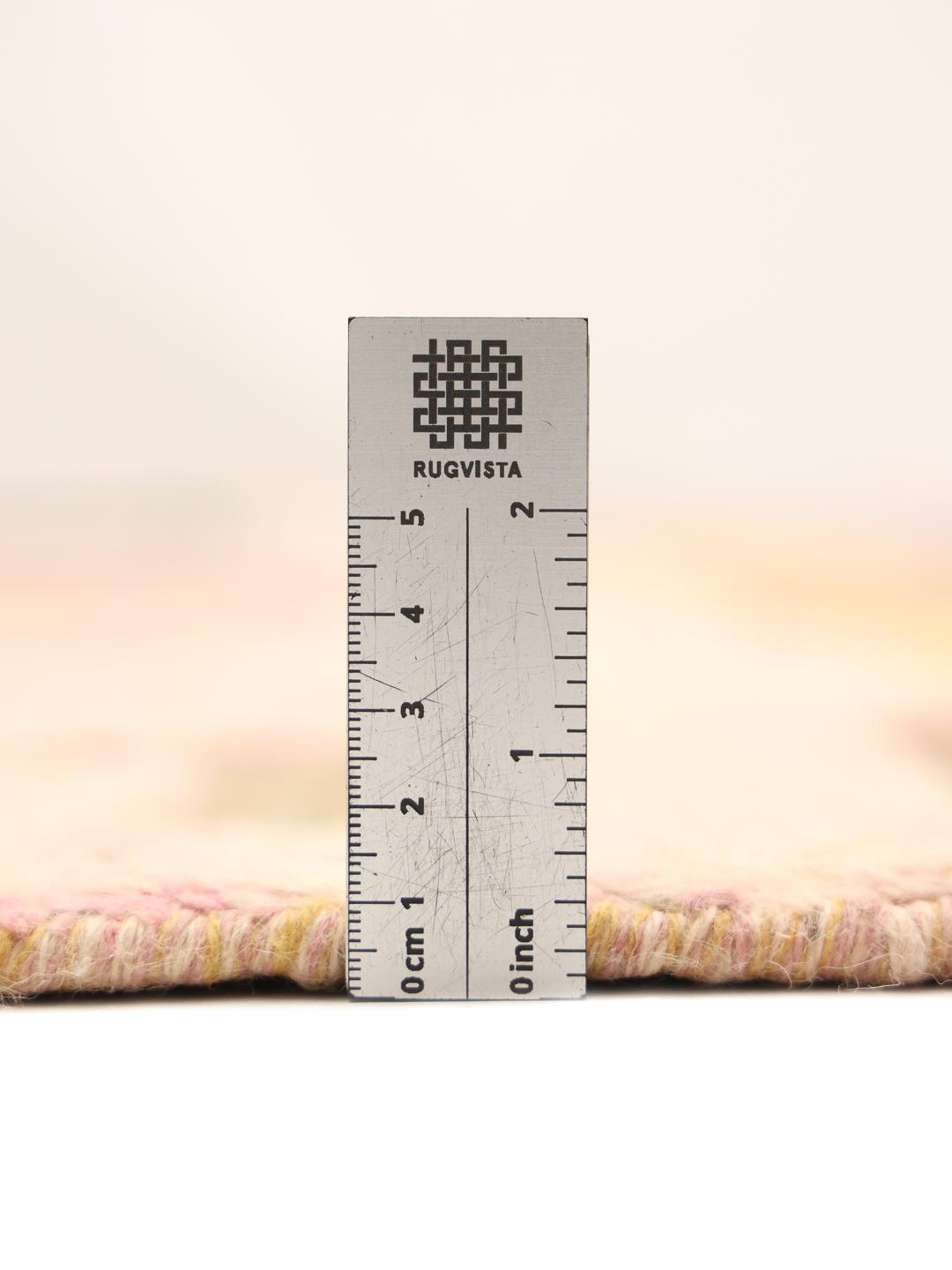
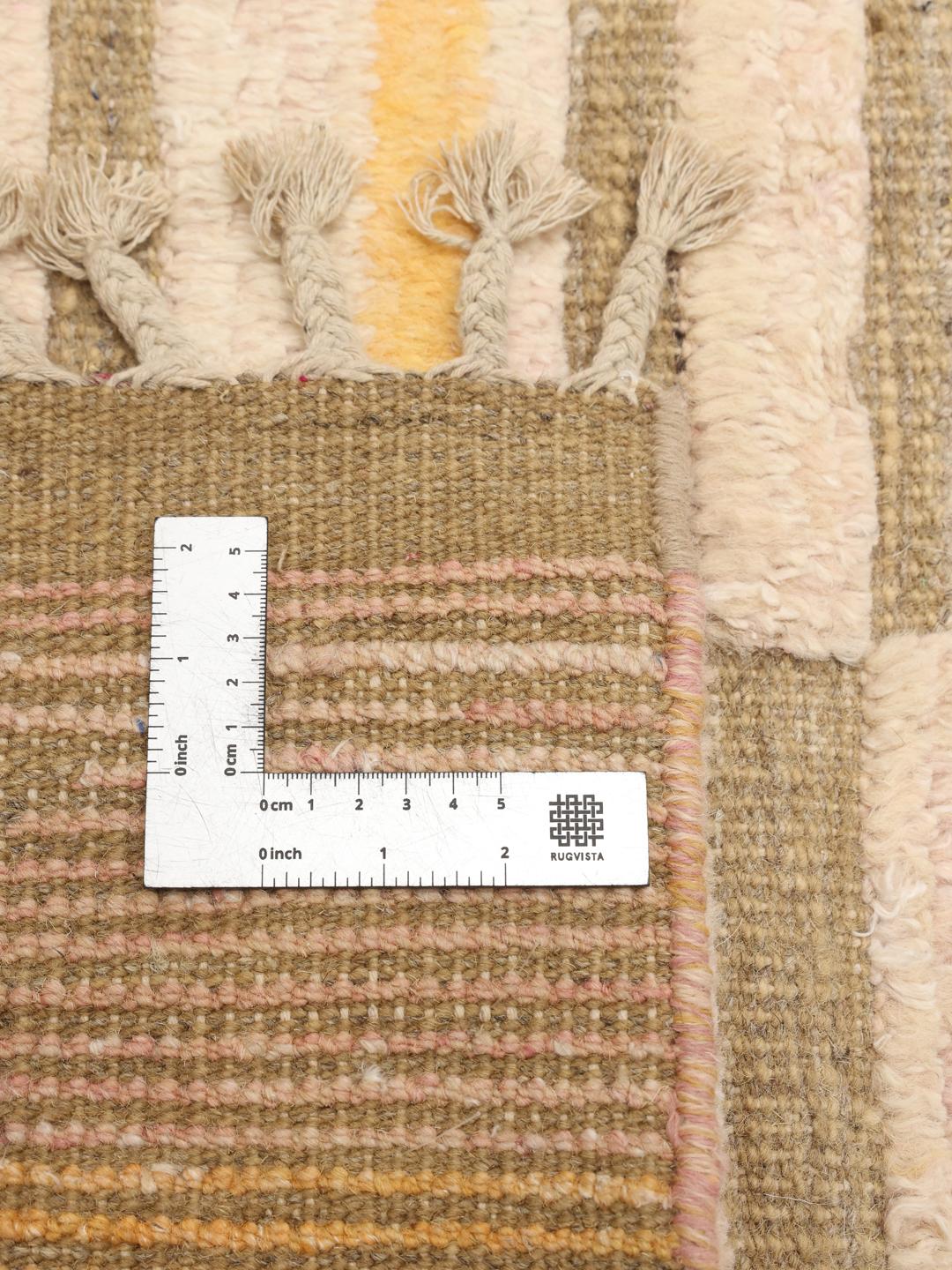
Understanding the quality of a hand-knotted rug begins with the foundation. The use of wool for both the pile and the base creates a resilient, long-lasting structure. This traditional method of weaving provides a natural durability and softness that synthetic alternatives simply cannot match, making it a preferred choice for those who value authentic craft.
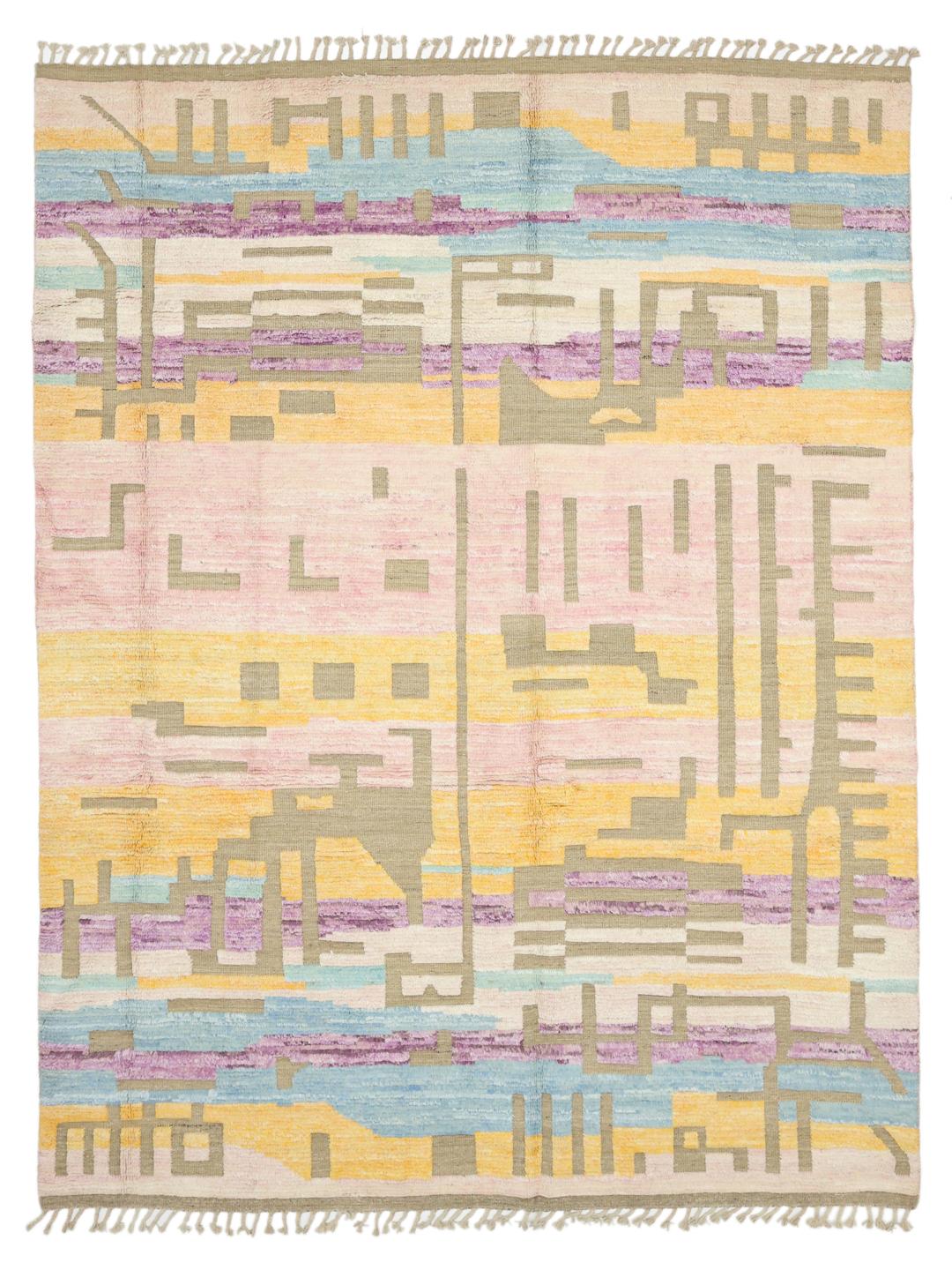
Visually, this piece draws from the abstract and geometric language often found in contemporary interpretations of traditional weaving. Rather than formal, symmetrical medallions, the design prioritizes a free-flowing, artistic arrangement of shapes and lines, showcasing a modern evolution of long-standing nomadic motifs.
Collecting a rug of this nature is an investment in human skill and cultural continuity. Each piece serves as a bridge between ancient weaving methods and current interior trends. By choosing this rug, you are preserving a legacy of craftsmanship and supporting the artisans who keep these historical techniques alive in the modern world.