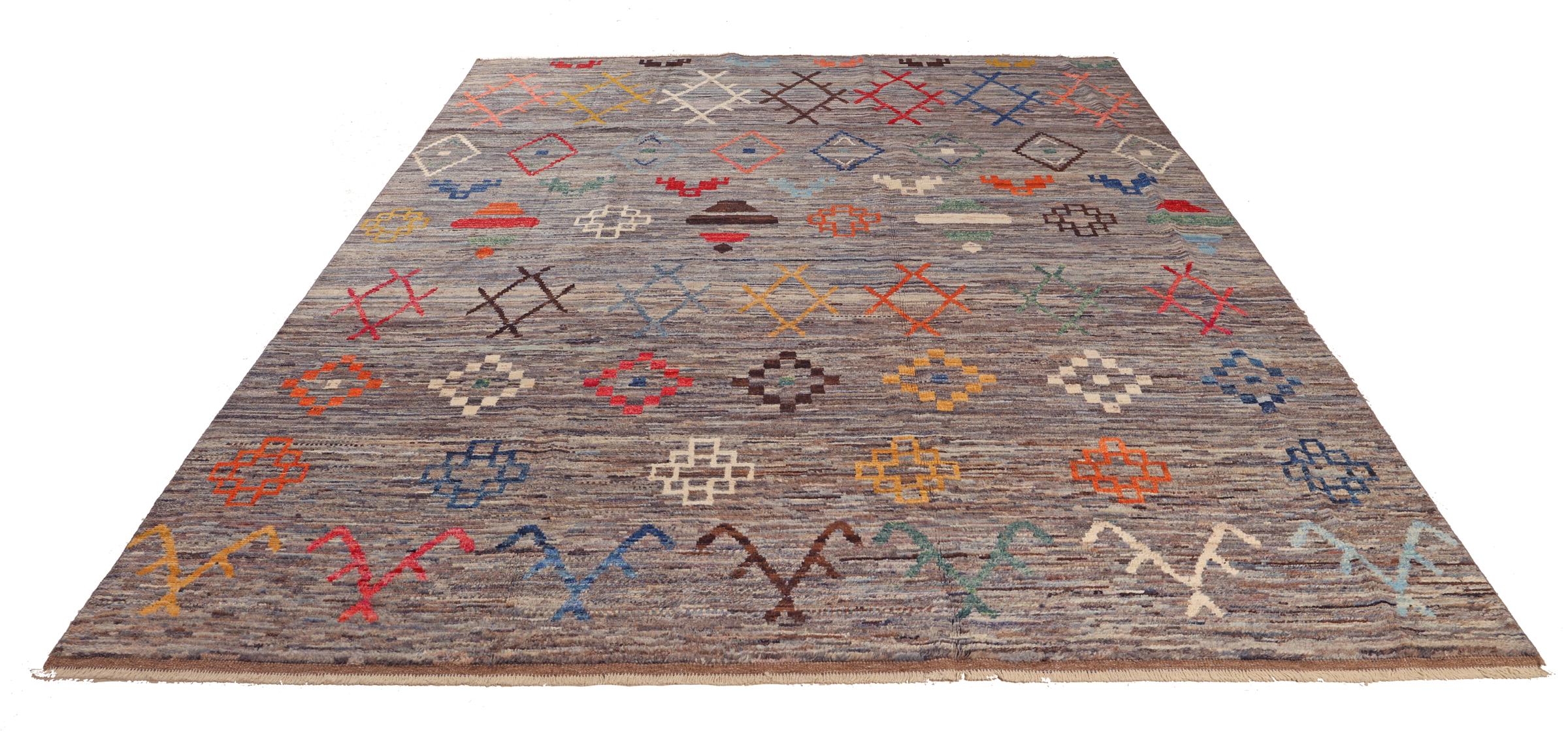
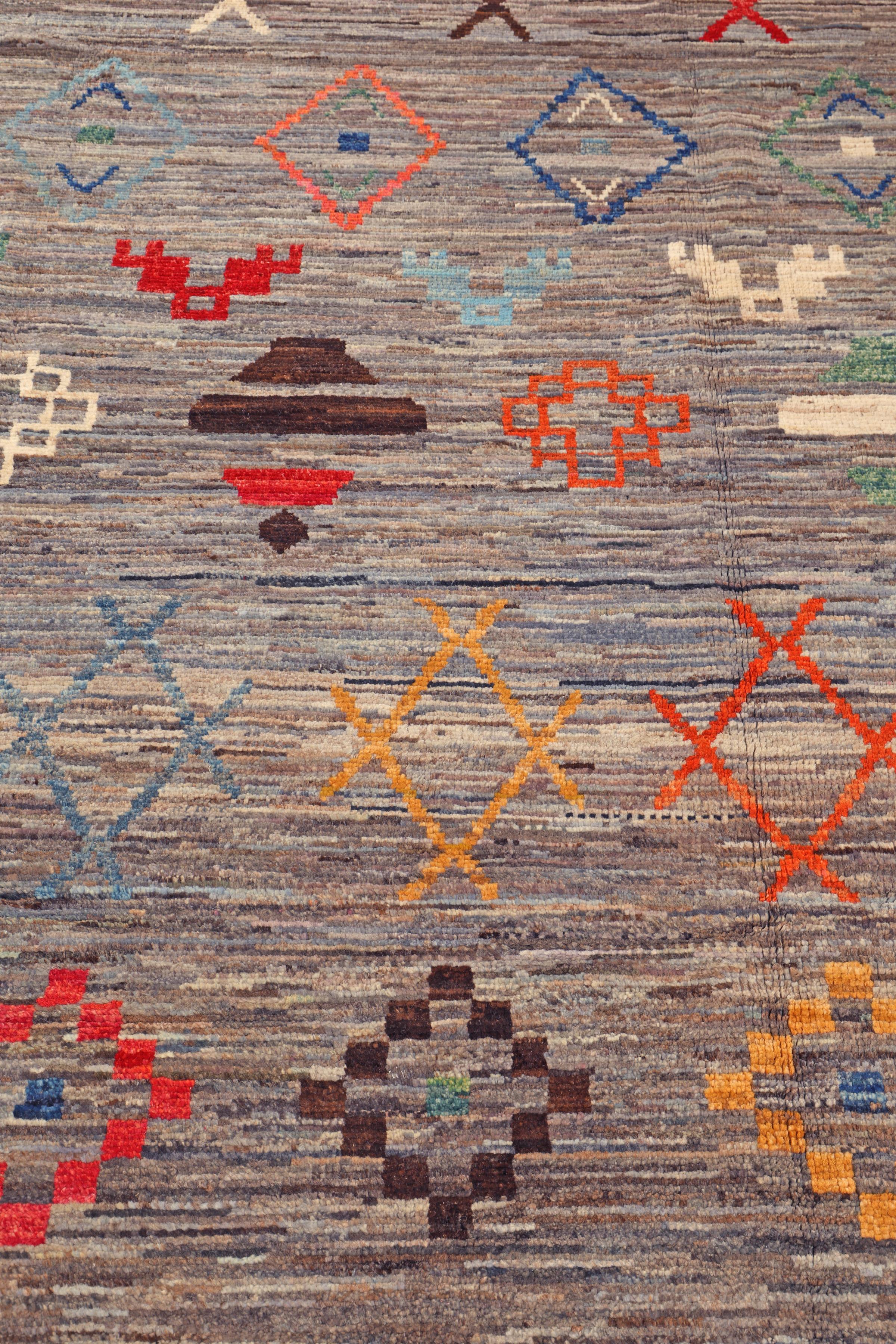
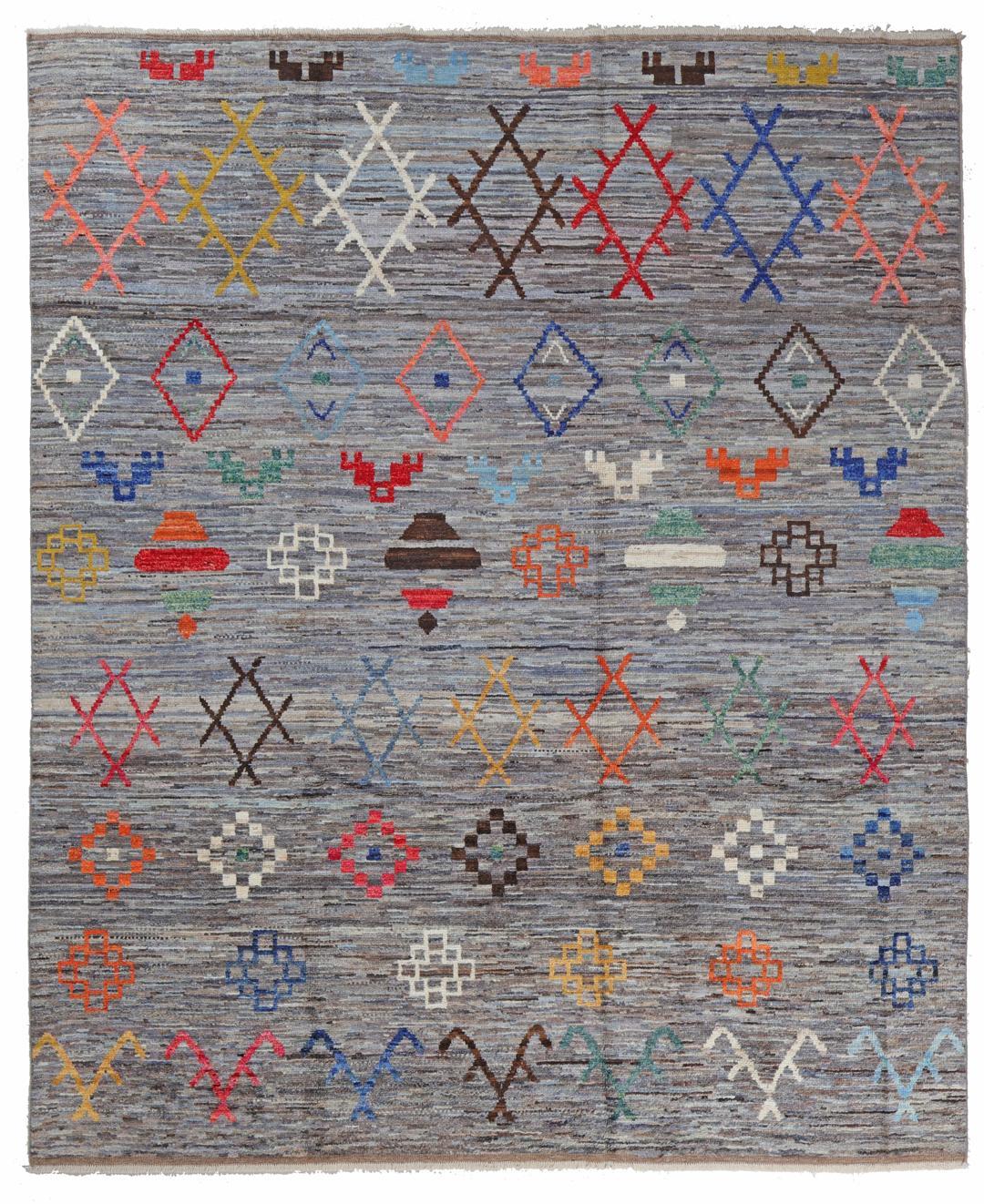
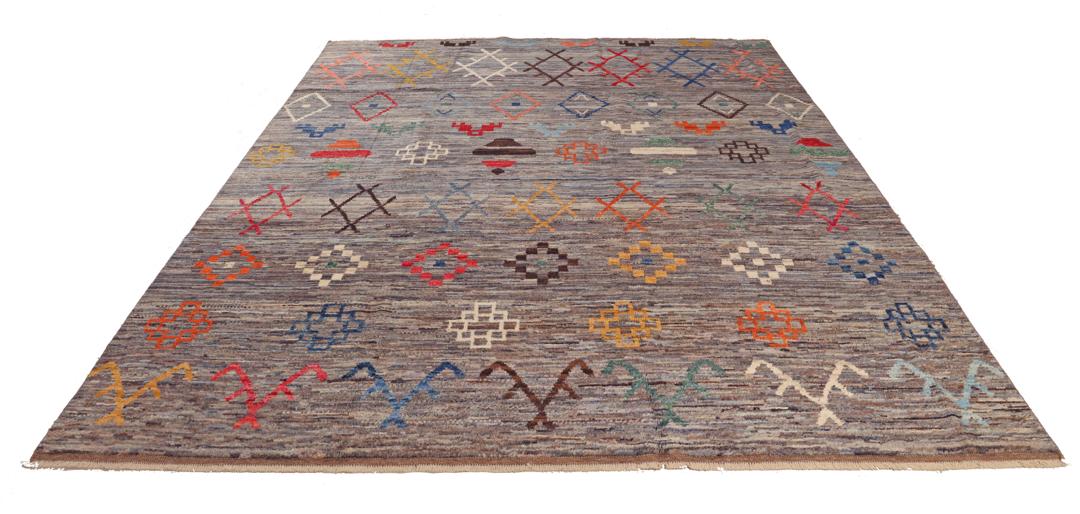
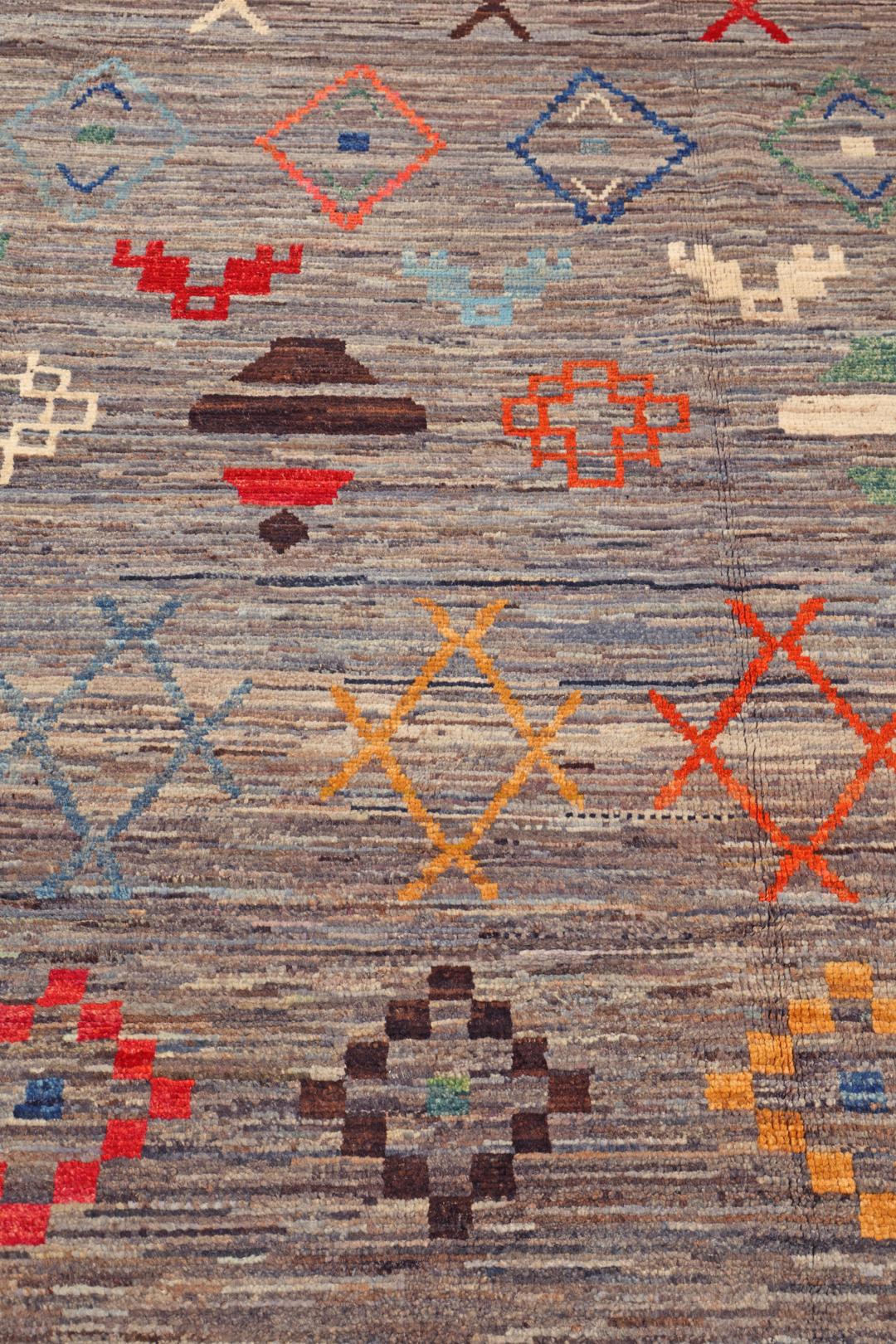
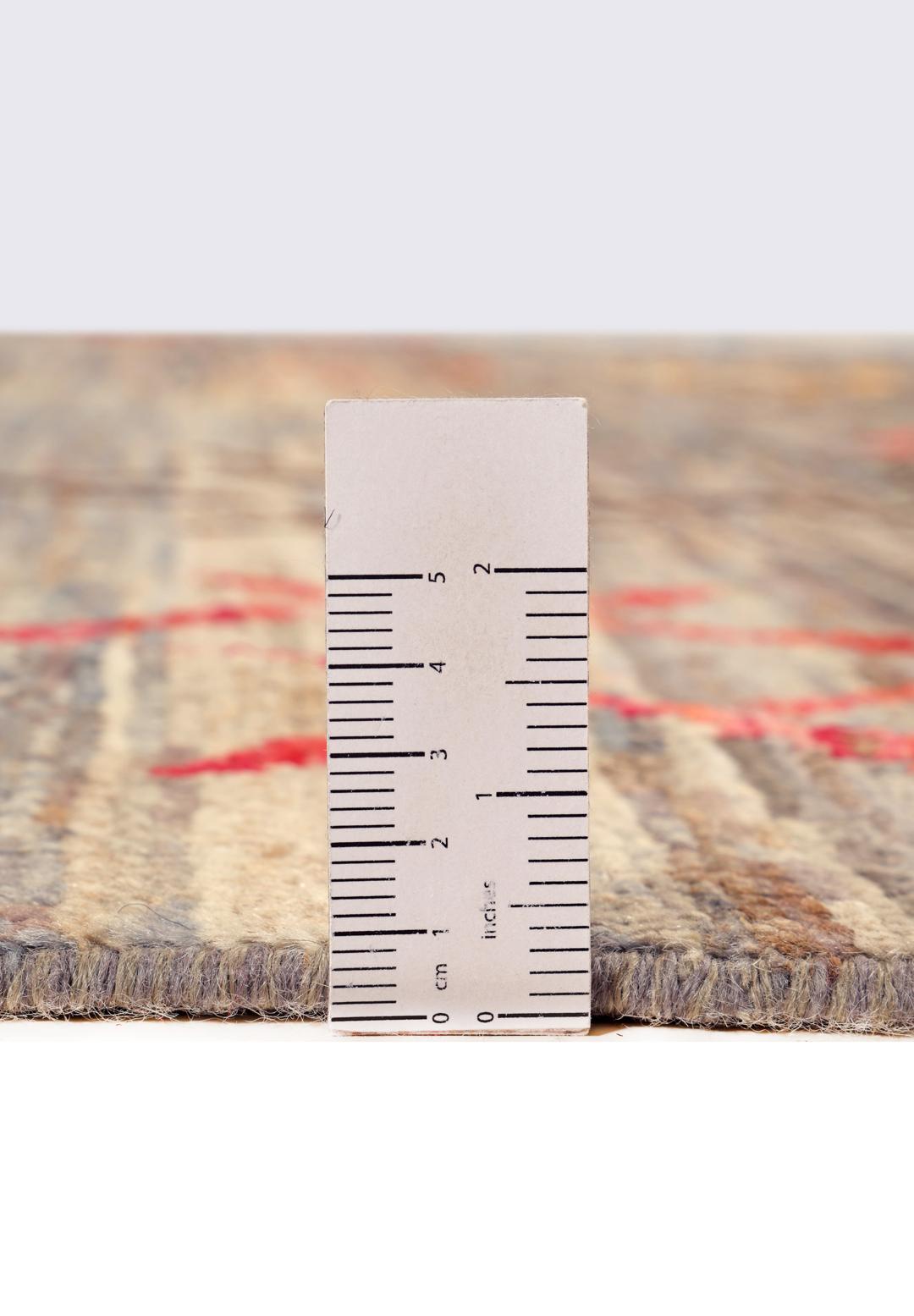
The Berber Colourful tradition is deeply rooted in the nomadic weaving practices of the Middle East and surrounding regions. Historically, these rugs were created by tribal groups who translated the landscapes, stories, and cultural symbols of their environment into intricate, functional textiles designed for life on the move.
The term 'Berber' refers to the stylistic influence of North African and Middle Eastern tribal motifs, which are characterised by their bold, geometric simplicity. Over time, these traditions have evolved as weavers in regions like Afghanistan have adopted and adapted these styles, infusing them with local materials and regional artistic sensibilities.
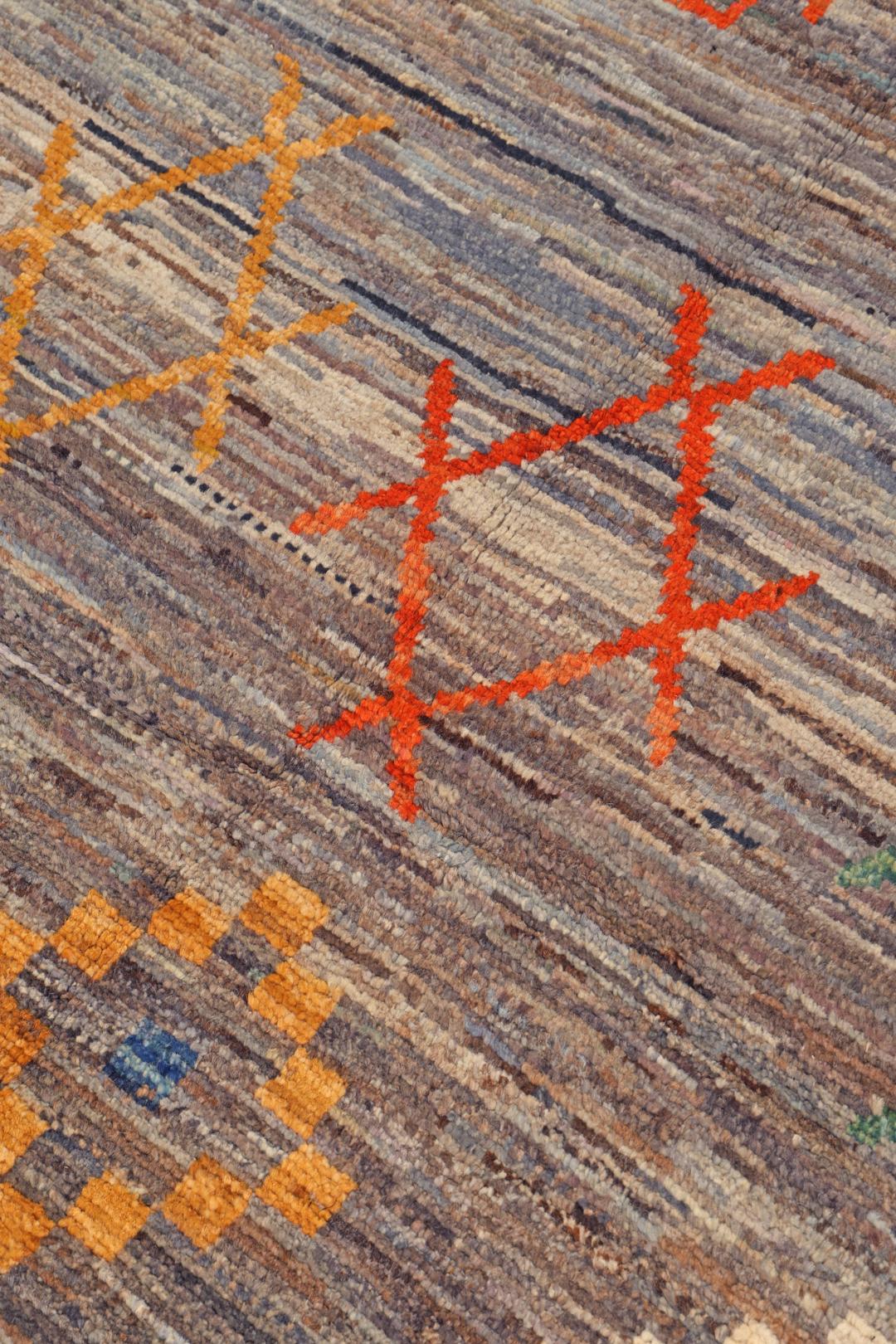
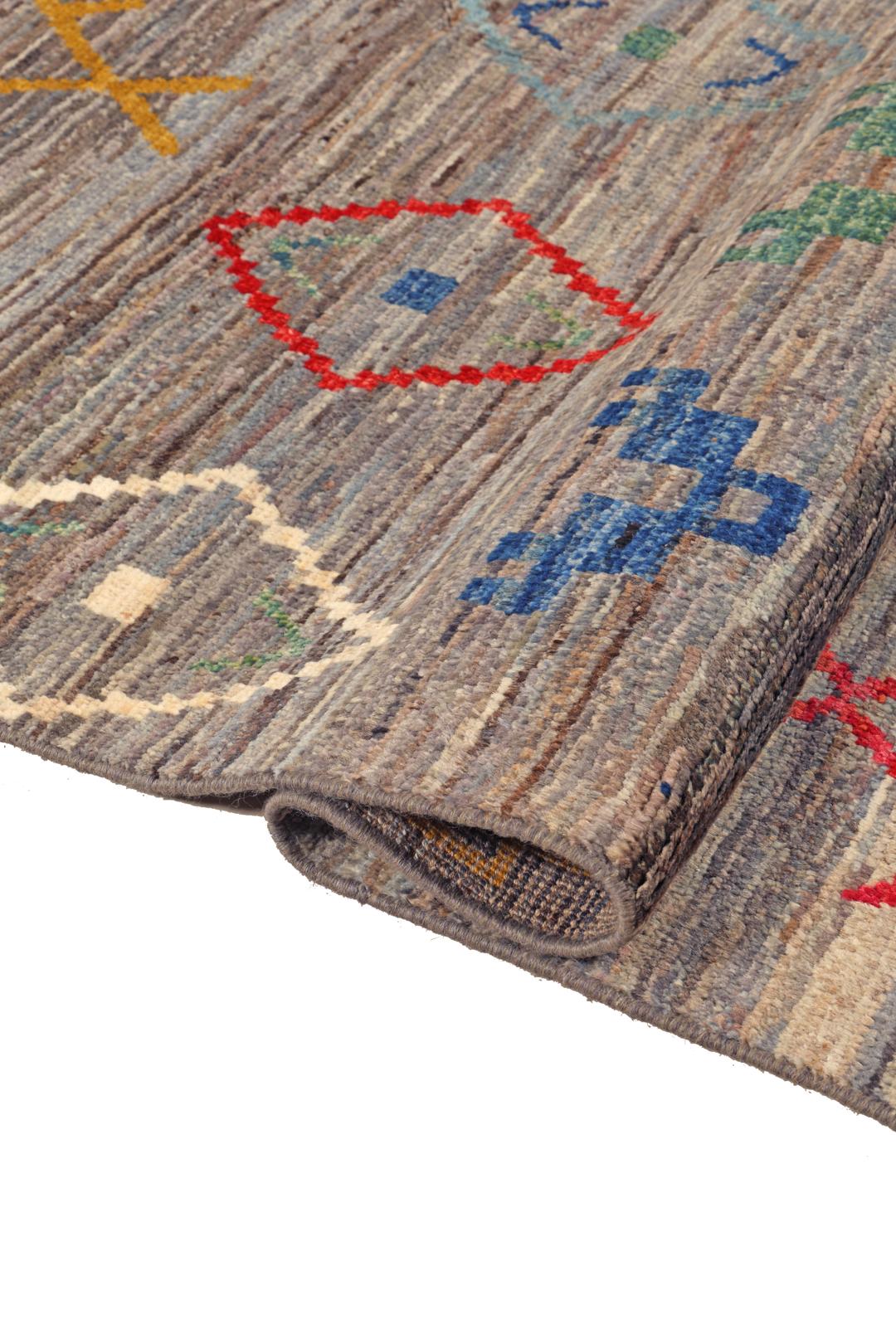
Signature design elements often include repeating diamond shapes, stylised tribal motifs, and symbolic icons that carry historical meaning for the weaving communities. The patterns are typically free-flowing and expressive, moving away from rigid formality to embrace a more organic, artistic representation of the weaver's intent.
Owning a rug from this tradition is a way of connecting with a long lineage of craft. These pieces are highly valued by collectors not only for their aesthetic appeal but for the skill and cultural heritage they represent. Each rug acts as a bridge between ancient techniques and modern living, offering a sense of history that is rare in contemporary home decor.