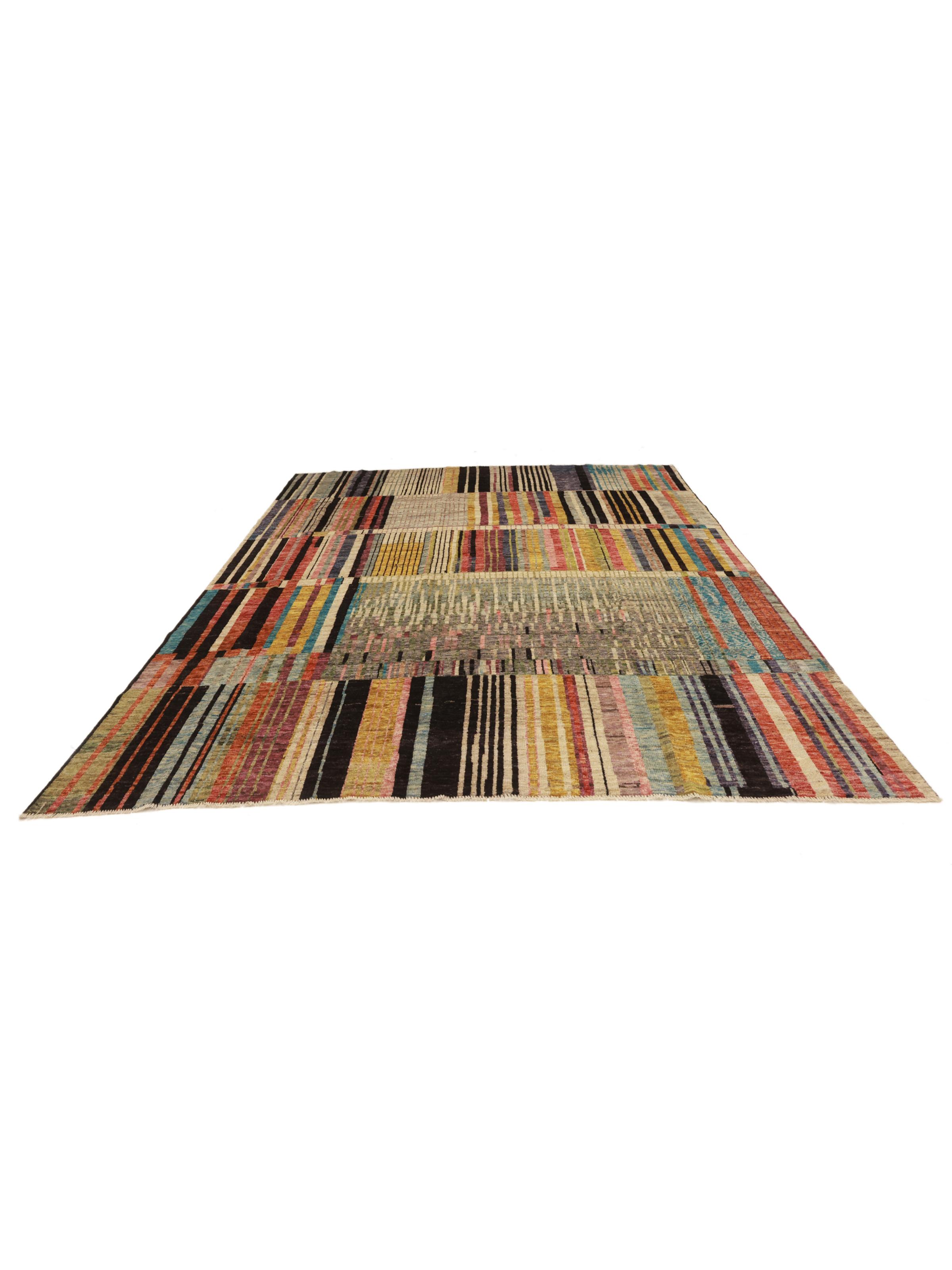
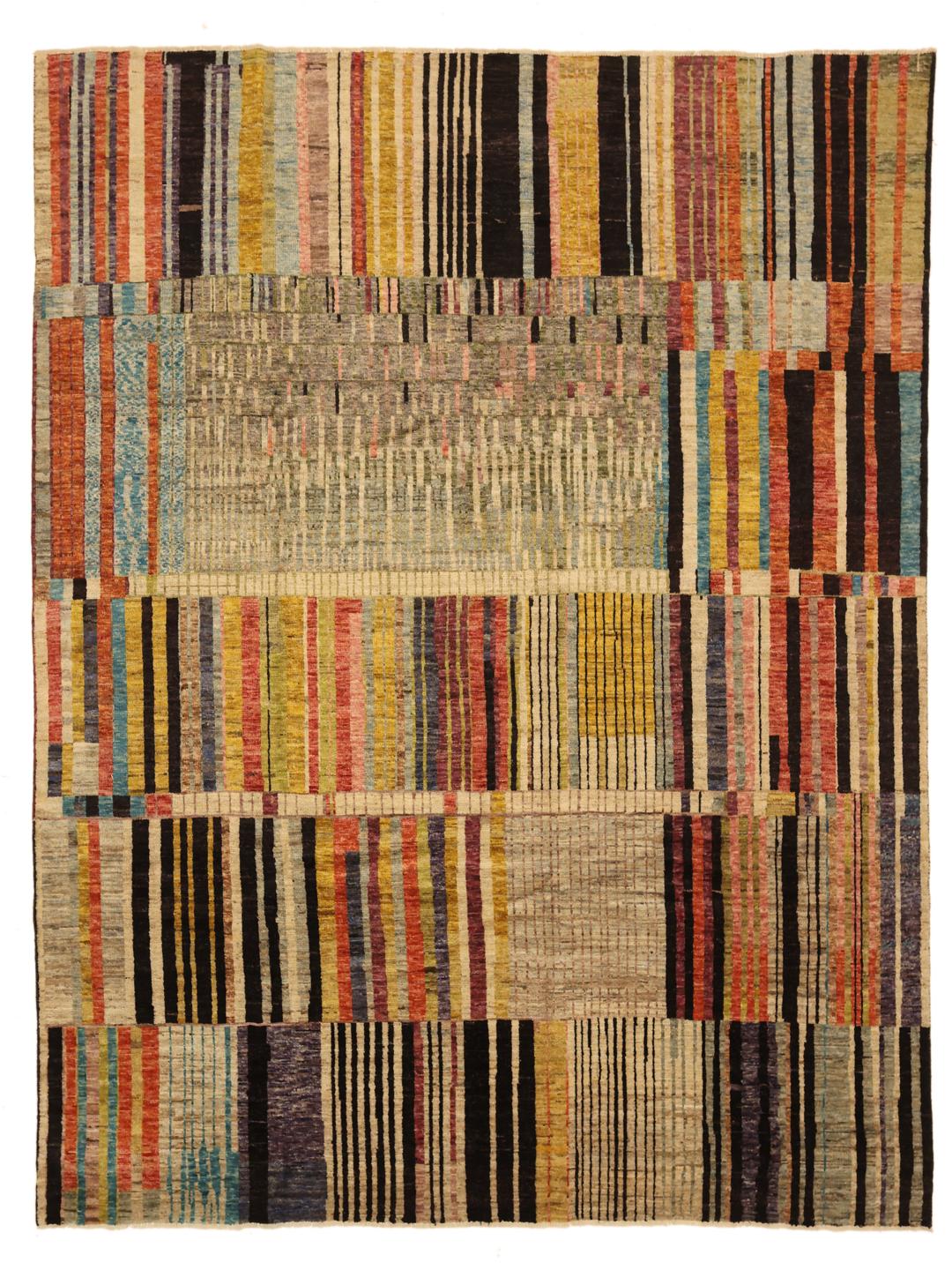
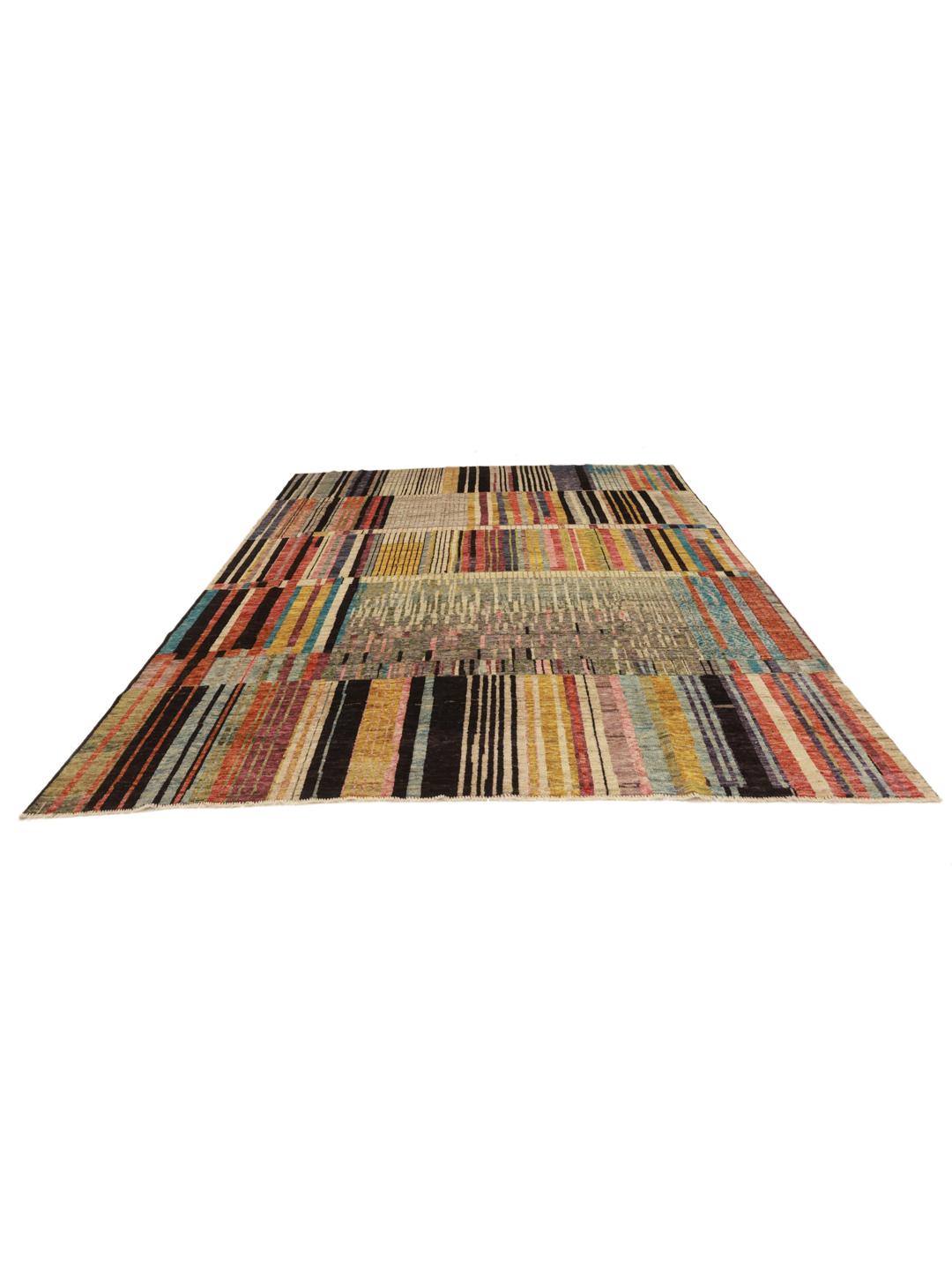
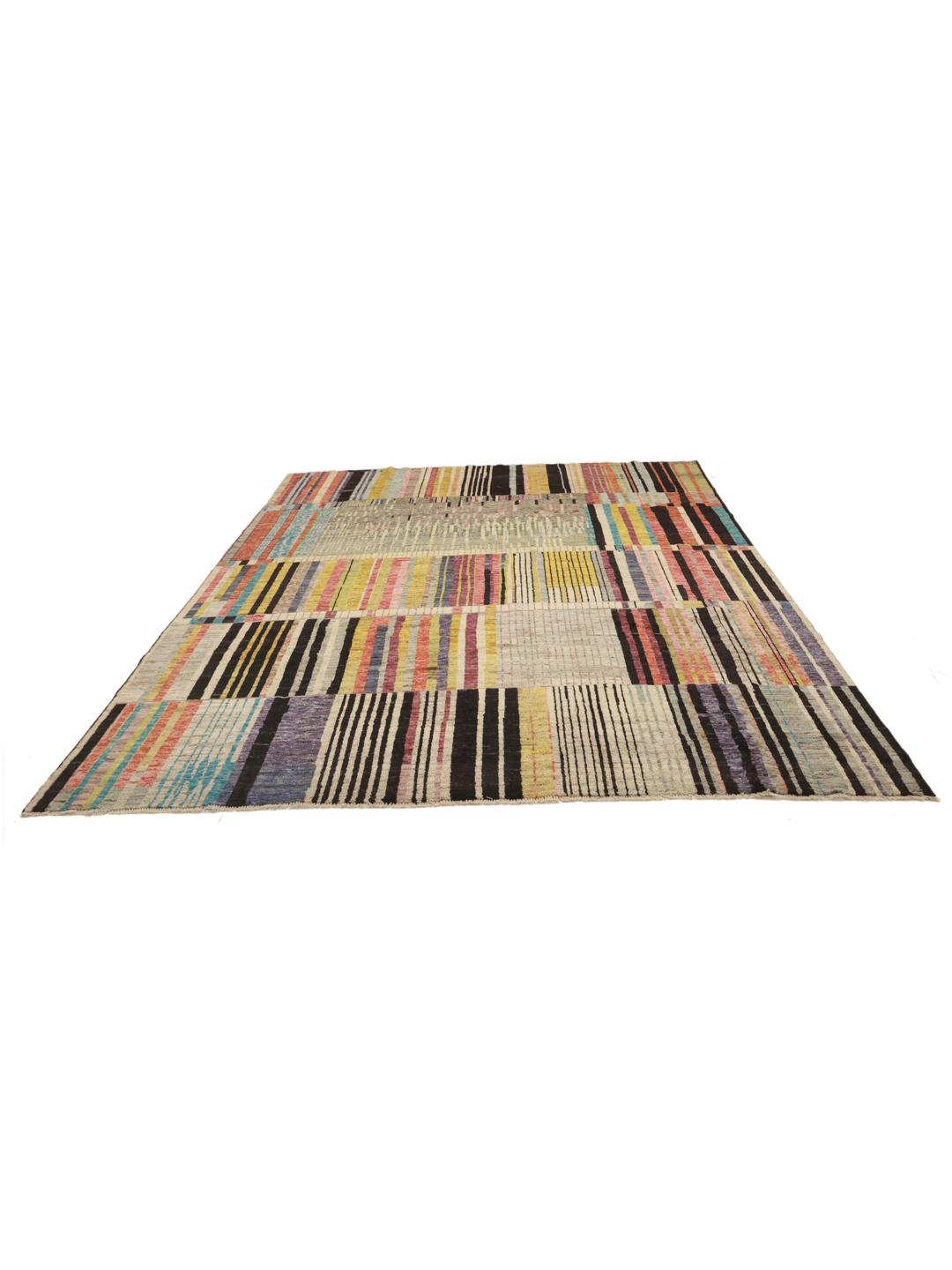
Berber-style rugs are deeply rooted in the nomadic traditions of the Middle East and Central Asia. Originally created by tribal weavers, these rugs were designed for practical use, serving as bedding, wall hangings, or floor coverings in harsh climates. Today, Afghan weavers have embraced and evolved these traditions, creating pieces that blend ancient techniques with a contemporary aesthetic.
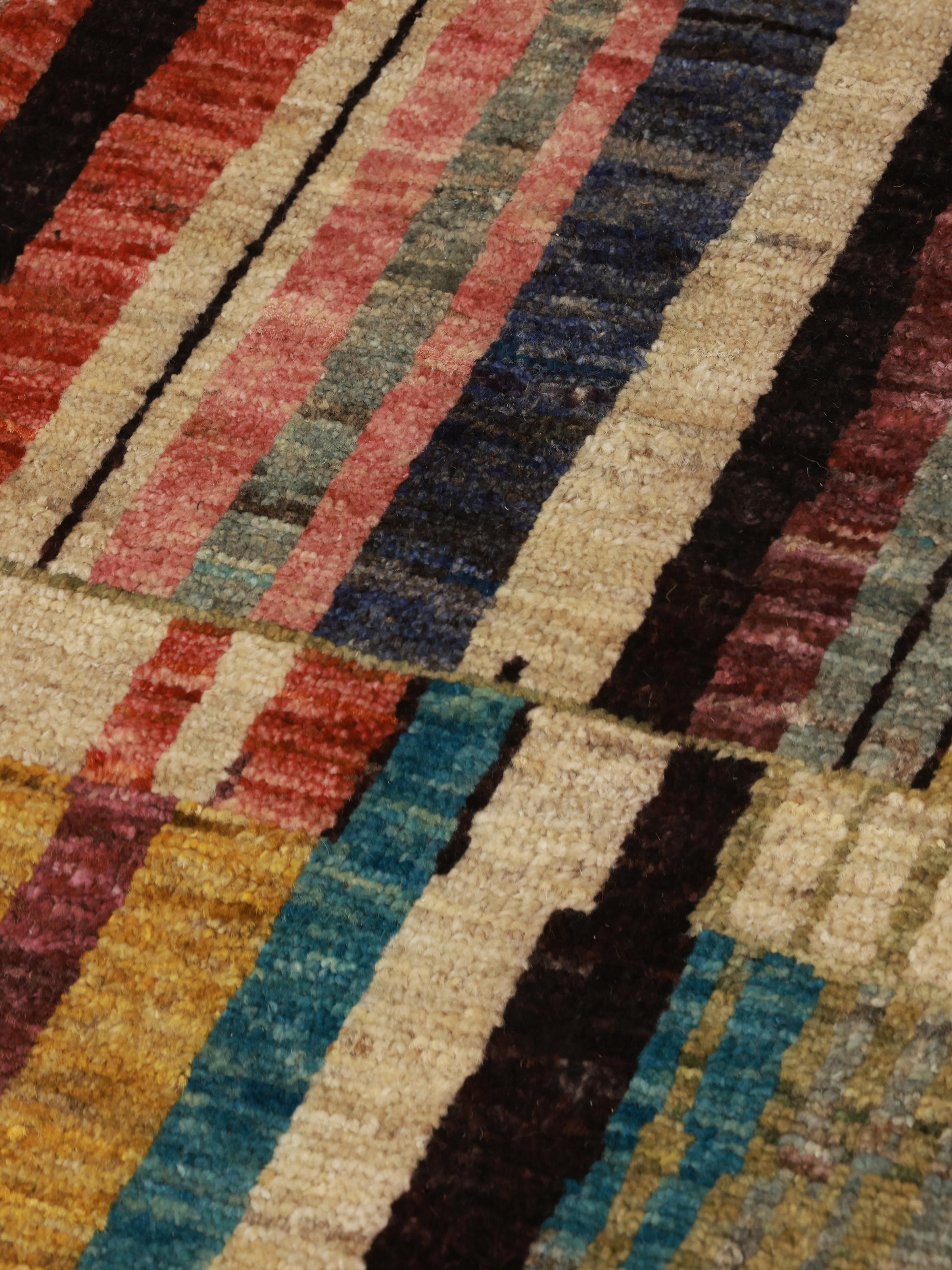
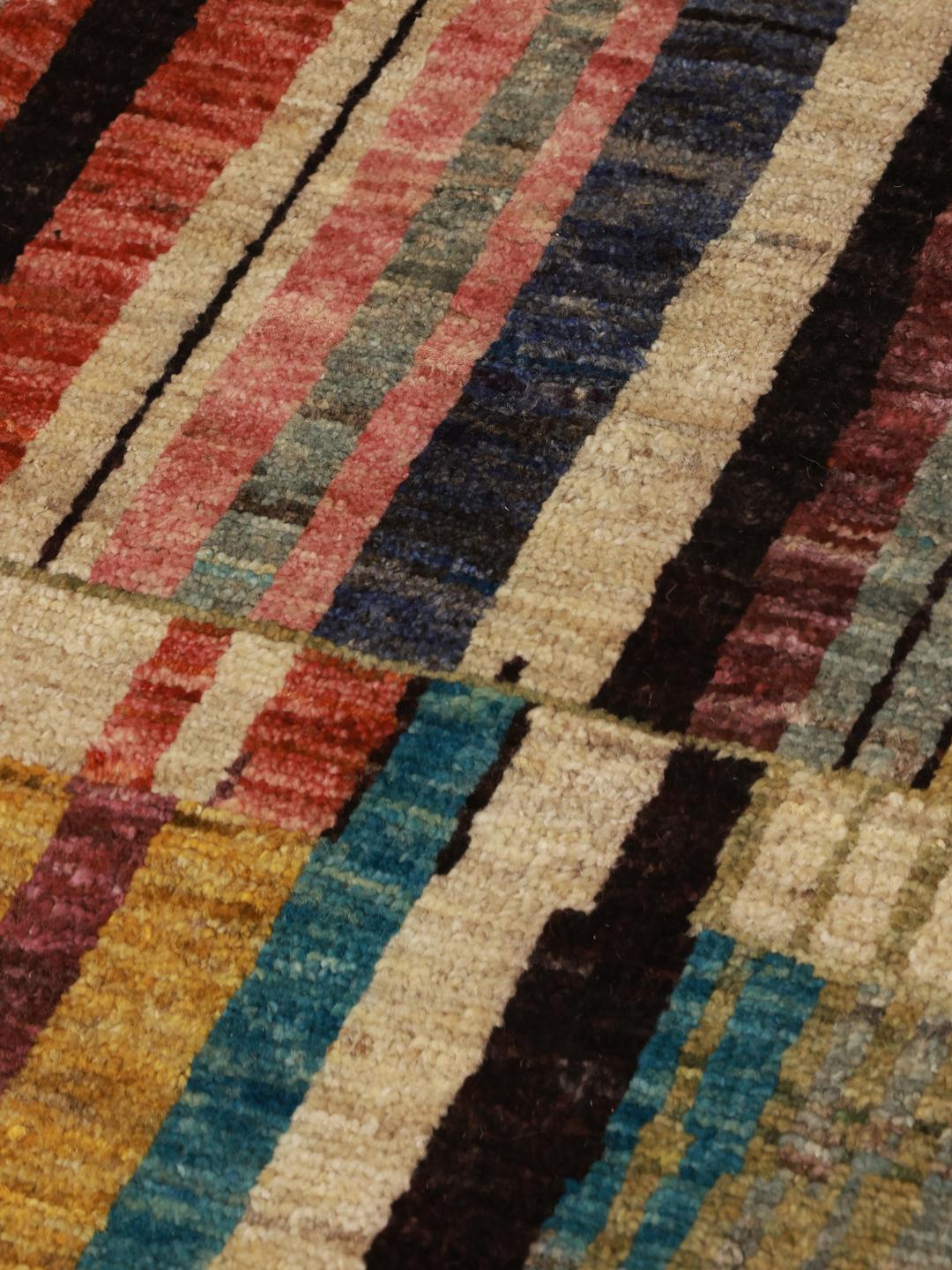
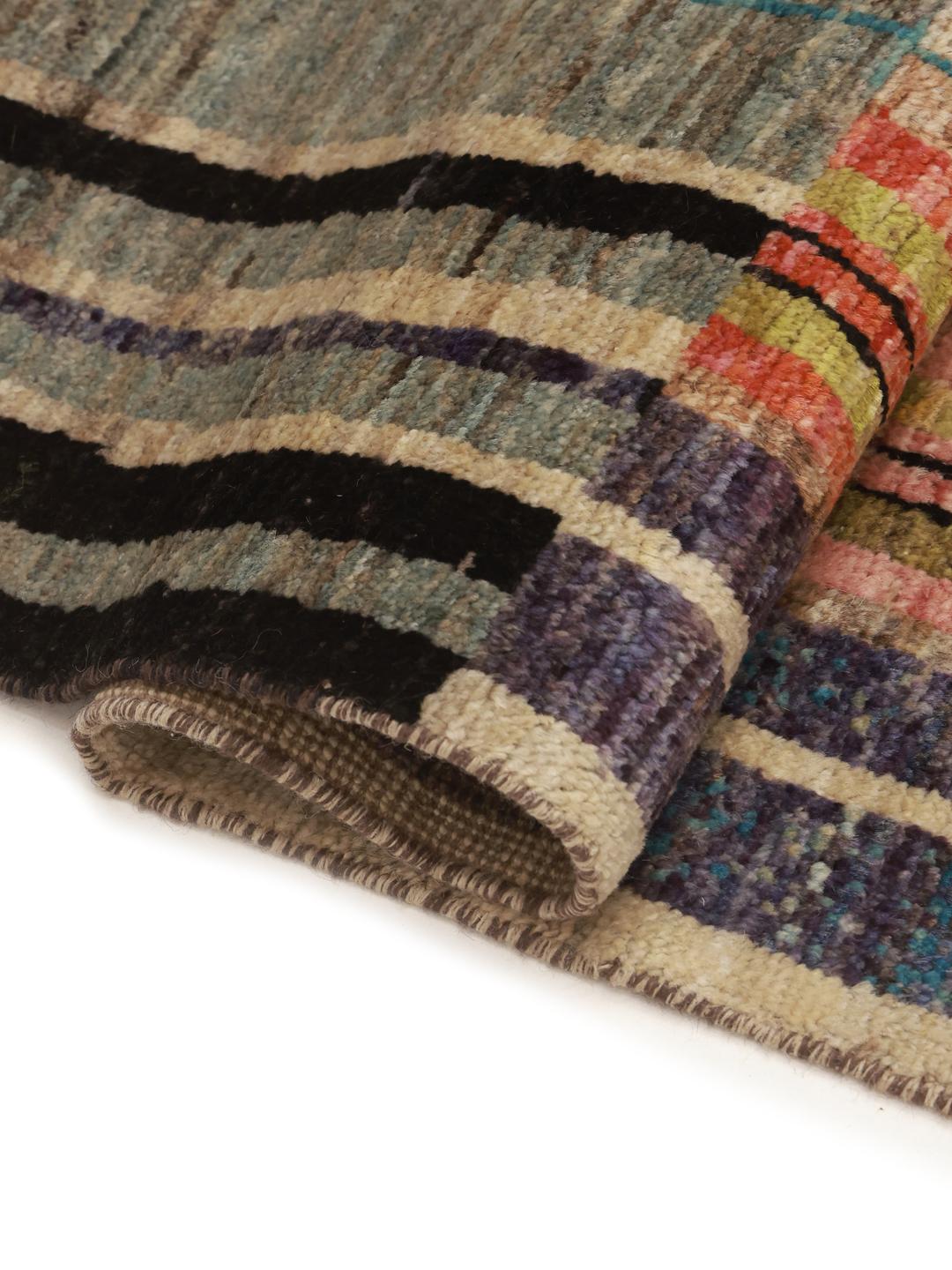
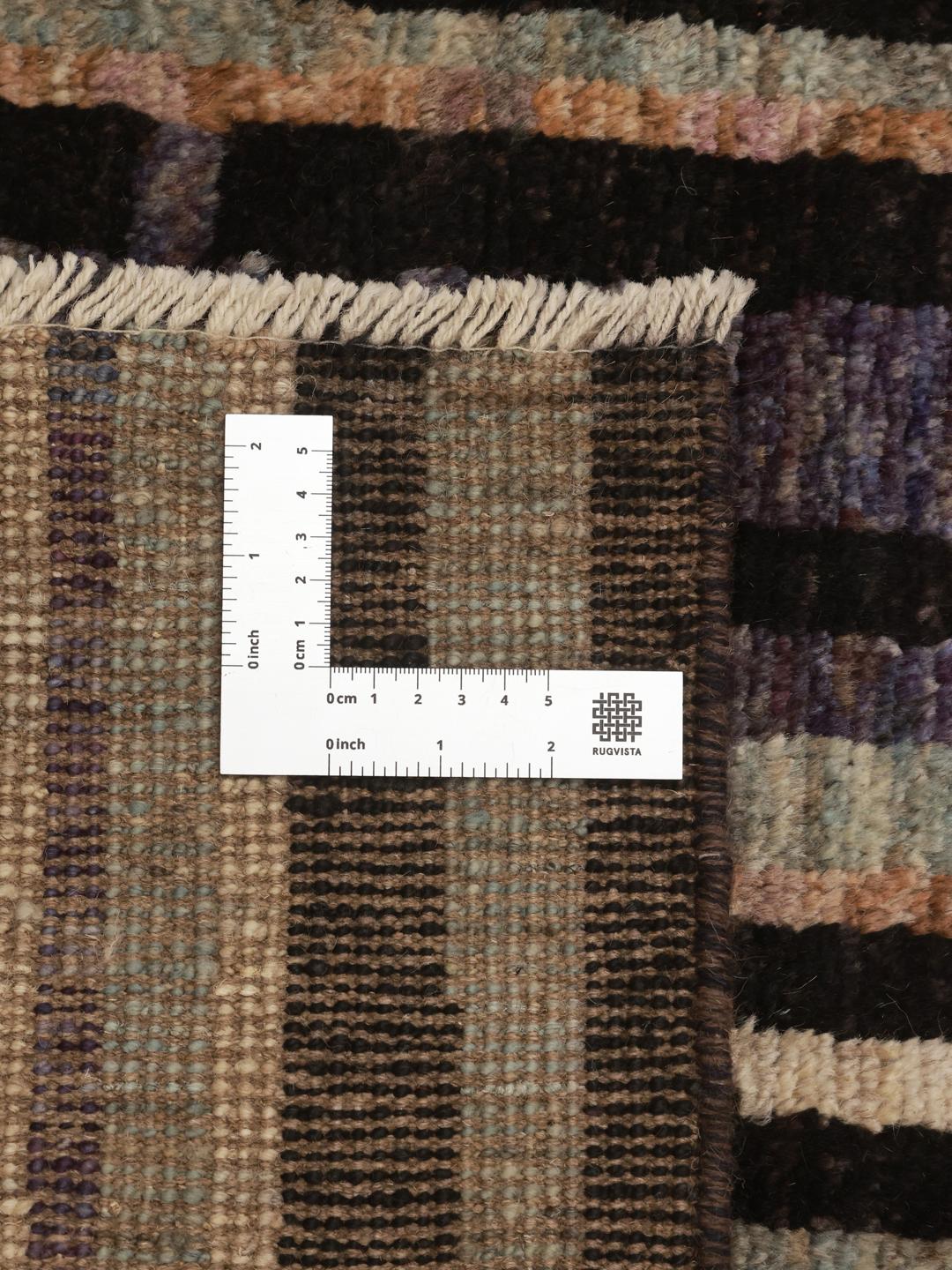
The term hand-knotted refers to the time-honoured method where each individual knot is tied by hand around the foundation threads. This process is the pinnacle of rug-making, as it allows for the creation of complex, high-detail patterns that are physically integrated into the structure of the rug, rather than just printed on the surface.
Signature elements of this style include its bold, expressive use of colour and geometric rhythm. While traditional Berber designs often featured natural, undyed wool, modern interpretations like this one celebrate a vibrant palette. The stripes and block patterns seen here are inspired by the natural landscape and the cultural narratives of the region, creating a visual language that feels both ancient and refreshingly modern.
Owning an Afghan-made rug is a way to connect with a long history of craft and human ingenuity. These pieces are highly valued by collectors not only for their durability but for the stories they tell. Each rug is a testament to the skill of the weaver, representing a legacy of artistry that survives in an era of mass production.