Berber-style rugs have a deep-rooted history, traditionally woven by nomadic tribes in North Africa. While the term Berber has become a design category, the influence of these tribal weaving traditions has travelled across the globe, inspiring artisans in regions like Afghanistan to adopt these techniques and infuse them with their own local artistic sensibilities.
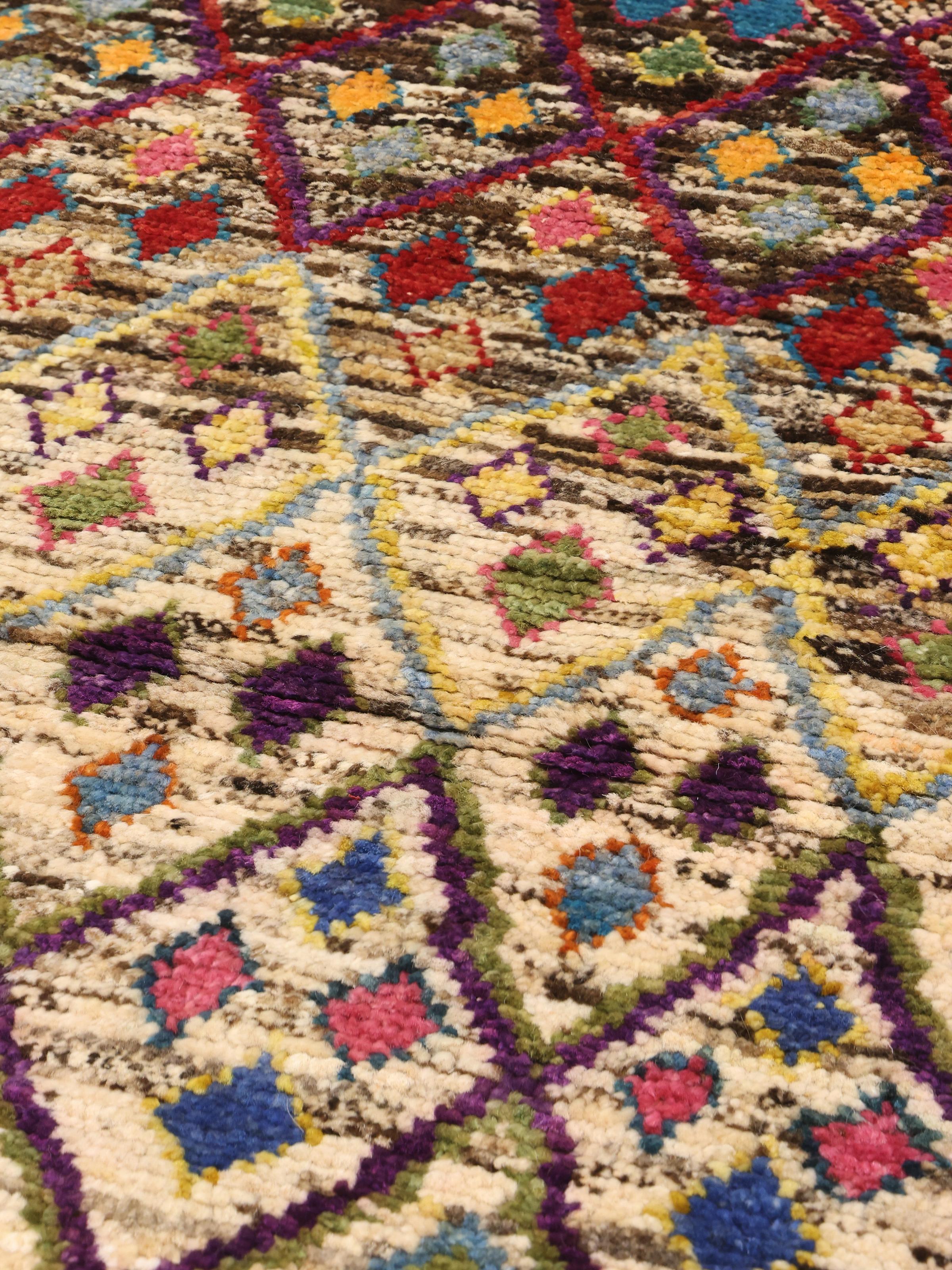
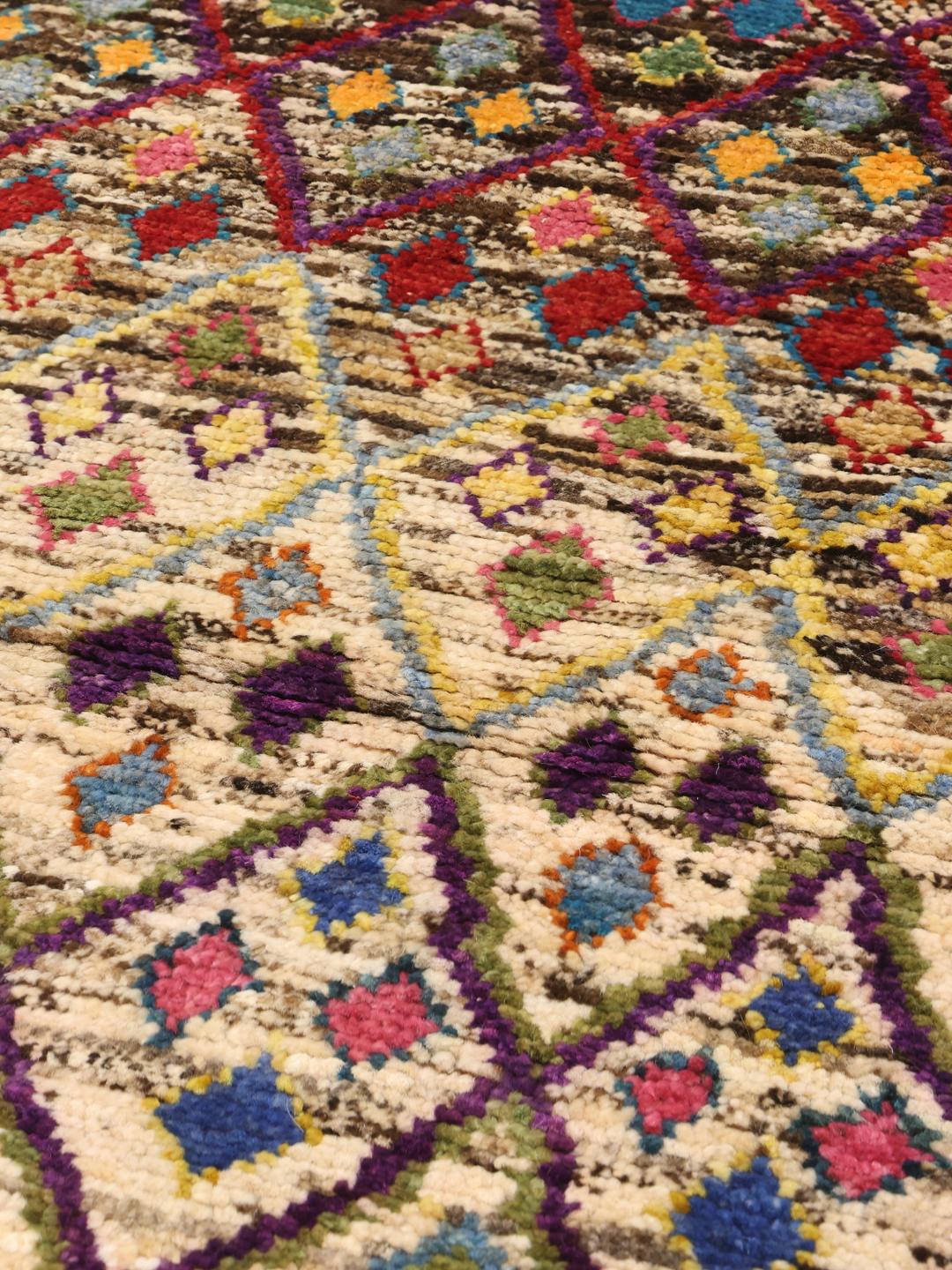
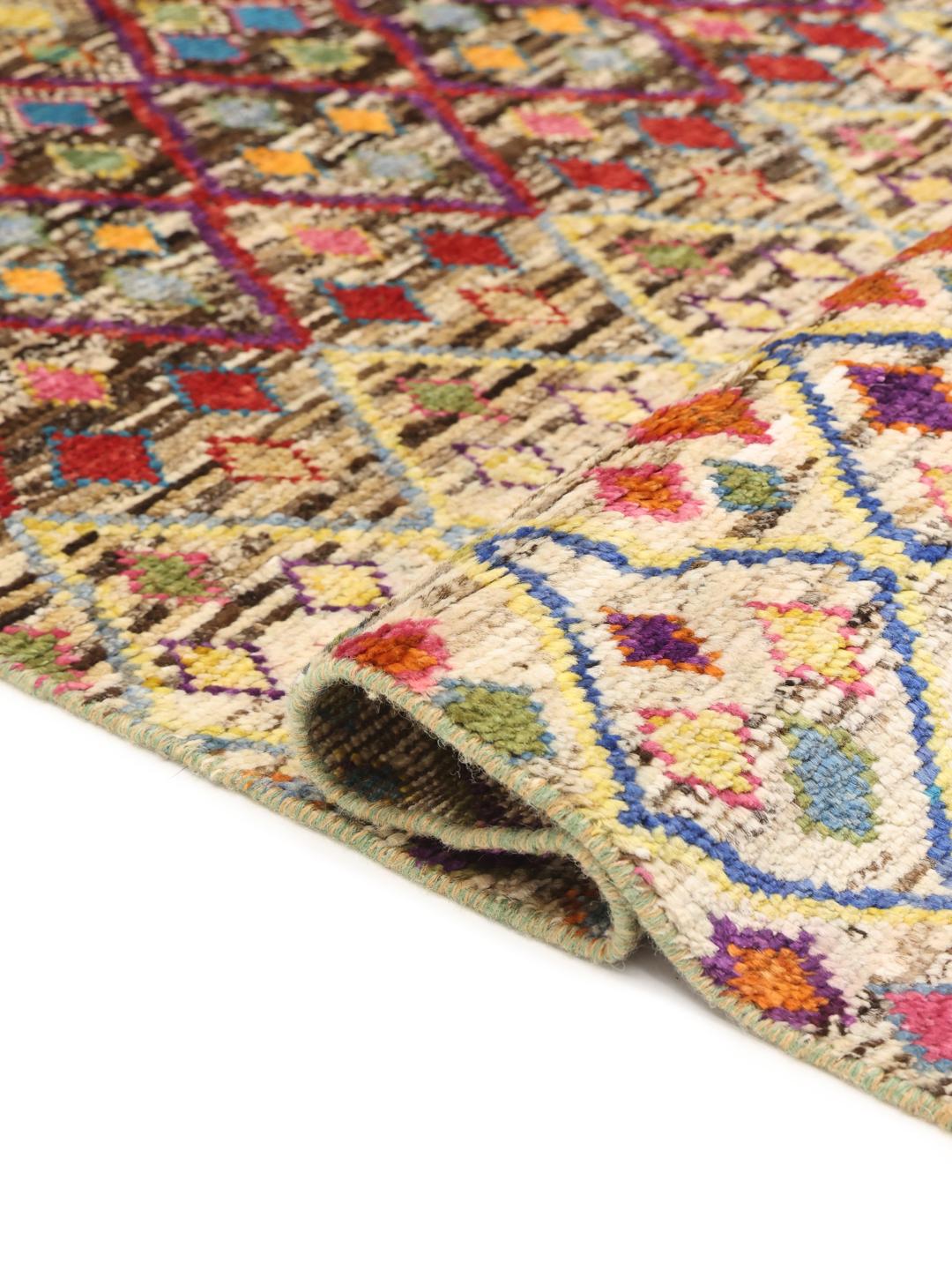
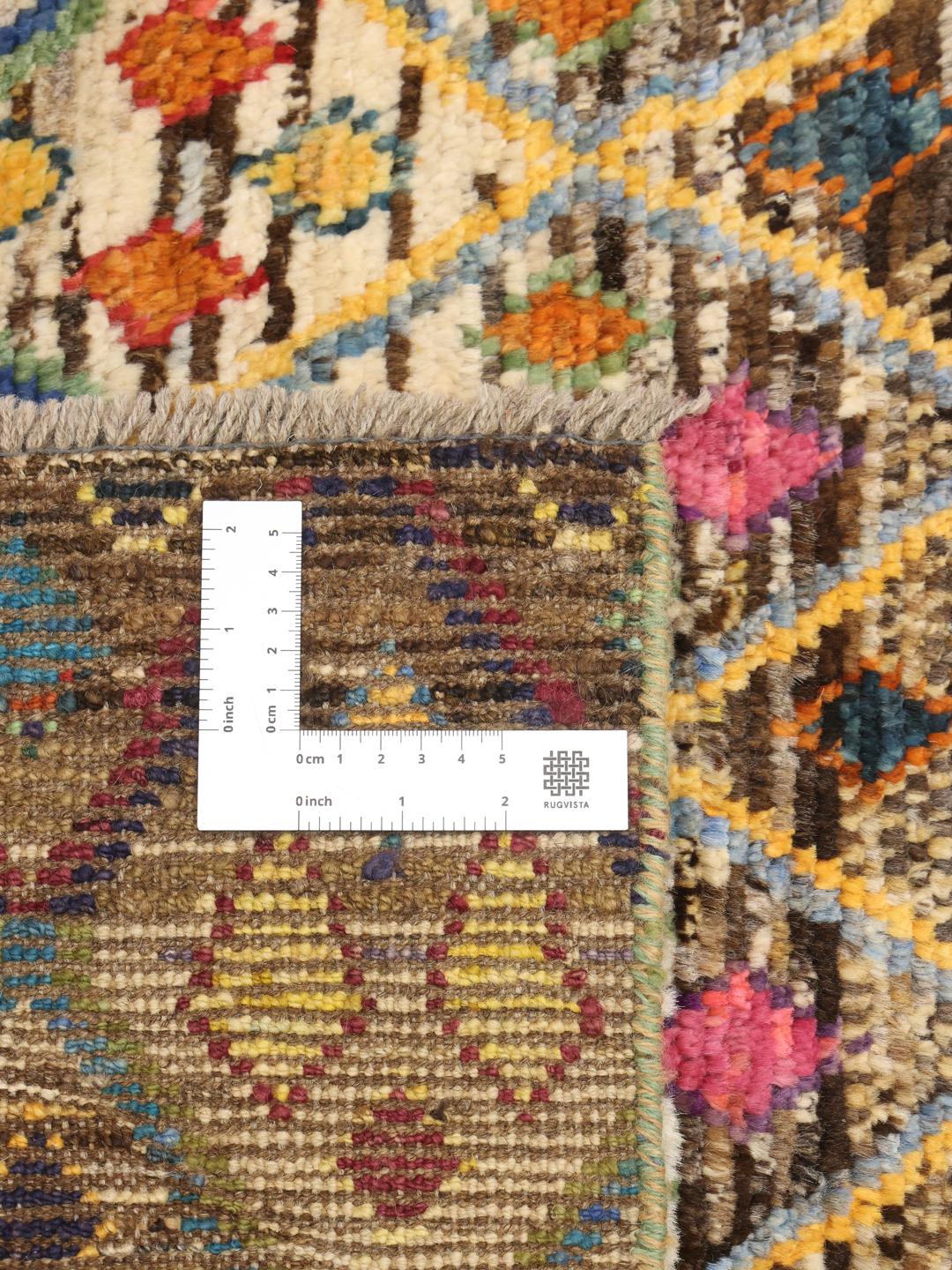
The construction of such rugs relies on the traditional hand-knotting technique, where individual strands of wool are tied onto a foundation. This labour-intensive method is what gives the rug its signature density and resilience, allowing the material to hold its structure and softness far better than mass-produced alternatives.
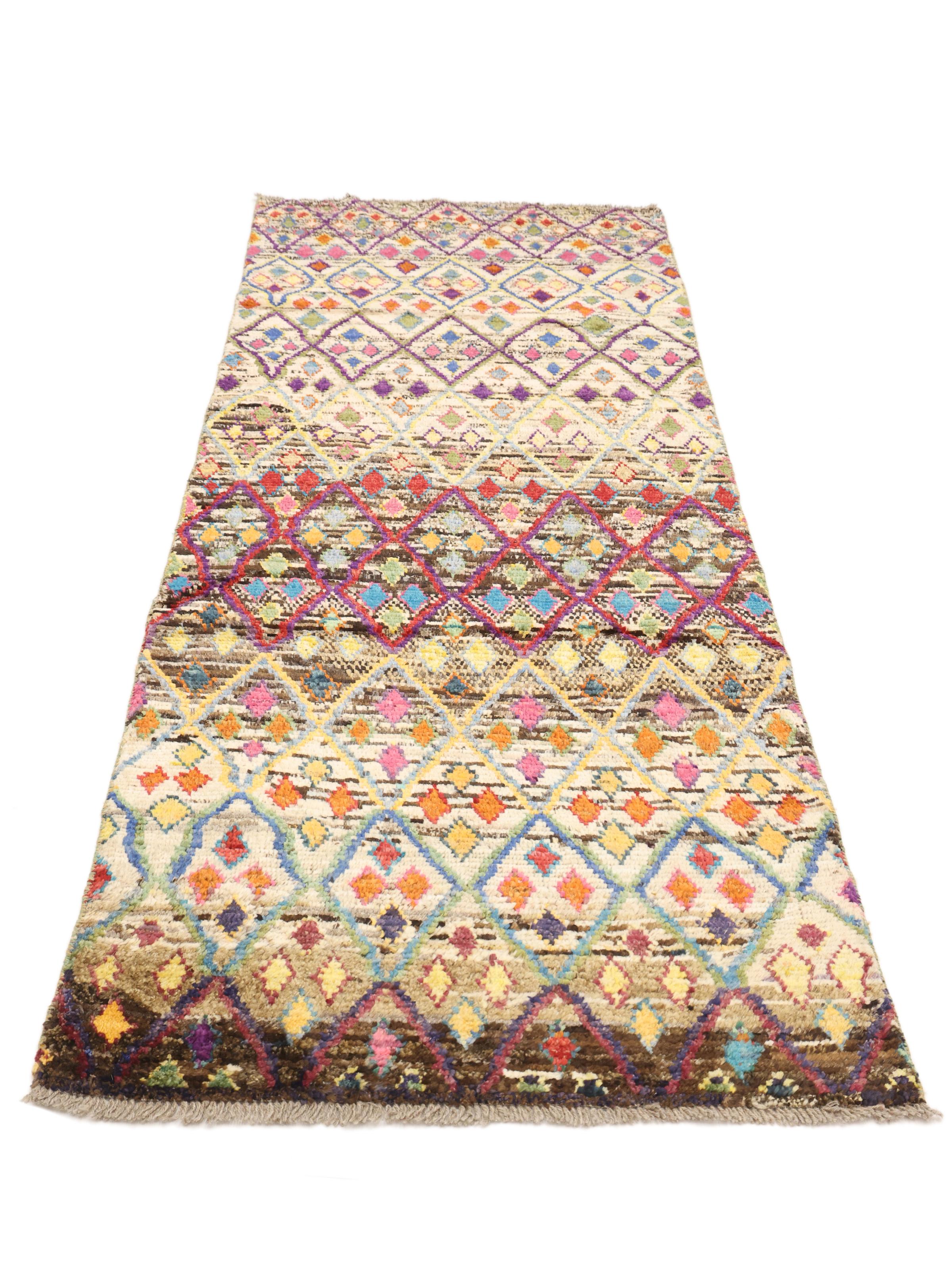
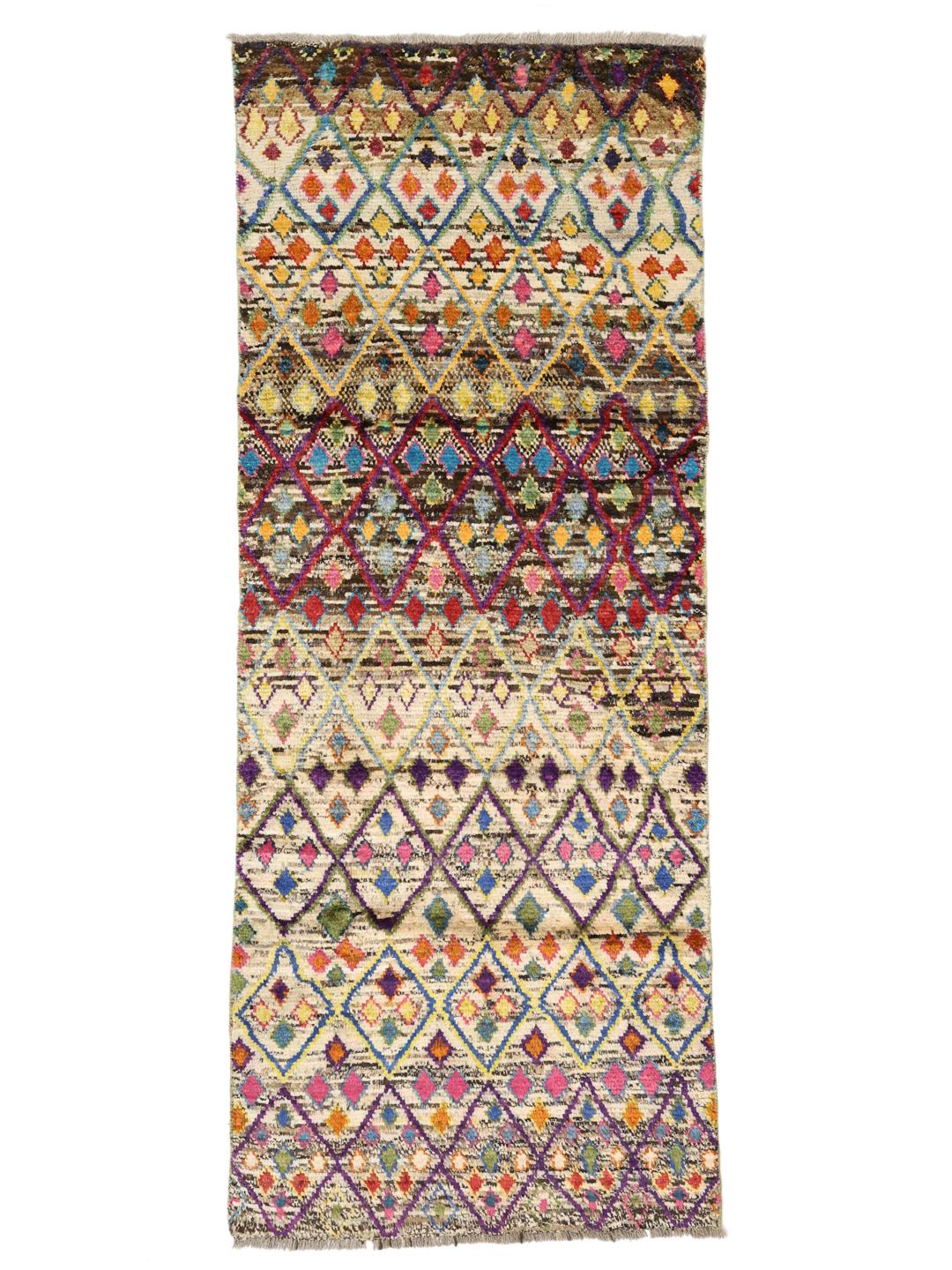
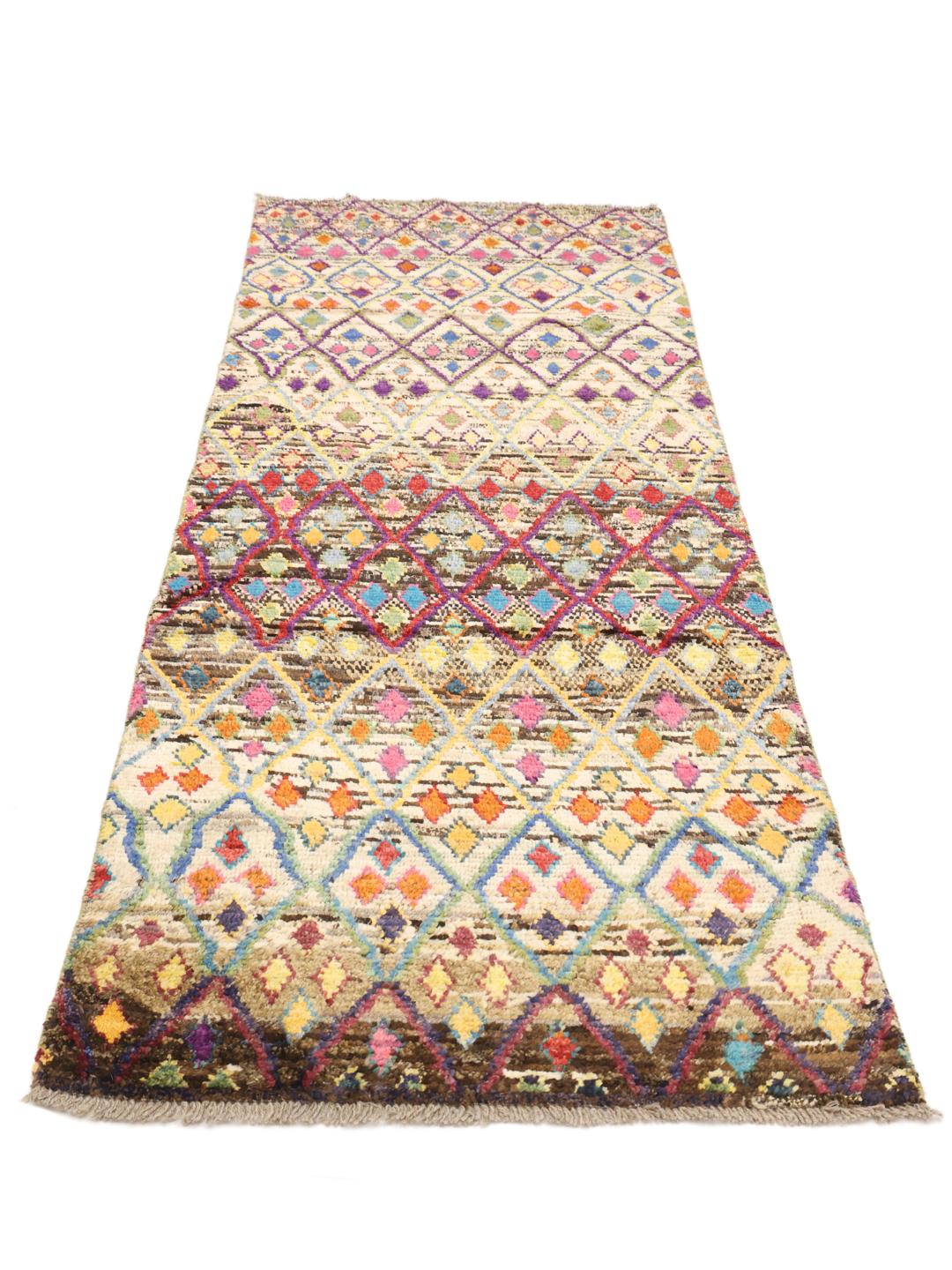
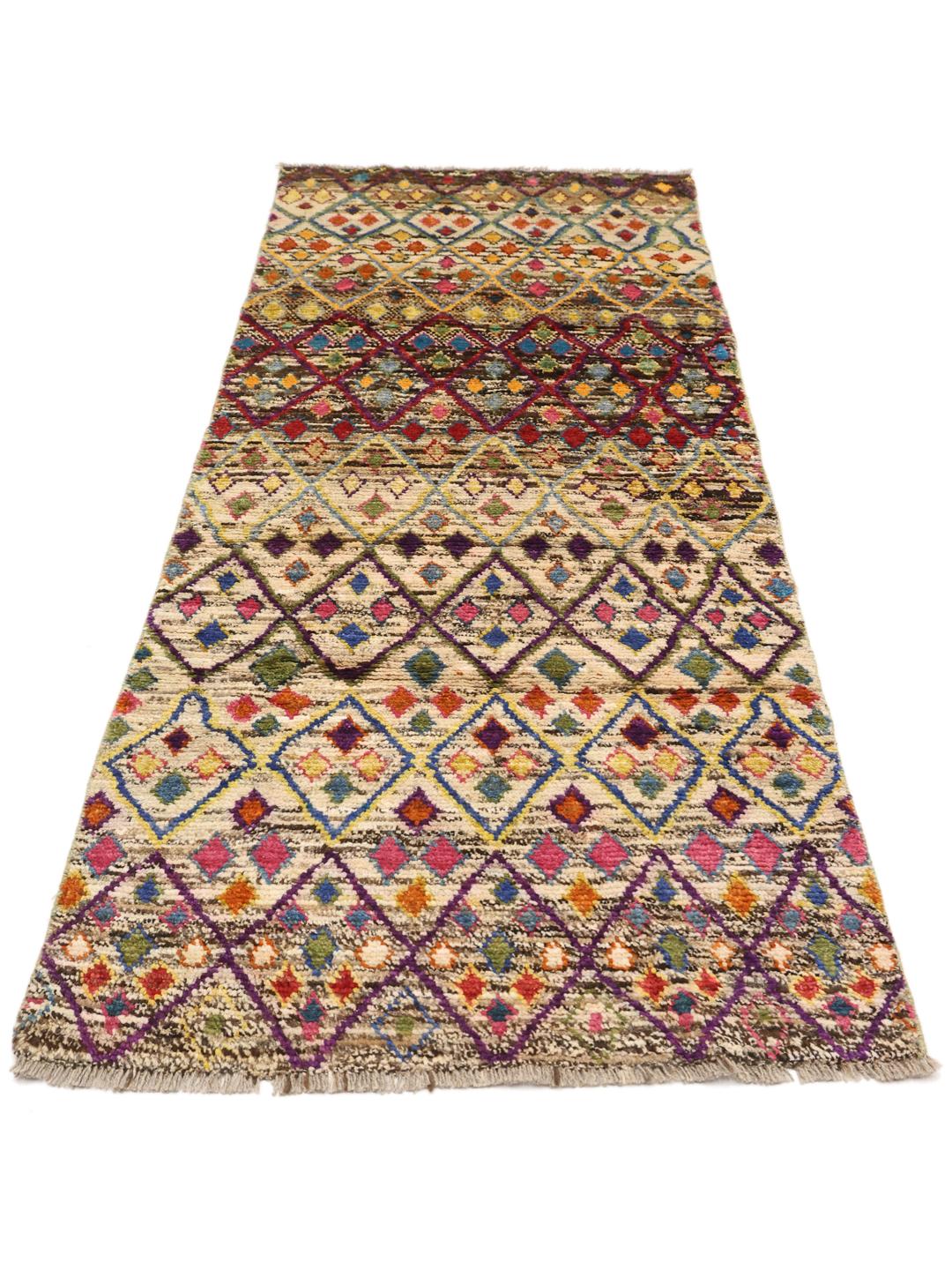
Visually, these rugs are defined by their bold geometric language. The diamond motifs seen here are classic elements of the Berber tradition, often used to symbolise protection or personal storytelling. The use of vibrant, contrasting colours is a hallmark of this style, intended to bring light and energy into the interior of a tent or home.
Owning a hand-knotted runner from this tradition connects you to a long lineage of craft. It is not merely a floor covering but a piece of cultural history that values patience, skill, and the beauty of natural materials. By choosing such a piece, you are supporting a tradition that prioritises lasting quality over fleeting trends.