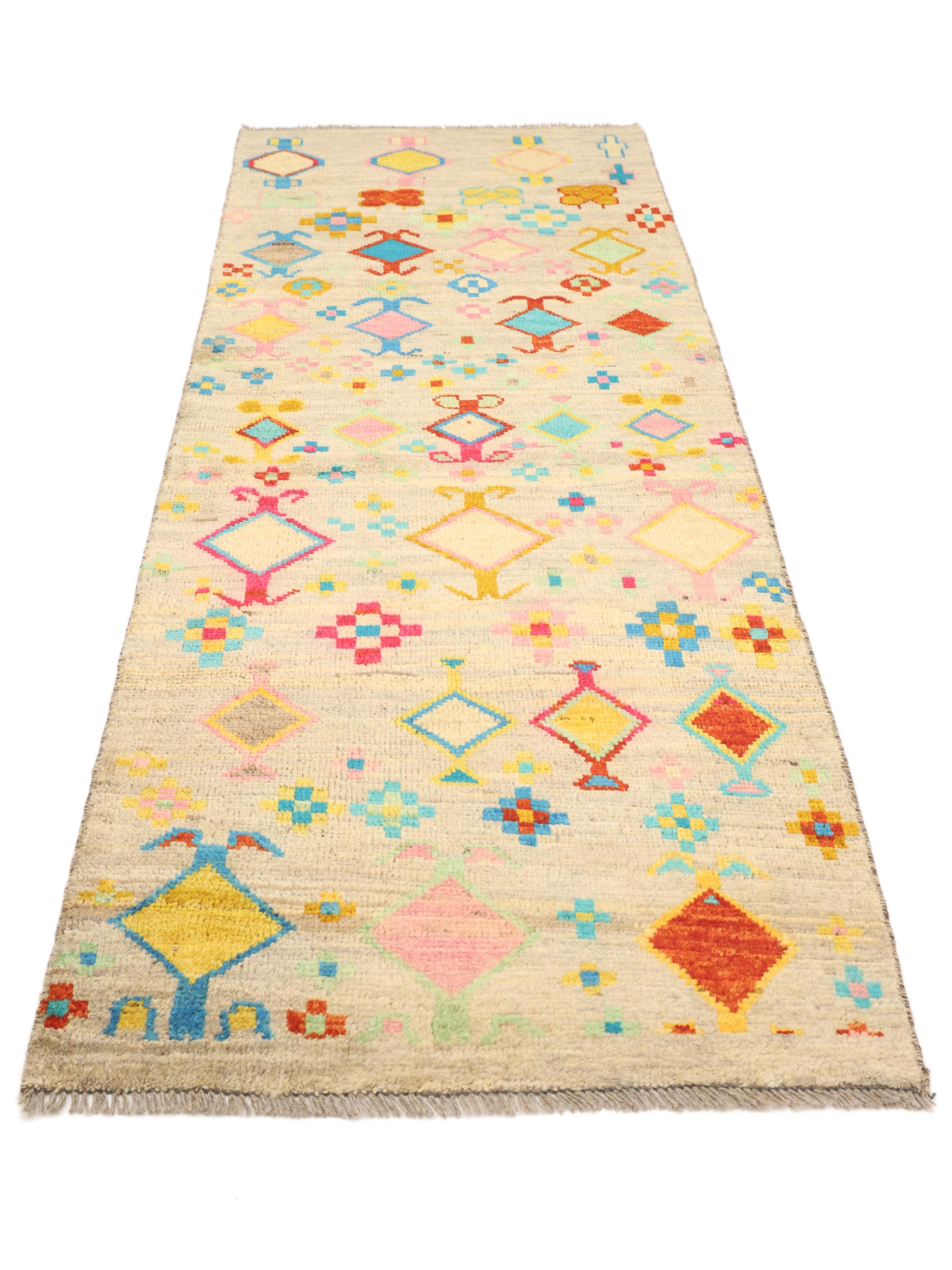
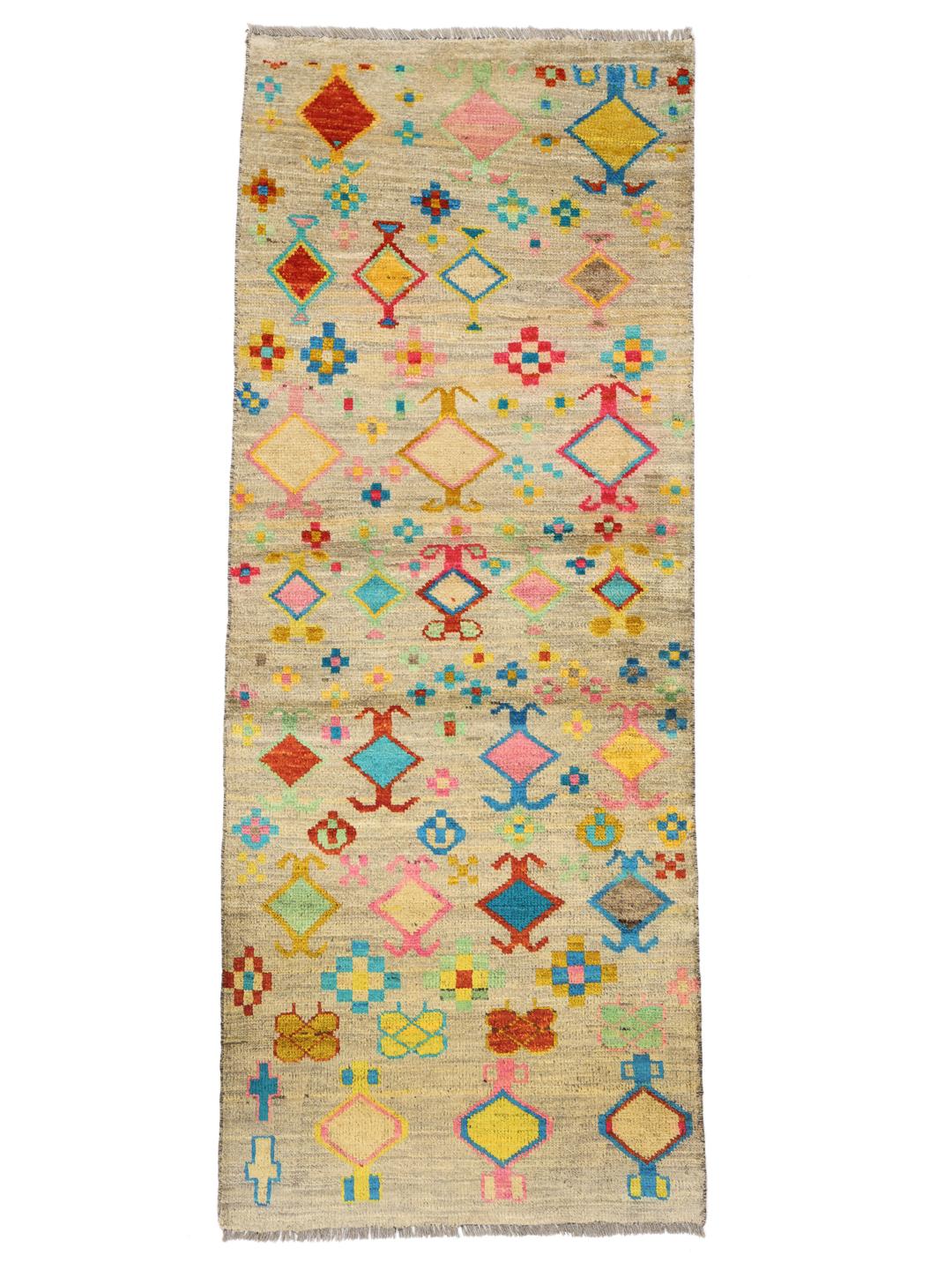
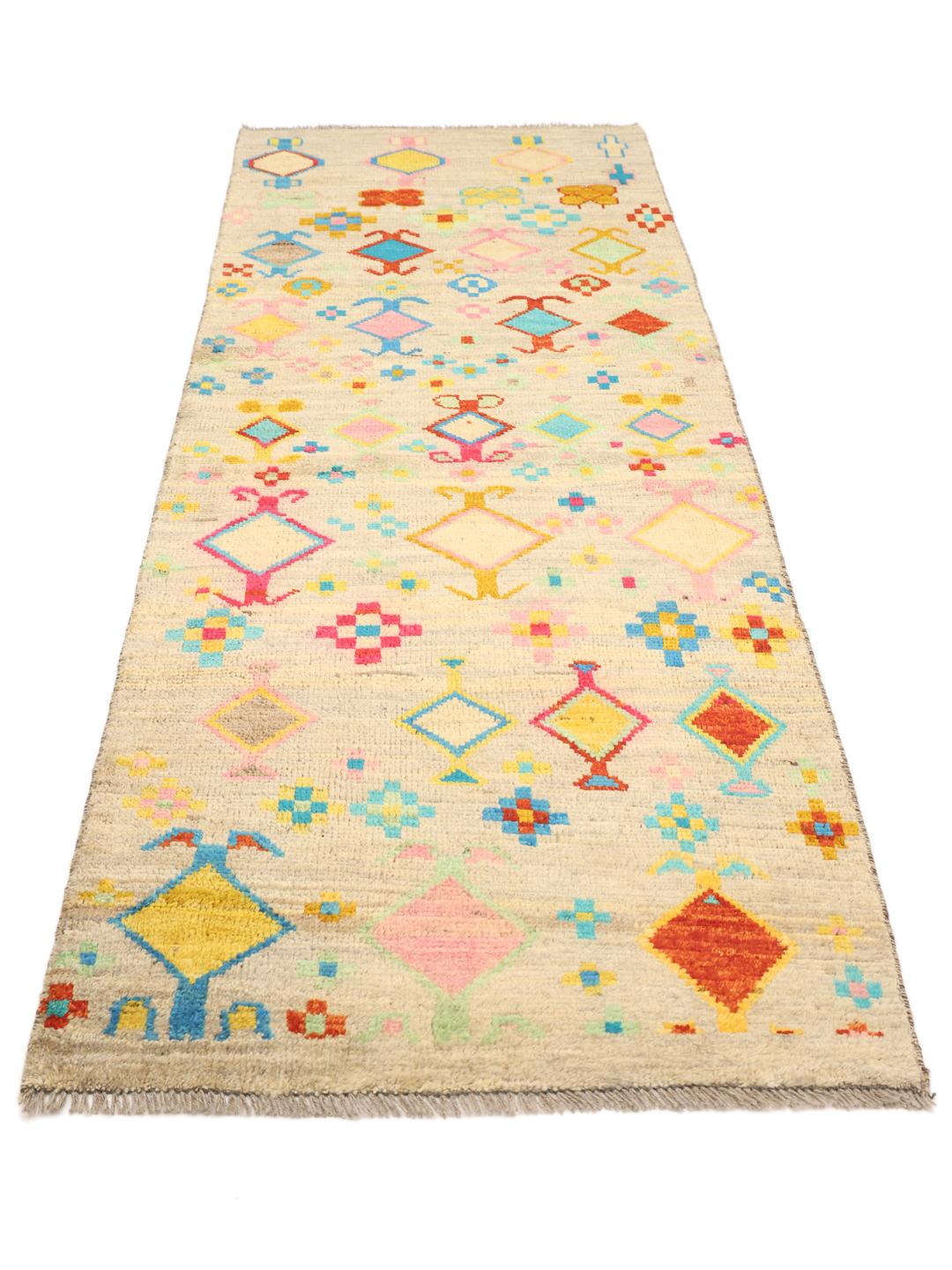
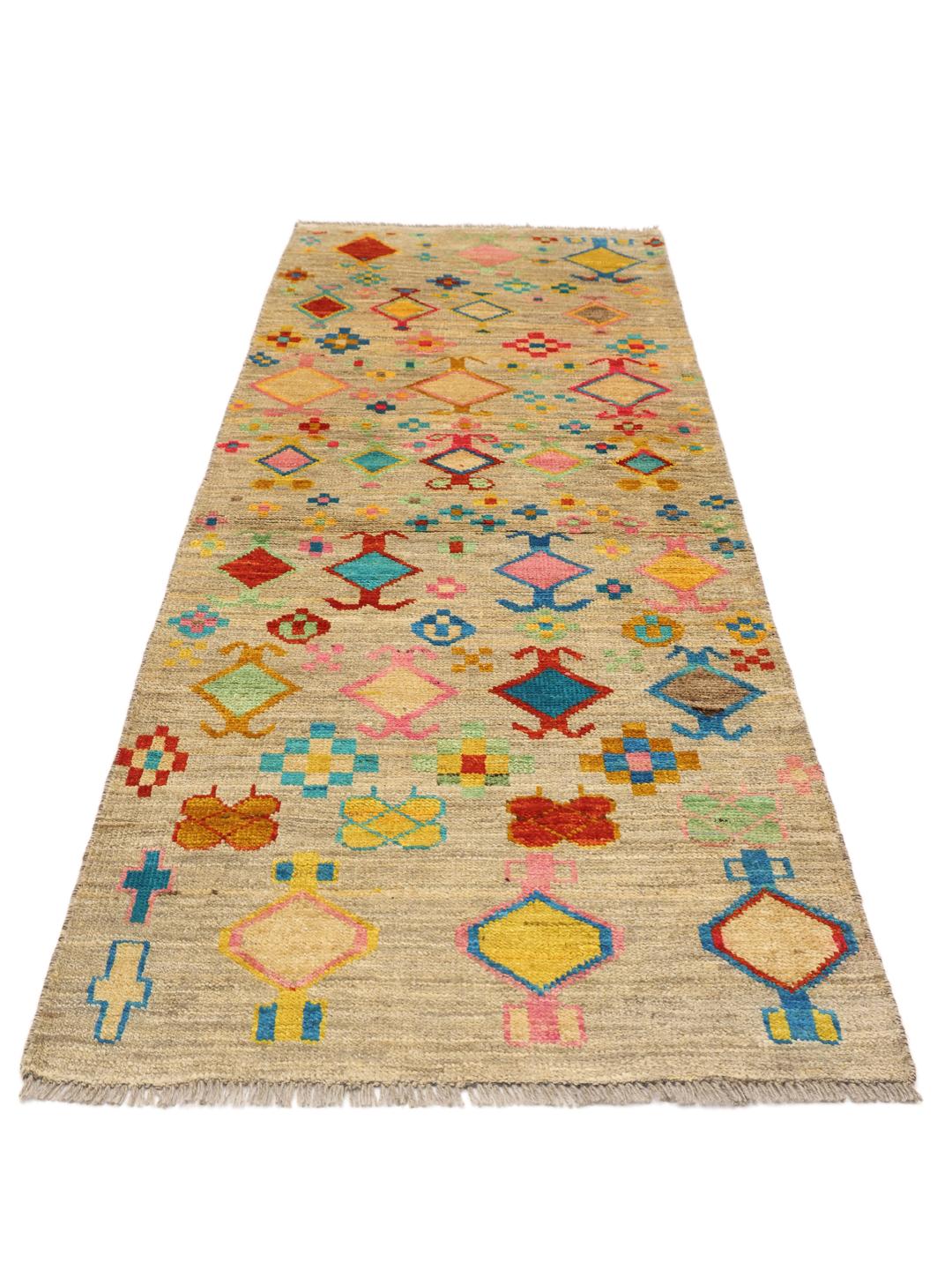
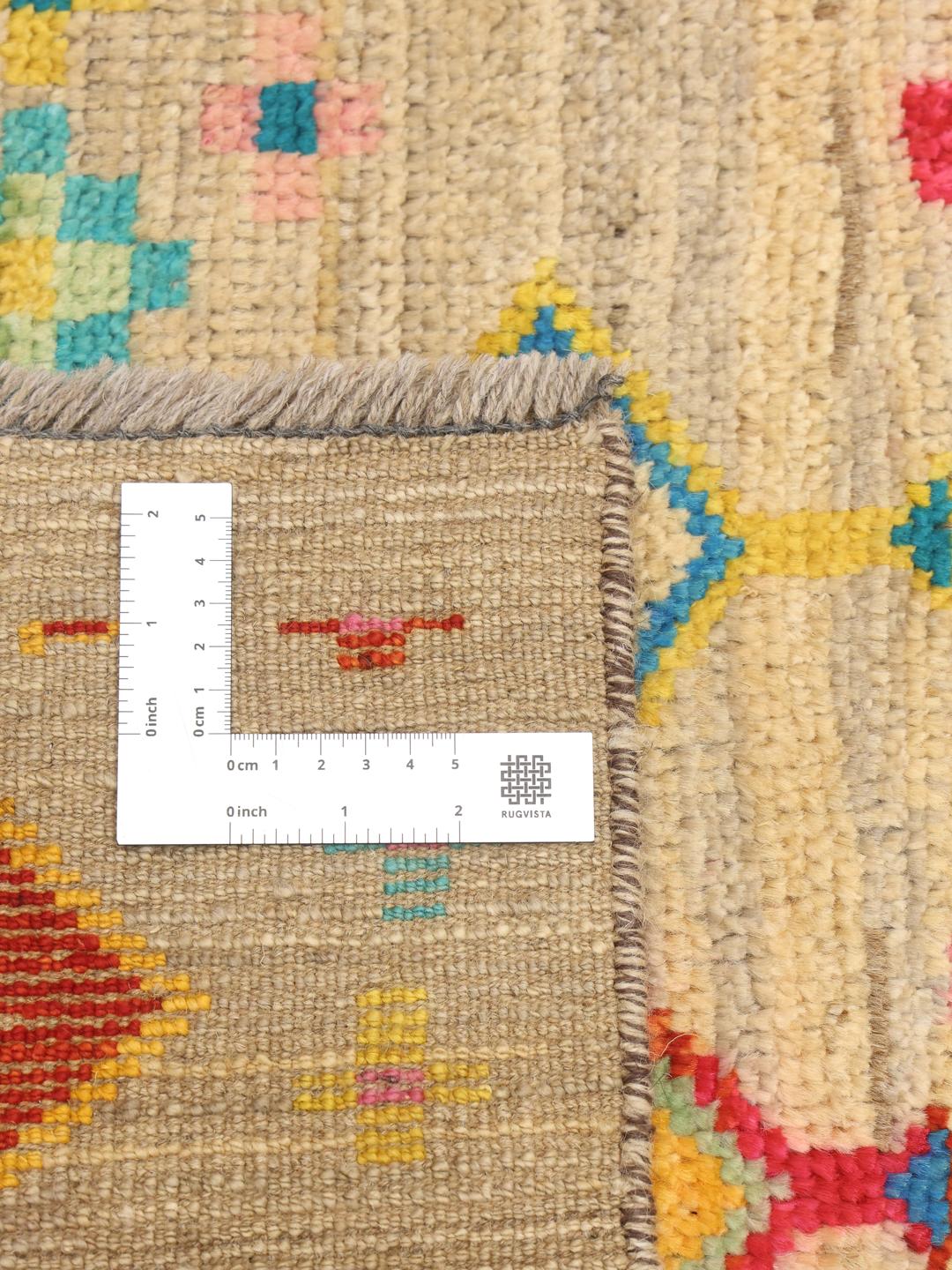
Berber rugs are deeply rooted in the nomadic traditions of North Africa, but their influence has travelled across the globe, inspiring weavers in regions like the Middle East to adopt similar techniques. The term Berber refers to the indigenous peoples of the region, whose style of weaving is characterised by a focus on organic materials and storytelling through abstract, symbolic motifs.
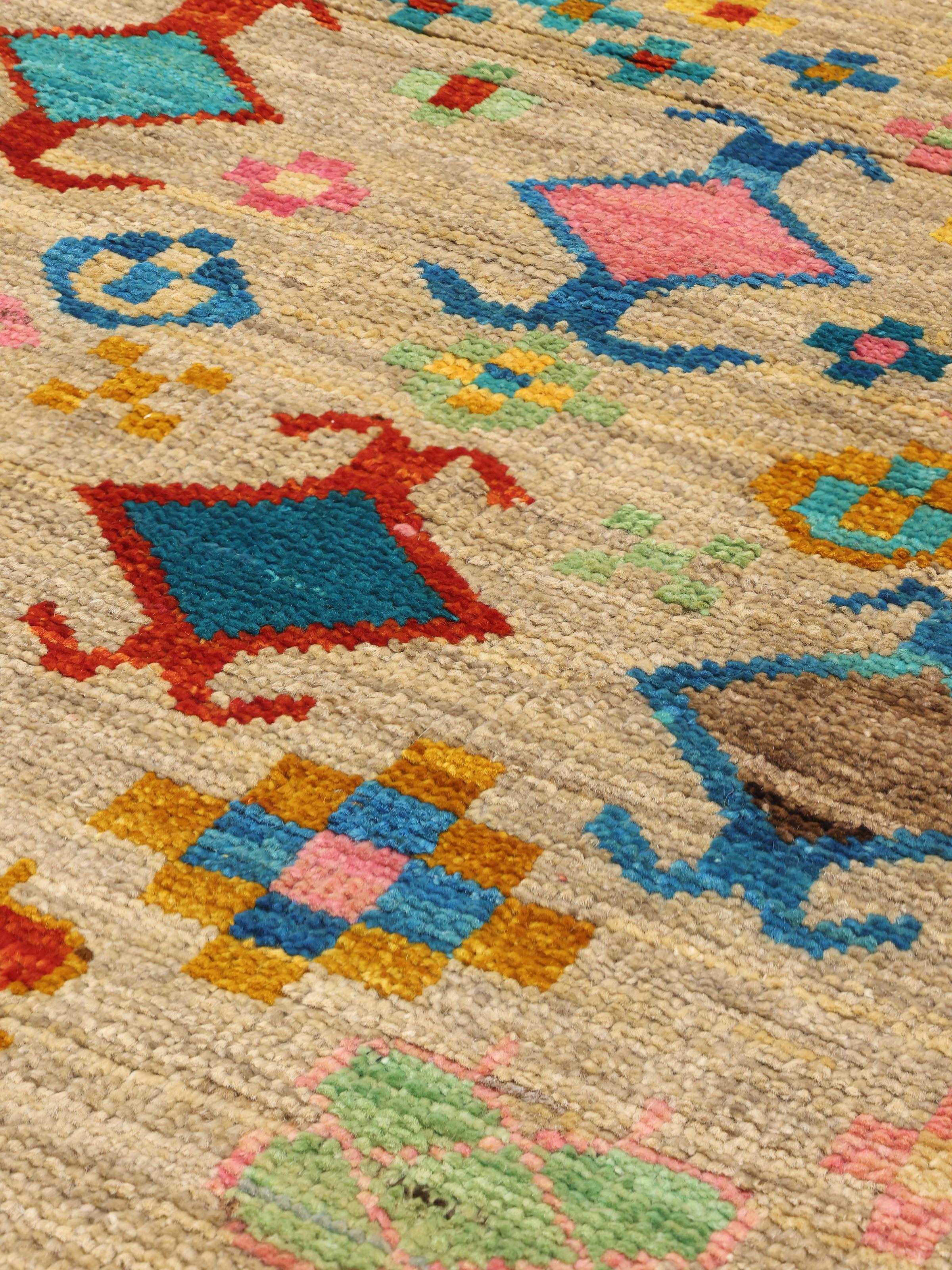
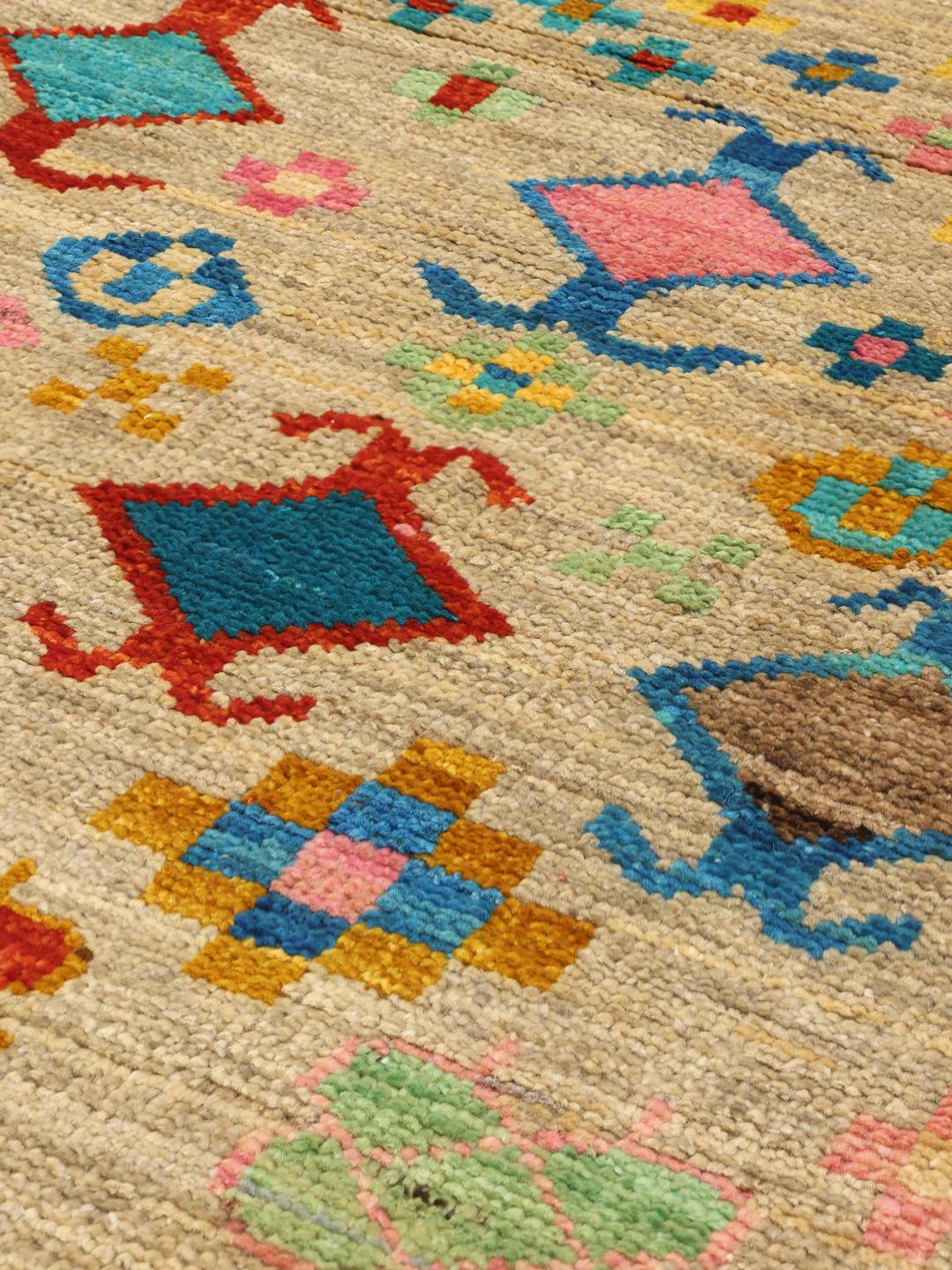
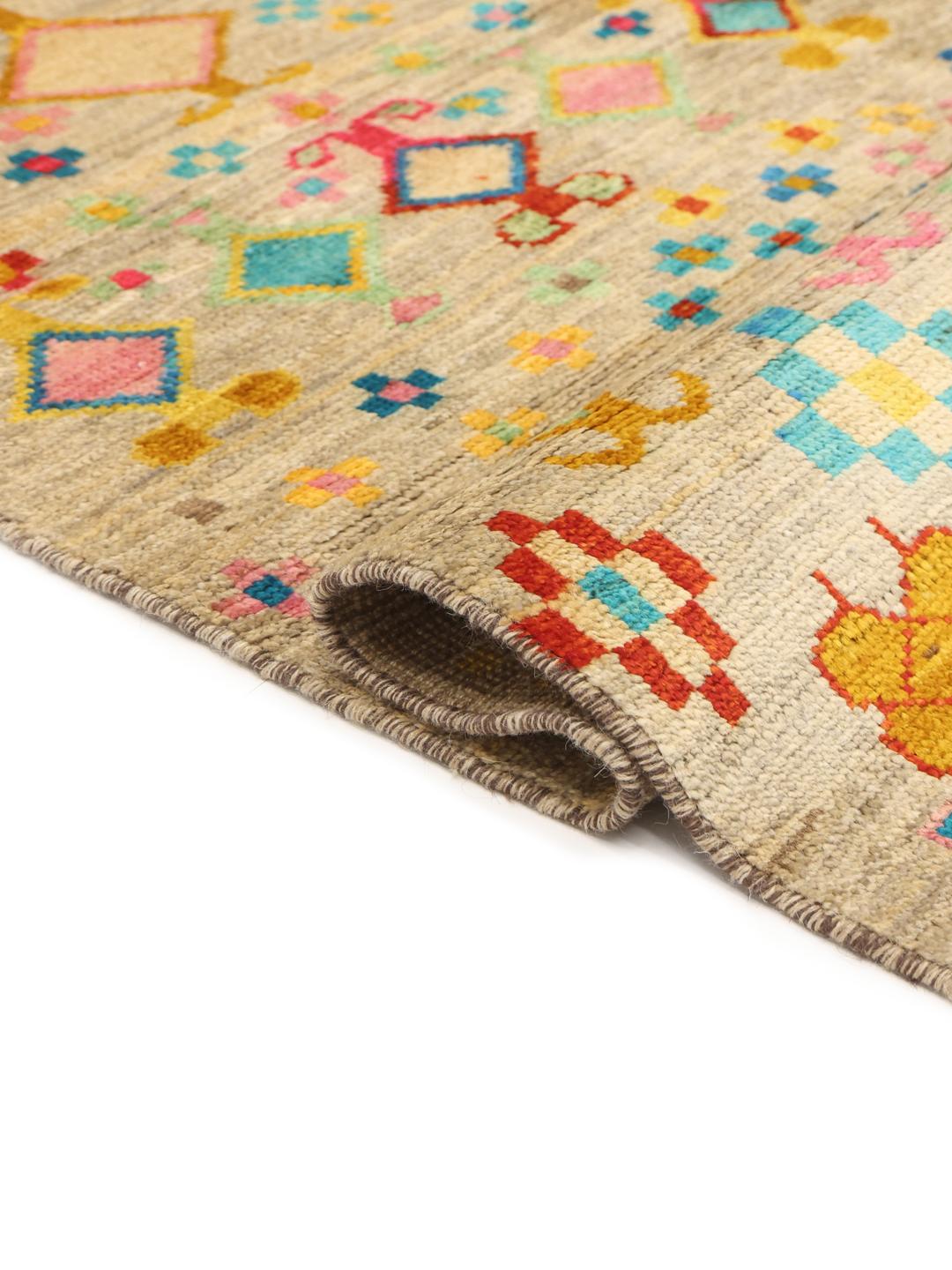
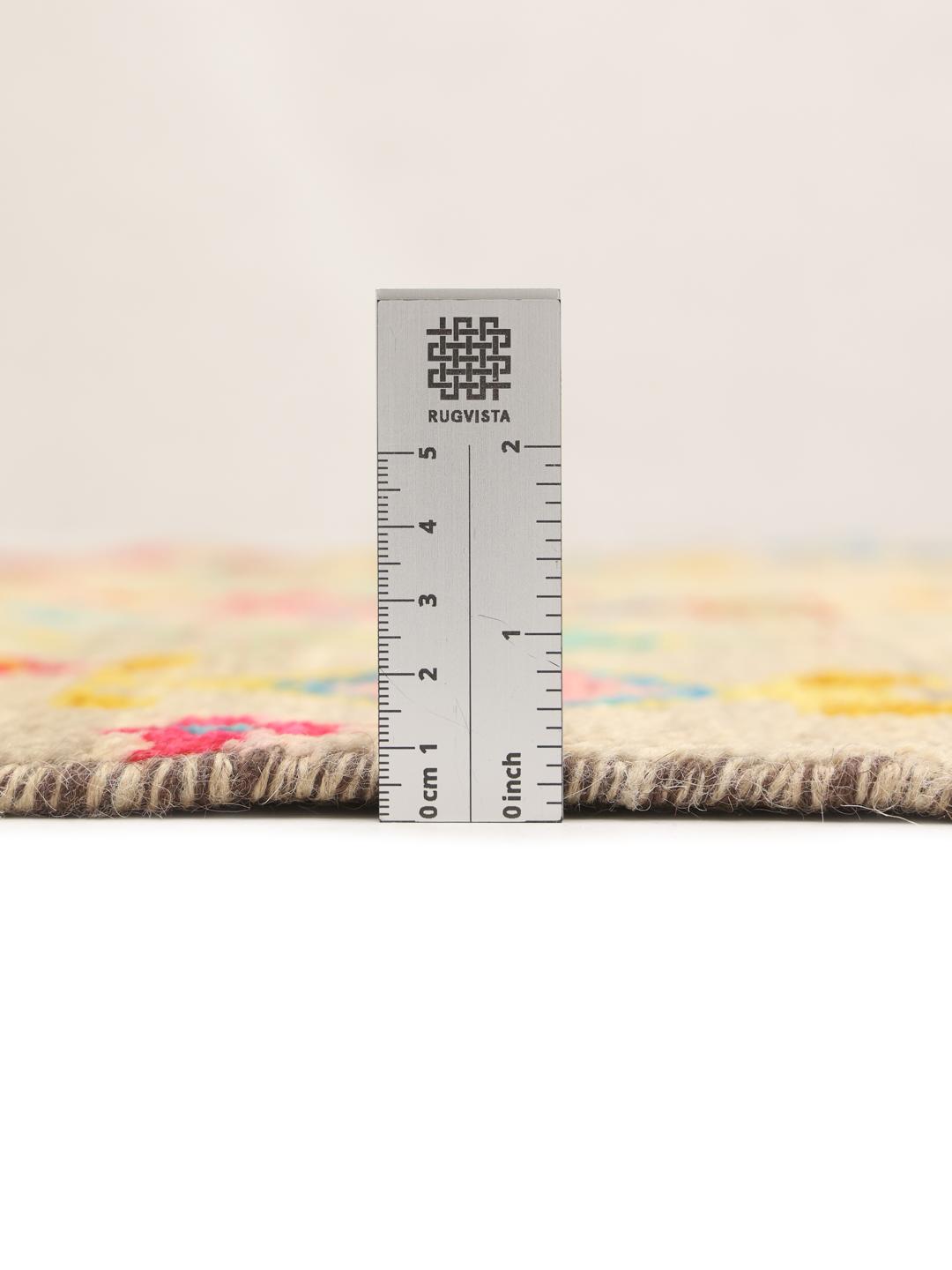
In the context of this Middle Eastern-made runner, the craft has evolved to incorporate the local penchant for robust, high-quality wool. The hand-knotted technique is a labour-intensive process that involves tying individual strands of wool onto a foundation. This method is the hallmark of quality in the region, as it allows for intricate designs and a pile that is exceptionally resistant to wear.
The visual language of this rug is defined by its geometric diamond motifs, often referred to as 'guls' or tribal symbols in various weaving traditions. These shapes are not merely decorative; they often serve as a visual lexicon for the weaver, representing protection, fertility, or the natural world. The use of bright, contrasting colours against a neutral field is a stylistic choice that highlights the playfulness of the maker.
Collectors value these rugs for their authenticity and the heritage they represent. When you bring a rug like this into your home, you are participating in a tradition that has survived for centuries. It stands as a testament to the skill of the weaver and the endurance of a craft that values human intuition and natural materials over industrial speed.