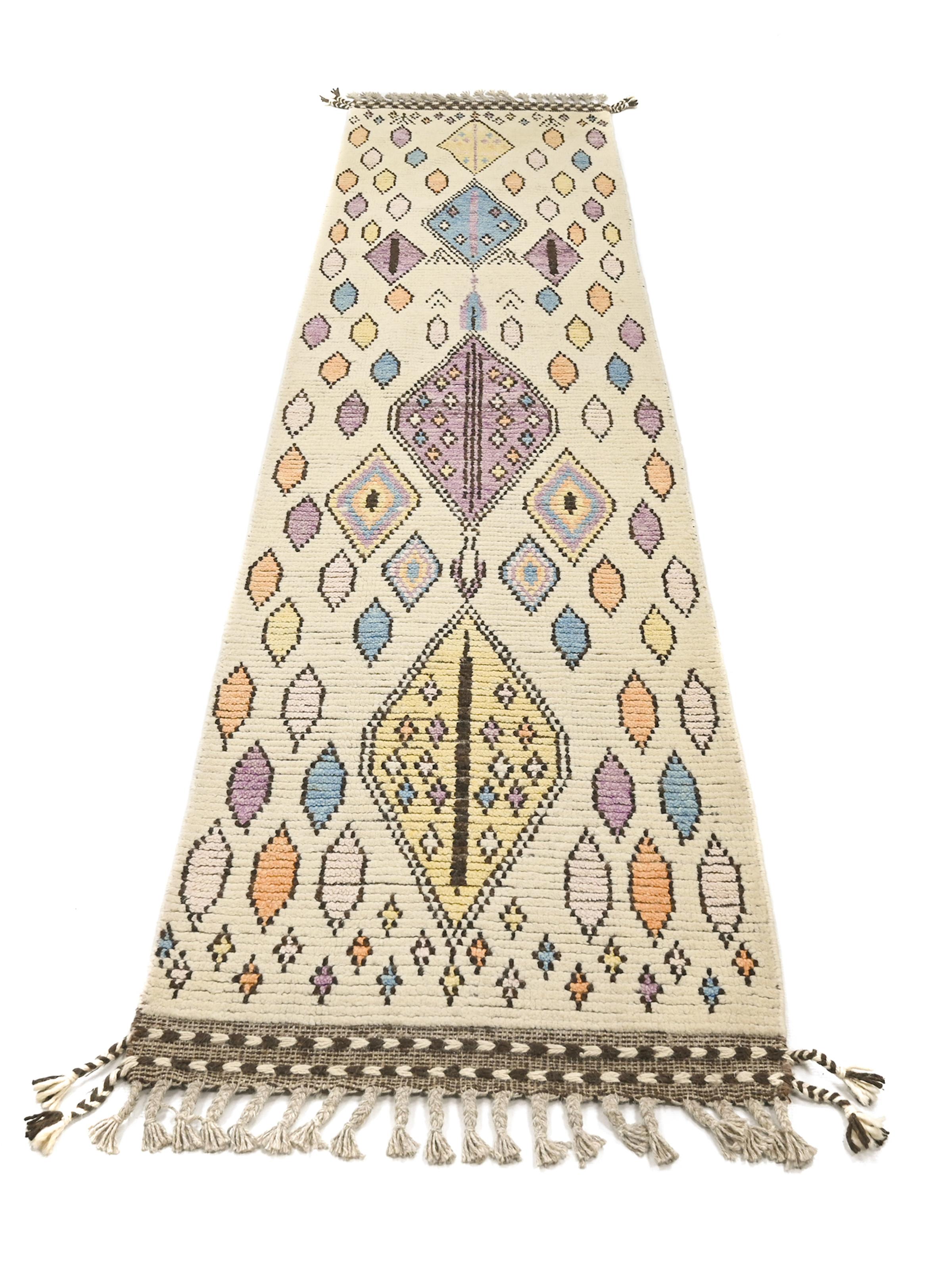
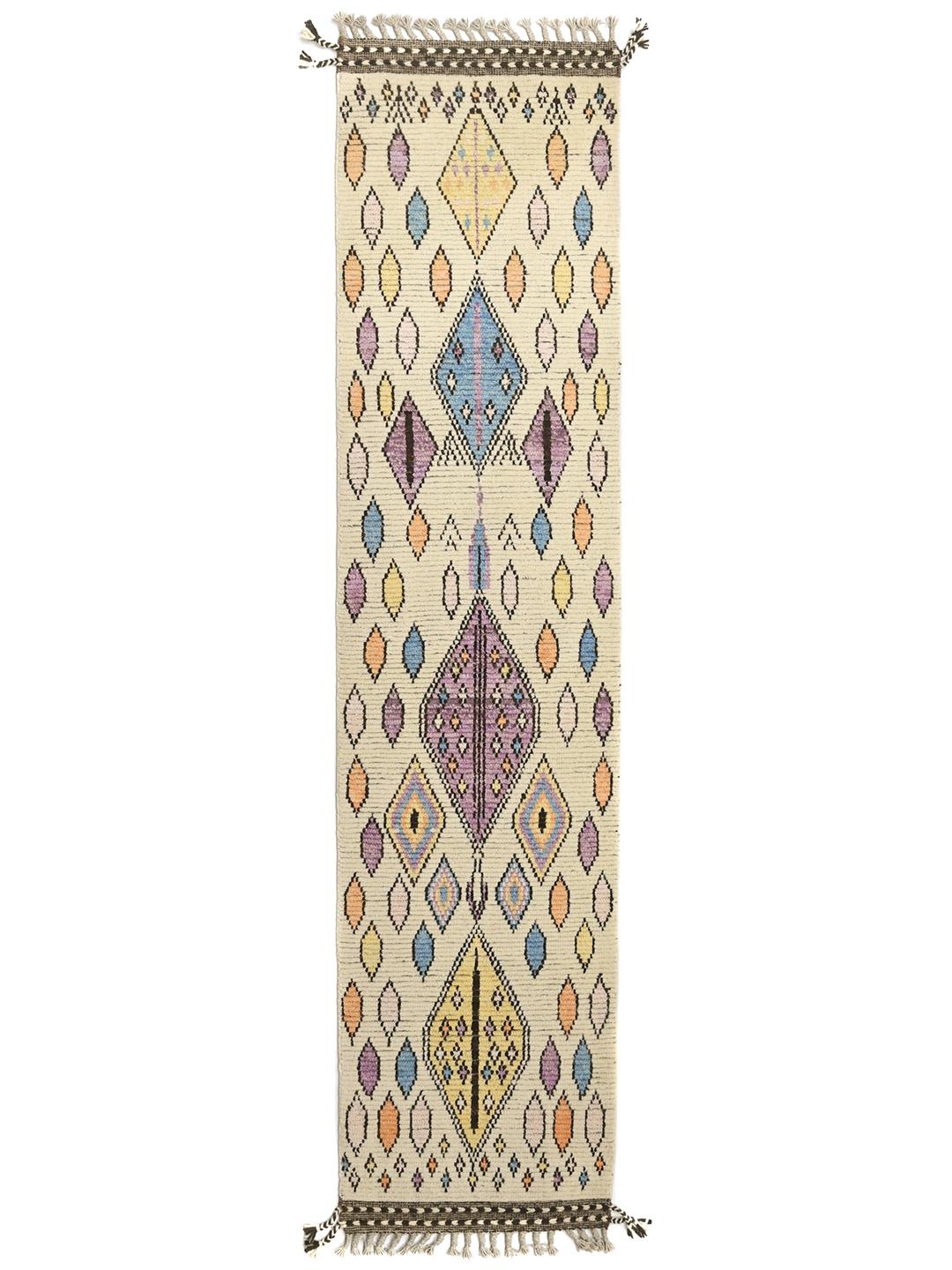
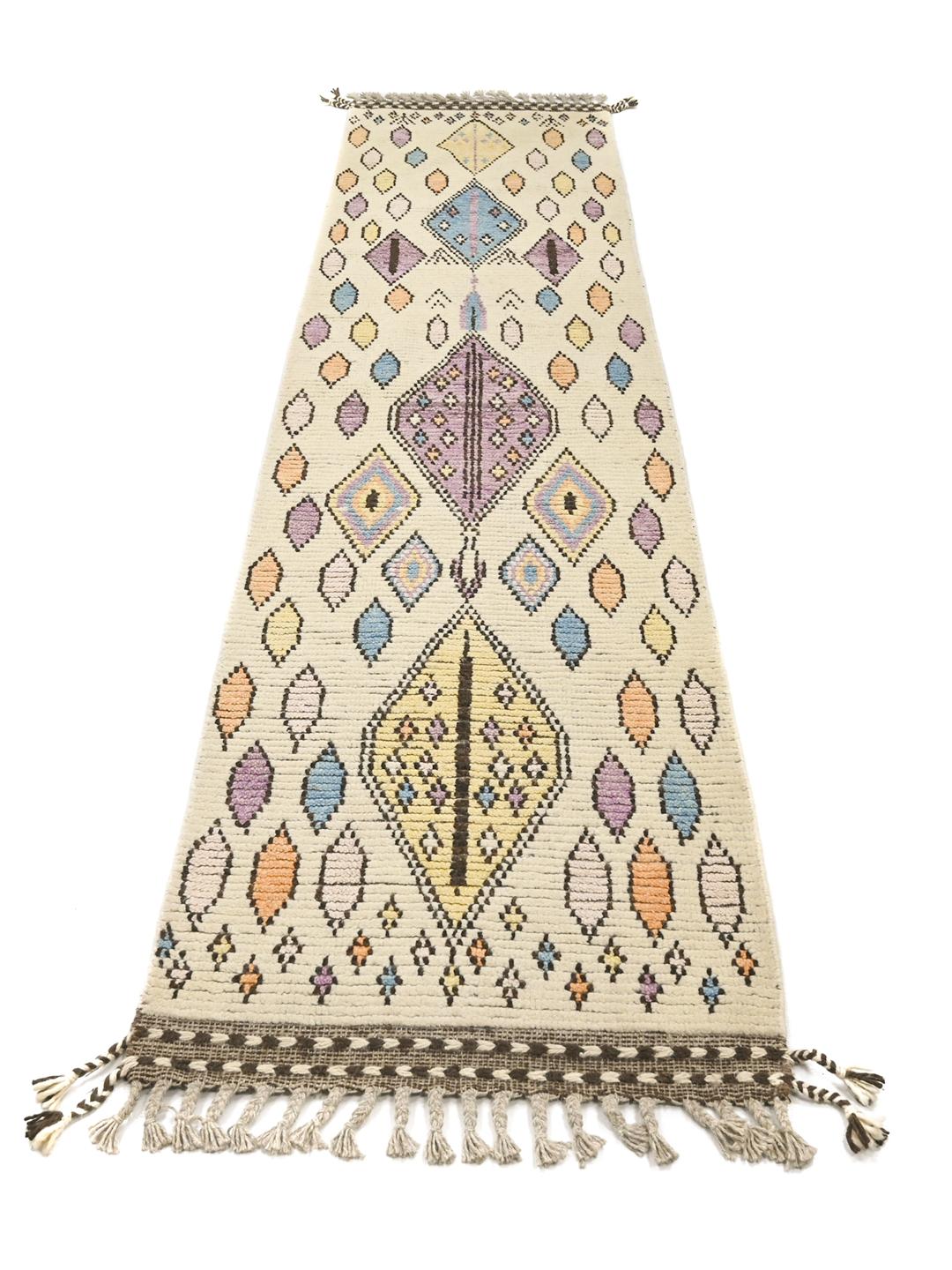
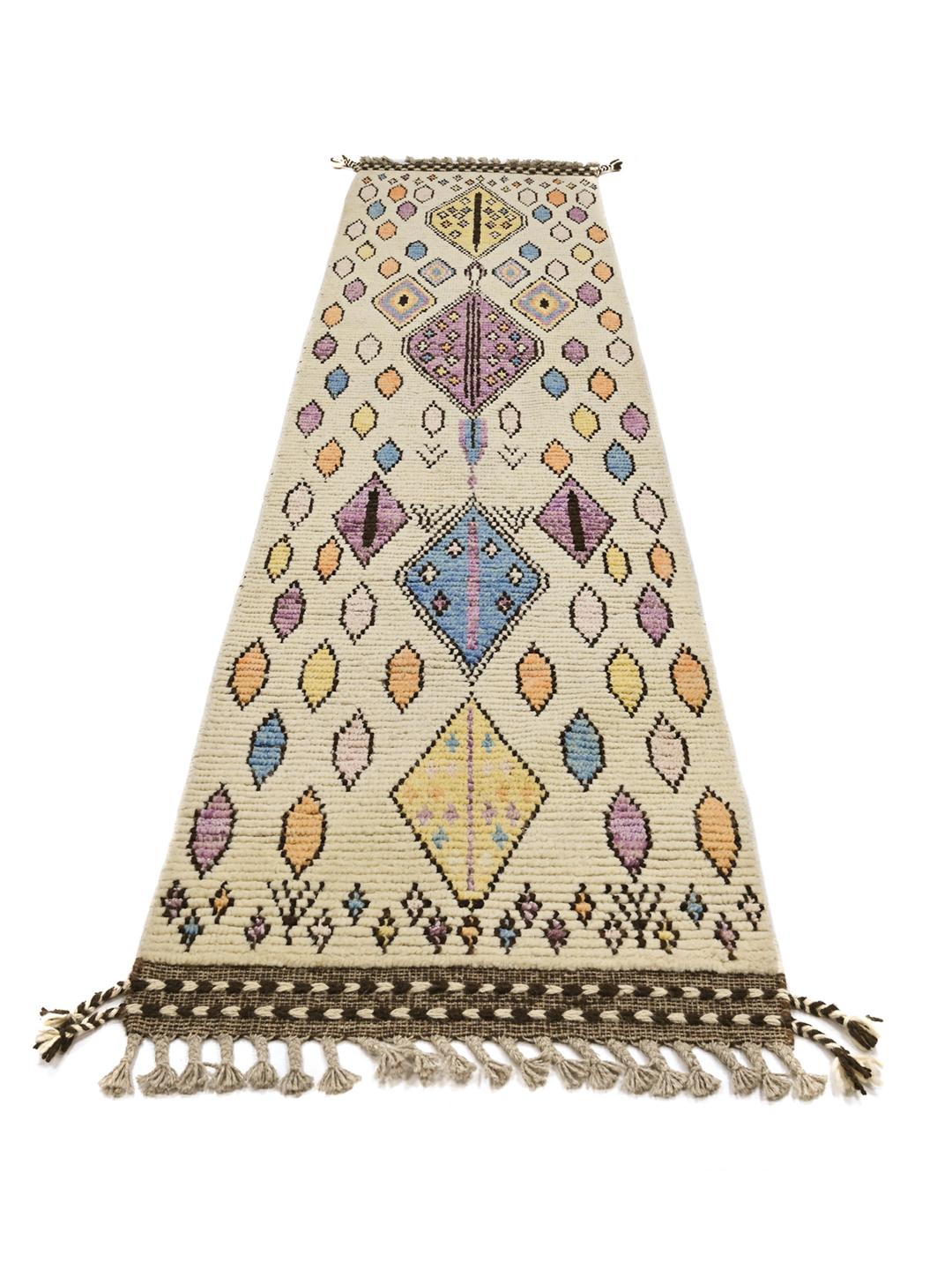
Berber rug traditions originated among the indigenous tribes of North Africa, renowned for their simple, expressive geometric motifs on neutral wool fields. Over time, these weaving methods spread across regional craft hubs, inspiring artisans throughout Central and South Asia to weave colorful variations that blend traditional tribal symbols with local craft techniques.
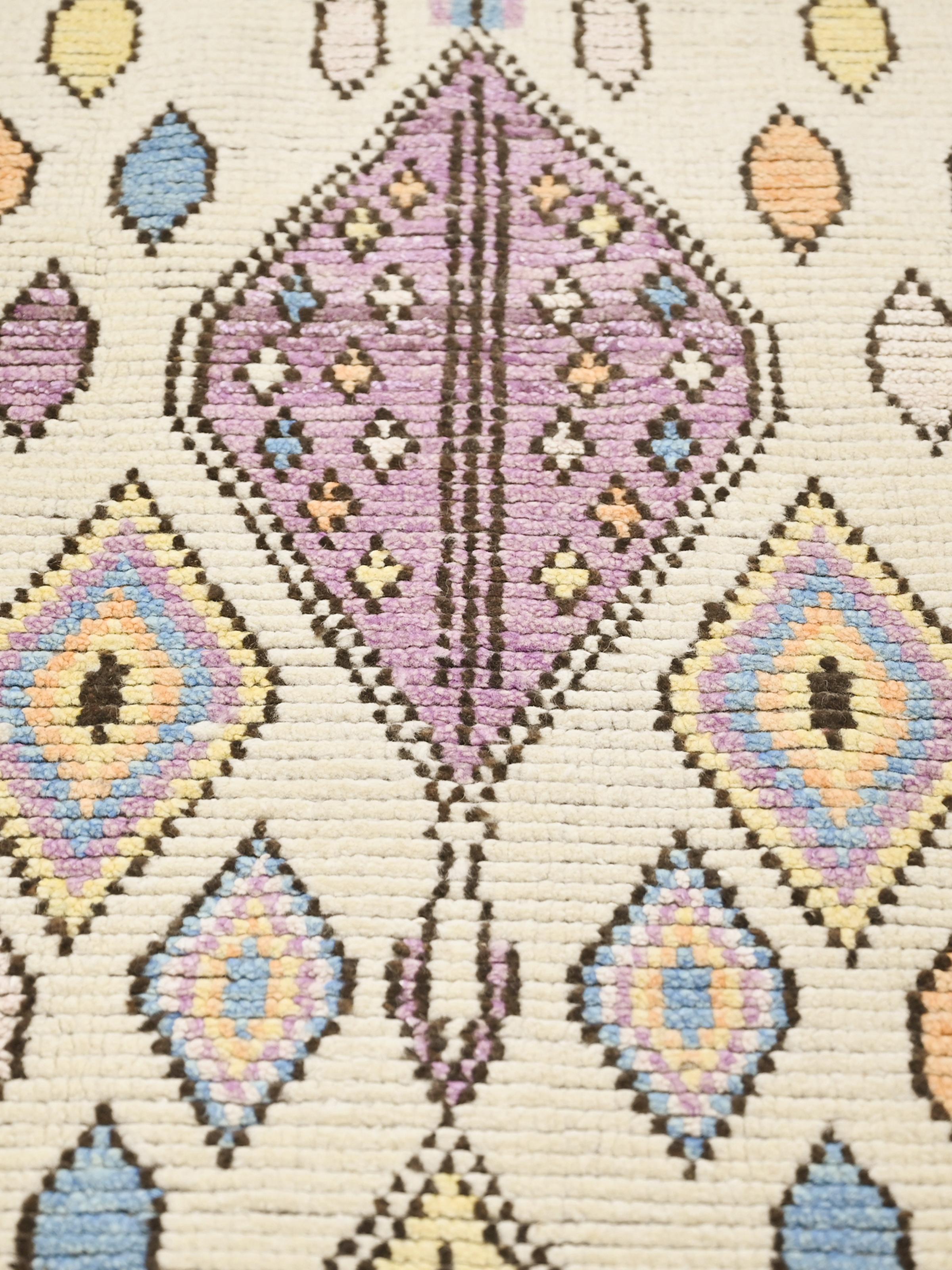
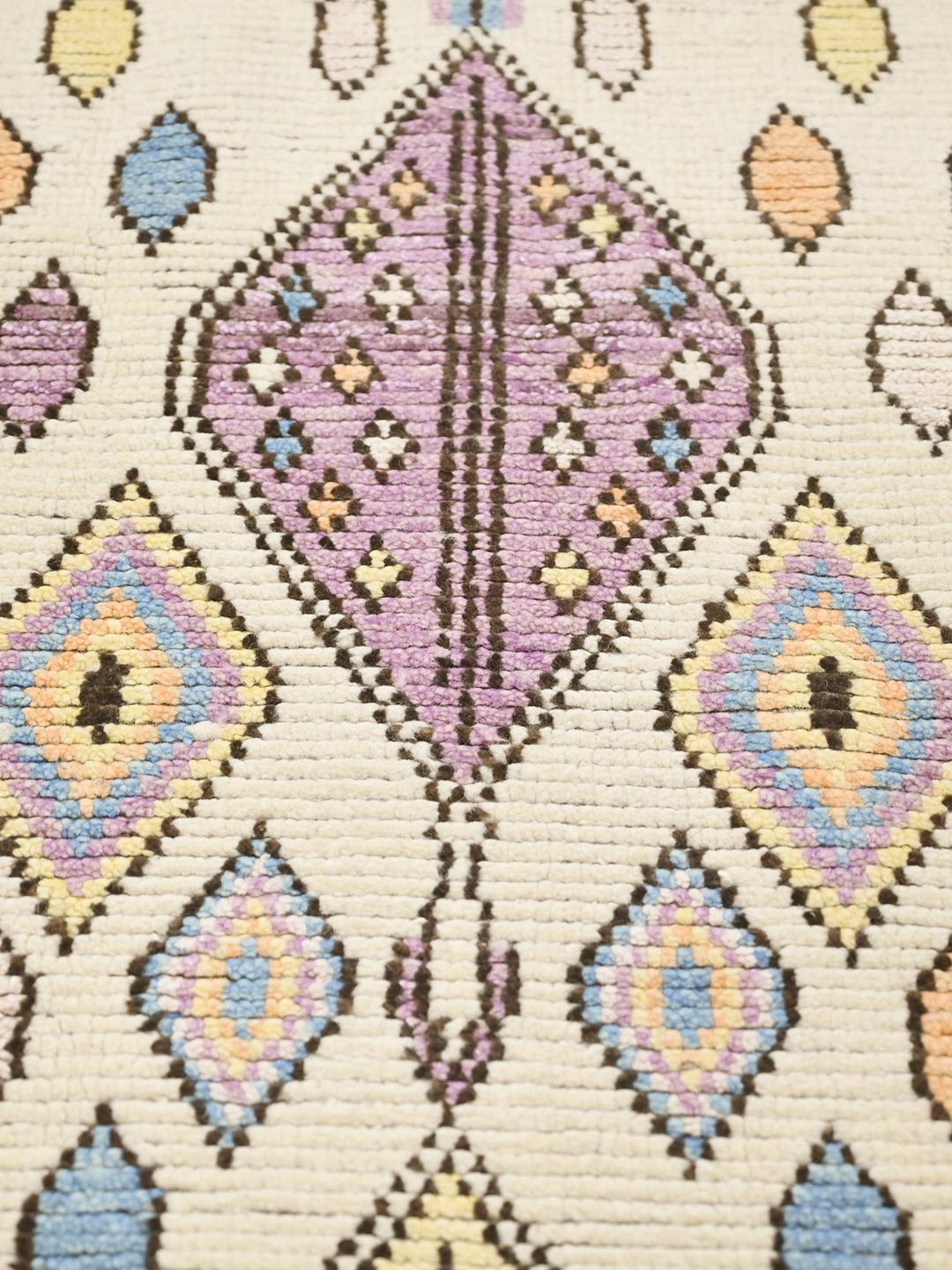
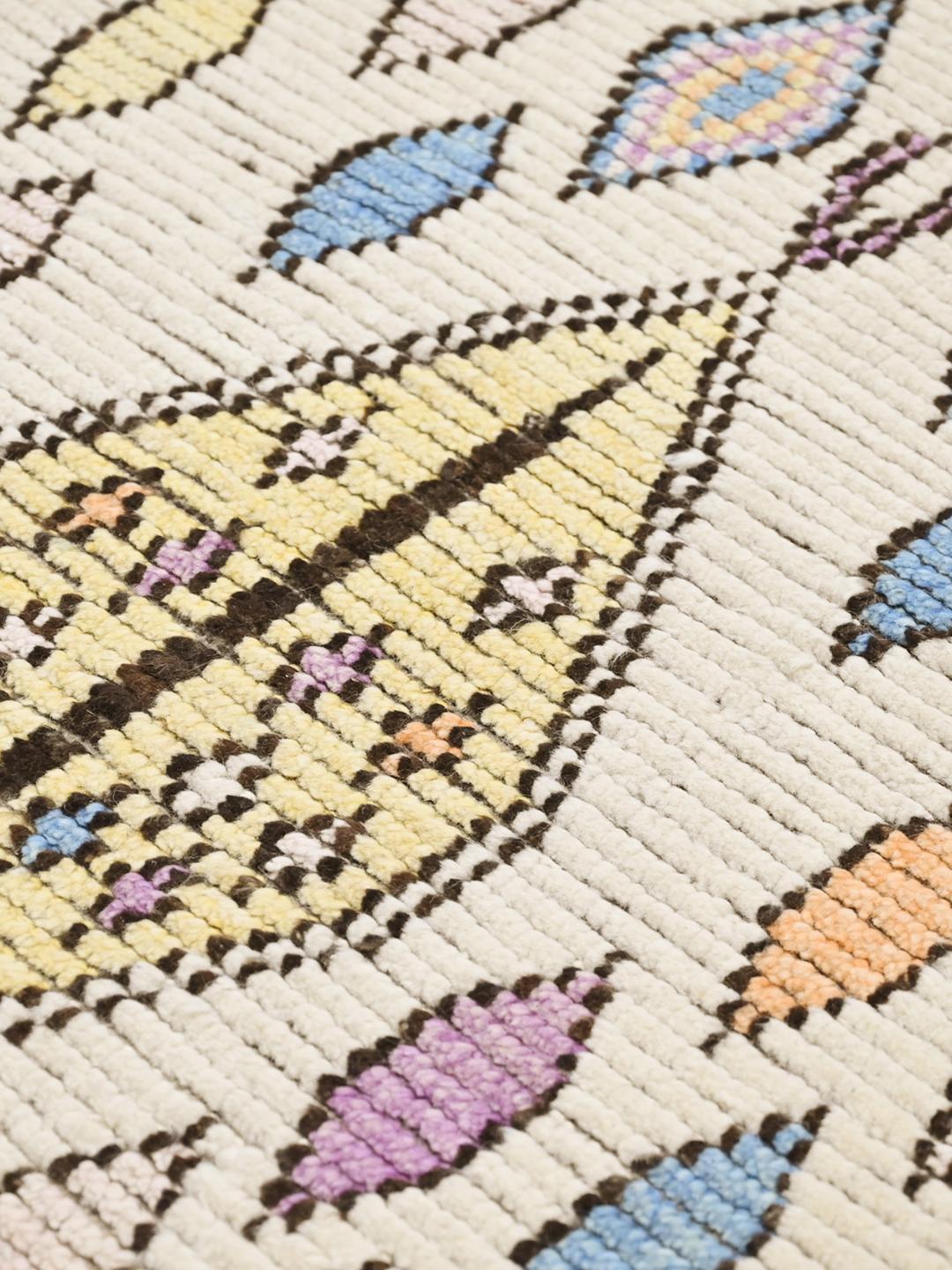
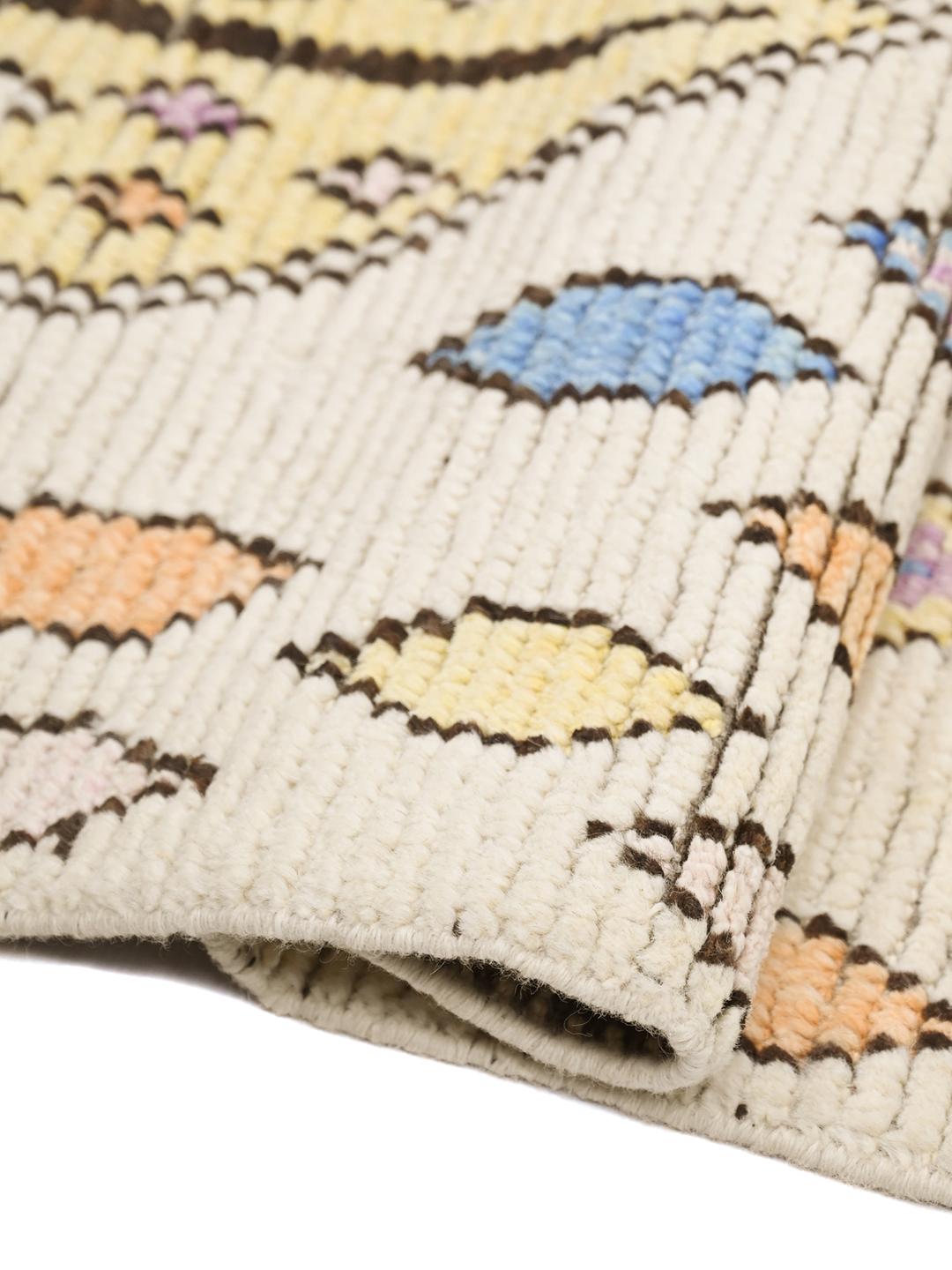
Hand-knotting is one of the oldest decorative textile methods in existence. By securing individual tufts of wool around warp threads row by row, weavers create a dense pile that holds detailed patterns while offering exceptional physical resilience over decades of use.
The signature design elements of this runner lie in its repeating diamond motifs and lozenge shapes. Historically, these geometric patterns were used to symbolize protection, prosperity, and natural landscapes, while the bright hits of blue, yellow, and orange add a contemporary energy to the traditional beige backdrop.
Owning a hand-knotted Afghan rug connects your space to centuries of textile art. Collectors and interior enthusiasts value these pieces for their authenticity, hand-spun texture, and the unique artistic decisions captured within every woven row.