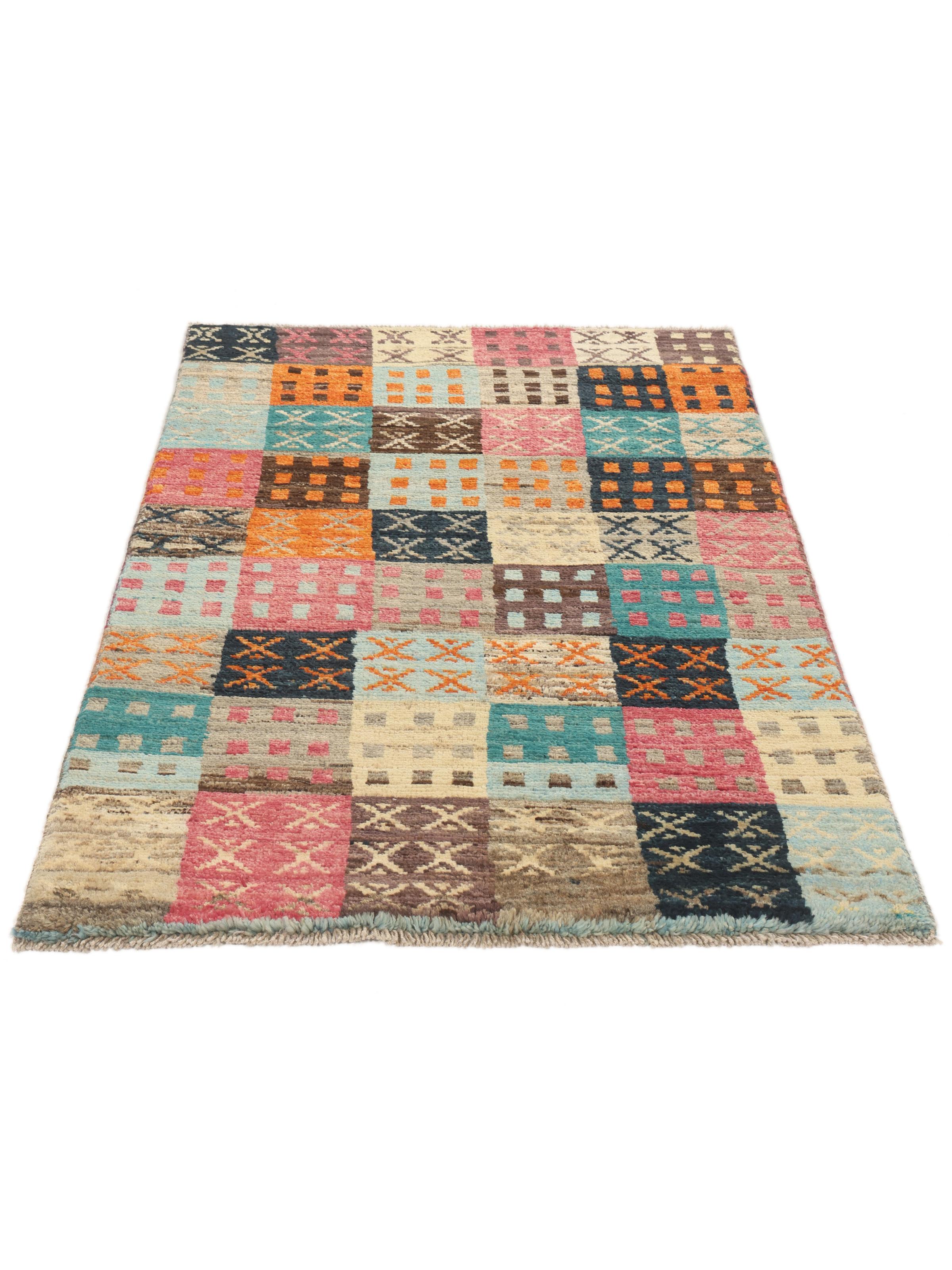
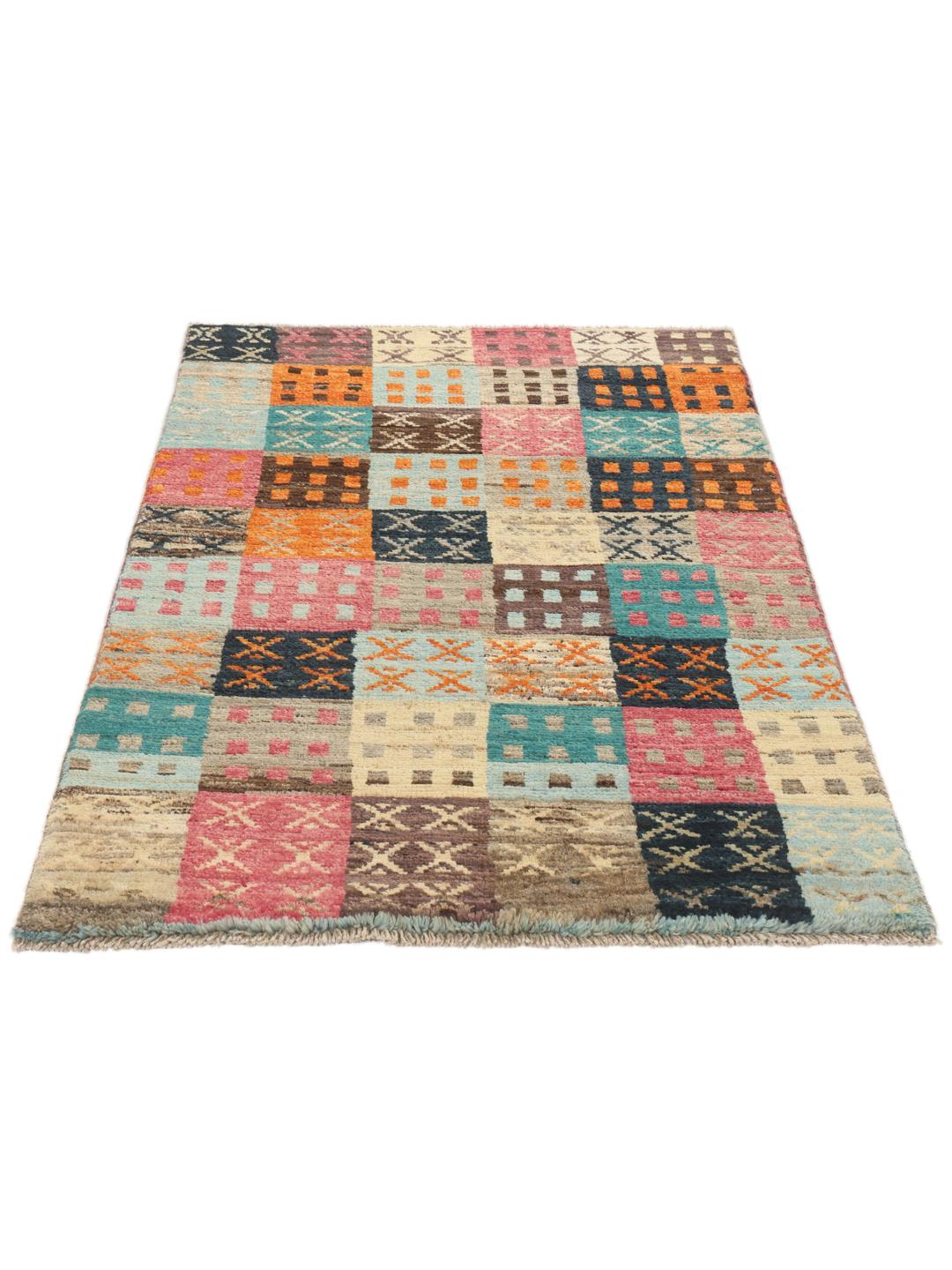
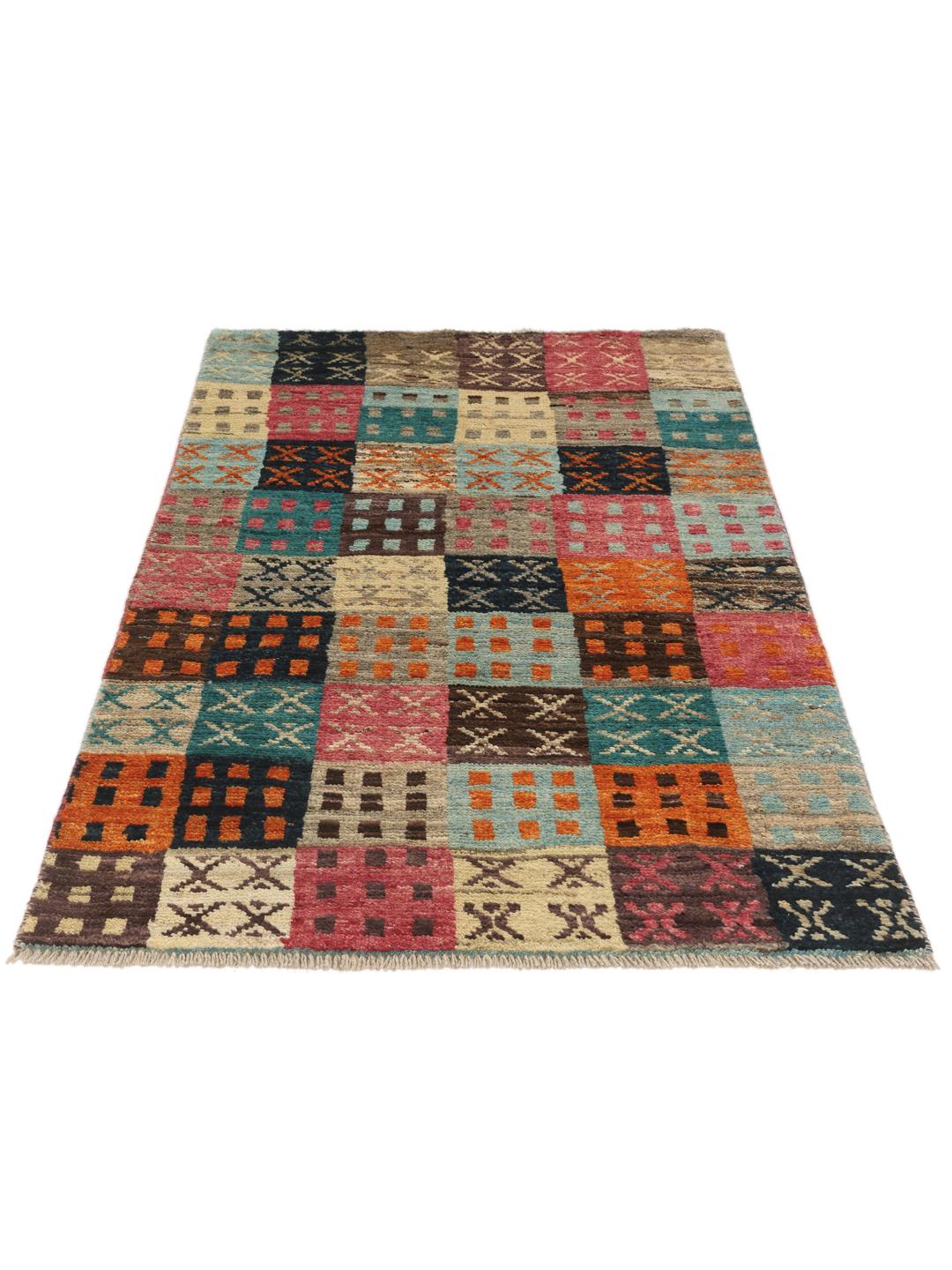
Berber-style rugs trace their origins to the nomadic tribes of North Africa, where they were traditionally woven for utility and protection against the elements. Over generations, these weaving traditions have travelled and evolved, finding a new home in the craft centres of Afghanistan. Today, Afghan artisans have embraced these tribal influences, infusing them with their own regional aesthetic and local Wool traditions to create something entirely new.
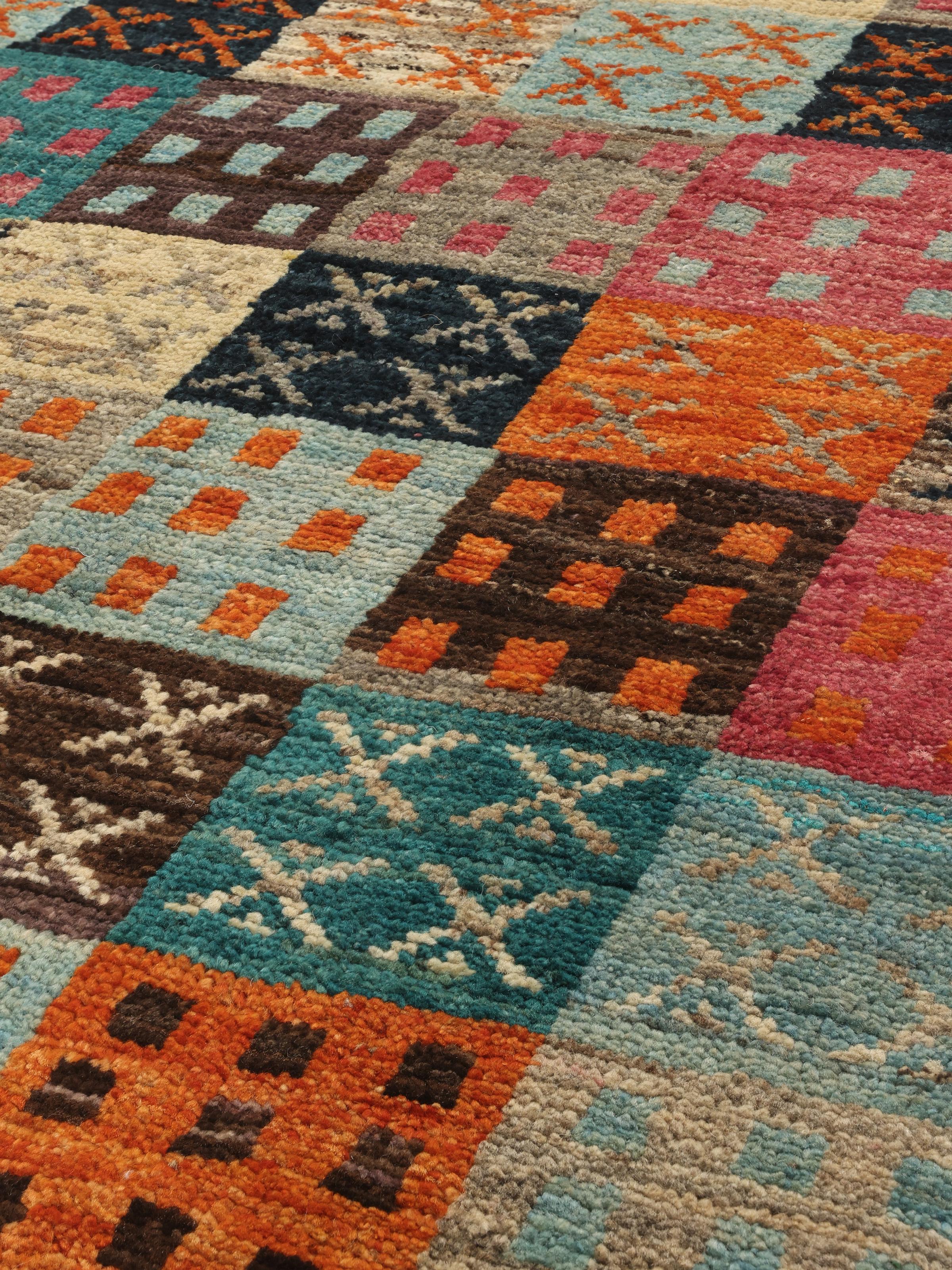
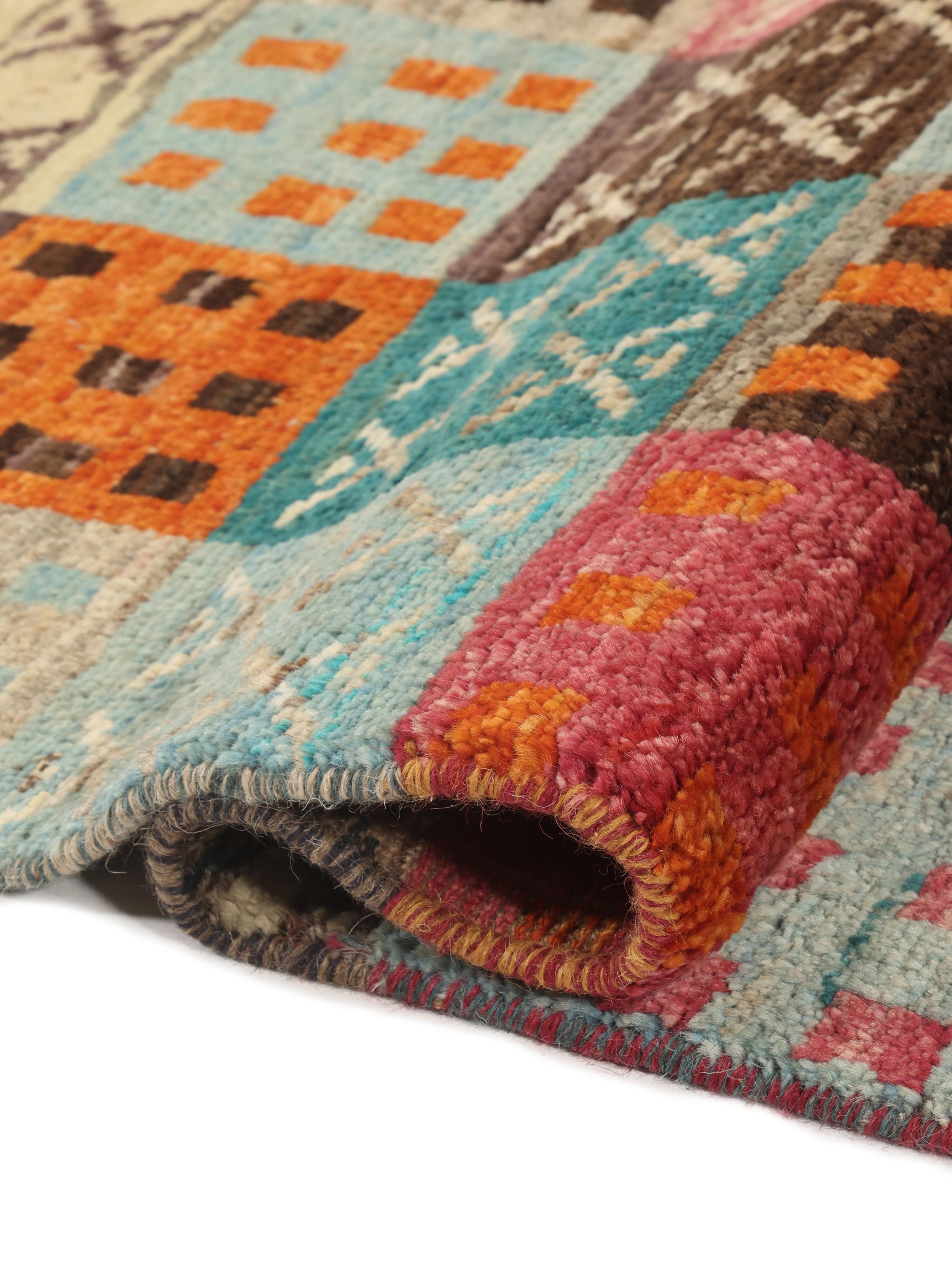
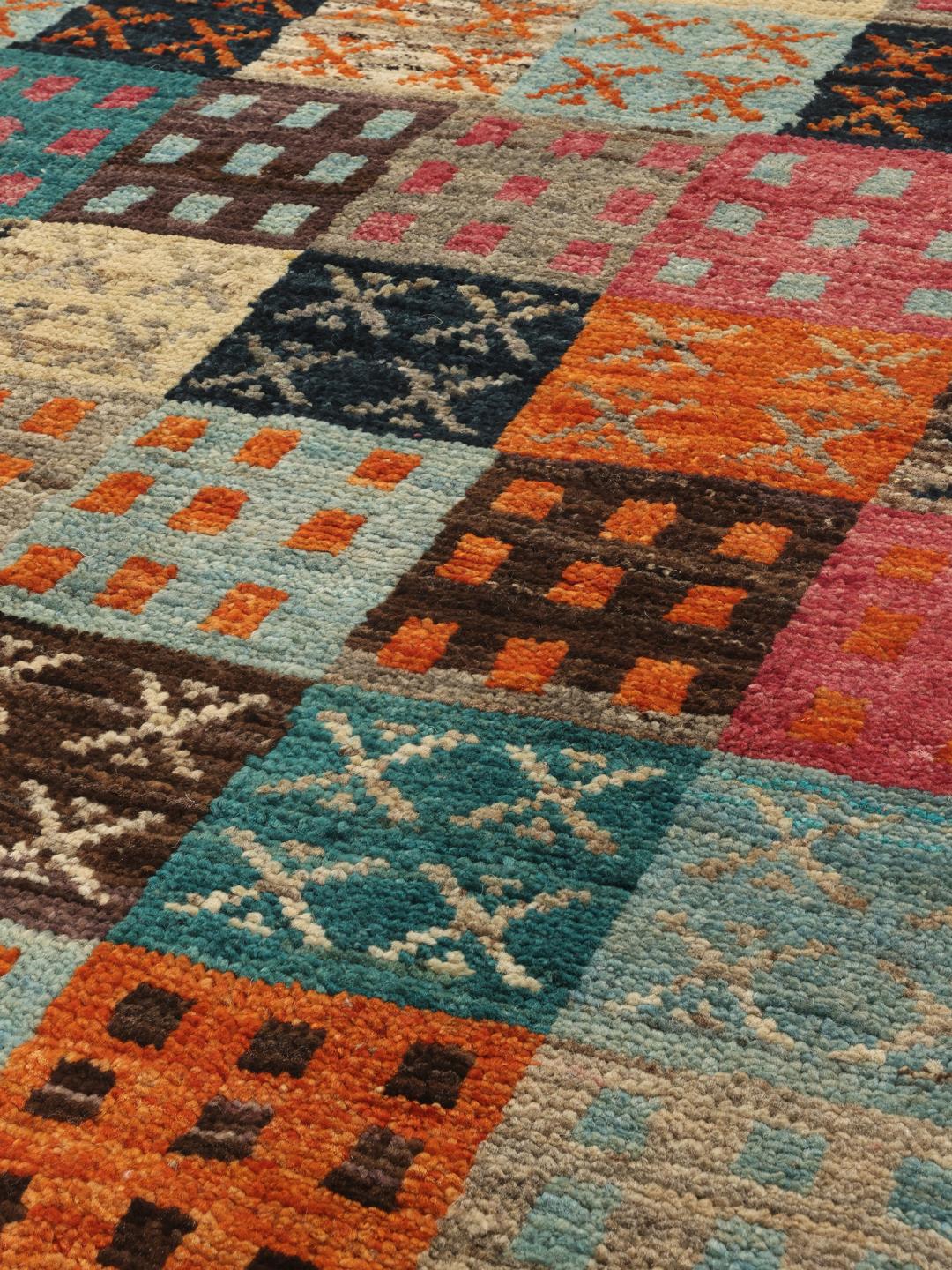
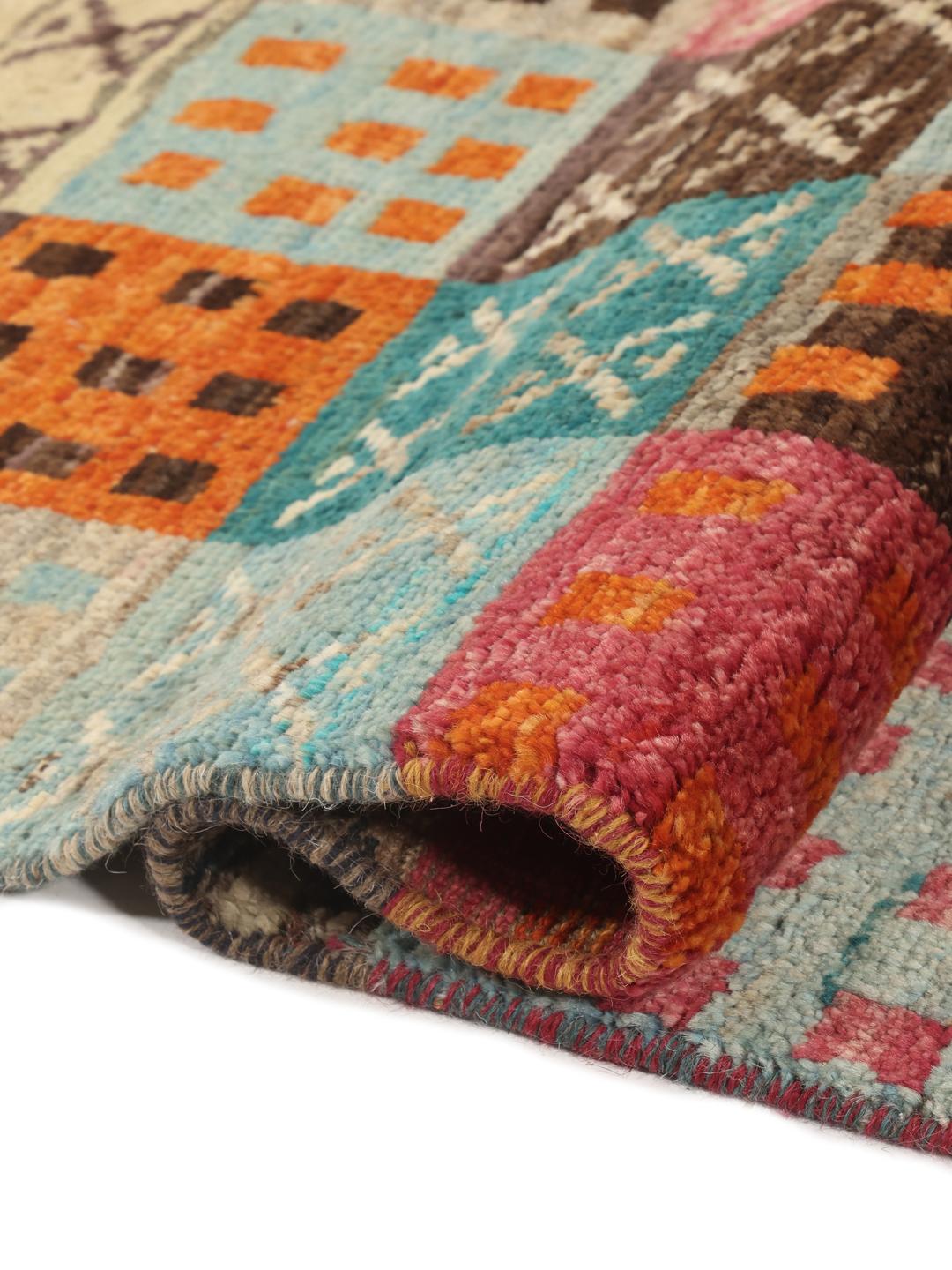
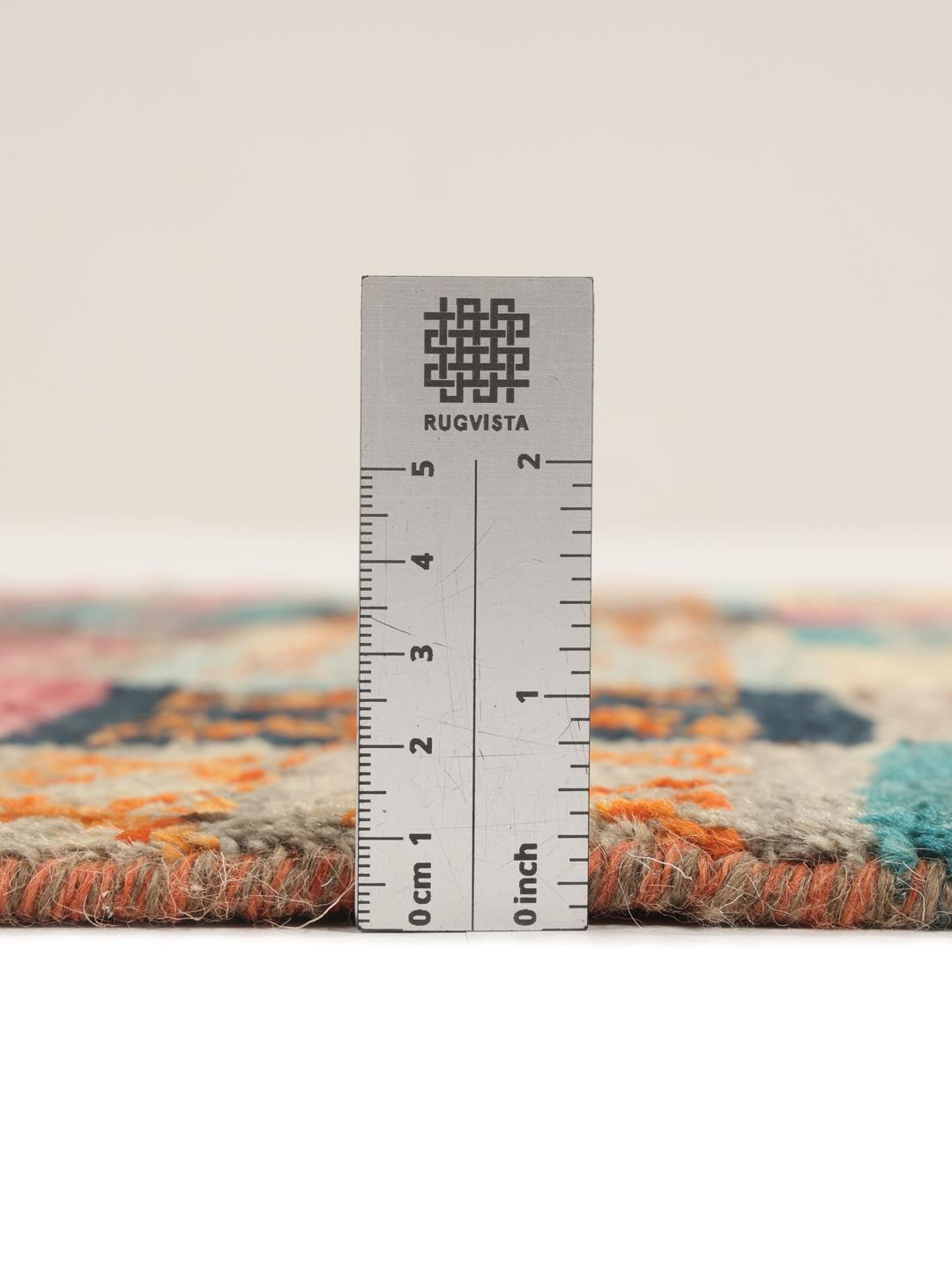
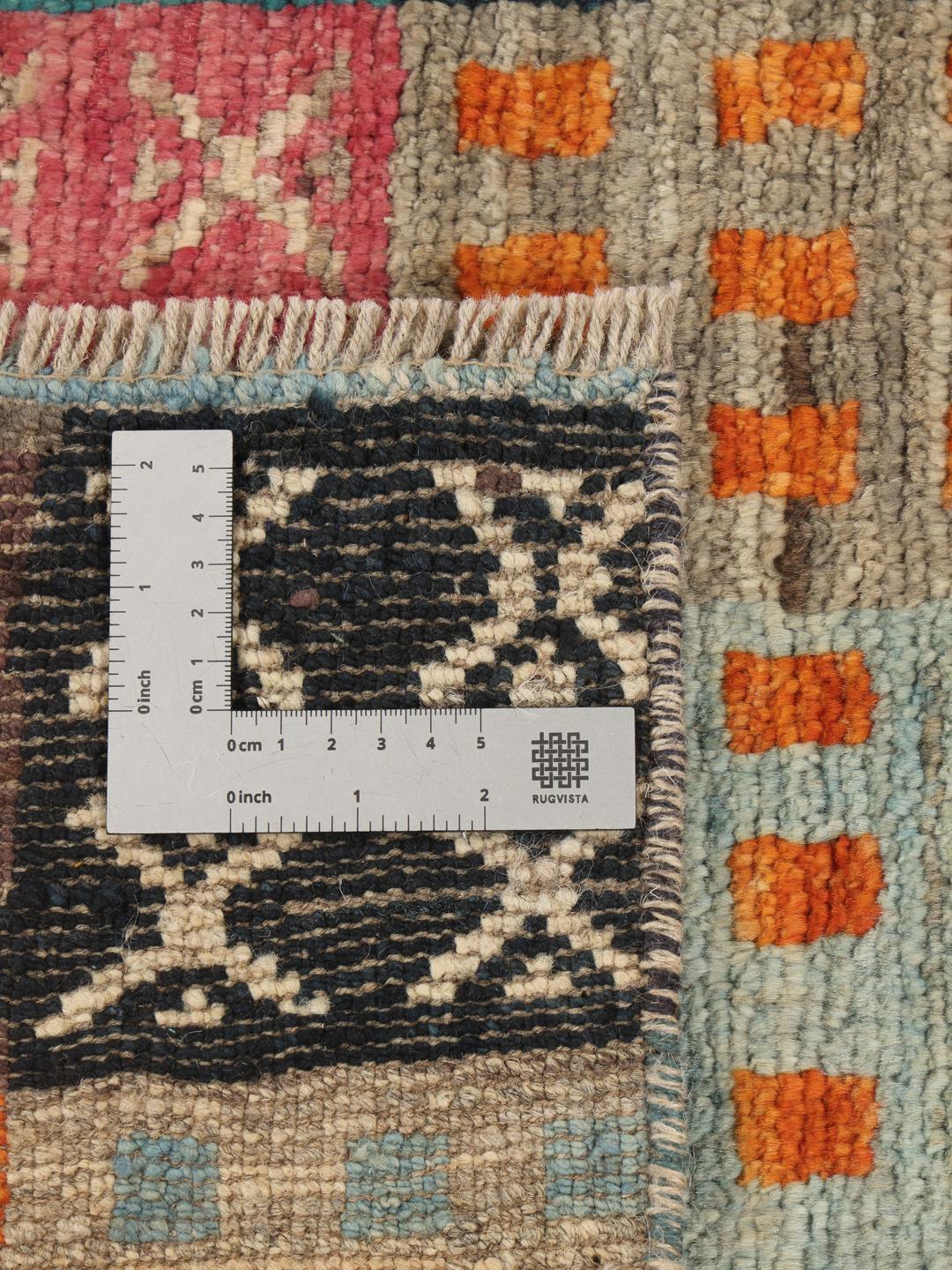
The term 'hand-knotted' refers to the most traditional and labour-intensive way to build a rug. Each individual knot is tied by hand onto the foundation, a process that creates a highly durable structure. This method allows for the complex, varied patterns seen here, as the weaver can change colours and motifs with every single knot, resulting in a design that is integrated directly into the rug's fabric.
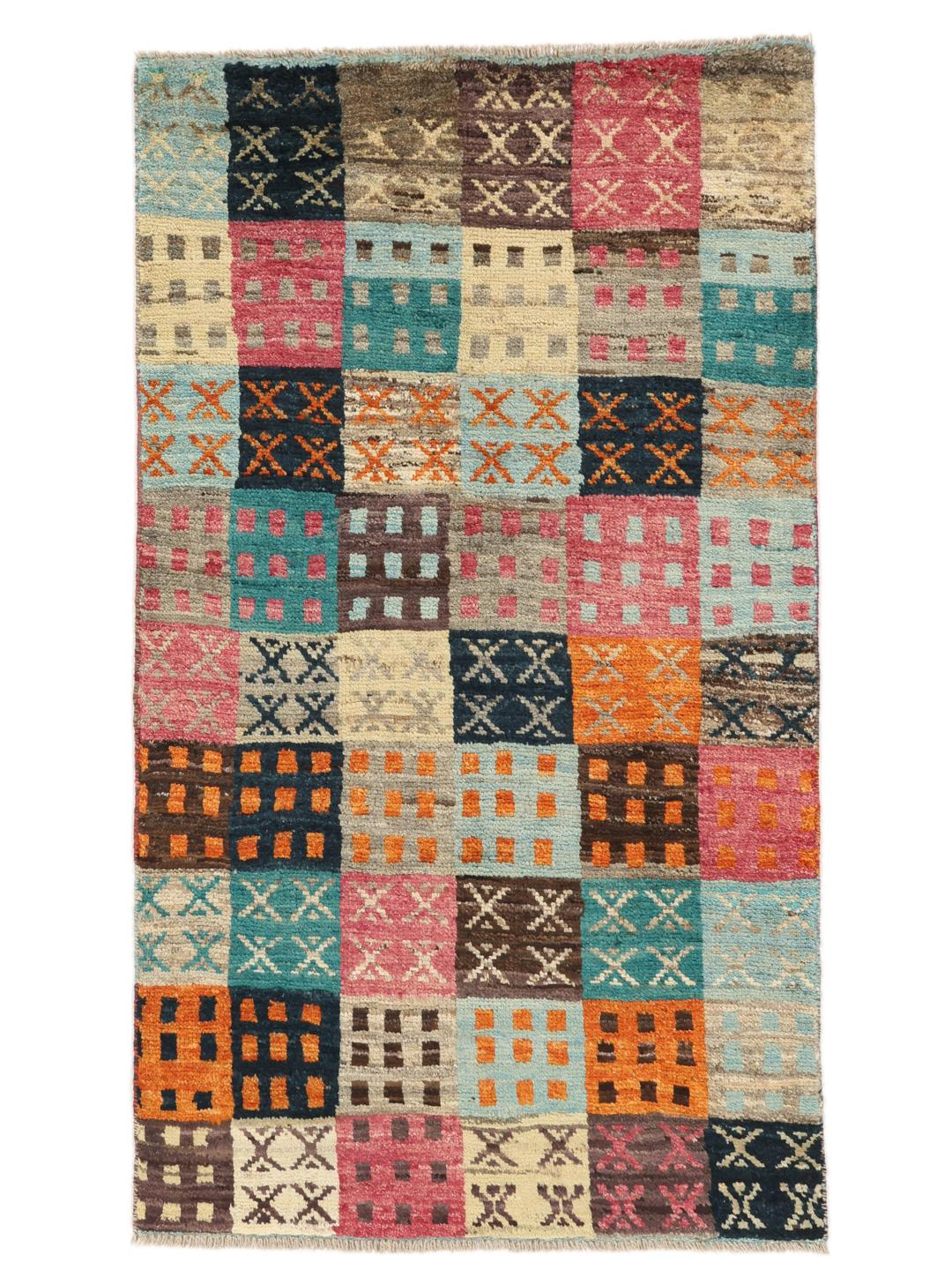
The visual language of this rug centres on geometric motifs and a multicoloured patchwork layout. While traditional Berber designs often favour more neutral, earthy palettes, this piece embraces a bold, modern spectrum of colours. The repeating cross and block patterns are reminiscent of ancient tribal symbols, reimagined here in a way that feels fresh and perfectly suited for a contemporary home.
Acquiring a rug from this tradition is an investment in human skill and cultural heritage. These pieces are valued not only for their durability but for the story they tell of the weaver's patience and artistic choices. By choosing a one-of-a-kind rug, you are preserving a craft that prioritises quality and individuality over the uniformity of modern manufacturing.