The Berber tradition is deeply rooted in the history of North African and Middle Eastern weaving cultures. While the term Berber is historically associated with the indigenous peoples of North Africa, the style has evolved and been interpreted across various regions, including Afghanistan. These rugs are celebrated for their expressive, often geometric designs that have been passed down through generations of skilled weavers.
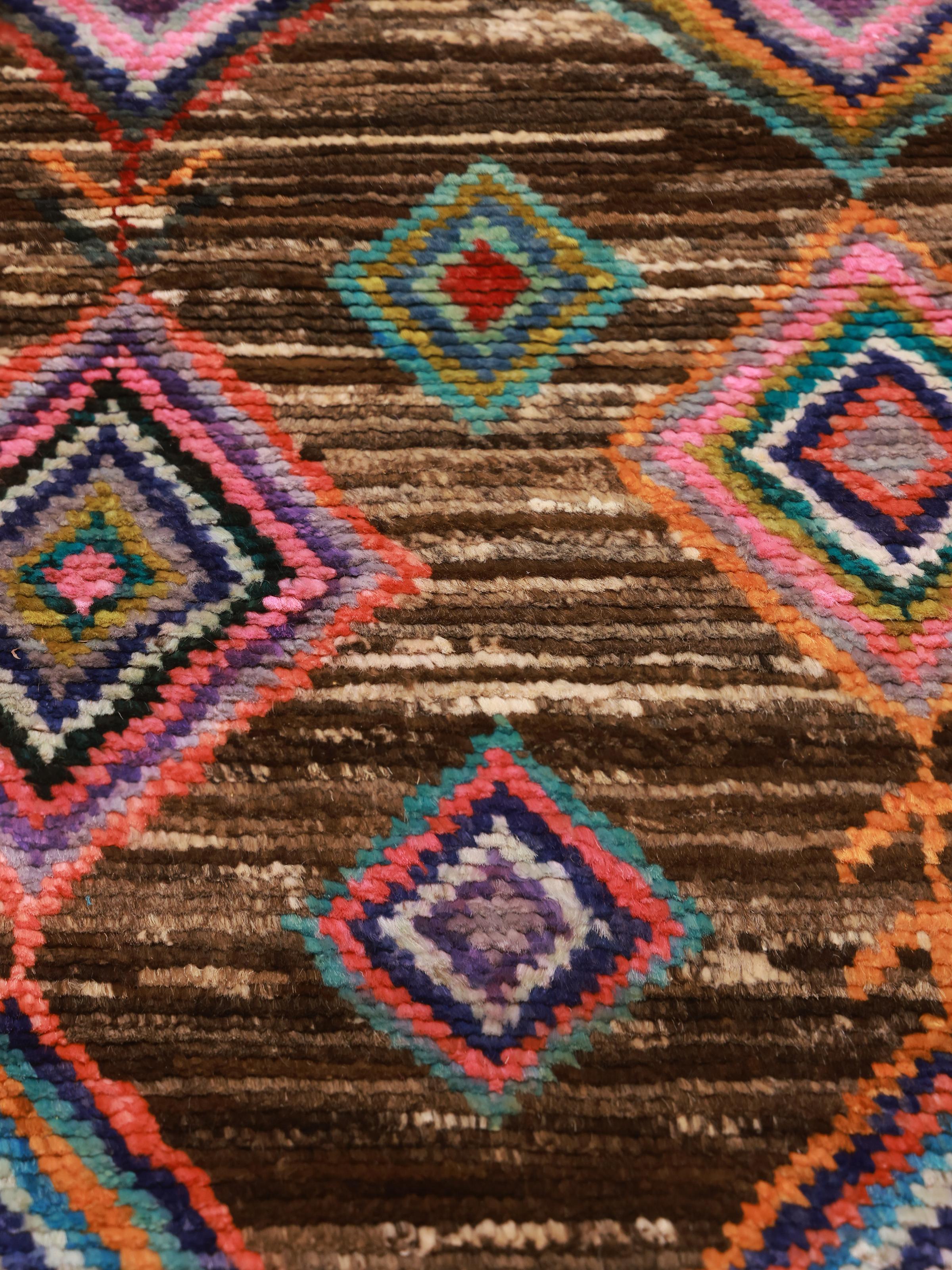
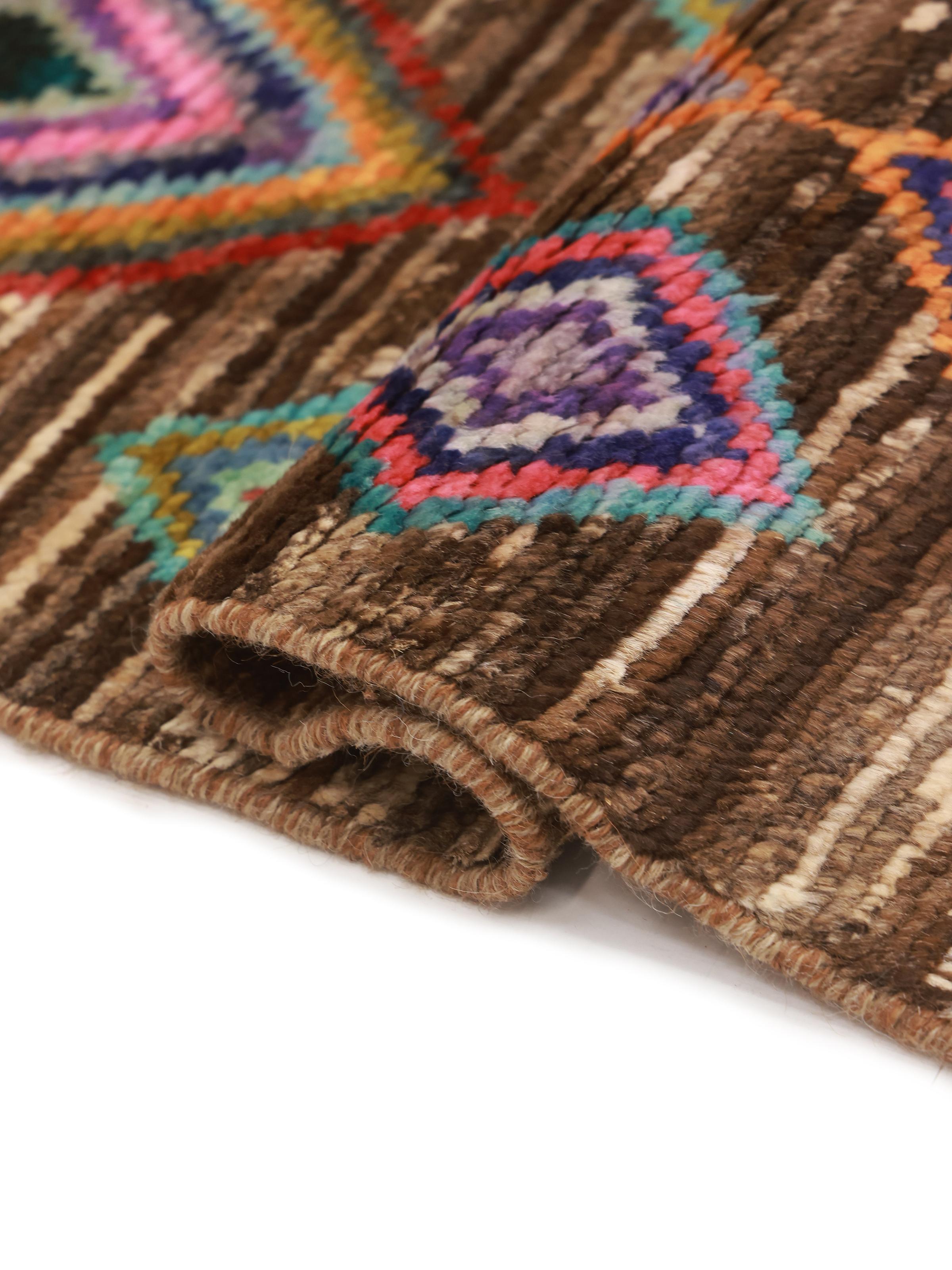
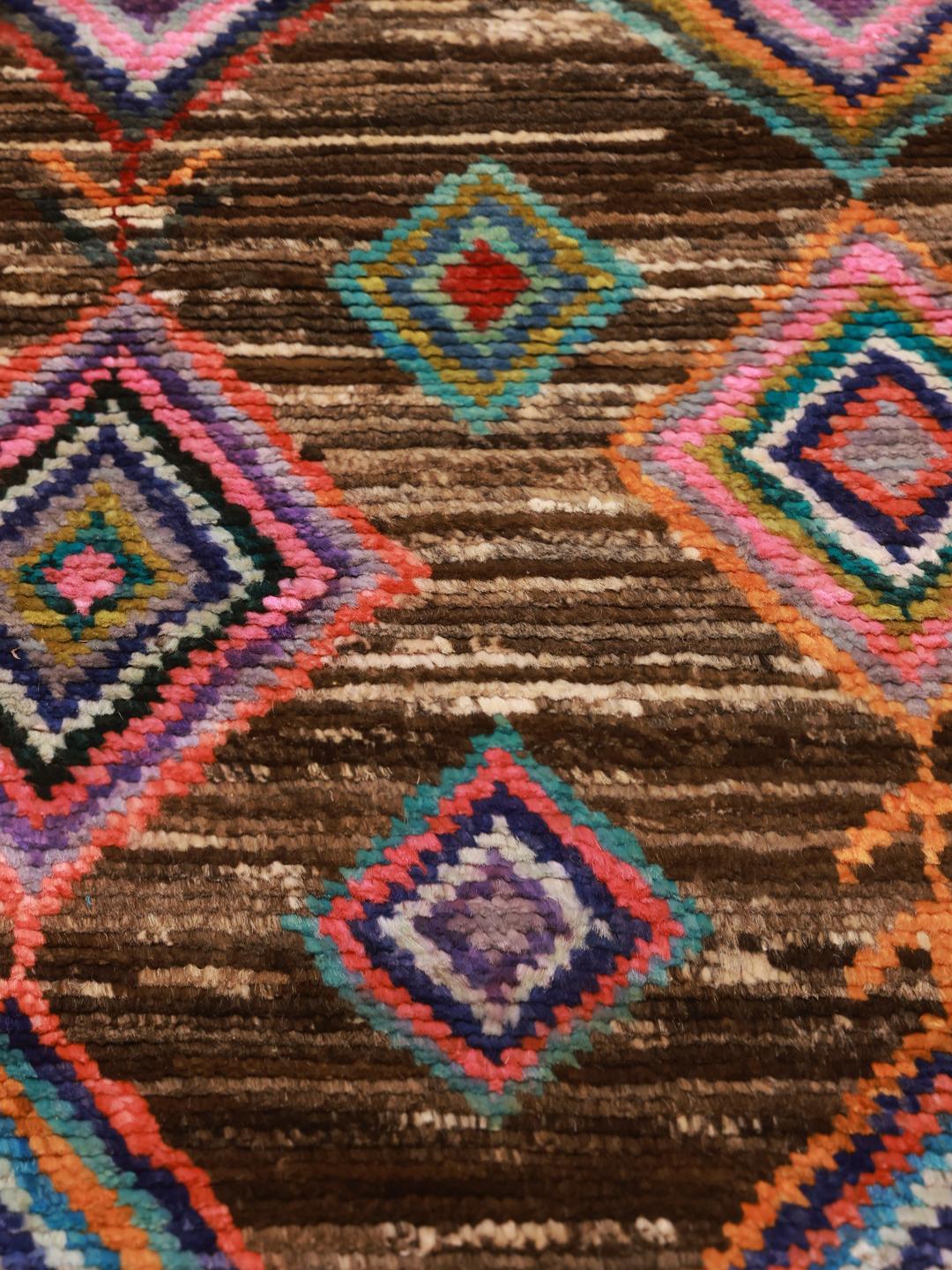
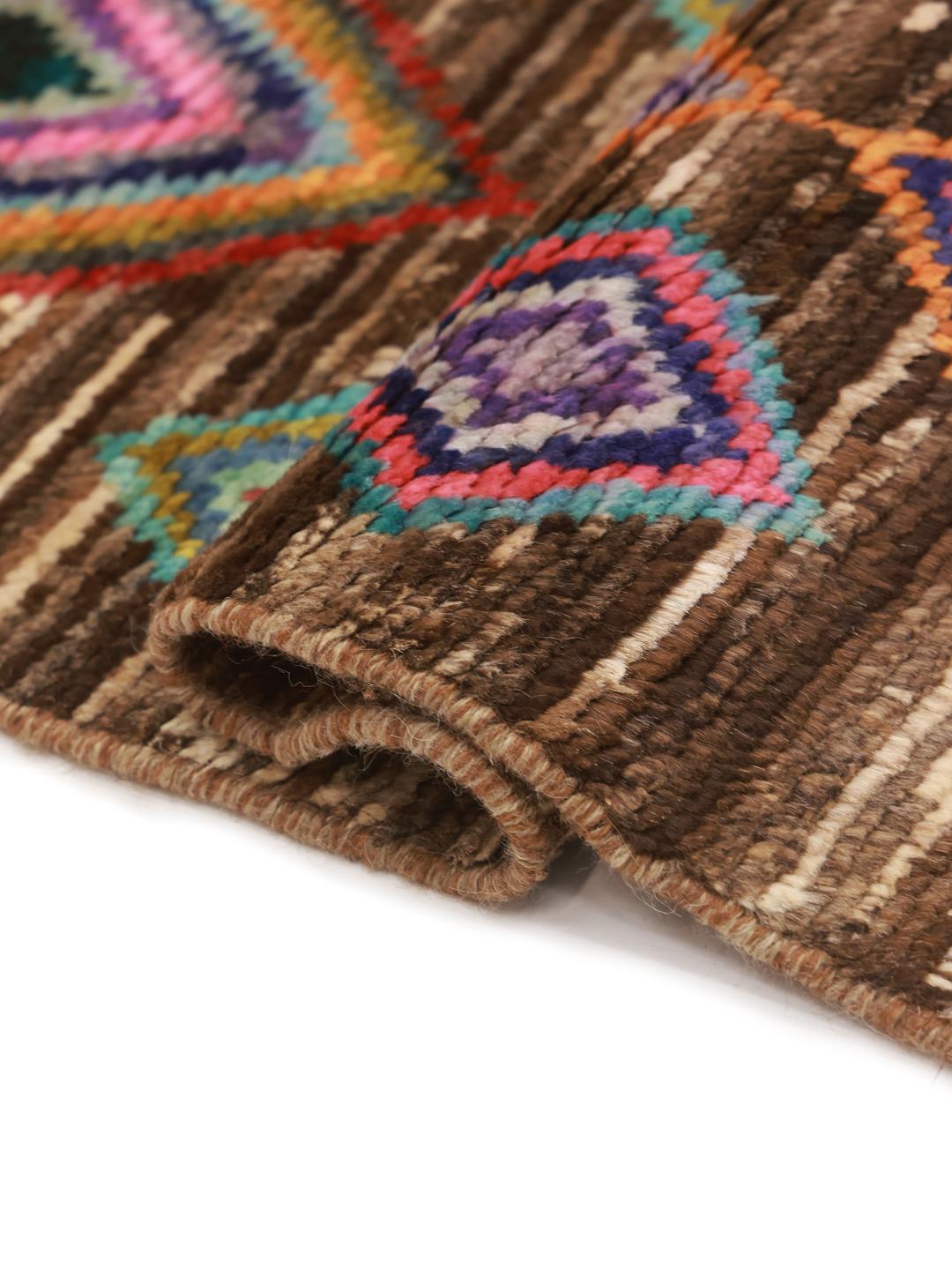
The craft of hand-knotting is a cornerstone of this tradition, where the quality of the rug is determined by the precision and density of the knots. A well-knotted rug is not only more durable but also showcases a sharper, more defined pattern. This technical expertise allows weavers to translate complex, creative ideas into a tangible medium that can endure for decades, providing both beauty and utility.
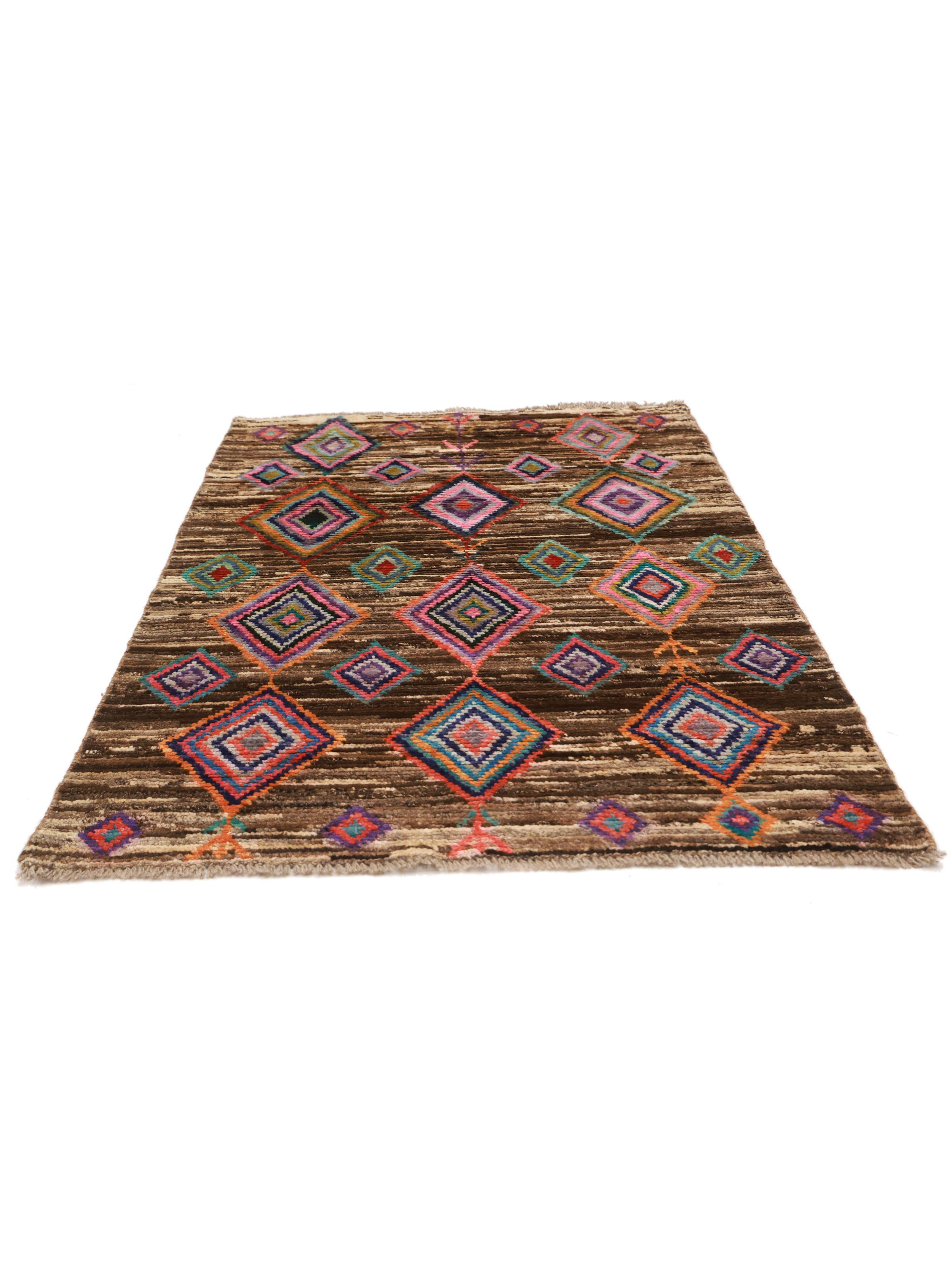
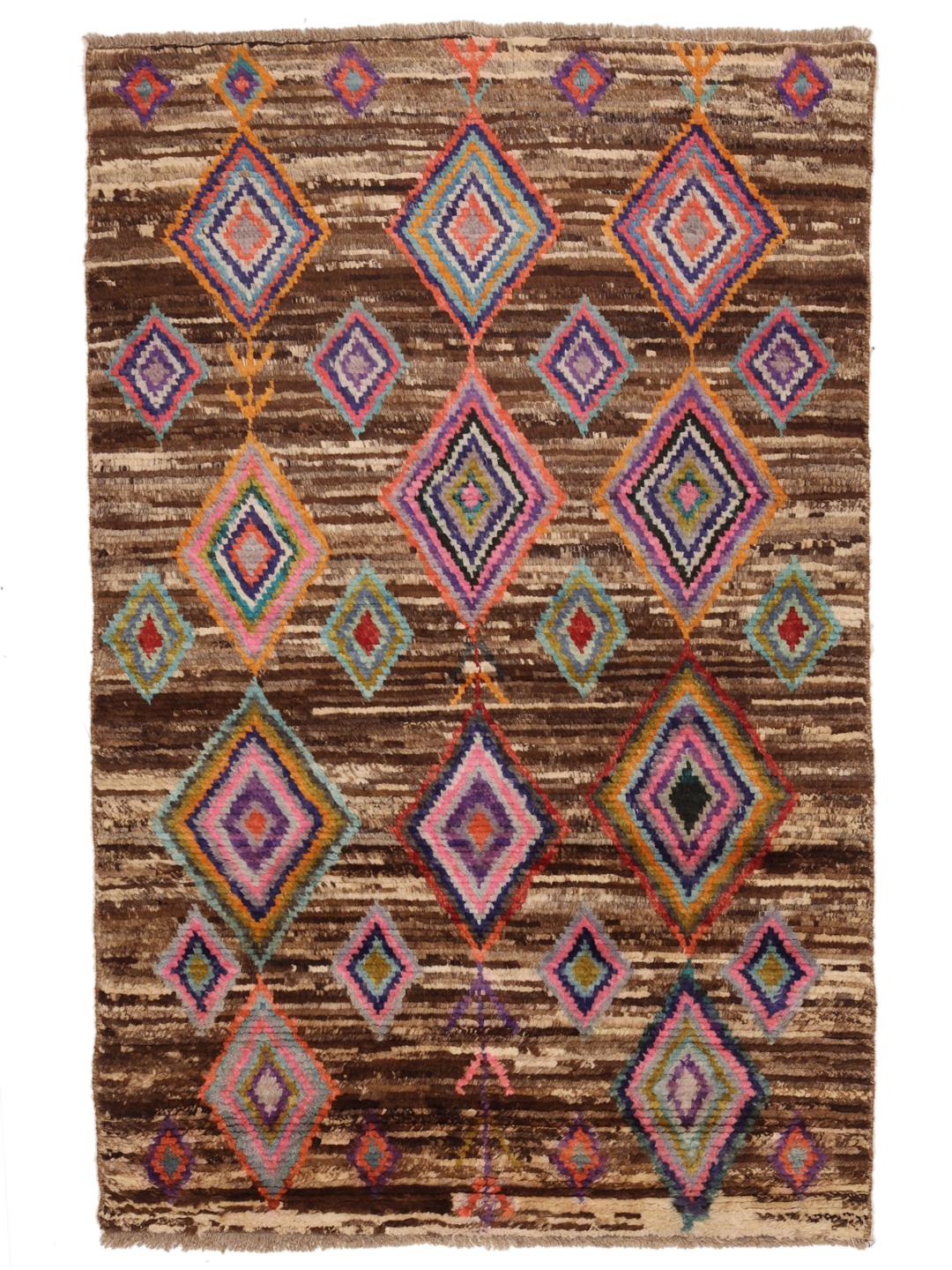
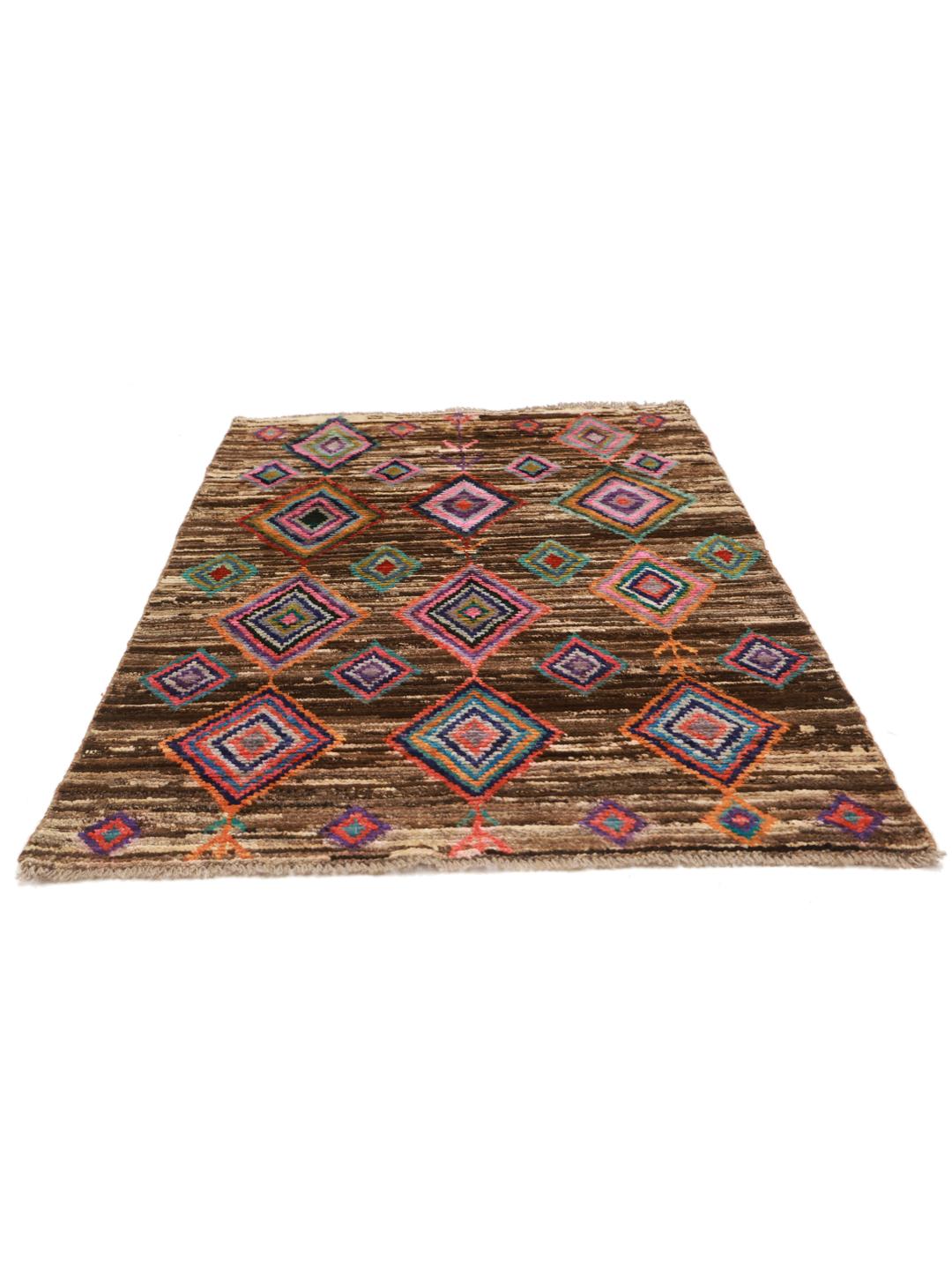
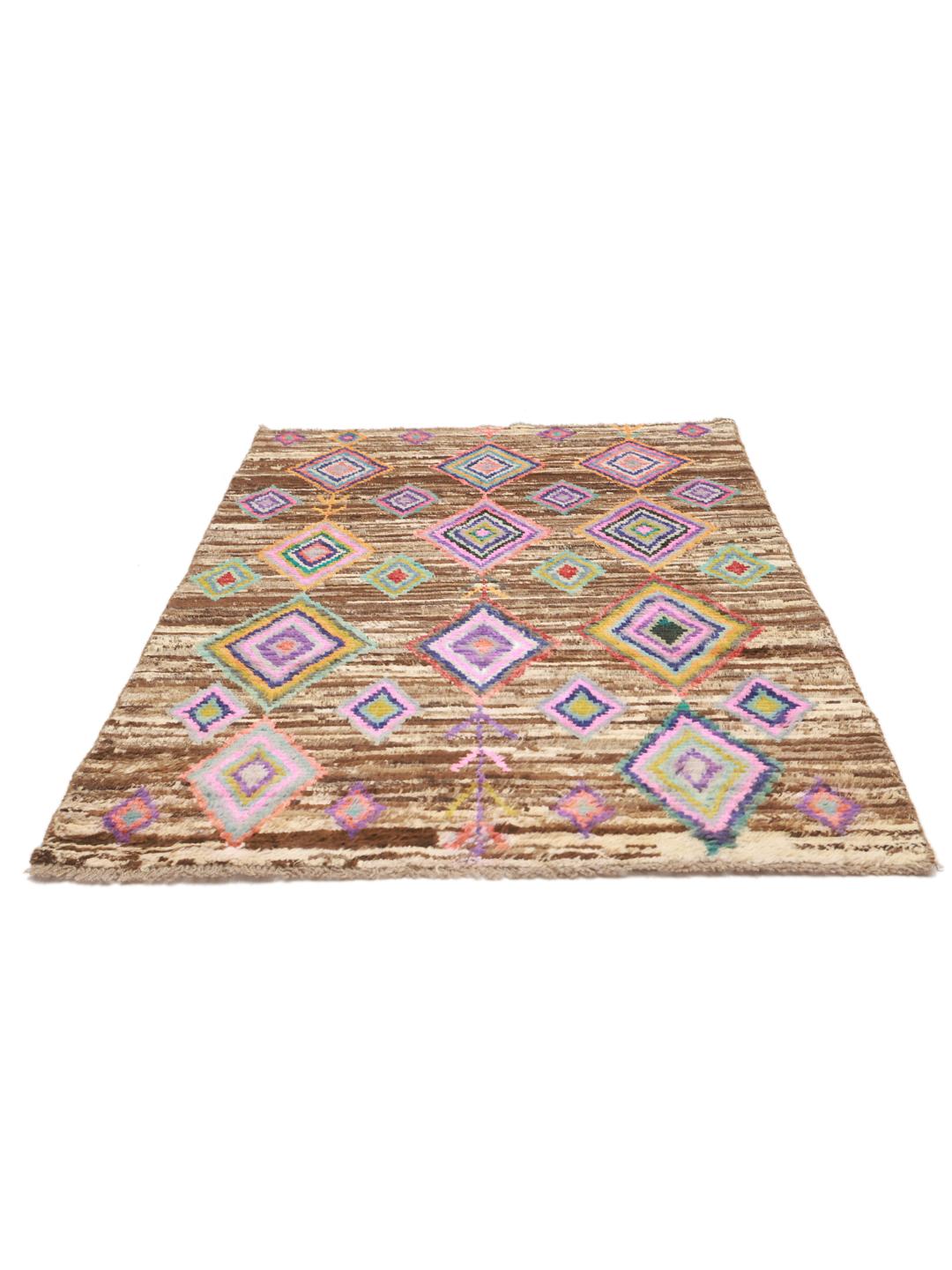
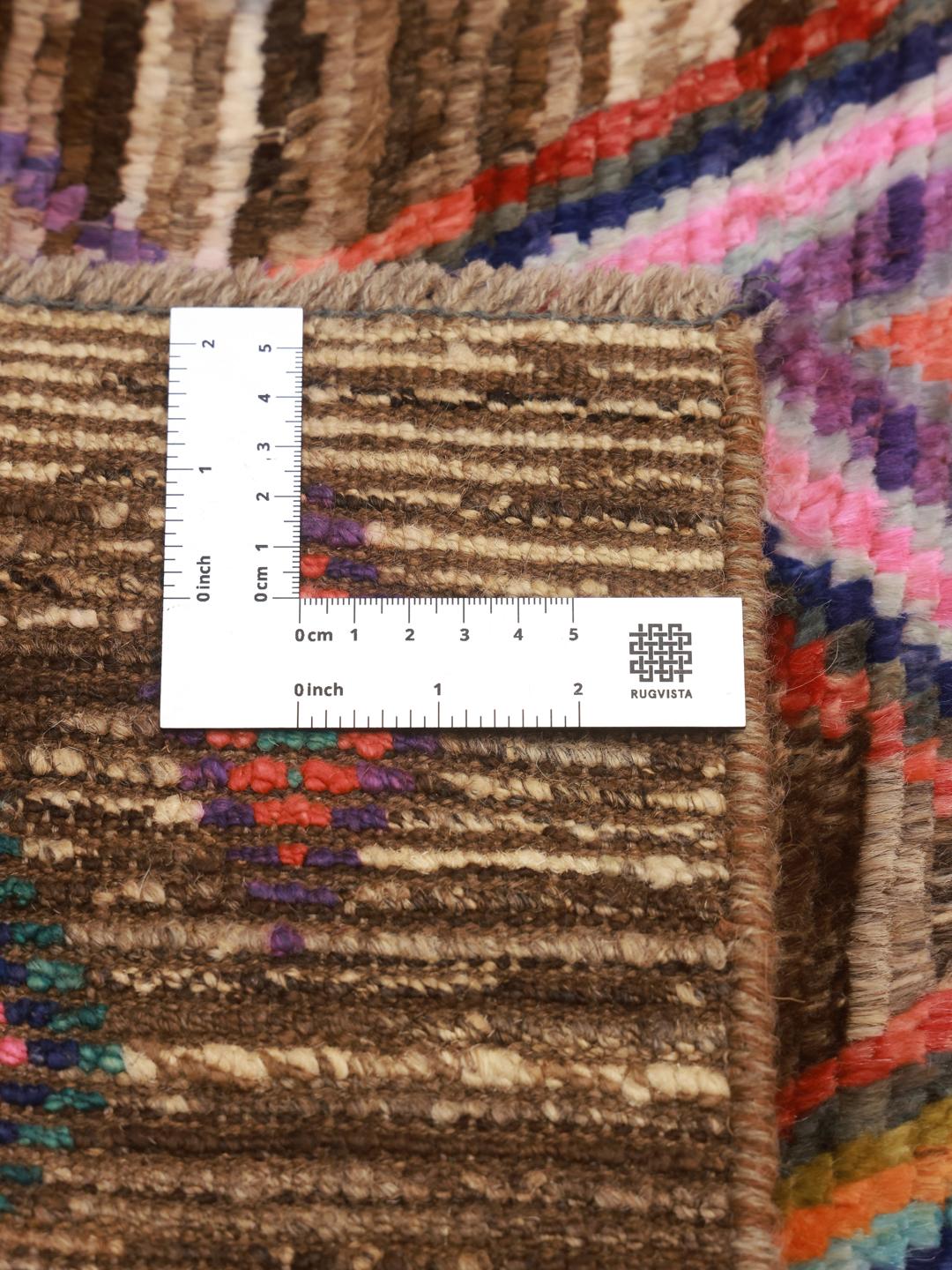
Signature elements of this style include the use of bold geometric motifs, such as the diamond patterns seen here, which often carry symbolic meaning within the weaving community. The use of natural, earthy tones as a backdrop serves to highlight the vivid colours used in the patterns, creating a striking contrast that is a hallmark of the Berber aesthetic. These design choices are not merely decorative but are deeply embedded in the cultural identity of the weavers.
Owning a hand-knotted piece from this tradition is an investment in cultural heritage and skilled artistry. Collectors value these rugs for their authenticity and the human effort required to create them. When you bring this rug into your home, you are acquiring a piece of history that celebrates the enduring connection between the weaver and their craft, ensuring that these traditions continue to thrive in modern homes.