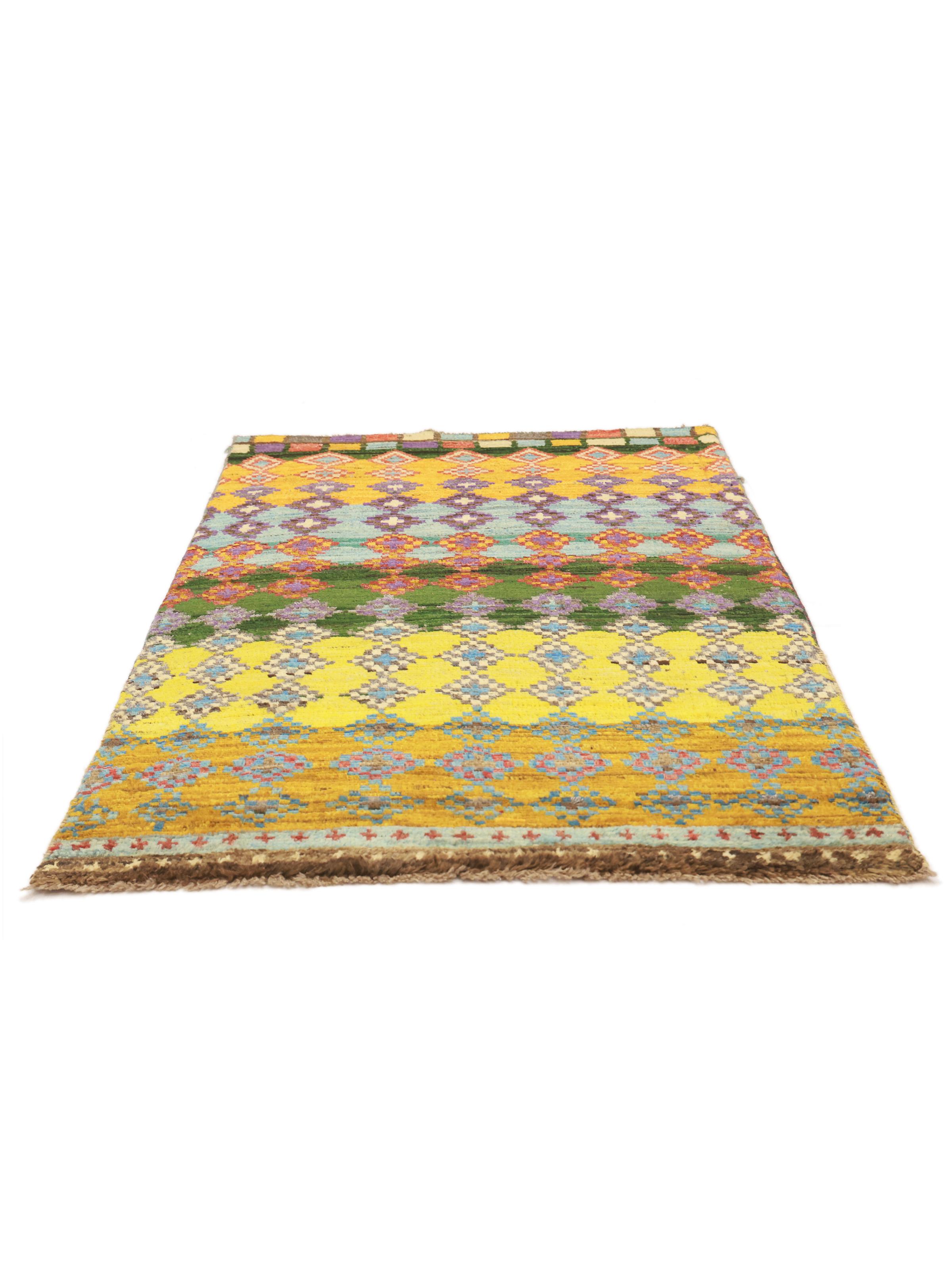
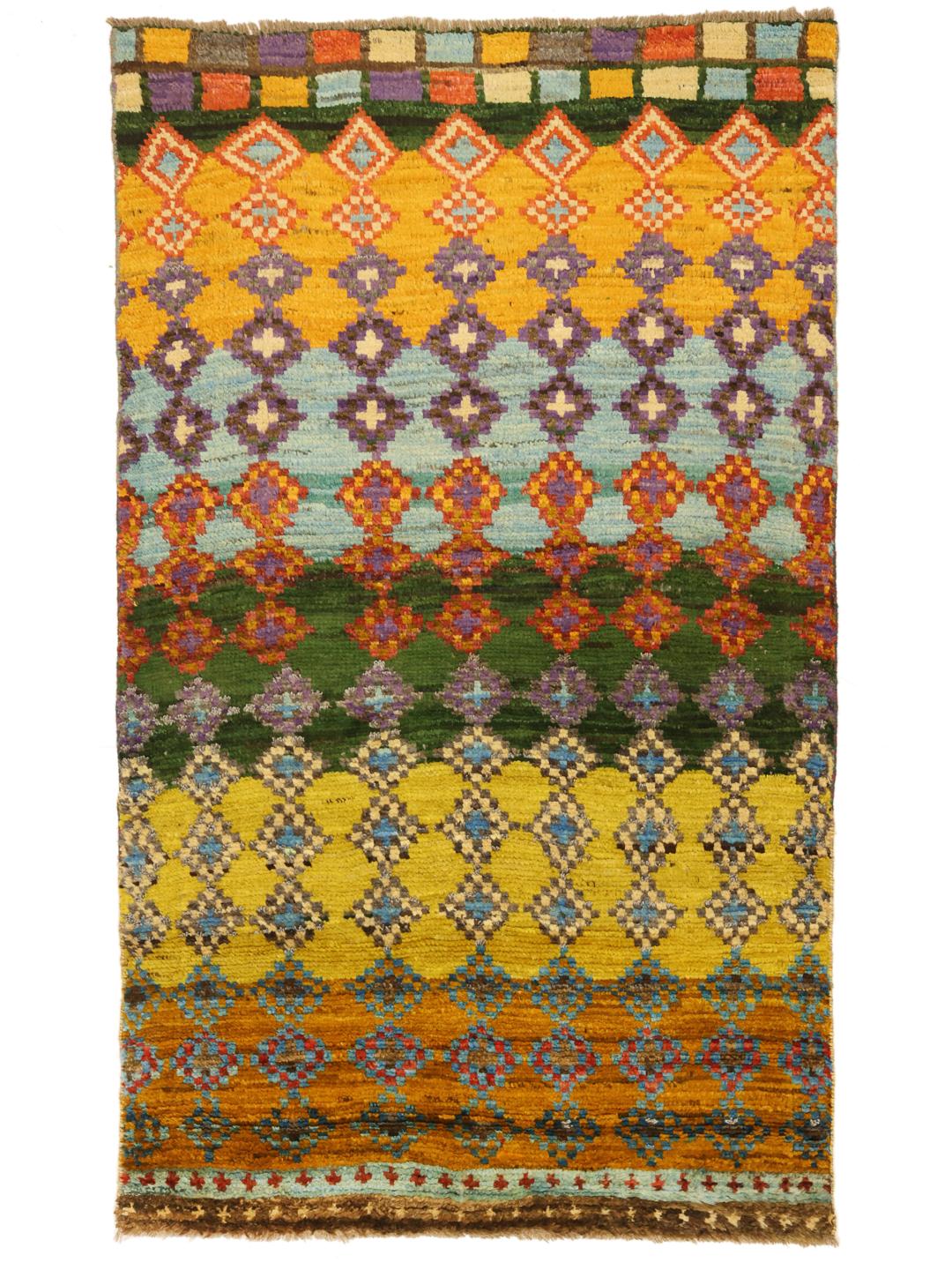
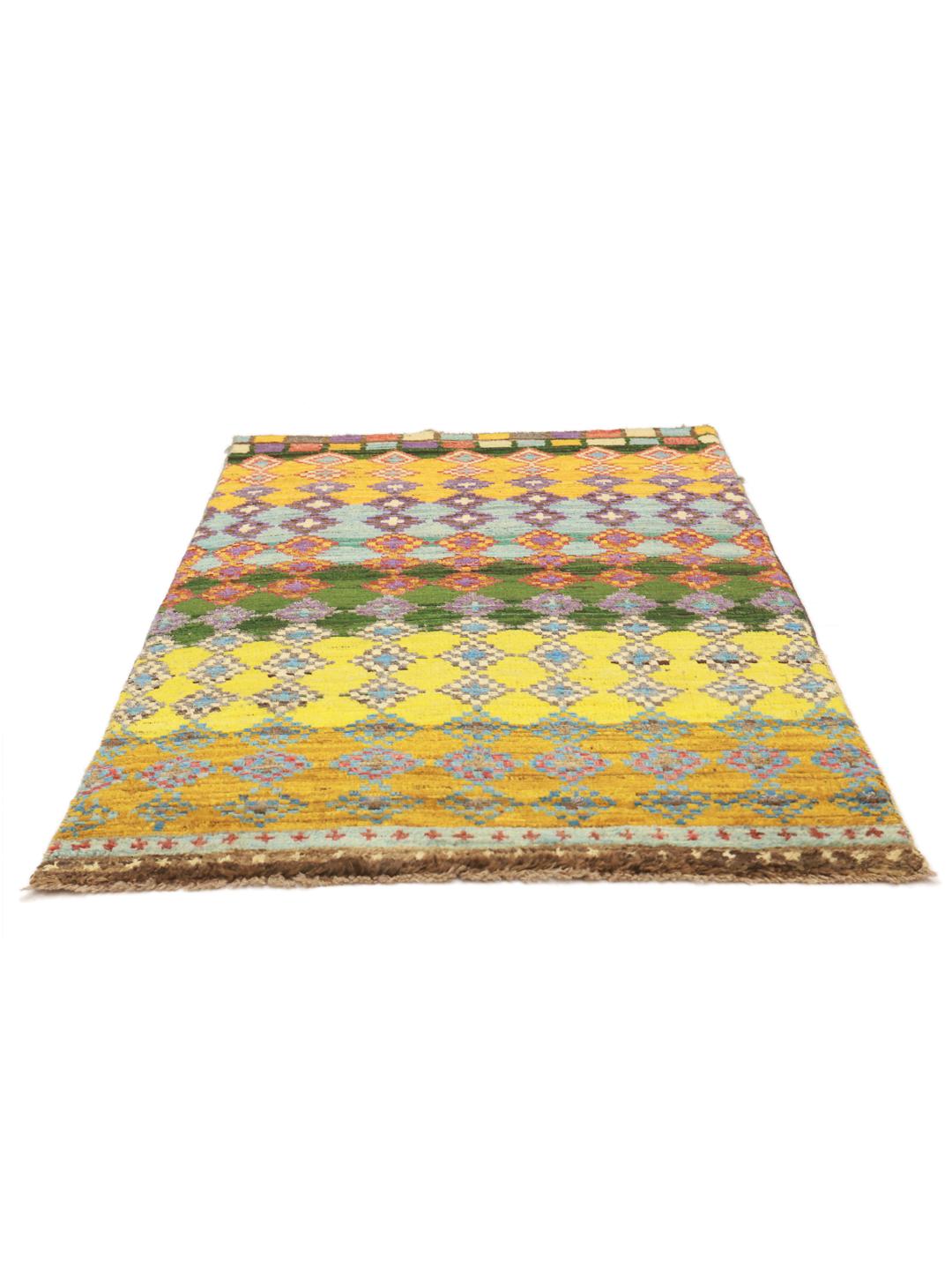
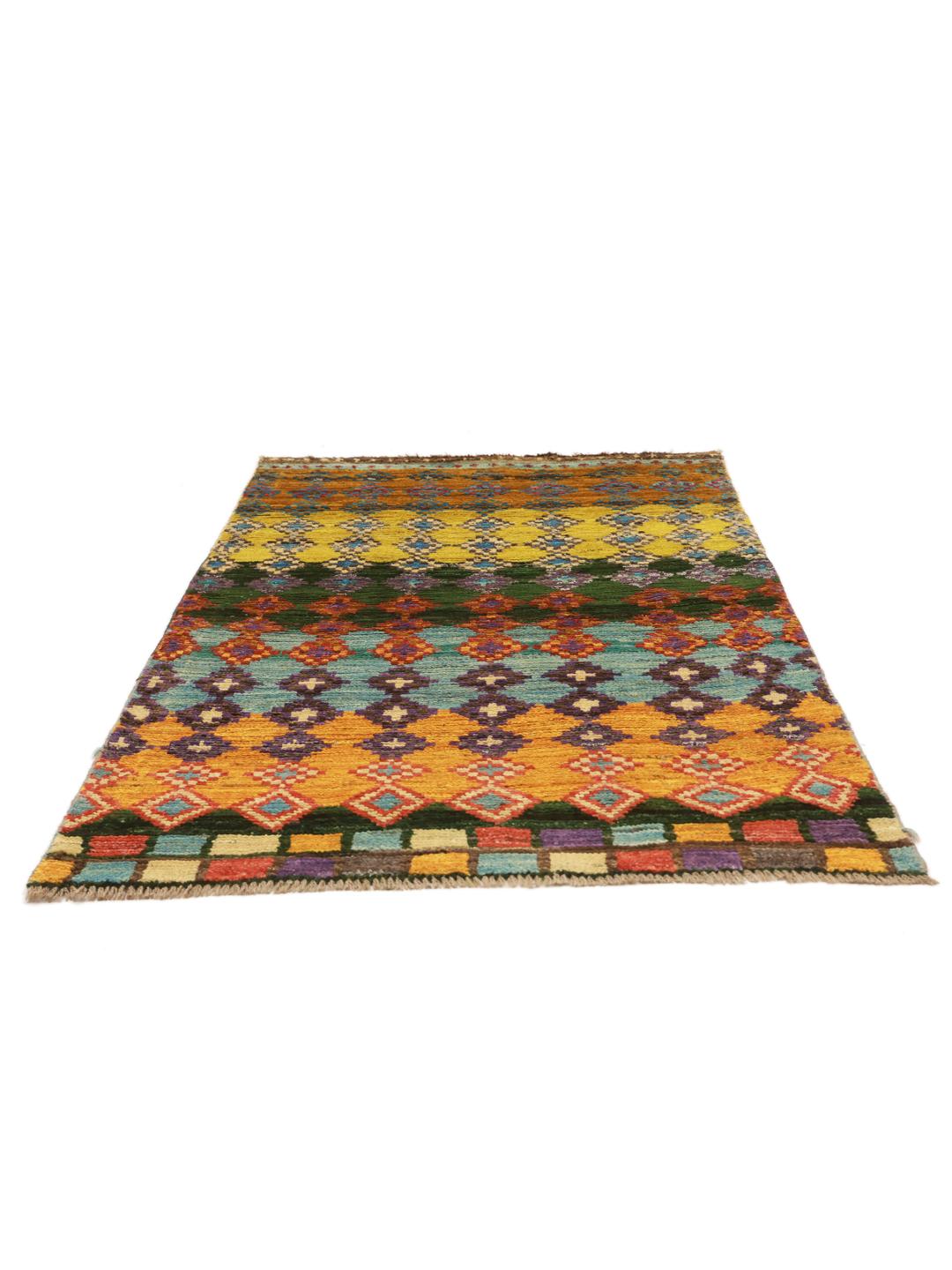
Berber rugs are deeply rooted in the traditions of North Africa, yet their influence has travelled far beyond, inspiring weavers in regions like Afghanistan to adopt these bold, expressive styles. The migration of these designs reflects a shared appreciation for geometric storytelling and the use of vibrant, natural dyes to capture the essence of a culture.
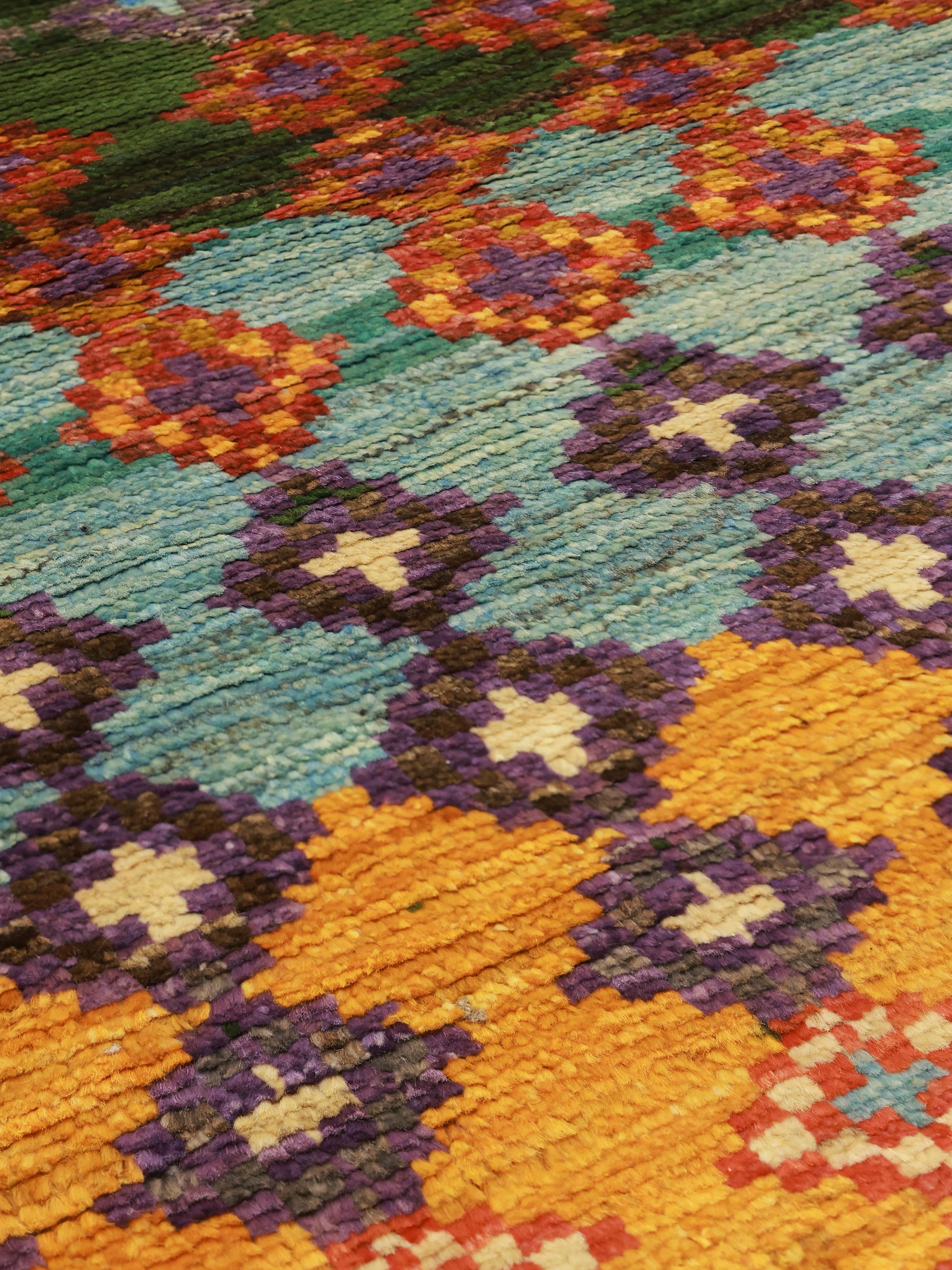
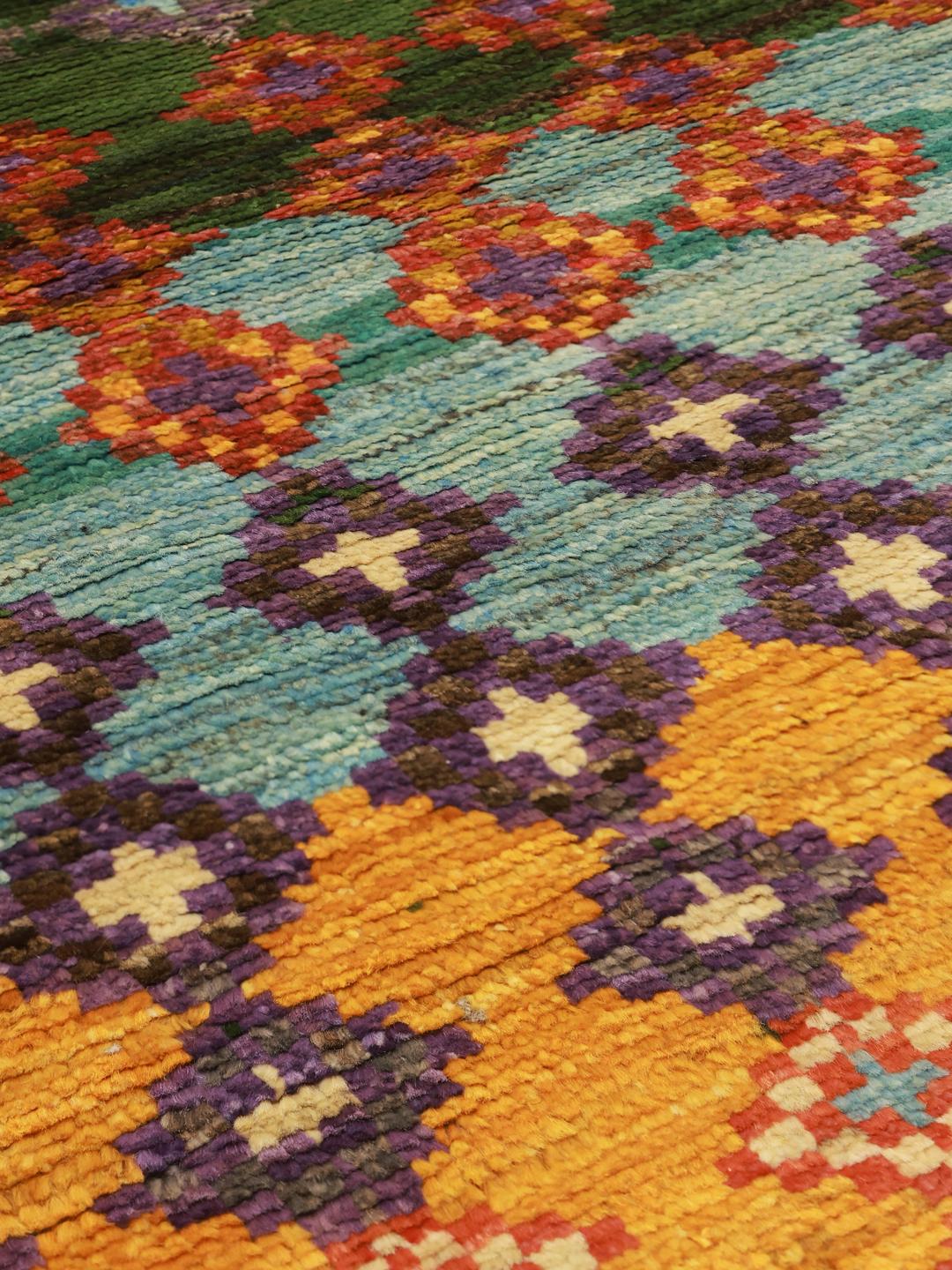
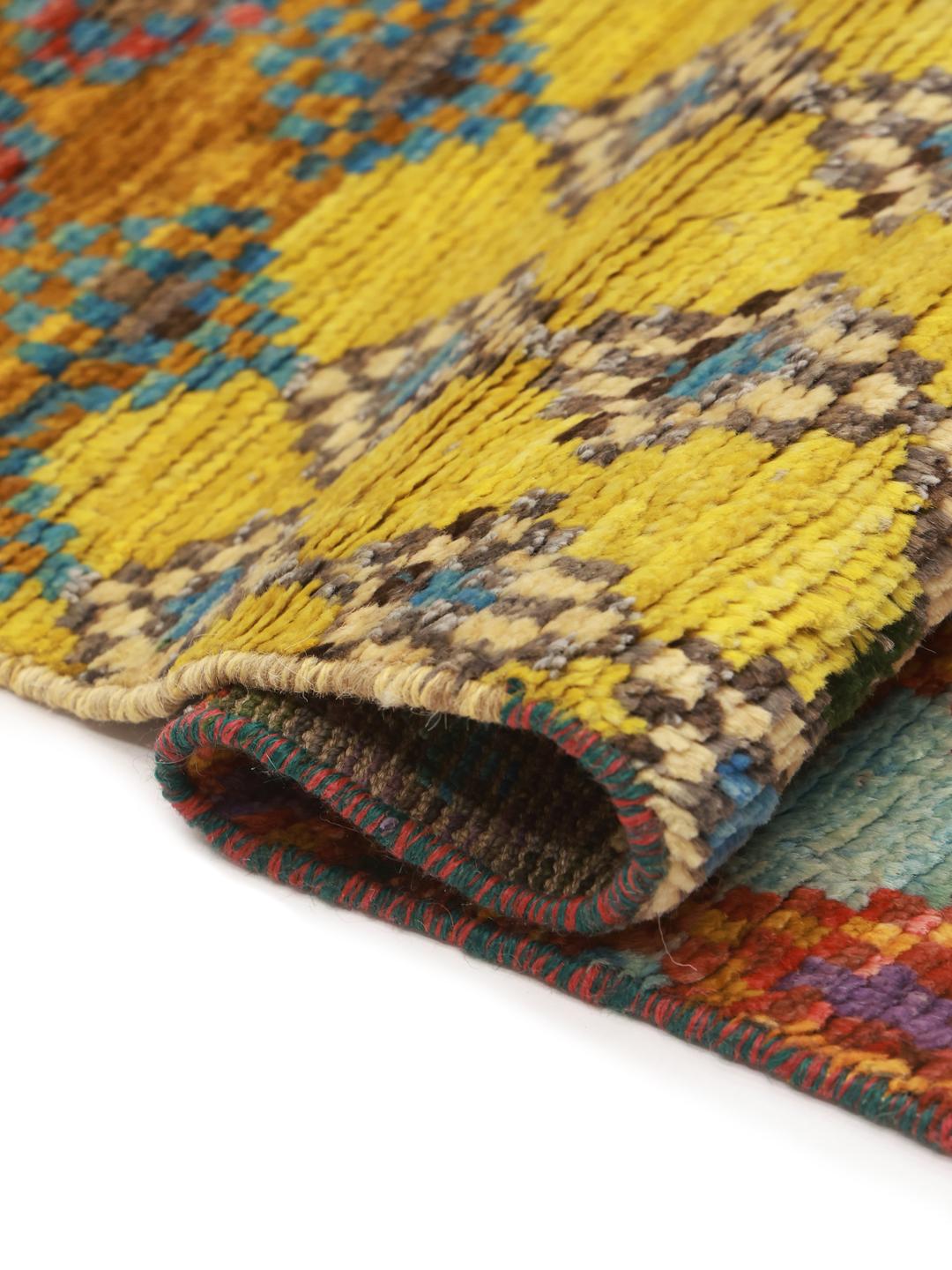
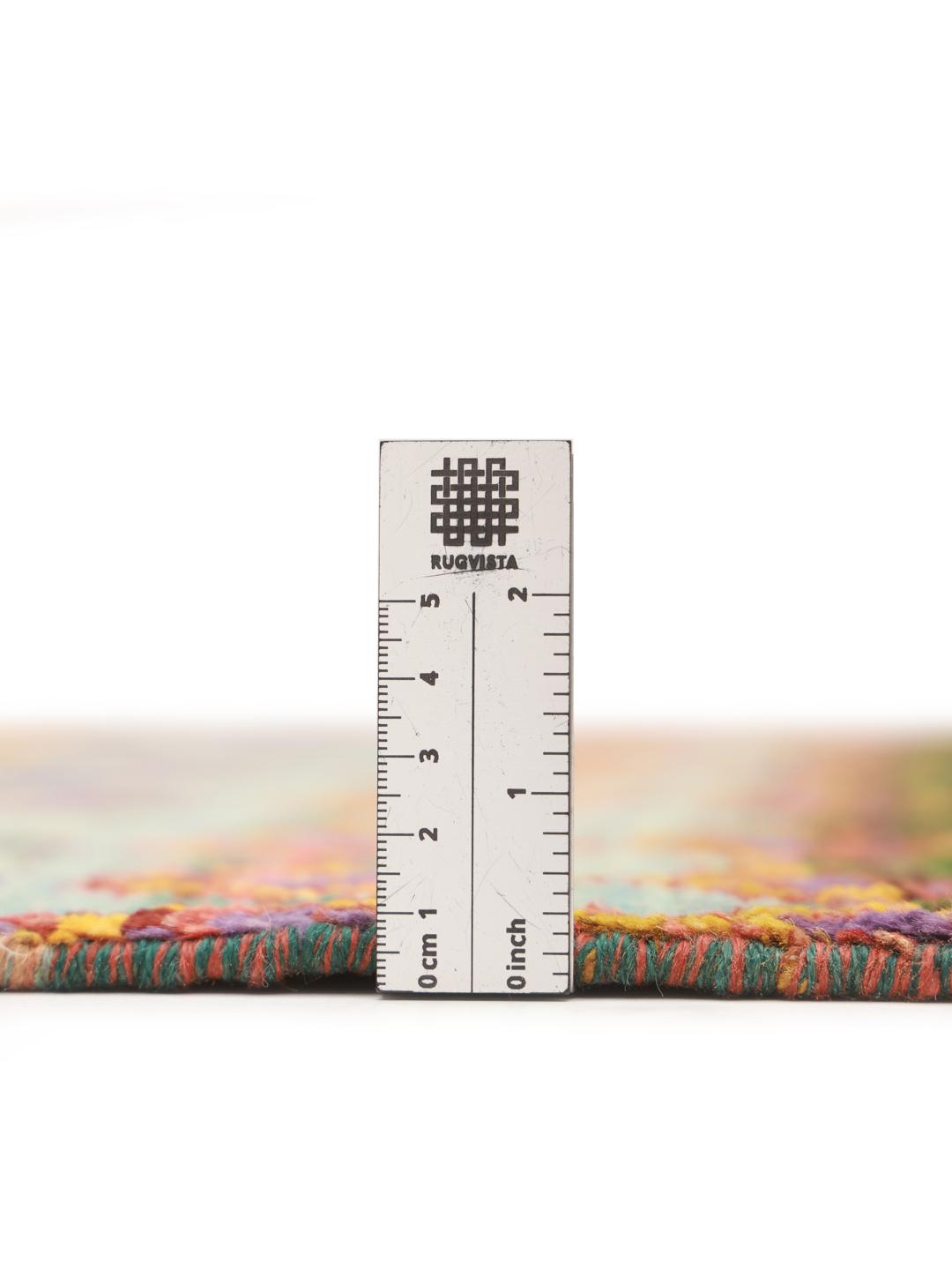
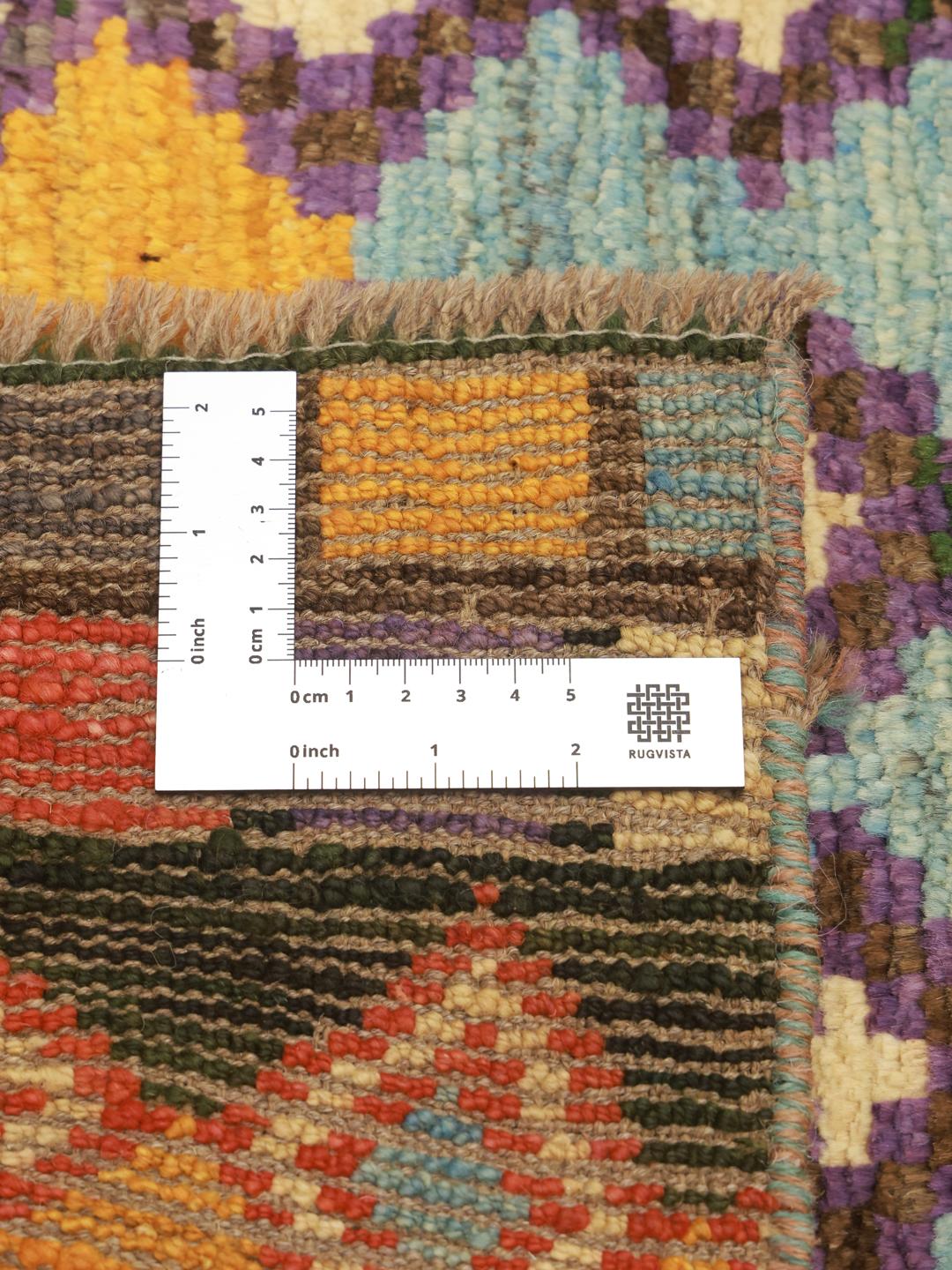
The term hand-knotted refers to the classic technique of tying individual knots to a warp and weft foundation. This method is the gold standard for rug making, as it creates a dense, luxurious pile that is incredibly durable. The precision required in this process allows for the creation of complex, lasting motifs that simply cannot be matched by modern machine techniques.
Signature elements of these rugs often include bold geometric shapes, such as diamonds and chevrons, which are frequently arranged in repeating patterns across the field. The use of varied colours, as seen in this piece, is a hallmark of the tradition, where each colour serves to highlight the contrast and rhythm of the overall composition.
Collecting these pieces is an investment in human skill and cultural legacy. Owning a rug from this tradition is not just about floor decor, but about preserving a craft that has been passed down through generations. These rugs are valued for their ability to bring a sense of history and human presence into a modern home.